Charles Storrow House // 1884

Facade

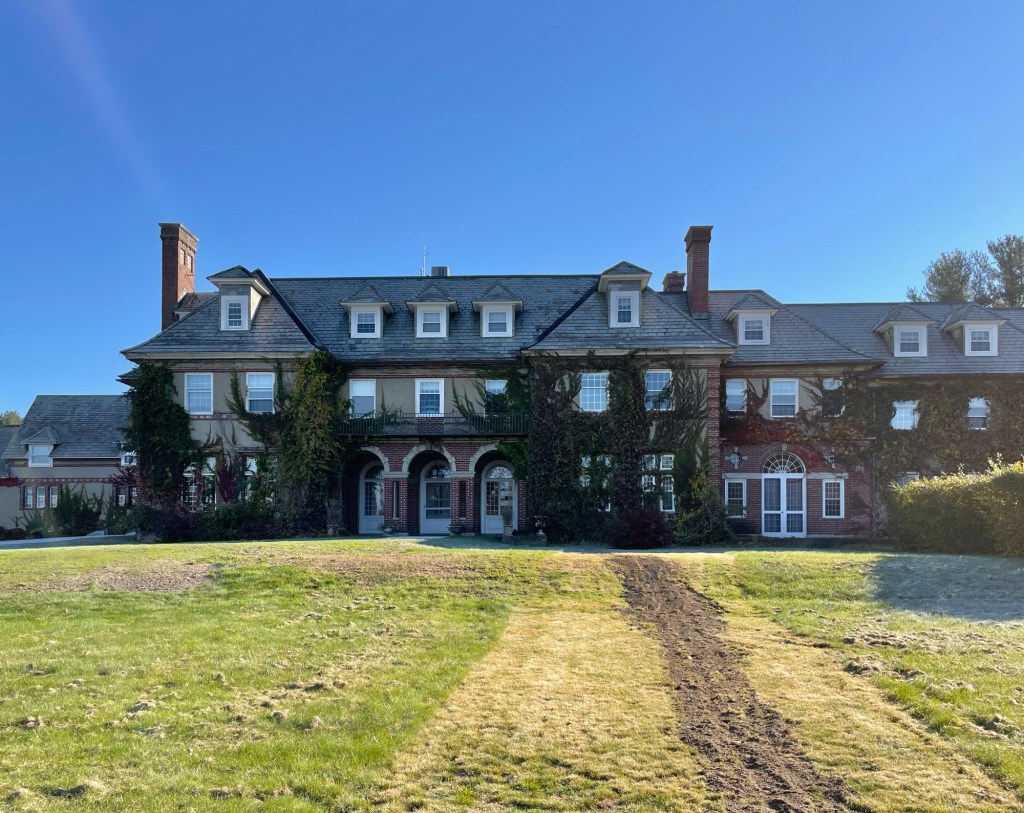
This shingle and brick Queen Anne style house at 112 High Street in Brookline, Massachusetts, was built in 1884 for Charles Storrow and his wife, Martha Cabot Storrow from plans by architect, Edward C. Cabot, Martha’s father. The lot here is said to have been gifted to Charles from his father, Charles Storer Storrow, a prominent civil engineer and industrialist, who is known for designing and building the dam and textile mill complex in Lawrence, Massachusetts. Besides the Victorian main house, the property included a historic stable and a detached house on an adjacent lot, which appears to have been rented by Mr. and Mrs. Storrow. The property was designed by Frederick Law Olmsted’s firm, with rustic rock walls, natural topography, and large, mature plantings. The Storrow House originally had stained glass windows designed by John LaFarge, which were sold in the 1970s. 

Side elevation.

Dana House // 1896

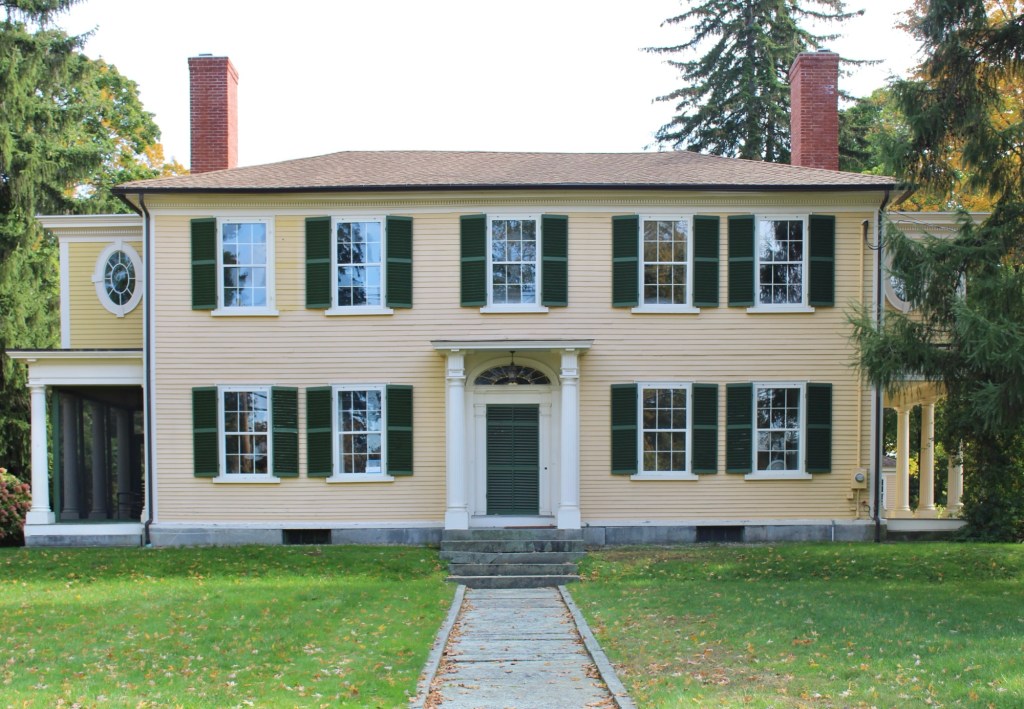
The Dana House at 41 Allerton Street in Brookline, Massachusetts, is one of many stately suburban residences designed in the Colonial Revival style here. Built in 1896 for Ms. Julia Hurd Dana (1825-1914), a widow of James Dana, who was a Mayor of Charlestown between 1858-1860, before it was annexed to Boston. The Dana House was designed by the important architectural firm of Chapman & Frazer, who specialized in higher-end suburban housing at the turn of the 20th century. Julia Hurd Dana was the daughter of William Hurd of Charlestown, and after her husband’s death, moved to Brookline in this new home with her daughter, Mary. The residence is notable for its ample setback from the street, providing a front yard garden, hipped roof of slate with pedimented dormers, and palladian window over the portico which is now covered in crawling ivy.

Ambrose Burnside House // 1866

What do this unique Victorian house and sideburns have in common? Well, you are about to find out!

The Ambrose Burnside House is sited on an oddly shaped, and sloping corner lot on Benefit Street in Providence’s East Side neighborhood, and is one of the most unique Second Empire style residences in New England. The house was built in 1866 for General Ambrose Burnside (1824-1881), a Union general in the American Civil War, who returned to Providence and was about to begin a term as governor, followed by two terms in the United States Senate. Ambrose Burnside hired local architect, Alfred Stone, to design his new city mansion, which upon completion, was deemed one of the most “modern residences” in Providence. Built of brick with Nova Scotia stone with a concave slate mansard roof and one-of-a-kind rounded corner bay, the Ambrose Burnside House does not disappoint! Ambrose Burnside died in 1881 and the property was occupied by his sister-in-law until the property was sold in 1884 and housed the Providence Children’s Friend Society House for Aged Women and the Providence Association for the Benefit of Colored Children, providing shelter and food for elderly women and children of color without parents or guardians. After WWII, the Burnside House was converted to apartments.

Now, to the sideburns… Ambrose Burnside was noted for his unusual beard, joining strips of hair in front of his ears to his mustache but with the chin clean-shaven; the word burnsides was coined to describe this style. The syllables were later reversed to give sideburns.

Brown-Crocker House // c.1836

In 1829, Riley Brown, a housewright, purchased a house lot at the corner of Thayer and Transit streets in Providence, and by 1836, built this charming gambrel-roofed cottage, which is one of the most charming in the city. Riley Brown lived in the house next-door at 6 Thayer Street (1829) and on available land, built this 1-1/2-story dwelling on a full-height raised basement on speculation. It is possible that the house could have dated to the 18th century, and was possibly moved to the site from a nearby location, given the distinct gambrel roof and Georgian qualities. The residence here was sold in 1836 to John Crocker, who resided here with his family until his death in 1865. The Brown-Crocker House stands out for its unusually high basement of brick and stone, with a stair ascending up to the central entry and the gentle saltbox roof off the rear. Two shed dormers were likely added in the 20th century to make the house’s second floor more liveable.

Tillinghast House // c.1800

The Tillinghast House at 10 James Street in Providence, Rhode Island, was built around 1800 by Captain Joseph Tillinghast (1734-1816), and it was occupied by a number of his children in the early 19th century. By 1818, with Joseph already deceased, the Federal style home was owned by two of his daughters, Mary, and Amey Tillinghast, who operated a small store from the basement. The two-and-a-half-story, brick Federal house is set on a high basement all with brownstone trim at the stringcourse (between first and second stories) and at the entrance. The house was restored in the late 1970s, along with a new clapboard addition by designers, Luigi Bianco and Georgia Patterson Boomer, of Bianco/Boomer. Without nearly as much ornate detail as many other Federal style homes in the East Side area of Providence, this residence proves that high-quality materials and strong proportions can make a home truly stand out!

William Mason House // c.1812

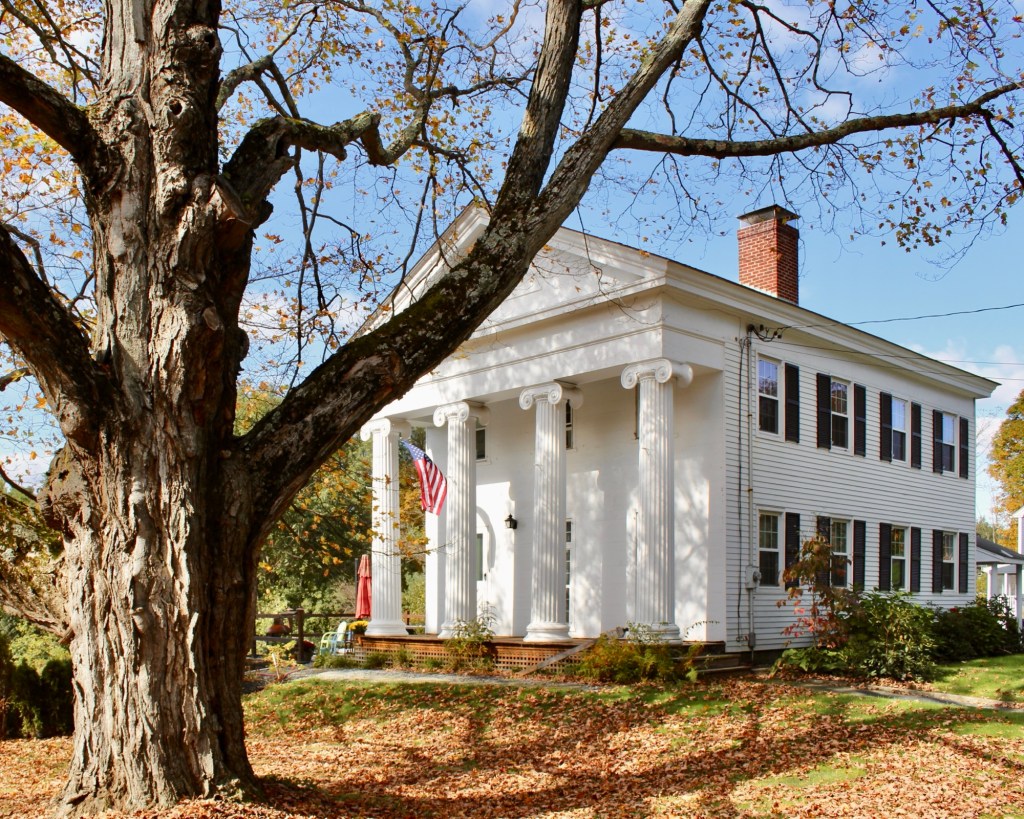
This oversized brick Federal style house in Providence looks like it belongs more on the iconic Benefit Street rather than a quieter side street like Transit Street, but its history informs us as to why. Located at 136 Transit Street, the Benjamin Mason House stands as one of the finest (and largest) brick houses in the Fox Point neighborhood of Providence. The residence was built around 1812 by William Mason, who appropriately worked as a bricklayer and builder in 19th century that put his talents to work to build his own home seen here. The large brick residence was not only a family home, but marketed his abilities as a mason to area residents who were in need of his services. Benjamin Mason lived here until he moved to a new house down the street with his wife, Ann. Benjamin died by 1828 and the brick residence was purchased at auction and later sold to Reverend William Phillips. The house retains much of its original fabric, and even includes a stunning courtyard garden bounded by – you guessed it – a brick wall. 

Larkin-Ladd House // c.1813

The Larkin-Ladd House at 180 Middle Street in Portsmouth, New Hampshire, is a three-story, masonry Federal-style residence with symmetrical facade, built for one of the city’s wealthiest merchants. Samuel Larkin (1773-1849) was born in Charlestown and moved to Portsmouth, marrying Ann Jaffrey Wentworth, a daughter of Col. Joshua Wentworth. During the War of 1812, Samuel Larkin made his fortune as an auctioneer, selling the contents of English ships captured by local privateers. It is believed that fourteen privateers and their crews worked out of Portsmouth Harbor and are said to have captured an estimated 419 British ships! With the profits from stolen goods from these British ships, Larkin purchased lots on Middle Street and began construction of this stately residence. He (and mostly his wife), had twenty-two children, although roughly half of them died before reaching adulthood. By the late 1820s, financial hardship fell on Larkin and he sold this property, moving into his house next door, which before this was his original residence and later rented to boarders. The Federal style mansion was later owned by Henry H. Ladd, a prosperous Portsmouth shipping merchant, who also served as President of New Hampshire Bank and Portsmouth Savings Bank. The Larkin-Ladd House is undoubtedly one of the finest Federal style residences in New England, and stands out for its entrance, flanked by Palladian windows and the slightly recessed elliptical surrounds at the first and second floor windows. Additionally, the historic stable, also from the 1810s, maintains much of its architectural integrity.

Langley Boardman House // c.1804

Langley Boardman (1774-1833) was an important builder and real estate developer who built his own home, this stately Federal style residence, at 152 Middle Street in Portsmouth, New Hampshire. Langley Boardman later served as a Constitutional Councilor and as a State Senator, living here until his death in 1833. His son, Dr. John Howe Boardman, owned the home until his own death in 1882. The Boardman House is a high-style Federal style residence with a three-story, five-by-three-bay, rectangular, form. The building has a hipped roof and four tall brick chimneys, with flushboard siding at the facade. The facade has a double wood-paneled entrance door with fanlight and rectangular sidelights under an elliptical flat-roof porch with overhanging eaves and denticulated cornice supported by columns with scrolled capitals. At the facade second story, directly above the entrance, is a Palladian window with columns with scrolled capitals slightly recessed in an elliptical surround.

Samuel J. Nutter House // c.1750

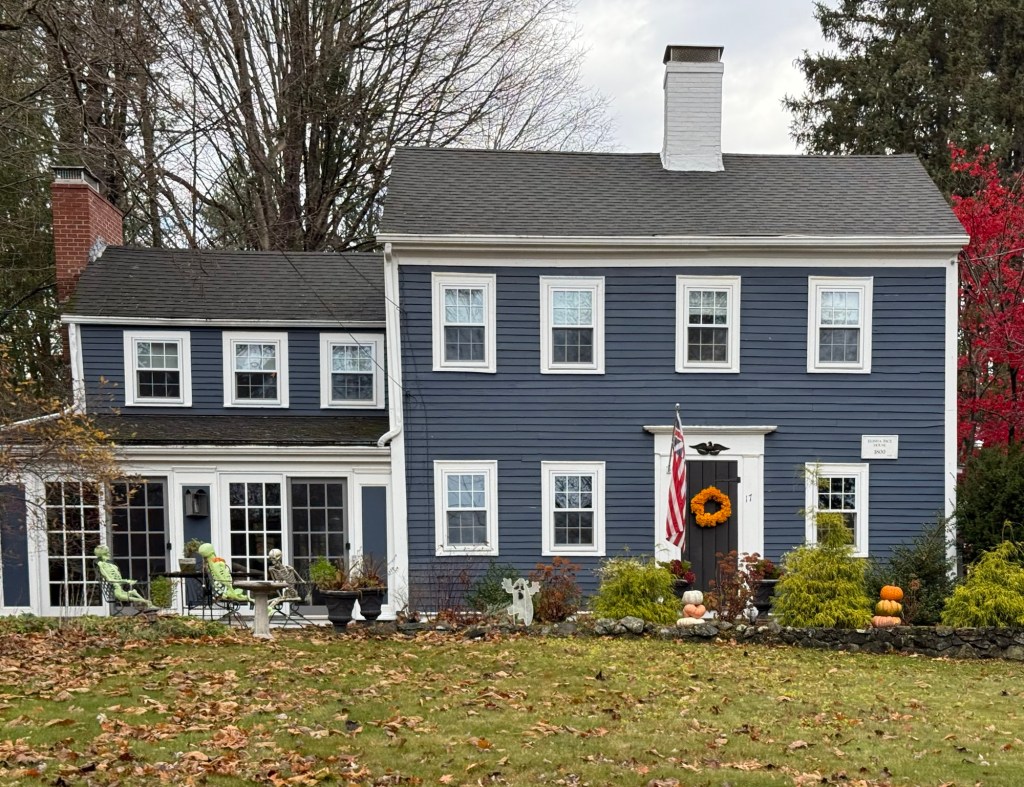
The Samuel J. Nutter House on Indian Pond Road in Kingston, Massachusetts, is a fairly rare example of a half-cape Georgian-era home in New England. Local history states that the house dates to before the American Revolution and was constructed as an early half-cape, with an off-center door flanked by two bays of windows. The small house form would allow the owner to add on additional bays to make it a 3/4- (has a door with two windows on one side and a single window on the other) or full-cape (with a central door and two windows on each side) as the family and prosperity grew. This house was built as a half-cape and has not changed in its over 275-year existence, besides the addition of a barn and one-story connecting addition to it. The house was originally located elsewhere in town, but was relocated to the site in about 1830 by Samuel Nutter (born Nutt and changed his name in 1825), who married Mercy Washburn that year. The Nutter Family farmed here until the early 1900s.

Bildad Washburn Tavern // c.1774

This stately Georgian style house on Main Street in Kingston, Massachusetts, was originally built in nearby Marshfield and later moved to its current location just decades later. The house was built on the Winslow estate in Marshfield in about 1774 by either Dr. Isaac Winslow or his brother, Maj Pelham Winslow. In 1796, the property was purchased by Bildad Washburn, a noted gravestone carver, and the house was moved to its present site. Reports state that the house was moved by boat and oxcart to its current location, where it became a tavern and residence of Mr. Washburn. In 1804, the house was sold to Major George Russell, a merchant and town clerk, who later served in the War of 1812, who converted the ell into a store where he sold, East and West India goods from his ships. After his death, his daughter ran a dame’s school from the house. The Washburn Tavern is significant as a large Georgian-era house that remains in a great state of preservation.