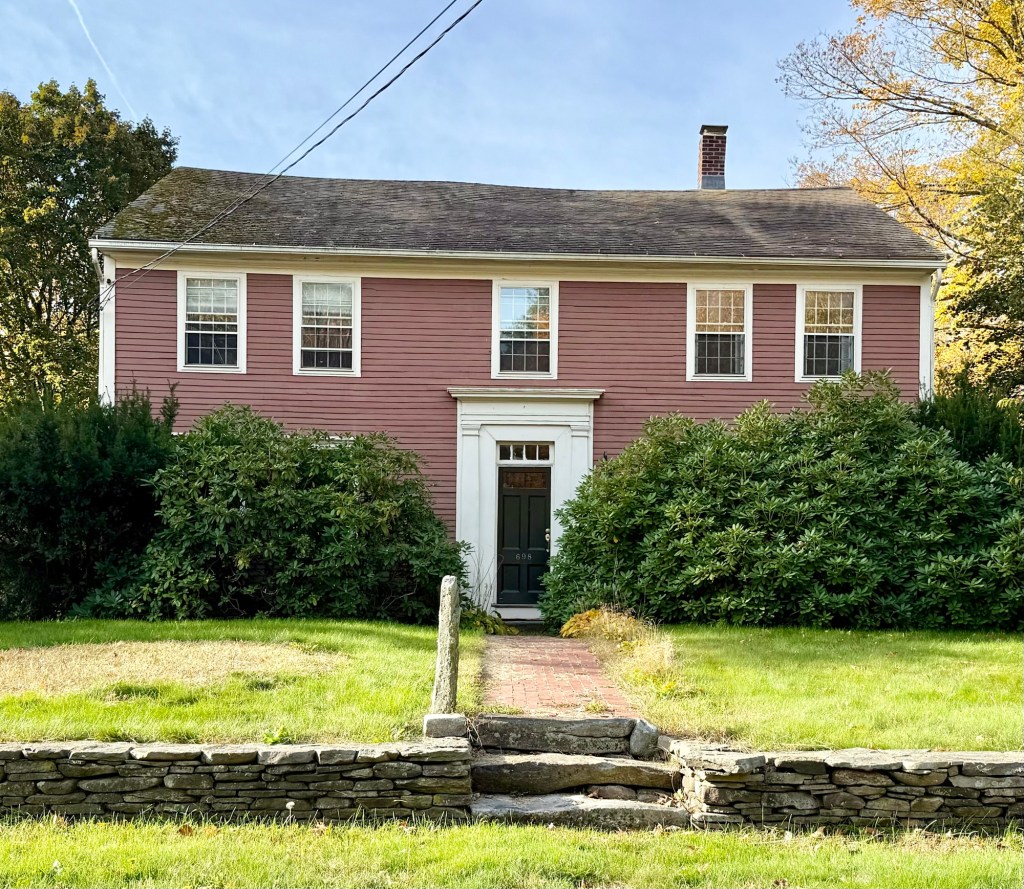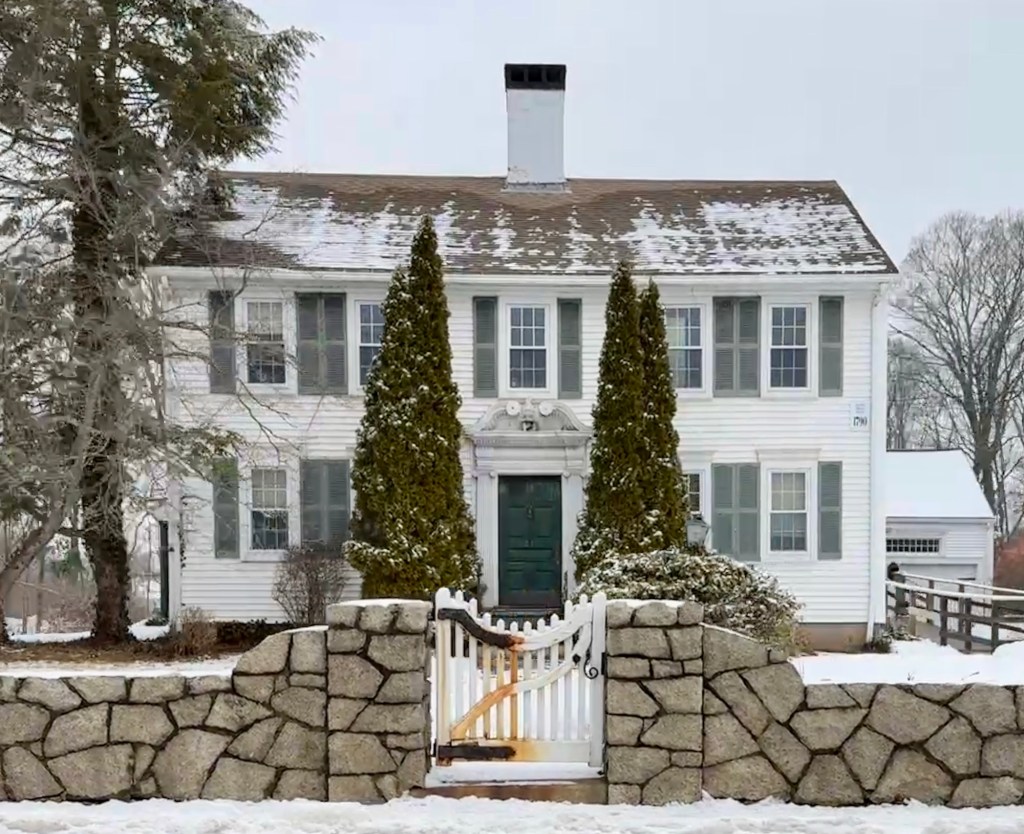
Gen. Stephen P. Gardner House // 1798

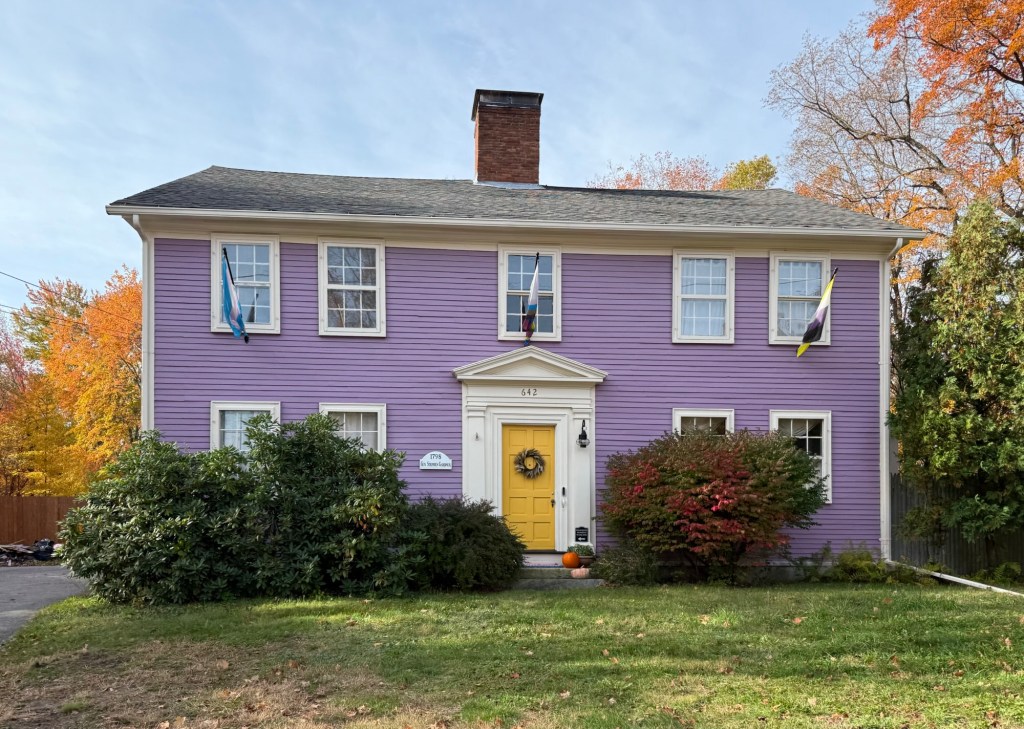
The Stephen P. Gardner House on Main Street in Bolton Center, Massachusetts, is a stunning late-Georgian style residence evocative of rural housing built in the decades following the American Revolution. The home was built by 1798 for Stephen Partridge Gardner (1766-1841) upon the occasion of his marriage to Achsah Moore. Stephen Gardner was born in Sherborn but settled in Bolton where he quickly became one of Bolton’s most important residents. He served as Town Clerk for twenty years from 1797 to 1816, as Town Treasurer from 1810 to 1820, and was also an Assessor and a Selectman for many years. Stephen Gardner was chosen to help write the petition from Bolton against the Embargo Act prior to the War of 1812, and rose to the rank of Brigadier General in the Massachusetts militia. In 1873, the house was purchased by the First Parish Church and used as the minister’s residence for about fifty years before being sold to private owners. The now purple house is well-preserved and maintains its traditional pedimented doorway and central chimney.

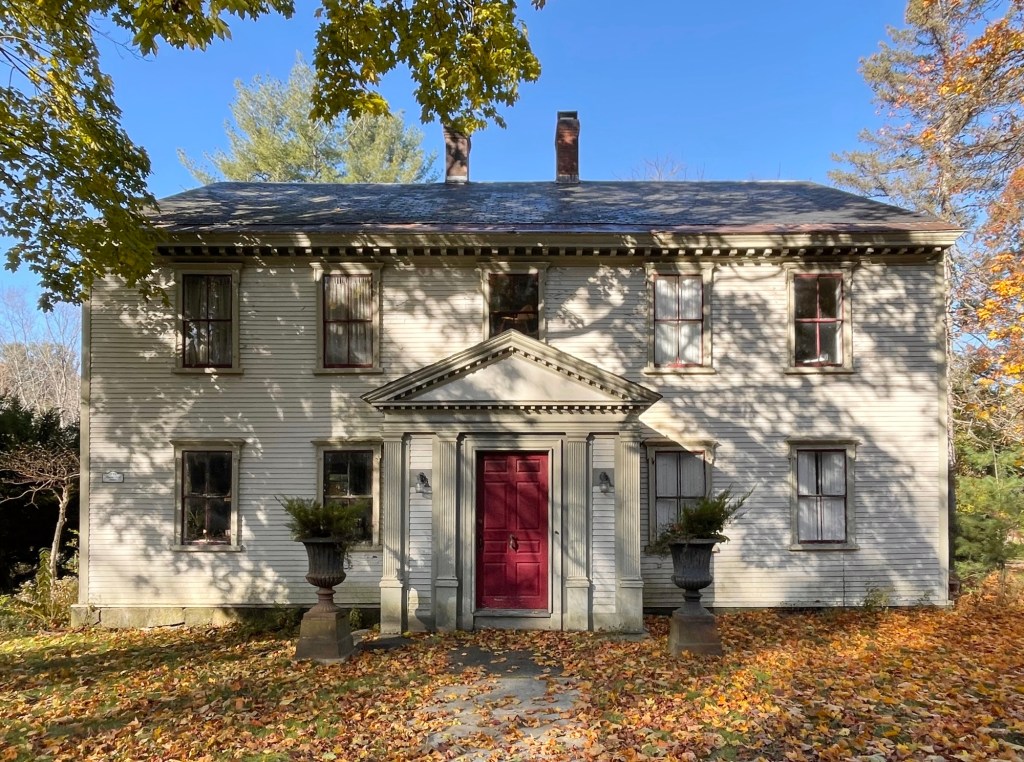
Dr. Amos Parker House // 1801

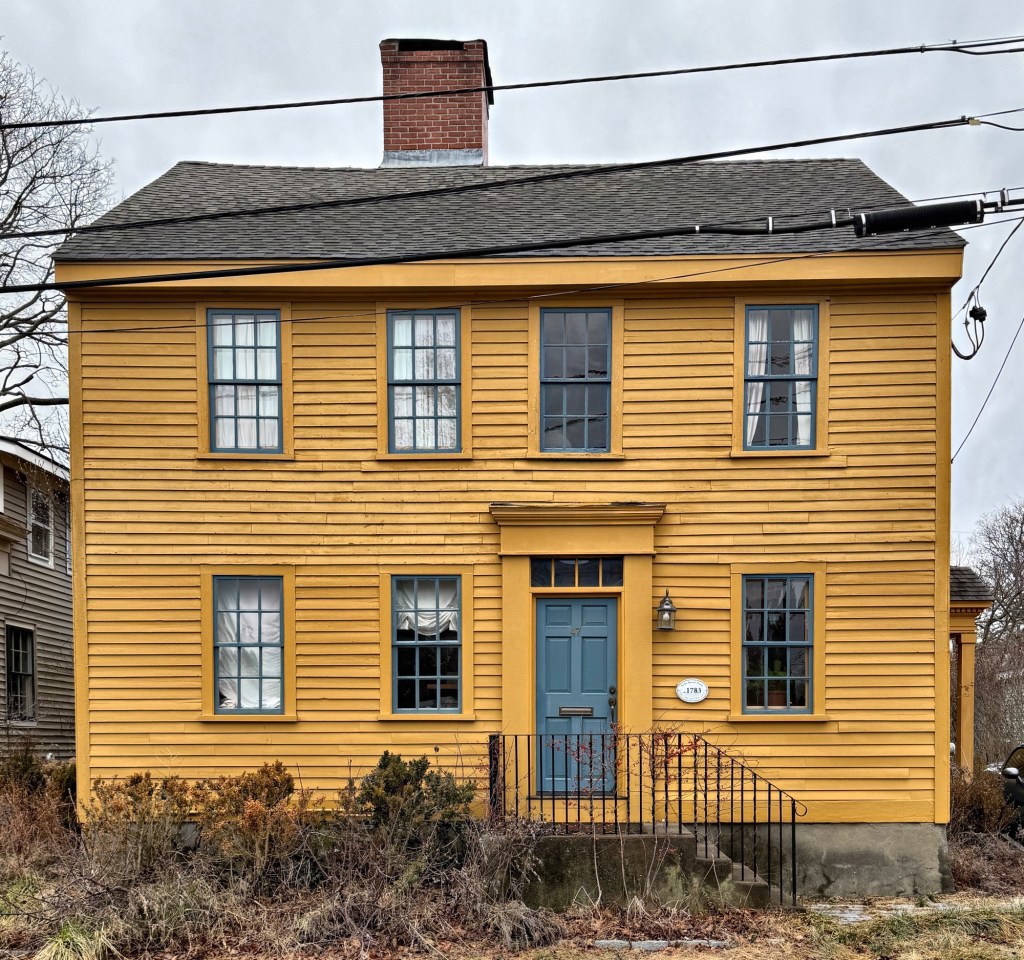
Built in 1800-1801, this house on Main Street in Bolton, Massachusetts, had multiple owners in quick succession until 1806, when it was purchased by Dr. Amos Parker. Amos Parker (1777-1861) was born in Hubbardston and later moved to Bolton to work as the town’s doctor, and also served as Bolton’s first Postmaster, from an ell that was once attached to this residence. Dr. Parker and his wife, Elizabeth (Whitney,) had at least four children, who of which died as infants and two daughters remained unmarried. Elizabeth Lydia Parker (1809-1882) and Louisa Jane Parker (1812-1900) inherited their parent’s home and lived here until their deaths. Louisa worked as a teacher in Bolton schools, and was forced to remain unmarried to keep her teaching position by law. In 1904, the Parker home was acquired by the local Baptist church and occupied as a parsonage and was later sold to private owners who restored the home to its near-original condition.

Joseph and Ruth Sawyer House // c.1782

The town center of Bolton, Massachusetts, as we know it, was largely an early Colonial landholding and farm held by William Sawyer (1679-1741) who possessed roughly 300 acres in the area when Bolton was still a part of Lancaster. The Town of Bolton seceded along the Still River from Lancaster and incorporated in 1738. A year later, an aging William Sawyer gifted two acres of his land for the town’s newly designated burying ground, now the Old South Burying Ground, where his own grave (dated 1741), is the oldest marked burial in the cemetery. In 1780, William’s son, William Sawyer, Jr., sold over sixty-acres of the family farm to his son, Joseph Sawyer (1756-1828) who was to marry Ruth Walcott in 1782. This house was probably built about the time of their marriage. Joseph had previously fought in the Revolutionary War, and marched with the Bolton militia to Lexington on April 19, 1775, and upon his return, he worked as a blacksmith and operated the farm while serving in various town offices.

John Sprague House // 1785

Judge John Sprague (1740-1800) was a Harvard graduate and settled in Lancaster, Massachusetts as one of only three lawyers in Worcester County following the departure of his Tory colleagues during the Revolution. From this, a young Sprague climbed the professional ladder quickly and represented Lancaster in the General Court beginning in 1782 and occasionally sat in the Senate. He was first appointed judge in 1784 and in 1798 became chief justice of the Court of Common Pleas for Worcester County. After being appointed a judge in 1784, Sprague purchased a house lot on Main Street in Lancaster and hired local housewrights Eli Stearns and Jonathan Whitney, to design and build this stately home. Judge Sprague moved from his 1771 houseshort distance away, to this more substantial late-Georgian home with projecting entry with pilasters and pediment. After his death in 1800, the property was inherited by his daughter, Ann Sprague Vose and her husband, a merchant, Peter Thatcher Vose

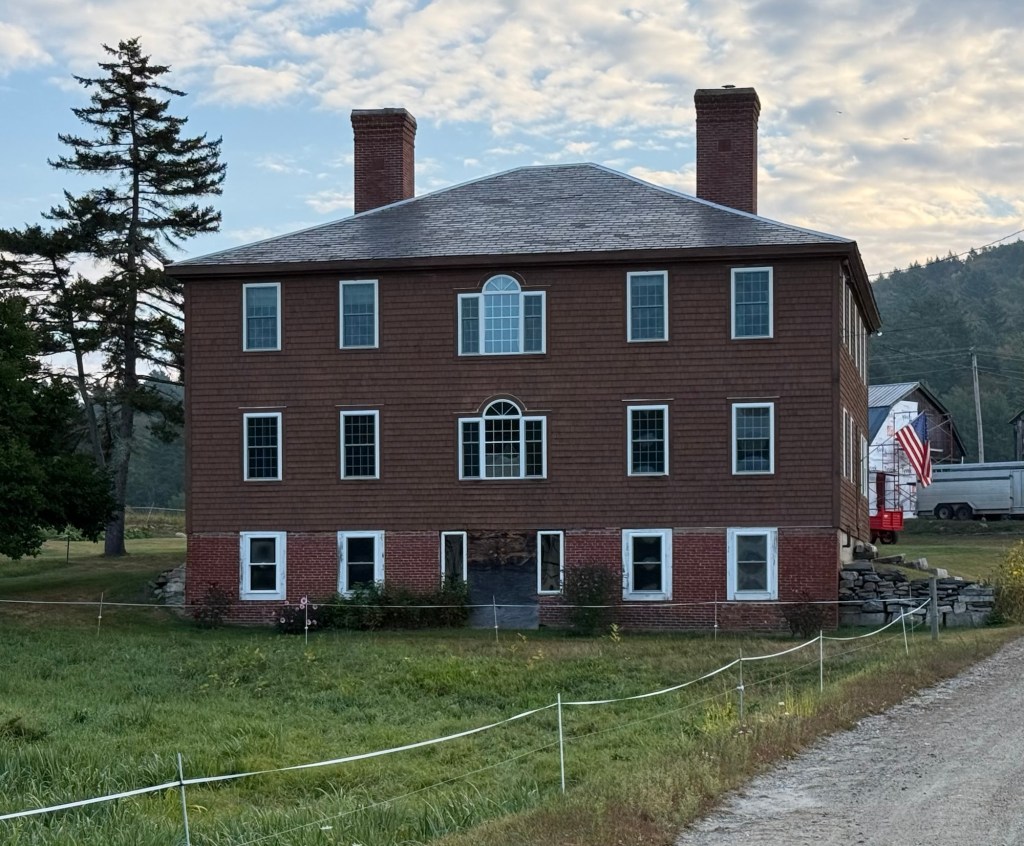
Jabez Sargeant Jr. House // 1797

Deacon Jabez Sargeant (1720-1788) was born in Malden, Massachusetts, and later moved to the newly established town of Chester, Vermont in 1763. He is thought to have been the first settler of European ancestry in the town. Upon the outbreak of the Revolution, he served in Captain Little’s Company in 1778, returning home to Chester after. His son, Jabez Sargeant Jr. built this stately three-story late-Georgian residence in 1797 as a tavern along the Green Mountain Turnpike, a highway connecting Boston and Montreal. The dwelling originally fronted directly on the road, but was moved back sometime in the 19th or 20th centuries. The building boasted a large ballroom on the second floor, likely for community and fraternal organizations, and a tavern in the brick first floor. It is likely that Jabez and his family lived on the third floor. Outside, the property contained a large apple orchard and cider house, providing drinks to weary travellers. Although the tavern is built to a large size, it lacks many of the high-style features often found in large Georgian houses, telling for its time of construction in a sparsely developed area without seasoned builders.

Daniel Heald House // c.1785

Daniel Heald (1739-1833), one of the earliest settlers in the town of New Flamstead (later renamed Chester) Vermont, established his farm on the west side of the upper Williams River. He moved to rural Vermont from Concord, Massachusetts, where he was one of the Patriot soldiers who at the Concord bridge, fought against the British troops while his wife and children who had fled from their home viewed the battle from a neighboring hill. He, with his family, emigrated to Vermont in about 1776 and eventually would serve as town clerk from 1779 to 1799 and as town representative from 1783 to 1797. Around 1785, he built this residence, oldest wood-frame house in North Chester, a two-story, central-chimney house with saltbox roof sloping to the rear. When his son, Amos Heald, was of age, some of the property was deeded to him, where he built a stately Federal style residence that stands across the street to this day. Both of the Heald houses tell the early history of Chester through well-preserved houses.

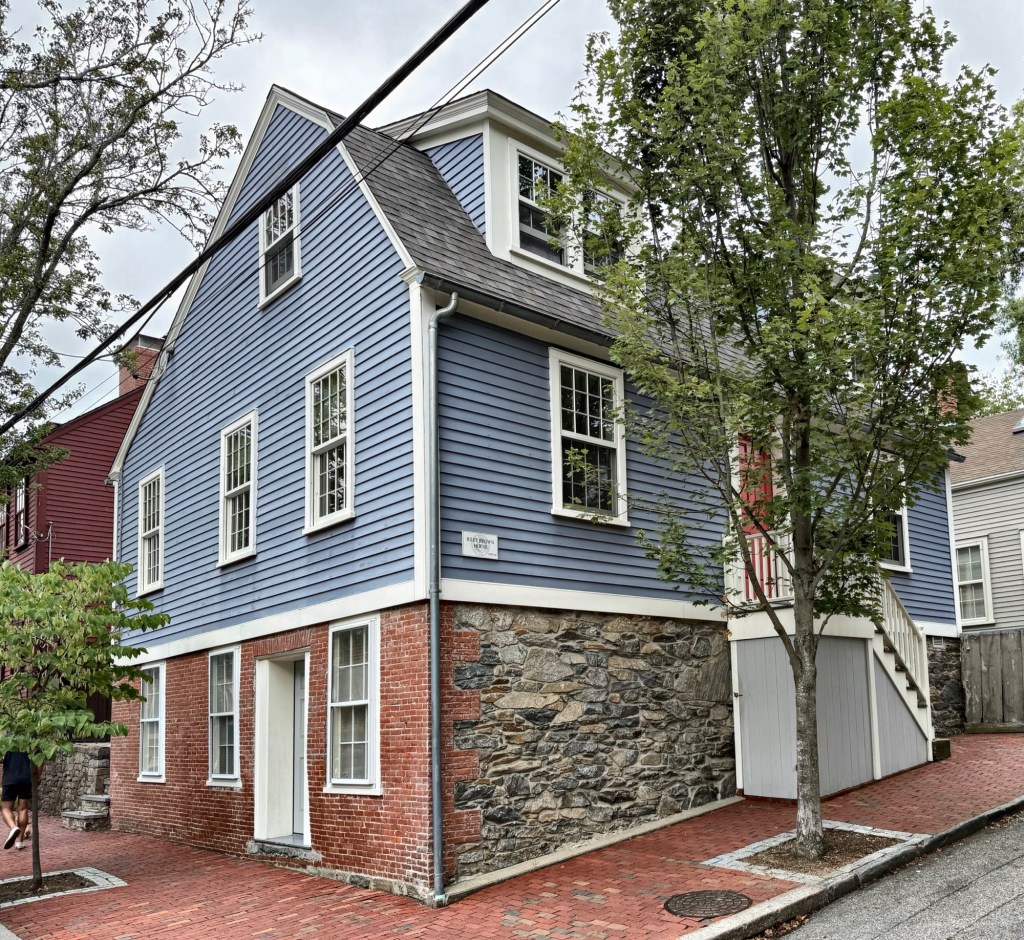
Brown-Crocker House // c.1836

In 1829, Riley Brown, a housewright, purchased a house lot at the corner of Thayer and Transit streets in Providence, and by 1836, built this charming gambrel-roofed cottage, which is one of the most charming in the city. Riley Brown lived in the house next-door at 6 Thayer Street (1829) and on available land, built this 1-1/2-story dwelling on a full-height raised basement on speculation. It is possible that the house could have dated to the 18th century, and was possibly moved to the site from a nearby location, given the distinct gambrel roof and Georgian qualities. The residence here was sold in 1836 to John Crocker, who resided here with his family until his death in 1865. The Brown-Crocker House stands out for its unusually high basement of brick and stone, with a stair ascending up to the central entry and the gentle saltbox roof off the rear. Two shed dormers were likely added in the 20th century to make the house’s second floor more liveable.

Simeon Ingraham House // 1795

Simeon Ingraham (1749-1840), a housewright (house builder) purchased a corner lot on Wickenden Street in the Fox Point area of Providence in 1795, and constructed this absolutely stunning late-Georgian home that has survived centuries of commercialization and Urban Renewal of the surrounding area. In the early decades, Simeon purchased lots nearby and built houses, selling them for profit, and repeating this until his death in 1840. Simeon left no will, and the property was eventually purchased by his eldest son, Solomon, who bought out all of his other heirs for their shares of the property. Solomon allowed his widowed stepmother to reside in the home until her death in 1851. Solomon operated a store nearby, and it was likely he who jacked up the house, adding the brick ground floor for commercial purposes in the 1850s, coinciding with the increased commercialization of Wickenden Street. When the house was raised, the former center entry (now on the second floor) was turned into a window, with the doorway placed in the new brick level. Changes like these showcase how buildings are vessels of history, informing later generations of the layers of history that our cities and towns experience over time.

Tredick House // c.1802

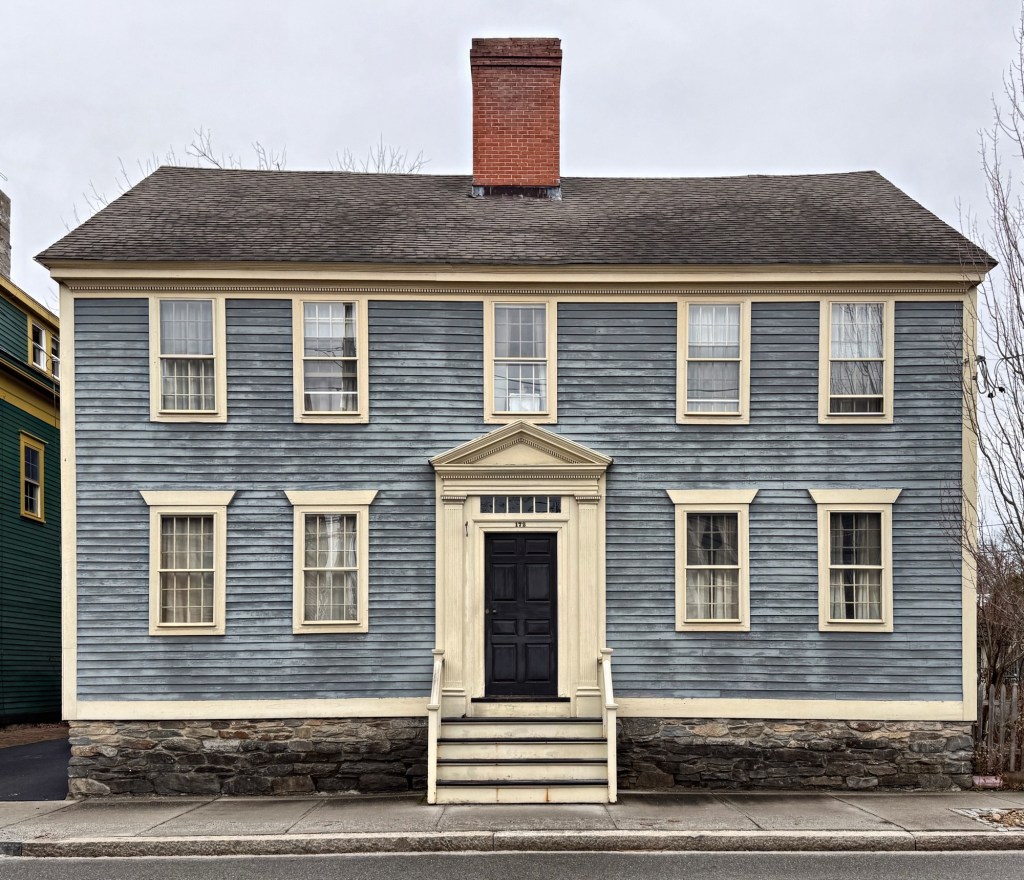
The Tredick House is located at 187 Marcy Street in Portsmouth, New Hampshire and was built in 1802 for Captain Jonathan Martin Tredick (1777-1803) and his new wife, Martha Marshall on land gifted to them by Jonathan’s father, William Tredick. In a tragic shift of fortune, Captain Jonathan Tredick never got to live in his new house as he died at sea, with accounts differing, either from fever or being swept overboard. At the time, Jonathan and Martha had two children, 2 year-old Catherine Marshall Tredick (1801-1822) and newborn Jonathan Marshall Tredick (1802-1875). Martha, a sudden widow at the age of 26 with two children, was aided by her family and that of her late husband, and operated a store nearby to supplement her income until her death at home in 1872, she was 96 and never remarried. The late Georgian style house features a hipped roof with central chimney, pedimented dormers and a pedimented entry and 9-over-six sash windows on the house.

Nelson House // 1797

This residence sits on the historic Elm Street in Georgetown, Massachusetts, and is one of the best late-Georgian style dwellings in the town. The house was built in 1797 for Nathaniel Nelson (1767-1853), a banker who worked in Newburyport, just years after his marriage to Sally Chaplin. Nathaniel descended from Thomas Nelson (1615-1648), who was among the twenty families who had come to the New World in the winter of 1638 with the Puritan cleric Ezekiel Rogers (1590-1660). With Rogers most of these families settled at Rowley, incorporated in 1639 with Georgetown later setting off from Rowley, creating their own town in 1838. Nathaniel and many of his family worked as tanners, preparing the skins of animals into leather, and had shops in the area. Mr. Nelson was such an esteemed member of society, that when the War of 1812 broke out, he was asked to store money and gold from Newburyport in his basement, away from the coast, hiding it from the British forces. After successive ownership, the residence was purchased in 1936 by Everett A. and Mary A. Spaulding. A Georgetown native, Everett Augustus Spaulding made colonial revival furniture under the corporate name Spaulding Colonial Reproductions. The residence remains in spectacular condition, with its large central chimney, symmetrical façade, portico, and hipped roof punctuated by pedimented dormers.