Located on stunning West Broadway in Bangor, Maine, the Smith-Miller House stands out as a beautiful blending of the Shingle and Queen Anne styles. Built in 1893 from the designs of Connecticut architectural firm Cook, Hapgood, and Company, the home was featured in The American Architect and Building News journal for its design success. The home is clad with continuous cedar shingle siding, with a prominent corner tower, wrap-around porch, and porte-cochere, all together provide complexity and intrigue on the street of large homes. What do you think of this home?
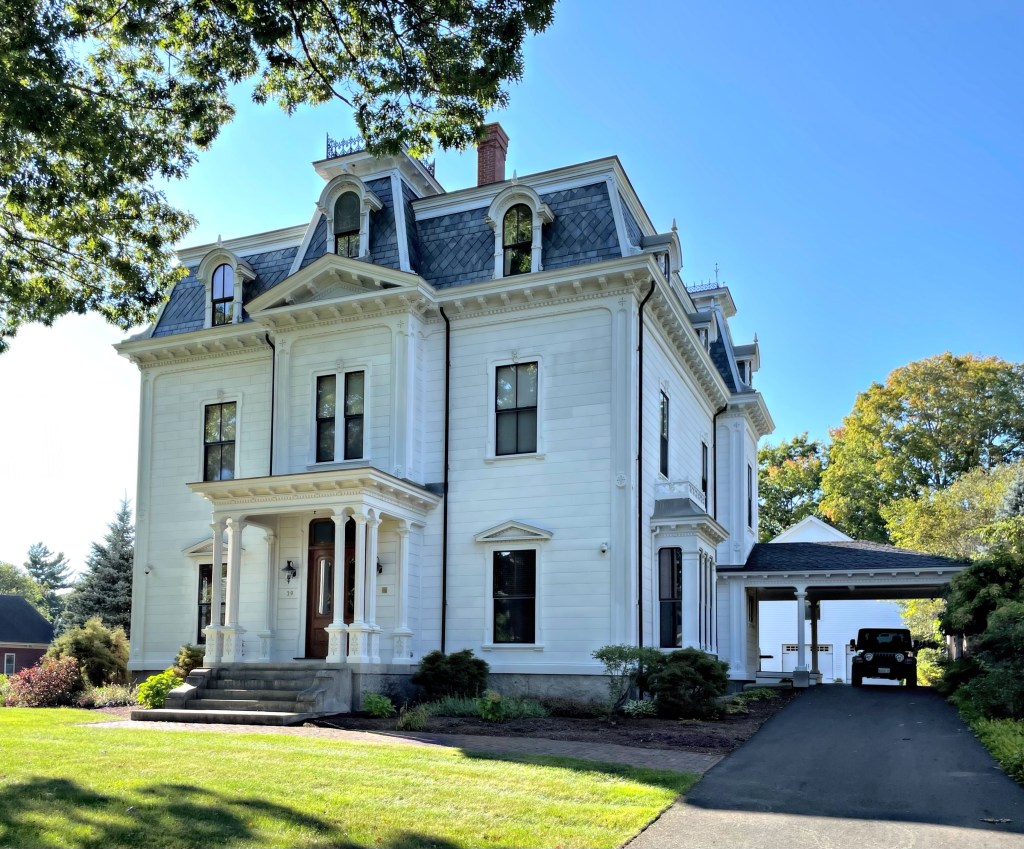
Located next to the famed Stephen King House in Bangor (last post), this stunning Second Empire house was purchased by Stephen and Tabitha King in 2004, creating a small historic house campus in one of the nicest neighborhoods of the city. The Brown Mansion was constructed in the early 1870s for Charles P. Brown, an attorney who became involved in land speculation in the west. During and immediately following the Civil War, Brown purchased large land holdings in the “western frontier” in Minnesota and farther west, and re-sold the land years later at a huge profit when development began. He was thought to be one of the richest men in Maine upon his death in 1892, but it was discovered that many land holdings possibly vanished (or he lied about having much more land to his family), leaving his executors of his will very upset. The man who was estimated of having a net-worth of over $1,000,000 in 1892 (more than $31,000,000 in dollars today), left just $16,000, split between his two daughters, leaving nothing to his sister, whom he had been living with for the final two years in his life.
Located a short walk from the Stephen King House in Bangor, this stunning Second Empire style house shines just as bright! This house was built in 1866 for Joseph C. White, a dry goods merchant in town. Just years after it was completed, he sold the mansion, possibly due to upkeep. The two-story mansard-roof house is clad in wood siding, scored to resemble stone rustication, a method to make the home appear more expensive. The corner entrance with later enclosed second-floor porch, massive brackets, and scrolled dormers add a lot of Victorian flair to the home. Would you move in here?
Stephen King, the world-renowned author of some of the most popular horror novels, was born in Maine, and has used the state as the setting for many of his stories. From blood-soaked Carrie, to the haunted hallways in The Shining, to the evil clown Pennywise in “It”, Stephen King has long been one of the leaders in horror, terrifying millions with his books and film adaptations. Instead of living in a larger metropolitan area, he has long resided in Bangor, Maine, in one of the most visually striking homes in the state. The home was built in 1854 for William Arnold, who operated prosperous livery stables in town. The home is a rare example of an Italianate Villa in the state. While Stephen King now spends most of his time at his home in Florida, his Bangor mansion with its iconic wrought-iron gate ornamented with spiders and webs, bat-winged creatures, and a three-headed reptile are much more fitting of the horror author’s essence.
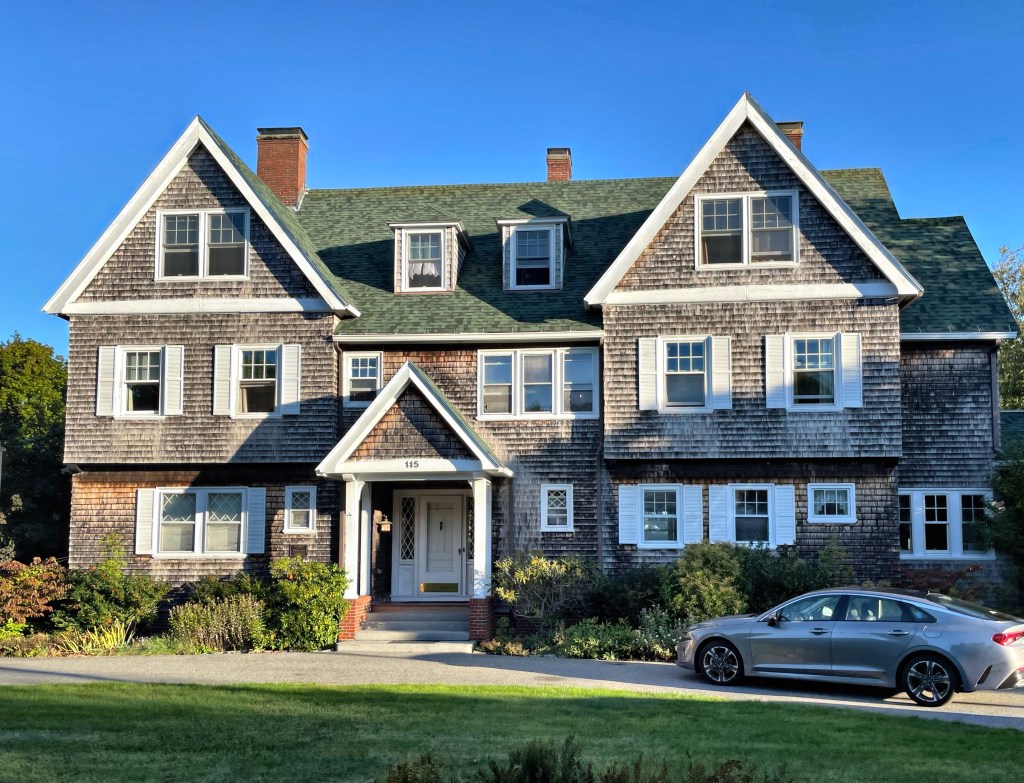
Sunset Cottage was designed by local architect Milton Stratton and cost $20,000. The cottage was constructed for New Yorker Gertrude Stevens Rice, a decade after the death of her husband William. She and her husband formerly resided at The Tides, a home nearby, but she decided to construct a new home to summer at with her sister. The shingled home originally had half-timbering in the gables, but other than that, looks almost identical to when it was built 110 years ago!
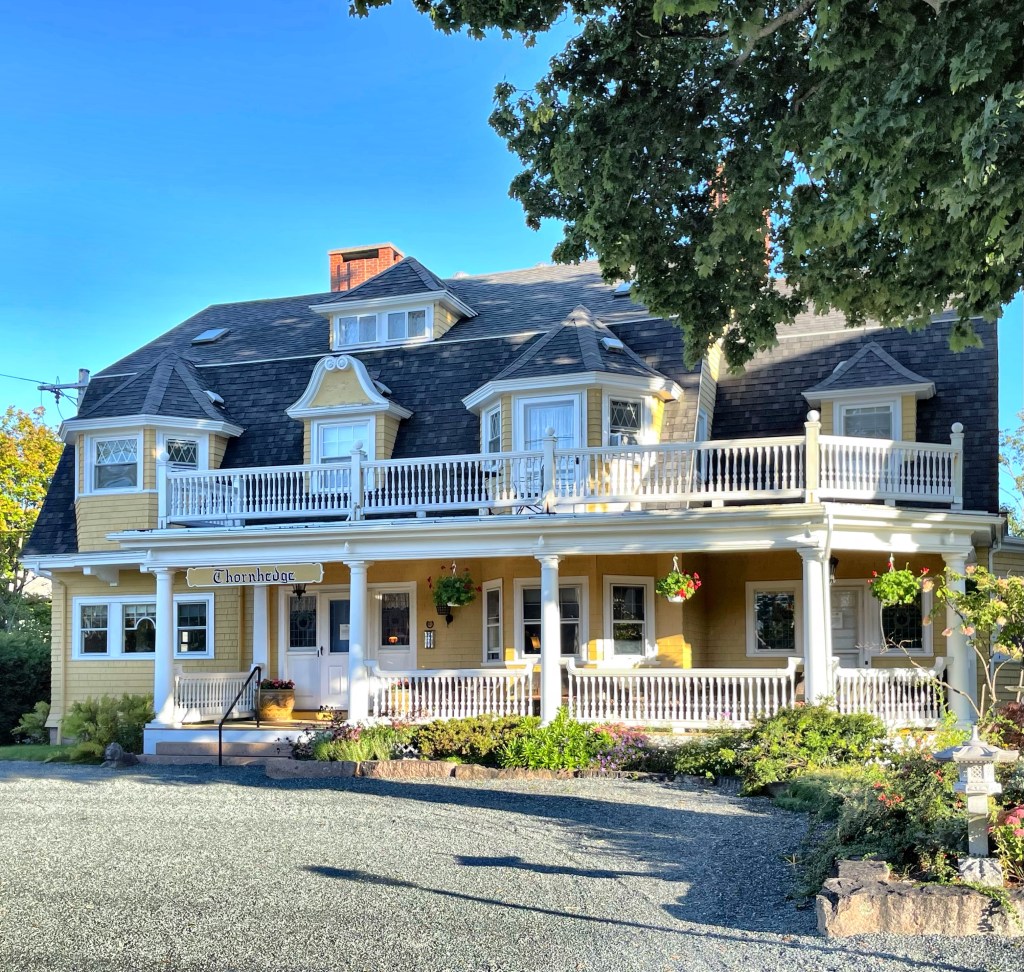
Located next door to “The Poplars” (last post), another summer cottage Thornhedge, stands out for its architectural splendor and great state of preservation. Similar to “The Poplars”, the home was built in 1900 for Lewis A. Roberts, a retired book publisher from Boston. Roberts ran the publishing house with his brothers, and they published work by authors including Emily Dickinson, Fyodor Dostoyevsky and George Sand, the first American edition of Treasure Island by Robert Louis Stevenson, and had their greatest commercial success with Little Women by Louisa May Alcott. The business was purchased by Little and Brown Publishing in 1898. Lewis Roberts died in 1901, only a year after completing Thornhedge, and the house came under the care of his son, Lewis Niles Roberts. Mr. Roberts kept the house as a summer residence until 1920, then sold it to the family of William F. Frick, a prominent judge from Baltimore. The home became an inn by the 1970s. Thornhedge is a Queen Anne style cottage which was originally organized with the first and second floor serving as the living quarters and the top and bottom floors for the servants. The laundry, servants dining hall, and kitchen were out of sight in the finished basement, with a dumb-waiter to bring hot food to the butler’s pantry. The third floor was the servants’ living quarters.
It’s Tudor Tuesday so I have to share one of the great Tudor Revival cottages in Bar Harbor, Maine, “The Poplars” (because any good summer cottage needs a name)! The cottage was built in 1899-1900 for Lewis A. Roberts, a retired book publisher from Boston, who purchased the lot which contained a summer cottage and stable, razing both. He hired the local firm of Goddard & Hunt, an architect/builder duo who worked on many projects in the village. The Tudor Revival cottage was only occupied in the summer months by Roberts and his family as the home was not winterized at the time. The cottage was built of wood and rough stucco work with rough timber trimmings all hallmarks of the Tudor style. The home was later known as the Stratford House, and became an inn until just a couple years ago. It was recently listed for sale and has 13 bedrooms and 13 bathrooms!
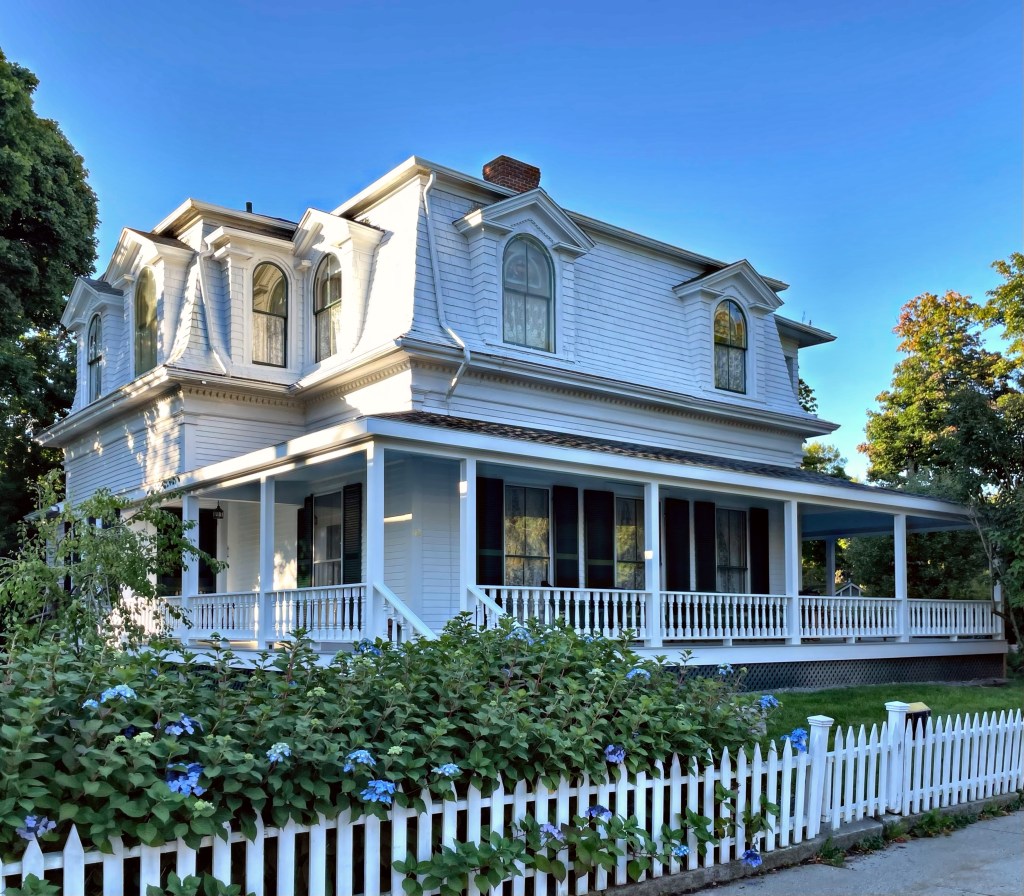
Built for an A. Veazie, this mini-mansard cottage stands out as the oldest home on Bar Harbor Maine’s beautiful West Street. The 1871 Second Empire style home was located elsewhere in the village, but moved to the current site in 1886 by new summer resident, William Sterling. The cottage was modified in 1916 by Maine Architect Fred Savage for William and his family. The stunning windows inset into the mansard roof are especially noteworthy.
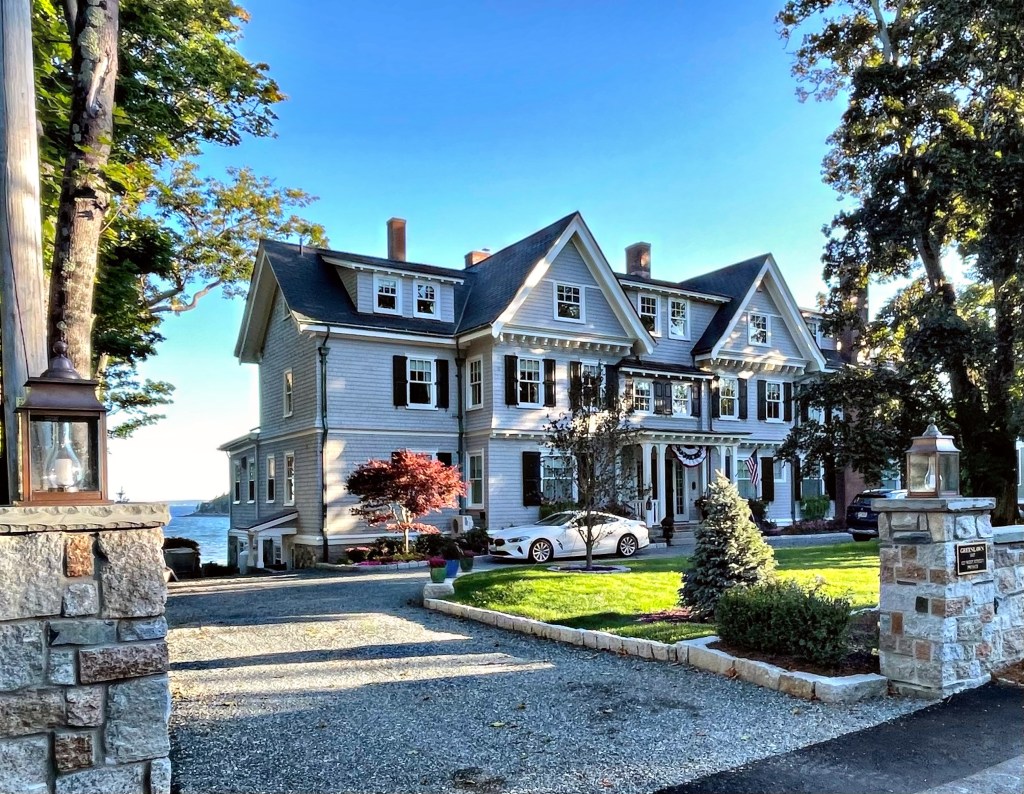
West Street in Bar Harbor was laid out in 1886, and developers laid out house lots on both sides, with larger, more expensive land right on the water. One of the earliest homes built on the street is Greenlawn, constructed in 1887 for William Rice, an industrialist who co-founded Rice & Hutchins, a shoe manufacturing company with main offices in Boston. The architectural firm of Rotch and Tilden, comprised of partners Arthur Rotch and George Thomas Tilden. Both had studied at the Massachusetts Institute of Technology and at École des Beaux-Arts in Paris. Both had worked at the architectural firm of Ware and Van Brunt, and would be best known for their Gilded age mansions in New England. By 1896, the cottage was owned by William L. Green, which is likely when the cottage’s name “Greenlawn” stuck. The house recently sold for $4.25 Million and the interiors are gorgeous!
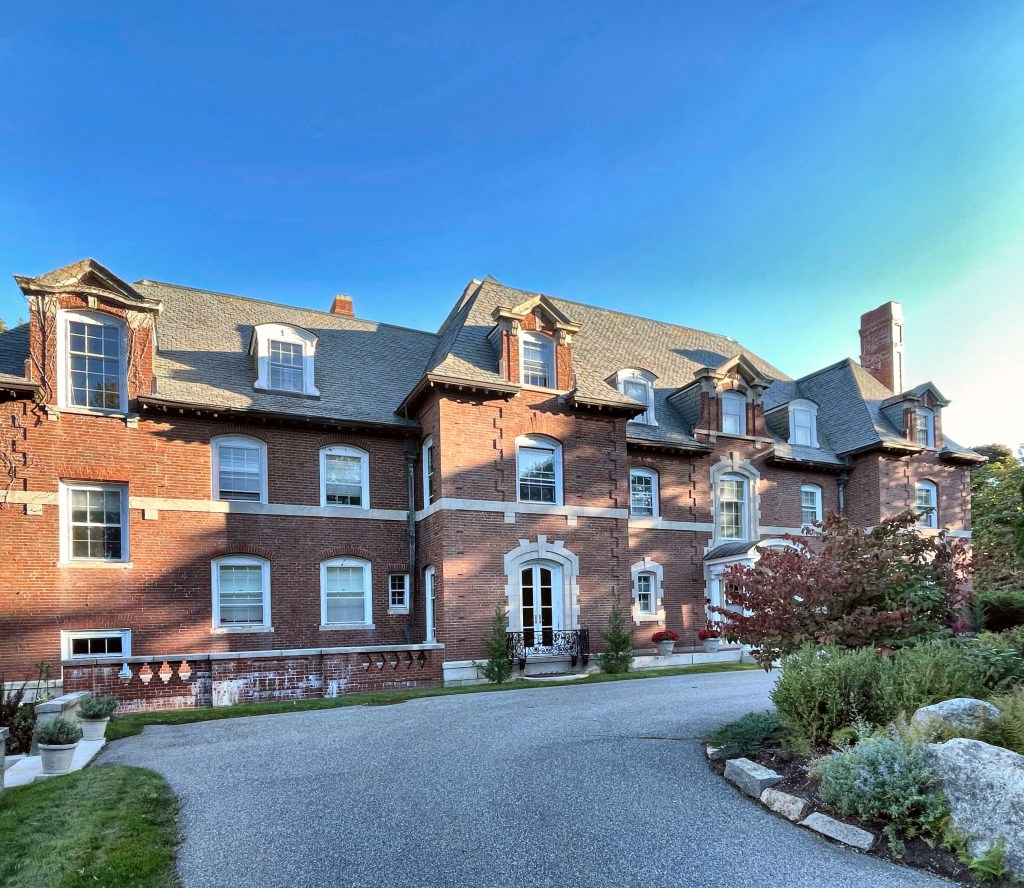
“La Rochelle”, one of the many beautiful summer “cottages” in Bar Harbor, Maine, sits on West Street, a well-preserved stretch of mansions that showcase Gilded Age wealth in the town. The cottage dates back to the 1902-3, when George Sullivan Bowdoin, great-grandson of Alexander Hamilton, and partner at J.P. Morgan, and his wife, Julia Irving Grinnell Bowdoin, a great niece of Washington Irving) commissioned the Boston architectural firm of Andrews, Jacques & Rantoul to design a cottage for them. They hoped to spend their summers away from New York, where they could rub elbows with other wealthy and well-connected summer residents in Bar Harbor. The French Renaissance style cottage, known as La Rochelle, became one of the first Bar Harbor mansions constructed of brick. The forty-one room, 13,000 square foot cottage was built with twelve bedrooms and nine full-bathrooms on two acres of land, which backs up to the Mount Desert Narrows and harbor. The name La Rochelle comes from La Rochelle, a seaport in Nouvelle, Aquitaine, France, where George’s ancestors lived before settling in present-day Maine (later moving to Boston). In the 1940s, Tristram C. Colket of Philadelphia and his wife (the former Ethel Dorrance, daughter of John T. Dorrance, the Campbell’s Soup king) acquired La Rochelle. In 1972, La Rochelle’s owners, the Colket family, donated it to The Maine Seacoast Mission, who then sold it in 2019 to the Bar Harbor Historical Society.




 Buildings of New England