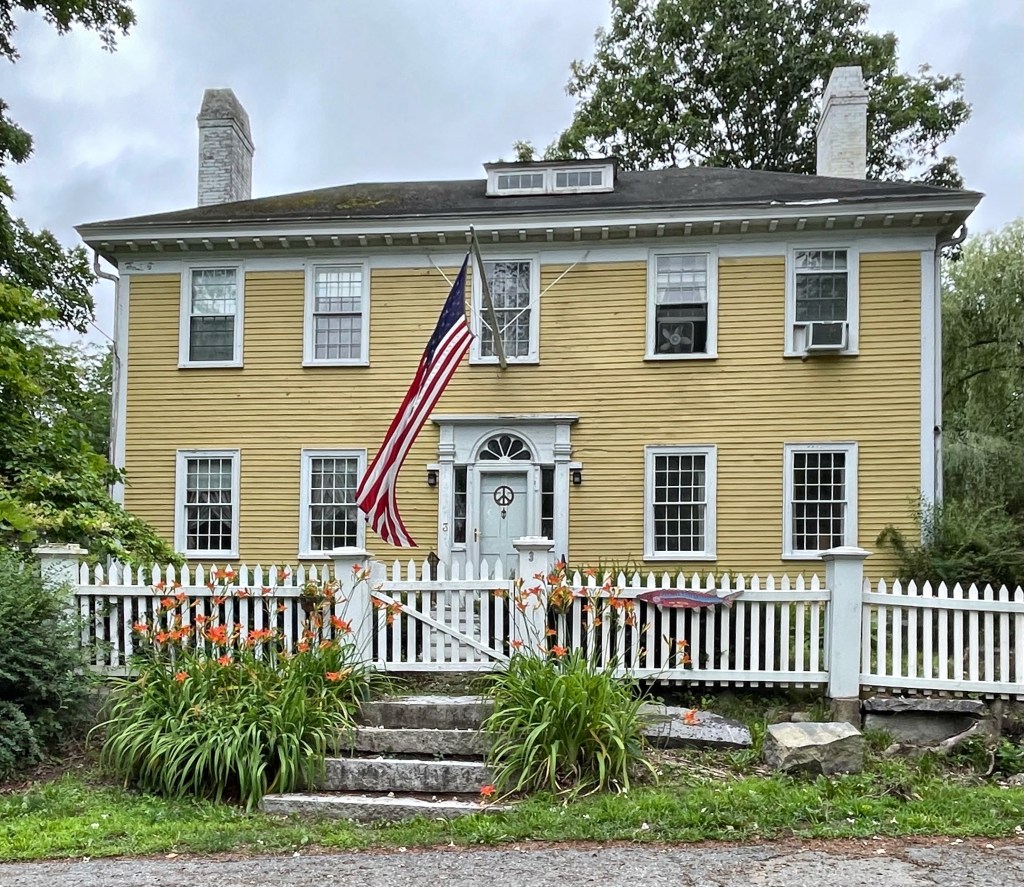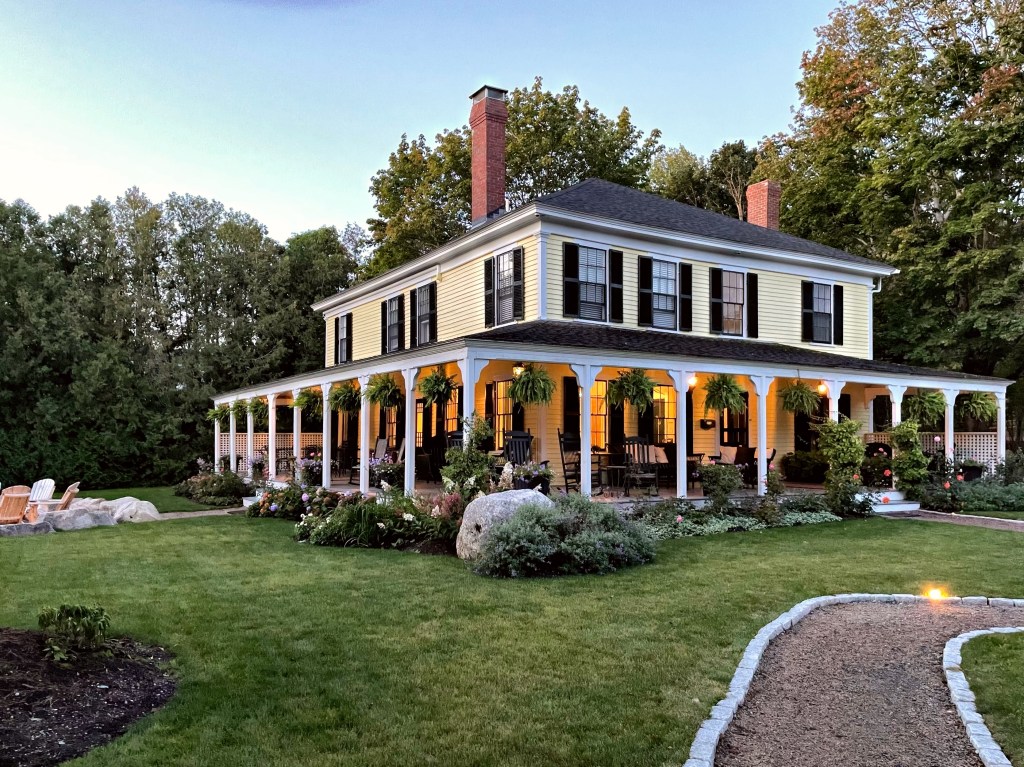
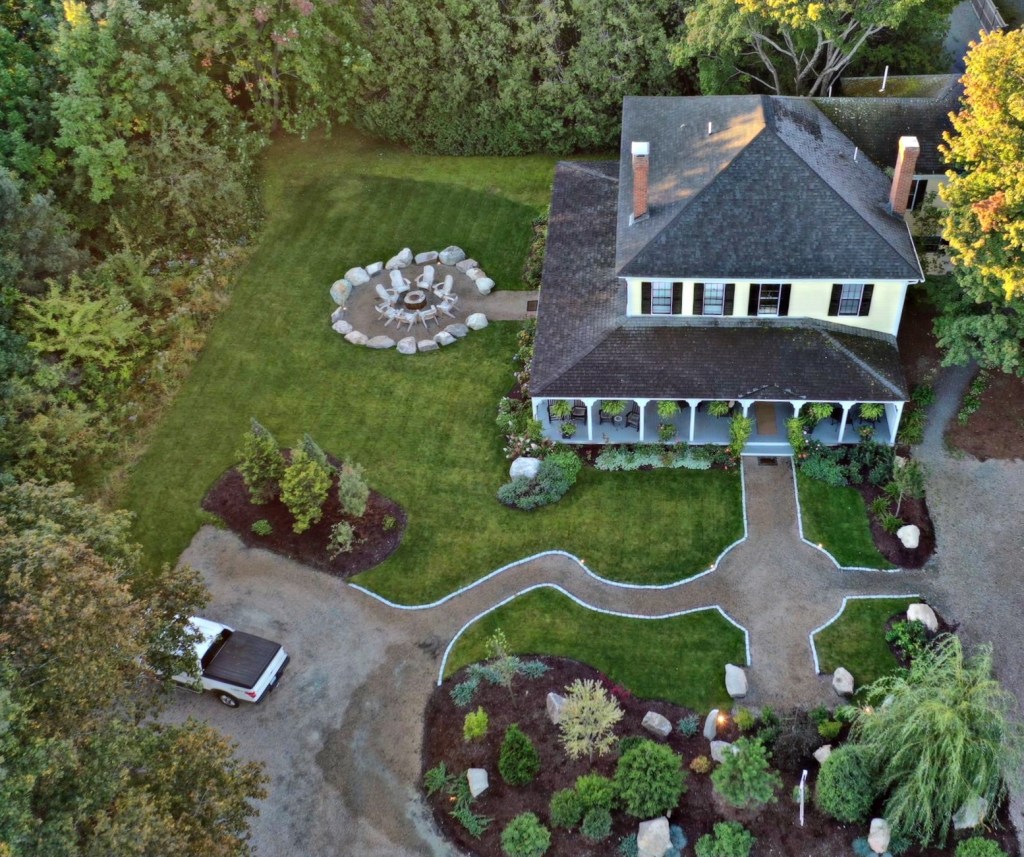
Yellow House Inn // c.1880

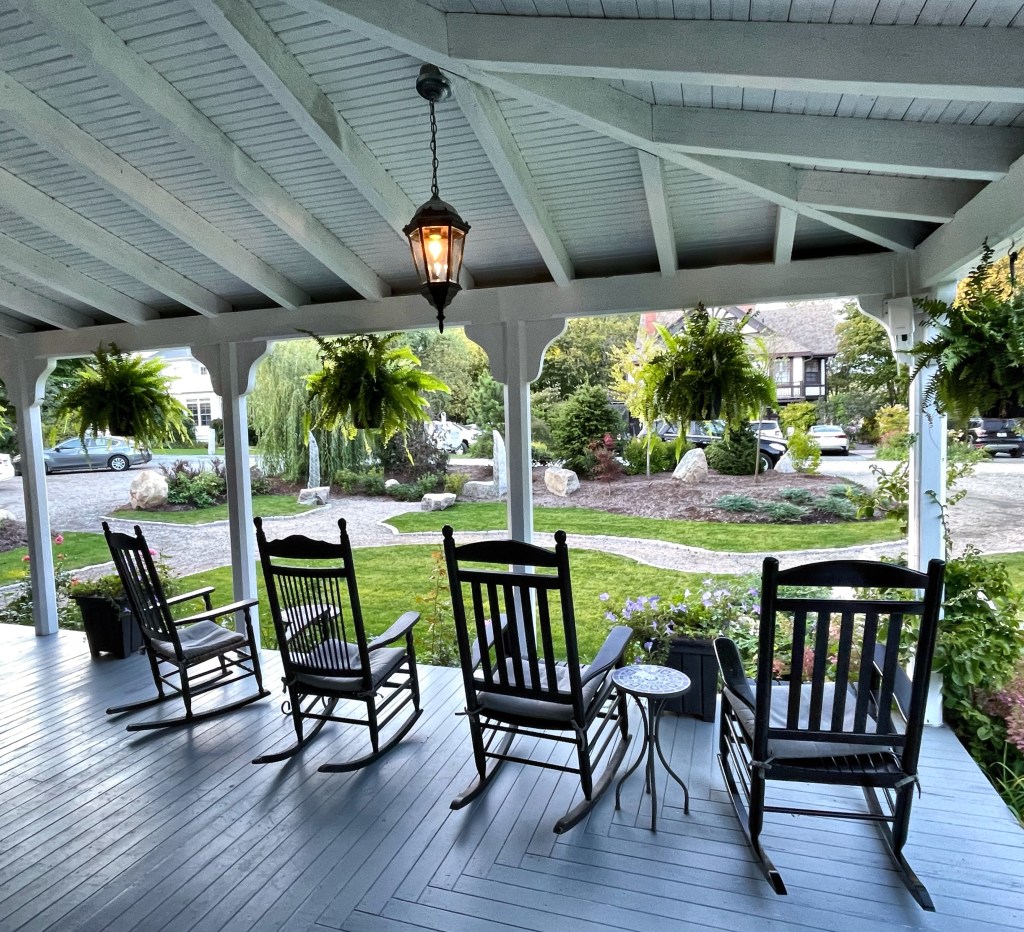
The Yellow House in Bar Harbor is one of the most stunning summer cottages in town, and luckily for us, is an inn! The cottage sits on a sleepy road just off Main Street, just steps from the rugged Mount Desert Island coastline on one side and busy restaurants, shopping, and bars on the other side. The cottage appears to have been built in the late 19th century from deed research and was acquired by socialite Ms. Sarah Parker Torrey Linzee, of Boston by 1886. Sarah married Thomas Linzee, a treasurer of a mill in Lowell, in 1855 and engaged in upper-class society together in Boston until his death in 1863. His wealth went to Sarah, who within a year of his death, purchased a rowhouse in Boston’s newly established Back Bay neighborhood. Her sister, Susan and her husband John Revere (the grandson of the American Patriot Paul Revere), had a matching home built nextdoor in Boston. Like any good socialite, Sarah Linzee desired a summer cottage in desirable Bar Harbor, Maine, to escape the woes of city life for clean air and large parties. Sarah and her sister Susan purchased this cottage, painting it yellow, and the name “Yellow House” stuck. The home was purchased by Leonard Opdyke and remained in the family for generations. By the second half of the 20th century, it became an inn, a use it remains as to this day. The old cottage features the finest wrap-around porch I have seen, large rooms, and original detailing inside and out. For anyone thinking about visiting Acadia National Park, I HIGHLY recommend checking in here to get the true Bar Harbor vibe!
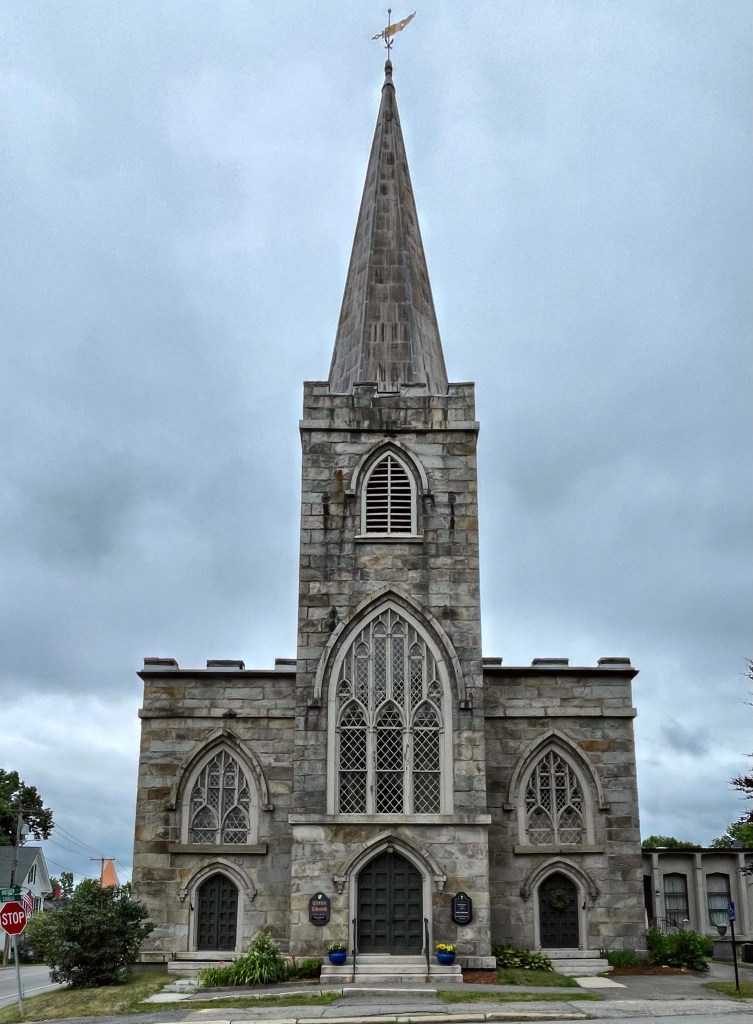
Christ Episcopal Church, Gardiner // 1820

The oldest known example of ecclesiastical Gothic Revival architecture in New England is surprisingly located right in Gardiner, Maine, the Christ Episcopal Church. The Episcopal Church in Gardiner was organized in 1772 by Sylvester Gardiner, a major landowner for whom the city is named as the town’s main church. Two more vernacular buildings were constructed as houses of worship until a new, fireproof structure was desired. Built in 1820, the stone church was designed by the Reverend Samuel Farmer Jarvis, who was likely heavily inspired by the stone churches found in England. The church has massive lancet Gothic windows with tracery, that in the tower considerably larger.

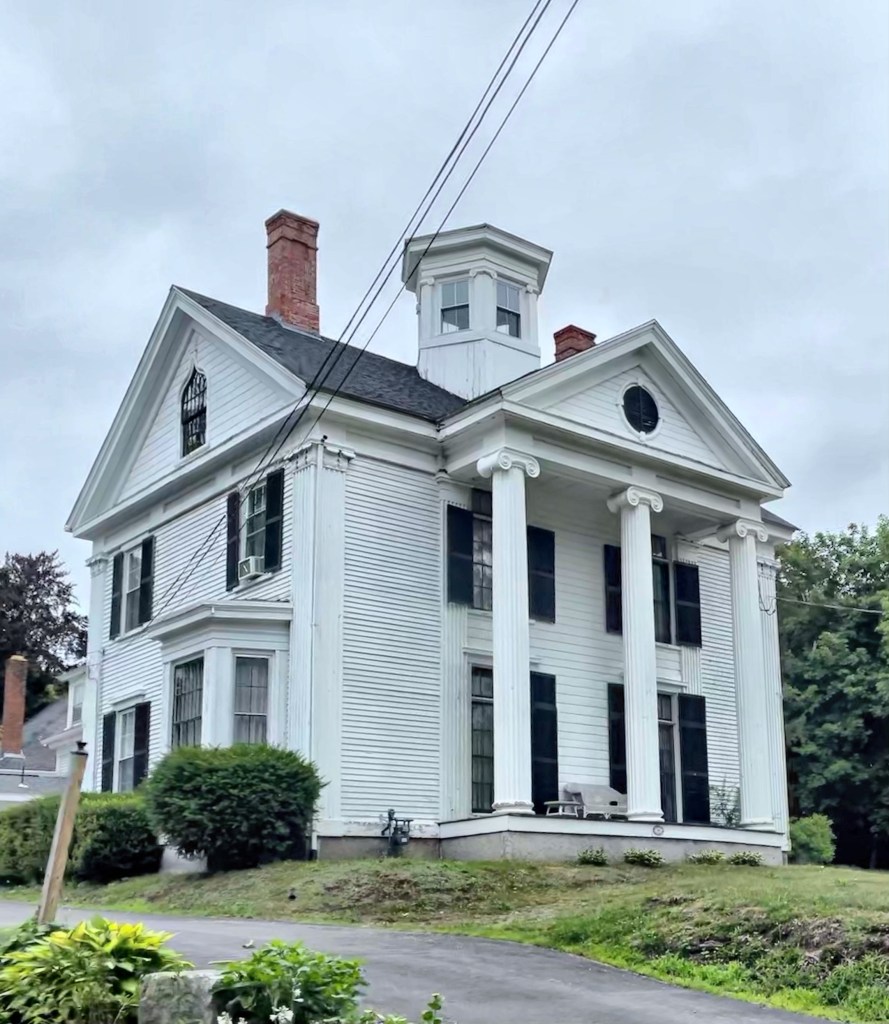
Mitchell-Patten House // c.1840

One of the most stunning examples of Greek Revival architecture in Gardiner, Maine, is the Mitchell-Patten House. The home was constructed in the mid-1840s for John S. Mitchell (1804-1891) head of the firm of Mitchell, Wilson and Co., who were traders on the Kennebec river, in lumber and other goods. The home was likely built not long after John’s wife, Philenia Sewall Mitchell died during childbirth in 1837 to the couple’s son, who died at just two years old himself. After the death of his wife and only son, John met Mary and they married, moving into this home. Together, they had four children. Together, they had three sons, but like with his first marriage, tragedy wasn’t far behind. Their first son was stillborn, their son William died at age 27, and their third son, Egbert died in his first year. The family home was willed to the couple’s only living child, Susan, after her marriage to husband Freeman Patten. Freeman was a successful businessman in town and worked as a bank director, and later served as President of the Board of Trade and as Mayor of Gardiner 1899-1900.

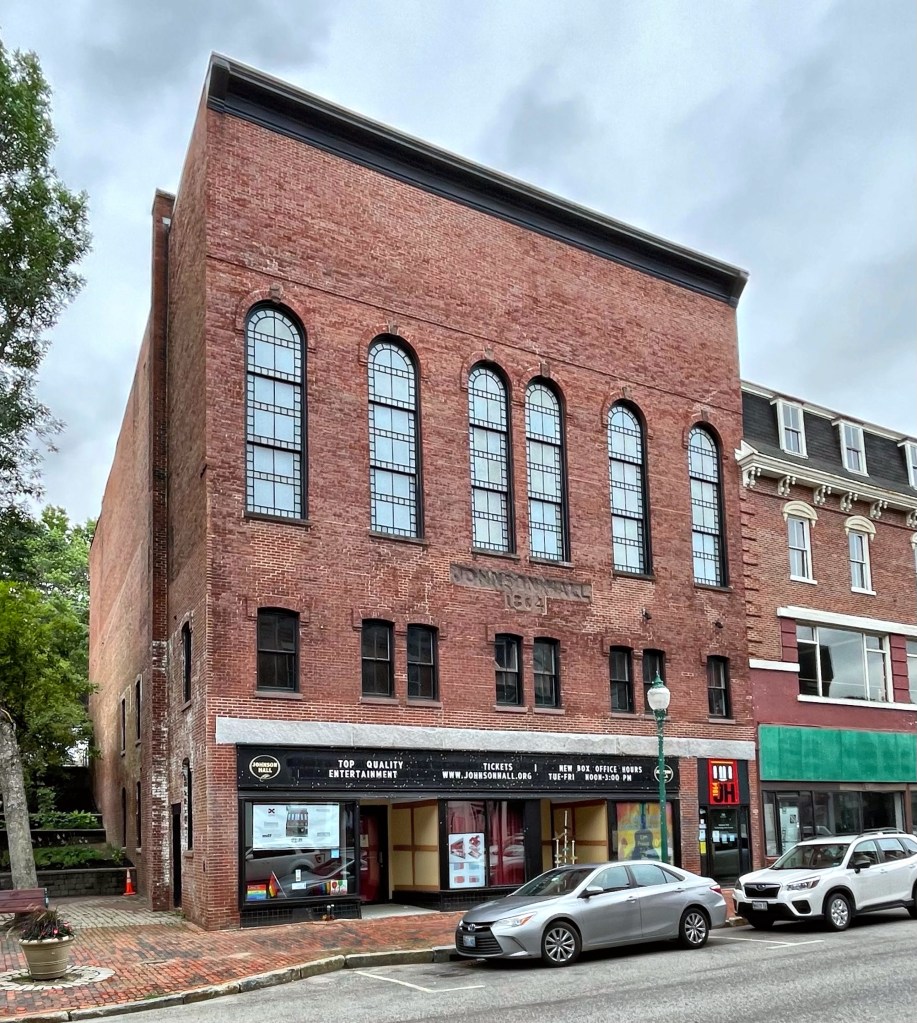
Johnson Hall // 1864

After heading west to seek his fortune in the California Gold Rush, Gardiner resident Benjamin Johnson, moved back to his hometown and immediately spent money to buy one of the finest hotels in town. He renamed the hotel Johnson House and served as the manager of the hotel through the American Civil War. The hotel included a two-story stable to the side which allowed visitors to keep their horses and carriages nearby. In December 1864, he completed a two-story vertical addition which added a large hall with gallery above for events and shows, retaining the stable on the ground floor. The demarcation of the two sections is evident from the windows on the main facade and the difference in brick. The hall opened to great fanfare, and with Johnson as manager, hundreds of plays, musicians, and events were held in the event space, which made Gardiner a major hub for socio-cultural life in Kennebec County. In the 1880s, he added a new wood floor upstairs which allowed the hall to be used for rollerskating, a very popular update. Not long after, the stable was converted to commercial space at the ground floor, and upstairs an opera hall. Benjamin died in 1903, and his widow, Henrietta took over, and kept-up with the times, changing the upstairs hall to a moving pictures and silent film theatre. The theatre closed in the mid-20th century, like so many other small local theaters. Good news though! A group of locals is working to fully restore all three floors of Johnson Hall, creating a new state-of-the-art performing arts theater, while maintaining the architectural character of the building.

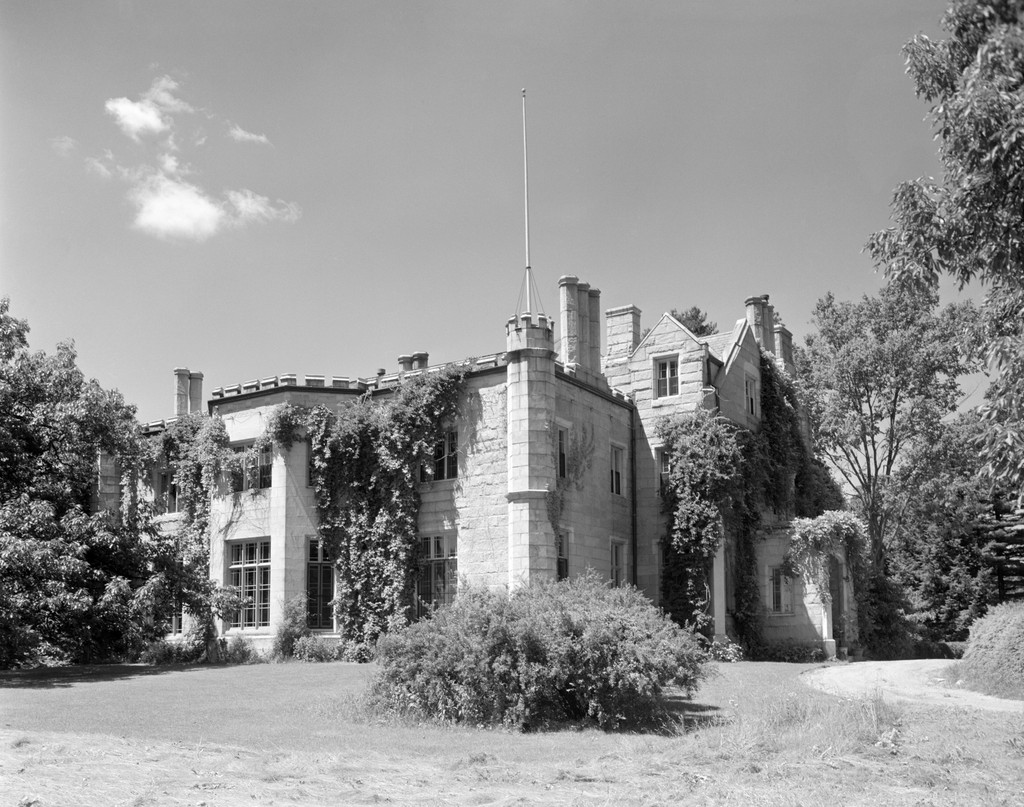
Oaklands // 1835

A massive amount of land on the eastern edge of the Kennebec River was acquired by Sylvester Gardiner in the 18th century, but confiscated by the state during the American Revolutionary War (because Gardiner was a Loyalist who fled). Years later, the land was recovered by Gardiner’s grandson and heir, Robert Hallowell Gardiner. Upon coming to age, Robert Hallowell Gardiner returned to Maine in 1803, after graduating from Harvard, ready to straighten out and manage the holdings willed to him by his late grandfather Dr. Sylvester Gardiner, the founder of Gardiner, Maine. He came with no inclinations or training in business, but his cousin Charles Vaughan in Hallowell helped in steer him on the right course. Starting at the age of 25, Robert Hallowell Gardiner embarked on the task of developing an entire city, Gardiner, but with profit and investment in mind over the next sixty-one years. His business enterprises included: six dams, saw and gristmills, shipyards, foundries, a brick mill, broom making industries, furniture manufacture, paper making and the ice-harvesting business. He married Emma Jane Tudor of Boston (who he likely met during his time at Harvard, in 1805. They soon after built a home for their family and welcomed friends and family to stay there on the massive property. The first Oaklands estate burned in 1834 and the present Gothic Revival mansion on the site was built in 1835-37. Designed by English-born architect Richard Upjohn, Oaklands typifies an English country manor house and features a rectangular hip roof, hooded window moldings, turrets and elaborate stonework. Oaklands is among the first and finest 19th-century rural villas in the State of Maine and is among the most significant in the country. The home remains on over 310-acres of sprawling land which looks out over the Kennebec River, and is owned by the Gardiner family to this day!

Reverend Hanson House // 1853

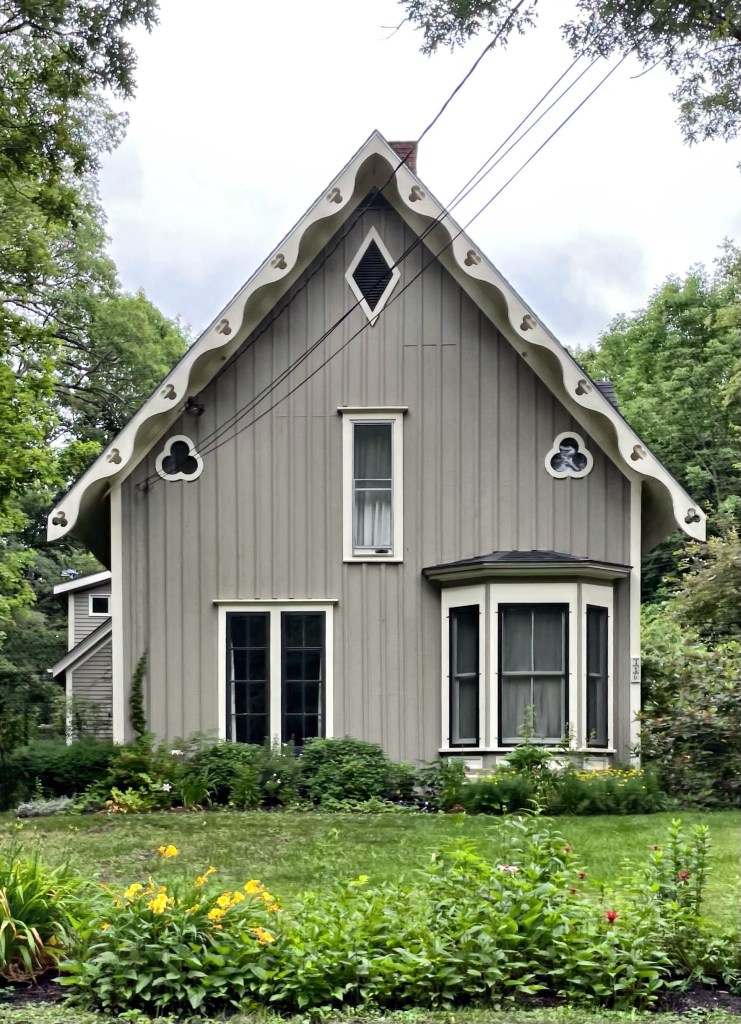
This Carpenter Gothic house in Gardiner, Maine, was built in 1853 by Reverend J.W. Hanson, author of the 1852 History of Gardiner, Pittston and West Gardiner and the second minister (1850-54) of the Universalist Church (last post), after its organization in 1843. Hanson was likely inspired by the design of his church when having his own home built, as he followed the Gothic mode. His house features board-and-batten siding, bargeboards, and trefoil windows and carvings in the said bargeboards. Reverend Hanson lived in the home until 1868 when he moved to Dubuque, Iowa. The home is very well preserved and one of the best examples of the Carpenter Gothic style in the state.

Gardiner Universalist Church // 1843

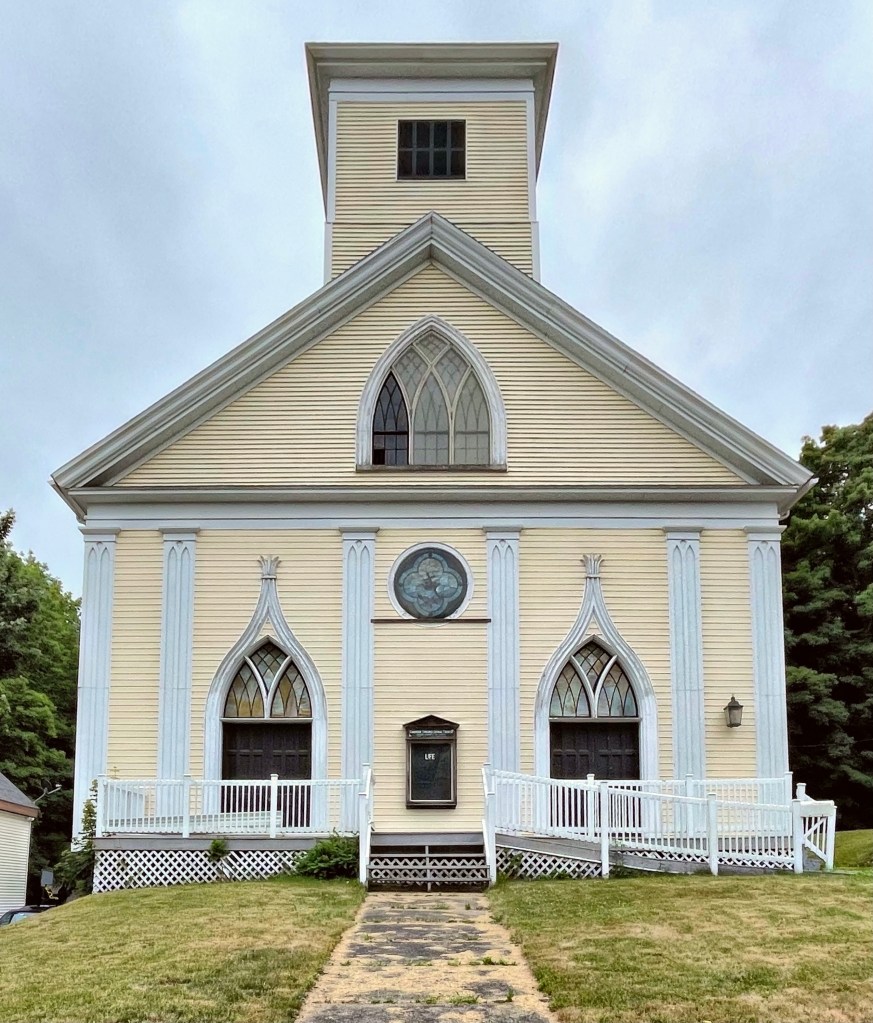
This stunning Gothic Revival church was built in 1843, on the site of the blockhouse, erected 80 years prior for the settlers of the area from native attack. In the 17th and 18th centuries, many rural parts of New England had blockhouses erected to allow the settlers a defensive fort from attack. The blockhouses were often garrisoned wooden structures with small windows on all sides to allow for gunfire to attackers below. The structure would protect those inside from arrows and melee weapons. This building however, was constructed later for the Universalists, who believed in “universal salvation,” who had been meeting since 1821 in a schoolhouse beside the town common. The church, in its original state with its steeple and clock, was an extremely sophisticated example in wood of the Gothic Revival style with its pinnacles, lancet windows and pilasters. Sadly, the steeple and clock were removed in the early 1920’s for safety reasons as the structure could not support it without significant engineering. The church and congregation changed to the United Church of Christ-Congregational denomination in 1964. After that, the building was occupied by a brewery (believe it or not), before being reverted back to a church by the current congregation.

Christian Science Church, Gardiner // 1905

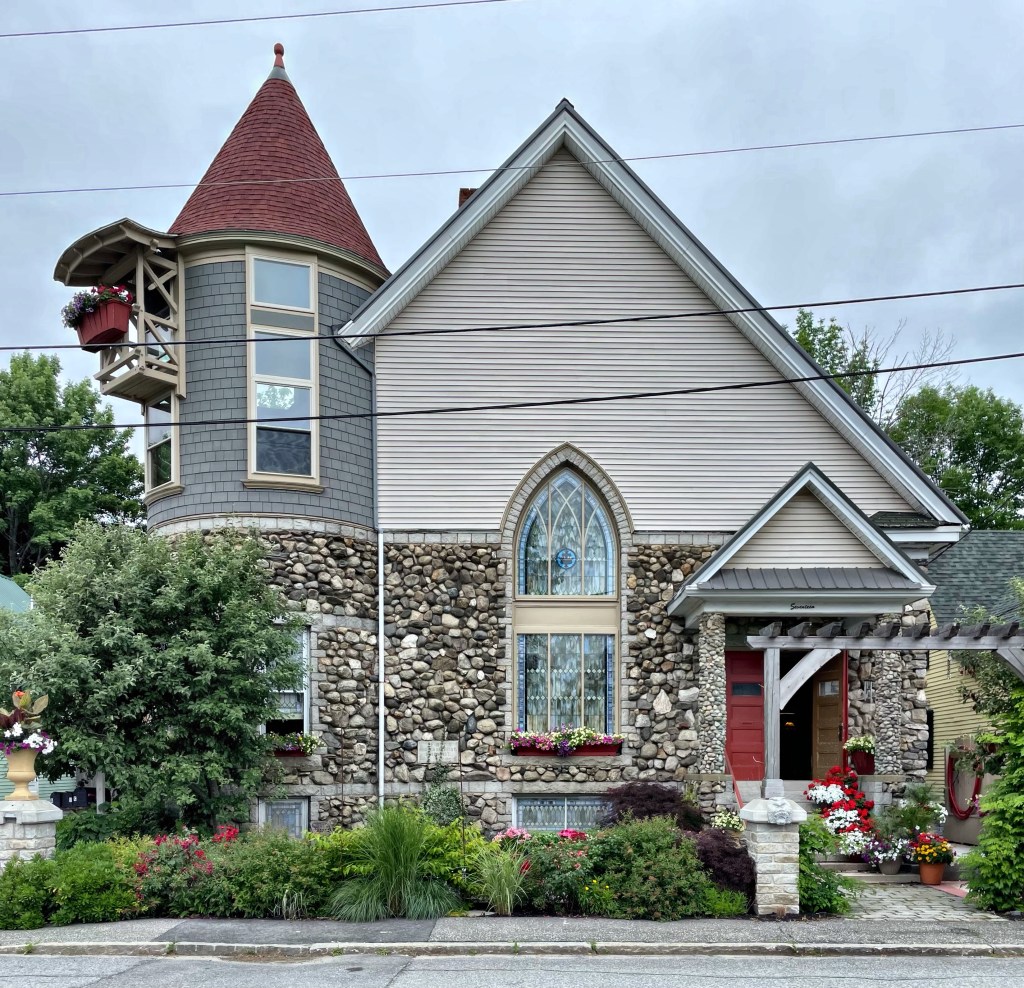
The first purpose-built Church of Christ, Scientist church in Maine is this turn-of-the-century edifice constructed in 1905 in Gardiner. Organized in 1897, this Christian Science Society of Gardiner met for several years in members’ homes and public places nearby until Palmer Noyes and his wife Caroline funded the new building. Caroline and Palmer helped establish the first such church in Chicago, after the couple witnessing a ‘healing’ and then heard Mrs. Mary Baker Eddy lecture in 1882. This church in Gardiner was seemingly designed by Caroline, who was likely inspired by architectural influences on the churches in town, from Gothic style lancet windows, to the shingle style facades. The building was eventually converted to a development center for the disabled, and is now known as “The Stone Turret”, a bed & breakfast, with amazing stained glass windows!

Gardiner Public Library // 1881

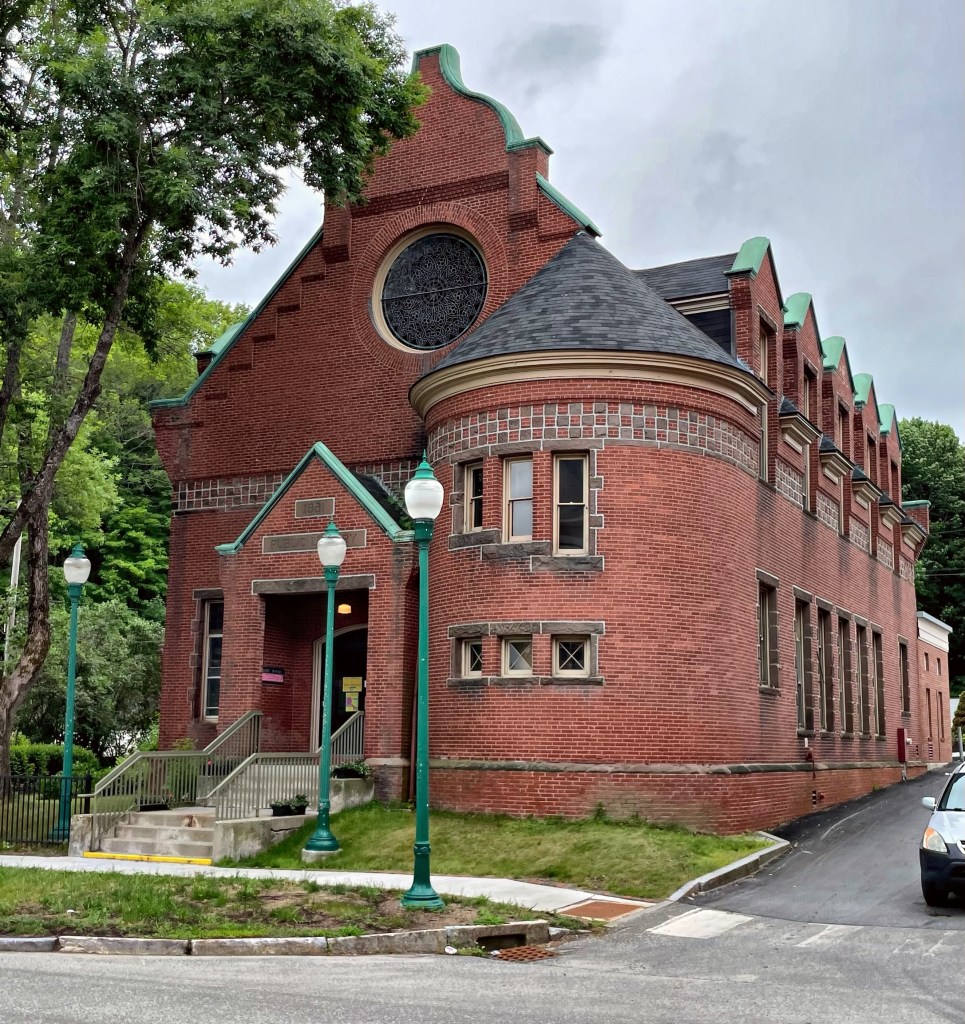
Possibly my favorite building type, the local town library buildings of New England, always amaze me with their small scale, yet architectural variety and intrigue. The library in Gardiner, Maine is no exception! This library building was constructed in 1881 from plans by Henry Richards, who was actually born in town in 1848. Henry graduated from Harvard in 1869, and soon after, took a post-graduate course in architecture at MIT. After completing schooling, he was a draftsman with Ware and Van Brunt. Soon after, he was a draftsman with Peabody and Stearns from 1872 to 1876, and then practiced architecture briefly on his own in Boston. During this time he married Laura Elizabeth Howe, daughter of Samuel Gridley and Julia Ward Howe. They moved to Gardiner, Maine and settled in a Federal house (featured previously), to learn more about Laura Richards and their house, check out the last post. Henry lived to be 100 years old! The library building is Queen Anne and Romanesque in style with a round corner tower with conical roof, brownstone and brick construction, and a stained glass ocular window with ogee parapet at the gable end roof. The small local library was added onto numerous times to hold a growing collection which includes works from Laura E. Richards, and Edwin Arlington Robinson, both Pulitzer Prize winning authors who lived in town.

Laura Richards House // 1810

This stunning Federal style house in Gardiner, Maine, was built about 1810 by Ebenezer Byram, who had purchased the land from Robert Hallowell Gardiner, a descendant of Dr. Sylvester Gardiner, the “founder” of the town. Dr. Gardiner was a resourceful Boston druggist, who was one of the principal owners of the Kennebec Purchase, known as the Plymouth Company, who purchased land on the west side of the Kennebec River in Maine. Dr. Sylvester Gardiner had been attracted to the Gardiner area for a number of reasons, primarily because of the depth of the water of the river to the point of Gardiner as the head of navigation for ships here. This house overlooking that river was purchased in 1878, by Henry and Laura E. Richards. Laura Richards (1850-1943) was the daughter of Samuel Gridley Howe, an abolitionist and the founder of the Perkins Institution and Massachusetts School for the Blind. Her mother, Julia Ward Howe wrote the words to The Battle Hymn of the Republic, a tune that I am sure most of you have heard of, but never knew the name. Henry and Laura moved to Gardiner in 1876 after suffering financial reverses in Boston, where Henry worked at his family’s paper mill, and it was about that time that Laura Richards began her writing career. At this house in Gardiner, Laura wrote more than 90 books including biographies (including one on her mother), poetry, and several children’s books. Even more impressive, Laura was awarded one of the first four ever Pulitzer Prize in 1917 for her biography on her mother, years before women were even afforded the right to vote!

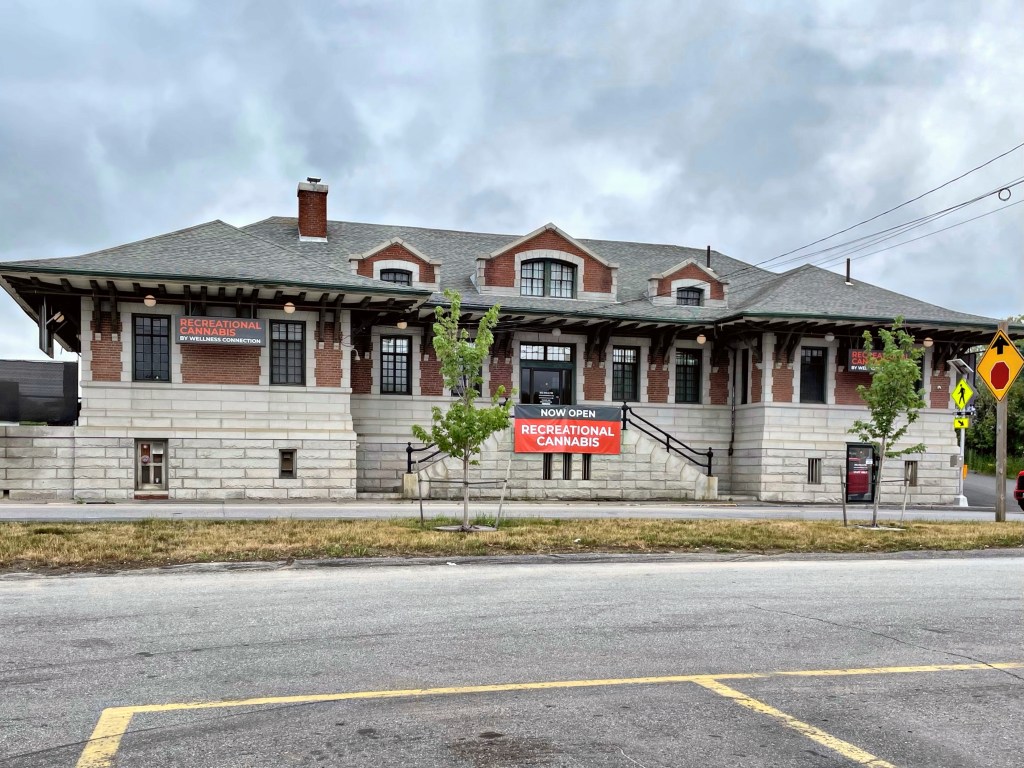
Gardiner Train Depot // 1911

The first train arrived in Gardiner, Maine in 1851. Rail here introduced a new mode of transportation for passengers and freight, which previously relied on horse or ship up the Kennebec River. When the old station was deemed too small and outdated, the Maine Central Railroad Company decided to hire Portland architect, George Burnham to complete plans for a more fitting station. This building is a mix of styles, the two I would categorize it as are Romanesque Revival and Spanish Revival. The building incorporates a number of influences of the two along with a deep overhanging roof supported by large brackets, heavy rusticated granite blocks at the base, and quoining around the windows and corners. The station was in operation until about 1960 when rail service here halted. Since that time, the building has been adaptively reused as a retail store, today as a recreational cannabis dispensary. So you can get high and look at cool architecture!

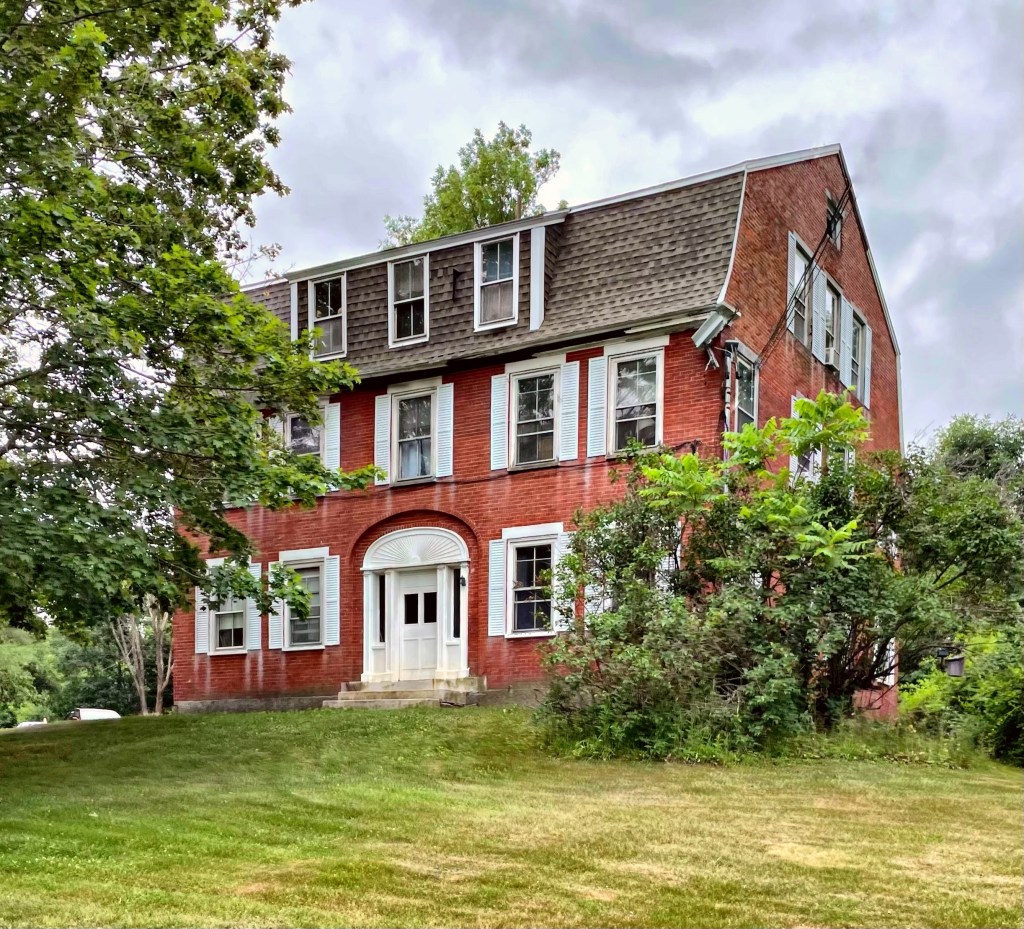
Gardiner Almshouse // 1834

This large brick Federal house was built on the outskirts of Gardiner, Maine, in 1834. Ebenezer Moore, the builder, worked as a carpenter and house-wright in town and showcased his skill on his own brick mansion, selling it to a C.E. Bradstreet. By the late 1840s, the town of Gardiner decided that it would need a new almshouse, city-provided housing for the poor, so they purchased the Bradstreet house and 14-acres of land. In the 1848 town report documents noted, “The establishment is a brick one, of two stories, containing thirty-six fine rooms, including seven fitted for the insane in the most admirable manner, together with a spacious hall. The building is every way a most excellent one for the purpose, and is a monument of the humanity and generosity of the city.” The almshouse served as a working farm where the poor could harvest their own crops and contribute in a small, closed society. The almshouse burned in 1909, and was immediately rebuilt using the outside brick walls. In the Colonial Revival manner, a gambrel roof replaced the former gable roof, which added a third story to the almshouse. The building was eventually sold, as new housing models for low-income residents took off. The former almshouse was converted to an apartment building in 1970, a use that appears to continue to this day.

Tucker Octagon House // 1856

The Octagon form of architecture was conceived in 1848 in the prolific mind of Orson Squire Fowler, phrenologist and author of books on sex, family relations, and many other subjects. His book A Home for All, or, the Gravel Wall and Octagon Mode of Building struck the fancy of a certain few, and Octagon homes were built across the country, for just about a decade until they fell out of favor almost overnight. This home in West Gardiner, Maine, was built by Jesse Tucker in 1856 on land his father had cleared, replacing a more standard structure. The new octagon house was being constructed as a gift to Jesse’s soon-to-be wife, but tragically fell from the roof of the barn when building, and died. The home was completed, and it was seemingly acquired by Jesse’s twin brother David. The home remained in the Tucker family until the 1950s.

Peter Grant House // 1830

The this 1830 home in Farmingdale ranks as one of the first Greek Revival temple style residences in Maine. Situated on a rise overlooking the Kennebec River, the house reflects a dignity befitting the commercial success of its original owner, Peter Grant. Peter Grant was born in 1770 in Berwick, Maine. He was a fourth generation descendent of an earlier Peter Grant, born in Scotland in 1631, and one of 3,000 Scots taken prisoner by Cromwell’s army at the Battle of Dunbar. In 1650, he was sent as a convict laborer to the iron works in Lynn, Massachusetts, for a term of seven years. A number of the Grant family settled in Berwick, Maine, and from there, Peter, builder of this house, and his father, Capt. Samuel Grant, moved to Gardiner. Peter Grant soon involved himself successfully in land speculation and shipping in the area. In 1796 he and a group of associates, purchased a large tract of land along the west shore of the Kennebec River, which later became Farmingdale. Grant became sole owner of better than 200-acres of this land in 1800 and built a substantial house soon after. The original house was destroyed by fire and was replaced by Grant with the present house in 1830 six years before his death in 1836.

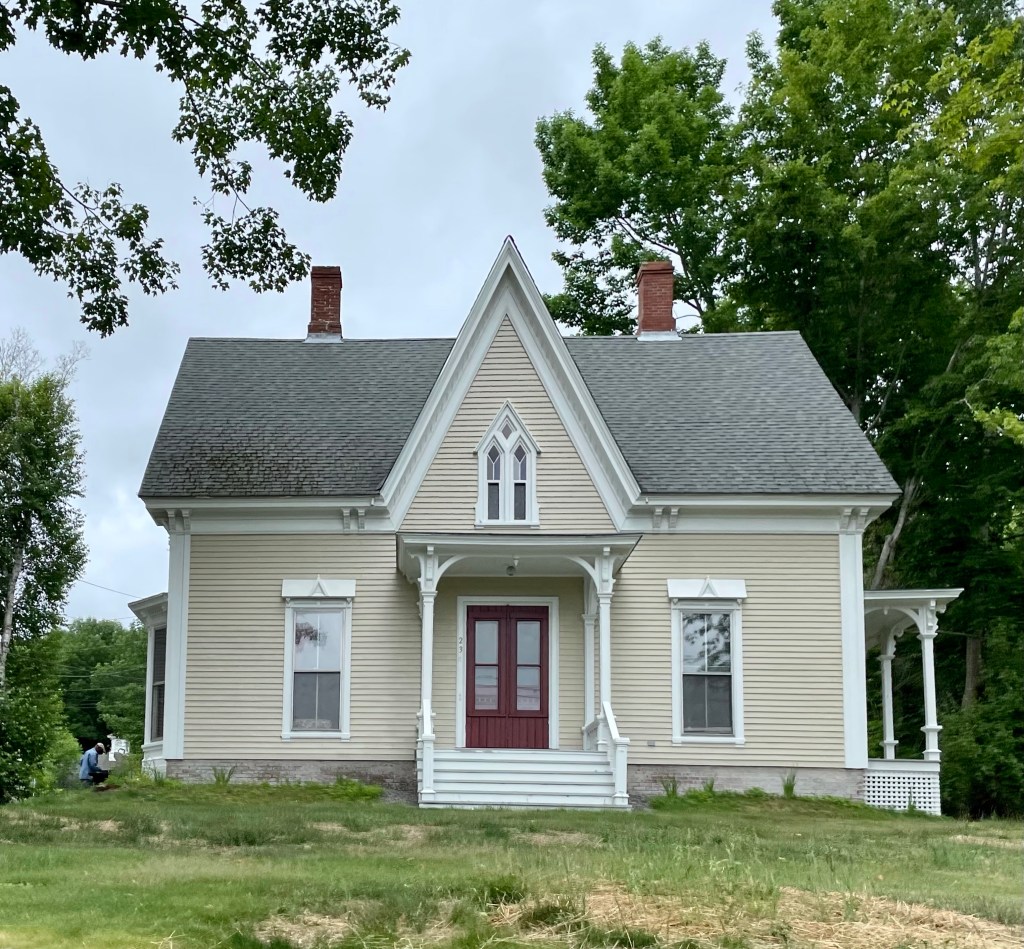
Dr. Gertrude Heath House // c.1850

Constructed c. 1850, this Gothic Revival house in Farmingdale, Maine, has many identifying features common in the style: a symmetrical facade, steeply pitched gable, and lancet windows in the front gable. Besides its architectural significance, the home is also historically significant as the home of Dr. Gertrude Heath. Gertrude Emma Heath (1859-1935) was born in Gardiner, Maine in January 1859. When Gertrude was just three years old, after the American Civil War began, her father died in battle at Fredericksburg, leaving his widow Sarah to run the family affairs. She excelled in school and received her early education in the public schools of Gardiner, afterward attending Hahnemann Medical College at Chicago, Illinois, taking special courses. She graduated from this institution in 1883 with the degree of Doctor of Medicine, and began medical practice in Chicago in 1884, moving back home within that year. Soon after returning to Maine, she accepted a position at the Maine State Hospital, at Augusta, where she specialized in eye and ear conditions. It is amazing learning stories about such strong women, when at the time, women medical practitioners were almost unheard of and women were decades away from earning the right to vote.