Nevers-Bennett Farmhouse // c.1820+

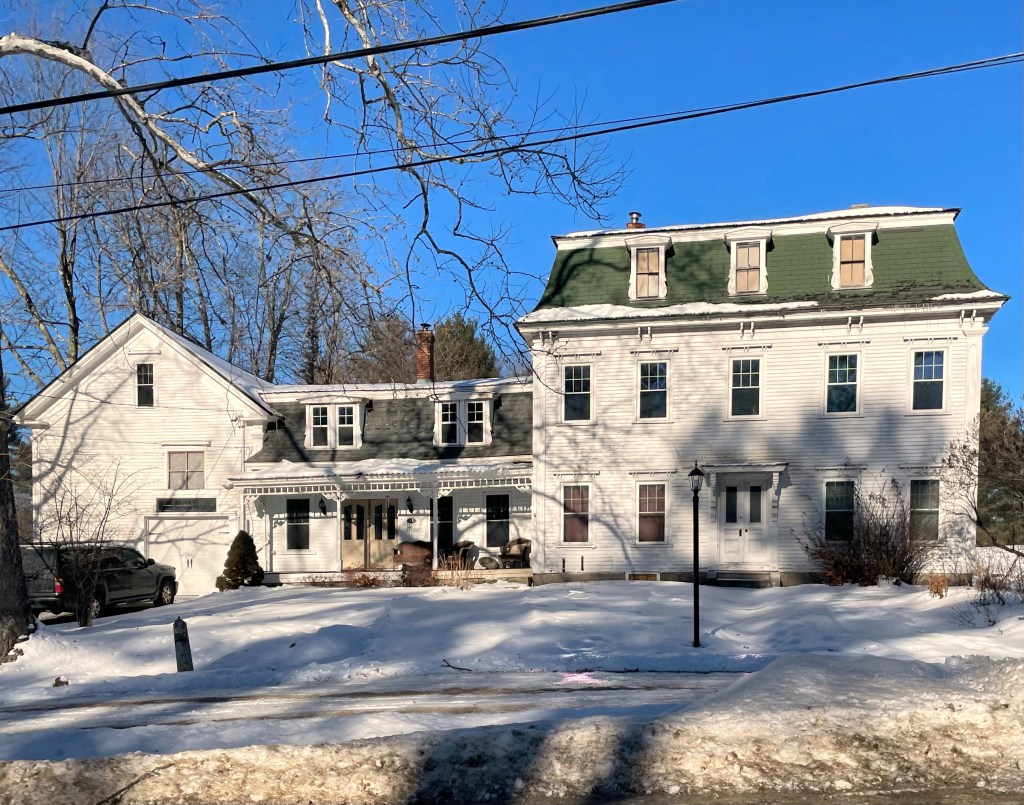
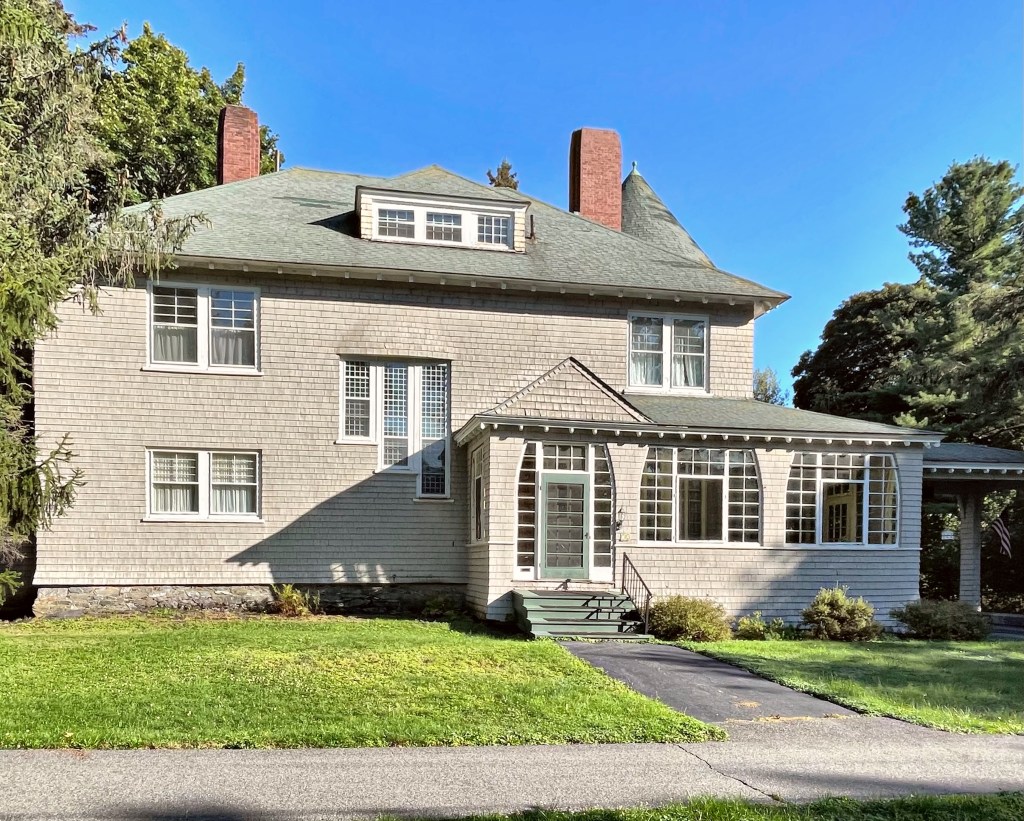
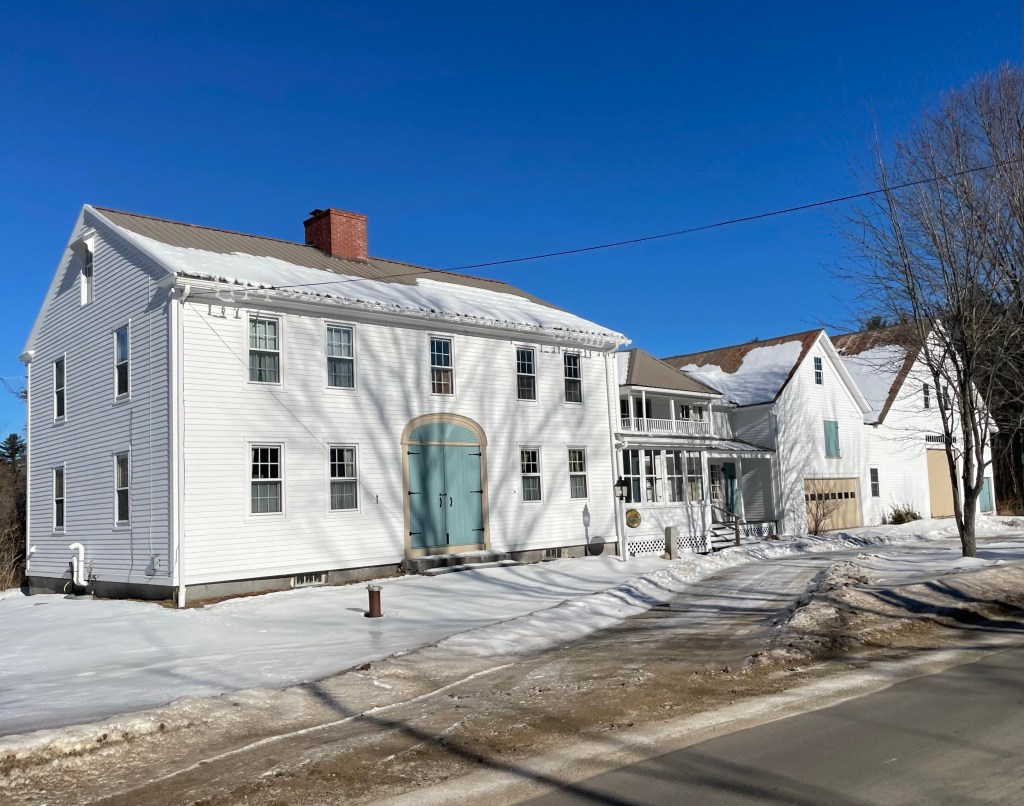
In 1820, just seven years after the incorporation of Sweden Maine, a homesteader, Amos Parker purchased fifty acres of land and began to erect a two-story, Federal house with a center chimney and a detached store beside it. Plagued by debt, Parker sold the unfinished house to Samuel Nevers circa 1833–1835, who purchased the property with the store for his recently married son, Benjamin. By 1860, Benjamin Nevers had a successful store and prospering farmstead. Benjamin died in 1883, and in the next two years, their daughter Charlotte, and her husband, Charles Bennett, dramatically remodeled and modernized the farmstead, adding a connected two-story ell building outward from the main house toward the old 1840 barn, connecting the entire property. I believe that the property remains in the Nevers-Bennett Family, as recently, Steve and Judy Bennett, recently negotiated an easement with the Maine Farmland Trust to protect their hay, beef, and maple sugaring acreage as farmland into the future.

‘Mountain Aqua’ // c.1882

Located near the base of Pleasant Mountain in Denmark, Maine, you’ll find this stunning Victorian house, possibly the best example of Queen Anne architecture in town. Down the dirt road, you can imagine how shocked I was to stumble upon this beauty set back off the road, overlooking the White Mountains in the distance. The house was built around 1882 for the Warren Family, descendants of one of the first settlers in the town. Caleb Warren Jr., is likely responsible for this house, which served as a base lodge for the hotel once located at the summit. In 1845, Caleb Sr. built the first guesthouse atop the 2,200′ mountain, which was purchased just years later by a Joseph A. Sargent. Sargent converted the old hotel into a bowling alley and built a new hotel at the summit. That structure burned to the ground, and was replaced in 1873. The buildings at the summit were eventually purchased and demolished by 1908 when the mountain was sold to the Appalachian Mountain Club. Mountain Aqua would have served as a base lodge for the mountaintop hotel, and was a place where visitors could depart by foot or wagon to the summit. Mountain Aqua appears to be a single-family home today.

Ingalls Homestead // c.1794

Cyrus Ingalls (1768-1832) moved to the wilderness of Maine from his relative comfort in Andover, MA at the end of the 18th century. When he arrived to Maine (which was part of the Commonwealth of Massachusetts until 1820), he built a grist mill on Moose Brook in what is now known as Denmark, Maine. Not far away, he built his homestead, a modest 1 1/2-story cape house on the newly laid Main Street where he raised his family. In the home, Cyrus had at least two sons, Cyrus Jr., who would inherit the homestead, and Rufus, who later served as Quartermaster General of the Union Army during the Civil War. After Cyrus’ death in 1832, the property was completely overhauled by Cyrus, Jr., who built a massive Greek Revival mansion likely in the 1840s or 50s, incorporating the former homestead as an ell (seen on the right in the image). The homestead remains an extremely significant architectural and historical landmark in this part of Maine, and is located across from the town’s Civil War Monument, possibly bankrolled by the Ingalls Family.

Boothby House // 1870

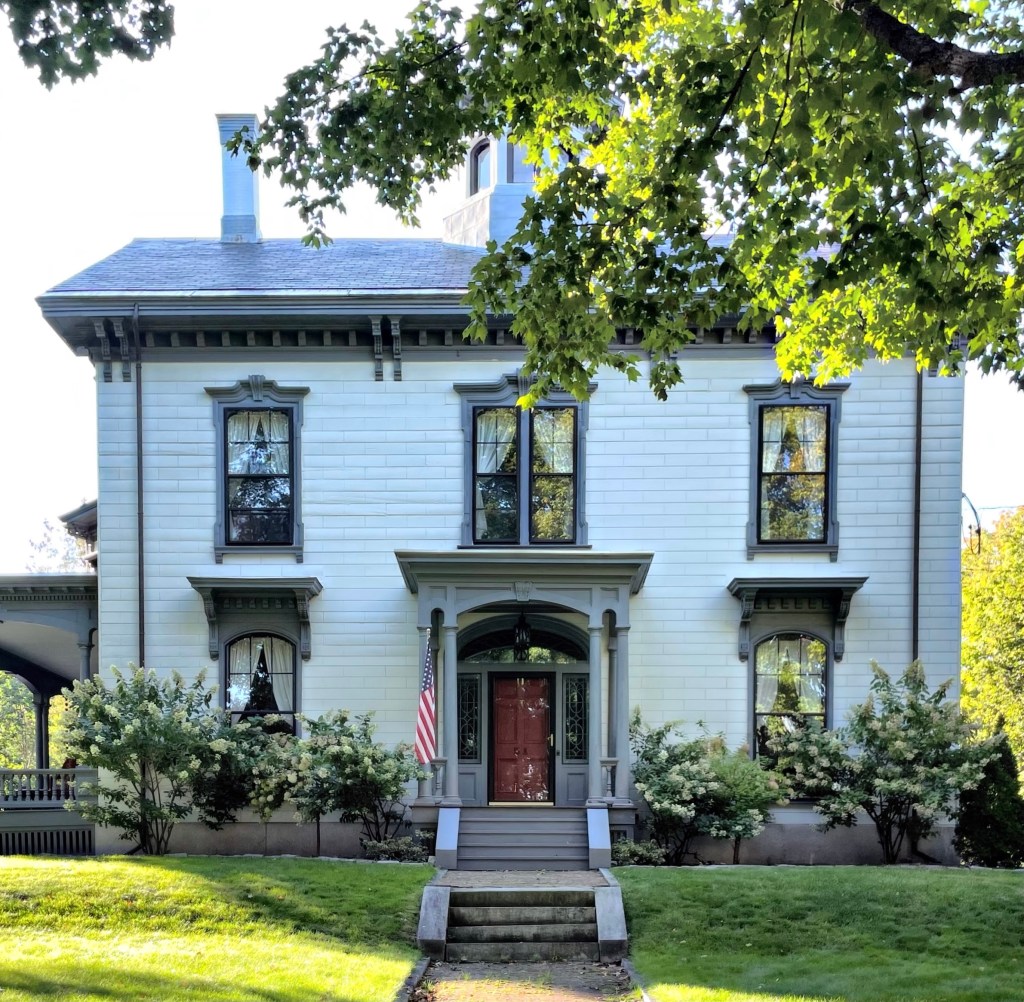
The Second Empire style did not take off in Maine as it did in other parts of New England (and the U.S. for that matter), so it’s always a treat to spot one driving the backroads of the Pine Tree State! This house in Denmark, Maine, was built around 1870 for E. A. Boothby, who worked as Assistant Engineer of the Maine Central Railroad. The Second Empire style is evident here from the mansard (French style) roof, bracketed eaves, and a hooded double-door entry.

Denmark Old Schoolhouse // c.1850

Welcome to Scandinavia of Maine, Oxford County! The rural county is home to towns named Denmark, Norway, and Sweden, but no Finland sadly! The land that is now known as Denmark, Maine, was once part of Pequawket, a village of the Sokokis Abenaki tribe. In 1725 during Dummer’s War, the village was attacked and the tribe abandoned the area fleeing to Canada. Settlers established a township with many settlers coming from Andover, Mass. The town was incorporated as Denmark in 1807, and named in a show of solidarity with the country of Denmark, after England attacked Denmark’s capital, Copenhagen that year. The town was mostly agricultural, with some industry along the ponds and the Saco River. The town saw a boost in popularity in the early 20th century as a location for summer camps, including Camp Wyonegonic, founded 1902, which is the oldest girls’ camp in the country.

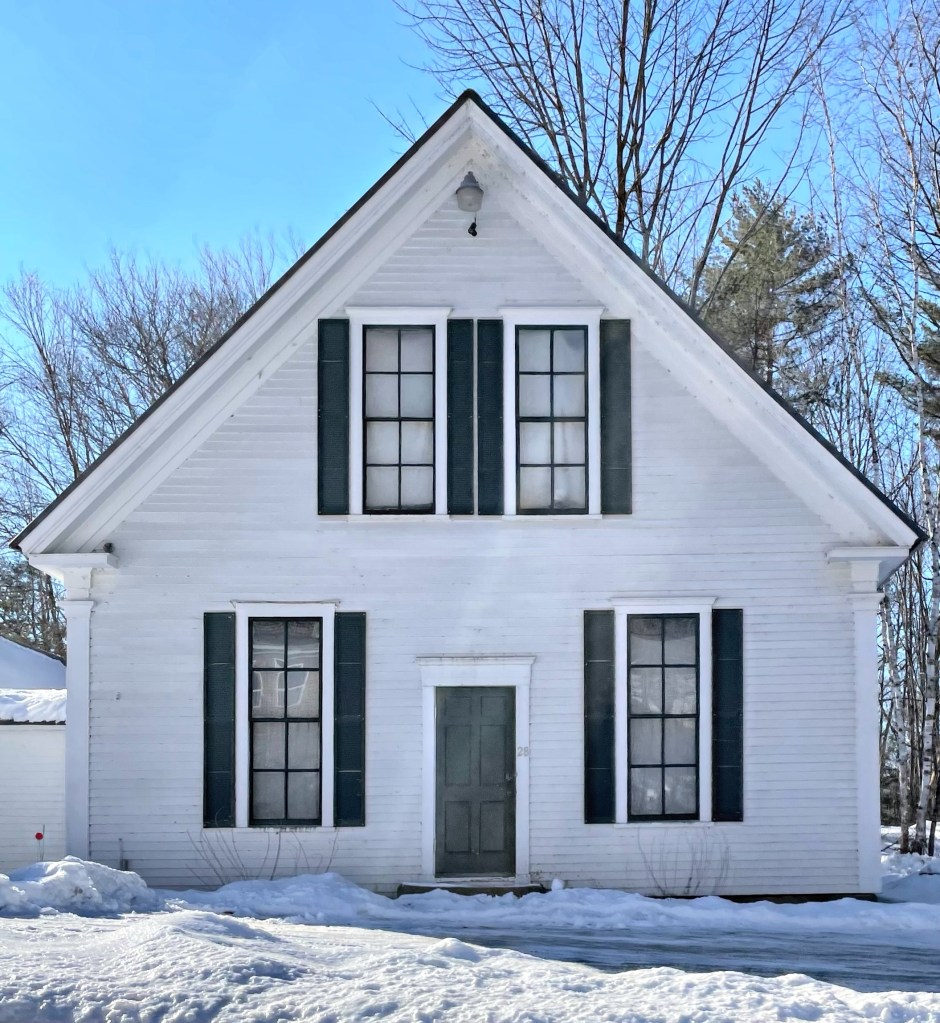
This building in Denmark Village appears to have been constructed in the mid-19th century as the village school. The vernacular Greek Revival building has very tall, multi-paned windows, Greek Revival trim, and modest proportions which really are pleasing to look at. It shows up on an 1880 map as “Old School House”, and appears to be a private home today. Stay tuned for more on the Scandinavian towns of Maine!

Zebulon Smith House // 1832

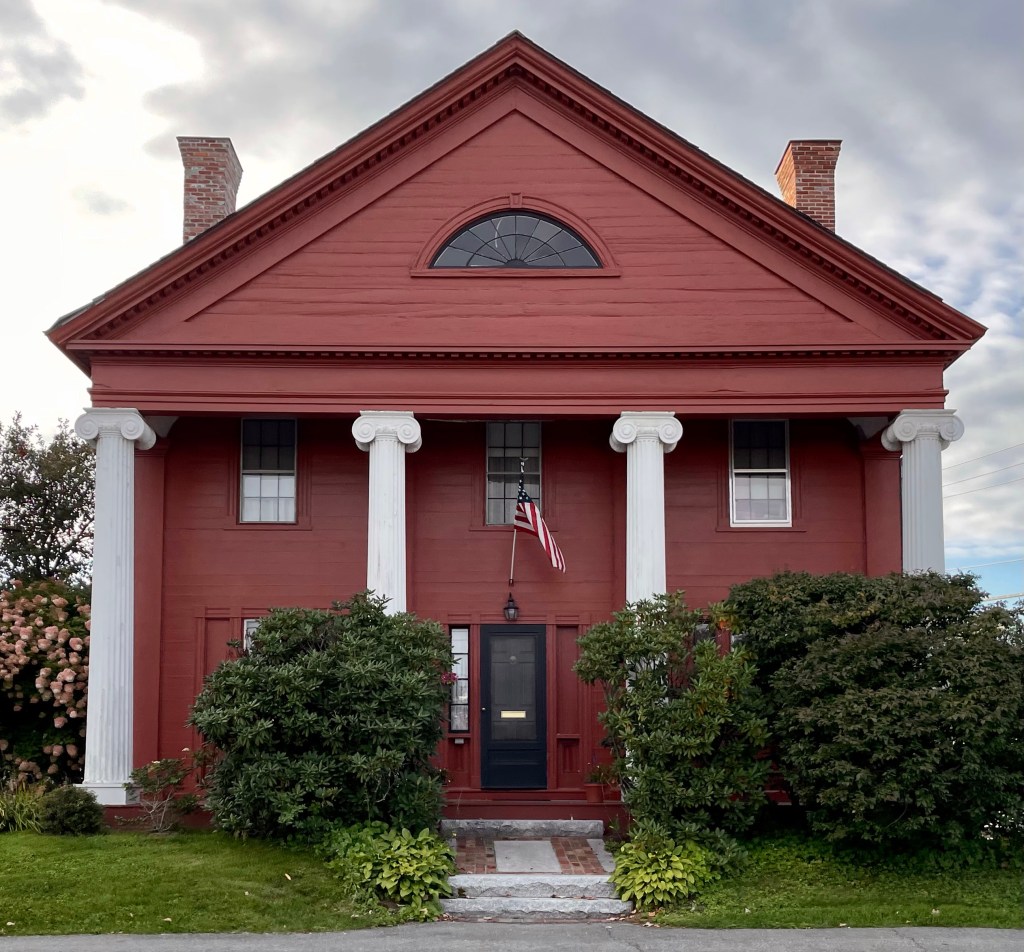
The Zebulon Smith House in Bangor is one of the earliest temple-front Greek Revival homes built in the state of Maine. The house was constructed in 1832 for Zebulon Smith, a businessman who moved to the Maine frontier in the early 19th century, likely to get involved with a lumberyard as this section of the state shipped timber all over the region. The substantial home was built just south of downtown Bangor, and has survived fire and urban renewal. It sits alone in a sea of parking lots and industrial buildings in what was once likely a lovely neighborhood.

Joseph Low Mansion // 1857

The neighbor to the iconic Thomas Hill Standpipe (last post), this pre-Civil War Italianate mansion predates the water tower and has long been one of the most grand homes in Bangor, Maine. The house was constructed in 1857 for Joseph W. Low, a businessman and trustee of the Bangor Savings Bank. The house he had built is one of eastern Maine’s outstanding Italianate residences, designed by Boston architect Harvey Graves, who was born in Maine. Soon after the Civil War, Graves moved west to California, likely seeking additional wealth from the spurned from the success of the Gold Rush. He appears to have lived out the remainder of his life out west, giving his family in Maine this home. The house exhibits flushboard siding with scored wood to resemble ashlar masonry, gorgeous window hoods and mouldings, and a large belvedere at the roof, which would have provided sweeping views of the Maine frontier when built, atop one of the highest hills in Bangor.

Frederick Parkhust House // c.1890

Frederick Parkhurst (1864-1921) was born in the small Maine town of Unity and attended local schools. He moved to New York to attend Columbia Law School, receiving his degree in 1887. Soon after, he was admitted to the Maine bar. Frederick moved back to Maine and joined his father in a leather goods business in Bangor, of which he later became president. He served on the Bangor City Council and later in the Maine House and State Senate. With his wealth and connections, he purchased a large house lot on West Broadway, then the most exclusive street in town, and hired local architect Wilfred Mansur, to design a Shingle style home for his family. During World War I he led the Liberty Loan effort and in 1920, was elected Governor with the largest margin in Maine history, moving to the State Capitol, Augusta soon after. Parkhurst served less than a month when he died on January 31, 1921.

Smith-Miller House // 1893

Located on stunning West Broadway in Bangor, Maine, the Smith-Miller House stands out as a beautiful blending of the Shingle and Queen Anne styles. Built in 1893 from the designs of Connecticut architectural firm Cook, Hapgood, and Company, the home was featured in The American Architect and Building News journal for its design success. The home is clad with continuous cedar shingle siding, with a prominent corner tower, wrap-around porch, and porte-cochere, all together provide complexity and intrigue on the street of large homes. What do you think of this home?

Joseph C. White House // 1866

Located a short walk from the Stephen King House in Bangor, this stunning Second Empire style house shines just as bright! This house was built in 1866 for Joseph C. White, a dry goods merchant in town. Just years after it was completed, he sold the mansion, possibly due to upkeep. The two-story mansard-roof house is clad in wood siding, scored to resemble stone rustication, a method to make the home appear more expensive. The corner entrance with later enclosed second-floor porch, massive brackets, and scrolled dormers add a lot of Victorian flair to the home. Would you move in here?