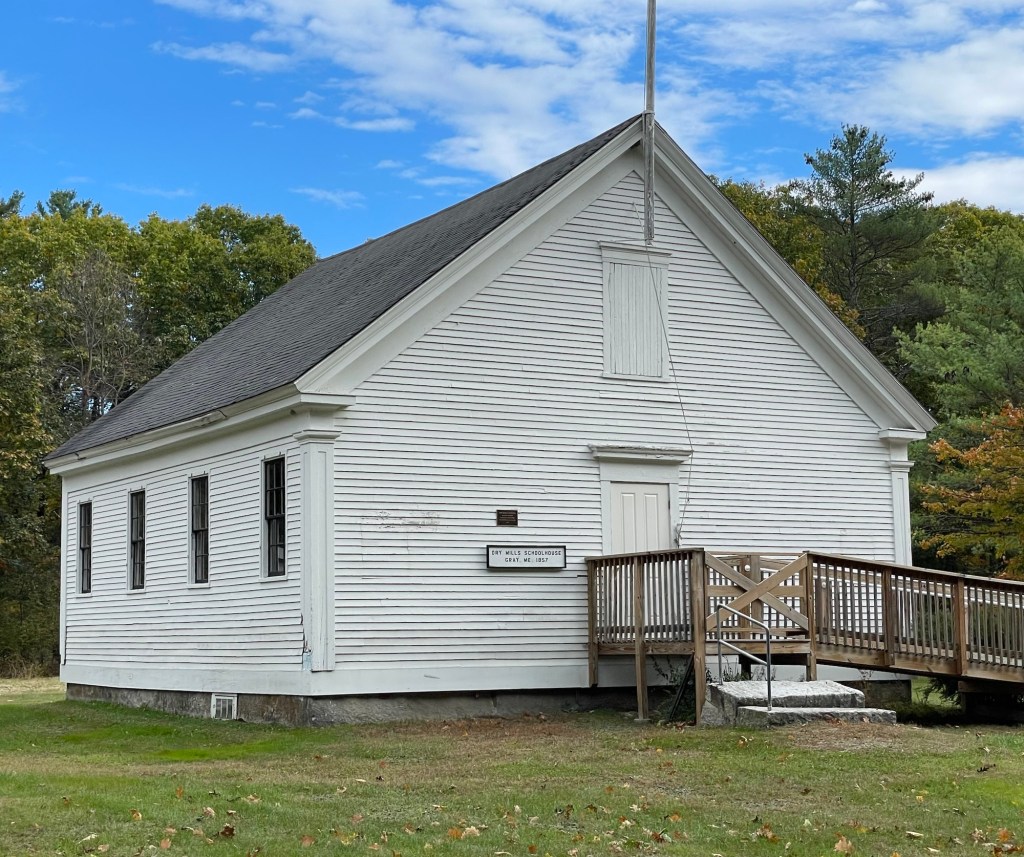
Dry Mills Schoolhouse // 1858

Before the use of automobiles for everyday use, the winding roads in towns all over New England were once lined by charming one-room schoolhouses, to educate children without forcing them to travel too long of distances (like many of our parents and grandparents who had to walk to school uphill both ways!) The Dry Mills School was built by 1858 and is the last one-room schoolhouse of twelve that were built in Gray, Maine. All of the others have  been sold by the town, converted into houses, and/or torn down.  The school was in operation from before the Civil War until it closed its doors to public education in 1958.  In the early 1990’s, at a cost of $12,000, the building and the original granite slab foundation were moved to their current location on the Maine Wildlife Park Road and has been restored to its original appearance thanks to local residents who advocated for the preservation of the building. The interior retains an original chalkboard, period wood stove and furnishings. Today, it is a living museum, attesting to the educational environment in the mid 1800’s and was listed in the National Register of Historic Places.
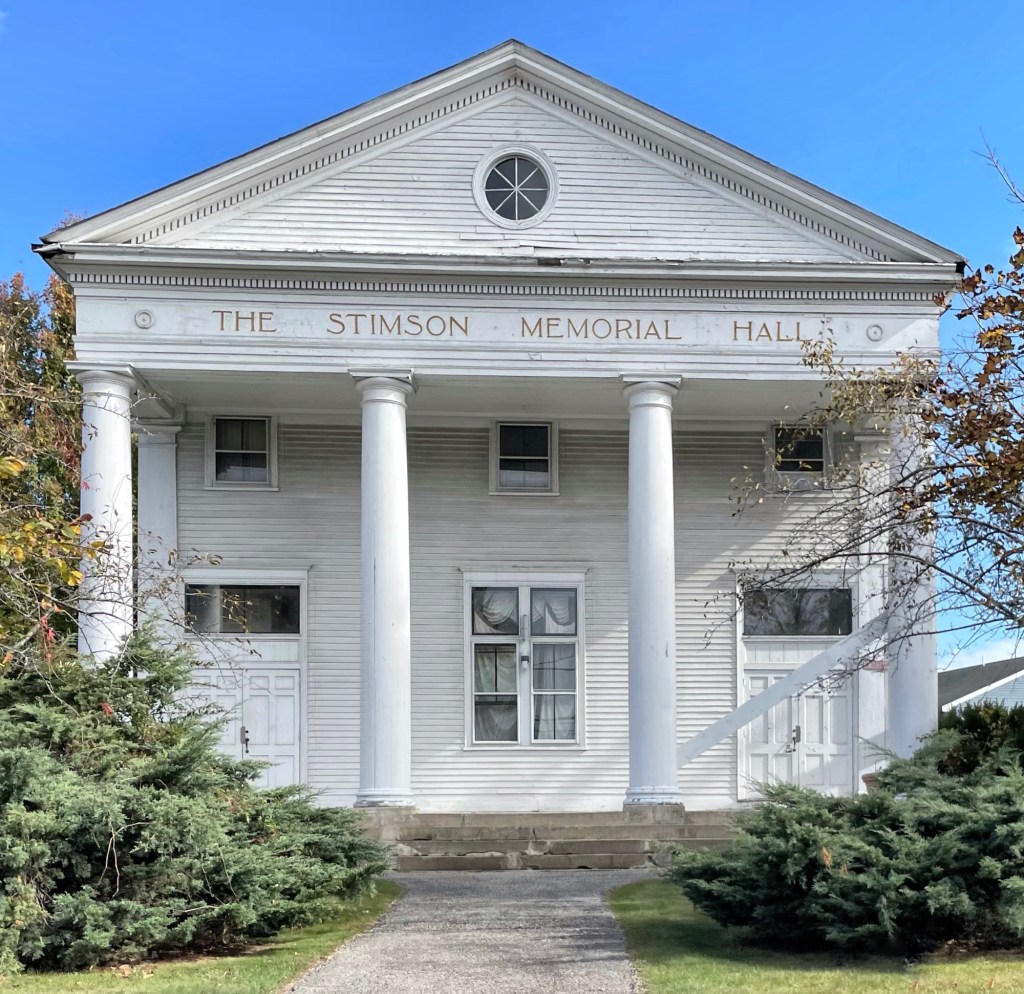
Stimson Memorial Hall // 1900

Stimson Memorial Hall is a historic, Neo-Classical building on Shaker Road in the center of Gray, Maine. Built in 1900, it served for many years as the town’s main public meeting space, and is a prominent landmark in the town center. The hall was built as a gift to the town, primarily through the efforts of Abbie Stimson Ingalls, who had moved to Cincinnati, Ohio with her husband, as a memorial to her late parents, Theophilus and Mary Stimson. The memorial hall was designed by Elzner and Anderson of Cincinnati, Ohio, and was built on land originally purchased by the local Universalist congregation. The upper level house the town library until the 1950s. The building was threatened in recent years, and as one of a handful of significant buildings remaining in the center of town, its preservation was important. It has some deferred maintenance but remains in good shape! Does anyone know what the building is/will be used for?

All Saints by-the-Sea Episcopal Church // 1905

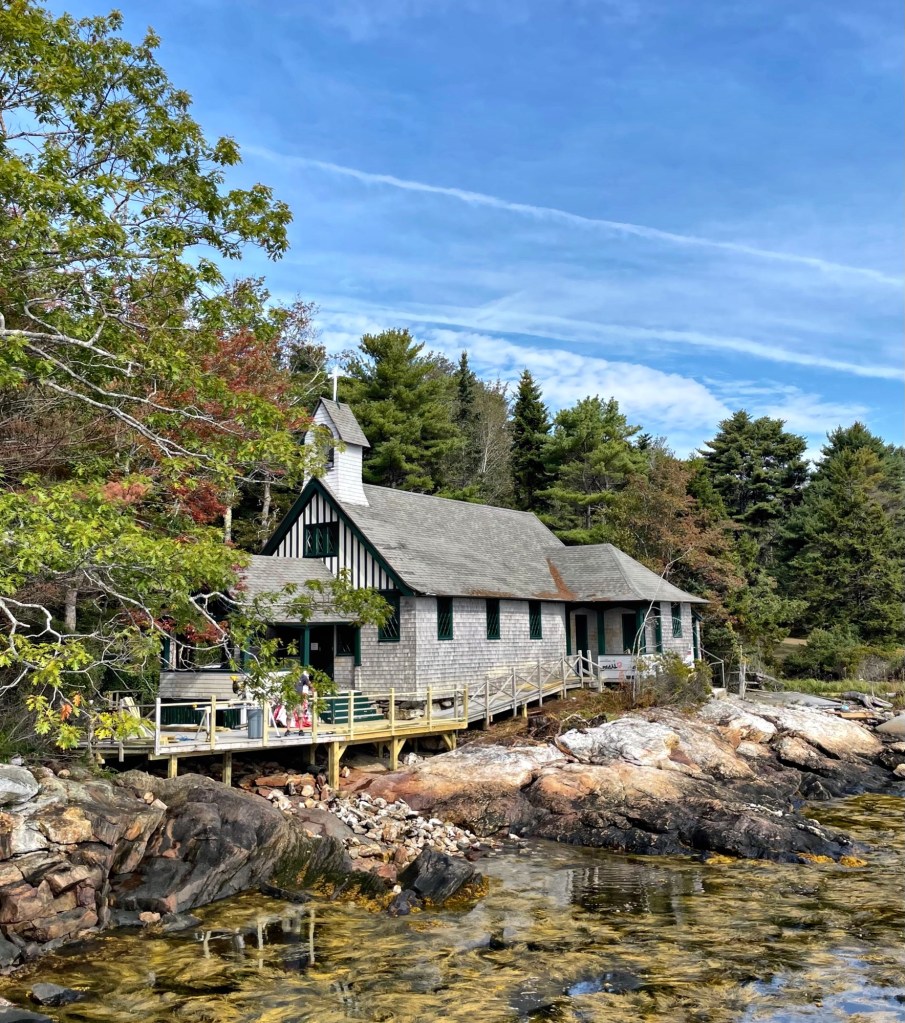
Possibly my favorite type of building in Maine are the historic Episcopal summer chapels that sprouted up along the coast in the late 19th and early 20th centuries. This is the All Saints by-the-Sea Episcopal Church of Southport, Maine, an island community with many summer residents. This church had its beginnings when Reverend John Thomas Magrath of Gardiner, Maine, would visit Southport in the summers and hold services for rusticators under the oak trees or in the cottage living room if the weather was poor. Eventually, a member of the congregation purchased a lot on the east side of Southport on the rugged coastline, and planning began for a chapel. In 1905, the chapel was designed by architect, Albert Hall in a rustic blending of the Shingle and Tudor styles. The building exhibits shingle siding with half-timbering, the original diamond-pane windows, and a large entry porch off the entrance.

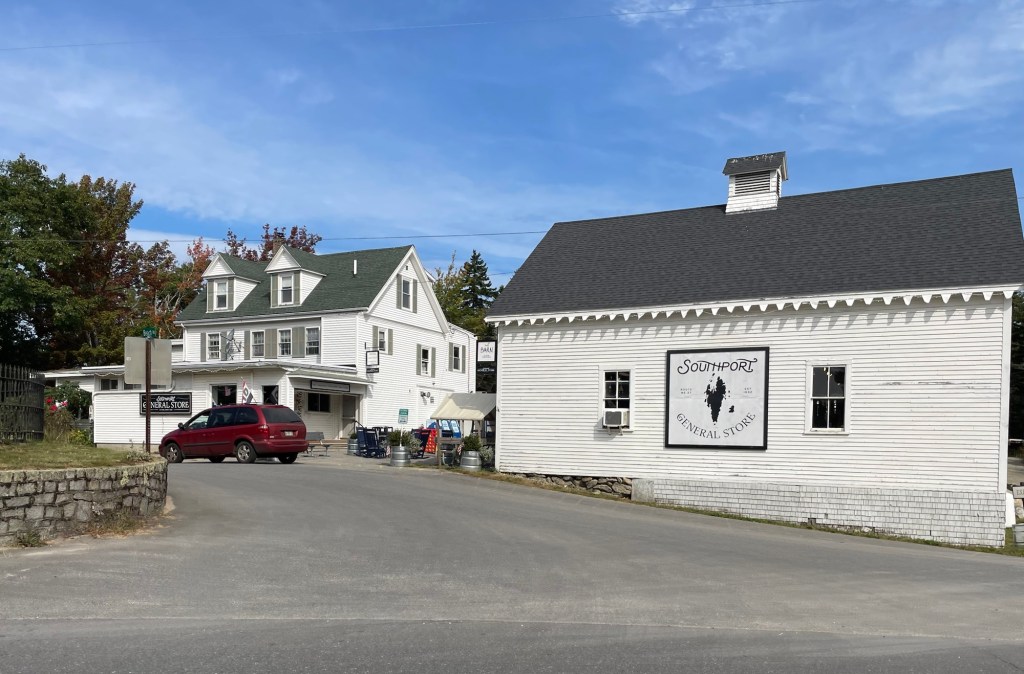
Southport General Store and Barn // 1895

In 1882, Edward Everett Pinkham, known as Everett, opened a new store in one side of his house on Hendrick Hill in the island community of Southport, Maine. The store was known for years as E. E. Pinkham and Son. Everett soon built a proper store adjacent to his house. He served the Town of Southport in many capacities: Postmaster, Town Clerk (1887-1905) Treasurer (1883), and Selectman (1888-1893). Sadly, on May 21, 1895, the store and house burned along with all of the old town records inside. The community helped Everett rebuild the present general store before the busy summer season. Edward’s son “Charlie”, would take over the business and the building has served as the town’s social center ever since. Year-round and summer residents bump into eachother at the store, catch up, and share local news, like every general store should be! Sadly, in so many communities, the “general store” has been replaced by big box retailers or convenience stores, removing the sense of community or place, so these businesses are more important than ever!

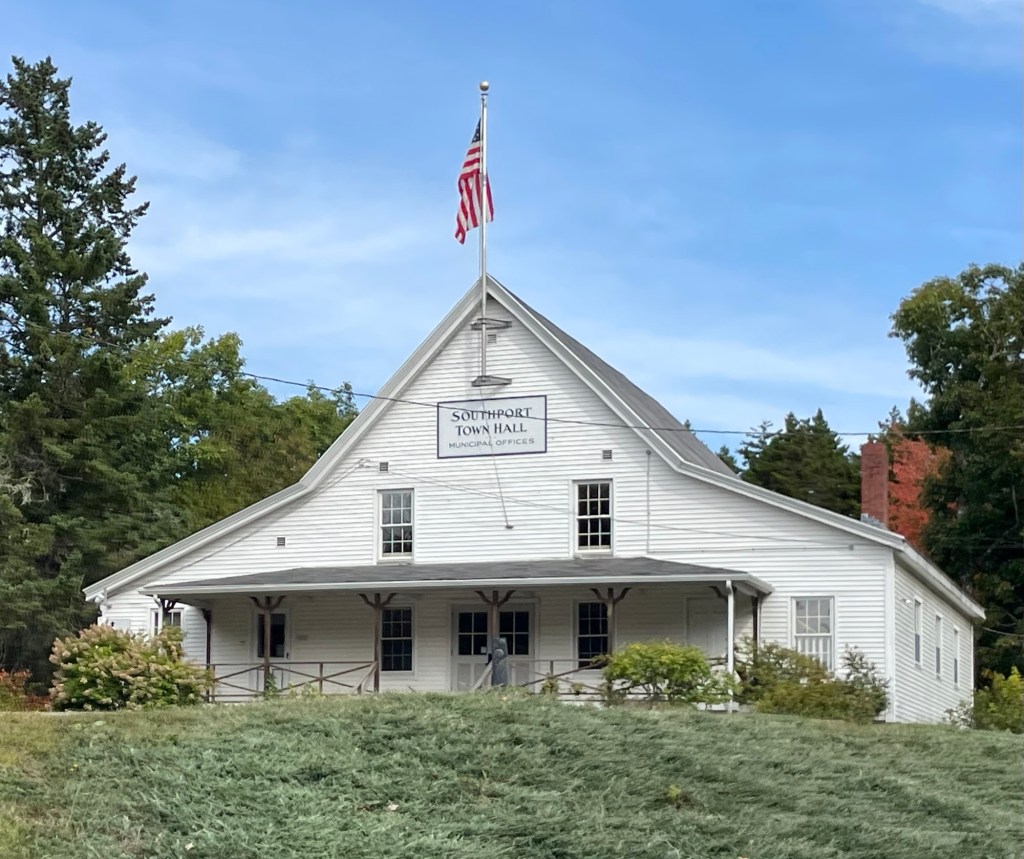
Southport Town Hall // 1866

While staying at the Spruce Point Inn in Boothbay Harbor, Maine, I took the chance to visit the nearby island-town of Southport! The town of Southport incorporated in 1842 when it separated from Boothbay and became known as Townsend, Maine. Just eight years later, in 1850, Townsend changed its name to Southport, after SouthportEngland. The town has a population of just over 600, which grows in the summer months as the island and nearby Squirrel Island (also a part of Southport) has many summer homes dotted along the coastline. The present-day Southport Town Hall was built in 1866 by the Ladies Sewing Circle of the Southport Methodist Episcopal Church as a meeting place for the women of town to meet and socialize, it also was rented to the town for town meetings. Eventually, the town purchased the building in 1900, where it has remained the town hall ever since.

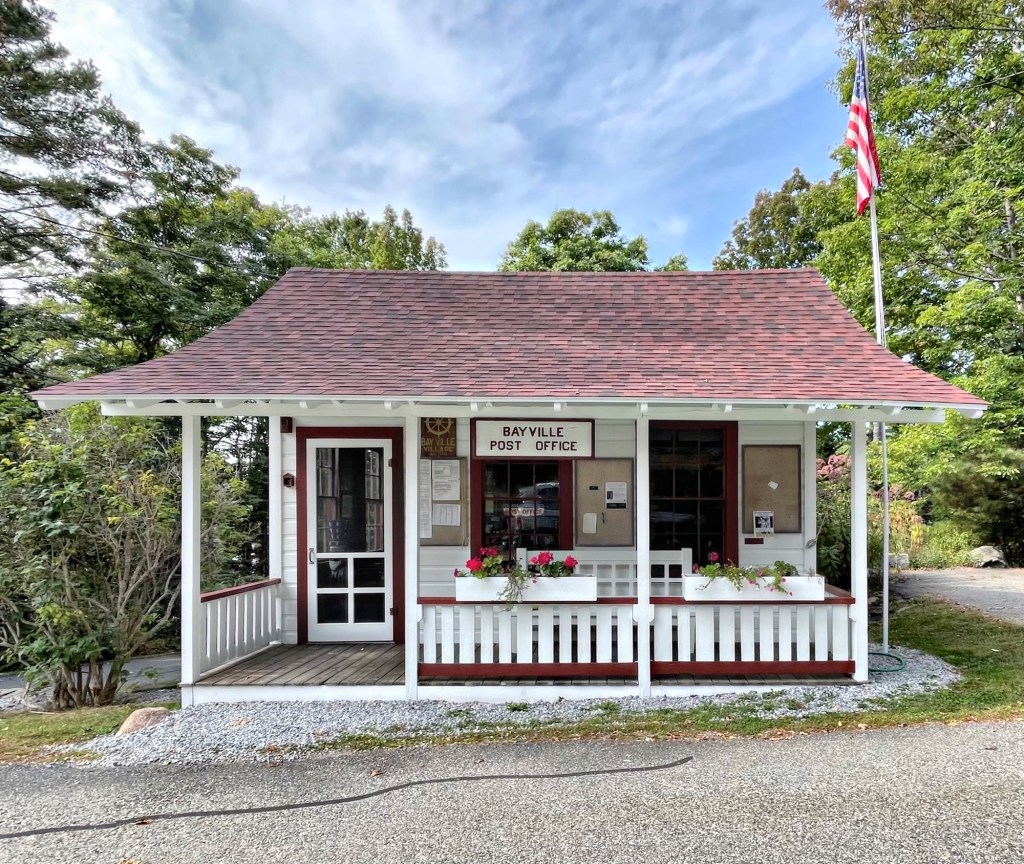
Bayville Post Office // c.1920

Bayville, is a quiet and picturesque coastal village on Linekin Bay, in the eastern part of Boothbay Harbor, Maine. The small village is comprised of roughly 40 cottages and a small post office. This post office was built around 1920 and has operated here seasonally every summer since. The rustic Craftsman style building features a broad roof with exposed rafter tails, extending to create a sheltered porch off the front.

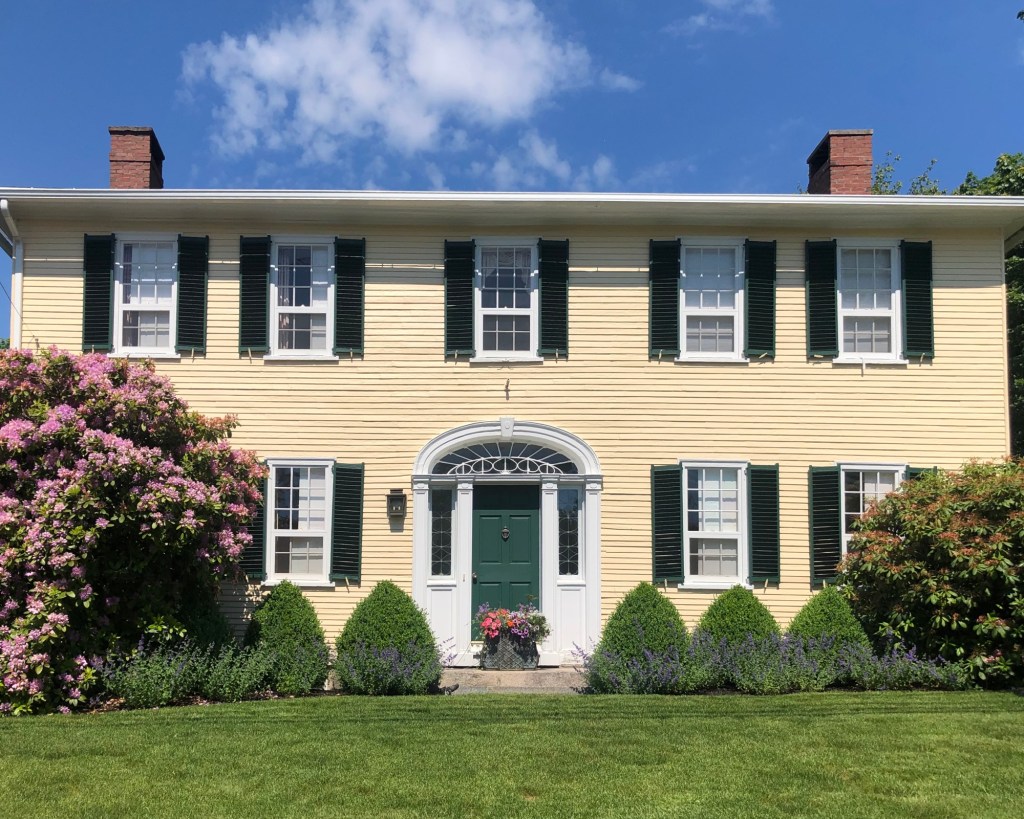
John Andrews Jr. House // c.1808

John Andrews Jr. (1747-1844) was born in Essex County, Massachusetts to John Andrews Sr., a church Deacon, merchant, and blacksmith. John Jr., was a fisherman and would later move to Arundel by 1783 (now named Kennebunkport) and built this stately Federal style residence in the village. The house was built sometime between 1783 and 1810, with my best estimate dating the house (at least in its current form) to around 1808 as the high-style entry is similar to what is seen in Asher Benjamin’s plan books of the early 19th century, like the American Builder’s Companion, which provided builders with plans for elevations, cornices, entrances and windows, and any other features of a house built at the time.

Thompson Ice House // c.1826

In 1826, a man named Asa Thompson, dammed a small brook from natural springs on his property in present-day South Bristol, Maine, and created Thompson Pond. He began cutting ice blocks for his own use. His neighbors began to purchase blocks of ice from him and he built this ice house sometime after to store blocks after harvesting from the pond. Thompson created a business, harvesting, shipping and selling ice blocks to residents in town and beyond. The property remained in the Thompson family until 1987, when it was gifted to a non-profit board to preserve the site indefinitely. Today, the Thompson Ice House Harvesting Museum showcases the tools of the trade with a participatory ice harvest takes place there annually. The building is opened on appointments or certain events.

S Road Schoolhouse // 1860

The S Road Schoolhouse is the last-remaining one-room schoolhouse in the charming coastal town of South Bristol, Maine. The structure was built in 1860 as the District Five School for the Town of Bristol (South Bristol set off and incorporated as a separate town in 1915). This building replaced an earlier schoolhouse on the site that was on the 1857 Map of Lincoln County. By 1895, enrollment was about 16 but rose to the mid-twenties after other schools closed in the early 1900’s. The school is said to have closed in 1943 following the death of the teacher here, it never reopened. The South Bristol Historical Society recently restored the building following a successful capital campaign, gathering funds from members and town citizens, preserving this lasting remnant of days past.

Hiram Lodge 39, Knights of Pythias // 1895

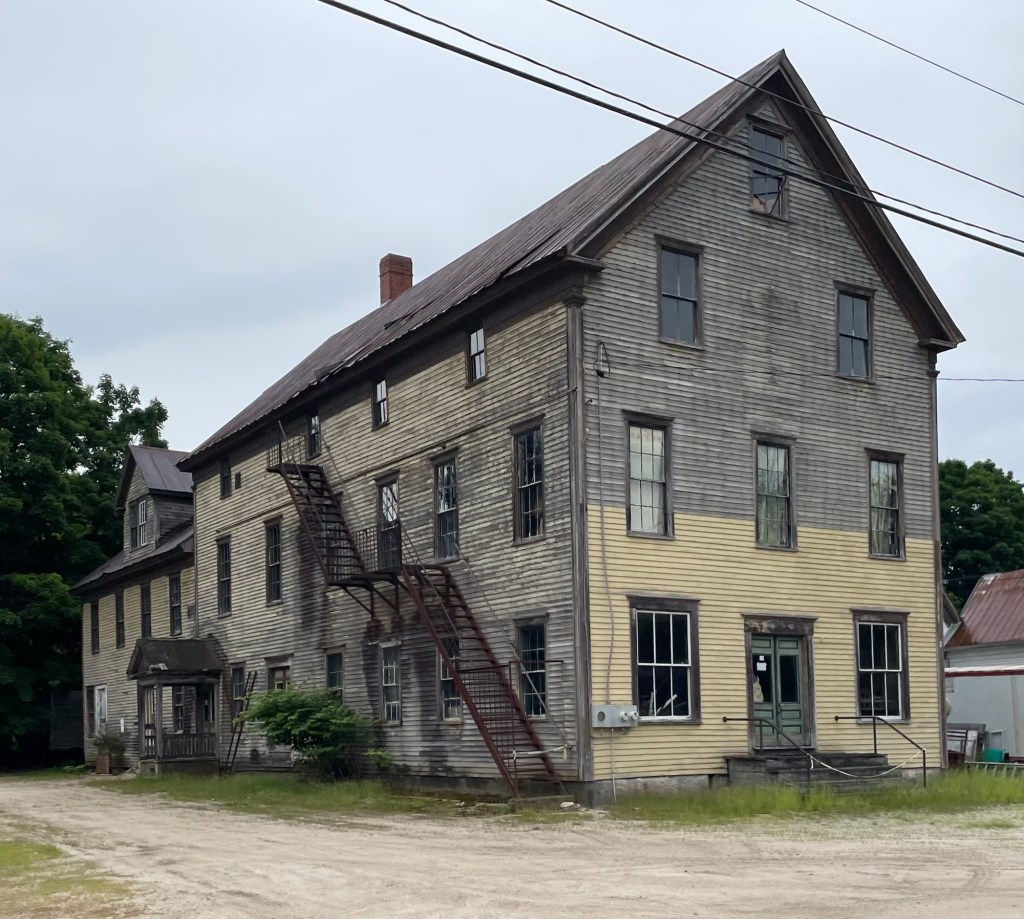
Another of the extant, significant vernacular buildings in the small town of Hiram, Maine, is this large frame building on Main Street. Hiram Lodge #39, Knights of Pythias, was organized in 1883 and a building was constructed on this site around that time. The first meeting hall was destroyed by fire in 1895, and soon-after replaced by this large lodge building, which is possibly the largest wooden building in town!  On the destruction of that first “hall” by fire in 1895, the Lodge hired Alva Ward to build what is probably the largest wooden building extant in Hiram. The Knights of Pythias Hall is important as a remnant of Hiram’s earlier commercial prosperity, with general store on the first floor, a large hall on the second floor (where dances, theatrical performances, and public suppers were held), and the lodge hall on the third floor.