This church in Agawam was built in 1927, replacing the first Catholic church in town, which was established in 1873. The earlier church was destroyed by a fire in 1925, causing the congregation and Archdiocese to fund construction of a new, fireproof church building. The Neo-Gothic Revival building features lancet windows, buttresses, and a central steeple. The building is now occupied as the Moldovian Baptist Church.
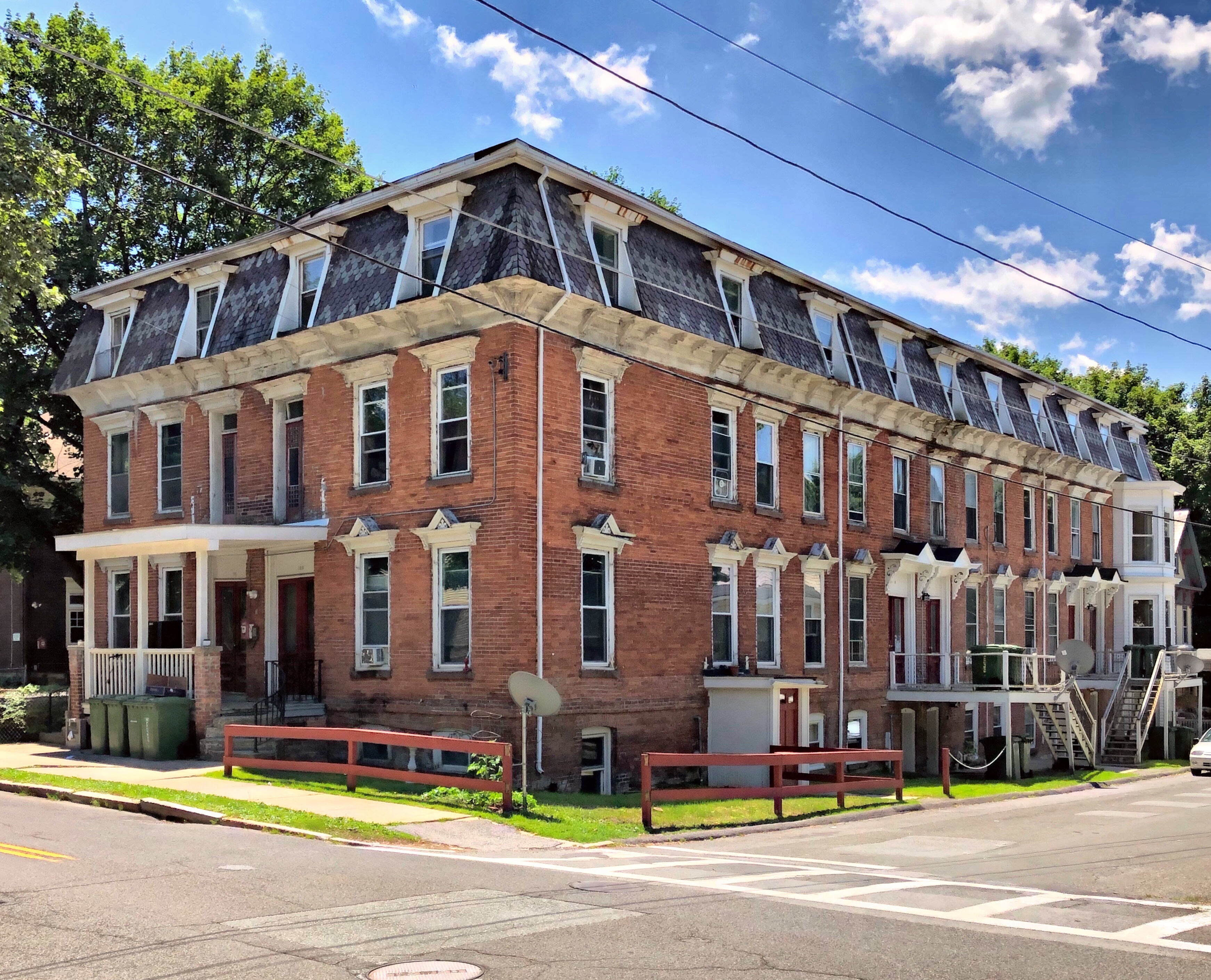
Industrial cities and towns all over New England drew in thousands of European immigrants looking for work. Due to the massive influx of workers and families, many towns and companies constructed tenement housing and other worker’s housing to provide living spaces close to factories and mills. This six-unit tenement house was built in 1872 and is a high-style Second Empire example of worker’s housing in North Adams. The use of brick, mansard roof, and window hoods was likely a concerted choice by the developers as they were located on a street lined by mill owners houses and the who’s who of North Adams.
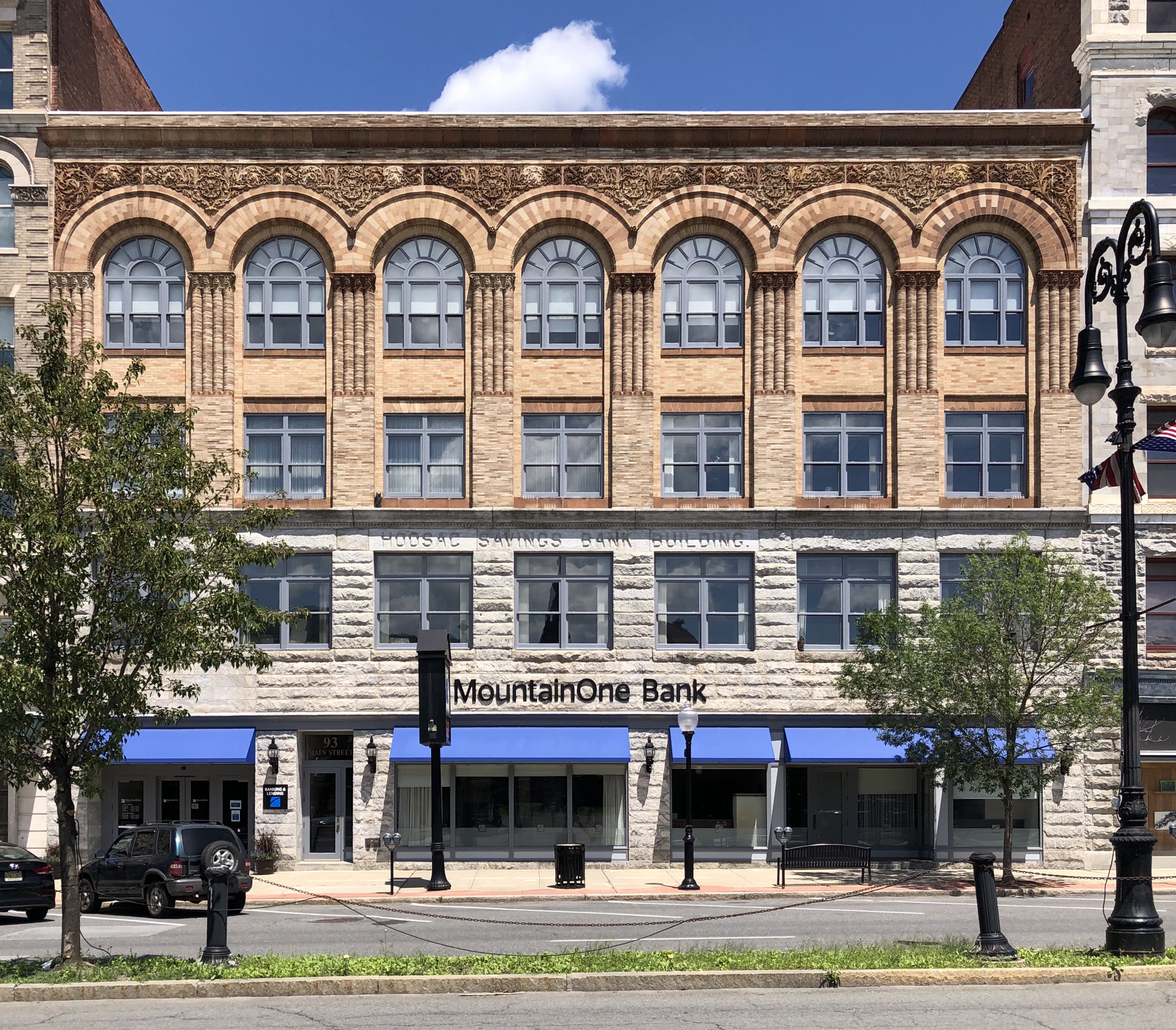
Located in Downtown North Adams, this beautiful Romanesque Revival commercial block is one of the better designed buildings in the region. Designed by architect H. Neill Wilson of Pittsfield, the Romanesque headquarters with fine terra cotta decorations cost $60,000 to build. When built in 1893, the stone over the storefronts were carved to display the bank’s name. The two venerable institutions merged into the North Adams Hoosac Savings Bank in 1962. In 2013, the bank merged with MountainOne Bank.
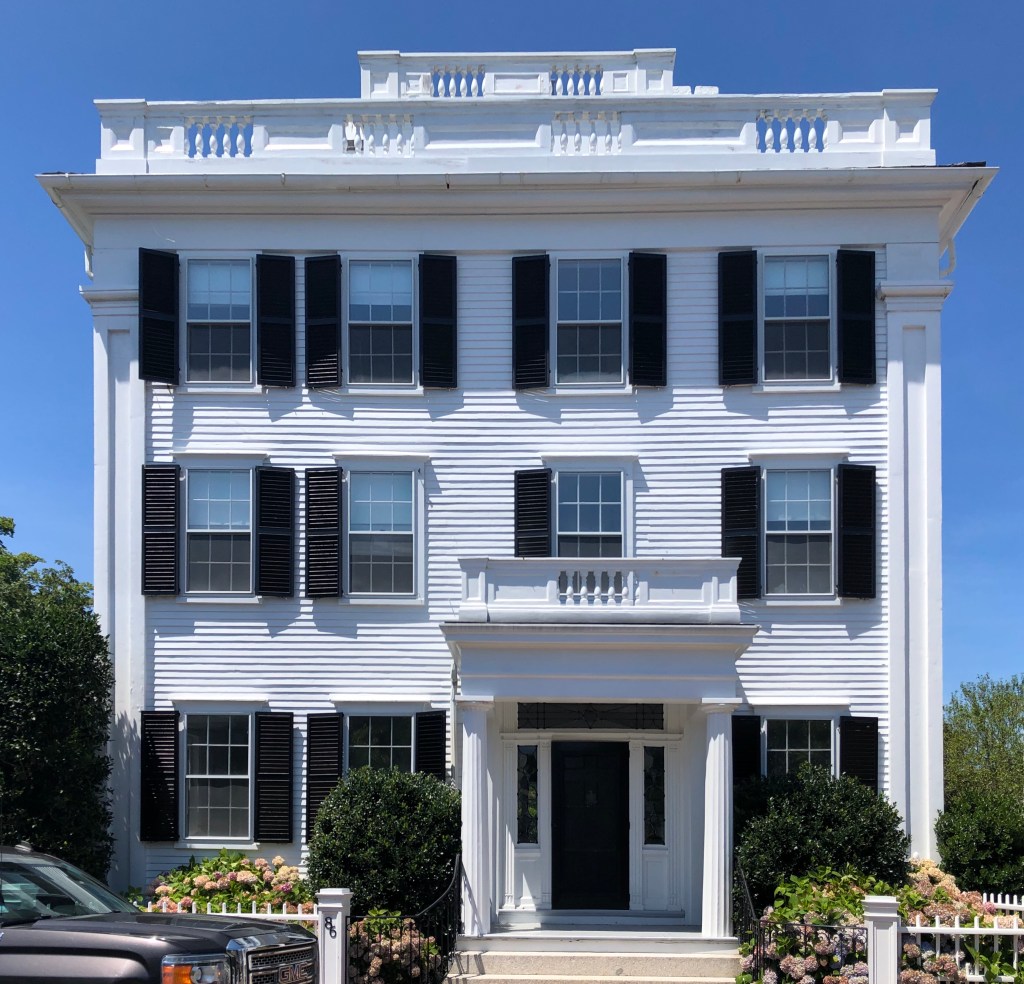
Maybe the most grand Greek Revival home in Edgartown, the Fisher-Bliss House has stood proud overlooking the harbor as ships come and go for nearly 200 years. Thomas M. Coffin, who built many whaling captains homes in town, constructed this iconic residence in 1832 for Captain George Lawrence, who had returned to town with over $90,000 worth of whale oil from a three year trip to New Zealand. Before the house was built for him, the home was sold to Captain Jared Fisher. The home was apparently to be a two-story gable roof home, but Fisher decided to square off the roof and have a widow’s walk added. Captain Fisher’s granddaughter owned the house and lived there with her husband Mr. Leonard Bliss, a merchant.
John Osborn Morse was born in 1803 in Edgartown. He was the second of eight children born to Uriah Morse and Prudence Fisher Morse. His father ran the small ferry from the foot of Morse Street to Chappaquiddick Island. As John Morse grew older, he began working as a whaler on various ships, sometimes gone for years at a time. After his first trip, he was hired as Captain of the Hector, a whaling ship which sailed out of New Bedford. Captain Morse took a break from whaling to establish a wharf on land he purchased and construct a massive Greek Revival home to overlook it. When news hit Edgartown of the gold found in California, it stirred the islanders’ imagination. In 1849, several ships sailed from Martha’s Vineyard to California, one commissioned by Captain Morse. The Vineyard Mining Company, led by Morse, brought roughly 50 passionate and hopeful Americans across the country by boat to California with some onboard writing journals of the trip. The boat arrived in San Francisco and discharged its crew in April of 1850 after a harrowing passage around Cape Horn and visits to several South American ports. After being in California for less than a year, Captain Morse decided to take go for a short whaling cruise. He died on this trip, reportedly getting “dropsy” off the coast of Colombia before succumbing in Peru in 1851.
This historic Georgian mansion was built in 1703 for John Coffin (1647-1711) who moved to Edgartown by the way of Nantucket and Haverhill, Massachusetts looking for new work. John Coffin opened a blacksmithy on the waterfront in Edgartown and immediately prospered, building this home after his success. Legend says the home was actually right on the street before the street was widened and after, the front steps and home’s location obscured the view of other buildings on the street. The home was moved back on the lot in its bucolic setting now amongst the hustle and bustle of downtown Edgartown. The home was threatened with demolition almost all of the 20th century due to the commercial nature of its location. Thankfully, it was acquired by the Vineyard Trust in 1946, who preserve it to this day with small businesses located inside.
Believe it or not, living on an island in the 19th century wasn’t as easy as you may think. Before this bank building was constructed in 1855, all banking was done off-island. The bank was constructed to house the newly formed Martha’s Vineyard National Bank, whose first president was Dr. Daniel Fisher, who made his money as a merchant and operator of one of the largest whale and sperm oil processing facilities in the country. The bank relocated to Vineyard Haven and the Edgartown National Bank was created to fill the void in town. Amazingly, the building is still to this day occupied by a bank, Rockland Trust, seemingly adding to the continuous occupancy of the building by banking facilities for well over a century. The structure is one of the oldest brick buildings in town and is a late iteration of the Greek Revival style.
Located on Trinity Park in Wesleyan Grove (aka the Martha’s Vineyard Camp Meeting Association), this 1878 church served the year round Methodist community in Oak Bluffs. The Trinity Methodist Church is a towered, Victorian Gothic structure of some distinction. Edward M. Hyde, a Methodist minister who had trained in architecture and art, designed it. The property that the church and Parish House sit on belongs to the Association, but the buildings are maintained by the congregation. Interestingly, should the congregation disband, the buildings would return to the Association.
One of the most unique buildings I have ever seen is the Union Chapel in Oak Bluffs on Martha’s Vineyard. The chapel, built in 1870 in the American Stick Style, is in the form of an Octagon, very unique for churches. Built as an inter-denominational house of worship, it is significant as the first non-sectarian religious building to be erected in a community that until 1870, was noted primarily for its strong association with the Methodist Church and its summer camp meeting (Wesleyan Grove) assemblies. The Chapel offered islanders and seasonal visitors regardless of religious affiliation not only an opportunity to worship but a gathering place for cultural activities. According to historic images, the chapel once had more elaborate stick work and finials, since removed, likely due to storms and general maintenance concerns. The chapel was designed by island resident Samuel Freeman Pratt (1824-1920) who had no known architectural training besides working as a wood carver in Boston, yet his work is characterized as having a dynamic and festive style. Pratt’s other major contribution to Oak Bluffs’ architecture, the Sea View Hotel, was erected at the head of the wharf in 1872, but burned down in 1892.



 Buildings of New England