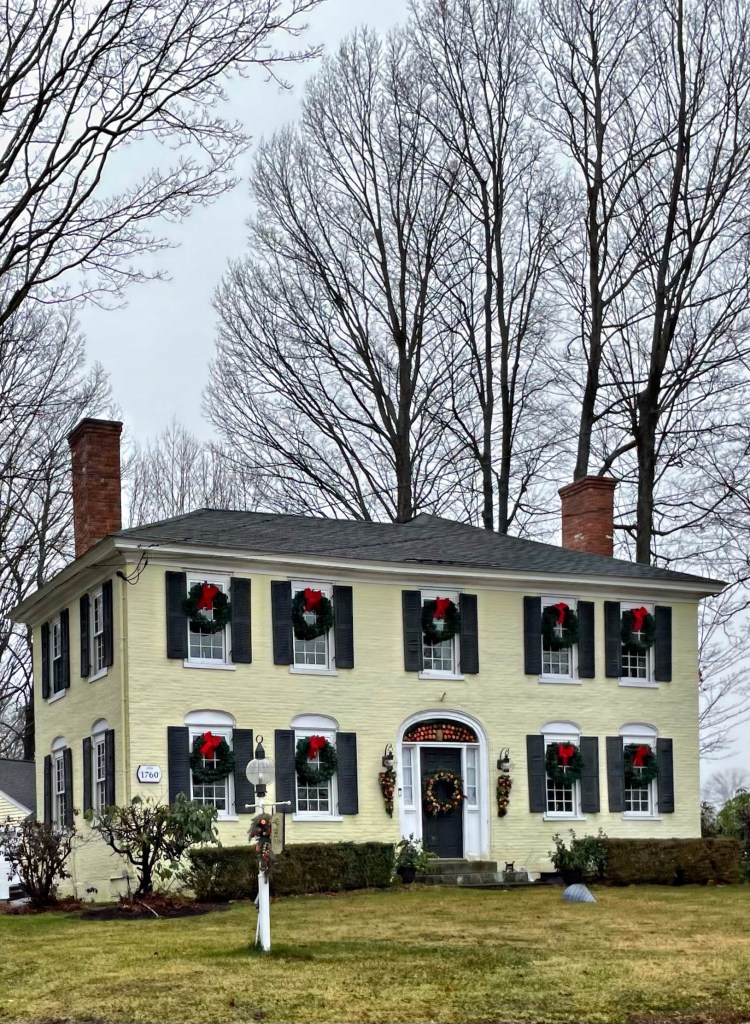
Handy’s Tavern // 1812

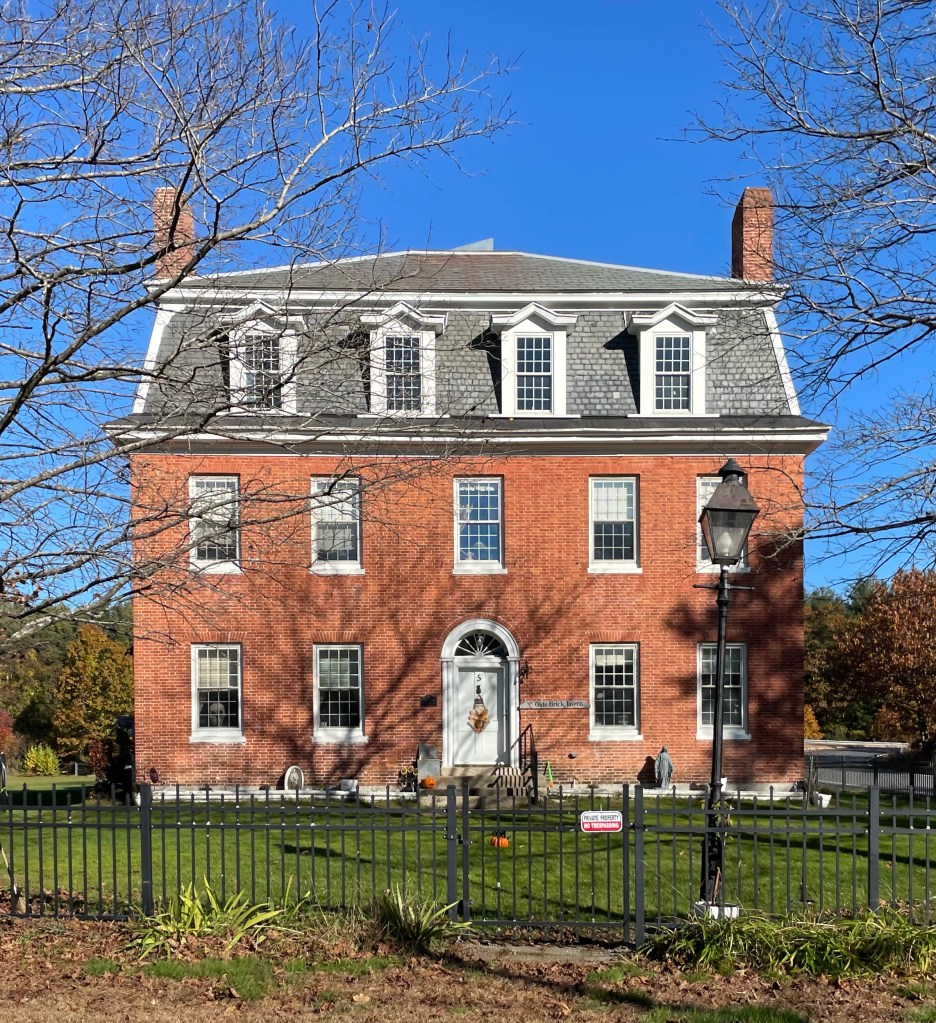
Before the days of cars and even trains ruled, people in New England would get around by horseback or stagecoach (horse-drawn carriages) from town to town. Due to the long travel times to get everywhere, many New Englanders built taverns, which served as inns and bars for the weary traveller on their journey. In 1812, a recently married Caleb Handy built this house to serve as a residence and source of income, as a tavern for travellers on the Plymouth-New Bedford stagecoach route. He married Sophia Dexter in 1811, who died just two years later at the age of 22. Two years after the death of his first wife, he married Sophia’s sister, Mary, who just turned 18 (he was 33). The tavern had a ballroom for local dances and a room for serving drinks, based principally on West Indian rum, that was shipped in from sugar plantations, owned by many wealthy white families in New England (many of whom exploited the slavery abroad). The Tavern was later owned by Benjamin Handy, who continued to operate it as a Tavern until the railroad made the stagecoach route obsolete in the middle of the 19th century. It then became a family home. The house was sold to the Sippican Women’s Club in 1923, who renovated and restored much of the building, and held luncheons and events inside. They maintain the building to this day.

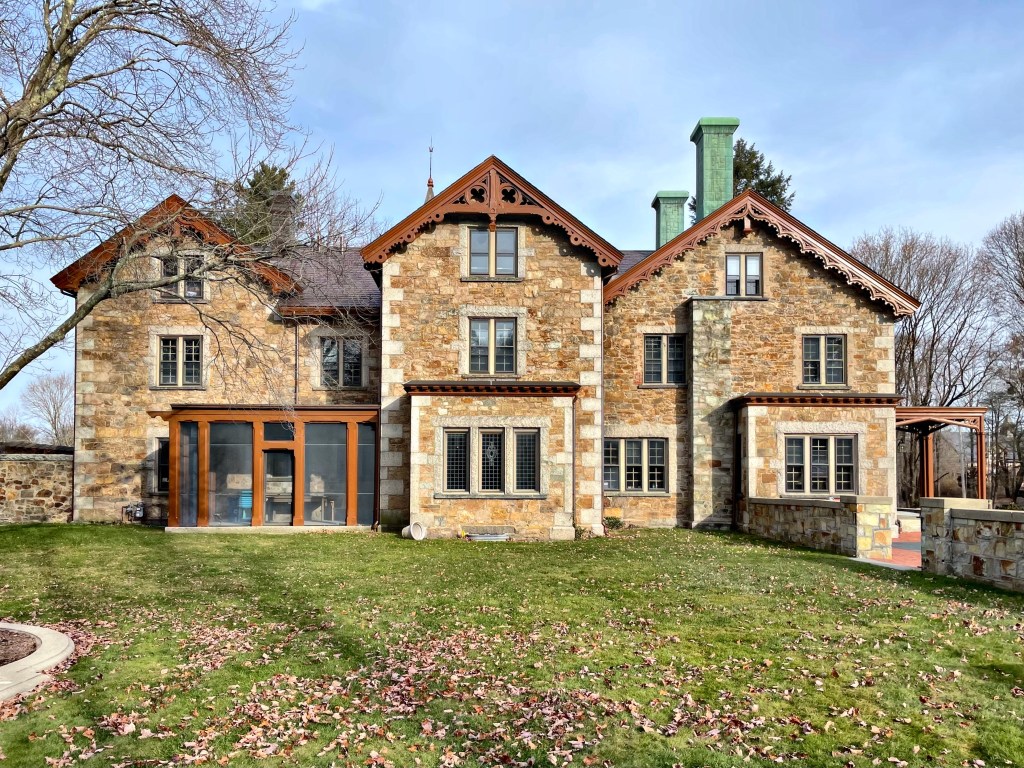
Dr. Ellis House – Sippican Historical Society // 1839

This house was built in 1839 Dr. Walton Nye Ellis (1808-1867), who served as physician in Marion in the second quarter of the 19th century. Born in Wareham, Ellis moved to Marion, and married Susan Delano (1809-
1840) after her death, within the year, he married Lucy Clark Allen (1820-1885); he had a daughter with his first wife and four daughters and three sons with his second. By 1838, he purchased a lot in Sippican Village for the price was $225. In 1855, Dr. Ellis organized a meeting of prosperous Village men, mostly sea captains, with the purpose of planning a library for the town. They pooled resources and funded a library which was located in a large closet on the second floor of his home seen here. The library’s books could be borrowed for a few cents a week. Subsequent funding from Elizabeth Taber helped create the Taber Library just decades later. In the 1960s, the home was gifted to the Sippican Historical Society, who remain in the building to this day.

Sherman’s Inn – Beverly Yacht Club // 1784

One of the oldest homes in Sippican/Wharf Village in Marion, Mass., this beautiful Cape house with gambrel roof dates to 1784 from deed research. The house was constructed by two owners, Barnabas Luce, innholder, and Stephen Cunningham, a mariner, seemingly as an inn for sailors who would dock their ships in the harbor just behind the property. It was later acquired by Edward Sherman (1790-1867), a shipwright and carpenter who built schooners at the wharfs in town. In 1868, his son Edward Franklin Sherman (1821-1907), also a ship carpenter, sold the waterfront property after his father’s death to Andrew A. Harwood, an admiral in the United States Navy, Commodore of the Washington Navy Yard, and through his mother, Elizabeth Franklin Bache, a great-grandson of Benjamin Franklin! The property remained in the Harwood family until, 1955, when the property was sold to the Beverly Yacht Club. The yacht club was originally named after the town of Beverly, north of Boston, when members broke from the Eastern Yacht Club of Marblehead which was more prestigious. For the first 23 years, the club had no fixed location, but eventually settled in Bourne, and merged with the local Sippican Yacht Club. The Great Hurricane of 1938 destroyed their clubhouse and they were “homeless” for years until moving into this 1784 home, later expanding it to meet growing needs.

Hadley’s Chandlery // 1806

At the corner of Main and Water streets in Marion’s Wharf Village, this beautiful building has long ties to the town’s rich maritime history. The building was constructed by A.J. Hadley in 1806 as a ship chandlery, a shop selling all the goods necessary for sailors and fishermen who were docked just steps away. While Hadley’s store occupied the right half of the first story, the western (left) segment housed the first Post Office in the village, leaving Hadley and his family on the second floor. There is something so special about fishing villages in New England, while the populations of these towns are very different than they once were, the buildings and history still convey martime history and the way of life here over 200 years ago.

Cobb House // 1841

The highest-style Greek Revival house in Marion is this home, built in 1841 as a parsonage for Marion’s Congregational Church. The first pastor to reside here was Rev. Leander Cobb. He assisted his father, Rev. Oliver Cobb, who had been preaching in Marion since the completion of the first meeting house in 1799. Leander’s daughter, Sarah Elizabeth, married Captain Benjamin Briggs, who’s father ran the local post office (see last post). In 1872, Captain Briggs set sail aboard his ship, Mary Celeste, with his wife and two year old daughter Sophia, and seven crewmates. Their school-aged son was left at home with his grandmother. They sailed from Massachusetts on November 7, 1872, bound for Europe with a cargo of commercial alcohol. Less than a month later, on December 4, the ship was found sailing erratically off the coast of Gibraltar. A local crew boarded the ship to investigate when they saw no one on deck. The sails were furled and the ship was in excellent condition. In the infant’s crib remained the impression of a sleeping child. However, no sign of the crew or the Briggs family was ever found. There are many theories about what happened, with the most likely being that some alcohol barrels got loose and flammable liquor poured out near the kitchen. It is possible the family and crew became frightened and boarded the safety boat incase of an explosion. The boat was not tethered and they likely could not reach the main ship as her sails were up. They were probably capsized by a wave and drowned to death in the open ocean.

Blankinship-Prichard House // 1790

Main Street in Marion, Massachusetts is a house lover’s dream. The street is lined with perfect 18th century capes and old whaling captains houses. This little cape house was built in 1790 for a J. Blankinship, one of the prominent local whaling families in town. By the early 1900s, Henry M. Prichard, an accountant, lived here. Born in New York City, Prichard and his family moved to Massachusetts. During the Civil War, he enlisted in the 25th Massachusetts Volunteer infantry and was part of the Burnside Expedition. According to his obituary,“he was wounded so seriously at the Battle of Cold Spring Harbor that he never fully recovered.” An “ardent devotee of canoeing”, Mr. Prichard retired to Marion, having spent most of his life in New York City and lived out his final days. It was likely he who added the large dormer windows as fresh air and light were seen as cures to ailments in the time. His widow, Abby and daughter, lived here until at least the mid-1920s.

Captain Grey House // 1845

Captain Russell Grey (Gray) was one of a handful of sea-captains who lived in Wharf Village, the downtown of present-day Marion, Massachusetts. The men would own ships that were docked in the harbor or in nearby New Bedford, and would leave for months-long excursions chasing whales, fish, or other treasures. Behind, they left their young wives and growing families, who braved the harsh New England winters and the unpredictable coastal weather events. This small cottage was built around 1845, for a young Russell Grey and his wife, Sarah Luce, who’s own family was full of mariners as well. The couple’s Greek Revival style cottage remains as one of the most charming in the village.

Major Rowland Luce House // c.1790

Built around 1790 for Rowland Luce (1756-1835), this Federal home oozes character and charm, and is located right on Main Street in one of my favorite towns, Marion, Mass. Luce was born in Tisbury on Martha’s Vineyard into a very religious family. While studying to become a Deacon like his father, the Revolutionary War broke out, and Rowland served to fight the British, leaving service as a Major. He eventually settled in Marion’s Sippican/Wharf Village and worked as a Deacon for the Congregational Church. The simple house is clad in cedar shingles and has two chimneys, a departure from earlier homes with one, large central chimney.

Rice-Petersen House // c.1890

Built in the 1890s by Dr. A.W. Rice, the ground floor of this Queen Anne style house served as the physician’s office, and he lived with his family in the upper floors. The home stands out as a fairly uncommon example of the Queen Anne style in Marion, a town dominated by Shingle style homes in that period. An enterprising Danish immigrant named Viggo V. Petersen, purchased the home and adjacent carriage house in 1921 and opened an ice cream parlor in it. When Viggo V. died in 1941, his son, Viggo C., attempted to carry on, until wartime cream shortages and rationing forced him to close for the duration of the conflict. Thereafter, Petersen’s ice cream resumed production and remained a Marion fixture until its final closing in the 1970s. The home is now occupied by two offices, and the former carriage house is home to the Mary Celeste Wine and Whiskey Library, a fun place that educates about wine and whiskey, offering tastings and events.

Delano House // c.1890

This late 19th century home in Marion was built for Florence and Walton S. Delano, a descendant of the great Delano family in Massachusetts. Walton worked in nearby Wareham at A. S. Gurney and Company, dealers in coal, grain and flour. The house is unique as it is in the American Foursquare form, a type of home built in the late 19th and early 20th centuries. The hallmarks of the style include a basically square, boxy design, two-and-one-half stories high, usually with four large, boxy rooms to a floor, a center dormer, and a large front porch with wide stairs. This example stands out for the shingle siding, flared eaves and rubblestone foundation. Swoon!