Thayer Bird Museum // 1903

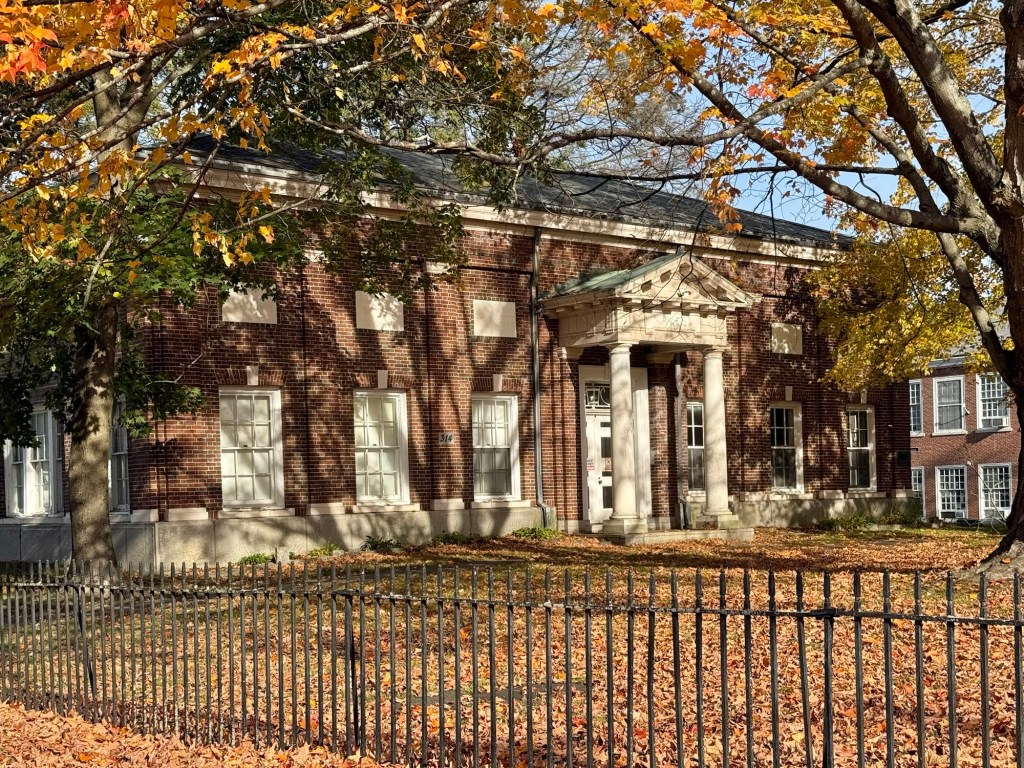
John Eliot Thayer (1862–1933) was an amateur ornithologist and member of the wealthy Thayer Family in Lancaster, Massachusetts. Due to his family’s business dealings, John Thayer was able to turn his passion, studying birds, into one of the largest collections of stuffed birds, eggs and nests for professionals all over the country to study. John began collecting and housed his collections were in several wooden buildings close to his home in Lancaster, but when these became unsafe and crowded he built this beautiful brick building in 1903 in South Lancaster opening it to the public as a museum a year later. The Boston architectural firm of Winslow & Bigelow designed the Colonial Revival style building, with the Guastavino Fireproof Construction Company providing plans for interior spaces and likely engineering inside. Many of the leading ornithologists of the time visited the Thayer Museum and it was estimated that more than ten thousand visitors came to the museum in the first six years.  In 1974, the building was sold to the now defunct Atlantic Union College and reopened as the Mabel Bartlett Art Gallery. Much of the Thayer collection was donated to the Museum of Comparative Zoology at Mr. Thayer’s alma mater, Harvard University. Since the Atlantic Union College closed in 2018, this important building has been closed, hopefully to see reuse in the eventual redevelopment of the campus.

Salem Christian Science Church – Witch Dungeon Museum // 1897

This Shingle-style church building on Lynde Street in Salem, Massachusetts, was built in 1897 as a satellite chapel for the First Congregational Society in Salem. The chapel was constructed from designs by the Boston-based architect Edward B. Stratton. From 1908 to 1979, the building was owned by the Christian Science Church and was eventually sold to private ownership in 1979, where it has since been home to the Witch Dungeon Museum. The building has retained much of its original design, including the large Gothic sanctuary window, tower, and decorative trusses at the gable. Sadly, the original shingles have been replaced by later siding.  

Yale University – Yale Art Gallery Building // 1928

One of the most visually stunning and unique buildings in New England is the 1928 Yale Art Gallery building, which is connected to Street Hall (last post) via a skybridge over High Street. Completed in 1928, the Yale Art Gallery was designed by relatively little-known, but significant 20th century architect, Egerton Swartwout. Swartwout graduated from Yale College in 1891 with a B.A. degree and with no formal architecture training, was hired as a draftsman at the illustrious firm of McKim, Mead & White in New York before running his own office, Tracy and Swartwout. Built in a Gothic Renaissance style inspired by Italian buildings such as the Bargello in Florence, the sandstone masonry structure commands the prominent site with a corner tower and facade fronted by five gothic arched windows. Inside, visitors are transported to a historic Italian art museum within the Gallery Wing, with the full-height Gothic windows with walls, floors and ceilings restored and lined in stone.

Canterbury Shaker Meeting House // 1792

The Canterbury Shaker Village was one of two Shaker communities existing in present-day New Hampshire (the other being Enfield Shaker Village, featured previously on here). In 1782 Israel Chauncey and Ebeneezer Cooley from the Mount Lebanon village of Shakers traveled to Canterbury and converted several prominent figures of the community by convincing some of the Christian farmers that the Shaker way was what they had been seeking. Among those converted to the Shakers, the Whitcher, Wiggin and Sanborn families, donated land to house the Canterbury Village community of Shakers and the Canterbury Village was founded in 1792, led by Father Job Bishop. The village expanded over time, and in 1803 there were 159 members in three families. Nearly fifty years later in 1850, the site contained 3,000 acres with a community of 300 housed in 100 buildings!

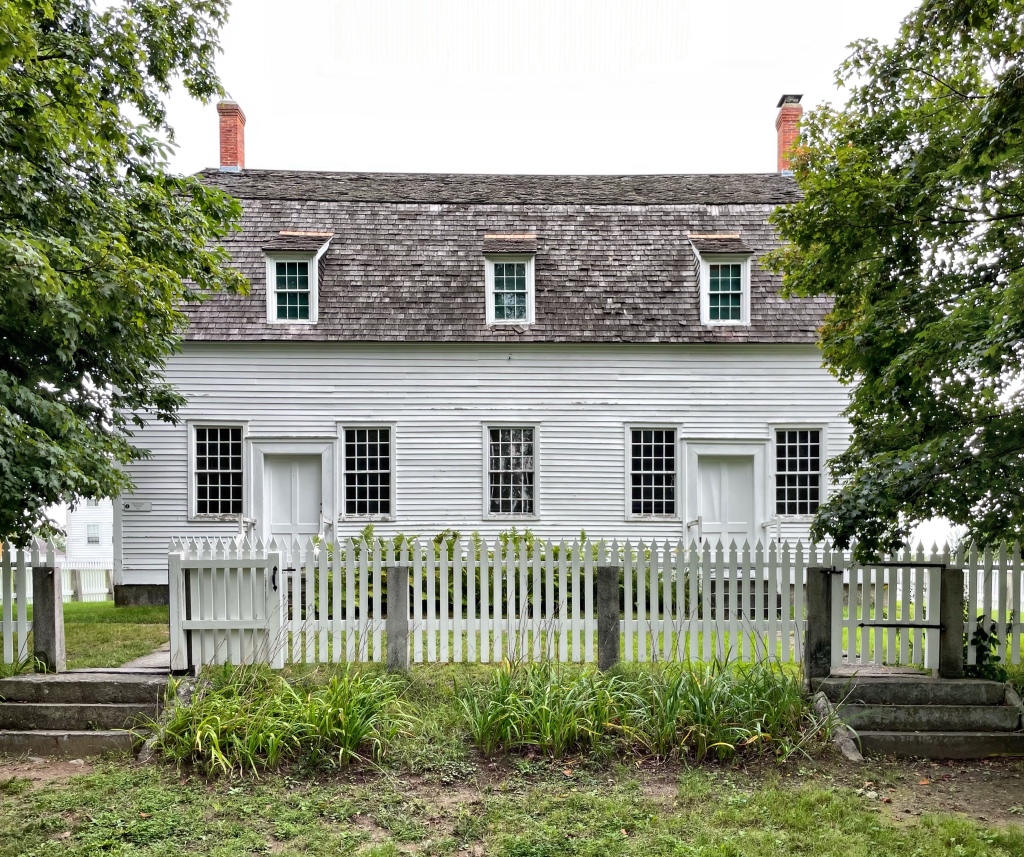
The first building of the Canterbury Village was the Meeting House. The Gambrel roofed building was constructed by members in reverent silence and supervised by Moses Johnson (1752-1842) who served as master builder of seven Shaker meetinghouses all over the Northeast. Inside, there were two stairways, one for men and one for women, located in the northwest and southwest corners of the building, each easily accessed by separate entrances, which led brothers and sisters from the first floor meeting room to the second story sleeping lofts.

In 1992, Canterbury Shaker Village closed, leaving only Sabbathday Lake Shaker Village open as a functioning community. There are apparently only two active Shakers left in the country, both at Sabbathday Lake in Maine. Many other villages like Canterbury, have been converted to museums, which give historians and the general public a great insight into how these places have functioned.