Fletcher Free Library // 1904

On July 14, 1873, Mrs. Mary L. Fletcher and her daughter, Miss Mary M. Fletcher, gave the city of Burlington, VT, $20,000 for the founding of the Fletcher Free Library. Half of this sum was to be spent on books; the other half was used to start an endowment for the library. By 1901, the library had outgrown its location in the old City Hall building. In the same year, Andrew Carnegie made a gift of $50,000 for the construction of a new library. In 1902, an architectural competition was created with entries from Boston, New York, Buffalo, Montpelier, Vermont, and Lowell, Massachusetts, but a young Burlington architect, Walter R. B. Willcox won the commission. Willcox designed the new ornate library that year and in August, 1904, the new library was dedicated and opened for business. In the early to mid-1970’s there was some pressure from the citizenry to demolish the Carnegie building and rebuild on the site, which coincided with Burlington’s large urban renewal policies in the downtown area. In response, a group of Burlington residents formed The Committee to Save the Fletcher Free Library Building. A petition was circulated, and as a result, the building was added to the National Register of Historic Places in 1974. In 1977, a grant of $234,000 made possible the stabilization and external repair of the building, and later an addition was constructed, to allow the historic library to meet the needs of the much larger city.

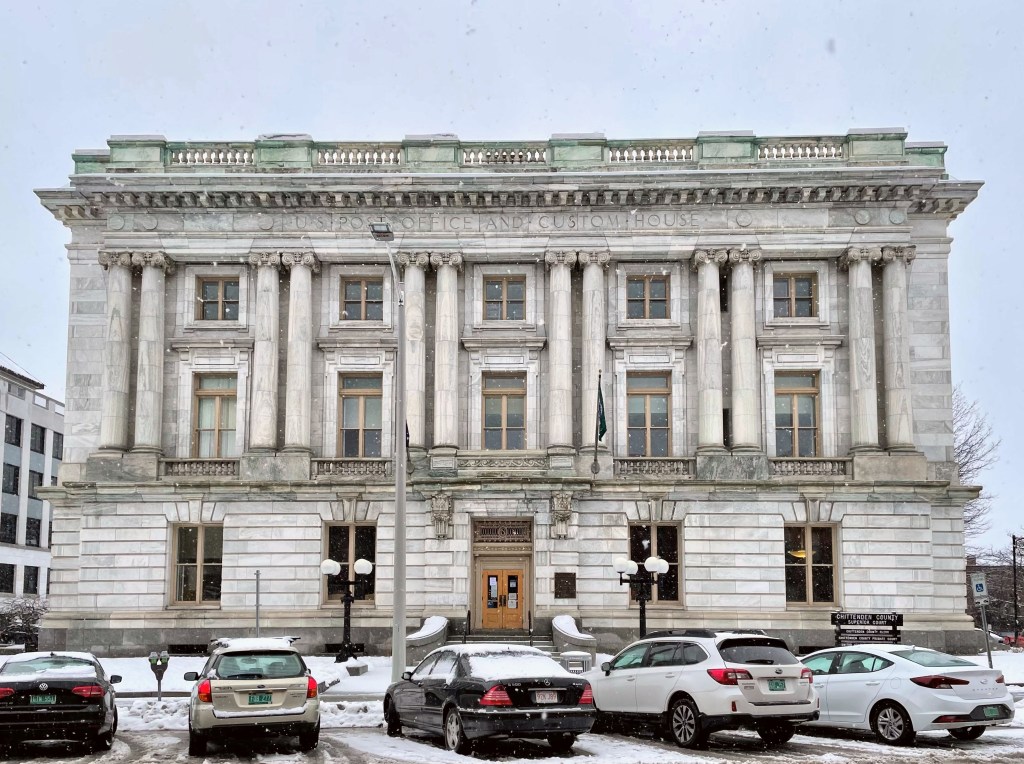
Chittenden County Superior Courthouse // 1906

The Chittenden County Superior Courthouse in Burlington, Vermont was built in 1906 and is one of the most bold architectural designs in the city. The building was actually constructed as the U.S. Post Office and Custom House for Burlington, but changed use in the 1980s after the Old County Courthouse was destroyed by fire. The building was the work of U.S. Treasury architect James Knox Taylor. Taylor designed, many major eastern federal buildings during the late 19th and early 20th centuries. He provided plans for this Beaux Arts structure with a well-appointed exterior finished in marble and dressed granite. Beaux-Arts architecture depended on sculptural decoration along conservative modern lines, blossoming in the United States in the early 20th century after many American architects studied at the École des Beaux-Arts in Paris, particularly from the 1830s to the end of the 19th century.

First Methodist Church, Burlington // 1869

This beautifully designed Romanesque Revival church consists of a large rectangular block with a steeply pitched gable roof and a square tower surmounted by a spire. The church is constructed of Willard’s Ledge stone (a locally quarried purplish limestone) with trimmings of Isle La Motte grey sandstone from quarries north of Burlington. This church is the only Romanesque Revival style church in the city and just one of four pre-1880 churches in Burlington. Architect Alexander R. Esty (1826-1881) designed the building and was a noted New England architect working during the late nineteenth century. He was trained in Boston and opened his own office in 1850 in Framingham, Massachusetts. The congregation remains active and welcoming.

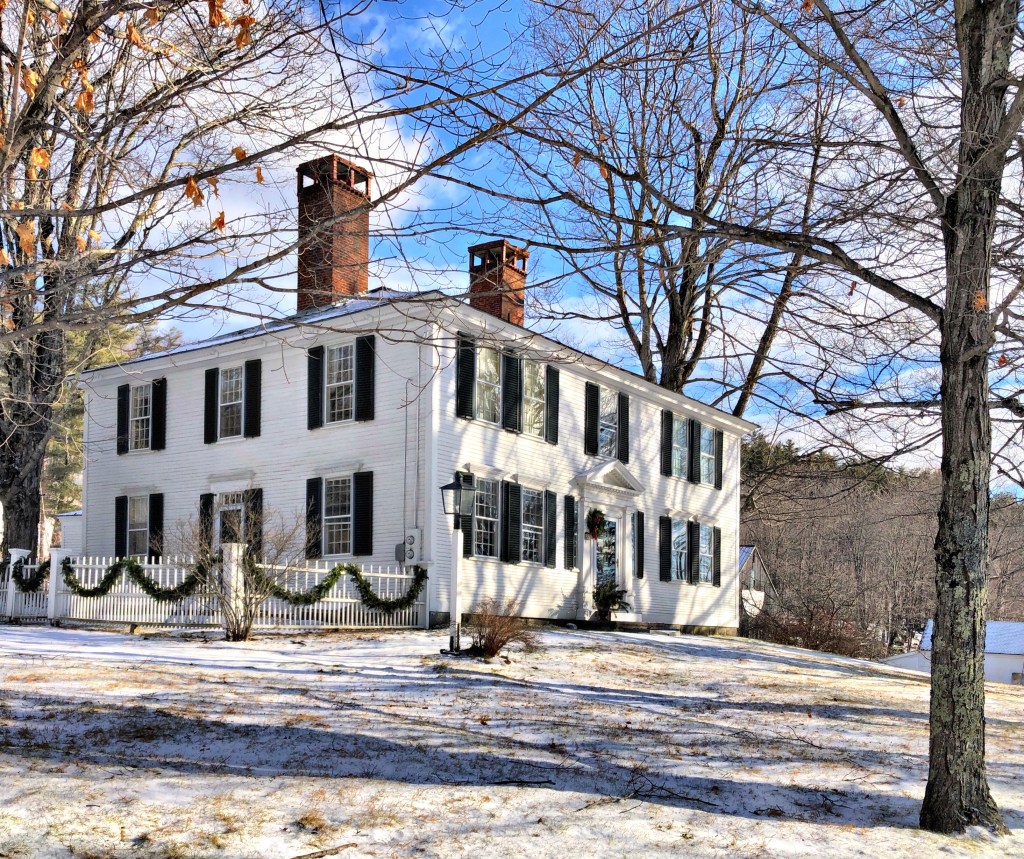
Faxon House // c.1795

Located adjacent to the Washington Town Green, the Faxon House exemplifies the Georgian architectural style seen in small towns all over the region. The home was built in the early 1790s by a member of the Faxon family. By the early 19th century, the home was owned by Azariah Faxon a storekeeper and the schoolmaster at the District #1 School, which at that time was located between the Town Hall and the Congregational Church in the center of town before being replaced with a larger structure. In 1793, an eight-year-old Sylvanus Thayer moved up to Washington from his family home in Braintree, Massachusetts, to live with his uncle, attending school where he was a teacher. While there, impressionable Sylvanus met Benjamin Pierce, father of future President Franklin Pierce. Both General Pierce and Sylvanus’ Uncle Azaria, who had fought in the Revolutionary War, fed Sylvanus’ growing fascination with military matters, including the dazzling campaigns of Napoleon Bonaparte. Sylvanus later attended nearby Dartmouth College, and went on to become “the Father of West Point” as an early superintendent of the United States Military Academy at West Point and an early advocate of engineering education in the United States.

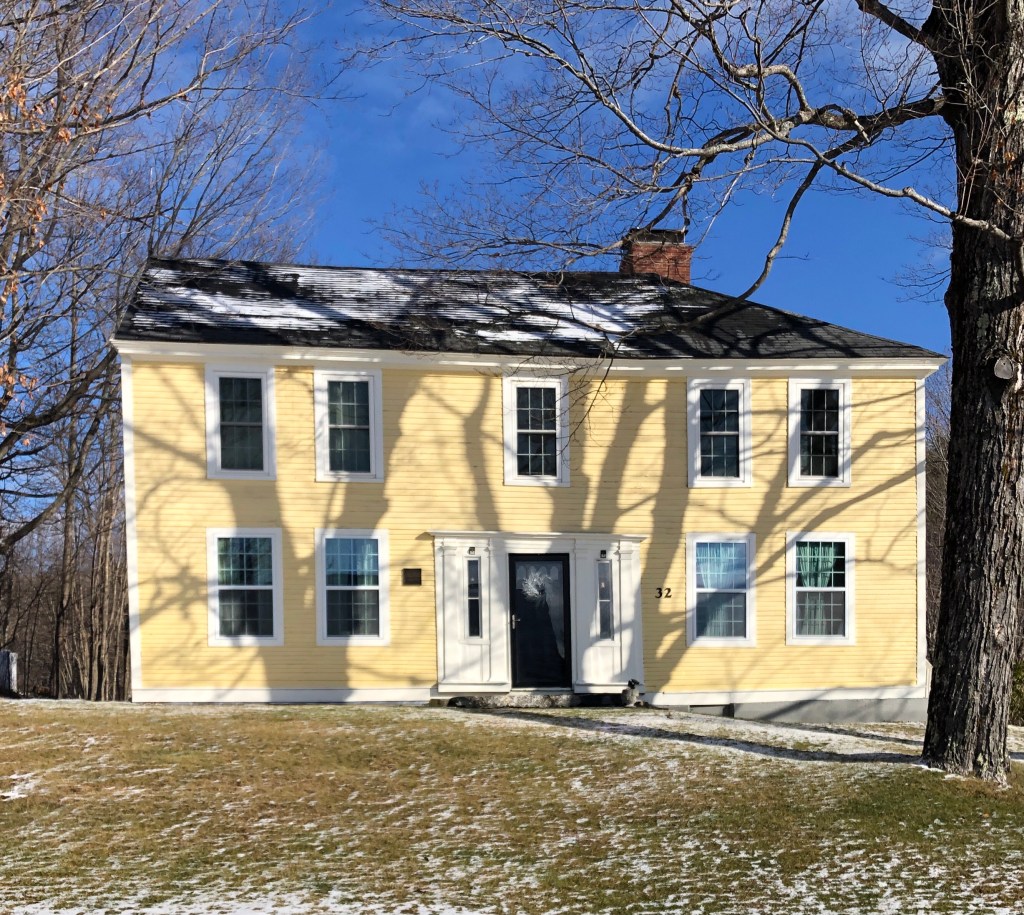
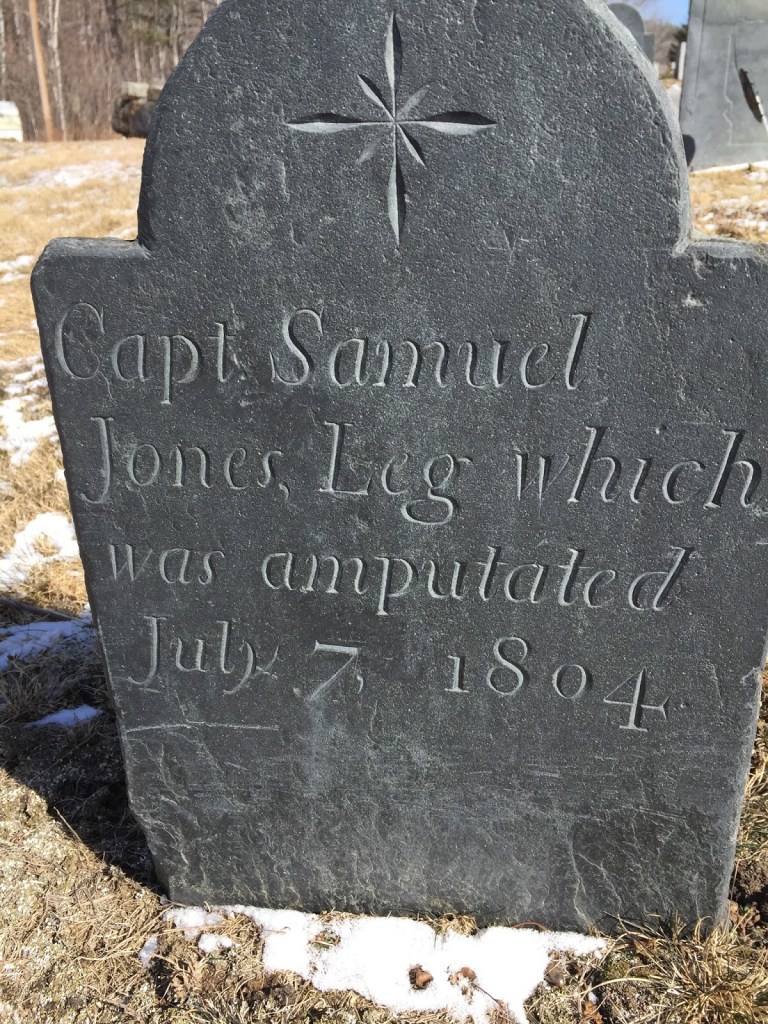
Samuel Jones House and Leg Grave //

Samuel Jones Jr. was born in Hillsboro in 1777. His family was among the first to settle in that town in the 1770s. Jones married Deborah Bradford in 1799, and the couple soon settled in Washington, New Hampshire that next year. Samuel ran a tavern out of the new family house which was built around that time. When he was 27 years old, Jones was helping a friend hoist and move a building on logs, when his leg became was caught and crushed by the building. His friends brought him to his house where he laid on a table awaiting a doctor. This occurred in the days prior to knowledge of anesthesia so his friends and neighbors treated him with whisky or rum. When the leg was removed they decided it should have a “proper burial” so it still rests with its marker in the old cemetery in Washington. Samuel survived the amputation and later moved to Boston, where he worked at the Customs House and later moved to New York where the rest of his body was buried upon his death in 1851.

Shedd Free Library // 1881

Aren’t tiny old libraries just the best?!

Located in Washington, NH, the Shedd Free Library is the only Victorian Gothic building in town, and packs a punch for its small size. The library was named for Sarah Shedd, a Washington teacher and poet who went to work in the cotton mills of Lowell, Massachusetts to support her family and educate her siblings. When she died in 1867 she bequeathed $2,500 to her hometown to establish a free public library, an amazing gift! The gift did not appear to be enough as nothing was built until 1881, after Boston architect S. S. Woodcock was selected by Luman T. Jefts, a wealthy shoe manufacturer in Massachusetts, to design the library after a gift to his hometown.

Washington Center Schoolhouse // 1883

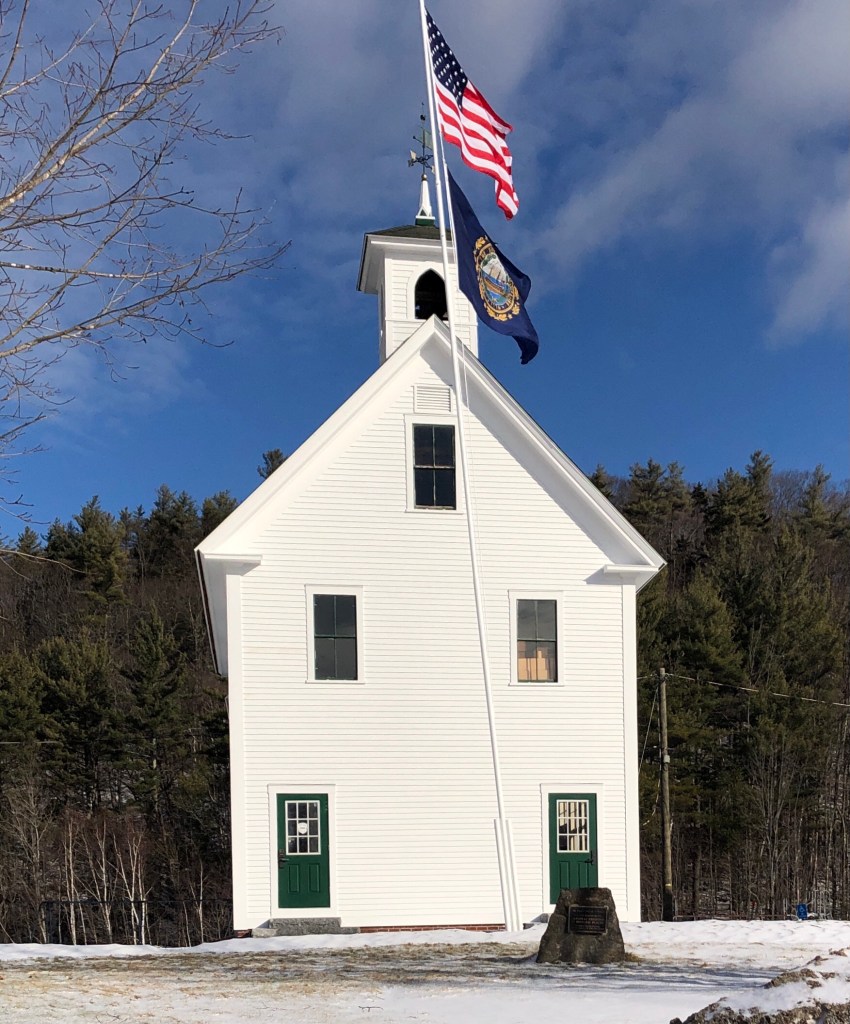
Adjacent to the Washington Meeting House, the Washington Center Schoolhouse perfectly compliments the Georgian building, despite being constructed 100 years later. Constructed in 1883, this building served as the principal school house in Washington, and was known as the Center School. There had been an earlier school house near this site, a small brick structure, but by the 1880s it was both worn out and too small and replaced. Eventually, it was decided to build a new school in the general style of the other town buildings, and place its facade flush with the Church (next post). The building now appears to be home to the town’s police department.

Washington Meeting House // 1787

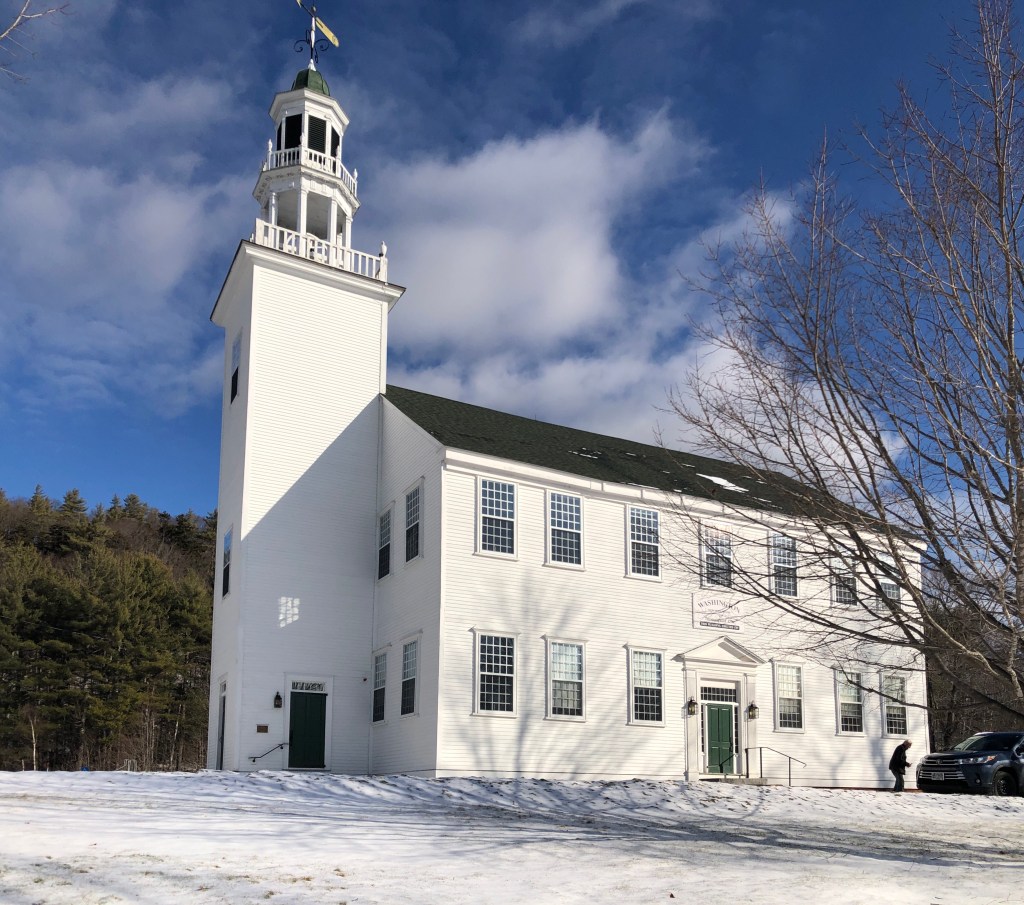
The Washington Town Hall, originally raised as a meetinghouse in 1787, is the civic and visual focal point of Washington Center in New Hampshire. Land here was first granted in 1735 by Colonial Governor Jonathan Belcher of Massachusetts. The town was one of the fort towns designated to protect the colonies from attack by Native peoples, and it was named “Monadnock Number 8”. The first permanent settlers arrived in 1768 and built log houses. By 1773, the community had 132 inhabitants. On December 13, 1776, the newly established American revolutionary government incorporated the town as “Washington”, after George Washington — one of the first named in his honor. A small townhouse was built but was replaced a decade later with what we see today. The current structure was originally a simple, two-story clapboarded structure, with east and west porches. The tower and belfry rising from the end were added in 1820. The building committee specified all details of the meeting house, including “that the windows should be glazed with squares of glass, seven by nine inches, forty panes to the window”. This attention to detail shows how the meeting house would be a source of pride for the new town and all details were to be discussed to the smallest detail.

The Charlesgate // 1891

One of the most grand apartment hotels in Boston, The Charlesgate, serves as one of many architectural anchors for the Back Bay neighborhood from Kenmore Square. The apartment hotel was constructed in 1891 and so named after the Charlesgate Park which was created by landscape architect Frederick Law Olmsted as part of the glorious Emerald Necklace park system. The Back Bay Fens was the first park designed by Olmsted for the City of Boston. Creating the Back Bay Fens was as much a sanitary as an aesthetic project, because the water was heavily polluted and often stagnant; Olmsted envisioned Charlesgate as the meeting point of the Back Bay Fens with the Charles River. The apartment hotel was actually designed and was financed by the architect, John Pickering Putnam, and members of his family. The basement and first story are constructed of Indiana limestone with the remainder of brick, with limestone trimmings. A picturesque effect is obtained by grouping the bays in pairs, and surmounting each pair with gables in the Queen Anne style, and by relieving these features against a high roof of green slate. The building originally featured 30 apartments and has since been reconfigured into over 50. The architectural landmark is one of the best statement-pieces in the neighborhood, and shows that apartment design can be done very very well!

Corbin Estate // 1880

Austin Corbin (1827-1896) was a 19th century railroad man known for consolidating what we know today as the Long Island Railroad. He was born in Newport, New Hampshire and eventually graduated from Harvard Law School in 1849. He eventually moved to New York, and founded the Corbin Banking Company, which he leveraged into a successful banking firm, which funded his diversifying into resorts and railroads. In 1873, while following doctors advice of ocean air for his ill son on Coney Island, Corbin recognized the area as an untapped natural location for a summer resort, and proceeded to purchase 500 acres, opening a large hotel and a new railway system to deliver New Yorkers to the resort in 1878. He is infamous for strong-arming the Montaukett tribe on Long Island out of nearly 10,000 acres they occupied around Montauk. The tribe is still seeking compensation for this tactic. In 1880, he built this summer estate in his hometown of Newport, NH as a castle for his greed, also acquiring over 100 acres for the estate. He soon after bought out over 25,000 acres of land for an ultra-private members-only hunting club. Corbin died on the estate in 1896 and the property was eventually purchased by William Ruger. The home was vacant for decades following WWII until Ruger, who co-founded Sturm, Ruger & Co. purchased the estate, likely utilizing the hunting reserve next door. The property and another owned by the Ruger Family were sold separately at auction in 2019.