Gardiner Almshouse // 1834

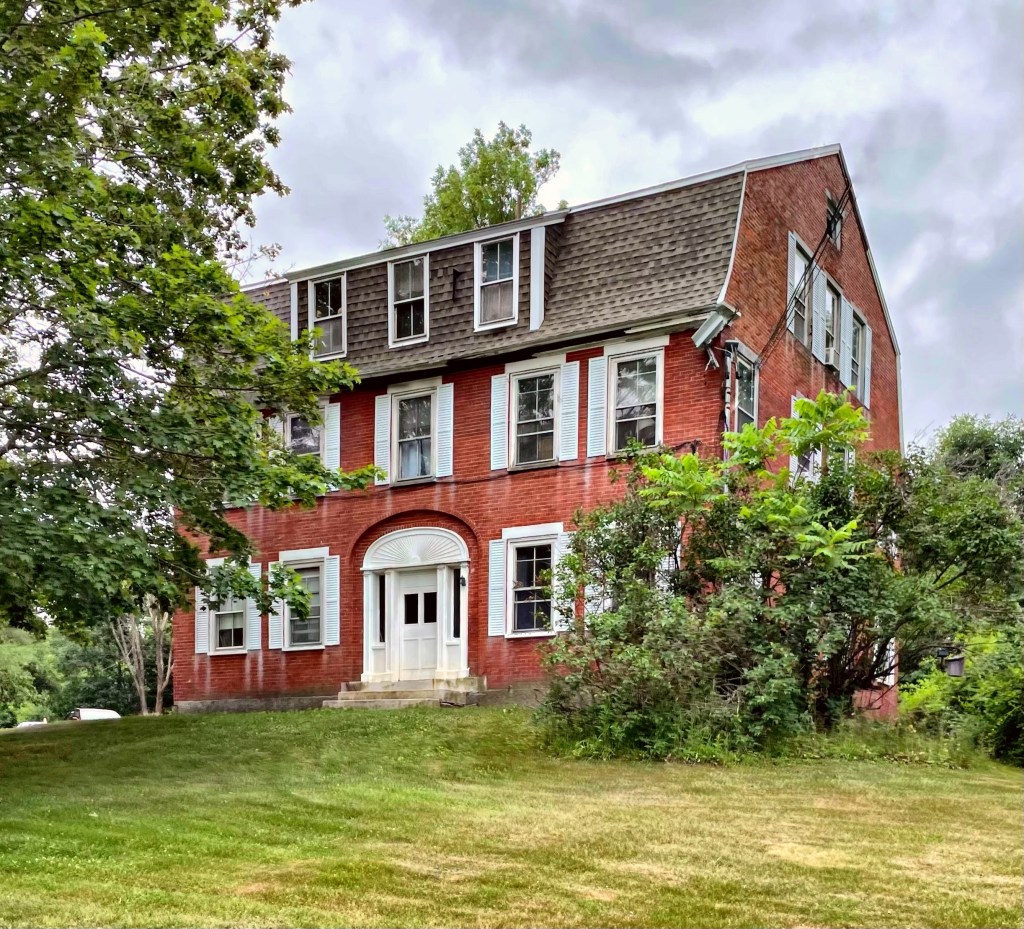
This large brick Federal house was built on the outskirts of Gardiner, Maine, in 1834. Ebenezer Moore, the builder, worked as a carpenter and house-wright in town and showcased his skill on his own brick mansion, selling it to a C.E. Bradstreet. By the late 1840s, the town of Gardiner decided that it would need a new almshouse, city-provided housing for the poor, so they purchased the Bradstreet house and 14-acres of land. In the 1848 town report documents noted, “The establishment is a brick one, of two stories, containing thirty-six fine rooms, including seven fitted for the insane in the most admirable manner, together with a spacious hall. The building is every way a most excellent one for the purpose, and is a monument of the humanity and generosity of the city.” The almshouse served as a working farm where the poor could harvest their own crops and contribute in a small, closed society. The almshouse burned in 1909, and was immediately rebuilt using the outside brick walls. In the Colonial Revival manner, a gambrel roof replaced the former gable roof, which added a third story to the almshouse. The building was eventually sold, as new housing models for low-income residents took off. The former almshouse was converted to an apartment building in 1970, a use that appears to continue to this day.

Captain Nathaniel Stone House // 1872

The Captain Nathaniel Stone House in Farmingdale, Maine was constructed in 1872 on a small plot of land overlooking the Kennebec River. The charming home was constructed by Nathaniel Stone (1797-1884), a retired ship chandler,(a dealer in supplies or equipment for ships) who moved back to his hometown after making his fortune in Boston. He lived here with his wife, Martha, and his adopted son, Uriah, in this fashionable Second Empire style. Nathaniel died in 1884, outliving his wife by two years. The property was willed to his adopted son Uriah, who quickly sold the home on account of him seeing ghosts inside, he refused to live there because of it. The home was acquired by William Ring, a businessman who owned real estate in nearby Gardiner, Maine. Between 1886 and 1912 he and his family resided at the former Stone House, but by the turn of the Twentieth-century he grew increasingly in debt, and on several occasions he borrowed against his property to meet his obligations. Before the home went up for auction in 1912, a massive fire broke out in the home, destroying all the interior woodwork, and William perished inside. Although significantly damaged, it was largely rebuilt to its original appearance by its eventual buyer and has been an architectural landmark on the Kennebec River ever since. Now that I think of it, maybe Uriah Stone could see the future and saw William Ring as a ghost!

Harkness Estate – Carriage House // 1908

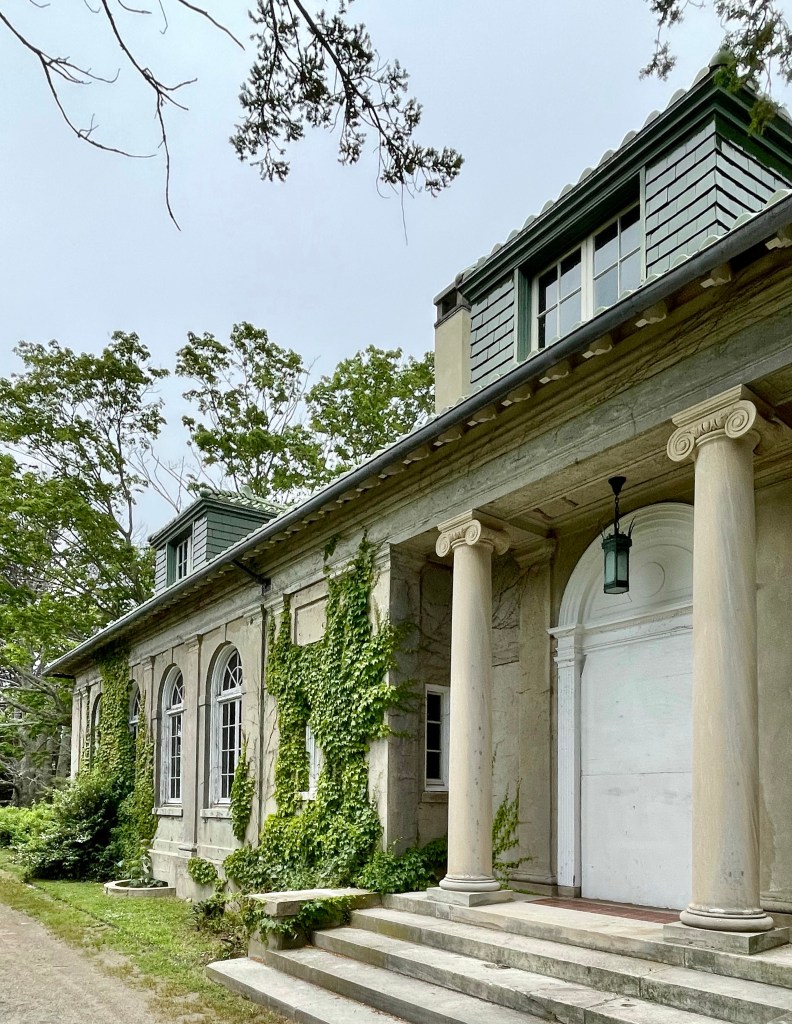
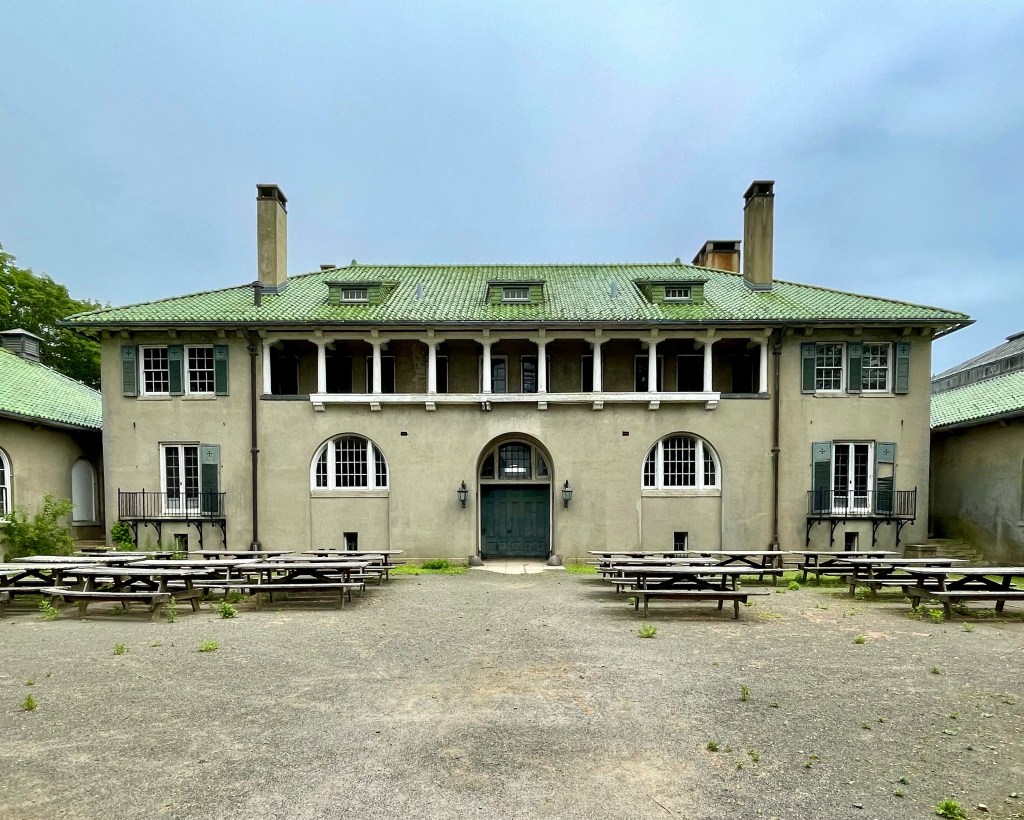
Another of the stunning buildings on the Harkness Estate is this massive all-purpose building that served a variety of functions, but I will call it the Carriage House. The building was constructed in 1908 and designed by James Gamble Rogers, mimicking the Renaissance Revival grandeur of the main home, Eolia. As previously mentioned, the large, U-shaped building was a multi-use support compound for the Harkness Family and their farm. The South Wing (right) of the building served as a clubhouse for Edward Harkness and his friends, with a billiards room, squash court, and two bowling lanes. This wing has large windows looking out towards the ocean and the large gardens on the property. The central block contained a garage with a turntable to facilitate the parking of limousines, a gas pump and a car wash for Mr. Harkness and his growing automobile collection. The North Wing (left) contained the horse stables, carriage area, tack room, smithy, and even a space dedicated to dog grooming. Upon close inspection you can see small rounded stones near the portals to allow the wheels to hit them rather than damage the building. Perhaps most importantly, the Carriage House was the location for the furnace room with its huge steam boiler. This boiler heated the Carriage House as well as the Mansion via an underground steam line. Apparently the building will soon be undergoing a restoration. Fingers crossed!

New London Ledge Lighthouse // 1909

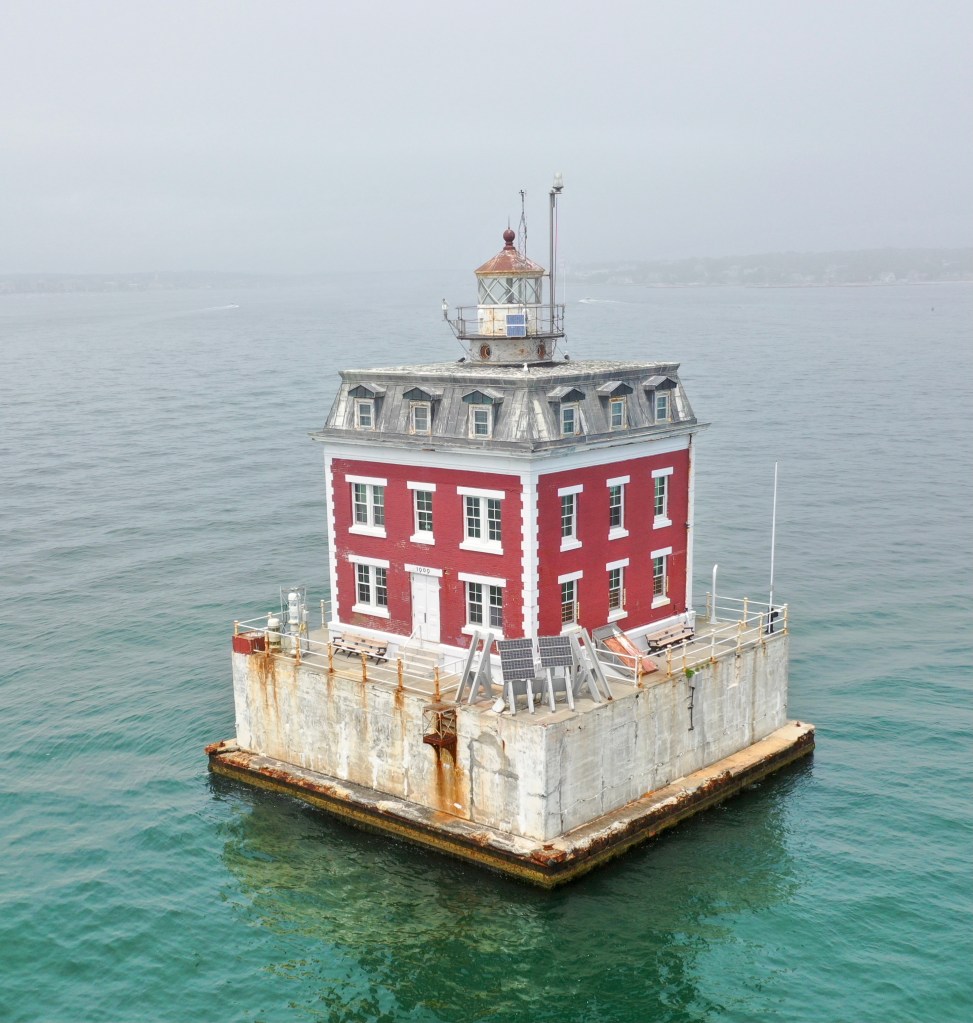
Set way off the coast of Connecticut at the eastern end of Long Island Sound, sits this stunning lighthouse which appears more as a Second Empire style home than a lighthouse! By the early 1900s, New London, with its protected harbor at the mouth of the Thames River, had made the transition from whaling center to industrial city. New London Ledge Light was built because New London Harbor Light wasn’t sufficient to direct vessels around the dangerous ledges at the entrance to the harbor. The New London Ledge Lighthouse was completed in 1909, built by the Hamilton R. Douglas Company of New London and is an architectural antique as its Second Empire style is about 50 years past the time the style was popular in American architecture. The lighthouse reportedly owes its distinctive French Second Empire style to the influence of the wealthy home owners on the local coast, who wanted a structure in keeping with the elegance of their own homes. Sadly, many of the large homes near the shore in the area were destroyed in the Great Hurricane of September 21, 1938. Coast Guard crews lived at the light until it was fully automated in 1987. The lighthouse today is owned and operated as a museum by the New London Maritime Society.

Boxborough Town Hall // 1901

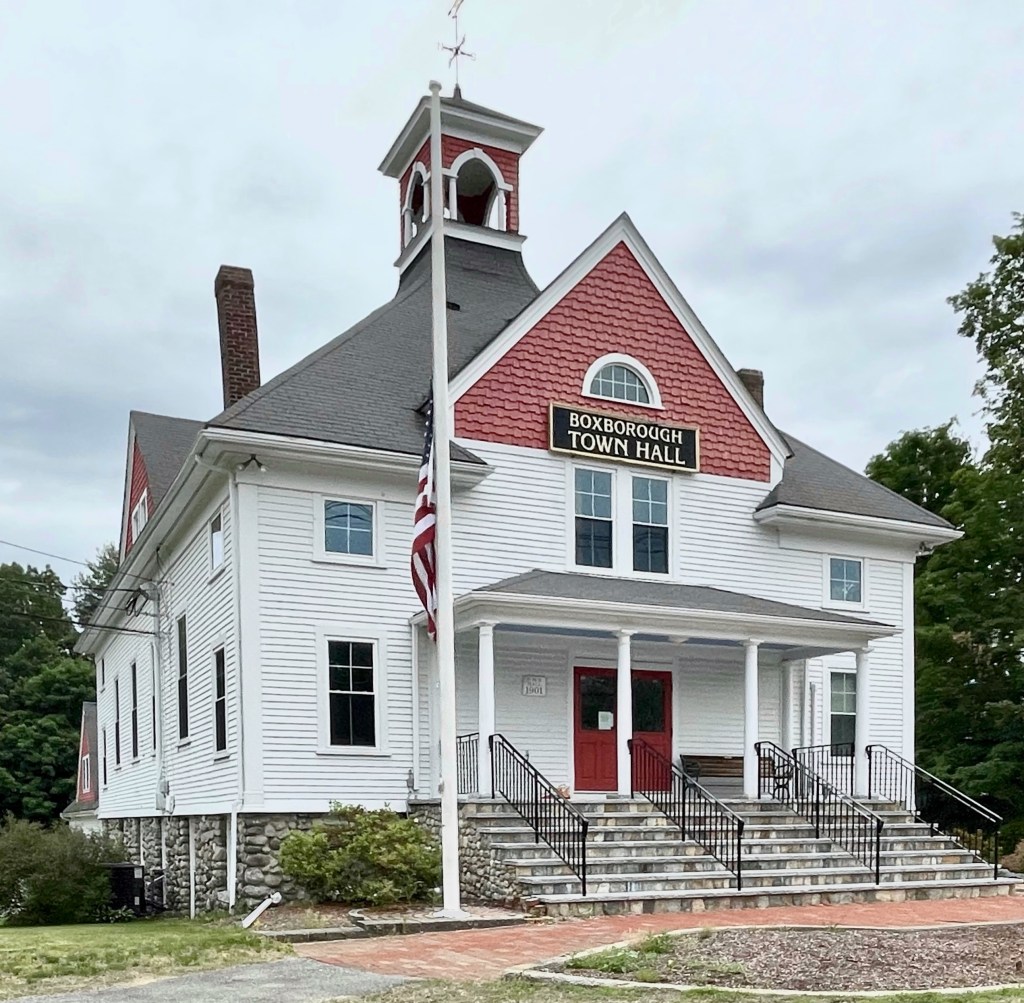
The area which became the town of Boxborough, Massachusetts, was first inhabited by the Native Americans of the Nipmuc and Pennacook tribes. Land in Boxborough was not settled by colonists until the beginning of the eighteenth century by farmers looking for fertile land to establish farms, who branched out from nearby Acton. Boxborough was formed from Harvard, Littleton, and Stow in 1783 and was incorporated as its own town. With the exception of small local industries including gristmills, sawmills, and cooperages as well as some minor boot and shoemaking, comb-making, and a lime quarry and kiln, Boxborough’s economy remained almost entirely agricultural through the 19th century. The town grew steadily and a Town Hall building was funded by the turn of the 20th century. This Queen Anne/Colonial Revival Town Hall building was constructed in 1901, atop the foundation which was constructed of locally gathered cobblestone by local volunteer farmers. Today, the town retains much of its agricultural heritage, but it is definitely under threat by subdivisions and Neo-Colonial mansions further contributing to Bostons suburban sprawl.

George L. Allen Summer Residence // c.1895

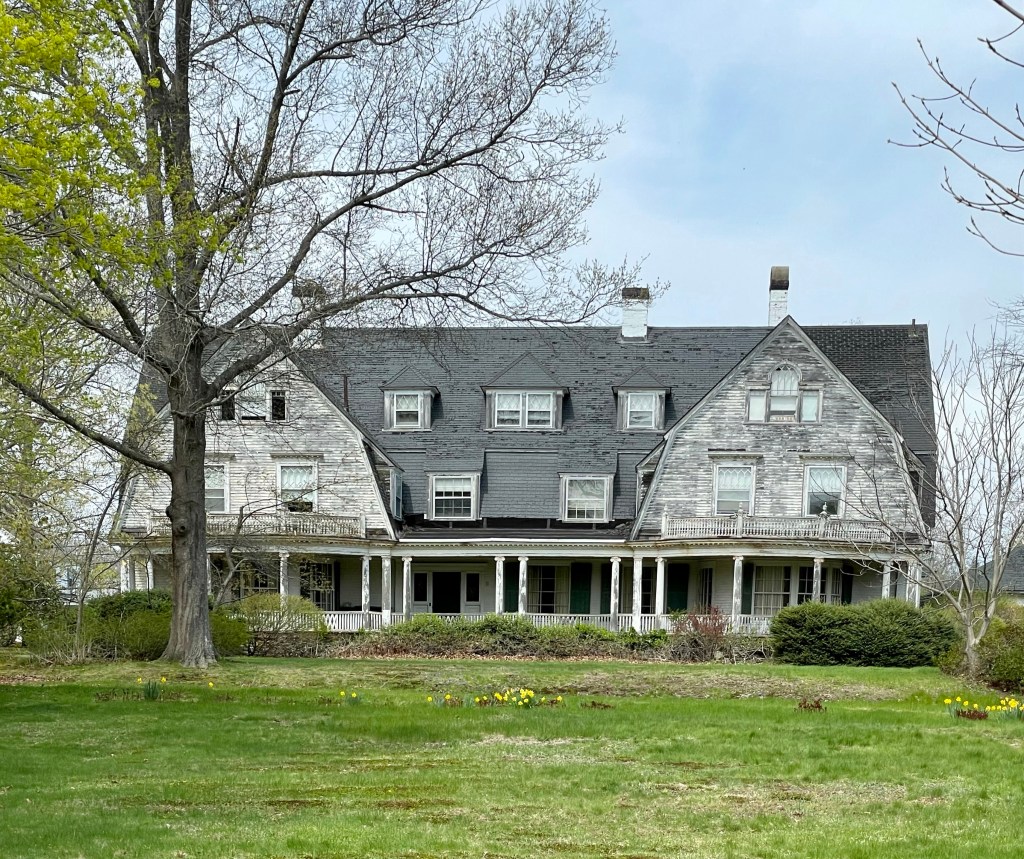
This massive summer “cottage” in Rye Beach, NH, was built around 1895 for St. Louis businessman George L. Allen. The massive Colonial Revival home features a gambrel roof with a series of gabled, hipped and shed dormers to break it up. A circular driveway would have allowed visitors for Great Gatsby-esque parties to get dropped off by their driver and enter right into the home’s large stair-hall. The most stunning facade is the rear, which faces a lawn with views out to the Atlantic Ocean. A full-length porch on the first floor sits recessed under the floor above to provide shelter from the harsh summer sun. Sadly, the mansion has seen better days and appears to be a shadow of its former self. Luckily, almost all of the historic windows remain and the home can definitely be saved. Fingers and toes are crossed to see this beauty preserved.

Lougee Cottage // c.1880

This house was built and first occupied by George G. Lougee, owner and proprietor of the Sea View House Hotel (demolished) across the street. Before building his own hotel, Lougee was a clerk at the Atlantic House, another summer resort. Lougee eventually worked his way up and ended up managing that hotel. Lougee’s success managing the Atlantic and later, the Farragut, enabled him to pursue his own enterprise and build his Sea View Hotel. When Lougee sold the Sea View hotel, he also sold this house with it. His former Stick style home was then converted to additional rooms at the hotel until it closed in the 20th century.

Fort Dearborn // 1943-1961

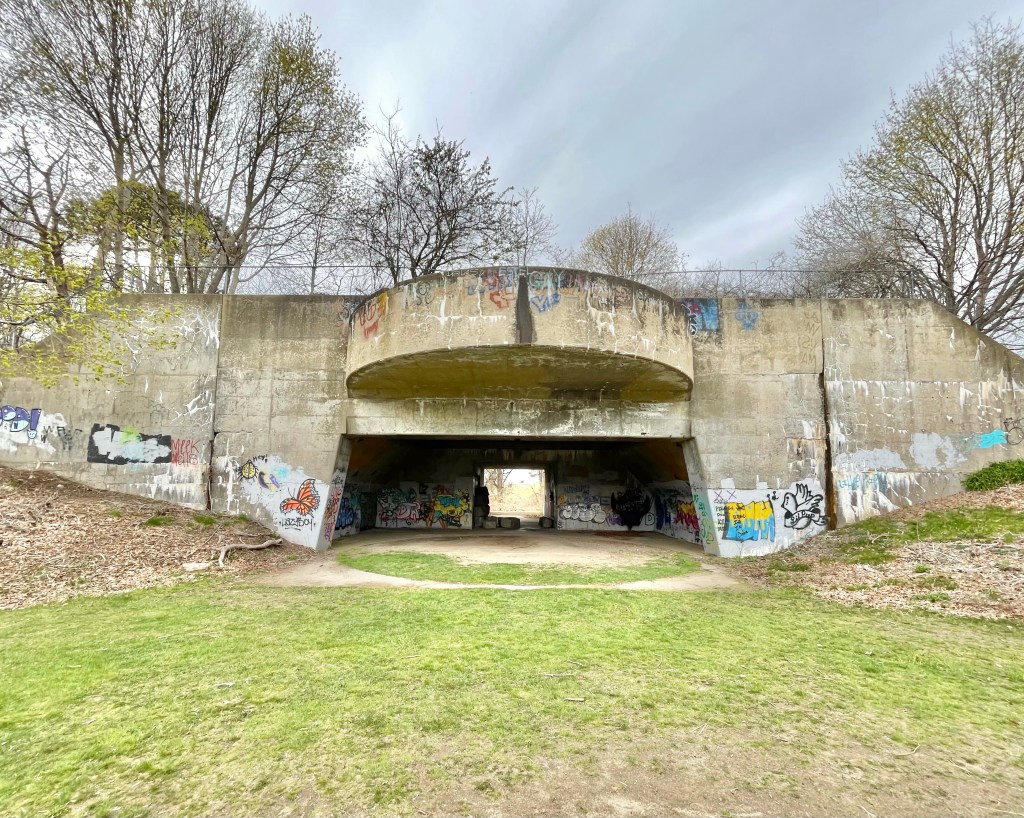
Odiorne Point in Rye New Hampshire was owned by the Odiorne Family from at least 1800, when the family built a farmhouse on the land. The peninsula juts out into the Atlantic Ocean, just south of Portsmouth, and it was seen as a strategic position by the United States Government, to protect the Portsmouth Naval Shipyard. With the advent of World War II, the United States Government deemed it necessary to improve the fortifications commanding the approaches to the Portsmouth Navy Yard, so the Government acquired this property and named it Fort Dearborn. Giant 16” coast defense guns and other equipment were installed to protect the coast from the impending German advance into North America. The Government acquisition on Odiorne’s Point included Mr. Odiorne’s home and 24 other properties, with many fine old homes on the coast demolished to make way for military facilities, but the Odiorne house was converted to a barracks. When The Nazi forces were beat in Europe, the fort was deactivated and all the guns were removed. In the Cold War period, the U.S. Air Force took formal possession of 45.3 acres at Odiorne’s Point in 1955, which it had been using since 1949 as the Rye Air Force Station. By 1961, the defensive use of the site was not as important, and the site was sold to the State of New Hampshire as a State Park. Today, you can explore the park and the decaying concrete batteries up close, which is a favorite excursion of mine.

Hatch Memorial Shell // 1940

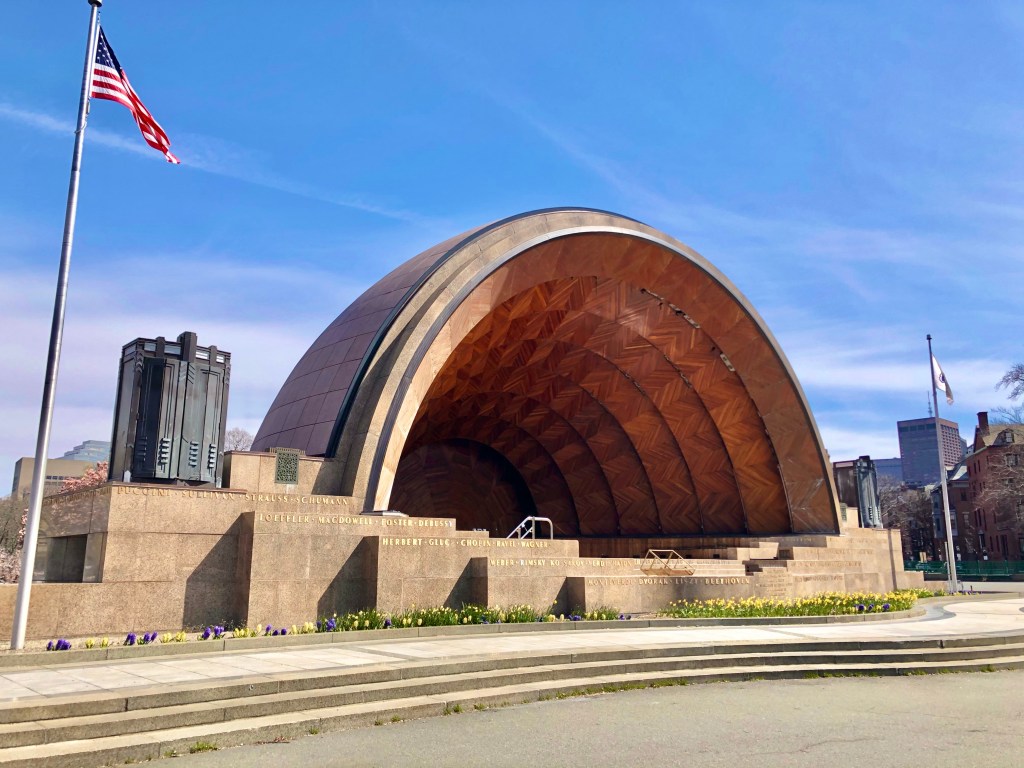
Located at the Charles River Esplanade in Boston, the Hatch Memorial Shell has long been an iconic landmark and meeting place for Bostonians and tourists alike. Built in 1940, this outdoor amphitheater structure replaced an earlier 1920s shell, envisioned by Arthur Fiedler, the first permanent conductor of the Boston Symphony Orchestra. Construction began on the first shell in 1928 and Arthur Fiedler conducted the first Boston Pops concert there on July 4, 1929, followed by a month of concerts during that first summer, a tradition that has continued to this day. A second temporary shell was constructed of metal in 1934, which was unsatisfactory for the famous orchestra. In 1940, the construction of the new music shell took place, donated by benefactor Maria Hatch, to build a memorial for her late brother, Edward, who it is named after to this day. The permanent shell was designed by Richard J. Shaw, a Boston architect known for designing churches. The Art Deco design, with intricate woodwork adorning the interior and a terrazzo tile roof, was dedicated on July 2, 1940, just in time for Independence Day celebrations.

Stoneymeade Farm // c.1773

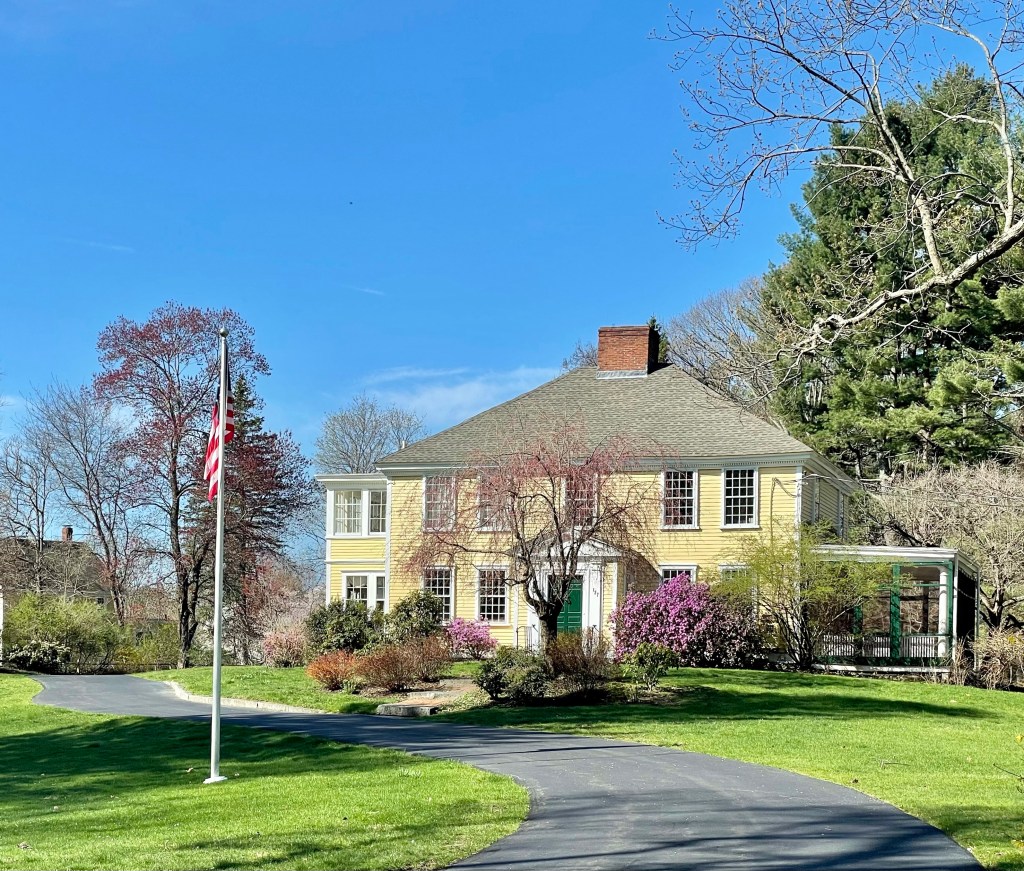
This stunning Georgian farmhouse in Acton, Massachusetts, was built around 1773 for Seth Brooks (1740-1831) and his wife Molly Conant Brooks, on land that had belonged to her father, William Conant of Concord (part of which was later annexed to Acton). Seth Brooks fought under Captain Isaac Davis on April 19th, 1775 at the Battle of Concord, who was among the first killed and was the first American officer to die in the Revolution. It was Brooks who ordered Davis’ body carried from the field after he fell, so he could be buried with honor. After the war, the family suffered an unfathomable tragedy. Seth and his wife, all their nine children, and all but one of their grandchildren died of the same type of tuberculosis, “slow consumption.” The family “curse” appears to have been broken by grandson Nathan Brooks, Jr., (1799-1881,) who inherited the property. According to local legend, a room beside the center chimney sheltered runaway slaves, as Nathan Brooks was an avid abolitionist. At the turn of the 20th century, the farm was purchased by Brookline timber merchant Benjamin Pope, owner of the Pope and Cottle Company of Boston. For many years, the Pope family used the house as a summer residence, with managers working the property as a dairy farm. It was Pope who named the farm “Stoneymeade,” and added greenhouses, an icehouse, and had an elaborate water system installed. Stoneymeade Farm continues to this day as an equestrian farm with boarding space for horses.