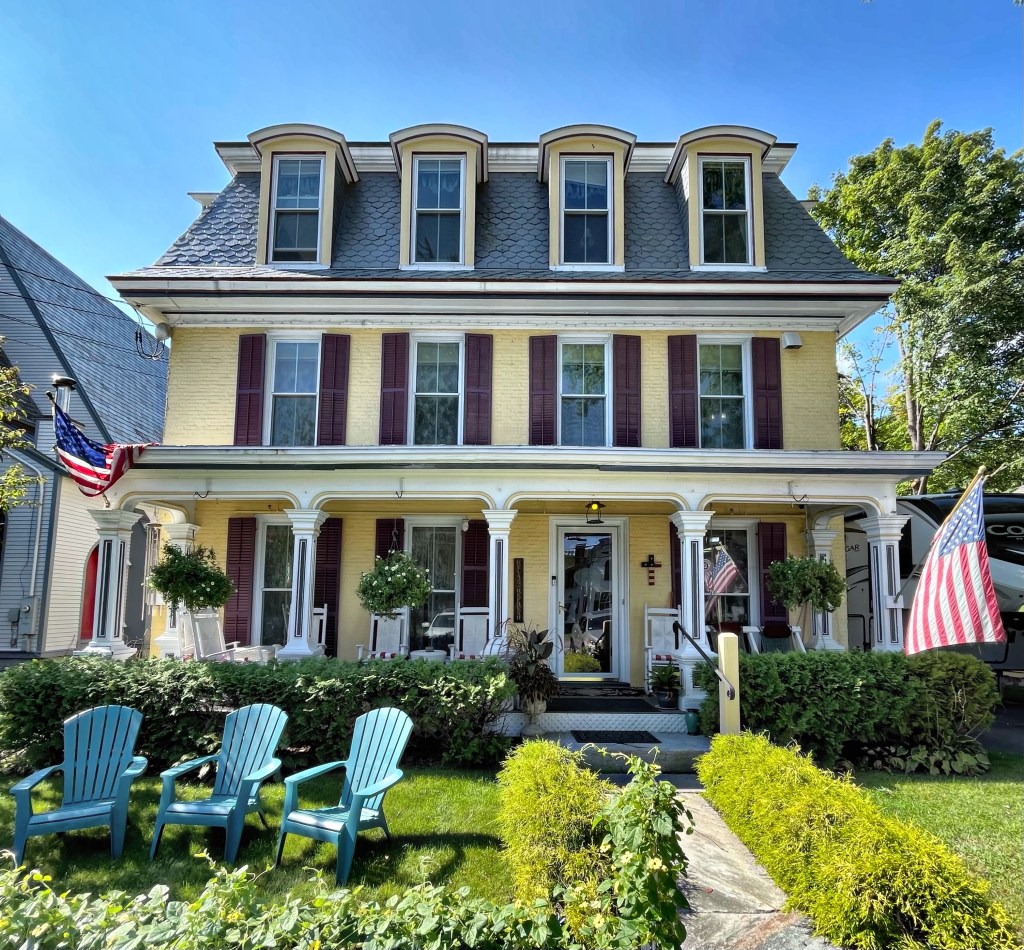
Inn Victoria // c.1850

Located right on Main Street in the beautiful village of Chester, Vermont, this historic inn has been a landmark in town since it was built in the mid 19th century. The house was constructed around 1850 for Dr. Abram Lowell (1794-1876), the village doctor. Dr. Lowell conducted his medical practice in a small building next to the main house and resided in the home, which originally had a side-gable roof. Tributes printed in regional newspapers at the time of his death called him an eminent physician, accomplished gardener, “eccentric in his ideas,” and “the wealthiest man in town.” After his death, the home was inherited by his daughter and her husband, George Hilton. They immediately “modernized” the home, adding the mansard roof, which provided an extra full story of living space. The home was converted to a bed & breakfast in 1998, and has been one of the most intact, Victorian era inns in the state since! It is known as Inn Victoria, so named after Queen Victoria and the Victorian period of architecture in the United States.
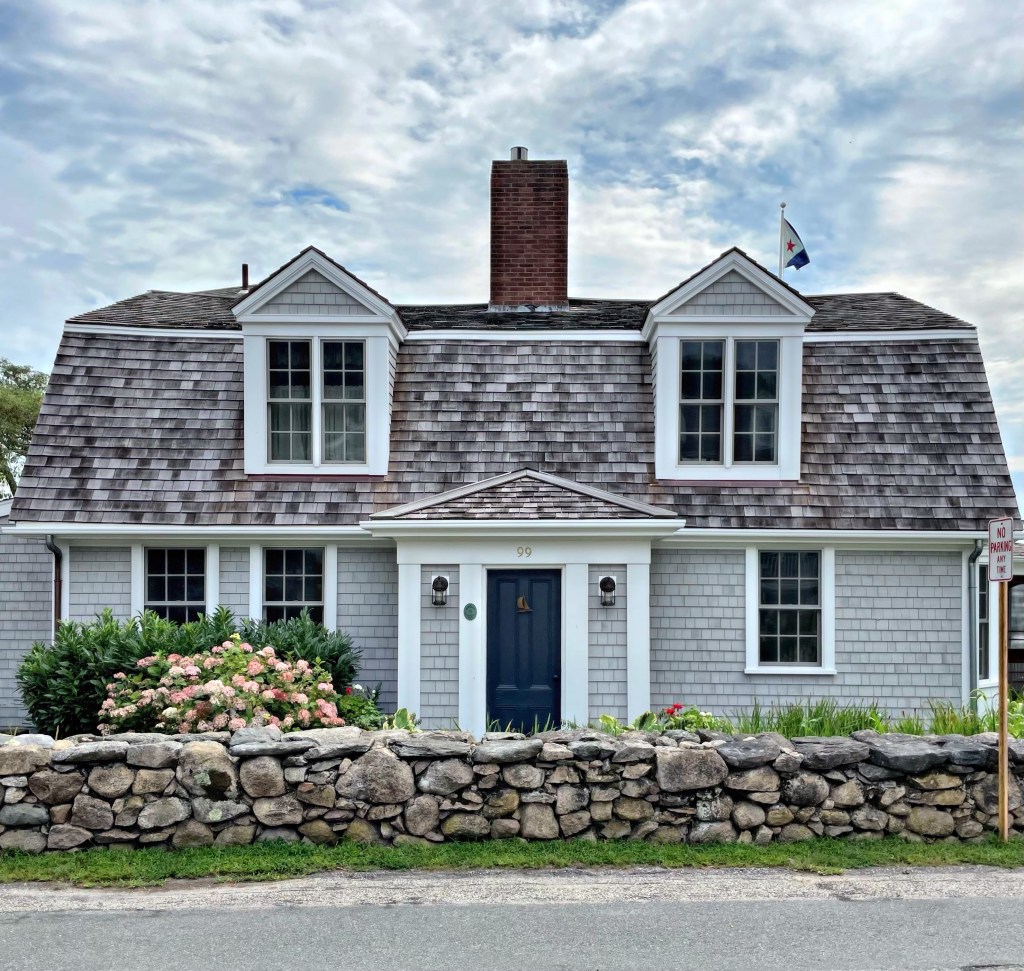
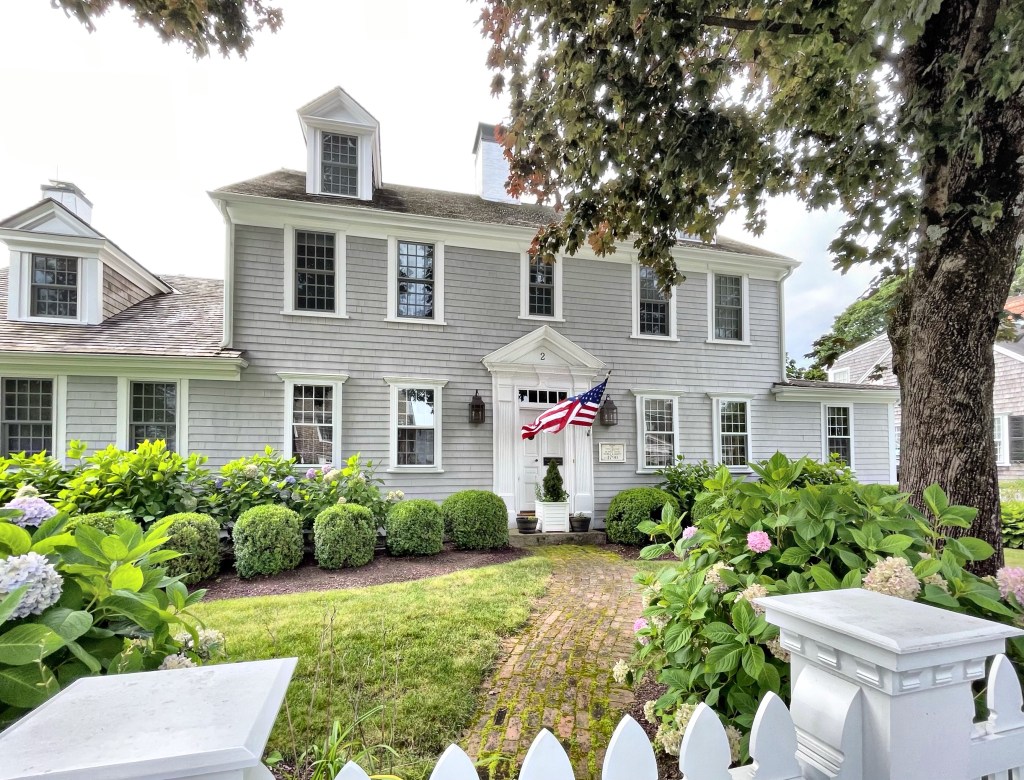
Sherman’s Inn – Beverly Yacht Club // 1784

One of the oldest homes in Sippican/Wharf Village in Marion, Mass., this beautiful Cape house with gambrel roof dates to 1784 from deed research. The house was constructed by two owners, Barnabas Luce, innholder, and Stephen Cunningham, a mariner, seemingly as an inn for sailors who would dock their ships in the harbor just behind the property. It was later acquired by Edward Sherman (1790-1867), a shipwright and carpenter who built schooners at the wharfs in town. In 1868, his son Edward Franklin Sherman (1821-1907), also a ship carpenter, sold the waterfront property after his father’s death to Andrew A. Harwood, an admiral in the United States Navy, Commodore of the Washington Navy Yard, and through his mother, Elizabeth Franklin Bache, a great-grandson of Benjamin Franklin! The property remained in the Harwood family until, 1955, when the property was sold to the Beverly Yacht Club. The yacht club was originally named after the town of Beverly, north of Boston, when members broke from the Eastern Yacht Club of Marblehead which was more prestigious. For the first 23 years, the club had no fixed location, but eventually settled in Bourne, and merged with the local Sippican Yacht Club. The Great Hurricane of 1938 destroyed their clubhouse and they were “homeless” for years until moving into this 1784 home, later expanding it to meet growing needs.

Luce-Bates House // c.1790

Captain Elisha Luce (1786-1850) was born in Massachusetts and from a young age, loved the sea. The son of Rowland Luce, Elisha spent his childhood in the family home (featured in the last post). Captain Luce moved into half of this double-house by 1813, right after his marriage to Jane Hiller, when he was 27 and she was 19. I don’t know many 27 year olds that could afford a house like this today! Captain Elisha E. Luce’s best known ship was the Persia, which made numerous profitable trade missions and whaling excursions from her home port of New Bedford. His wife, Jane died at the young age of 29, and he quickly remarried the next year to Lucretia Clark; they had three boys. In the other half of the home, Captain Noble Everett Bates who co-owned the schooner Marmion and went on his own voyages from his wharf in town. The home was locally known as the “Two Captains House”.

Harvey Everest Cottage // c.1890

Built during the 1890s for real estate agent Harvey W. Everest, this home in Marion has such a stately presence even as a cottage. The Colonial Revival home features a large gambrel roof with two shed dormers and one central gable dormer. Mr. Everest in was active in town affairs, he petitioned to build a section of sea wall in town to help protect the buildings from storms and flooding during inclement weather. After building this home, he lived out his final days here, until the old age of 92. There is a horse hitch near the street too!

Robert Lippitt House // 1854

“Less is more” is a phrase adopted in 1947 by architect Ludwig Mies van der Rohe to describe his minimalist, Miesian glass box buildings. While he was referring to Modern architecture, the same phrase can be used in 19th century design, where massing, form, and materials are showcased in all their glory with little frills or additions. The Robert Lippitt House in Providence was constructed by 1854 for Robert Lincoln Lippitt (1823-1858), who worked with his brother Henry Lippitt in owning and managing textile mills. Henry would later build his own mansion nextdoor to his late brother’s house (see past post). Sadly, Robert died four years after this home was built, at the young age of 34. His widow, Louisa Gorden Hallet remained in the home and remarried within a year of her late husband’s death, to Charles Lippitt, possibly a cousin to Robert. Messy. The home was designed by architect Thomas A. Tefft, a promising and respected young architect who also died young, at the age of 33.

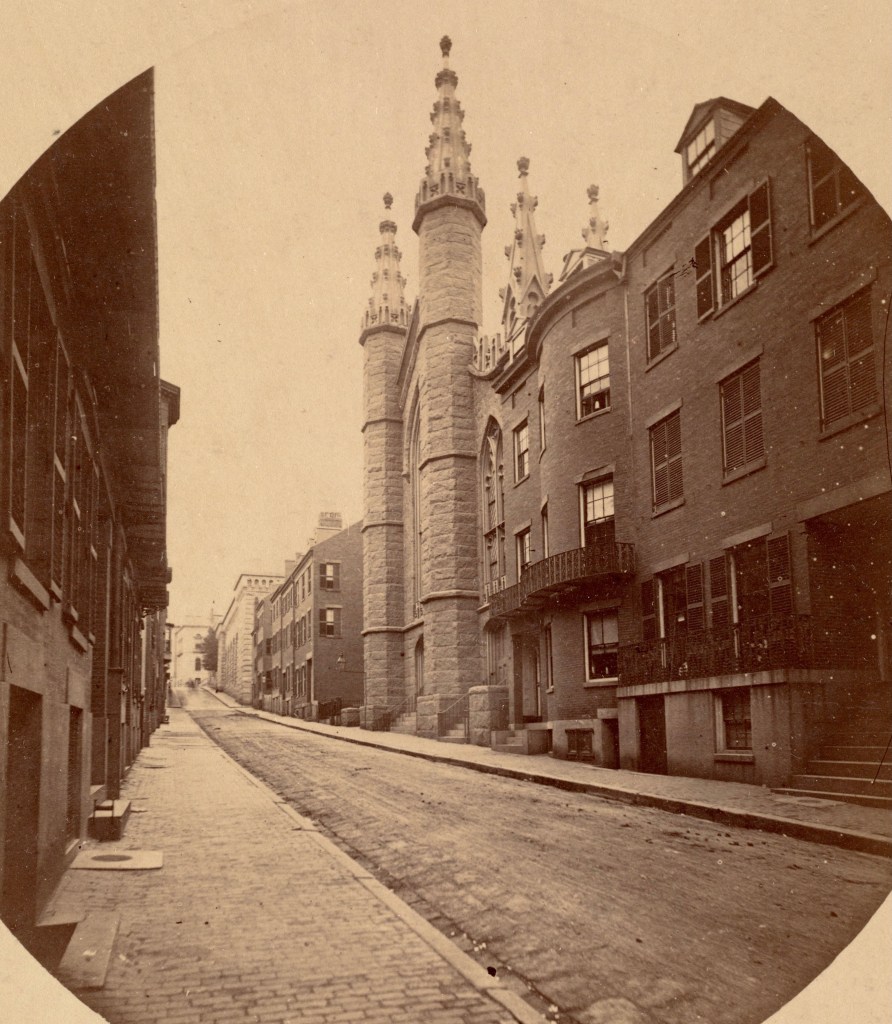
Grace Church // 1835-1966

Grace Church was built in 1835 for a growing congregation in Beacon Hill. The absolutely stunning Gothic style church was designed by William Washburn (1808–1890), an architect and city councilor in Boston. The church was constructed of granite and had massive stained glass windows and soaring towers with decorative embellishments. Inside, a massive central window flooded the interior with natural light, and illuminated paintings from Mario Bragaldi, a Milan artist. In 1865, the building was sold to the Methodist Episcopal Society. 1873, it merged with Hanover Street, and took the name First Methodist. The church was variously referred to as First, Grace, or Temple Street, sometimes all at once! This church was occupied until 1962, when it merged with Copley to form First-Copley, which appears to have then occupied the Old West Church. The building was soon after acquired by Boston University and demolished for the building on the site today, a true loss to one of Boston’s most beautiful buildings.

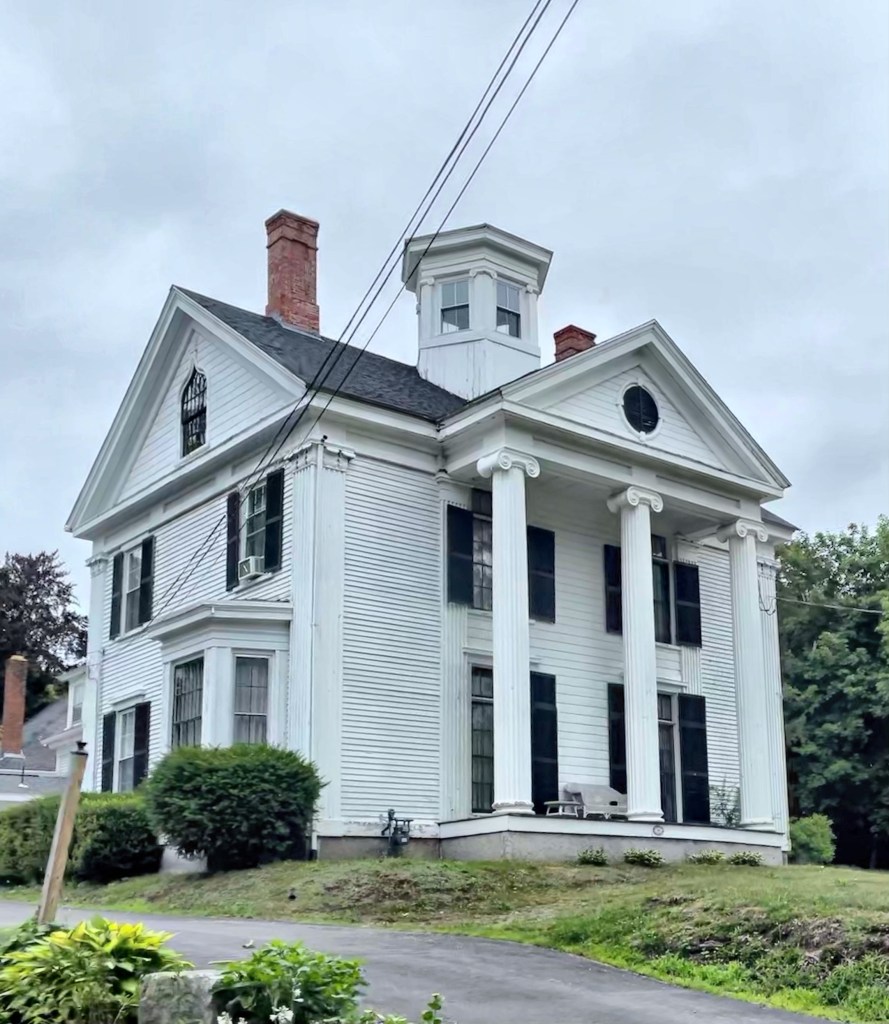
Mitchell-Patten House // c.1840

One of the most stunning examples of Greek Revival architecture in Gardiner, Maine, is the Mitchell-Patten House. The home was constructed in the mid-1840s for John S. Mitchell (1804-1891) head of the firm of Mitchell, Wilson and Co., who were traders on the Kennebec river, in lumber and other goods. The home was likely built not long after John’s wife, Philenia Sewall Mitchell died during childbirth in 1837 to the couple’s son, who died at just two years old himself. After the death of his wife and only son, John met Mary and they married, moving into this home. Together, they had four children. Together, they had three sons, but like with his first marriage, tragedy wasn’t far behind. Their first son was stillborn, their son William died at age 27, and their third son, Egbert died in his first year. The family home was willed to the couple’s only living child, Susan, after her marriage to husband Freeman Patten. Freeman was a successful businessman in town and worked as a bank director, and later served as President of the Board of Trade and as Mayor of Gardiner 1899-1900.

Hartley Jewett House // c.1895 //

This stunning Queen Anne home in Gardiner, Maine, overlooks the Kennebec River from its high position on a hill. The home was built for Hartley Jewett, who ran a busy lumber mill in town, which sold long lumber, laths, and shingles, some of which ended up on his own home. Maine was huge in the lumber industry, and it’s vast forests were often cut and sent down to cities like New York and Boston on rail to supply their own building booms.

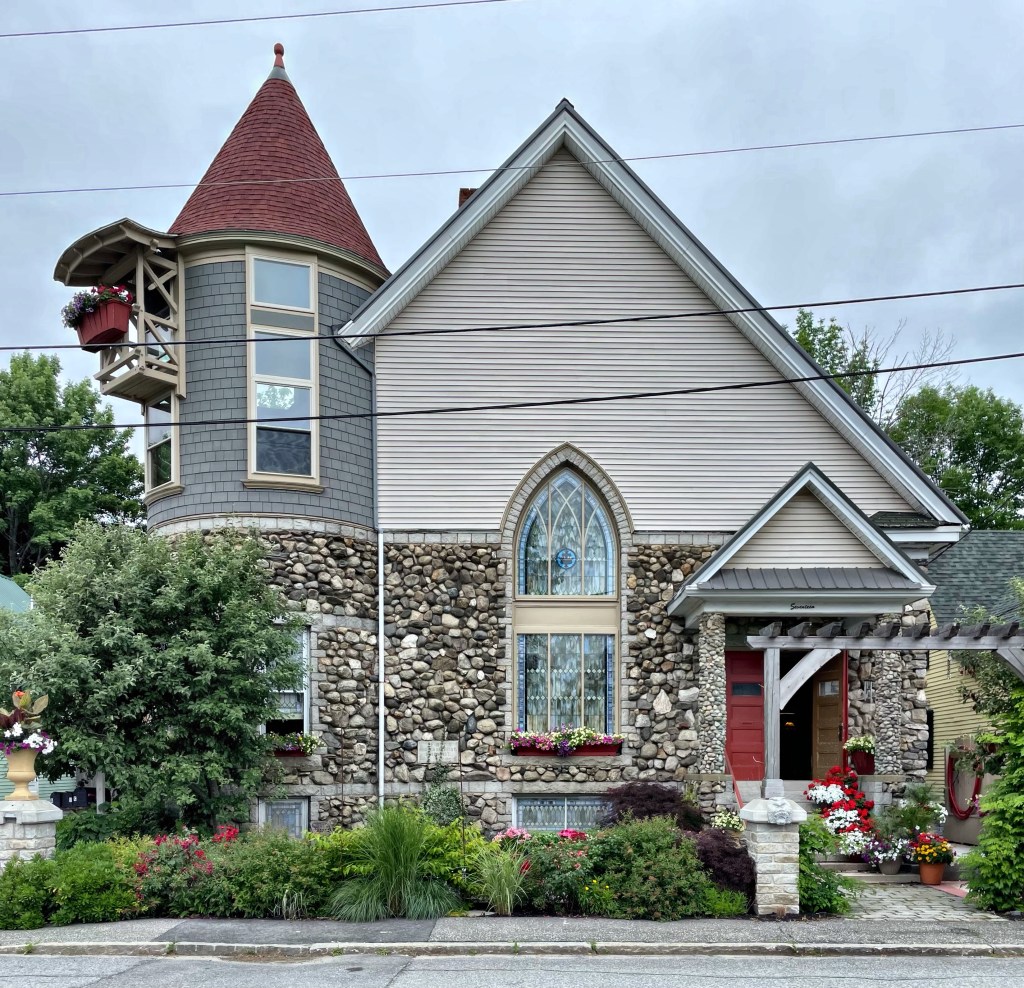
Christian Science Church, Gardiner // 1905

The first purpose-built Church of Christ, Scientist church in Maine is this turn-of-the-century edifice constructed in 1905 in Gardiner. Organized in 1897, this Christian Science Society of Gardiner met for several years in members’ homes and public places nearby until Palmer Noyes and his wife Caroline funded the new building. Caroline and Palmer helped establish the first such church in Chicago, after the couple witnessing a ‘healing’ and then heard Mrs. Mary Baker Eddy lecture in 1882. This church in Gardiner was seemingly designed by Caroline, who was likely inspired by architectural influences on the churches in town, from Gothic style lancet windows, to the shingle style facades. The building was eventually converted to a development center for the disabled, and is now known as “The Stone Turret”, a bed & breakfast, with amazing stained glass windows!

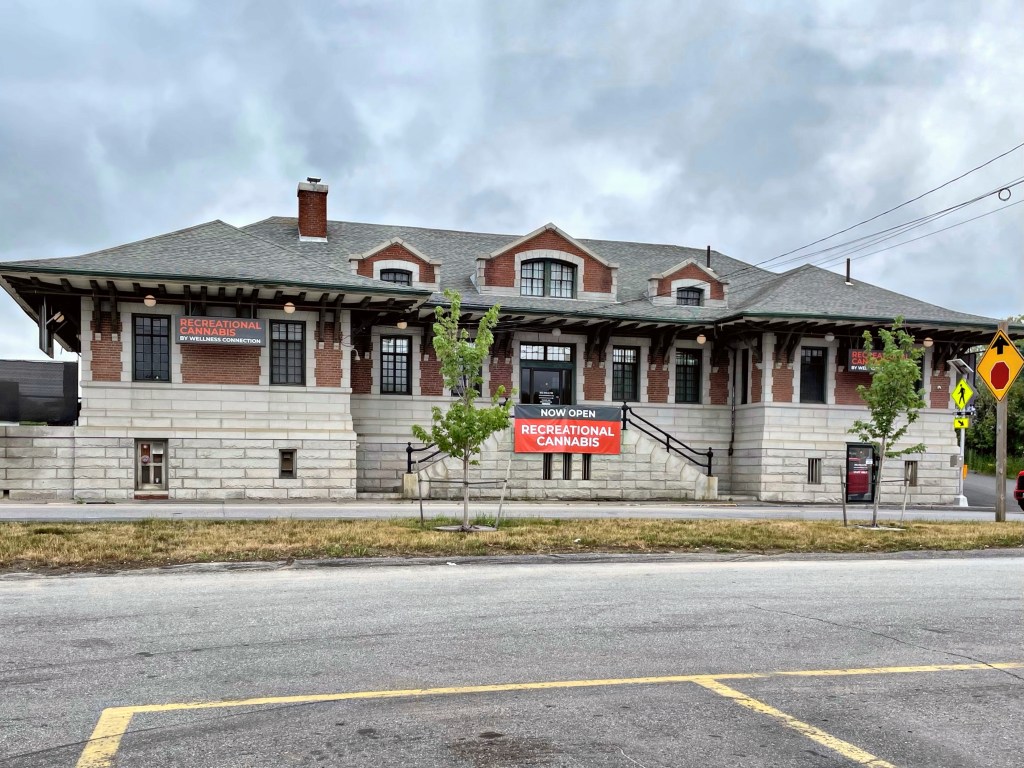
Gardiner Train Depot // 1911

The first train arrived in Gardiner, Maine in 1851. Rail here introduced a new mode of transportation for passengers and freight, which previously relied on horse or ship up the Kennebec River. When the old station was deemed too small and outdated, the Maine Central Railroad Company decided to hire Portland architect, George Burnham to complete plans for a more fitting station. This building is a mix of styles, the two I would categorize it as are Romanesque Revival and Spanish Revival. The building incorporates a number of influences of the two along with a deep overhanging roof supported by large brackets, heavy rusticated granite blocks at the base, and quoining around the windows and corners. The station was in operation until about 1960 when rail service here halted. Since that time, the building has been adaptively reused as a retail store, today as a recreational cannabis dispensary. So you can get high and look at cool architecture!