Lincoln Wharf Power Station // 1901

Back in the day, even power stations were gorgeous!

The Boston Elevated Railway Company, and its successor, the Massachusetts Bay Transportation Authority (MBTA), operated Lincoln Wharf Power Station from 1901 to 1972. The Boston-based engineering firm of Sheaff & Jaastad, specialists in electric power and lighting plants, designed this 1901 power station to serve the Atlantic Avenue Line and provide supplementary
power for the Downtown Boston elevated and surface lines. Due to increased demand in 1907, a massive addition was constructed at the rear, facing Commercial Street, which now is the main orientation of the large structure. By 1971, all elevated tracks powered by this station were removed and the power station was sold by the MBTA to a private developer for housing. Eventually, San Marco Housing Corporation, hired the Boston Architectural Team, Inc., to renovate the power station in 1987 for low- to moderate-income housing. The result is an innovative and stunning example of adaptive reuse providing much-needed housing, while retaining historic fabric of old Boston.

1901 Power Station viewed from waterfront.

North Adams Universalist Church // 1893

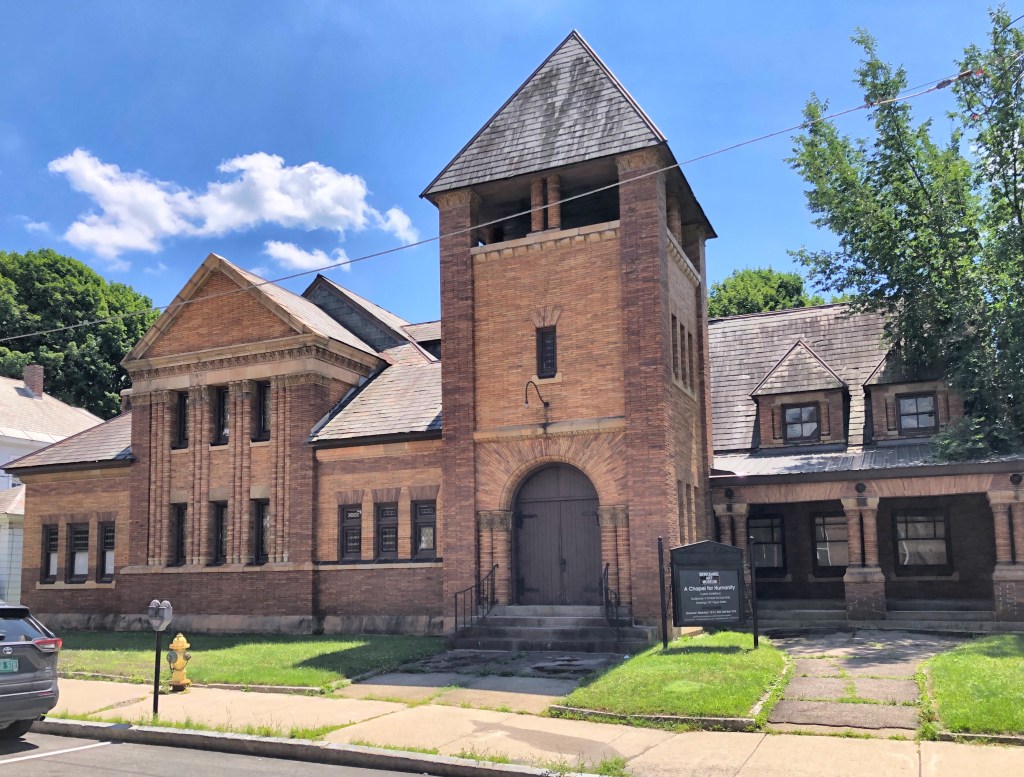
Tucked away off Main Street in North Adams you’ll find this charming little church. The Universalists were organized in North Adams in 1842, restoring an existing church near the Hoosic River. The congregation chose a site for a new church in 1852, and erected a white wooden chapel. It is unclear if the church was outgrown or a fire destroyed it, but the Unitarian society voted to build this church for a cost of approximately $25,000 in 1892. Architect Henry Neill Wilson of Pittsfield drew the plans, and the firm of Porter and Harnam of North Adams constructed the church. Due to the declining population in town in the mid-20th century, the church struggled and was sold to a private owner. The building began to decay by the 1970s and was later sold in 1996 to Barbara and Eric Rudd to house artist Eric Rudd’s installation entitled “A Chapel for Humanity”. The building is currently used as the Berkshire Art Museum Annex.

Captain Valentine Pease House // c.1830

This charming little Greek Revival house has a lot of history, tied to literature and the whaling industry that shaped Edgartown in the 19th century. The home was built in around 1830 for Captain Valentine Pease (1797-1870), a master mariner and captain of the Acushnet, a prominent whaling vessel which often departed from New Bedford. In 1841, Captain Valentine Pease, his crew, and a 21-year-old Herman Melville shipped out of New Bedford 1841 for eighteen months as Melville’s only whaling voyage. Melville took part in the hunting and killing of whales and in harvesting and processing whale oil aboard ship. He endured gales and calm, experienced excitement and boredom, followed ship’s discipline, all the while absorbing the lore of the veteran seamen who made up the Acushnet’s diverse and colorful crew. It is speculated that Valentine Pease was an inspiration for the character of Captain Ahab in Melville’s book “Moby Dick”.

Norton-Coffin House // c.1740

This home on the idyllic Water Street in Edgartown (maybe my favorite town in Massachusetts) was built in two main phases in its storied history. What is now a rear ell, was built as a home around 1740 by “Squire” Norton, who ran the Customs office out of the house in his role as Customs Collector in town. The home was located in the current location of North Water Street, which had to jog around the home until the early 19th century when it was moved to the current location and altered as an ell of the new house standing there. The home was later owned by Captain Edward Coffin (1850-1917), a renowned sea captain. At just 15 years old, Edwin Coffin left Edgartown to be a cabin boy on his first ship. Through the end of the 19th century, he voyaged on numerous whaling vessels and served as captain on many. In 1902, Captain Coffin was chosen to command the steamer America, which carried the Fiala-Ziegler Expedition, a failed attempt at reaching the North Pole. The party remained stranded north of the Arctic Circle for two years before being rescued, yet all but one of its members survived.

Trinity Methodist Church // 1878

Located on Trinity Park in Wesleyan Grove (aka the Martha’s Vineyard Camp Meeting Association), this 1878 church served the year round Methodist community in Oak Bluffs. The Trinity Methodist Church is a towered, Victorian Gothic structure of some distinction. Edward M. Hyde, a Methodist minister who had trained in architecture and art, designed it. The property that the church and Parish House sit on belongs to the Association, but the buildings are maintained by the congregation. Interestingly, should the congregation disband, the buildings would return to the Association.

Methodist Camp Meeting Association Office // 1859

Located at the center of the Wesleyan Grove, – the Martha’s Vineyard Camp Meeting Association – this Italianate building has long served as a hub of the active summer community. The building was constructed in 1859, before any cottages were built in the newly formed summer colony. The office building was not only the headquarters for the Camp Meeting Association, it also served as a storage space for the baggage of the many who stayed in tents, many who didn’t have the means to purchase or rent a cottage. The building even was home to the associations’ post office. It now houses the Association director’s offices and contains the lease holders records back to 1864, a great way to learn about the diverse groups of people who visited and worshiped in this camp.

William Jefferds House // 1804

William Jefferds Jr. was born August 30, 1779 in Kennebunk. On October 25, 1802 he married Sarah (Sally) Walker who was born in Arundel on March 4, 1783. Twenty years later, in 1803, Captain Daniel Walker gifted his son-in-law, Captain William Jefferds, Jr., “80 square rods of land, with love and affection” on the lane leading to Walker’s Wharf (he also gifted land to his other son in law, Nathaniel Lord. In 1804 the 2-story, Federal-style building that now houses Captain Jefferds Inn was built as their private home.

Capt. Jefferds was a ship owner and captain in the West Indian trade; he later became a merchant in Kennebunkport. He and Sarah had 11 children, and their family was considered one of the most aristocratic in Kennebunkport. Following Sarah’s death at age 88 in 1871 (her husband had predeceased her in 1851), the household furniture was sold at public auction and the home sold outside of the family.

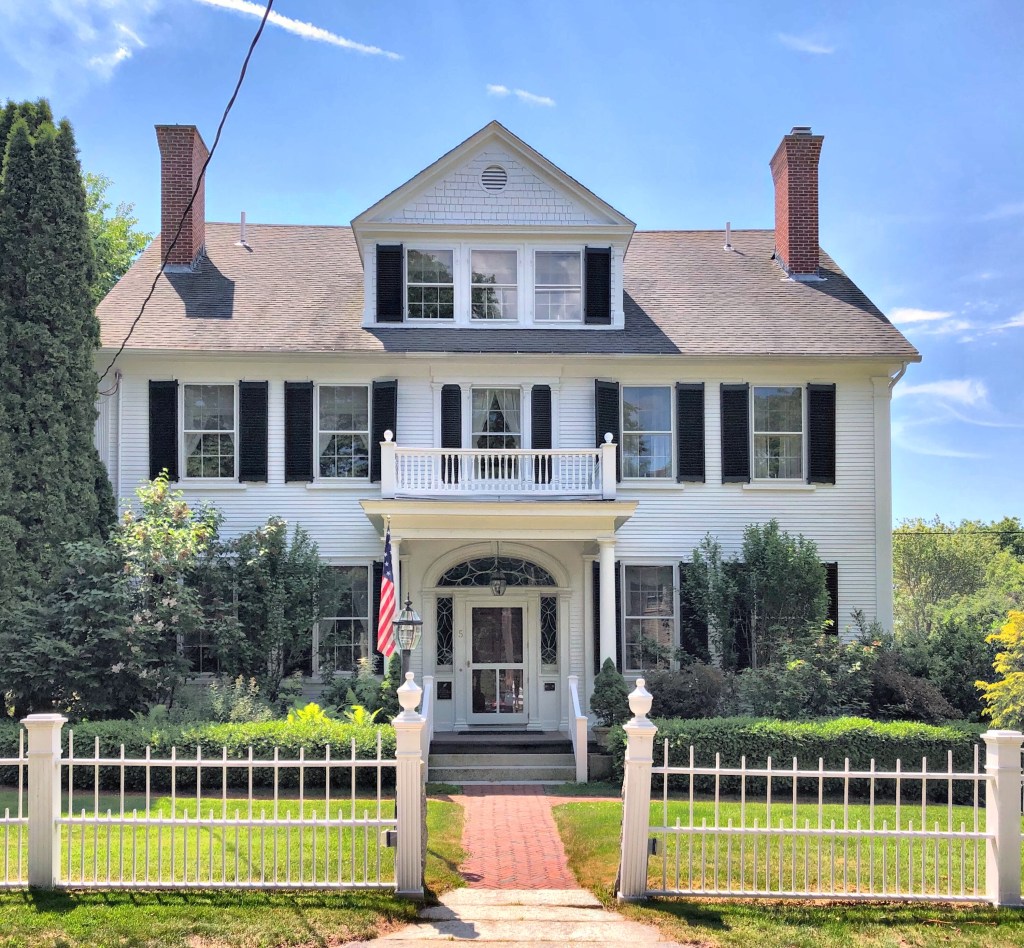
The house was a two-story hipped roof Federal style dwelling, somewhat outdated by the latter half of the 19th century. By the 1880s, the Agnew Family who owned it at the time, had the home remodeled with Colonial Revival detailing, including the portico and large central dormer. The home was eventually converted to an inn, and is known as the Captain Jefferds Inn.

Check the Inn’s website for more images and history!

Captain George Nowell House // 1854

Captain George W. Nowell and his wife, Frances, the daughter of the wealthy Capt. William Jefferds, built this elegant Italianate style home in 1854 that stands on Temple Street, next door to the Kennebunkport Post Office. George was a sea captain, following in his father’s footsteps and also invested in several of the ships he sailed, but had the fiscal foresight to insure his interests against loss. His prized ship was named “Tropic” and she was launched in 1855, less than a year after his house was built. On a cold December day in 1862, Nowell, captaining The Tropic left Philadelphia with a cargo of coal for the Pacific Mail Steamship Company in San Francisco. She and her crew of 20 were never heard from again. George was not yet 40 when he perished. His youngest son, Frank, never met his father and was only 8 years-old when his mother passed in 1872. Shipbuilder David Clark bought their Temple Street home and George’s brother took his children to live in Bangor.

The captain’s reputation as a prudent and charitable man was recognized by Victoria, Queen of England. She awarded Capt. George W. Nowell, of the ship Tropic, an engraved spyglass in testimony of his humanity in rescuing her subjects, the crew of the Village Belle, of Nova Scotia. The telescope and a certificate, signed by the Queen, have been proudly protected by the Kennebunkport Historical Society.

The family home features bold corner quoins, bracketed door and window hoods, and paired rounded arch windows at the top floor.

Reuben Nickerson House // c.1835

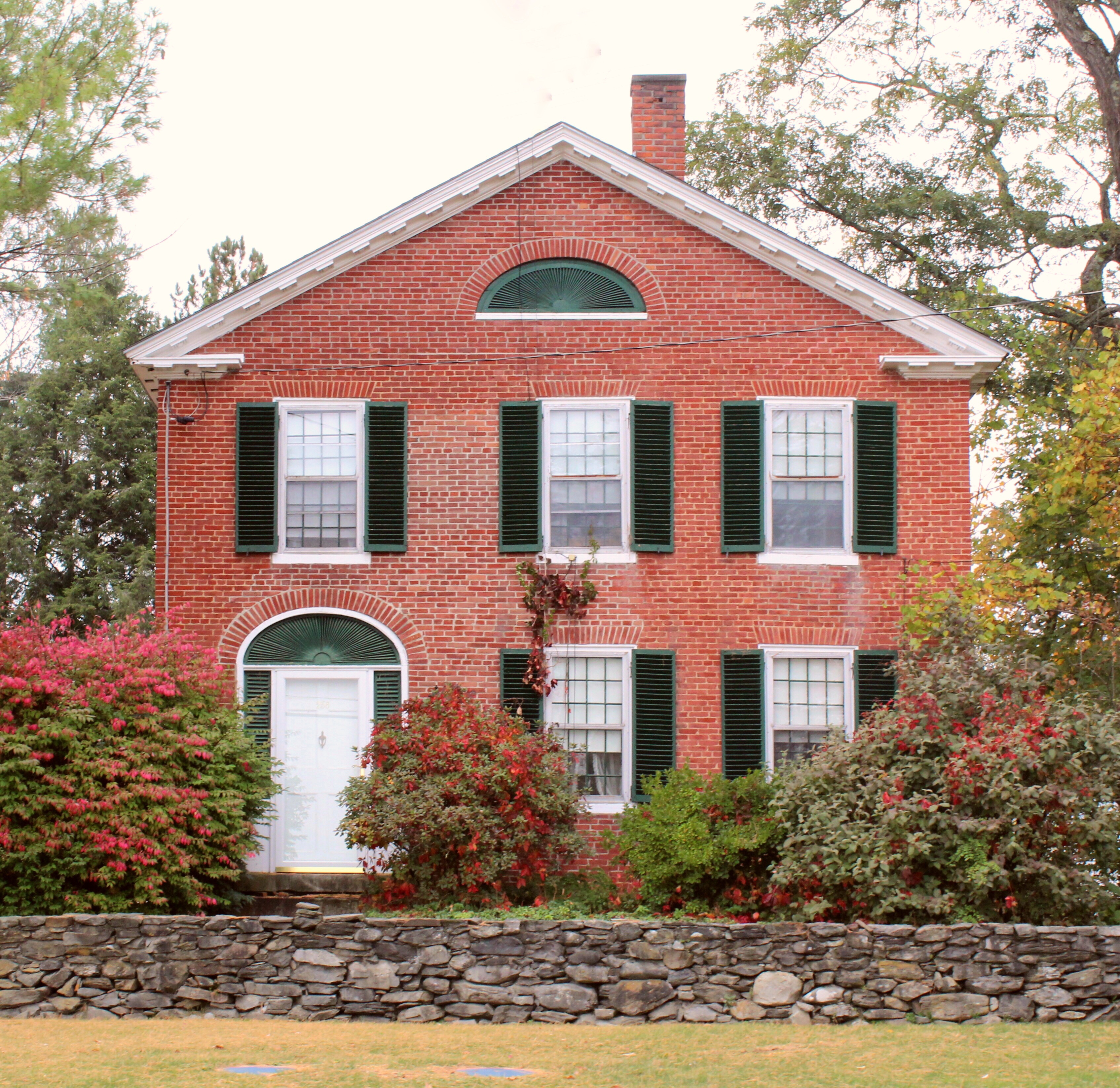
The gorgeous Reuben Nickerson House on Bridge Road in Eastham is an excellent example of a transitional Greek Revival home with hold-over features of the Federal style. Reuben Nickerson was born in 1814 on Cape Cod and worked as a farmer and saltmaker, he later served as a senator, school committee member, and representative. He was married twice; first to Elizabeth Doane who died in 1849, and he remarried Elizabeth’s sister Sarah Doane just a year later. By the 20th century, the home was operated by descendants of Reuben as a funeral home and residence. After WWII, the home was a bed and breakfast and has since been reverted to a single family home. Detail on the home includes: wide, paneled pilasters, boxed, molded cornice, a pedimented gable, a 2-part wide frieze, and a fanlight at the entrance.

Knowles House // c.1820

Located just a stones throw from the Penniman House, the c. 1780 Knowles House stands at the historic end point of Fort Hill Road. Accounts differ on its history. Some sources explain the home was built in c.1790 by Seth Knowles (who died in 1787) a prominent citizen of Charlestown, Mass., and one of the original members of the Bunker Hill Monument Association and of its board of directors. From my research, the home appears to have been built for Thomas Knowles, Seth’s son, and was later willed to his son, also named Thomas. Thomas Knowles Jr., was born in 1803, in Eastham, and in early life settled at New Bedford, engaging in the whale fishery industry. Deed research would be required to find out more. The gorgeous Federal home features a large, center cross gable with dentils at the cornice.