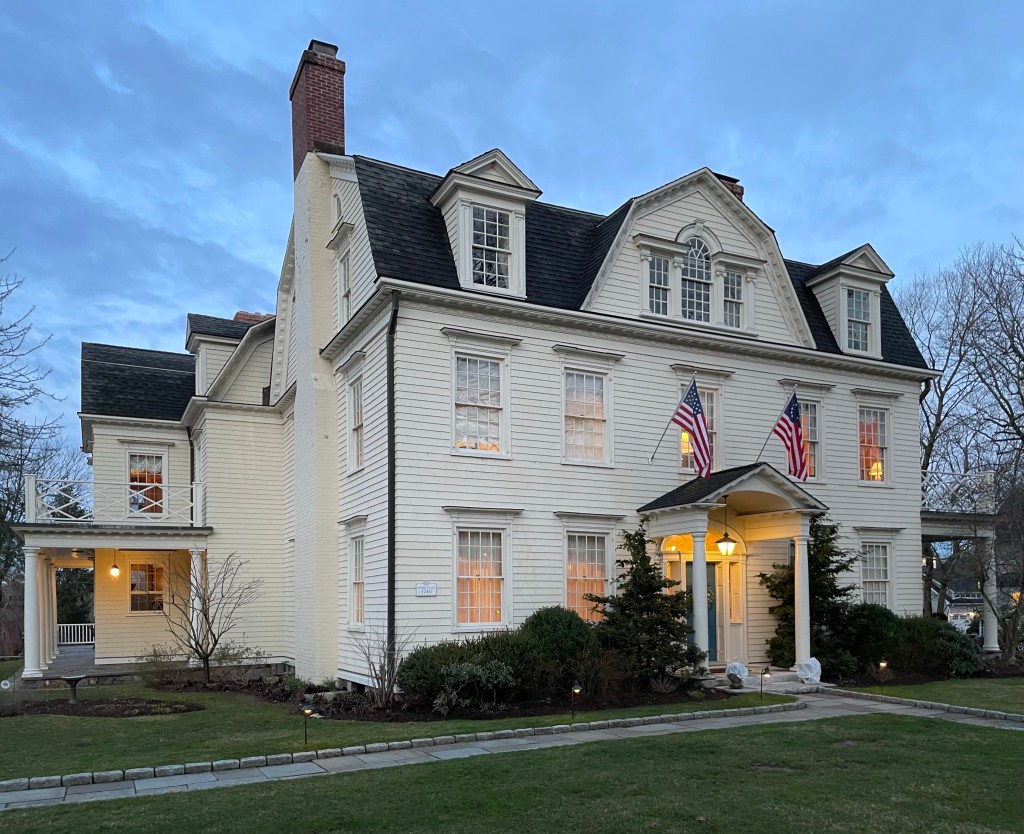
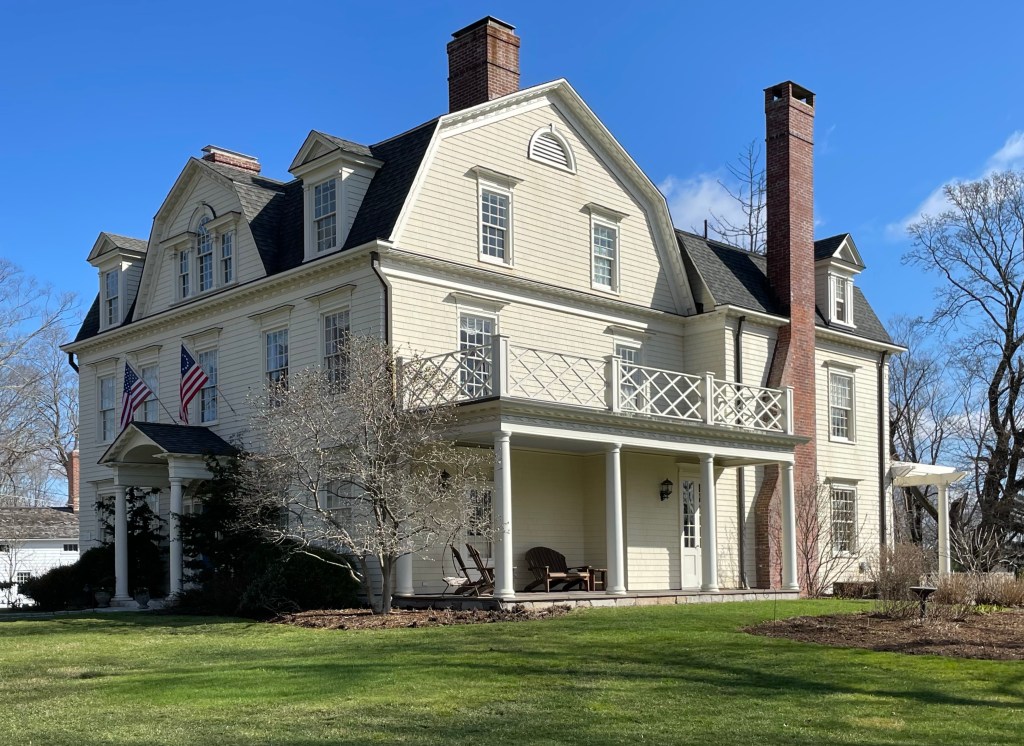
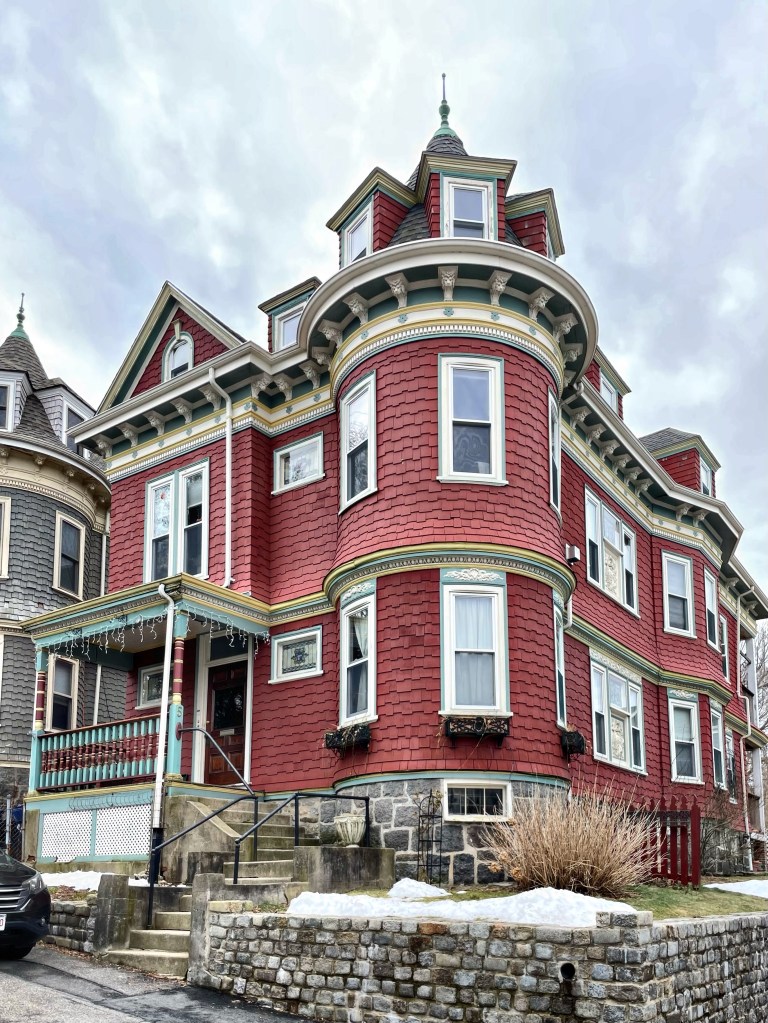
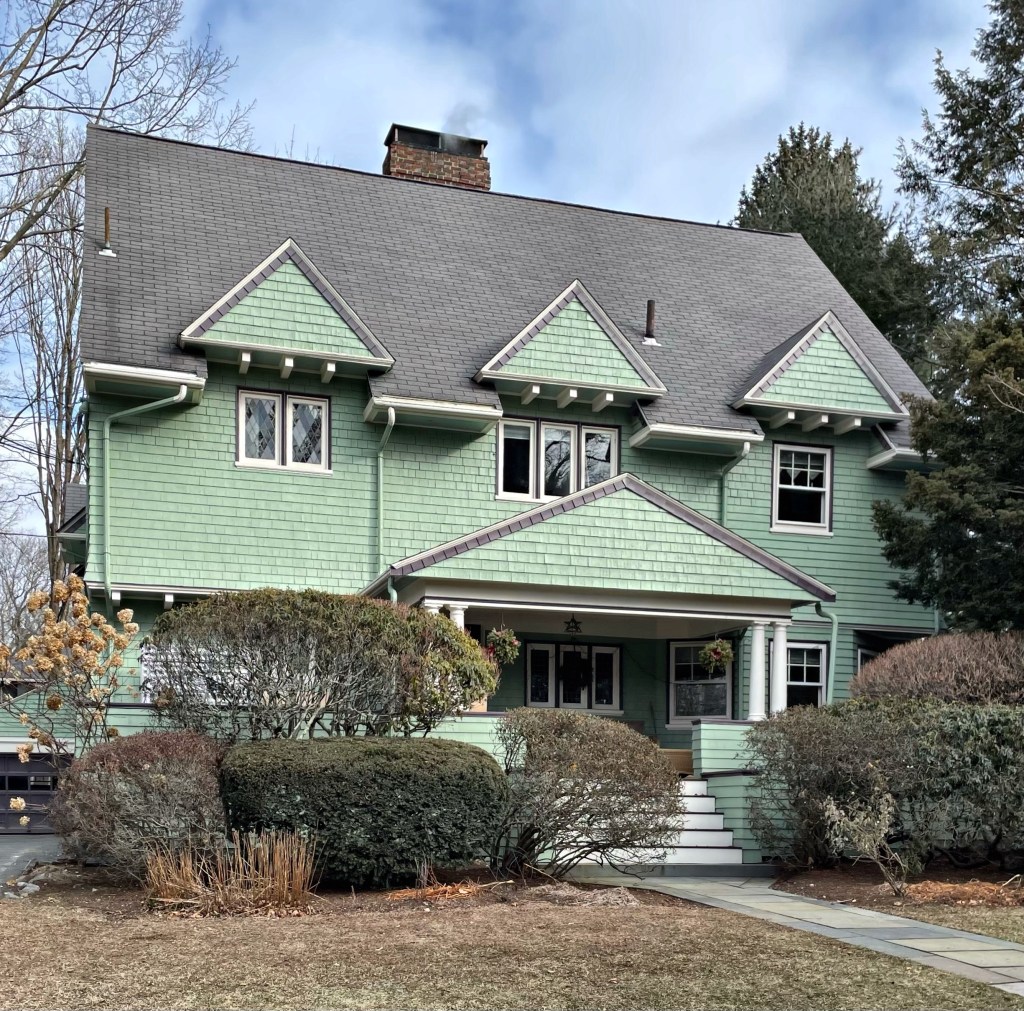
Waterford Odd Fellows Hall // 1904

Built soon after a massive fire destroyed much of North Waterford Village in Maine, the Iocal order of Odd Fellows decided to rebuild, constructing this building for their members. Though active for several decades after the building was reopened, an aging and dwindling membership forced this chapter to merge with the Odd Fellows of nearby Norway, Maine. After, this building was occupied by the Daughters of Rebekah, an auxiliary group of the IOOF for women until 1973 when it was donated to the recently formed Waterford Historical Society. The society has since moved, and listed the building for sale in 2020 for just $10,000!!

Hovey House // 1897

In 1897, tailor Charles L. Hovey and his wife Bertha, had this house in Waban built for their family. The architecture really stands out as an eclectic blending of styles, common at the end of the 19th century, when architects and builders would design homes to exhibit architectural details from multiple styles, all under one roof. The shingled house has a steep gable roof and three gabled dormers, which reflects Queen Anne theme. The diamond-pane windows and the technique of cantilevered dormers and the second floor overhanging the first, is First Period-Medieval in style, a unique interpretation of American architecture. What do you think of this home?

Evans-Cummings House // 1855 & 1890

The most iconic house in Norway, Maine has to be the Evans-Cummings House (also known locally as the Gingerbread House) on Main Street. The ornate Victorian era home was originally built in 1855 for Richard Evans, who was born in Portland in 1805 and after training as a carpenter, moved to Norway in 1833 for work. He and his wife, Mary Warren Hill, had eight children and they resided in the home until their death. In 1890, Charles B. Cummings bought the house in 1890 and hired local architect John B. Hazen to remodel the house. Hazen added the gingerbread adornments for which the house is now known colloquially. The home attracted a lot of attention in the region, and the later heirs continued that whimsical appeal. When the home was willed to Fred and Cora Cummings, they were said to have kept a stuffed peacock at the top of the stairs, which delighted children when they toured the home. The house eventually became used as storage by the owners of the local Advertiser Democrat newspaper, and its future was threatened. Since 2012, a local group, Friends of the Gingerbread House, have poured tens of thousands of dollars and an equal amount of time restoring the iconic home to her former glory! Preservation is important!

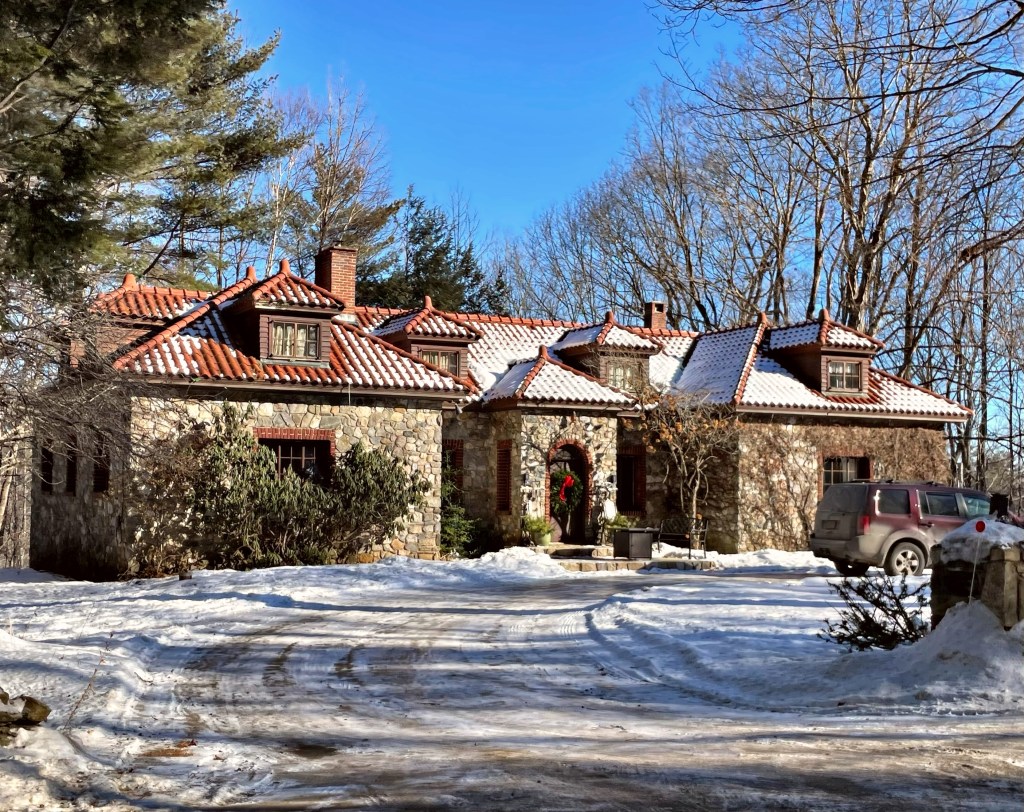
Wrightstone // 1925

In the early 20th century, Norway, Maine and the surrounding towns were sought-after for their natural beauty with large lakes and rivers with untouched expanses of forest. Upper-middle class residents of Portland, Boston and other larger cities in New England built more rustic summer homes, compared to the elaborate “White Elephants” in Newport, Rhode Island. This home in Norway was named Wrightstone and was built in 1925 for the Wright Family. The U-shaped home is constructed from rubblestone, likely gathered from the land on which it sits. The house blends the Arts and Crafts movement with the uncommon (in Maine) Spanish Colonial Revival style, with the terracotta roof! I bet the interior is so cozy!

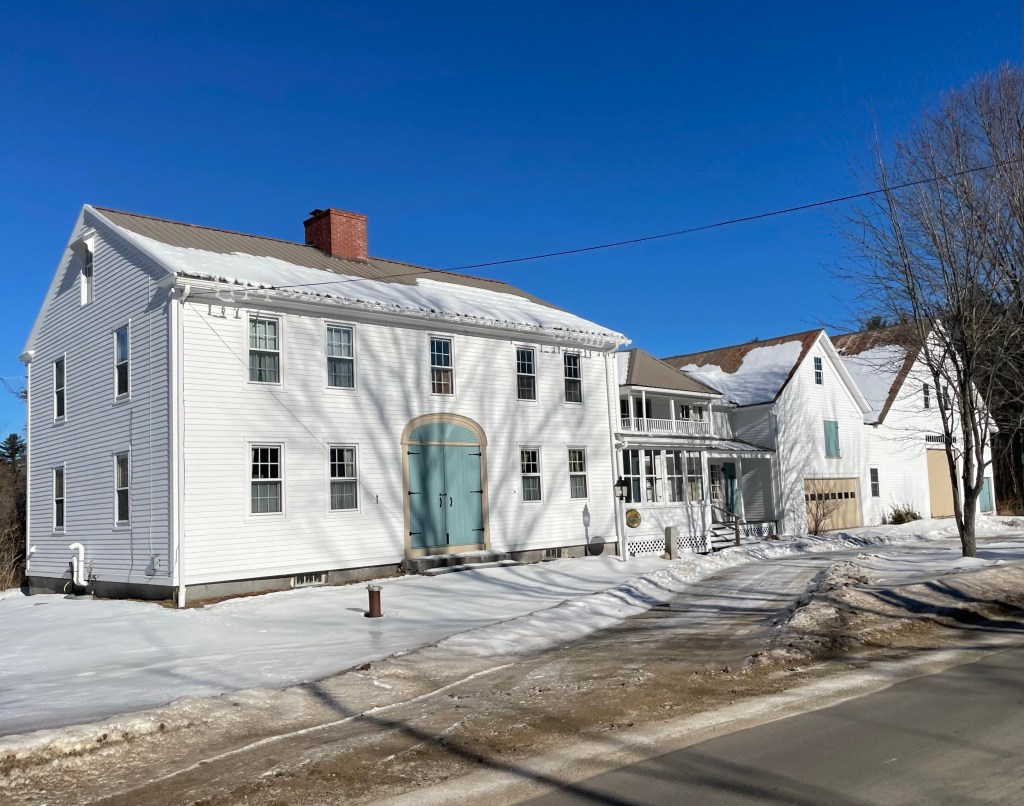
Nevers-Bennett Farmhouse // c.1820+

In 1820, just seven years after the incorporation of Sweden Maine, a homesteader, Amos Parker purchased fifty acres of land and began to erect a two-story, Federal house with a center chimney and a detached store beside it. Plagued by debt, Parker sold the unfinished house to Samuel Nevers circa 1833–1835, who purchased the property with the store for his recently married son, Benjamin. By 1860, Benjamin Nevers had a successful store and prospering farmstead. Benjamin died in 1883, and in the next two years, their daughter Charlotte, and her husband, Charles Bennett, dramatically remodeled and modernized the farmstead, adding a connected two-story ell building outward from the main house toward the old 1840 barn, connecting the entire property. I believe that the property remains in the Nevers-Bennett Family, as recently, Steve and Judy Bennett, recently negotiated an easement with the Maine Farmland Trust to protect their hay, beef, and maple sugaring acreage as farmland into the future.

Orrin Holt House // c.1840

Located on Tolland Turnpike in Willington, east of the Town Common, this temple-front Greek Revival home stands in an excellent state of preservation. The home was built for General Orrin Holt (1792-1855) in about 1840 after his work as a member of the Connecticut State House of Representatives 1830–1832, and in the Connecticut Senate in 1835 and 1836. He was re-elected as a Democrat to the Twenty-fifth Congress, serving until 1839. After leaving Congress, he served as Inspector General of the Connecticut State Militia, until his death in 1855. He likely built this home after leaving Congress in 1839, in his hometown. There is something about a temple-front home like this, they are so stately!

Daniel Glazier Tavern // 1815

The Daniel Glazier Tavern is located at the west end of the Willington Green, an area showcasing great vernacular examples of Federal and Greek Revival architecture. The tavern was apparently built by Daniel Glazier as a stop along the route connecting Norwich, CT to Springfield, MA, where visitors could grab a bite to eat and/or stay the night to rest. Daniel’s son Isaac was the first tavern-keeper, followed by Daniel’s son-in-law Arial Eldridge until his death in 1849. The ballroom of the tavern had long been used in the winter months for town meetings, as he basement of the Town Meetinghouse, used for town meetings, lacked any form of heat. Since 2009, the property has been owned by the Willington Historical Society, who have restored the building.

Millbury Post Office // 1940

Located in downtown Millbury, MA, the town’s local post office stands as a great example of Art Deco and Colonial Revival architecture styles, showing how well different styles can be incorporated into a single, complimentary design. The Millbury Post Office building was constructed in 1940 from plans by Louis Adolph Simon, who served as Supervising Architect in the Office of the Supervising Architect for the U.S. Treasury from 1933 until 1939, when the office was moved to the Public Works Administration / Works Progress Administration. The post office was designed at the tail end of the New Deal programs to help stimulate local economies by building infrastructure and providing jobs to locals. Inside, a mural “An Incident in the King Philip’s War, 1670” was painted by Joe Lasker and installed in 1941 and was “revivified” in 1991.

Elijah Waters House // 1845

Elijah Waters (1773-1846), a hardscrabble farmer in West Millbury inherited his father’s large farm and resided there for over thirty years before wanting something more his style. Unmarried and without children, Elijah (who was 72 at the time), had this impressive Greek Revival farmhouse constructed near his old family homestead. He was possibly looking to spend money saved up and without a wife or heirs to will it to. The massive temple-front Greek Revival mansion has a stunning doorway and six columns supporting a projecting pediment. Within a year after the home was built, Elijah died. The home was willed to his nephew, Jonathan Waters. The house is for sale for $384,000 which is a STEAL!

Windle House // c.1912

William “Willie” Winfred Windle (yes that is a real name) was born in Millbury at the height of the town’s industrial growth and prosperity. He ran the W.W. Windle Mill just west of downtown and with his wealth, was able to buy a house lot on one of the most fashionable residential streets in town. His home was built in the early 20th century and is a stunning example of Tudor Revival architecture. In 1911, Windle traveled to England to inspect mills there and was likely inspired by some of the residential architecture he viewed on the trip. The house elegantly blends stone walls with half-timbered wood, with a prominent entry. The timber and stone entrance porch which has decorative bargeboard and corbels, has been enclosed. The home remained in the Windle family at least into the 1940s, when it was occupied by William Winfred Windle’s son, Winfred Woodward Windle. By the 1970s, the home was occupied as the Millbury Society of District Nursing.