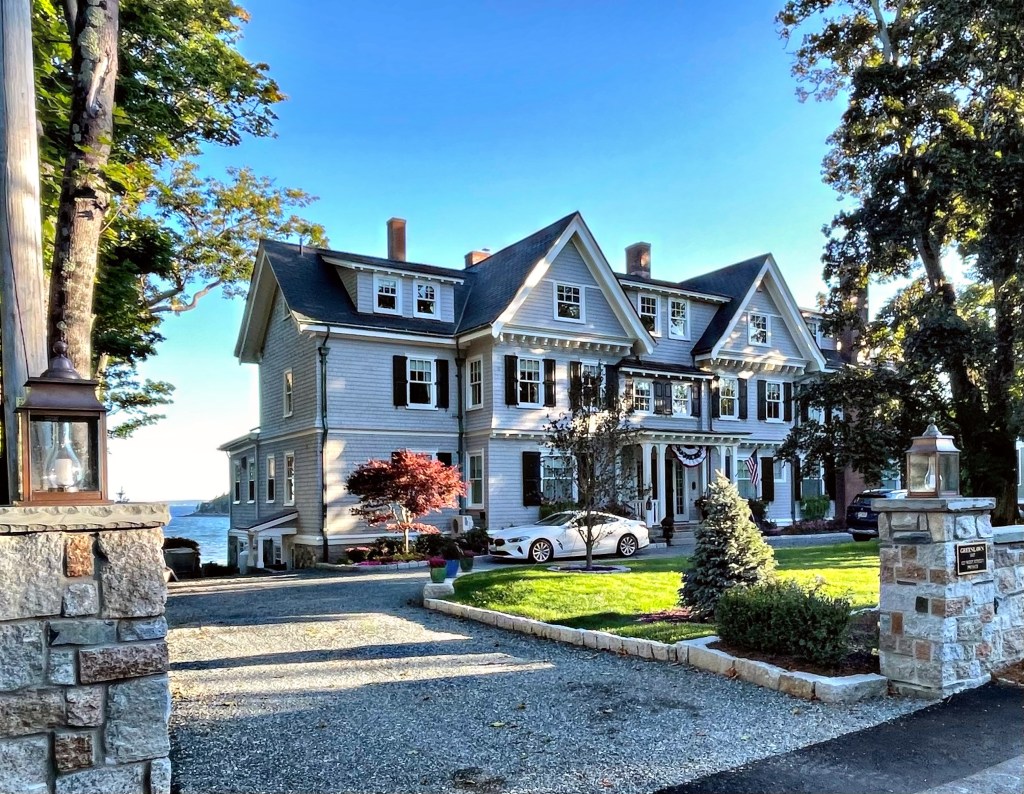
“Greenlawn” // 1887

West Street in Bar Harbor was laid out in 1886, and developers laid out house lots on both sides, with larger, more expensive land right on the water. One of the earliest homes built on the street is Greenlawn, constructed in 1887 for William Rice, an industrialist who co-founded Rice & Hutchins, a shoe manufacturing company with main offices in Boston. The architectural firm of Rotch and Tilden, comprised of partners Arthur Rotch and George Thomas Tilden. Both had studied at the Massachusetts Institute of Technology and at École des Beaux-Arts in Paris. Both had worked at the architectural firm of Ware and Van Brunt, and would be best known for their Gilded age mansions in New England. By 1896, the cottage was owned by William L. Green, which is likely when the cottage’s name “Greenlawn” stuck. The house recently sold for $4.25 Million and the interiors are gorgeous!
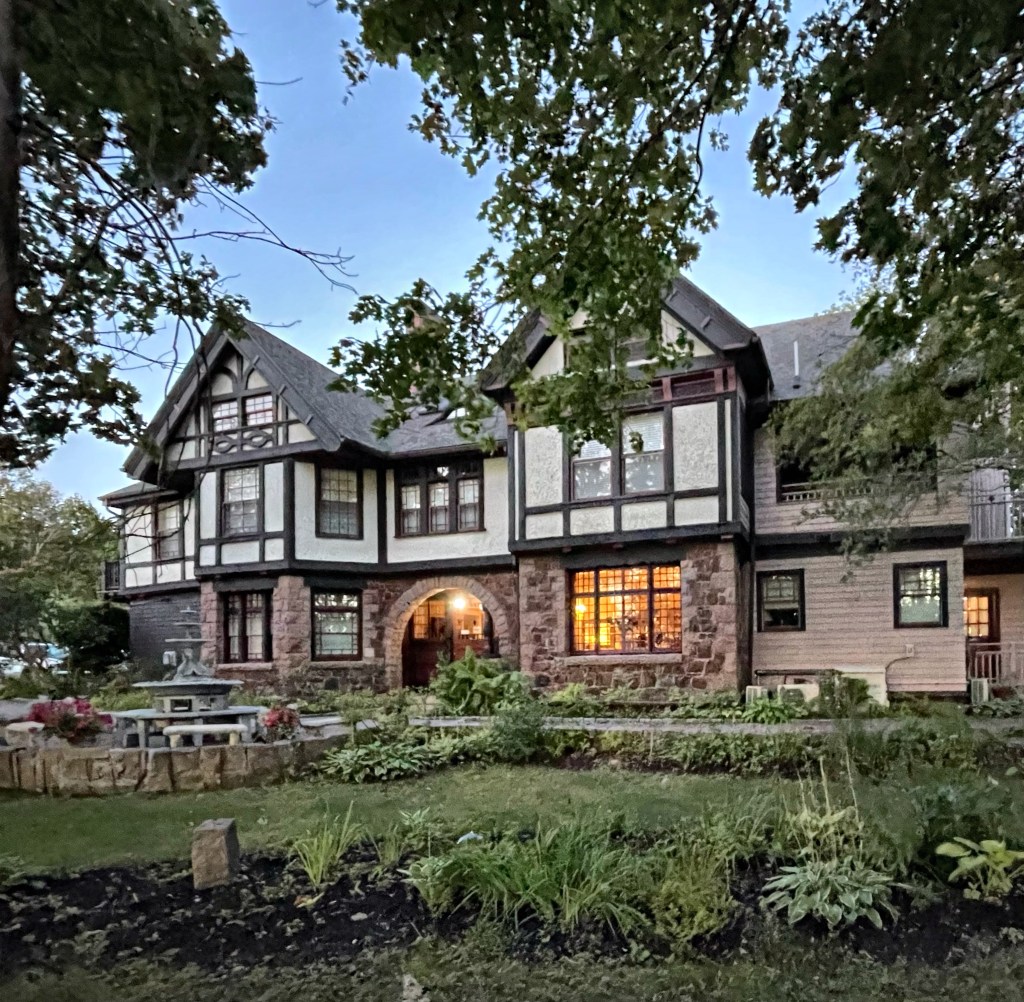
Ullikana // 1885

One of the earlier summer cottages in Bar Harbor is Ullikana, a Queen Anne style cottage, verging on Tudor Revival style. The cottage was built in 1885 for Alpheus Hardy (1815-1887) a trader in Boston. Hardy gained his wealth in shipping. He got his start by buying a small and fast ship that could make the voyage to the Mediterranean and back so quickly that he and his other investors captured much of the fruit importing business. His company would grow to have over 15 ships going as far as China. Hardy hired the Boston architectural firm of Cummings & Sears to design a new summer cottage in Bar Harbor, Maine, an ever-growing rival to Newport. He could only enjoy the cottage for two years, when in 1887, while cutting coupons, he dropped the scissors, the sharp points piercing his leg. Blood poisoning followed and death resulted. The summer cottage was owned by his family as a rental cottage for a number of years until it was purchased by the Maine Central Railroad, and rented to the recently widowed Princess Miguel de Bragança of Portugal, the former Anita Rhinelander Stewart. The cottage is now an inn.

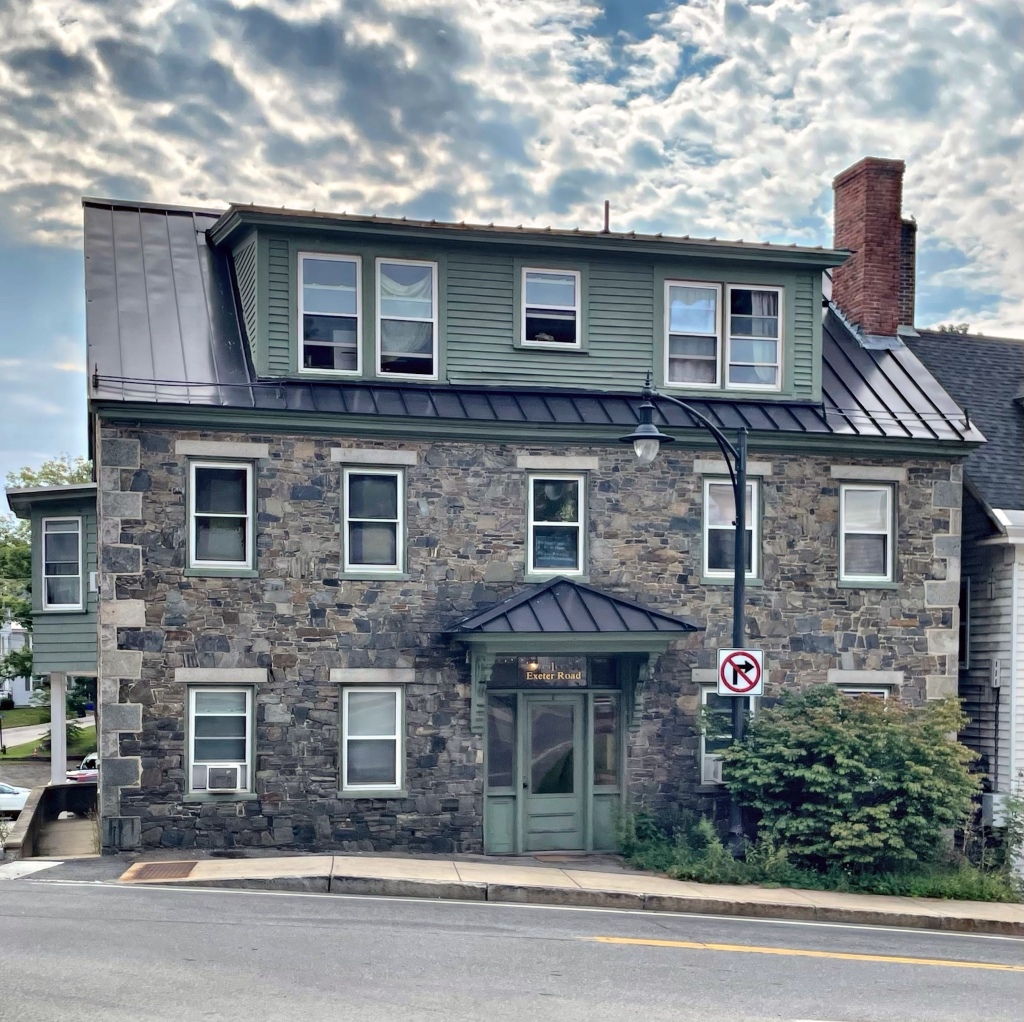
Mathes House // c.1835

Benjamin Mathes built this stone home around 1835 for his family, of the same stone he used to build a store across the street. The Federal/Greek Revival building has amazing granite quoins (stone blocks at the corners) and lintels (blocks above the windows). Even though there are later alterations, including the bracketed door hood and massive central dormer at the roof, the home remains one of the most visually stunning buildings in town.

Willey Hotel // pre-1822

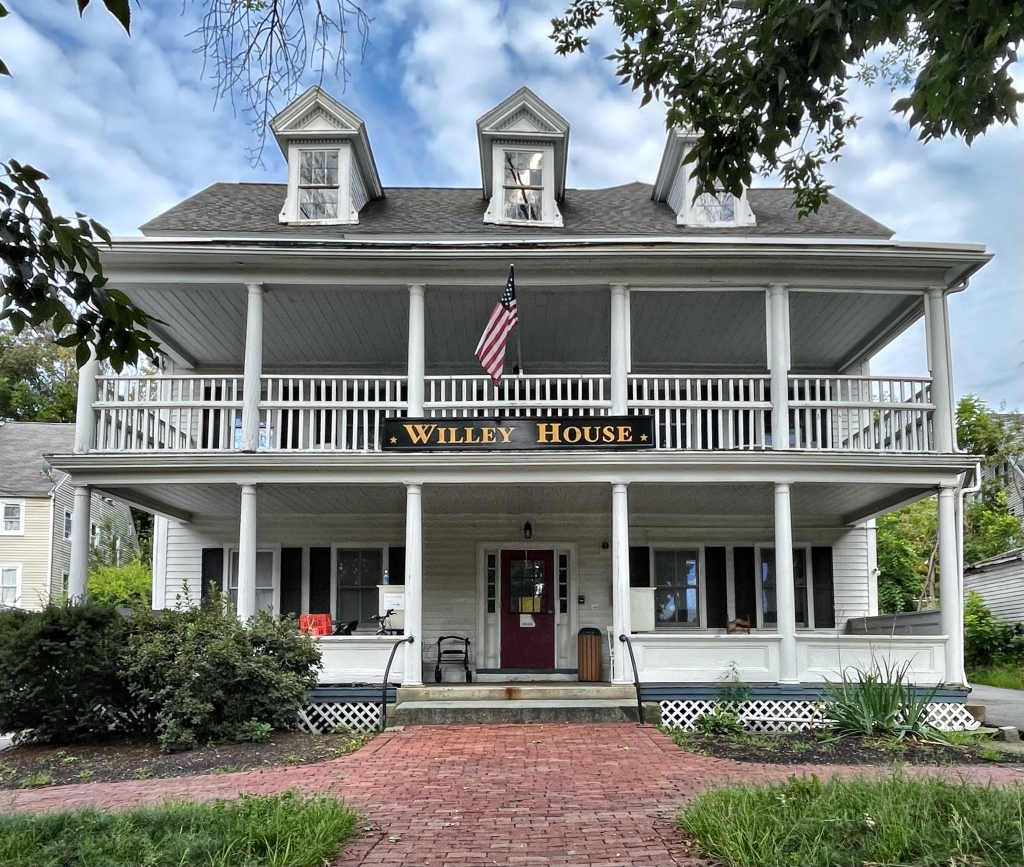
Originally an old tavern/inn, this wood-frame building in Newmarket, NH, was built for a member of the Rundlett Family who settled in town from nearby Portsmouth. The old building was known as Rundlett’s Tavern for a number of years, later renamed the Washington House, and eventually Silver’s Hotel by 1870. Under owner Joseph B. Silver, the Federal style building was updated with Victorian-era flair, marketing to visitors of town who had business with the Newmarket Manufacturing Company across the street. After Silver died in 1898, the building was purchased by George H. Willey and renamed the Willey Hotel/Willey House. He oversaw renovations in the 1920s to give it the Colonial Revival appearance we see today. The building is now apartments.

Doe’s Garrison // c.1690-1938

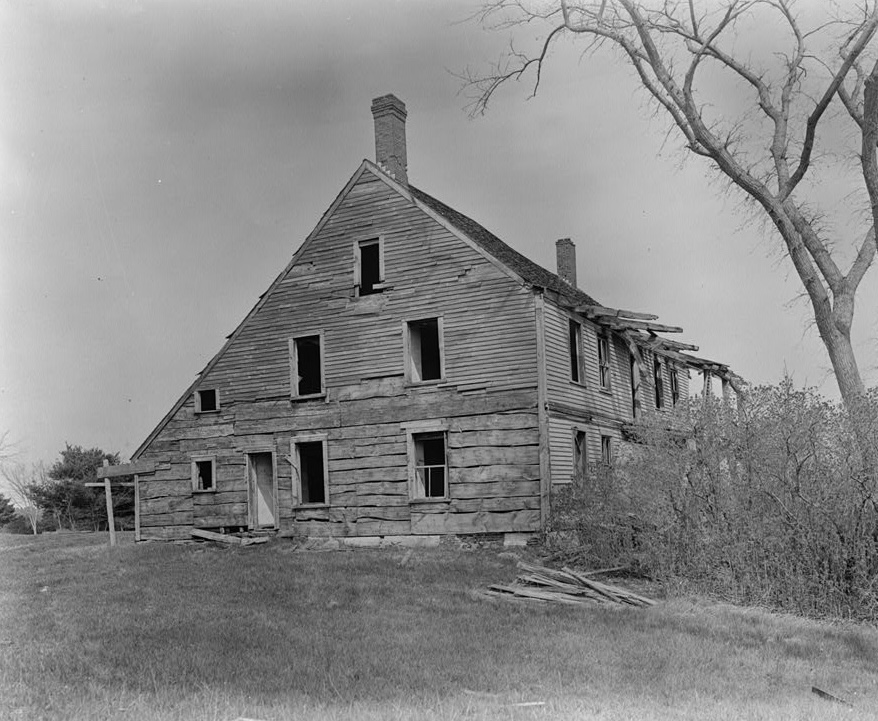
On Doe’s Neck (now Moody Point) in Newmarket, NH, a peninsula at the terminus of the Lamprey River where it meets the Great Bay, has long been a highly desired and contested piece of land. Towards the end of the 17th century, the land here was owned by the Doe Family, who built a Garrison House here. The house was used as a defensive structure to protect those living nearby from Native American attack. The Doe family resided here until after the Revolutionary War. The saltbox building was later altered with full-length porches by later owners, to take advantage of water views. By the Great Depression, the garrison house was suffering from severe neglect, but before it was demolished, it was documented as part of the Historic American Buildings Survey (HABS).

Old Stone School, Newmarket // 1841

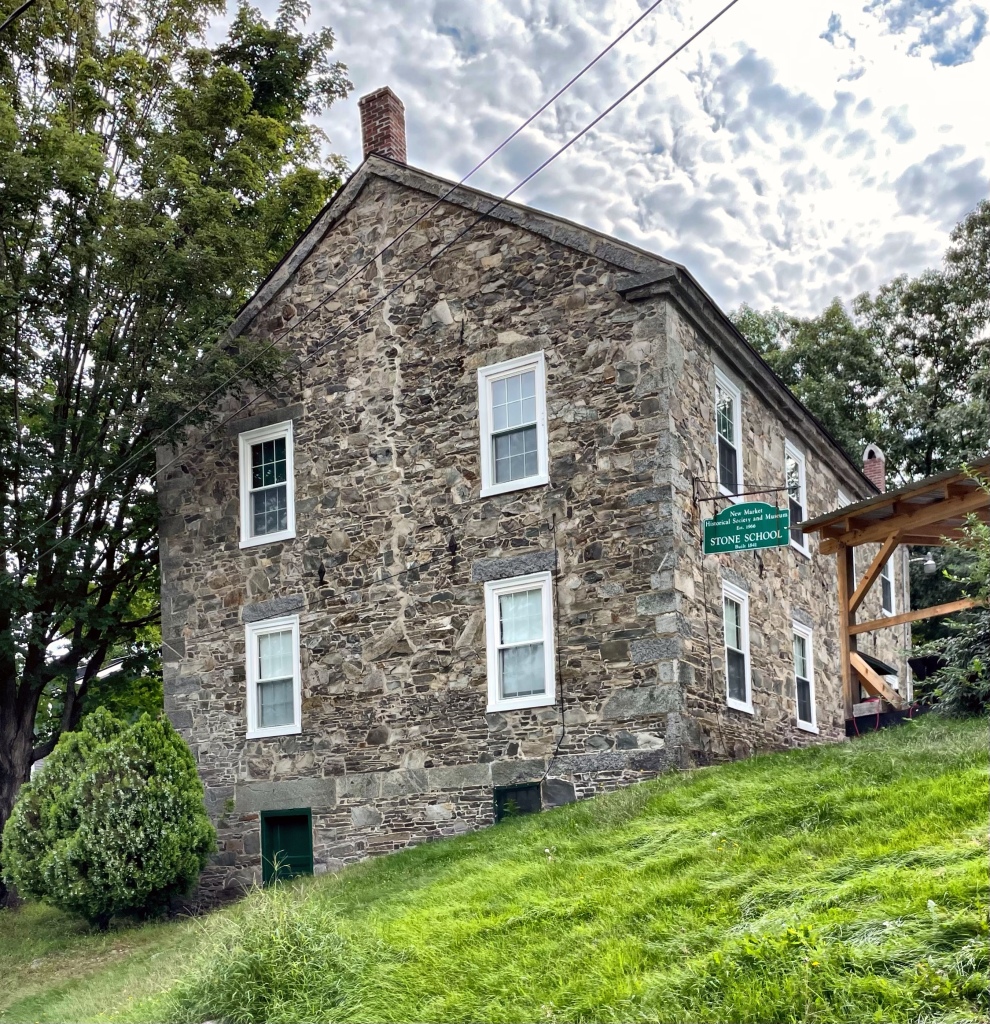
Perched high on a hill, next to the Stone Church (featured previously), the old Stone School in Newmarket is one of a handful of iconic stone buildings in the town. Built in 1841, its stonework executed by William and Robert Channel, local farmers and stonemasons, who likely got their skill from building stone walls on farms. The building was used continuously as a school until 1966, when it was given to the Newmarket Historical Society, which now operates it as a local history museum.

Stone Church // 1832

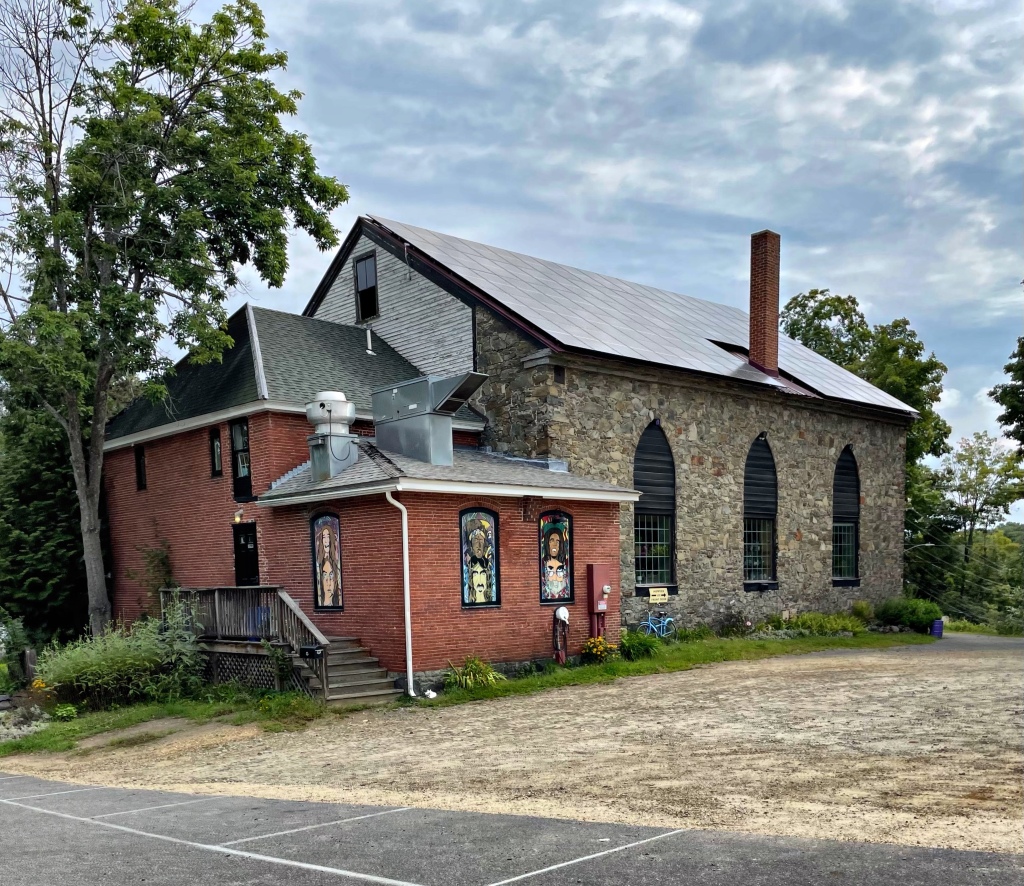
Erected in 1832, the iconic Stone Church building in Newmarket, NH, first served as a Universalist Meeting House before shifting to Unitarian twenty years later. In 1865, it was sold to the Roman Catholic Church, thus establishing the first Catholic Church in Newmarket, NH. In 1890, the congregation moved down to Main Street into a new church next to the town hall, and the Catholics then used the Stone Church as a school for teaching French to children, likely due to the influx of French-Canadian immigrants working at the mills in town at the time. After use as a church, the building was used as a roller-skating rink, playhouse, and VFW hall. In the 1950s, The Newmarket Heel Factory inhabited the building, a shoe manufacturing company. In 1968 the building was ravaged by a fire, and according to legend, the firefighters were reluctant to break the historic windows of the church to vent the fire. In 1970, the building was sold to two UNH students and another, who planned to open a coffee house, but quickly realized they couldn’t sell enough coffee to pay the bills. They decided to sell beer, but weren’t old enough to drink…legally. So one of the boy’s mom’s got the liquor license in her name. Since then, the Stone Church has been one of the most important cultural institutions in the state, providing arts and music space for local musicians and artists to gather and share ideas, over beer. What could be better?!

Mathes Block // 1840

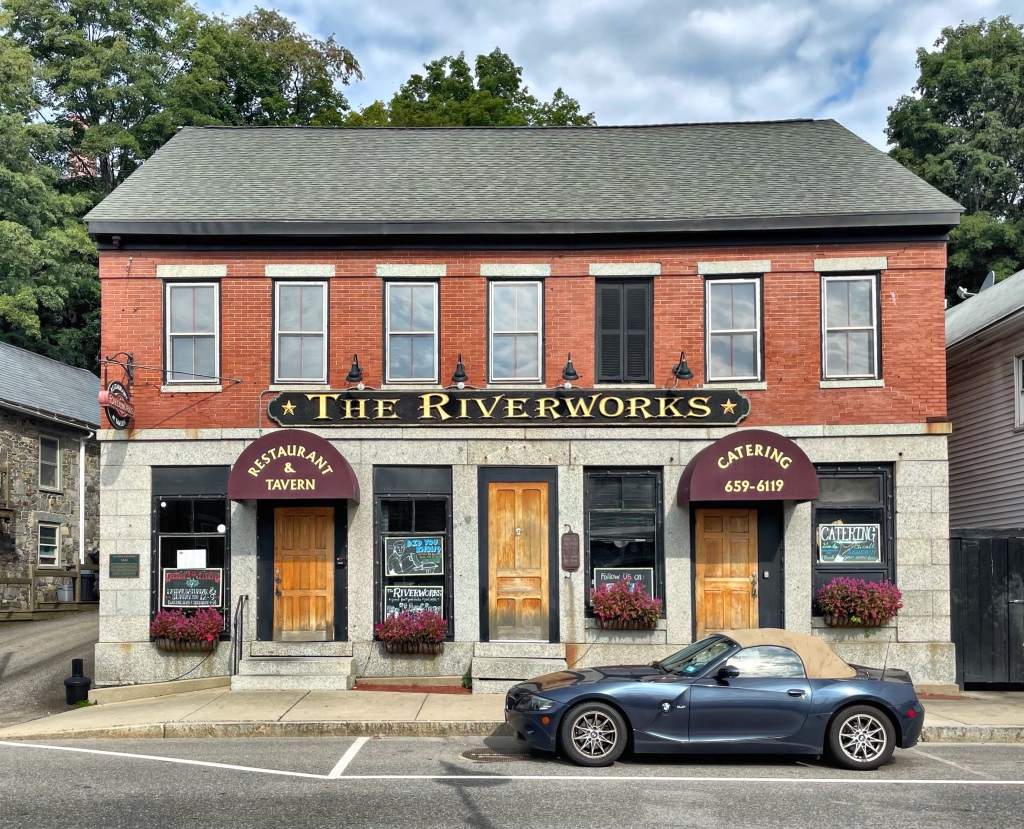
Right on Main Street in Newmarket, the Mathes Block is one of the best-preserved examples of a brick commercial building in town. The structure was seemingly built for Benjamin W. Mathes, who operated a grocery and dry goods store out of the storefronts. Above, he likely had offices or a dwelling for workers. The building stands out for the contrast of granite at the storefront with the brick elsewhere. The building is now home to The Riverworks, an aptly named restaurant/pub with great food.

Old Newmarket Town Hall // 1847-1989

Incorporated in 1727, Newmarket, New Hampshire, is one of six towns granted by Massachusetts in the last year of the reign of King George I (when it was a part of the Massachusetts Bay Colony). Newmarket started as a parish of nearby Exeter, and was granted full town privileges by the legislature in 1737. Newmarket was a center of the New England shipping trade with the West Indies and also saw financial success as a shipbuilding center for the Royal Navy. By the 19th century, the town thrived as a mill town with great water power from the Lamprey River. With the growth of industry and immigrant population increasing due to labor necessity, the town outgrew its older Town Hall. In 1847, the town purchased land adjacent to a prominent mill site on Main Street, and built this beautiful Greek Revival building. The building was updated in the late 19th century with a tower and additional detailing. A massive fire gutted the old building in 1987. Two years later, the building was demolished and town offices moved to a former school building. The site today is a surface parking lot.

Yellow House Inn // c.1880

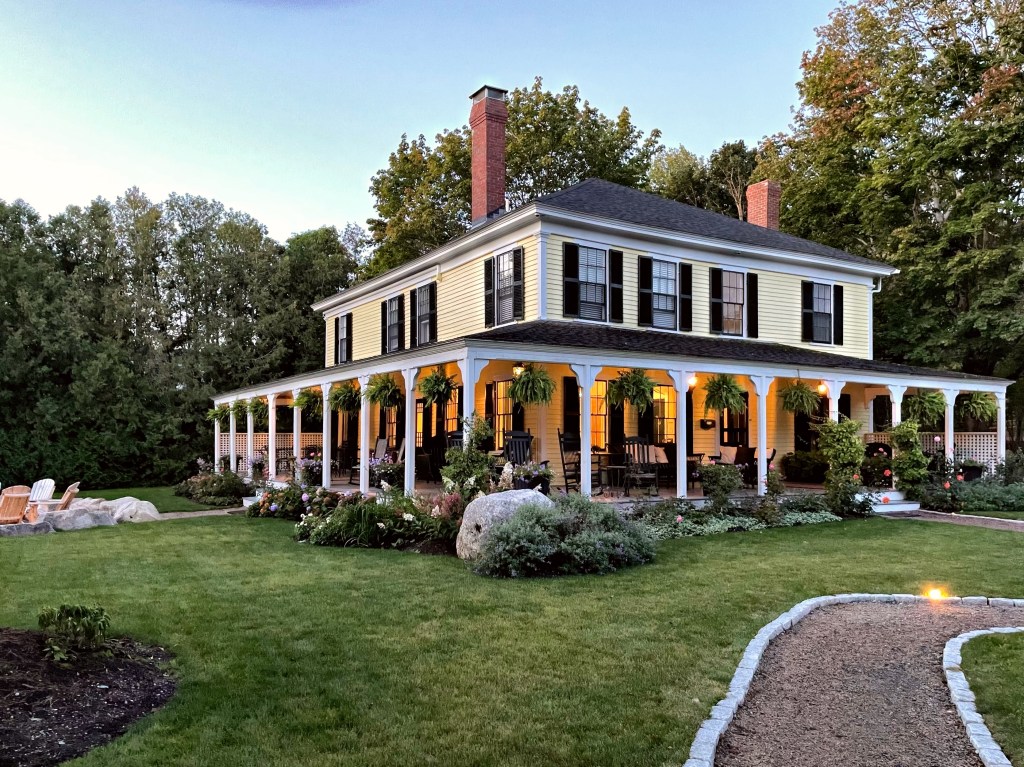
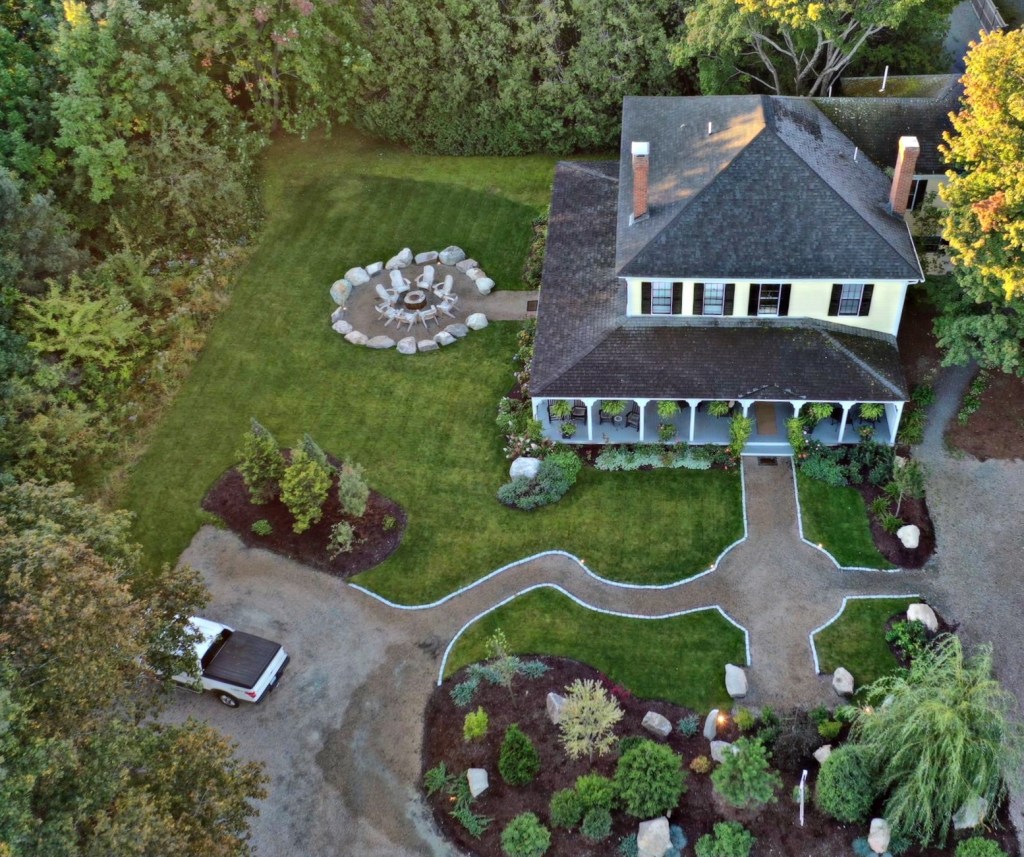
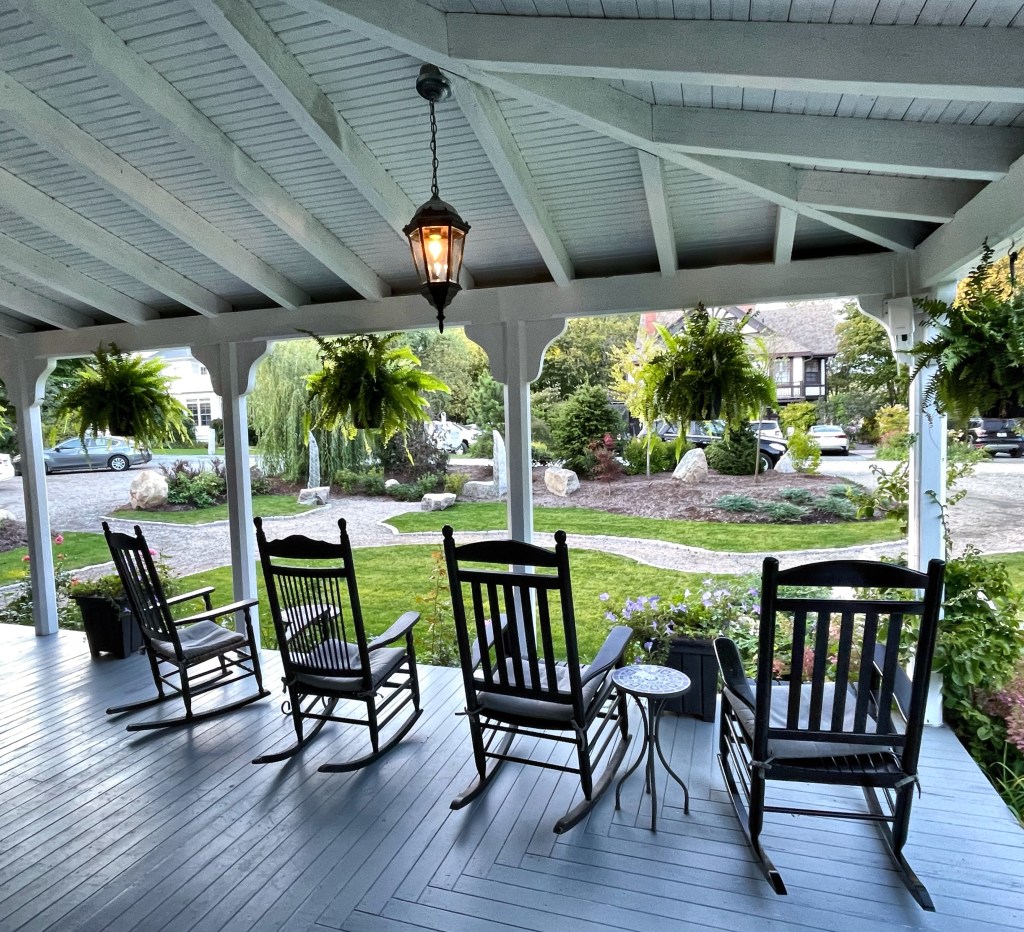
The Yellow House in Bar Harbor is one of the most stunning summer cottages in town, and luckily for us, is an inn! The cottage sits on a sleepy road just off Main Street, just steps from the rugged Mount Desert Island coastline on one side and busy restaurants, shopping, and bars on the other side. The cottage appears to have been built in the late 19th century from deed research and was acquired by socialite Ms. Sarah Parker Torrey Linzee, of Boston by 1886. Sarah married Thomas Linzee, a treasurer of a mill in Lowell, in 1855 and engaged in upper-class society together in Boston until his death in 1863. His wealth went to Sarah, who within a year of his death, purchased a rowhouse in Boston’s newly established Back Bay neighborhood. Her sister, Susan and her husband John Revere (the grandson of the American Patriot Paul Revere), had a matching home built nextdoor in Boston. Like any good socialite, Sarah Linzee desired a summer cottage in desirable Bar Harbor, Maine, to escape the woes of city life for clean air and large parties. Sarah and her sister Susan purchased this cottage, painting it yellow, and the name “Yellow House” stuck. The home was purchased by Leonard Opdyke and remained in the family for generations. By the second half of the 20th century, it became an inn, a use it remains as to this day. The old cottage features the finest wrap-around porch I have seen, large rooms, and original detailing inside and out. For anyone thinking about visiting Acadia National Park, I HIGHLY recommend checking in here to get the true Bar Harbor vibe!