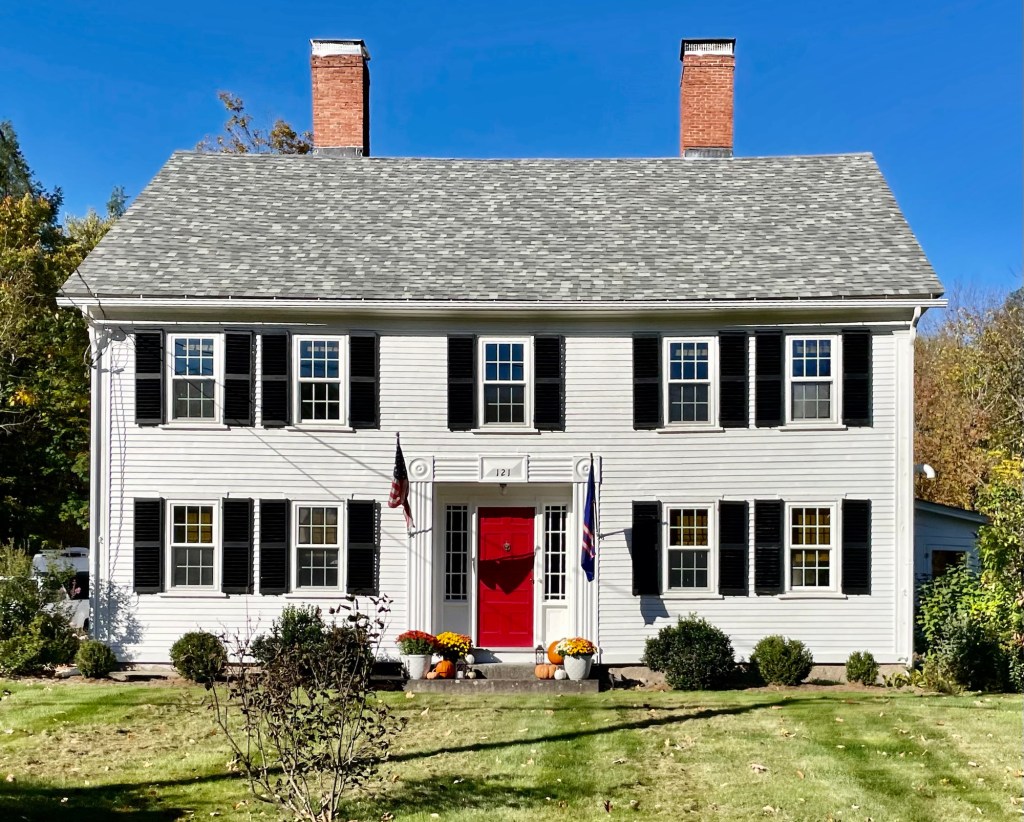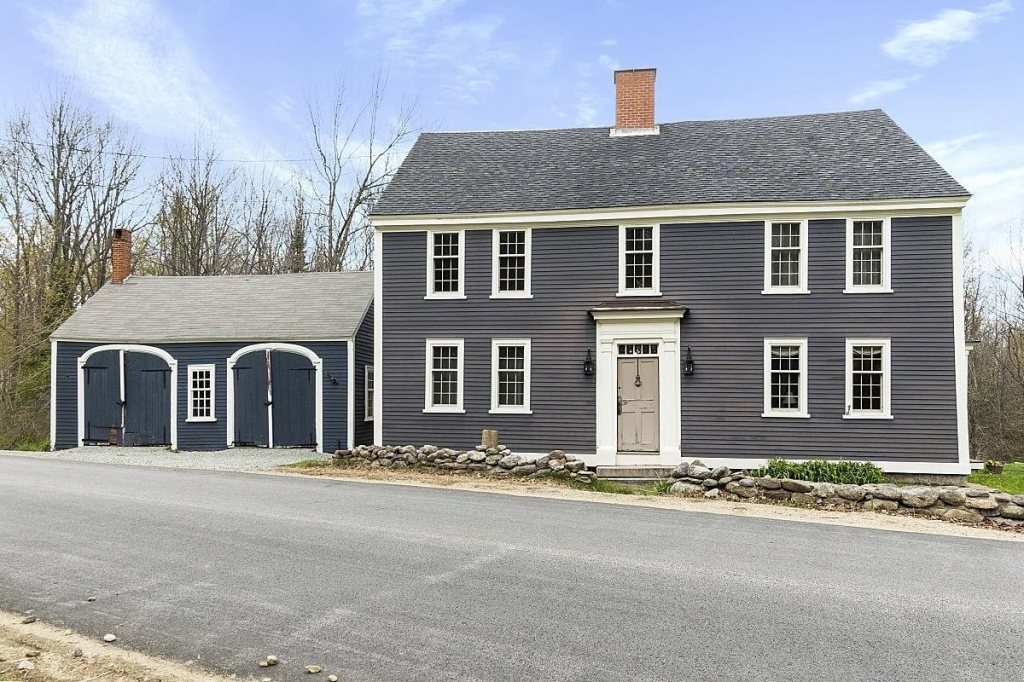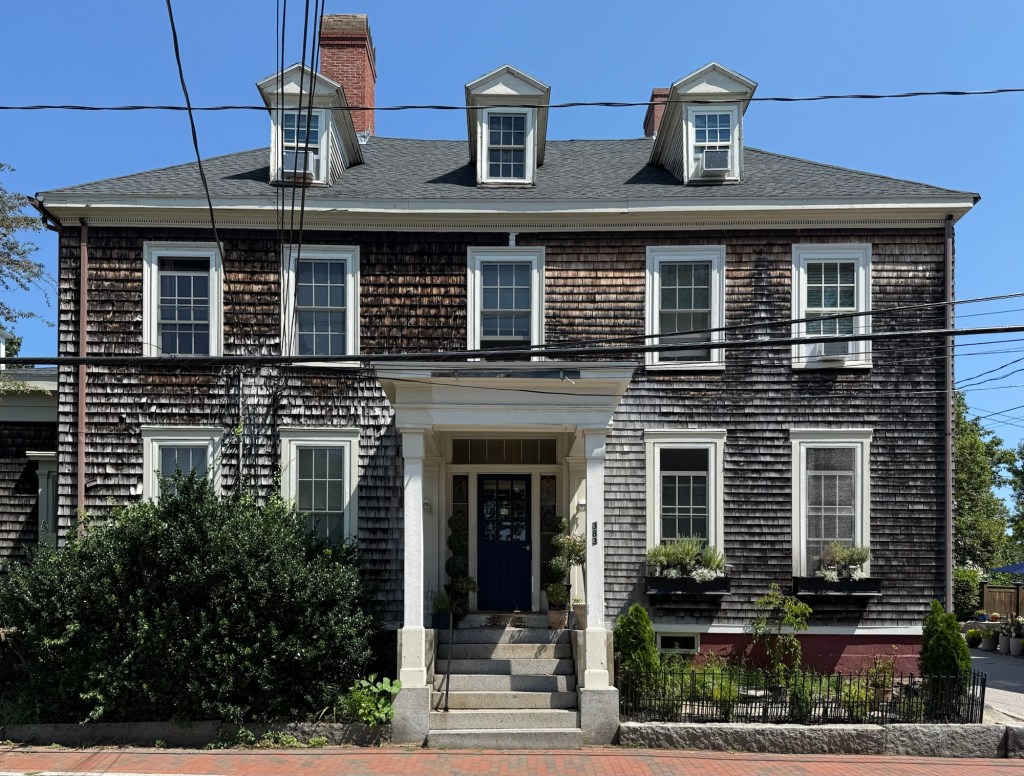
Capt. Charles Blunt House // c.1795

Master mariner Charles E. Blunt Sr. (1768-1823) built this large Federal period home on Pleasant Street in Portsmouth, New Hampshire near the turn of the 19th century for his bride, Abigail Laighton, and their new family. Charles Blunt was a wealthy sea captain who would be out at sea for months at a time, trading in the west indies. On a voyage near Havana Cuba in March, 1823, his vessel was boarded in the night by two piratical boats, with six men each, and Captain Charles Blunt was brutally murdered and thrown overboard. The ship’s cook was stabbed, and fed to the hogs on the brig, with the remainder of the crew maltreated and the goods plundered. The Captain Blunt House follows a symmetrical, five-bay, center entrance form, with cedar shake shingles, three pedimented dormers and large portico over the door.
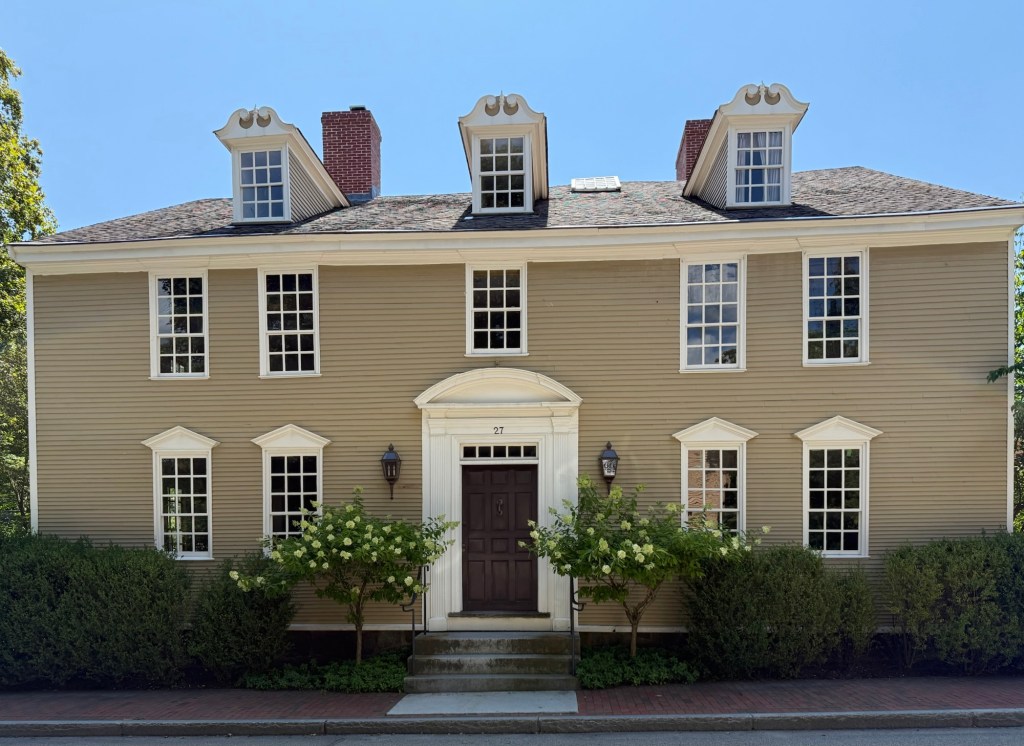
Joshua Wentworth House // 1770

The Joshua Wentworth House at 27 Hancock Street in Portsmouth, New Hampshire, is a high-style Georgian residence built before the American Revolution, and was almost demolished in the name of “urban renewal.” The house has a side-gable roof with three broken-pediment dormers and a wood paneled door with segmental entablature, pilasters, and a five-light transom. Joshua Wentworth (1742–1809) the namesake of the house, was a grandson of John Wentworth (1671–1730), who had served as an early Lieutenant Governor for the Province of New Hampshire, and was himself, a merchant and State legislator. The house was originally located in the North End of Portsmouth, but in the 1970s, urban renewal and local politicians sought to raze portions of the town to “revitalize” the port town. If only they knew that Portsmouth would be the largest tourist draw in the state just for people to see historic, walkable neighborhoods! Businessman Harry Winebaum acquired the house and sought to preserve it. The solution: move the house by barge to the south side of town near Strawberry Banke. Luckily for us, the house was moved in 1973 and was restored. It is a private residence.

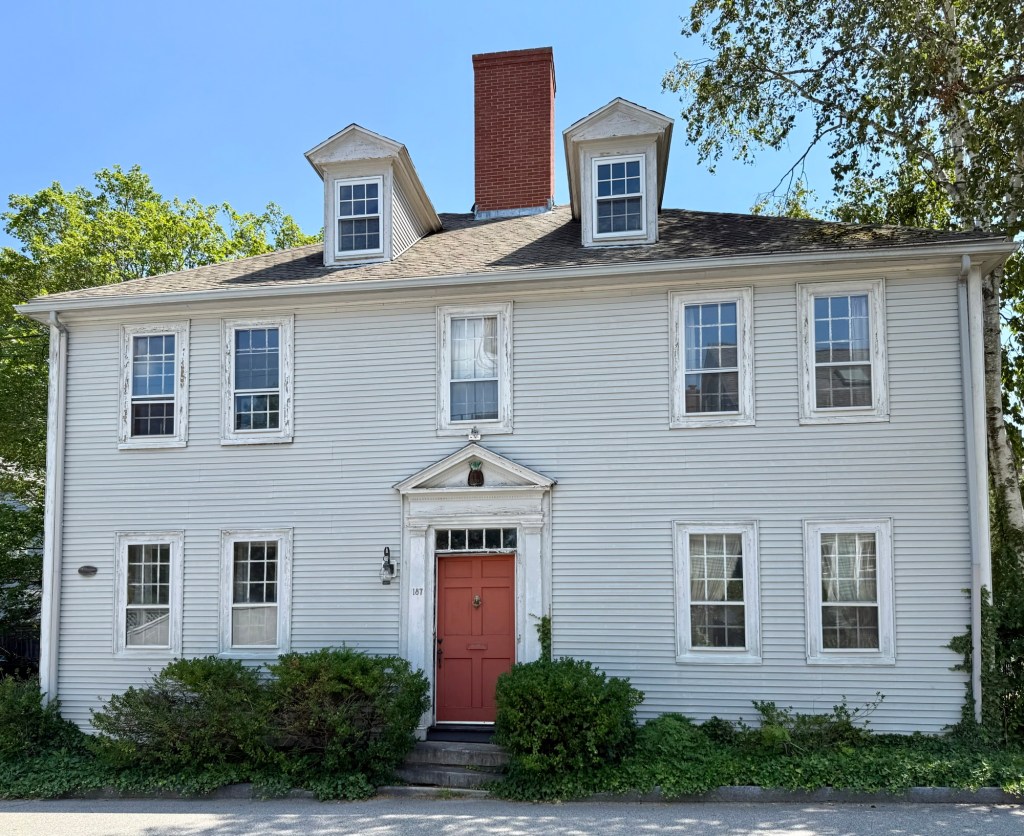
Tredick House // c.1802

The Tredick House is located at 187 Marcy Street in Portsmouth, New Hampshire and was built in 1802 for Captain Jonathan Martin Tredick (1777-1803) and his new wife, Martha Marshall on land gifted to them by Jonathan’s father, William Tredick. In a tragic shift of fortune, Captain Jonathan Tredick never got to live in his new house as he died at sea, with accounts differing, either from fever or being swept overboard. At the time, Jonathan and Martha had two children, 2 year-old Catherine Marshall Tredick (1801-1822) and newborn Jonathan Marshall Tredick (1802-1875). Martha, a sudden widow at the age of 26 with two children, was aided by her family and that of her late husband, and operated a store nearby to supplement her income until her death at home in 1872, she was 96 and never remarried. The late Georgian style house features a hipped roof with central chimney, pedimented dormers and a pedimented entry and 9-over-six sash windows on the house.

Captain Benjamin Damrell House // c.1812

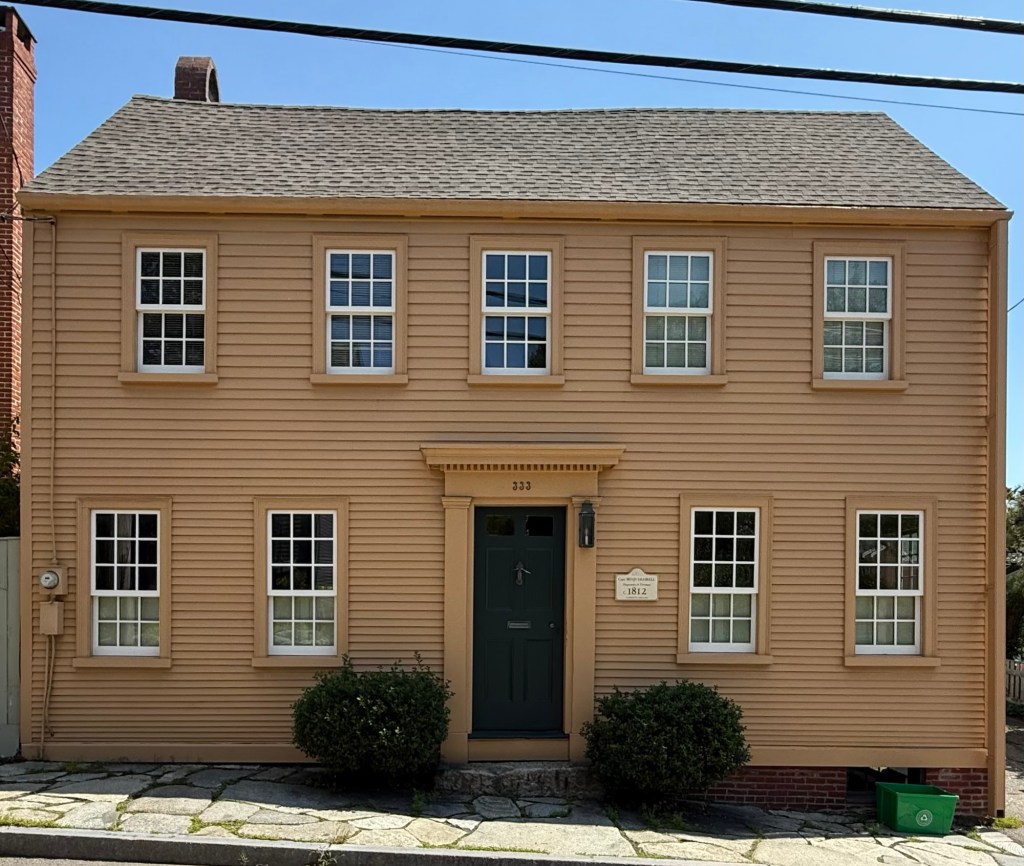
The people and buildings of Portsmouth, New Hampshire, have always been closely tied to the sea. Many old houses and commercial buildings here were built for merchants, ship builders, sea captains, and fishermen, who made their living from the charming port town. This historic house at 333 Marcy Street in the Downtown area of Portsmouth, was built around 1812 for Benjamin Damrell (1781-1821) a sea captain, privateer during the War of 1812, and member of the Portsmouth Marine Society and Alert Fire Society of Portsmouth, a volunteer fire fighting group. Captain Damrell died in 1821 while at sea and his property was inherited by his widow, Lucy, who appears to have remained here for some time, raising their daughter.

Samuel Tarbell Ames House // c.1890

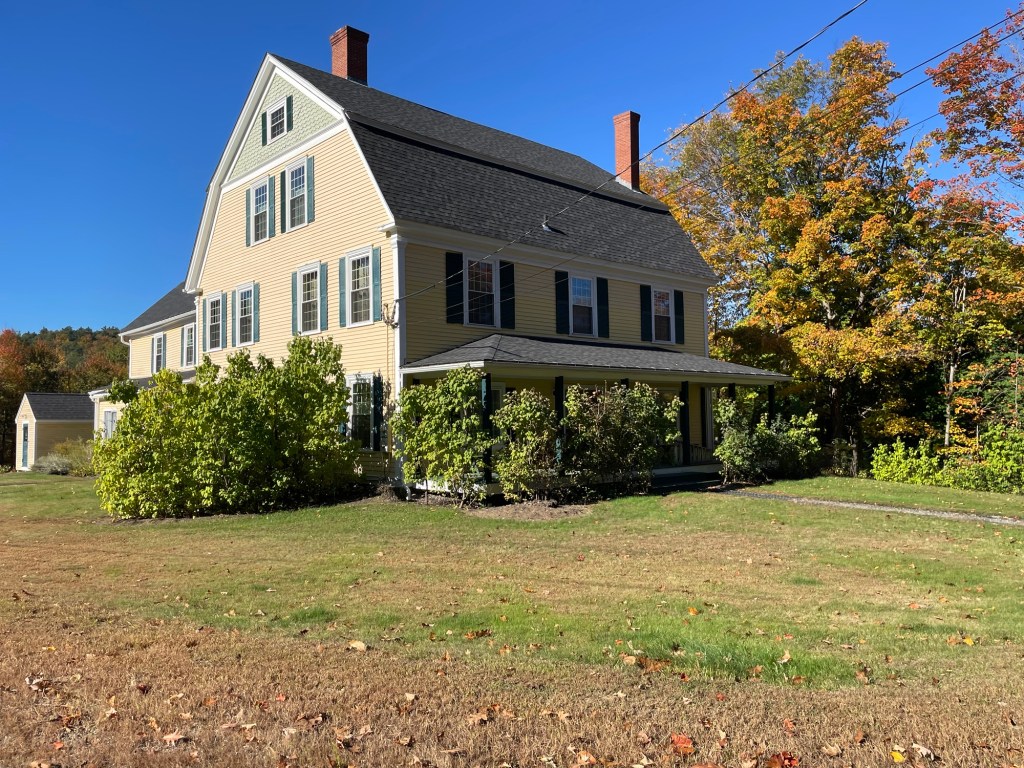
The Samuel Tarbell Ames House is a large, gambrel-roofed house located in New Ipswich, New Hampshire. The residence was built in 1890 for its namesake, Samuel Tarbell Ames (1810-1897), who was eighty years old when it was completed. Mr. Ames was a Boston businessman who summered in New Ipswich, as his wife was Mary Hartwell Barr, a daughter of Dr. James Barr, who lived in town. The house then passed to Samuel’s son, James Barr Ames (1846-1910), who was an Assistant Professor and Dean of the Harvard Law School, who took a great interest in Appleton Academy, serving as Trustee, and his widow donated this house to the Academy in 1912, after his death. The Ames House then served as a boarding house for teachers and students until it reverted to private ownership.

Preston-King House // 1764

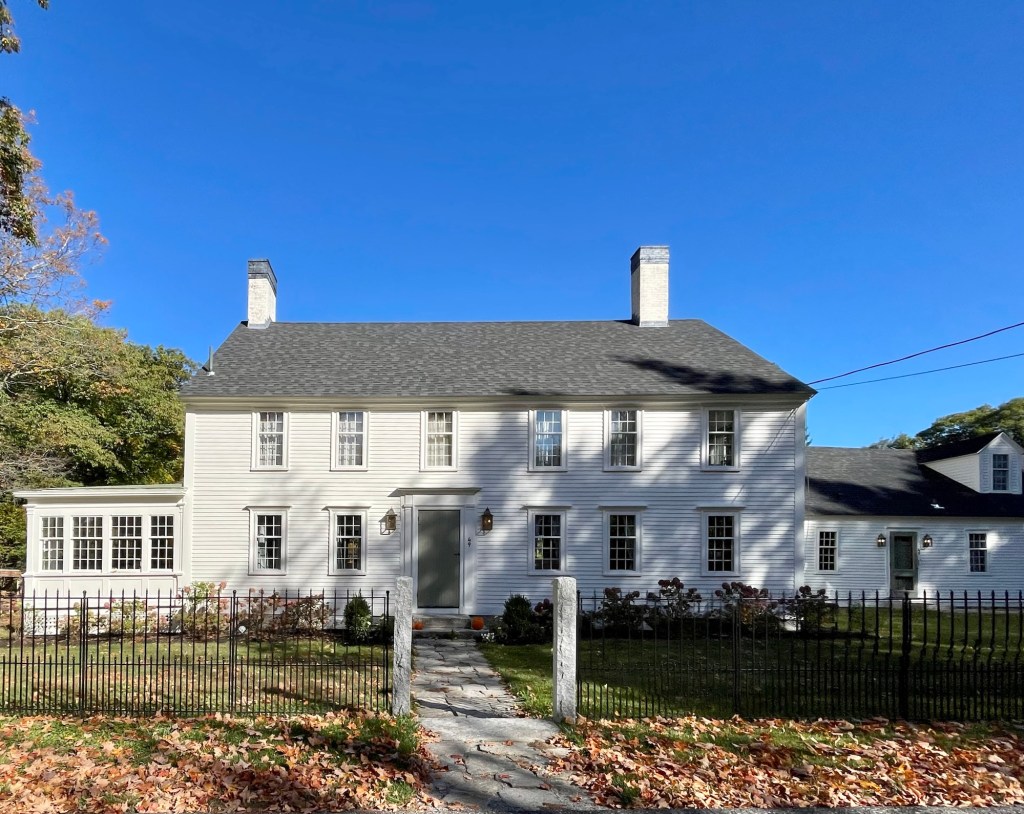
The Preston-King House of New Ipswich, New Hampshire, is a 2 1/2-story wood frame Georgian house and unique for its asymmetrical six-bay facade. John Preston I (1739-1803) built this house in 1764. Preston was a doctor, a profession followed by his son of the same name. As well as being the town’s leading physician, he was a member of the first Board of Selectmen and a member of the Convention for framing the State Constitution, also holding many local offices. Following his death, the house passed to his youngest daughter Anna, and her husband, Seth King, a manufacturer, in 1808. The house has been restored to its Colonial appearance and makes a statement without the frills and detailing of the Victorian style.

Charles Barrett House // c.1780

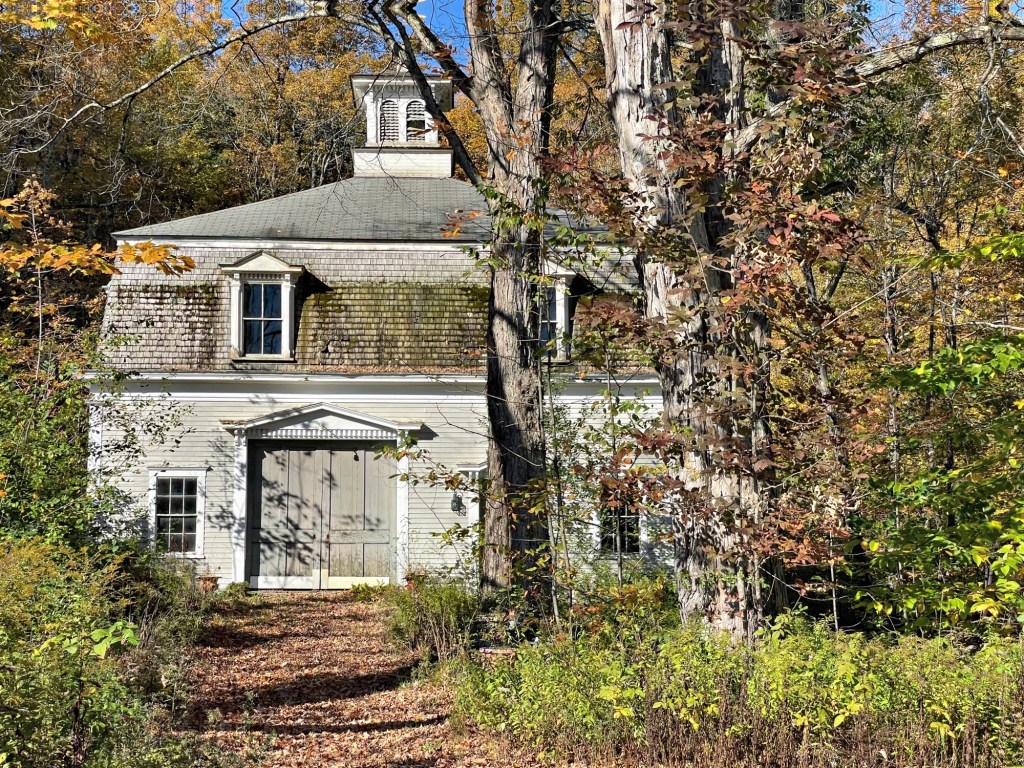
Built on a terraced knoll on Main Street in the enchanting village of New Ipswich, New Hampshire, the Charles Barrett House is a stunning late-Georgian residence that was restored in the 20th century. Charles Barrett (1739-1808) moved to the town from Concord, Massachusetts, and did quite well for himself, as just decades later, he would build his son one of the finest homes in the state, the Barrett House, next door. The house’s current appearance reflects a restoration circa 1960. Like many 18th century houses, it was altered in the 19th century with Victorian-era embellishments, including a Mansard roof, 2/2 sash, and a matching carriage house. Under the direction of Historic New England, the house was returned to its more simple, original, Georgian design.

Barrett House // 1800

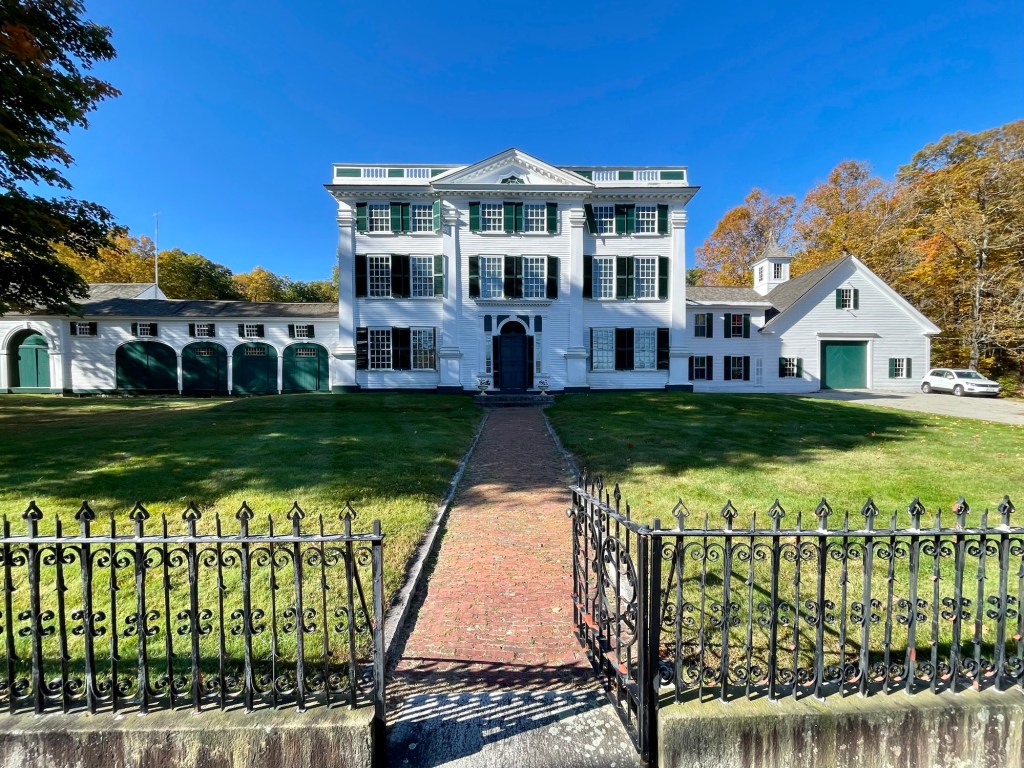
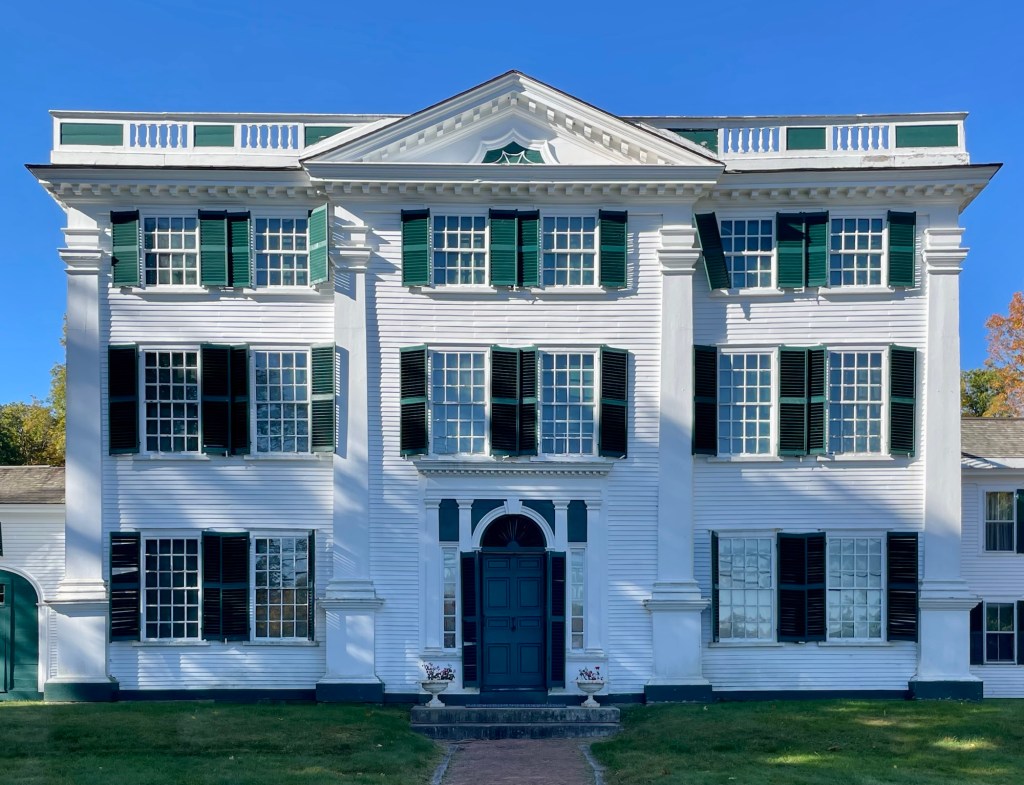
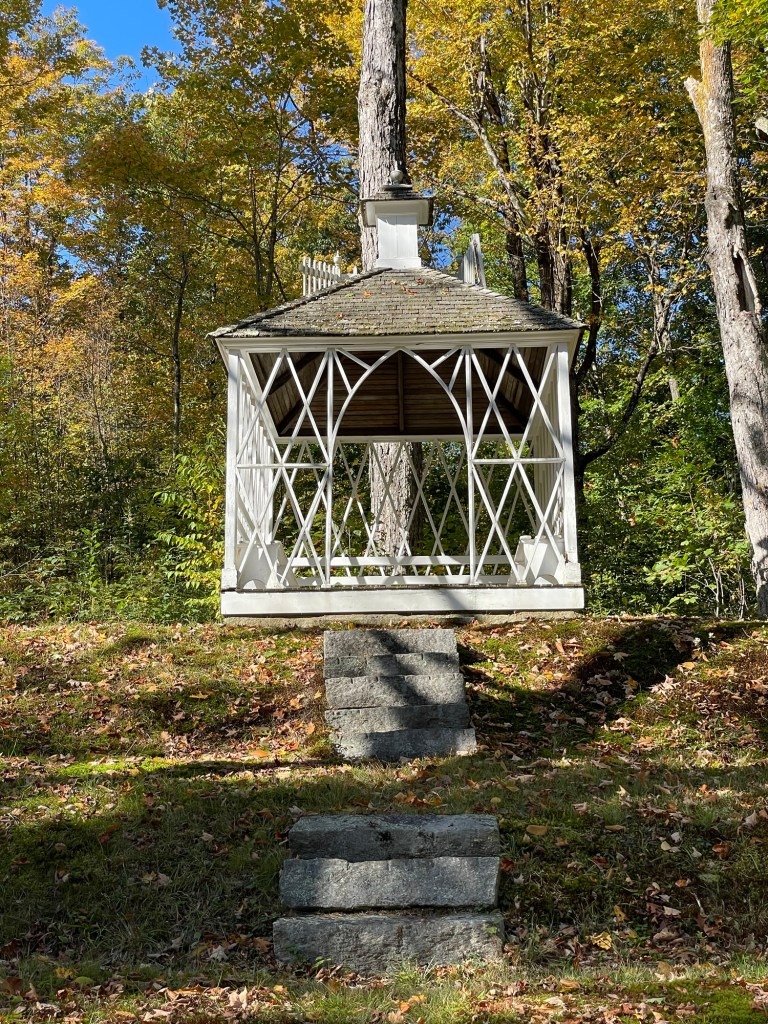
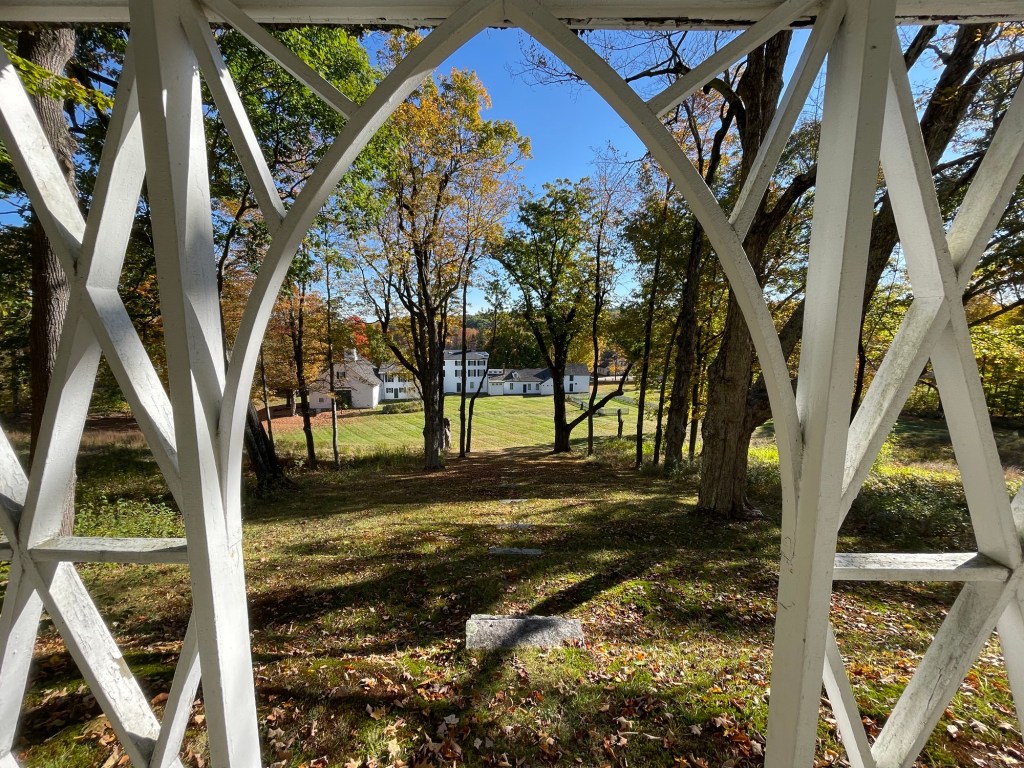
The Barrett House (also known as Forest Hall) is a Federal style mansion located in New Ipswich, New Hampshire and one of the finest buildings in the entire state. The mansion was built around 1800 by Charles Barrett Sr. for his son Charles Jr. and daughter-in-law Martha Minot as a wedding gift. Its grand scale was encouraged by Martha’s father, who promised to furnish the house in as lavish a manner as Barrett Sr. could build it. The interiors are elegantly furnished, and numerous reception rooms were designed for entertaining in a cosmopolitan manner. An elaborate allée was later added to the landscape, with a flight of stone steps flanked by maples rising up the hillside behind the house and leading to an elegant summerhouse. After Charles and Martha died, the estate remained in the family. However, after the railroad bypassed New Ipswich, the town entered into a decline. Charles Barrett’s descendants stayed on, but today Forest Hall remains essentially a relic of the Federal era. After 1887, the family used the house only in the summer-time. It was donated to Historic New England in 1948. Historic New England has ever-since opened up the property to those who want to see one of the best examples of a rural, Federal style estate in New England and its well preserved interior and grounds.

Ms. Dolly Everett House // c.1825

This house on Main Street in New Ipswich, New Hampshire, was built for Mrs. Dorothy “Dolly” Everett, (1770-1859), a sister of Samuel and Nathan Appleton, who returned to New Ipswich after her husband’s death. Her husband was David Everett (1769-1813), who had been a student at New Ipswich Academy, then attended Dartmouth, after which he studied law and practiced in Boston where he founded the Boston Patriot in 1809, and published works of drama and poetry, as well as political writings and died while on a trip to Ohio. Dolly’s house in New Ipswich is a unique, high-style blending of Federal and Greek Revival styles, with a notable entry with its recessed paneled entry, narrow paneled doorway surround with small corner blocks and paneled door. The wide, molded outer surround with its pateras and corner blocks, faceted tablet over the door and partial sidelights show the influence of architectural plan books of the period. In her will, Dolly Appleton Everett left her home to the local Congregational Church, who used the property as a parsonage into the 20th century. It was purchased in the mid-20th century as a summer residence and has remained a private home ever since.

Isaac Appleton Homestead // 1756

One of the oldest (if not the oldest) extant houses in Ipswich, New Hampshire is this Colonial home on Appleton Road, which gets its name from the first owner, Isaac Appleton. Deacon Isaac Appleton III (1731-1806) was one of the town’s original settlers who came to New Ipswich from Ipswich, Massachusetts. He held the office of town clerk and of selectman and was a deacon for thirty years. He responded to the call to arms from Concord to fight in the American Revolution. Deacon Isaac Appleton III was the father of Samuel Appleton, a wealthy Boston merchant; and Nathan Appleton, a merchant and politician in Boston and head of the famous Appleton Family which would influence Boston business and politics for generations. Samuel Appleton would fund and establish the Appleton Academy in New Ipswich, the second oldest in New Hampshire after Phillips Exeter Academy. The Isaac Appleton Homestead remains in a great state of preservation and sits just outside the town center.