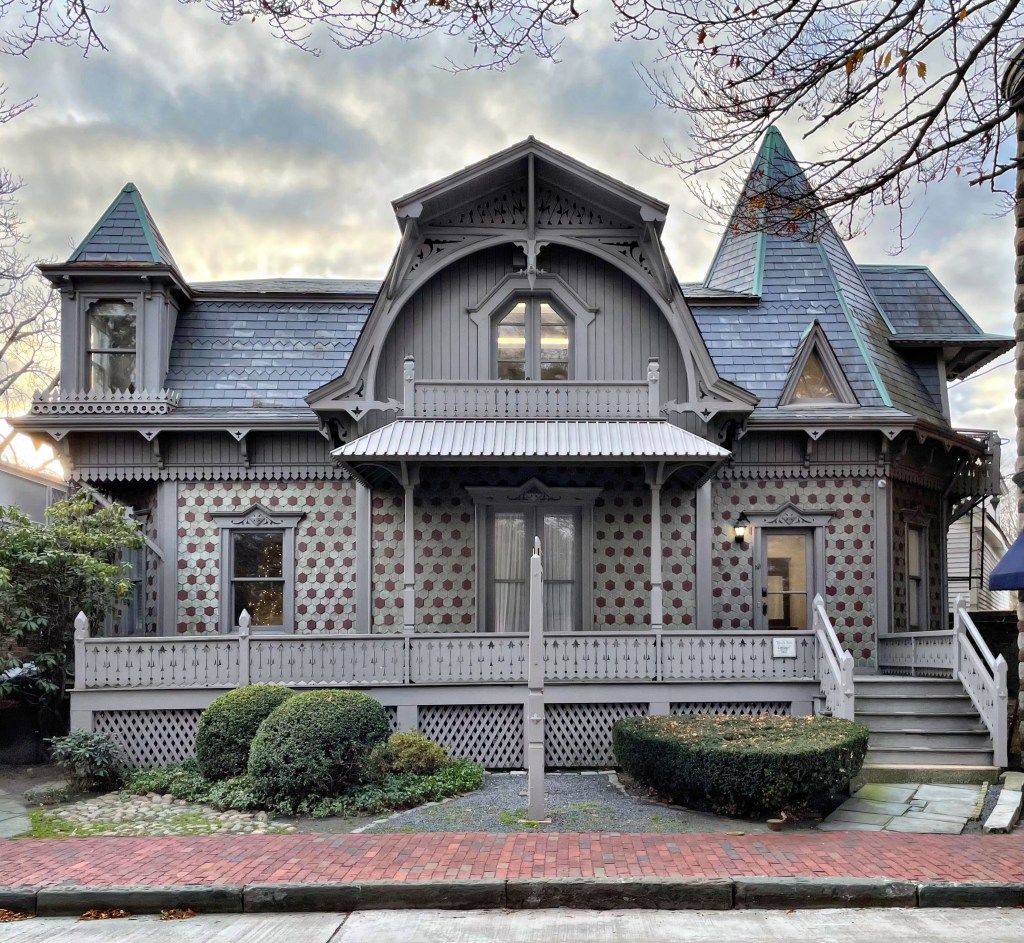
Bird’s Nest Cottage // 1872

One of the more unique and relatively modest summer cottages in Newport, Rhode Island is Bird’s Nest Cottage on Bellevue Avenue. The cottage was built in 1871-2 for Samuel Freeman Pratt, who lived his early life in Boston. The son of a carpenter, Pratt was was working as a carver in Boston, where he saw success as an inventor with several patents to his credit. From the success of one of his inventions, a device for sewing machines, the invention gave him the financial freedom to explore other interests, namely architecture. In Boston, he likely learned his craft from partner John Stevens, before setting out on his own. He designed buildings in Oak Bluffs on Martha’s Vineyard, but decided to reside in Newport. While many state that this cottage for Pratt was designed by the Newport resident and star-chitect Richard Morris Hunt, the design and the fact that it was his own cottage lead me to believe it was designed by Pratt himself. The eclectic cottage features complex gable shapes, fancy stickwork under the eaves, projecting corner bays, and a wall covering of multicolored slate roof shingles. It is now a professional office.
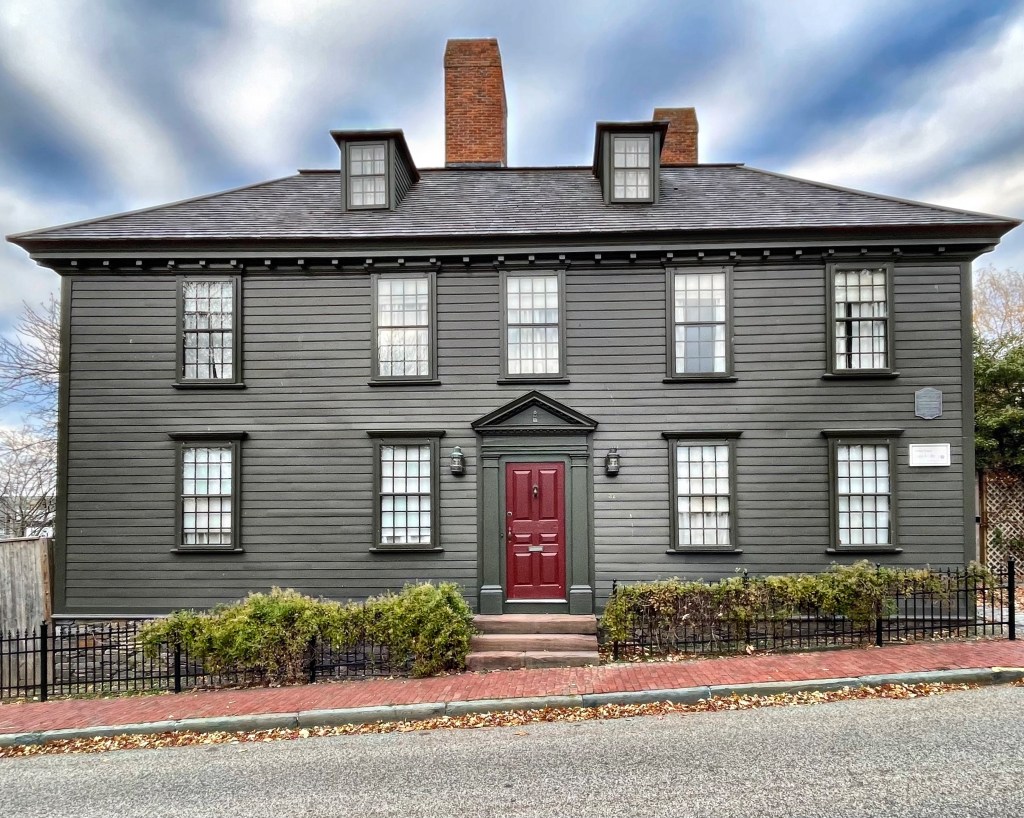
Cotton House // c.1720

One of the oldest houses in Newport, the Charles Cotton House stands on Church Street, and has a similar story to its neighbor, the Langley House (featured previously). The home was built around 1720 and is named for Dr. Charles Cotton who owned it in the early nineteenth century. Cotton was born in Plymouth, MA, and was a direct-descendant of ministers John and Josiah and worked as a surgeon aboard the USS Constitution during the War of 1812. From Newport Restoration Foundation: “The original structure was probably a small, single-chimney house of one-and-a-half or perhaps two stories. The house as seen today was obviously enlarged in the Georgian style in the mid-eighteenth century and received further improvements in the early nineteenth century.” The likelihood of the building’s incremental growth is evident from the two chimneys are not of the same size above the roofline, nor are they in line with each other. Had the house been built new in the later Georgian style, elements on the exterior probably would have been more symmetrical and balanced. This building, like the Langley House was moved by Newport Restoration in the 1970s to save it from the wrecking-ball. In its original place, a parking lot.

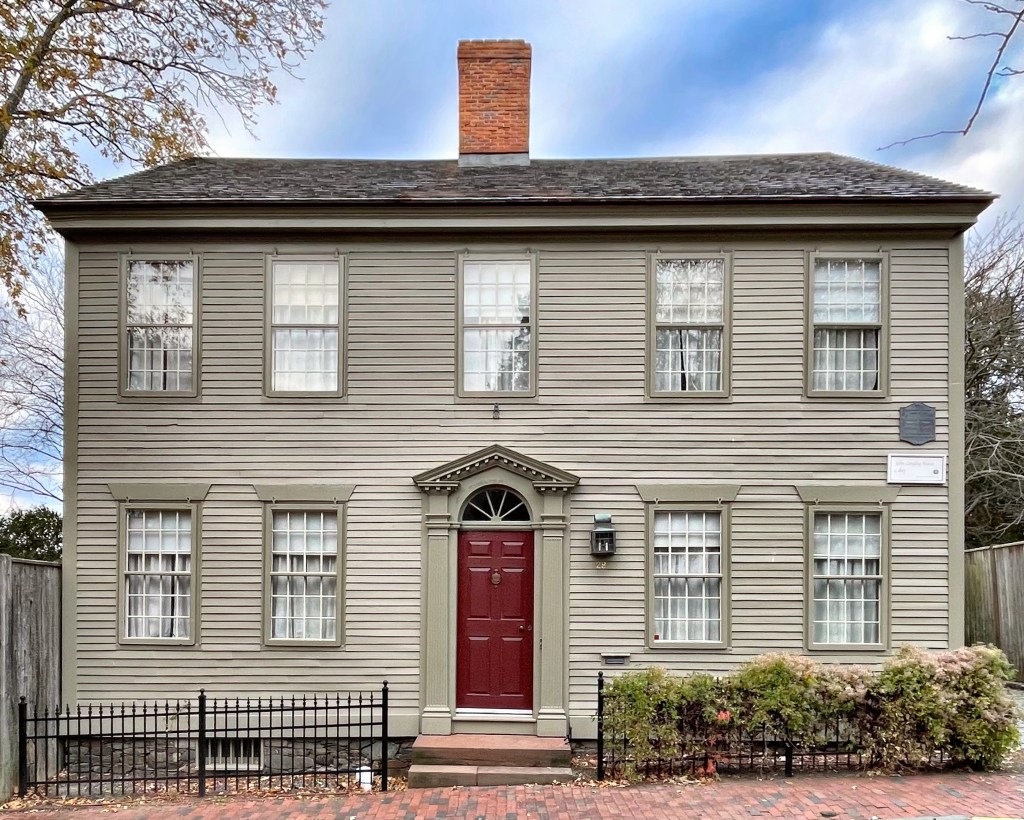
Langley House // 1807

Smack-dab in the middle of Newport, Rhode Island’s dense network of downtown streets, you’ll find Queen Anne Square, a rare bit of open space in a web of alleys and ways. Did you know that this park is only 50 years old? It’s true! In the late 1960s and early 1970s, Newport (and many cities all over New England) were grappling with suburbanization and dwindling tax revenue with people and businesses moving out. Their solution was “urban renewal”, which entailed the razing of buildings and sometimes, neighborhoods which were deemed “blight”. Historic buildings and communities were destroyed with modern planning (high capacity roads and high-rises connected by open space) to take its place. In Newport, this saw the form of America’s Cup Avenue and Memorial Boulevard, which cut through the city to allow for more cars and less-congested side-streets. Years later, planners realized that Newport was without a traditional town common like many New England towns, so they cleared buildings in front of Trinity Church to provide that traditional feeling. At the time, preservationists were trying to save significant buildings, with the Langley House being one of them. This house was set for the wrecking-ball, from Memorial Boulevard’s construction but moved and restored by Newport Restoration in the last hour to the south side of Church Street. Seven years later when Queen Anne Square was built, this house was moved to the north side, saving it once again. This house is a survivor!

William Bottomore House // c.1750

This well-kept Federal home in Newport was apparently built pre-Revolution, but it was likely significantly altered in the early 1800s for its namesake, William “Billy” Bottomore. “Billy” was born in Bologna, Italy, and moved to Salem, MA, where he possibly met Michele Felice Cornè, a prolific painter and who is credited in making tomatoes mainstream… seriously. In early 19th century New England tomatoes were thought to be deadly poison. Cornè was accustomed to eating tomatoes in his native land of Italy and would regularly eat them without ill effect and, thus, allayed the fears of the residents of his adopted country. Cornè became friends with Bottomore and they both moved to Newport. Bottomore likely modernized this house with help from his friend and ran a confectionery store in the home.

John Bush House // c.1845

Here is another of my favorite non-Gilded Age houses in Newport, the John Bush House on Mann Street! John T. Bush (1817-1881) was listed in directories as a “wool-puller” which clearly was a lucrative job, as he could afford to build this high-style Gothic Revival home. This house is heavily influenced by the publications of Andrew Jackson Downing first published in 1842, so the house is probably built within a couple years of that date. Hallmark features of the Gothic Revival style include: lancet windows, bargeboards, windows with drip molds, and steeply pitched roofs; this house has all of the above!

Levi Gale Mansion // 1835

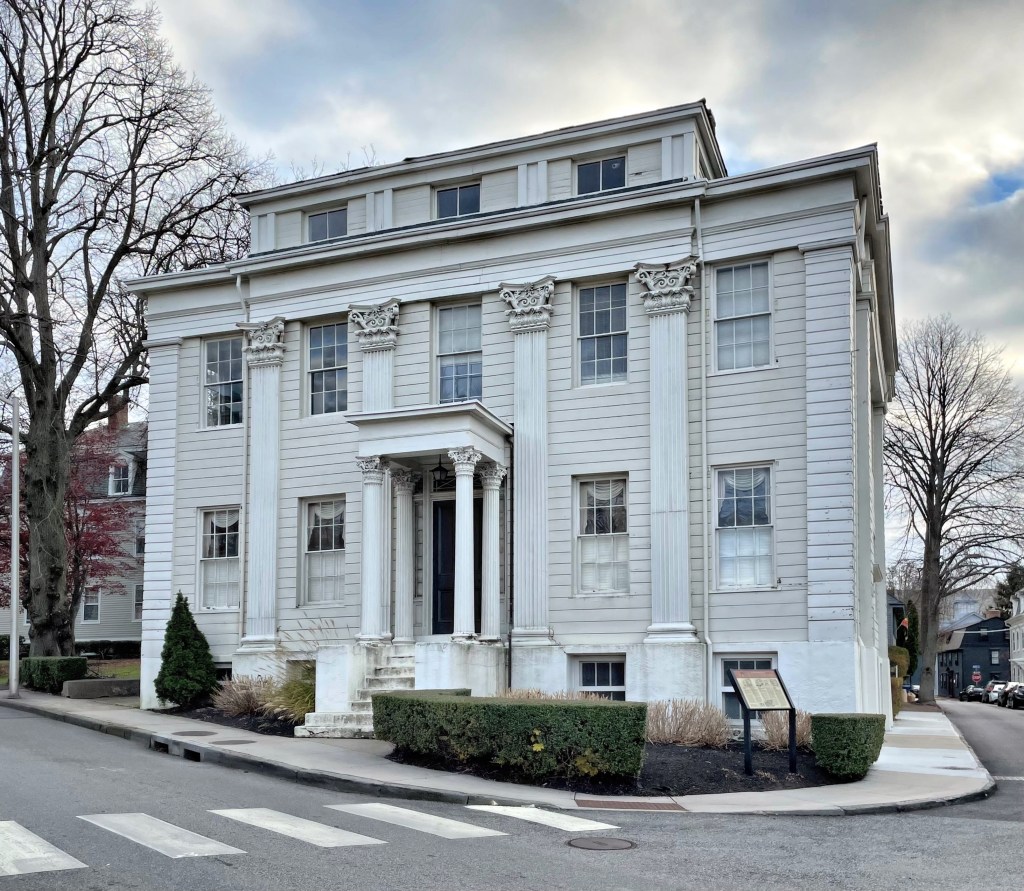
One of my favorite houses in Newport, Rhode Island is this amazing high-style Greek Revival mansion across from the Touro Synagogue. The house was built in 1835 for Levi Gale, and designed by esteemed Rhode Island architect Russell Warren. Gale was born in New Orleans and moved to Newport and is listed as a merchant. It is possible that Levi Gale was involved in the Triangular Trade, the trading of enslaved people, sugar (often in its liquid form, molasses), and rum between West Africa, the West Indies and Rhode Island. Many do not realize, but Rhode Island was heavily involved in the slave trade. The house follows the more traditional Federal form, but with two-story composite pilasters and flush siding, scored and painted white to resemble ashlar marble. The home is elegantly sited, but it is actually not on its original lot. It was actually built adjacent to Washington Square, in the place of the present Newport County Courthouse, and was moved to its present site in 1925. The mansion was cut in half, moved a block away, and re-assembled on a new foundation. It is now used as a Jewish community center, owned by the congregation that owns Touro Synagogue.

Peckham Houses // c.1855

On a little stretch of Kay Street in Newport, you can find four strikingly similar Italianate style houses, all neighbors. Upon further research, it turns out they were designed by the same man, Job Peckham. Job Almy Peckham (1807-1885) was a descendant of one of nearby Middletown’s “founding” families. He ran a lumberyard and began working as a housewright, building homes. He was a believer of the philosophy “if it ain’t broke, don’t fix it”, so he built many of his houses in a sort of cookie-cutter way, but each showcasing slight design changes. One of the most impressive features of these homes is the massive overhanging eaves with scrolled brackets. Peckham’s own house (bottom right) is included in the bunch. What do you think of these homes?

Townsend Industrial School // 1894

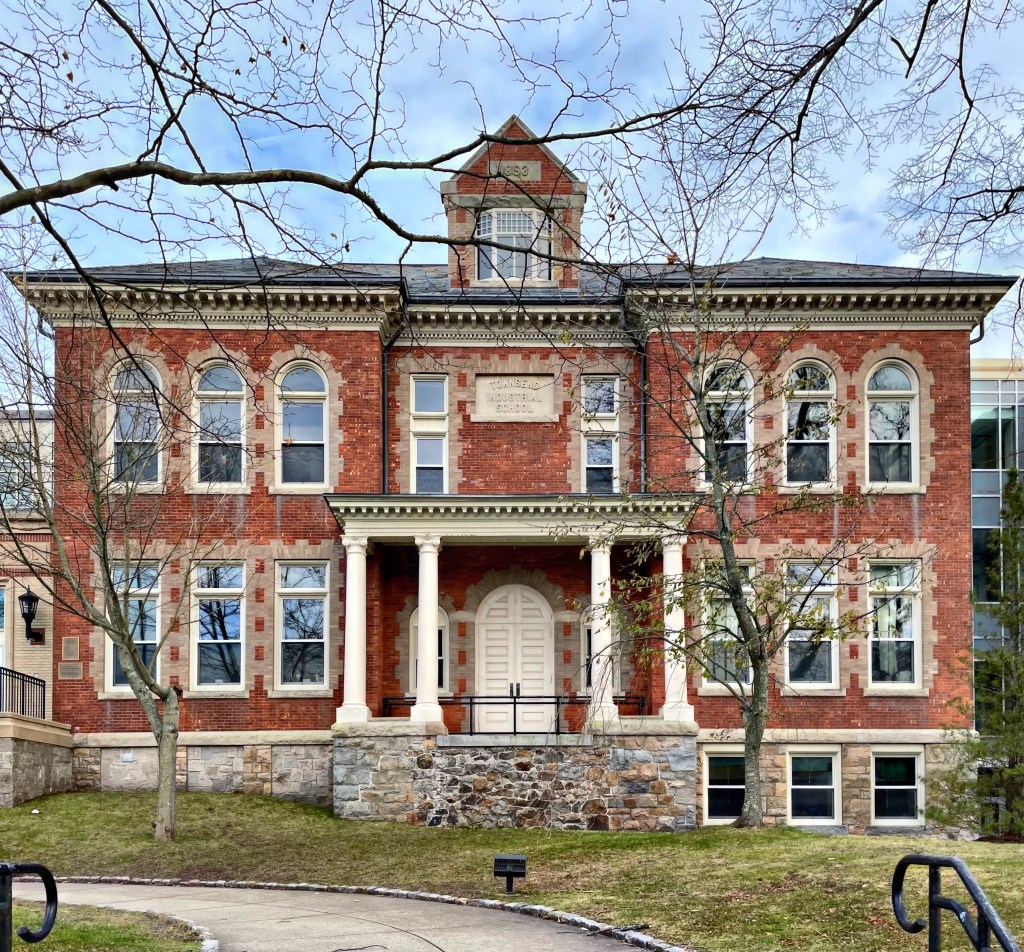
Located next to and predating Newport City Hall (a previous post), the Townsend Industrial School building is a great, eclectic Victorian-era building in Newport, that is often overlooked. The school itself evolved from a vocational school for women, that Katherine Prescott Wormeley began in town in 1872. The school taught pupils “not destined for classic education” but taught them skills that they would be able to use in the “real world”. The school was located next to the Rogers High School (demolished in 1957), which provided a more traditional education. The building was designed by Newport architect James C. Fludder and has maintained its stately presence to this day. The building has been acquired by the City of Newport, who added a Post-Modern addition, and it is now known as the Frank E. Thompson Middle School.

Armington House // c.1863

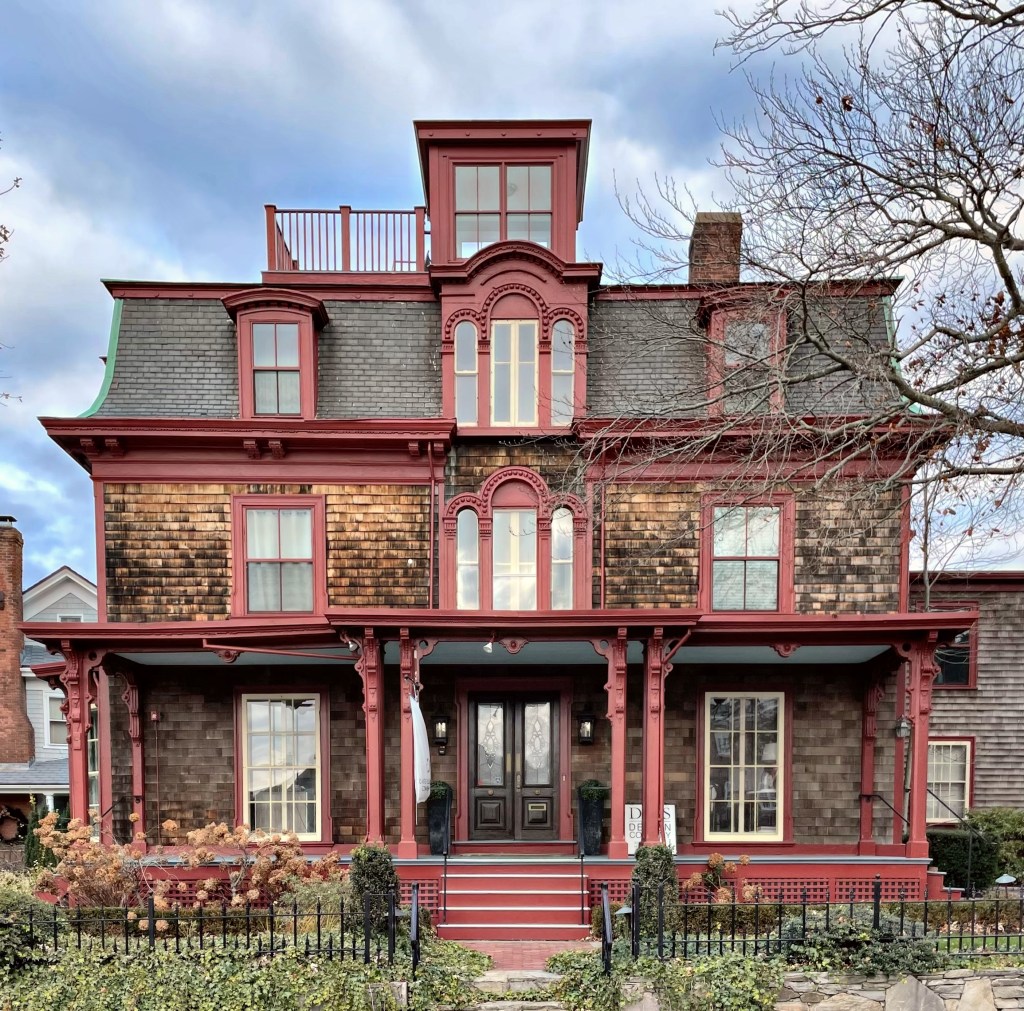
This beautiful mansard-roofed home in Newport was long the residence of the Armington Family. The history is a little murky, but deed research shows the property was purchased in 1863 by Horace E. Armington, a Boston tailor. Horace likely purchased an earlier home and from it, built this larger, Second Empire style house to serve as a summer retreat. The family eventually settled in Newport full-time and their son, also Horace, took a job as Assistant Librarian at the Redwood Library in town. The family owned the property for generations until it was converted to professional office use, likely due to the commercialization in the 20th century of the main streets in Newport. The house retains much of its original detailing including the rooftop belvedere. The later-added shingle siding adds a rustic touch.

Touro Synagogue // 1763

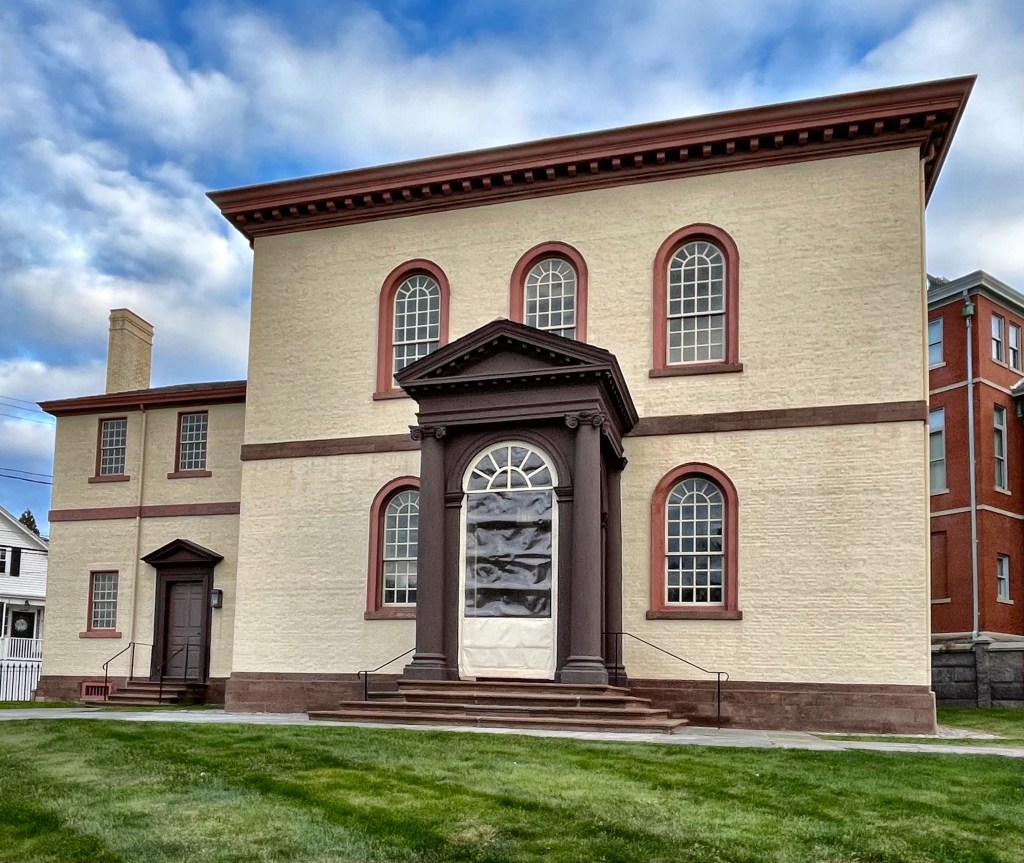
While Newport is arguably best-known for the Newport mansions from the Gilded Age, there are soooo many amazing buildings from the Colonial era, including some of the most significant and historic in the United States. Touro Synagogue in Newport is the oldest synagogue building still standing in the United States, the only surviving synagogue building in the U.S. dating to the colonial era, and the oldest surviving Jewish synagogue building in North America (for reference, second-oldest extant synagogue in North America was built in 1833, seventy years later)! Its history begins in the 17th century when the small but growing colony of Newport received its first Jewish residents possibly as early as 1658. The earliest known Jewish settlers arrived from Barbados, where they participated in the triangular trade along with Dutch and English settlements. By 1758, the Jewish population had grown sufficiently that there was a need for a house of worship. The Congregation now known as Congregation Jeshuat Israel (Salvation of Israel) engaged Newport resident Peter Harrison to design the synagogue. Harrison, a British American merchant and sea captain, who was self-tutored in architecture, studying mostly from books and drawings. By the time he designed Touro Synagogue, he had already completed iconic buildings including Newport’s Redwood Library and King’s Chapel in Boston. Construction began on the “Jews Synagogue” in 1759, which was completed years later in 1763. The building is one of the most significant buildings in America, and is open to tours where you can see the immaculately restored interiors.