Cornè House // 1822

What does this house and the tomato have in common? Keep reading to find out!

Michele Felice Cornè (1752-1845) grew up in Naples Italy and became disillusioned with the Napoleonic Wars. After the French occupation of Naples in 1799, he fled and was brought to the United States on the ship Mount Vernon, commanded by Elias Hasket Derby Jr., and settled in Salem, Massachusetts. Cornè moved to Boston in 1807 and lived and worked there until 1822 when he moved to Newport, Rhode Island, purchasing a property containing a barn. Cornè either had the barn renovated into this 1822 house or built the Federal period house from its timbers. Here, Cornè would paint many maritime scenes as murals in homes and businesses. However, his true contribution to his adopted country was convincing his neighbors to eat the tomato. While in Newport, it is reputed that Cornè introduced the tomato into the American diet. In early 19th century New England tomatoes were thought to be deadly poison. Cornè was accustomed to eating tomatoes in his native land and would regularly eat them without ill effect and, thus, allayed the fears of the residents of his adopted country. Today, the popularity of the tomato in American cuisine can be credited (in part) to Cornè and his love for the tomato.
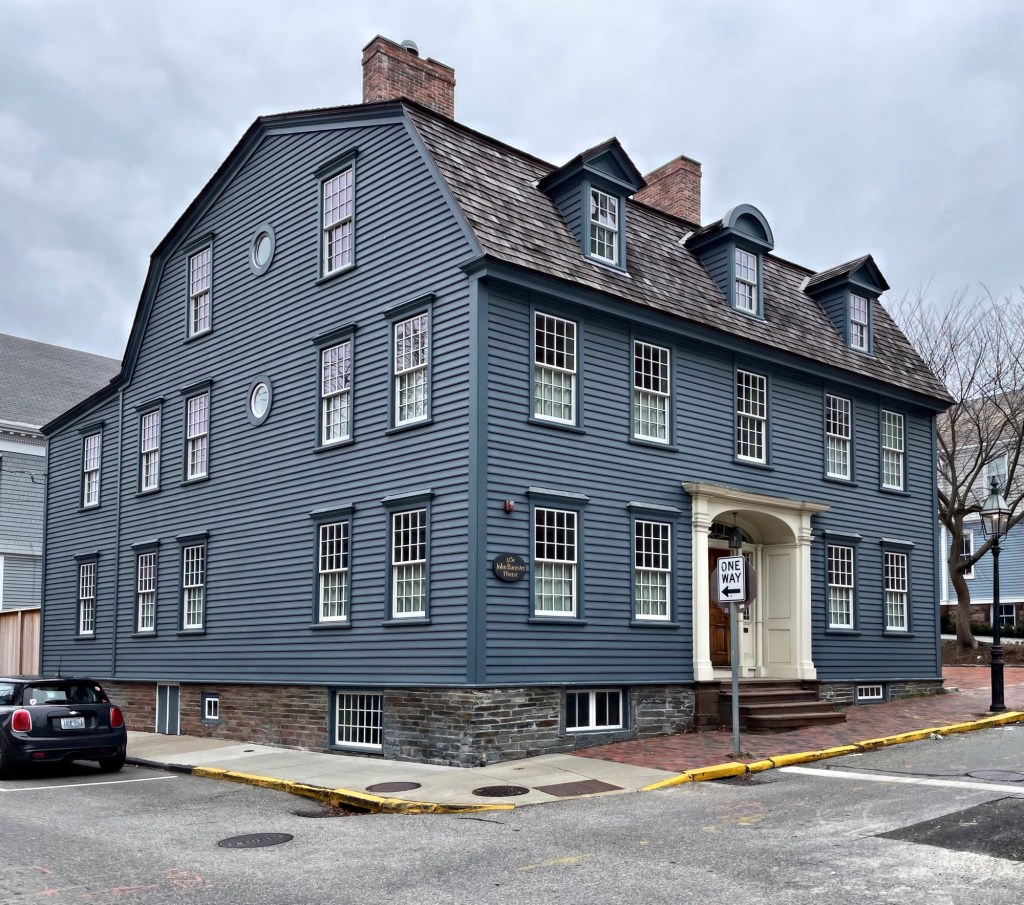
John Banister House // 1751

This deep, gambrel-roofed house is among my favorites in Newport. The house was built in 1751 for John Banister (1707-1767), a Boston-born merchant who moved to Newport in 1736, marrying Hermoine Pelham (1718-1765), a granddaughter of Gov. Benedict Arnold, that next year. Banister quickly established himself as a leading Newport merchant, trading with England, the West Indies, engaging in privateering and the slave trade. In 1752, he held one of the last public slave auctions in Rhode Island at his store, describing them in advertisements as “the finest cargo of slaves ever brought into New England”. The couple also built a country estate in Middletown, Rhode Island. John and Hermione had two sons, John and Thomas, who grew up in this home. John inherited the house after his father’s death in 1767, but the two brothers would soon find themselves on opposite sides of the battle for independence. Thomas was a loyalist, and even enlisted in the British army during the occupation of Newport, while John supported American independence. In retaliation for his patriot views, the occupying British forces seized this house, along with John’s farm in nearby Middletown. The house became the headquarters of General Richard Prescott during the occupation, although John later reclaimed his property following the British evacuation of Newport in 1779. The house has a later Federal entry, but otherwise is one of the best-preserved Colonial homes in Newport. It is a single-family home.

Harkness House // c.1730

The award for the cutest house in Newport goes to this c.1730 beauty on Green Street! This charming Georgian cape house sits just one-and-a-half stories tall under a squat gambrel roof. The house was originally located at the corner of Thames Street and was moved at least twice until it was placed on its present site by the Newport Restoration Foundation, after they acquired it in 1983, restoring it soon after. The center-hall house has just two rooms on each floor with a central staircase and chimney. The small dormers add some light to the second floor without compromising the historic and architectural integrity of the cottage.

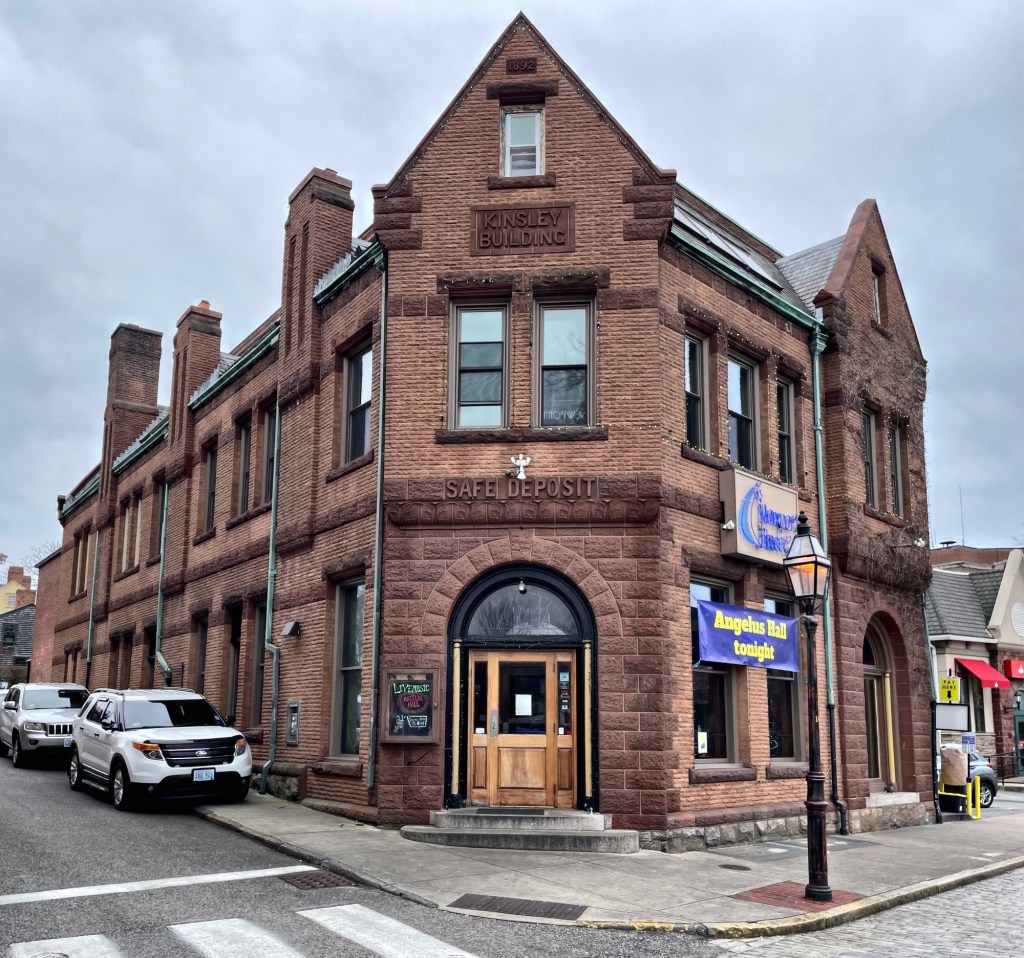
Kinsley Building // 1892

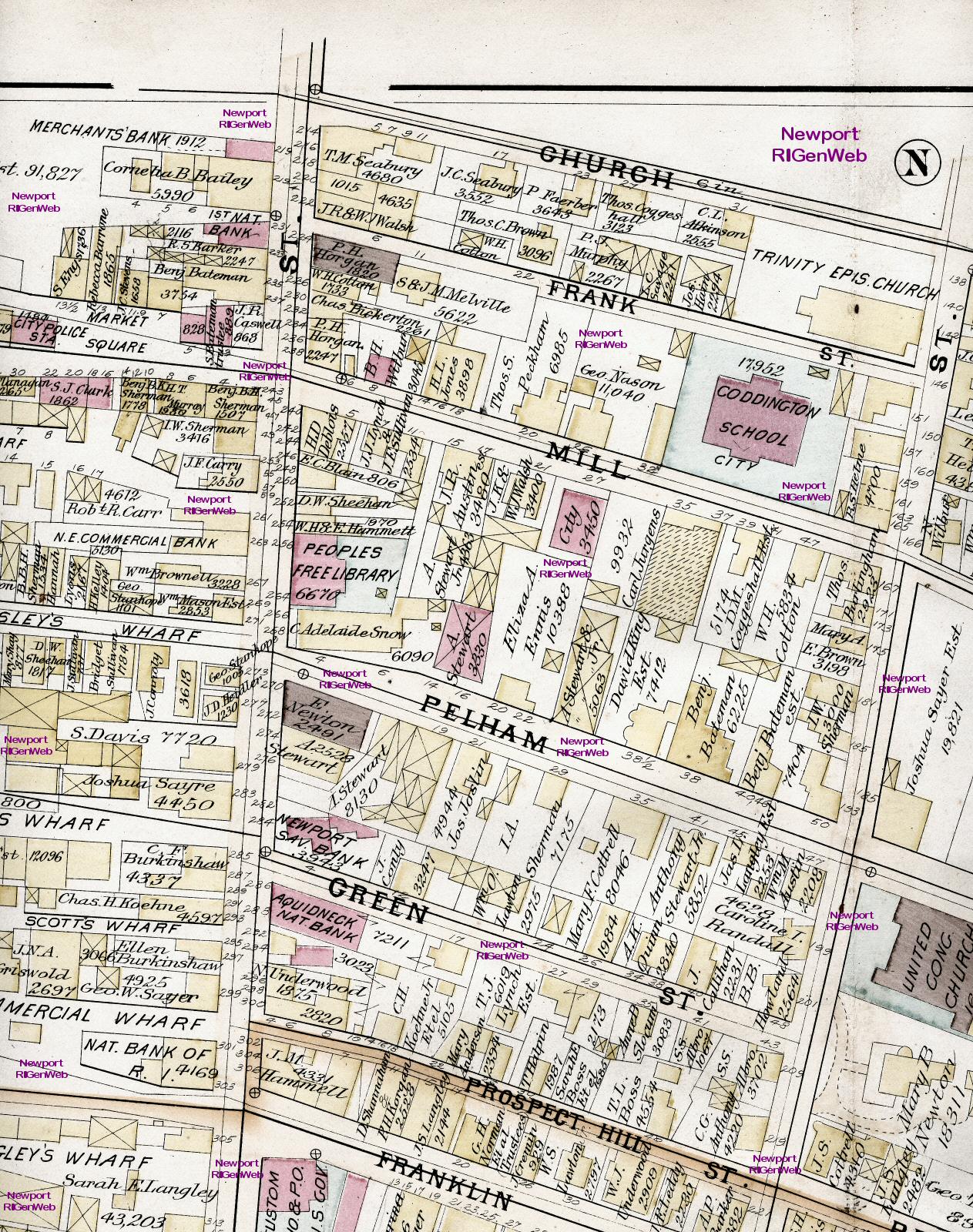
Established in May of 1854, the Aquidneck Bank begun with a capital of $100,000 with Rufus B. Kinsley as its president. The bank became the Aquidneck National Bank in 1865 and continued growing after the Civil War. The directors of the bank eventually left their former building (across Green Street) and moved into this building at Thames and Green Streets, which was built from 1892 to 1893 by local architect Dudley Newton. They named it after the banks founder, Rufus KinsThe Romanesque Revival style block is oriented to the corner and is built of brick and brownstone trim. Arched entrances are a nice Romanesque touch.

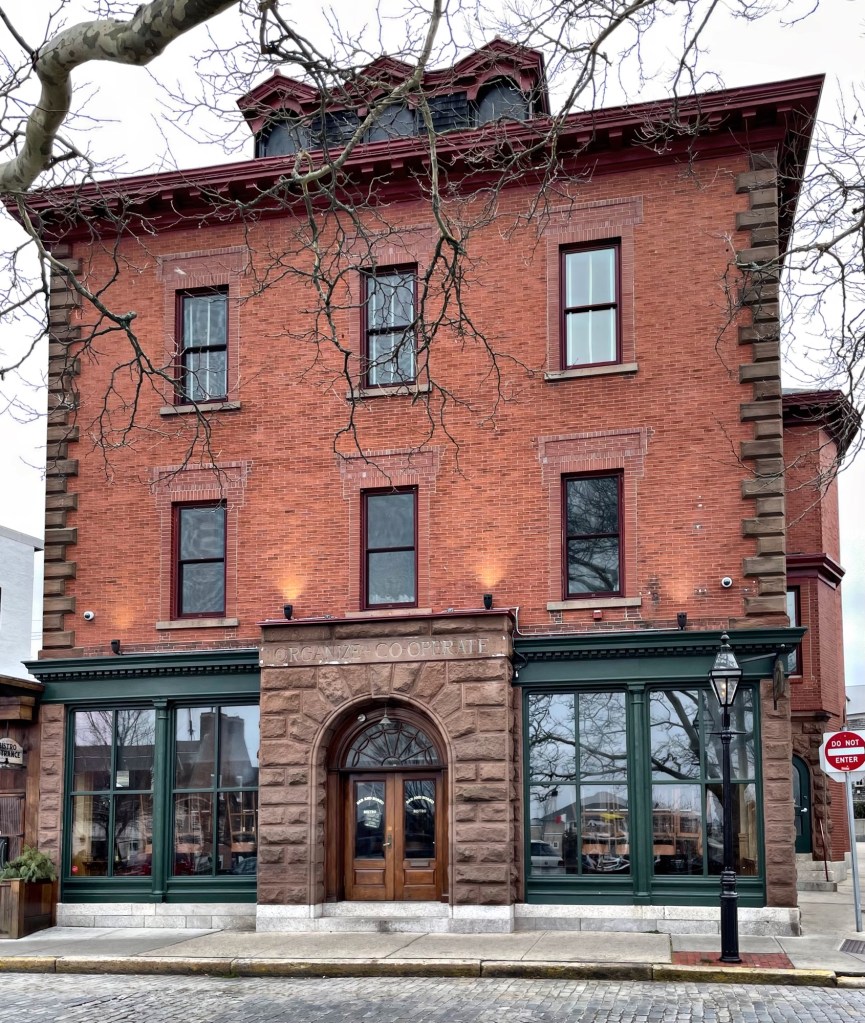
Rufus B. Kinsley Building // c.1860

This large commercial block on Thames Street in Newport was built before 1860 by Rufus B. Kinsley, a businessman who made his money in express companies (think express shipping) in the mid-19th century. He built this structure to rent out and diversify his income by around 1860. Early tenants included two banks: the Rhode Island Hospital Trust Company and the Aquidneck National Bank. The latter would remain here for years before building their own bank across the street.

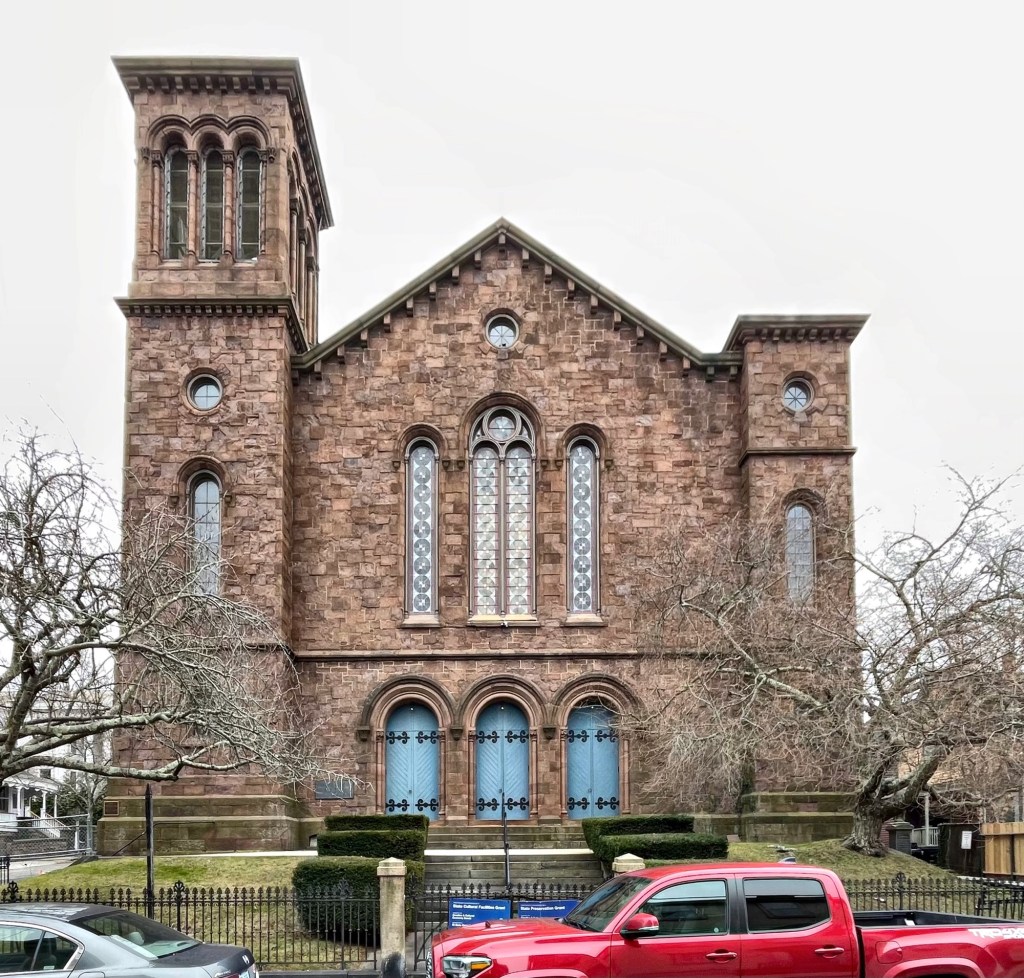
Newport Congregational Church // 1857

The Newport Congregational Church on Spring Street was built between 1855-1857 and serves the United First and Second Congregational parishes of Newport whose history began in the late 17th century. The building, designed by Joseph C. Wells a New York City architect, and redecorated on the interior in 1880 by John LaFarge, is an interesting and well-preserved example of the Romanesque Revival, brownstone churches of the mid 19th century. LaFarge had recently completed work on H. H. Richardson’s landmark Trinity Church, Boston, and sought to provide a more elaborate interior than he was able to in Boston. He produced twenty stained glass windows and a series of murals, which today, represent the only fully integrated ecclesiastical interior he produced. The congregation has shrunk in recent years and moved to nearby Middletown, but it’s vestry was committed to the preservation of La Farge’s work. The LaFarge Restoration Fund was established and since the 1990s, the nonprofit has spent $3 million on glass and mural restoration, architectural stabilization and systems upgrades for their former building. The building is used occasionally as an arts center.

Bowen-Newton-Tobin House // c.1825

Who would have ever imagined that the Federal and Second Empire architectural styles could work so well together?! This is the Bowen-Tobin House on Spring Street in Newport, Rhode Island. The house was originally built around 1825 by Stephen Bowen as a typical two-story Federal style house with five-bay facade and entry with pedimented fanlight above. The property and it remained in the Bowen Family until 1892, when it was sold by his heirs to Mary Bailey Newton, the wife of Dudley Newton, a prominent local architect who designed dozens of summer cottages for wealthy residents in Newport. Dudley Newton “modernized” this house, adding a towered mansard roof, bracketed cornice, new two-over-two windows, and a full-length front porch wrapping around the side. The couple later moved the house, which was formerly set back behind a front garden, to the side and at the sidewalk to lay out Green Place (originally Bowen Ct.) and house lots behind this home, removing the front porch in the process. The house was later sold to the Tobin Family.

Langley-King House // c.1710

Built c. 1710 this amazing Georgian Colonial house would have originally been a smaller, central chimney structure built by Nathaniel Langley. Major remodeling to effect the Georgian style seen today was done by a subsequent owner of the property. That owner was likely John Brown (1694-1764) a wealthy merchant that may have gifted or sold this home to his daughter, Ann Brown and her new husband, Charles Handy. Handy was a merchant and operated a spermaceti factory just to its west. Later owner, David King and his heirs owned the house for much of the 19th century. The house is on its original site and was purchased by the Newport Restoration Foundation (NRF) in 1969 and restored in 1970-71.

Joseph Cottrell House // 1843

The Joseph Cottrell House on Spring Street in Newport is a handsome, two-story, Greek Revival style house with flushboard siding and a traditional pilastered recessed center entry. What really stands out about this home is the two-story rounded corner bay which is finished with columned porches (since enclosed) which were likely added in the second half of the 19th century. Cottrell worked as a ship-builder in Newport, likely constructing the house and later addition himself. Developers today would never!

Cahoone-Yates Double House // c.1763

James Cahoone (1727-1814) and Stephen Yates built this stunning double-house on Green Street in Newport around 1763. Both James and Stephen worked as painters in town, and built this house together, each living in one half (Cahoone must have paid a little more because his “half” was a little larger). The Georgian style double-house eventually suffered from neglect and like several other Colonial-era buildings in Newport, its future was uncertain. Luckily, the Newport Restoration Foundation stepped in and purchased the property in 1968, restoring the houses in 1974, complete with a paint color even Cahoone and Yates would love!