Holyhood Cemetery Chapel // 1857

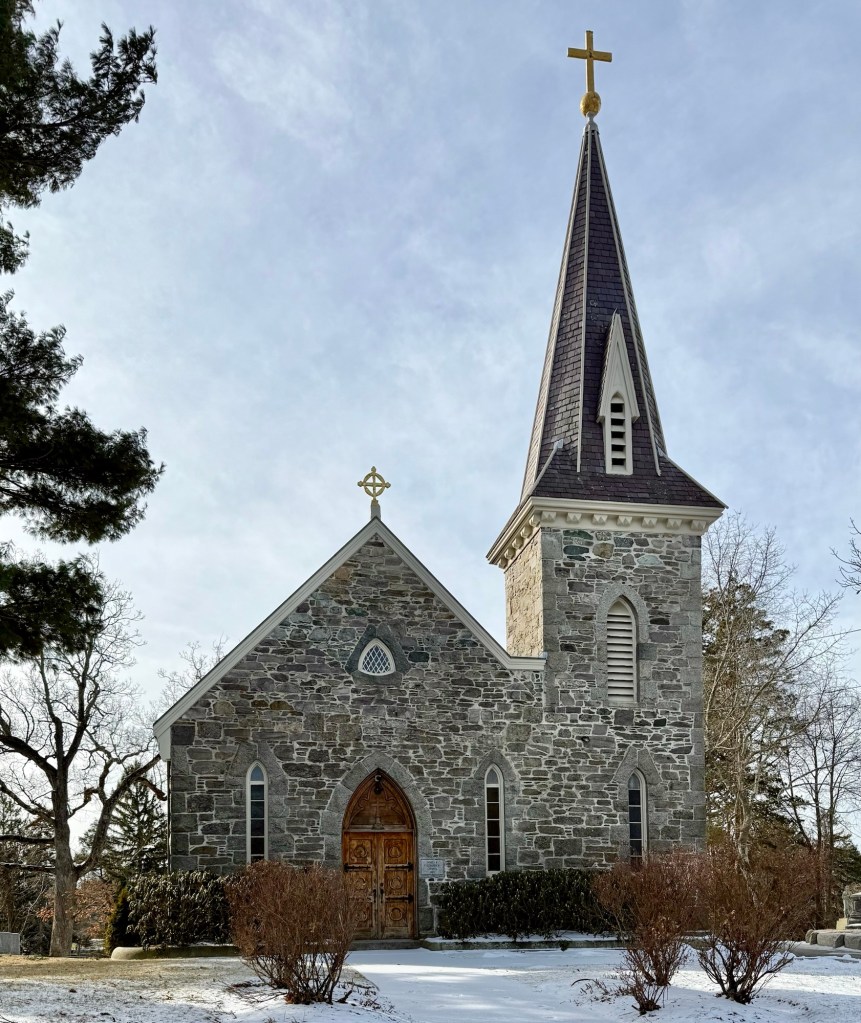
Holyhood Cemetery in Brookline, Massachusetts, was laid out in 1857 under the direction of Father Joseph M. Finotti, pastor of Assumption Parish , which included Brookline and Brighton. The cemetery reflects the mid-19th century influence of the Rural Cemetery movement and the romantic landscape cemetery planning begun at Cambridge’s Mount Auburn Cemetery in the 1830’s. A plan of the cemetery was drawn up by Shedd & Edson and published in August 1857. It shows curvilinear avenues and paths named after former bishops of Boston and Biblical figures. All were welcome to be buried except those who “died in a state of Drunkenness, Duel, or by self-destruction, unbaptized, non-Catholic, or otherwise opposed to the Catholic Church.” In the 1857 Shedd & Edson plan for Holyhood Catholic Cemetery, a chapel was located at the center on the hill shown in a small drawing on the edge of the plan. Known as St. Joseph’s Chapel, the stone building was designed by Patrick Keely, the successful and influential New York architect of many mid-19th century Catholic churches. The chapel would be dedicated in 1862. Decades later, a cemetery office was planned and built across Heath Street from the cemetery gates, but was demolished sometime in the 20th century. The cemetery grew and it along with the mid-19th century chapel, has been lovingly maintained to this day.  
Church of the Holy Name of Jesus Rectory //1857

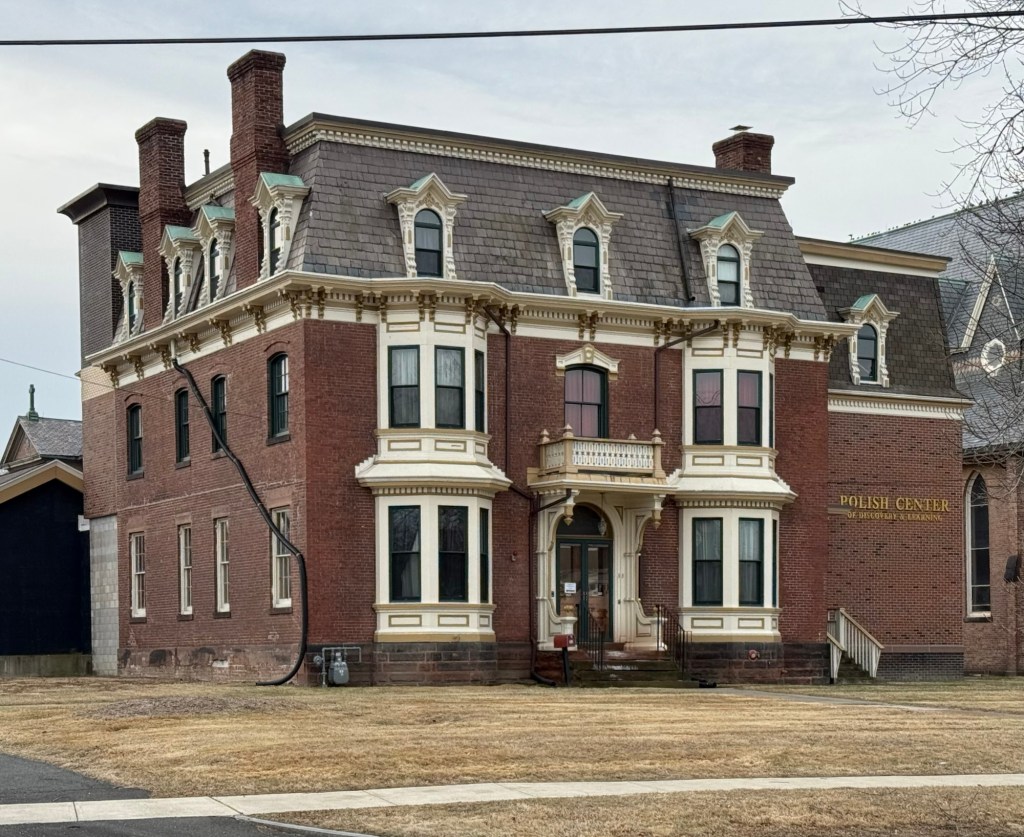
In 1857, the same year that the Diocese of Springfield built the Church of the Holy Name of Jesus in Chicopee, they also broke ground on an adjacent rectory, a residence for its priest. Like the church, the brick rectory was possibly designed by Irish-born architect, Patrick Keely. The Italianate style building originally was capped by a shallow hipped roof, but a renovation in 1871 added the mansard roof, two-story bays, and the portico at the entrance. The building served as the church rectory for over a century but eventually closed by 2011, and the future of the site was uncertain. Luckily, the Polish Center of Discovery and Learning have rented and occupied the rectory, serving as an important cultural institution educating and collecting to tell the story of Polish history in Chicopee and beyond. Fitting that many early-arriving Poles in the late 19th century to Chicopee attended this church before establishing their own.

Church of the Holy Name of Jesus, Chicopee // 1857

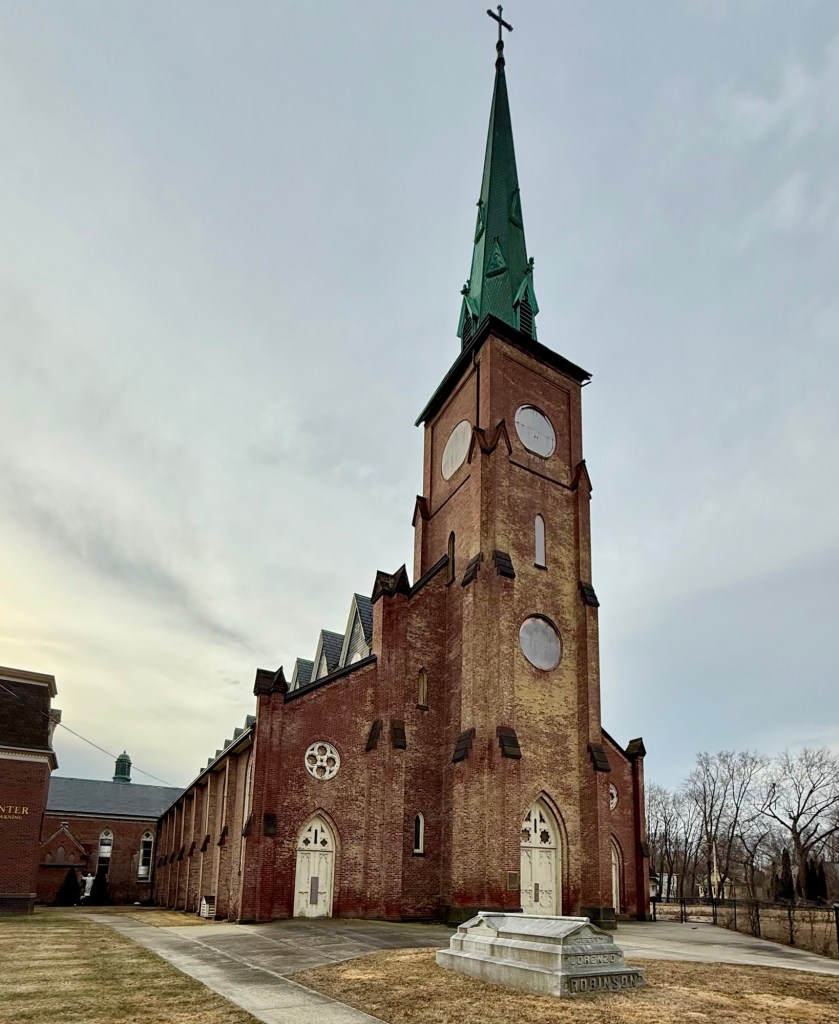
With crop failure a common occurrence in 1830s Ireland, immigration from Irish to New England surged with workers and families looking for a better life. Labor opportunities were abundant in the newly established mill town of Chicopee, with the Irish flocking here to dig canals, build dams and mills and later work in those same buildings. Their wives and daughters would work as cooks and maids, but later as operatives in those same mills. As many Irish were Catholic, it became apparent that a Catholic congregation should be established, St. Matthew’s was first organized in Chicopee in 1838. An earlier wood-frame church was built and used for a number of years until a large site on South Street was purchased by the Diocese for a new campus. Irish-born ecclesiastical architect Patrick Keely designed the church building which was constructed between 1857-1859 in the Gothic Revival style. The church was dedicated the “Holy Name of Jesus” church and exhibited sandstone-topped buttresses, rows of pointed dormers running down the clerestory on the sides, and a prominent central steeple. In 1910, the present copper spire replaced the original steeple which was damaged and burned in a lightning strike. The complex grew throughout the 19th and 20th centuries, with a rectory, schools, convent and monastery built on the site. Sadly, due to dwindling membership and fiscal considerations, many of these buildings were demolished in the past decades. The church appears now to be closed and is still owned by the Archdiocese of Springfield. I hope something can be done to preserve this landmark structure and the remaining buildings on the site.