Long-Ladd House // 1812

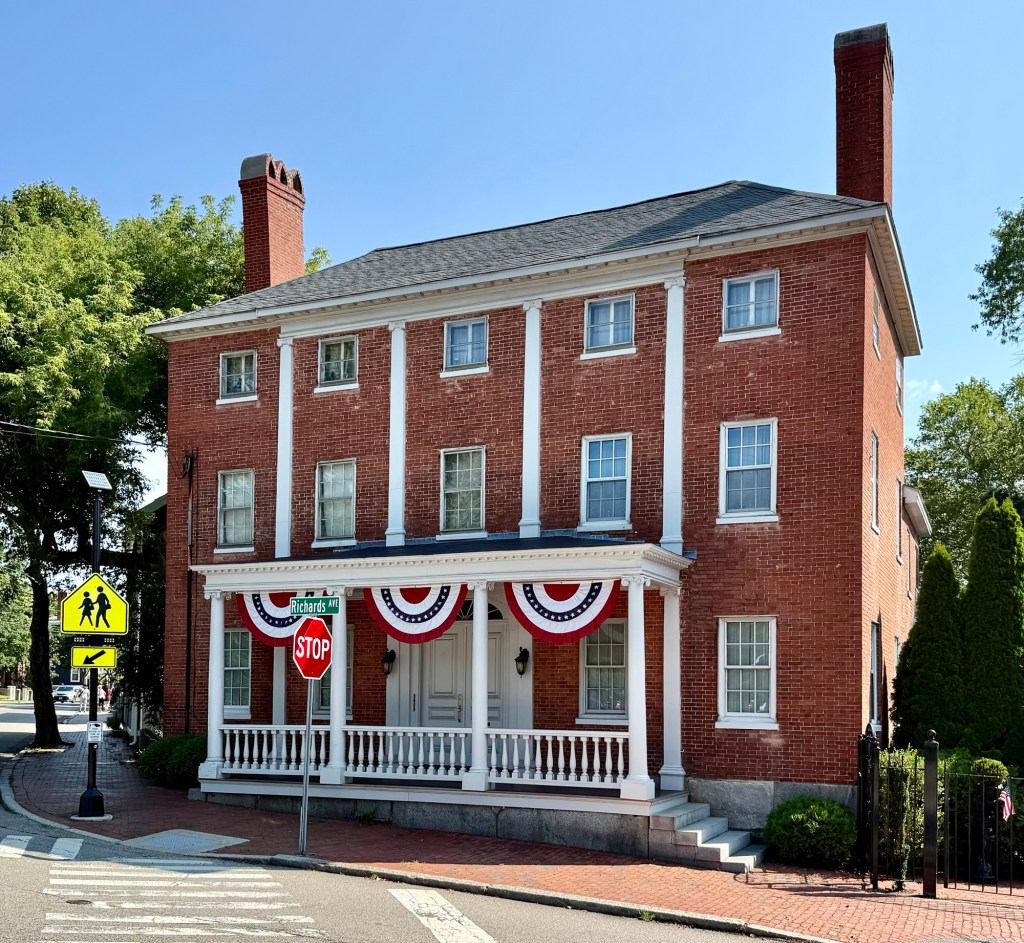
The Long-Ladd House at 3 Richards Avenue in Portsmouth, New Hampshire, showcases the versatility of the Federal style, an architectural style that dominated American architectural tastes from the 1780s through the 1830s. This house dates to 1812 and was built for George Long (1762-1849), a sea captain and trader until engaging in politics in his later years. He remained in the home until his death in 1449, leaving the property to his only heir, Marcy, and her husband, Henry Hurd Ladd. The Long-Ladd House is constructed of brick with the facade dominated by four, full-height pilasters breaking up the bays. A center portico shelters the main entrance which is adorned by a fanlight transom and classical surround. In a city full of Federal style homes, this one really stands out!

Gilman Morse House // c.1850

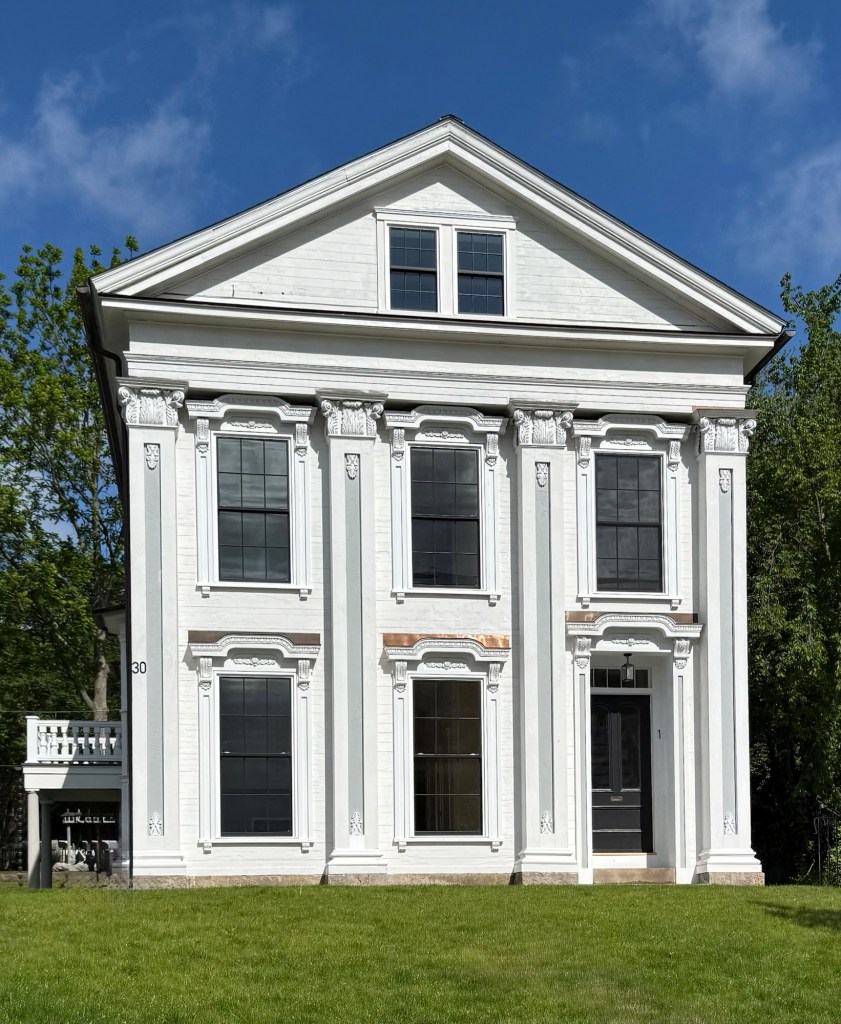
As the town of Westborough emerged from rural agricultural community to commercial center, connections to Worcester and Boston via rail service opened the town to prosperity. As businessmen accumulated wealth, these merchants built stately homes to showcase their position in the community. Before the Civil War, the Greek Revival style was ever-popular in Westborough, even though the style was already waning in popularity in larger cities. This is the Gilman Morse House, built around 1850 for Mr. Gilman Wood Morse (1810-1899) on East Main Street. Morse was a merchant in town and clearly did well for himself, building this stately house for his family. The residence is Greek Revival in style with its facade bays broken up by pilasters capped with Corinthian capitals adorned by acanthus leaves. The house also features ornate window and door hoods, showcasing the emerging Italianate style influence.

Elias Gates House // 1843

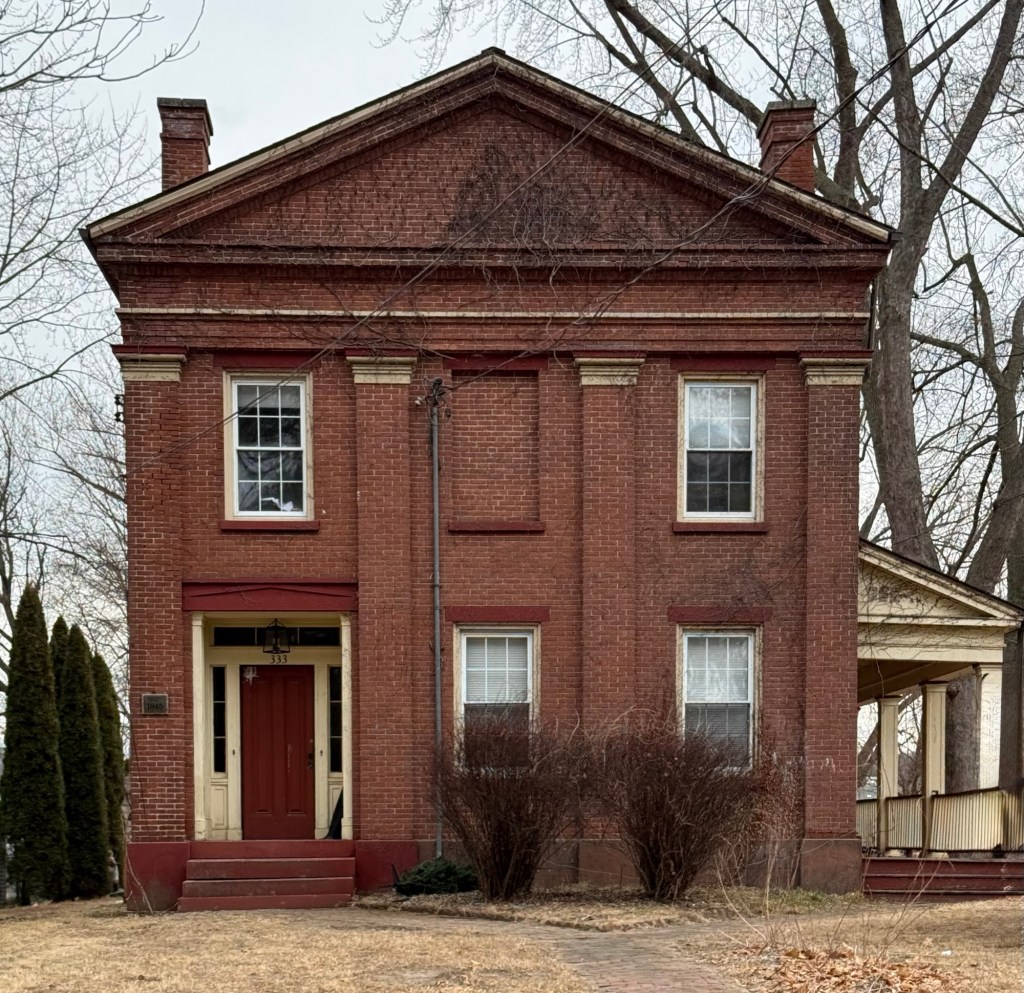
In 1843, Elias Gates (1801-1886) a young farmer, purchased land from the family of his wife, Mary A. Stedman, and had this handsome brick, Greek Revival style house built. The family would reside here less than ten years, and relocate to Albany, where Elias worked as a bookseller. The house was purchased numerous times throughout the 19th and 20th centuries, and operated as a farmhouse until much of the land was sold and subdivided for new housing. The Gates House is a great example of the Greek Revival style with a side hall plan, recessed entry with original sidelights and transom, and bold facade with brick pilasters dividing the bays with brick entablature and gable end facing the street.

Levi Starbuck House // 1838

One of the more unique Greek Revival style houses I have yet seen in New England is the Levi Starbuck House on Orange Street on Nantucket. The house was built in 1838 by housewright William M. Andrews who sold the completed property that year to Levi Starbuck, a wealthy sea captain for $5,000. When he bought the house, Levi Starbuck (1769-1849) was 69-years-old. Levi Starbuck is credited by some as inspiration for the character Starbuck in “Moby Dick.” He would spend the last ten years of his life in this opulent new house on Orange Street. Architecturally, the house is clad with flush siding with projecting paneled pilasters with fret patterns on the top and bottom breaking up the bays of the house.

Old Cooper Shop // c.1800

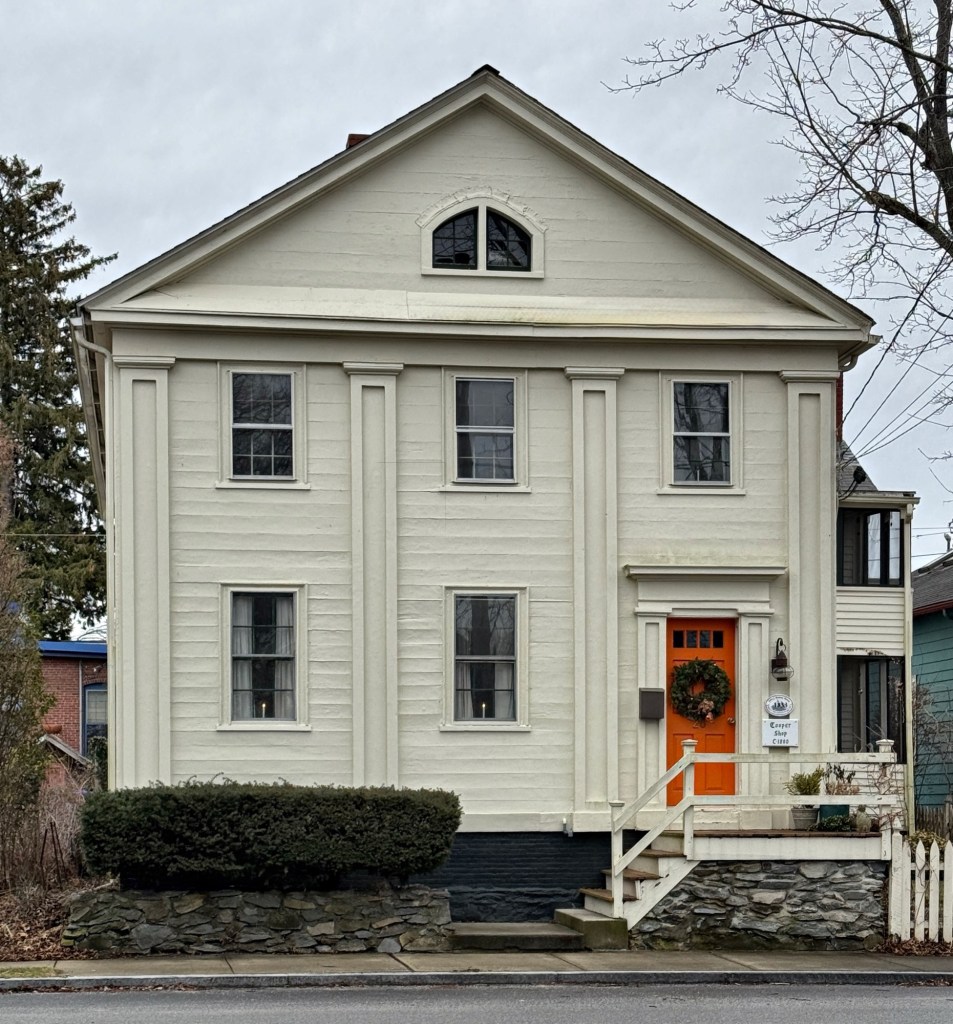
This stunning Greek Revival house in Warren, according to historians, was built c.1800 as a cooper shop! A cooper as a professional, would make wooden barrels, tubs, and casks from wooden staves from their shops. This shop, which was originally a vernacular structure, was later renovated around 1833 into a Greek Revival style residence. On its facade, the house has two-story applied pilasters which break up the bays and smooth flushboard siding which makes the house even more stately!