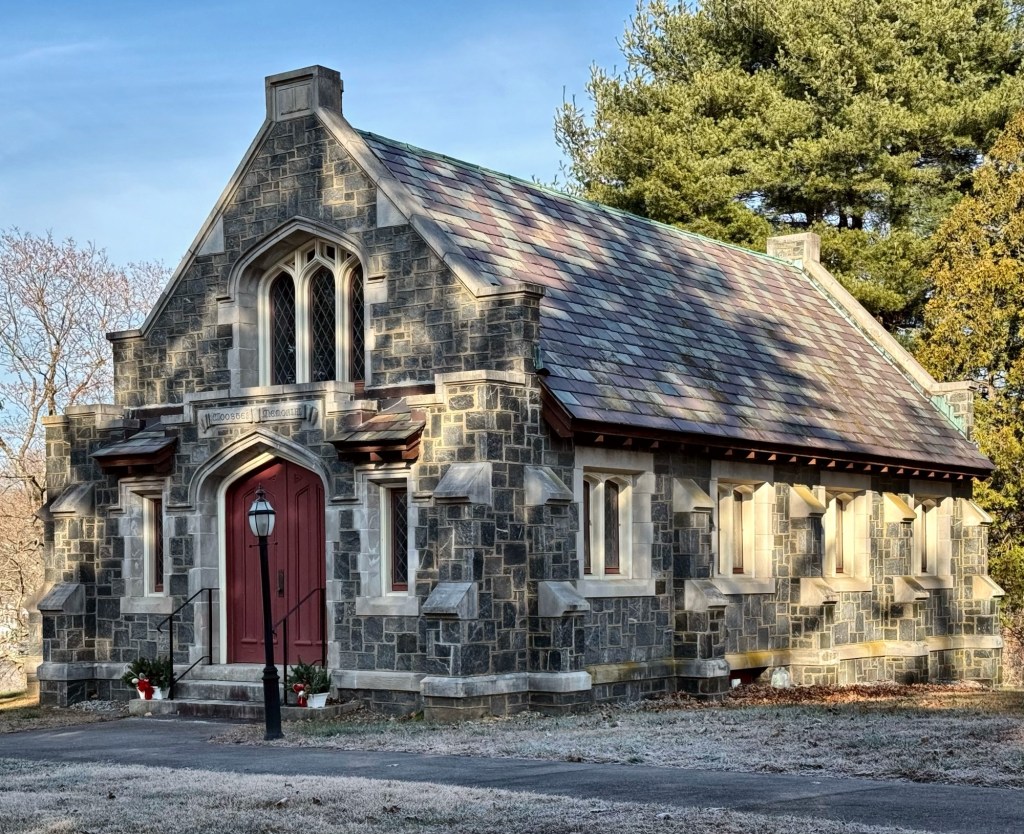
Wooster Memorial Chapel, Fountain Hill Cemetery // 1915

Located in Fountain Hill Cemetery, which has become a sort of Rural Cemetery in the small town of Deep River, Connecticut, this handsome gothic chapel graces the entrance and has provided a place of solemn memorials and celebrations of life for over 100 years. The Fountain Hill Cemetery was originally established in 1851, but after a half-century of use, Miss Mary McCellan Wooster (1839-1911), sought a non-denominational chapel for the grounds to not only beautify the local cemetery, but provide a place to honor the dead. In her will, Miss Wooster left $10,000 for a new chapel. The cemetery board of directors hired architect, Isaac Allen, Jr. of Hartford, Connecticut, to design the structure. The Neo-Gothic chapel was built of local stone and opened to the public in April 1915.

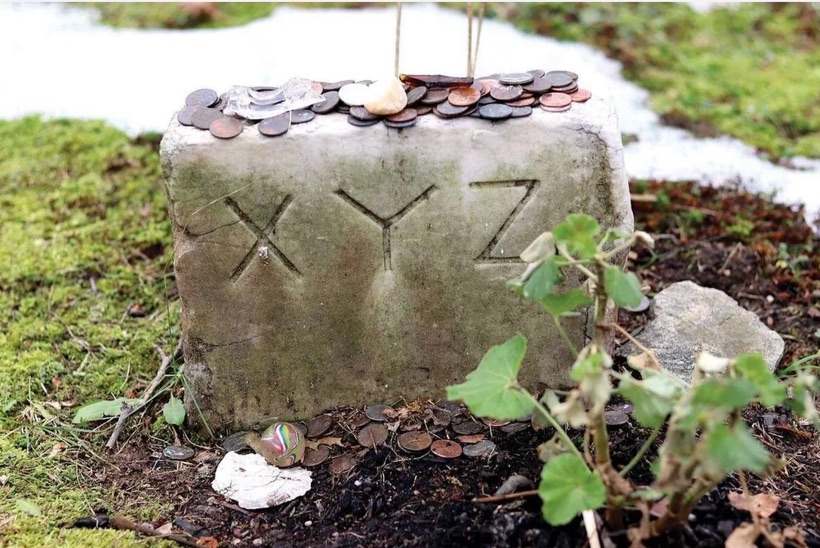
Another interesting story in the cemetery is the mysterious ‘XYZ’ gravestone. Legend says that in the evening of December 13, 1899, an unnamed man arrived in Deep River, Connecticut (along with three other male accomplices), to rob the local bank. This unnamed individual was confronted by the night security guard with a sawed-off shotgun, firing at the robber, blowing away part of his face. The other three robbers fled, leaving their accomplice in Deep River. In the hope that someone could identify him, his body was laid out for viewing at the local funeral parlor. During this time, an anonymous letter arrived, requesting that the man be buried with the headstone only marked as XYZ. The odd request was accorded, but was never fully explained. To this day, many locals leave stones and coins at the marker in Fountain Hill Cemetery.

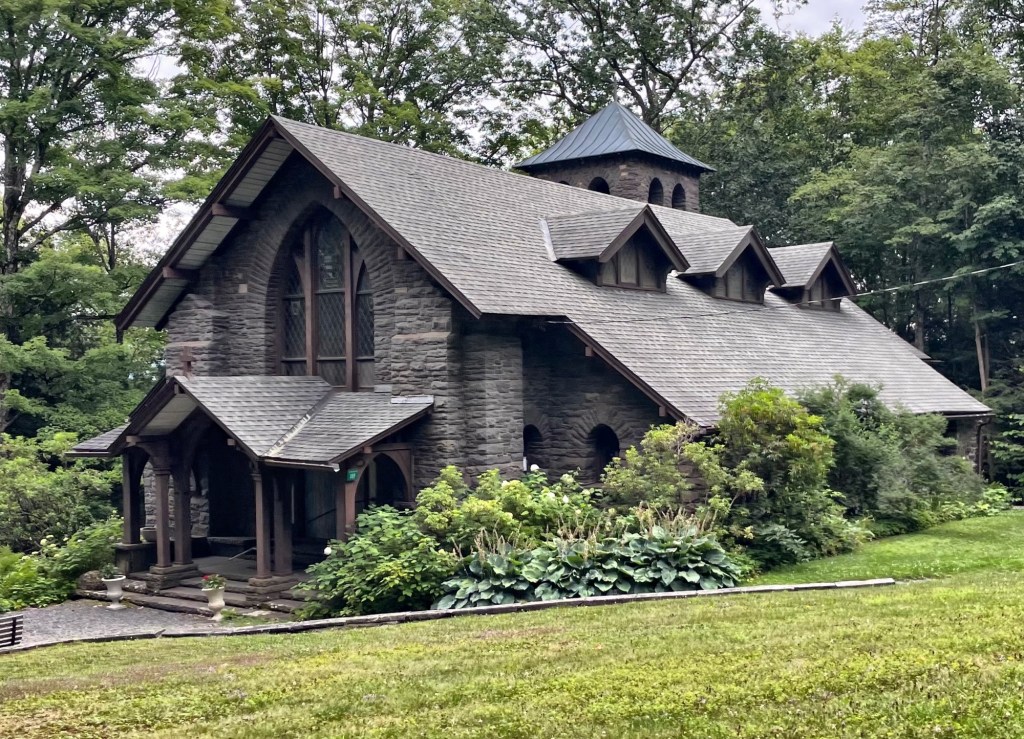
Memorial Church of All Angels, Twilight Park // 1896

The Memorial Church of All Angels is located in the center of the summer colony of Twilight Park, found in the town of Hunter in the Catskill Mountains. The founding of the church began shortly after the colony was established in 1888, when two years later, the Rev. H. M. Baum from Evanston, Pa., an early visitor to the Park, realized the need for an Episcopal Church, and funds were raised to build a small chapel, known as the St. Paul’s Church. The church was foreclosed upon in a matter of years. In 1895, church services were again reinvigorated when the Rev. Henry Yates Satterlee, the first bishop of Washington, then the Rector of Calvary Church, New York, had taken the cottage of his cousin, the artist Walter Satterlee, for his summer home. He set out to establish a summer chapel for Episcopalians in Twilight Park, and he hired architect Alexander Mackintosh, to furnish plans for the church. The church opened in 1896, and it would be expanded in 1909 with an addition and porch and again in 1915 with the belltower. The church opens every summer for services and is one of the finest Episcopal chapels in the Northeast.

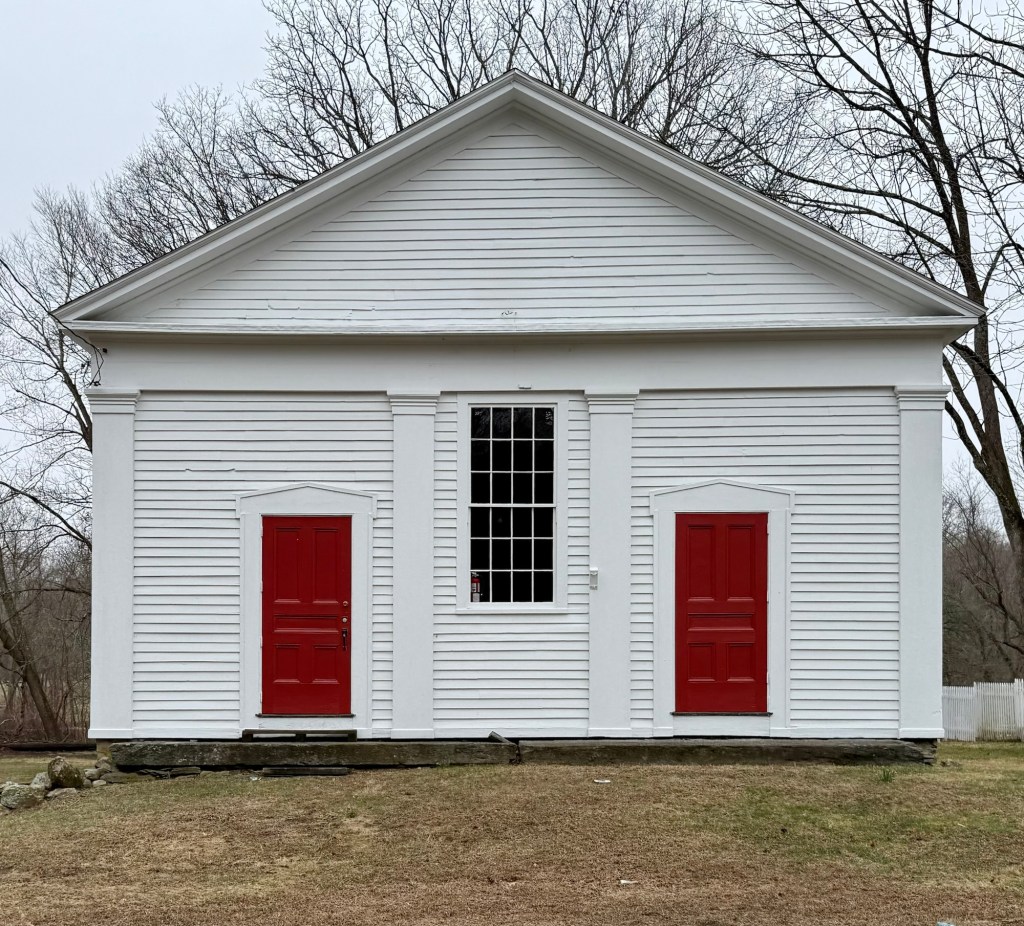
Scotland Universalist Church – Shetucket Grange Hall // 1843

This charming, Greek Revival style building near the town green in Scotland, Connecticut, was built in 1843 as a Universalist Church for area residents who split off from more Congregationalist beliefs. By the end of the 19th century, populations shifted heavily to industrial centers where work was more plentiful, the church appears to have lost much of its membership and the building became a local grange hall. The Shetucket Grange was organized in June 1887, and was a meeting place for local farmers and their families to promote the economic and political well-being of the community and agricultural pursuits. Today, the building is owned by the town, but it’s use is unclear. Greek Revival in style, the building retains much of its original architecture, from its simple form, facade with two entrances flanking a central hung window, and pilasters framing the bays.

Cornwall Congregational Church // 1842

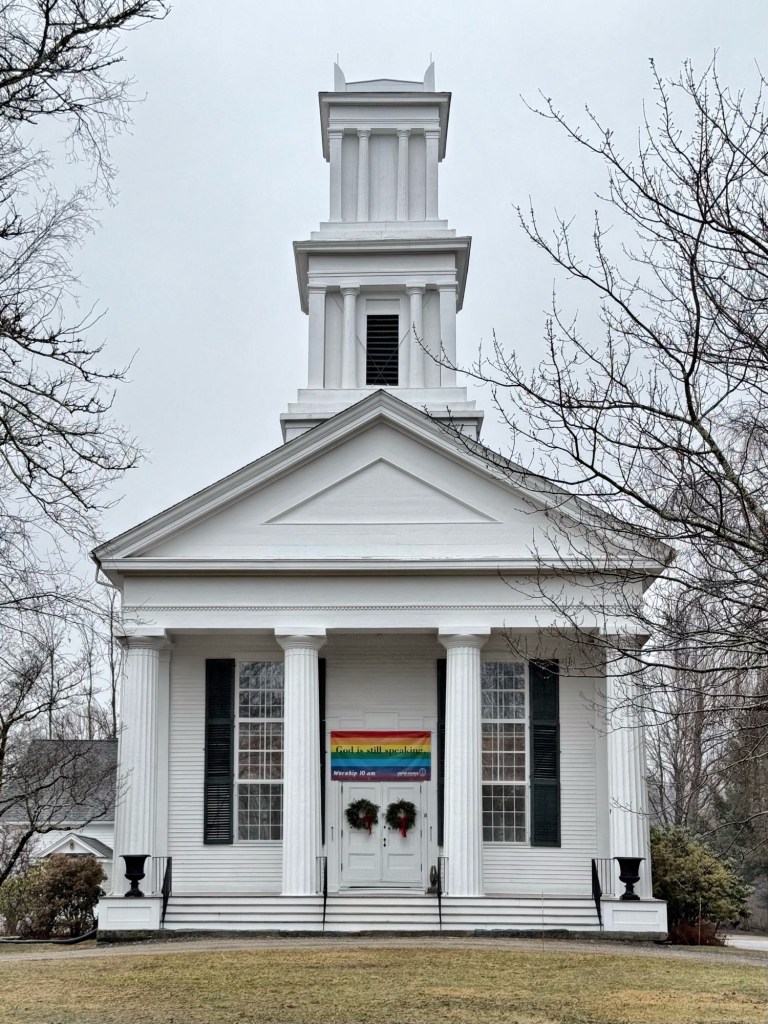
The Cornwall Congregational Church in Cornwall, Connecticut, was erected at 8 Bolton Hill Road in 1842, replacing the colonial-era meetinghouse which had first stood on Old Meetinghouse Hill at Cornwall Center. When members of the church split into two separate congregations due to religious differences, the original congregation moved to South Cornwall in 1790. Another Congregational church was built in North Cornwall for the other group. This wonderful Greek Revival church reflects the enormous popularity the style in the first half of the 19th century. The structure rests on a stone block foundation and is sheathed with clapboard siding. The building incorporates a central entry of paired doors with a Greek Revival surround, flanked by 20/20 windows. The street elevation of the building is dominated by a monumental portico with pedimented gable, broad frieze and fluted Doric columns. The showstopper is the two-stage square belfry, each stage Doric columns and pilasters. The church is active today as the United Church of Christ and is often utilized for town events.

Wildwood Baptist Chapel // 1910

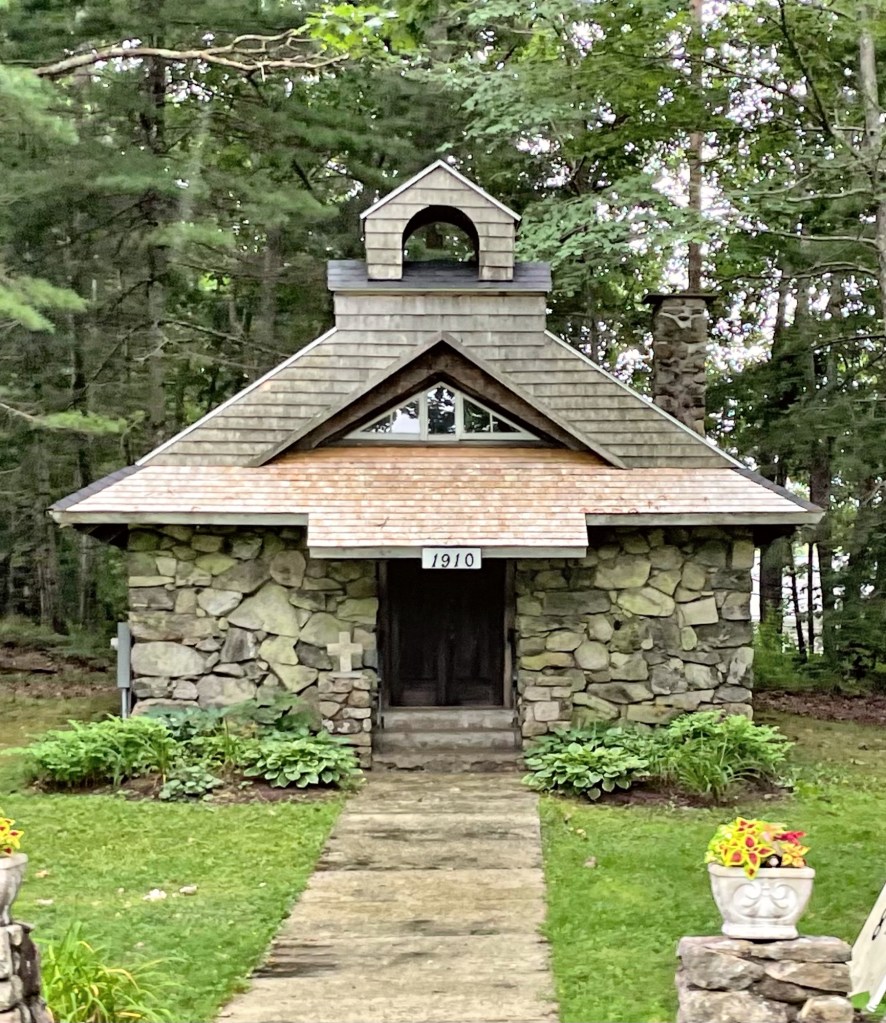
Tucked away on a wooded lot, away from the main villages of Kennebunkport, Maine, the Wildwood Baptist Chapel sits on the side of the road looking like a scene from a storybook. The chapel was built in 1910 for Baptists residing in the Wildes District of town, between the busier Kennebunkport Village and Cape Porpoise. The stone used in the construction of the chapel was taken from nearby properties and assembled on site by a skilled mason who built the walls with a Shingle style roof. Services here were limited and eventually ceased in earnest in 1935, as personal automobile allowed residents to travel to the church in the village for services. The poorly insulated chapel and small fireplace made the sanctuary inside difficult to heat in the cold winter months. The chapel is maintained well to this day, and is primarily used for summer services and special events.

St. John the Evangelist Church // 1885

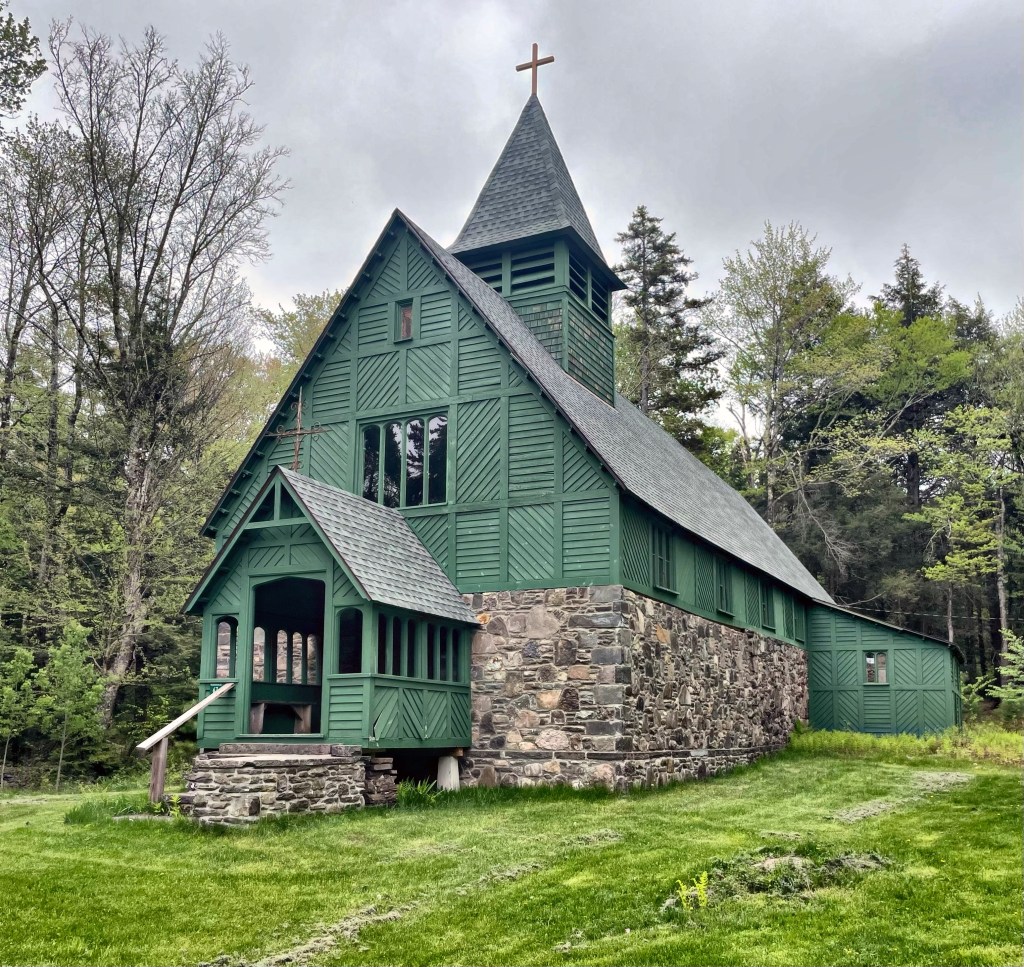
One of the most bucolic and beautiful buildings I have ever seen is this church in the Catskills, just outside of Elka Park, NY. Wow I wish New England could claim this one! The St. John the Evangelist Chapel was developed as part of a smaller enclave of summer cottages for rusticators from the Philadelphia-area, which was largely established by Mr. Alexander Hemsley (1834-1904) a chemist from Philadelphia who would later die from anaccidental chemical explosion at his factory. In 1883, Hemsley sold cottage lots to friends and family to erect summer houses in the Catskills and in 1884, decided to develop a lot for an Episcopal summer chapel. In that same year, Hemsley hired his future son-in-law, William Halsey Wood, to design the chapel. The Stick-style Victorian chapel blends the rustic use of natural materials found on the property with an elegant siting and attention to detail, not typically found in rural chapels. The native stone and stylized half-timbering really stood out to me. The church is used still in the summer with regular services on Sundays in July and August.