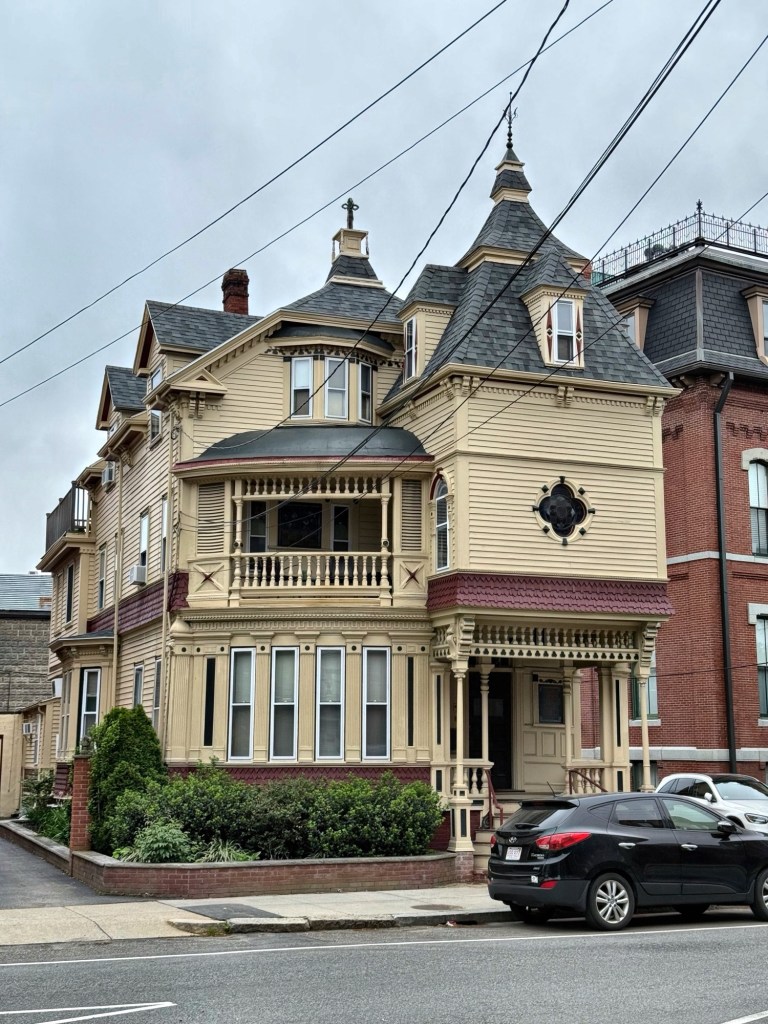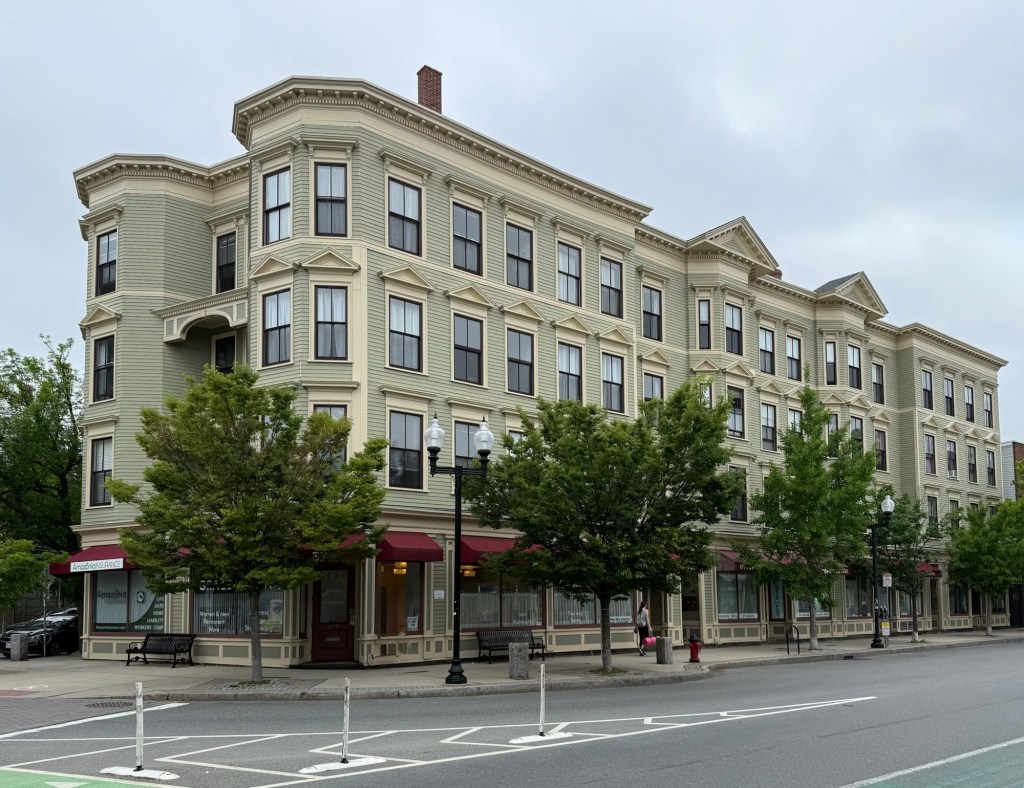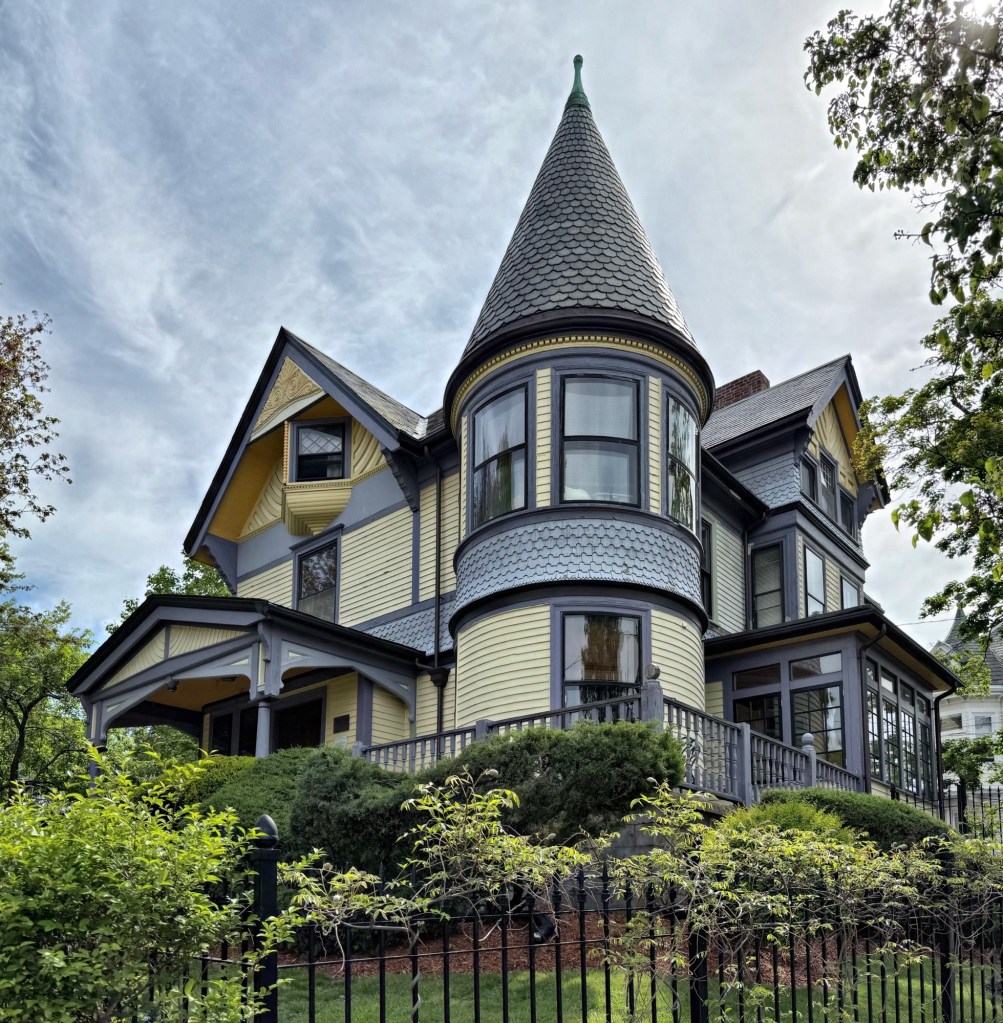
Louville V. Niles House // 1887

Louville Varanus Niles (1839-1928) was born in Maine and came to Boston in 1860 for the chance to make his fortune. In 1870, he formed a partnership with his two brothers in the provisions business under the name Niles Brothers. The company would later merge with the Boston Packing and Provision Company. Niles moved from Boston to Somerville in 1882, purchasing the Bradshaw estate on Walnut Street. He remained in the house until he decided to redevelop the property, building a number of dwellings on the former estate bounded by Walnut, Boston and Munroe streets. For his own residence, Louville hired the firm of T. B. Blaikie and Son, who designed this beautiful example of a Queen Anne style house in 1887. The building has irregular massing, with numerous gables and rooflines. There is a prominent two-story, rounded tower at the corner, capped with a conical roof, and applied ornament in the gable ends, all common features in this style in the Victorian period. The owners have painted the house to accent the many unique details found here. 
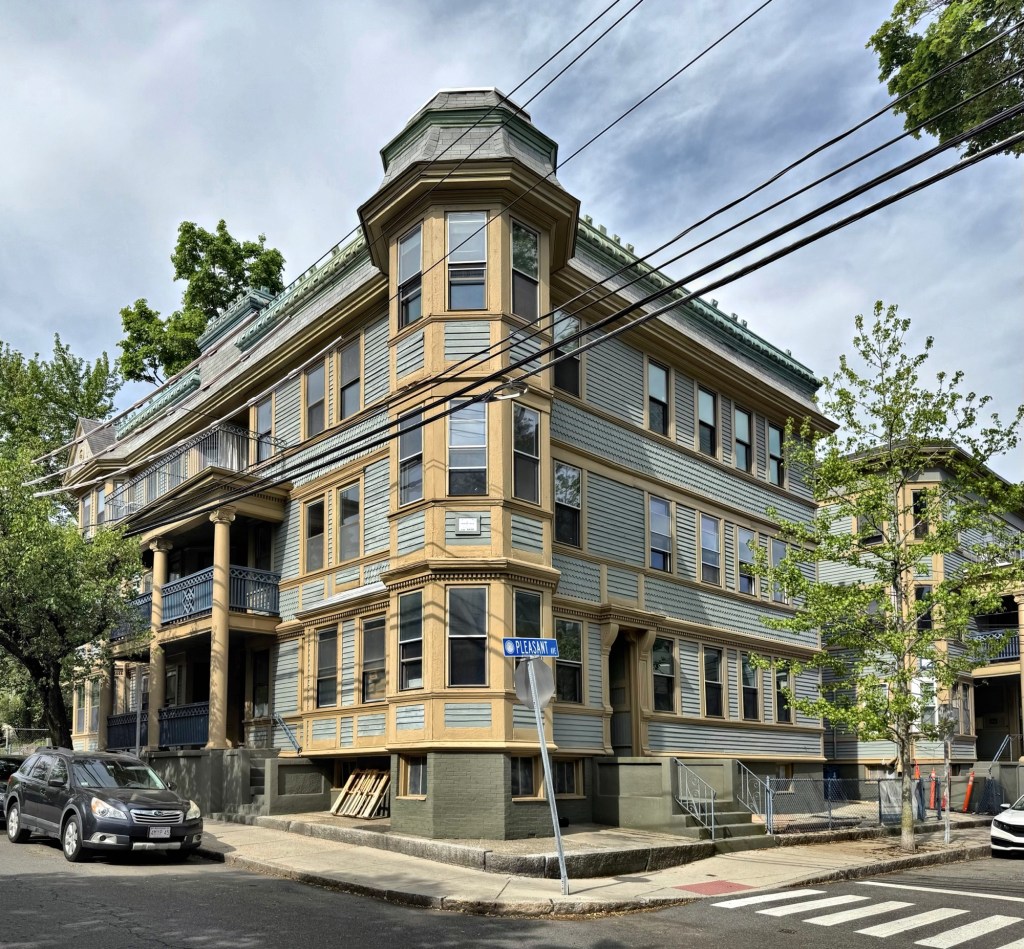
Hollander Apartment Buildings // 1892

These two stunning apartment buildings were constructed in the early 1890s in the Prospect Hill neighborhood of Somerville. Known as the Hollander Blocks after their original owner, Theodore Clarence Hollander, the two apartment buildings are some of the finest in the Boston suburbs. Both detached buildings follow a traditional three-decker block massing and form, but are decorated with varied siding, two-story columned porticos, and elaborate cornice. 

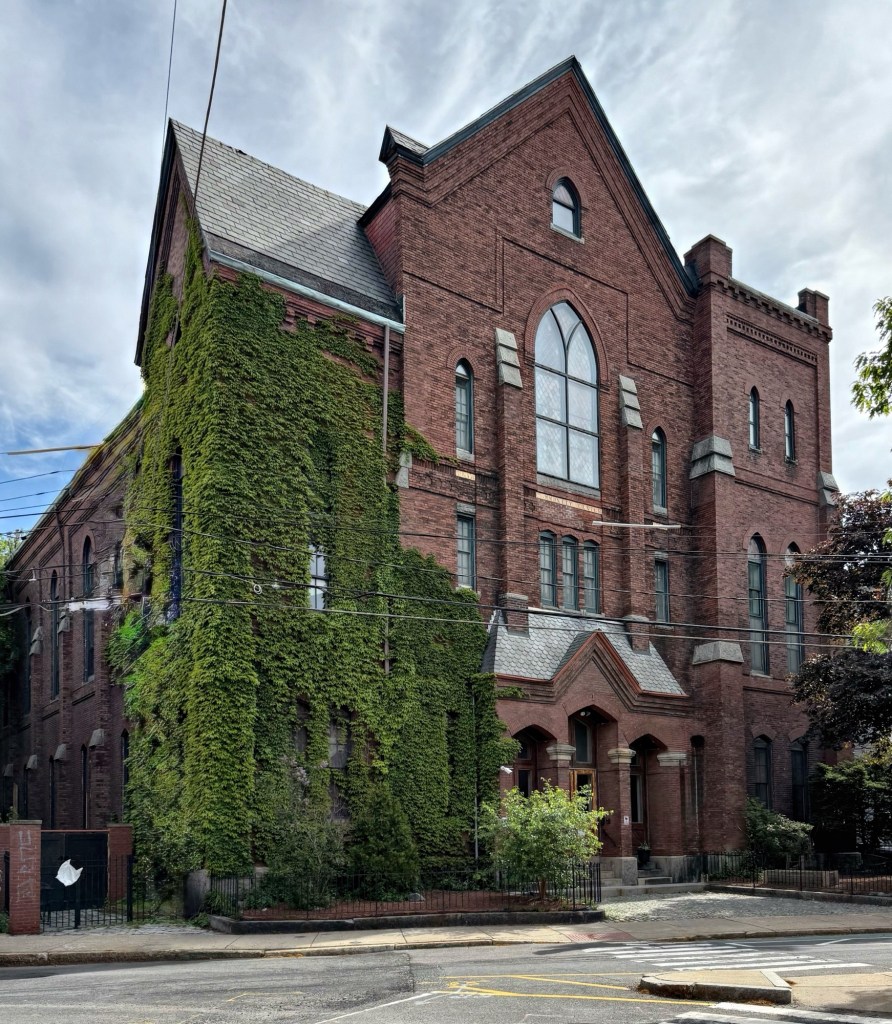
First United Methodist Church of Somerville // 1874

This handsome Victorian Gothic church sits on Summer Street in Somerville, defining the northern edge of the Union Square area. The church was built for the local Methodist congregation, which was established in 1855. The group would meet in local meeting halls and houses until this building was completed in 1874. The towering brick church was once even taller, but its steeple came down following the Great New England Hurricane of 1938. The church closed in the second half of the 20th century and the building was used by the Somerville Community News for years until it was purchased by a developer and converted to condominiums.

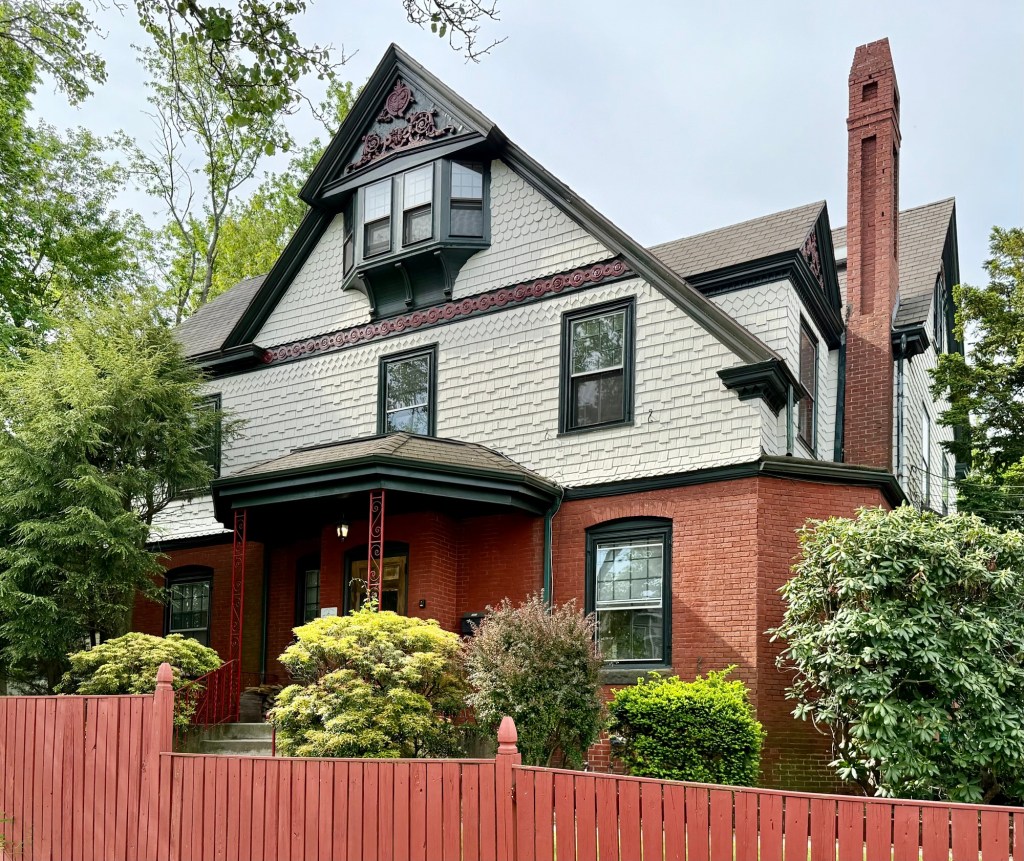
John E. Sylvester House // 1884

One of the many beautiful old Victorian houses in the Prospect Hill area of Somerville can be found here on Summit Avenue, a tree-lined street with sweeping views to Boston and other neighborhoods. This house was built in 1884 for John Edwards Sylvester (1839-1901) and his wife Clarissa (Clara). The Queen Anne style house has a brick ground floor with shingled walls above. The facade is dominated by its gable roof with varied shingle siding, decorative belt course, and oriel window with highly ornate pediment above. The house was likely designed by the Boston firm of Sturgis & Brigham, who included Sylvester in their list of clients. Mr. John E. Sylvester was head of the John E. Slyvester Co. in Somerville, a spike manufacturing company started by his father. After John died in the home from heart failure in 1901, his widow, Clara, remained in the home with her daughter until after WWI, when the property was sold. 

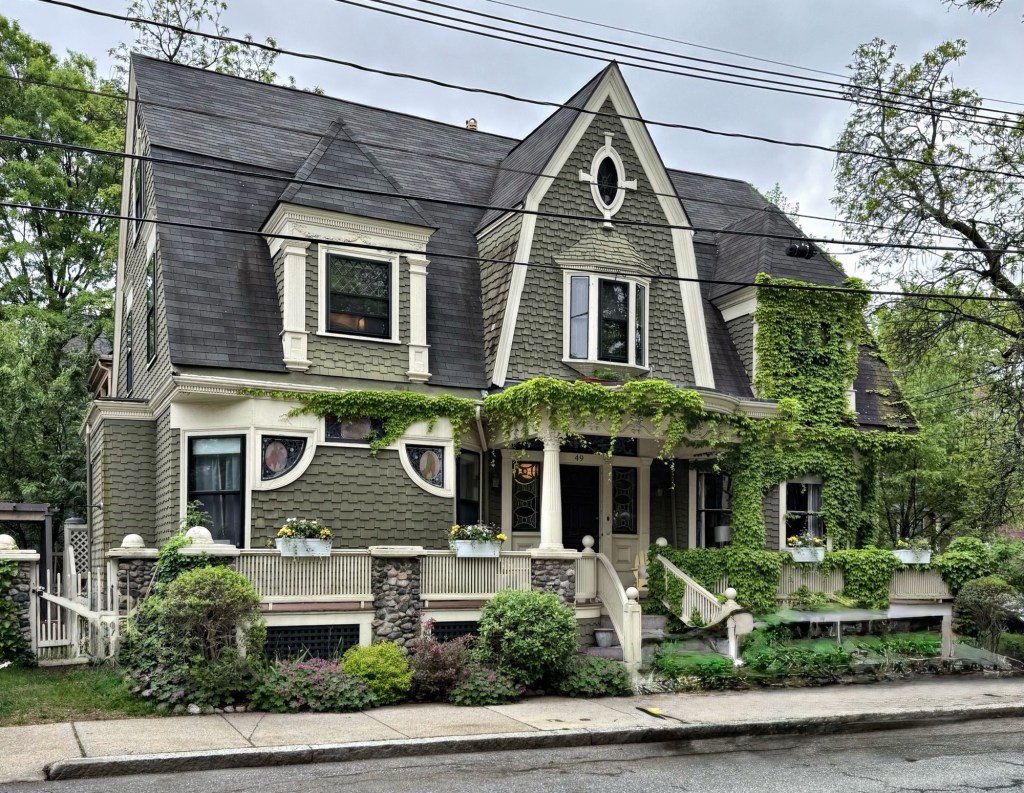
Mrs. Laura Haley House // 1894

This charming, gambrel-roofed house at the corner of Vinal and Pleasant avenues in Somerville, Massachusetts, was built in 1894 from local developer H. W. P. Colson, and sold upon completion to Mrs. Laura (French) Haley. An architect could not be located. Laura Haley was recently widowed and lived in the house with her daughter, with her son purchasing the house next door. The Haley House is notable for its gambrel roof with gambrelled center gable, pilastered dormers, stained glass windows, and full-length porch with columns and rubblestone base. The well-preserved house blends Queen Anne and Colonial Revival styles under one broad roof. It is magnificent!

Dr. Edson F. Whitman House // 1852 

One of the most eccentric and architecturally unique houses in Somerville can be found on Bow Street, in the middle of the busiest commercial district of the city. This is the Dr. Edson F. Whitman House (often known as the E.C. Mann House), which was built around 1852 and long-occupied by Dr. Whitman until just before his death in 1900. The house was likely a modest, 1850s Italianate style residence with its gable facing the street. Over time, as business increased, Dr. Whitman expanded his house and practice, adding Victorian flair to the once usual house. An entry tower with pyramidal roof and final was added with quatrefoil window and Stick style porch, an angled two-story addition was also added to the facade with a second-story porch, and applied ornament and curiosities were added to the doctor’s office and residence through the 19th century. Luckily for us, the Dr. Whitman house has remained relatively unaltered for the next 125 years! 

Drouet Block // 1896

Built in 1896, this handsome, four-story flatiron building at the corner of Bow Street and Somerville Avenue in Union Square, Somerville, was the largest tenement building in the city when completed. The property was developed by Charles Drouet, from plans by local architect, Aaron Hibert Gould. The block originally housed 37 apartments above six retail spaces at the street-level. The series of projections and an interior courtyard provided light and air into the apartments, which made them highly functional and desirable for families in the area. The building is more Colonial Revival than the 1892 Queen Anne style Richmond Apartments, also designed by Aaron H. Gould for Mr. Drouet nearby. The Drouet Block is a well-preserved example of late 19th century tenements in Somerville.

Richmond Block // 1892

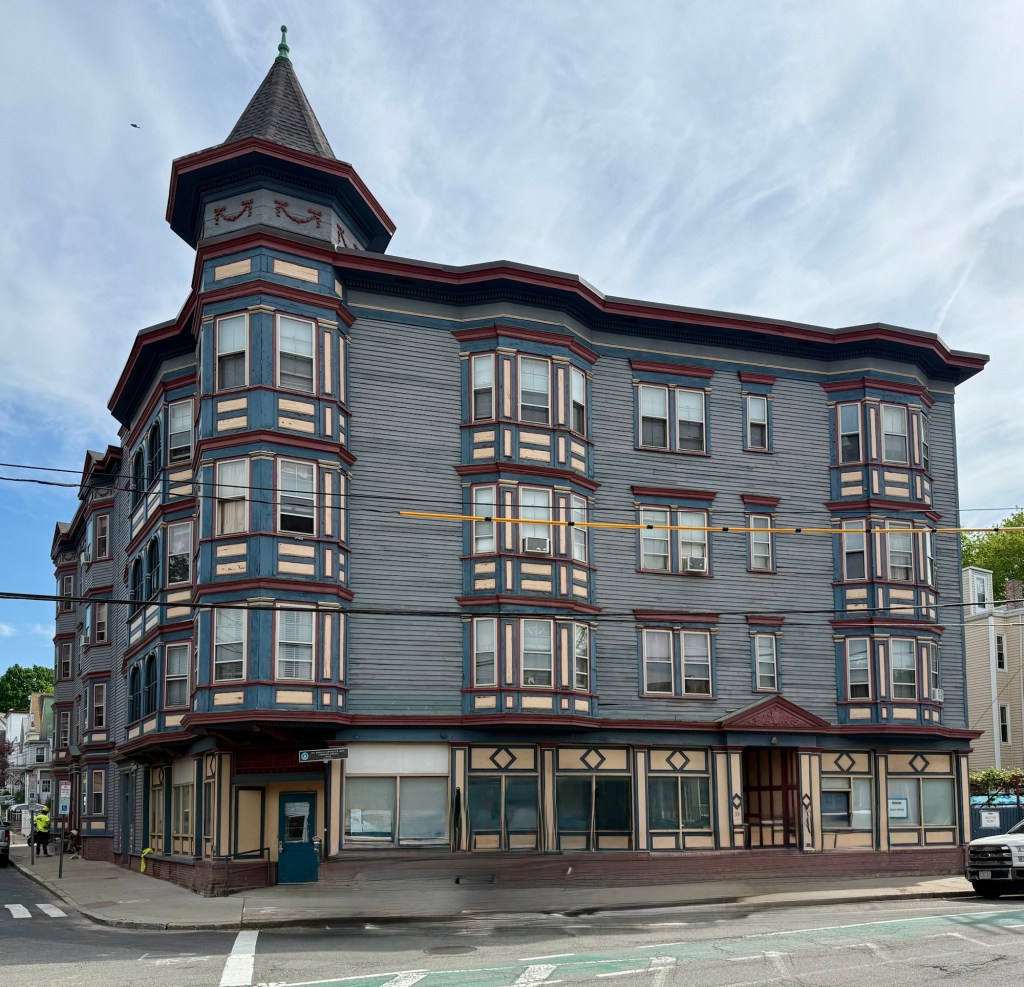
The Richmond Block on Bow Street in Union Square, Somerville, is a historic and architecturally significant mixed use building. Constructed in 1892 as one of the substantial wood-frame buildings in the western section of Union Square, the Richmond was designed by architect Aaron Gould for Mr. Charles Drouet, who developed the Drouet Block, a historic flatiron building just years later. Designed in the Queen Anne style, this building is noteworthy for its corner tower, octagonal oriel bay windows, sleeping porches on the side facade, and polychromatic color scheme to highlight the many architectural details on the block.

Prospect Hill Congregational Church // 1887

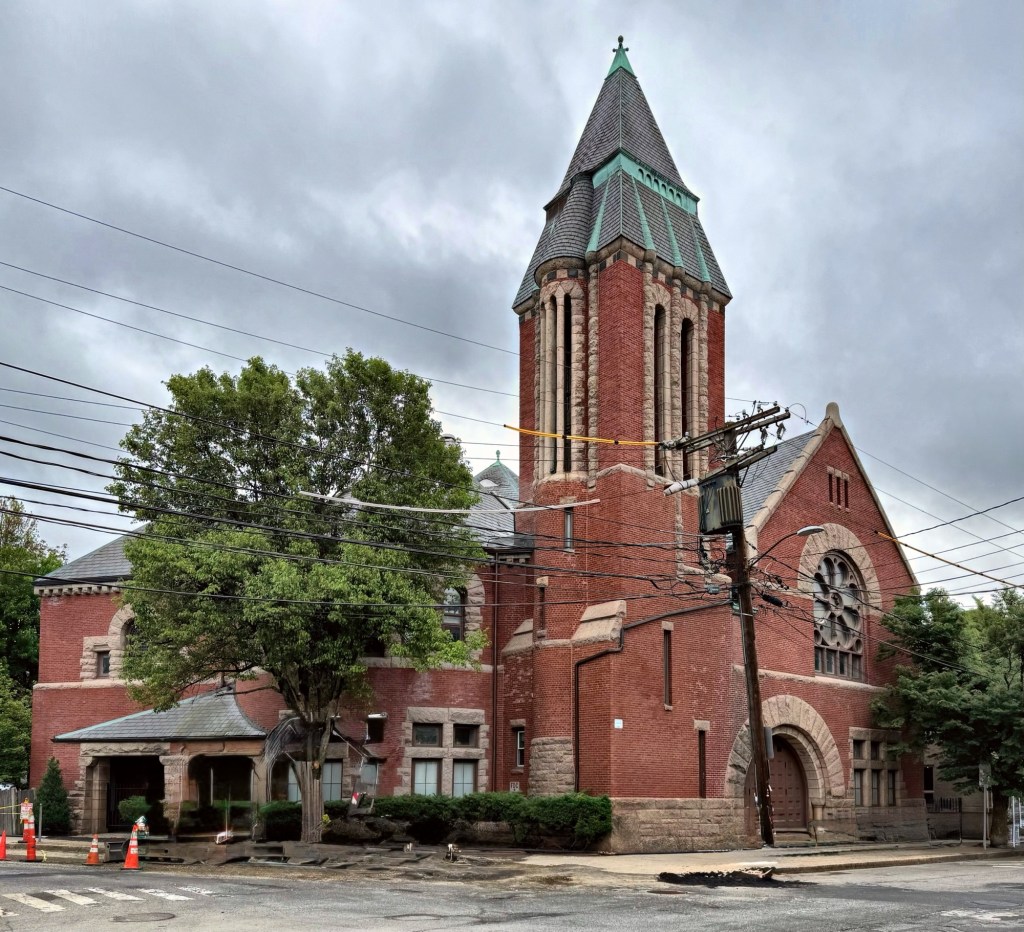
Located at the corner of Bow and Walnut streets in Somerville’s Union Square commercial center, the former Prospect Hill Congregational Church is one of the finest examples of the Richardsonian Romanesque style in the city. The congregation here was established in 1874 and originally met in private residences before erecting its first building on Warren Street in 1876. After two decades, the membership and prosperity of the congregation grew, allowing it to purchase a more prominent lot nearby and the ability to hire an architect for a new, substantial building. Architect Henry Squarebridge McKay furnished plans for the masonry building in 1887, clearly taking inspiration from the late Henry Hobson Richardson, who died the year prior. The church is constructed of brick with stone trimmings, features irregular massing with tall belfry tower, and a large arched entrance. After WWII, the congregation dwindled, and the building was later sold off. In the 1980s, the church was converted to residential use but without altering the exterior. 

Cities Service Station, Union Square // 1925

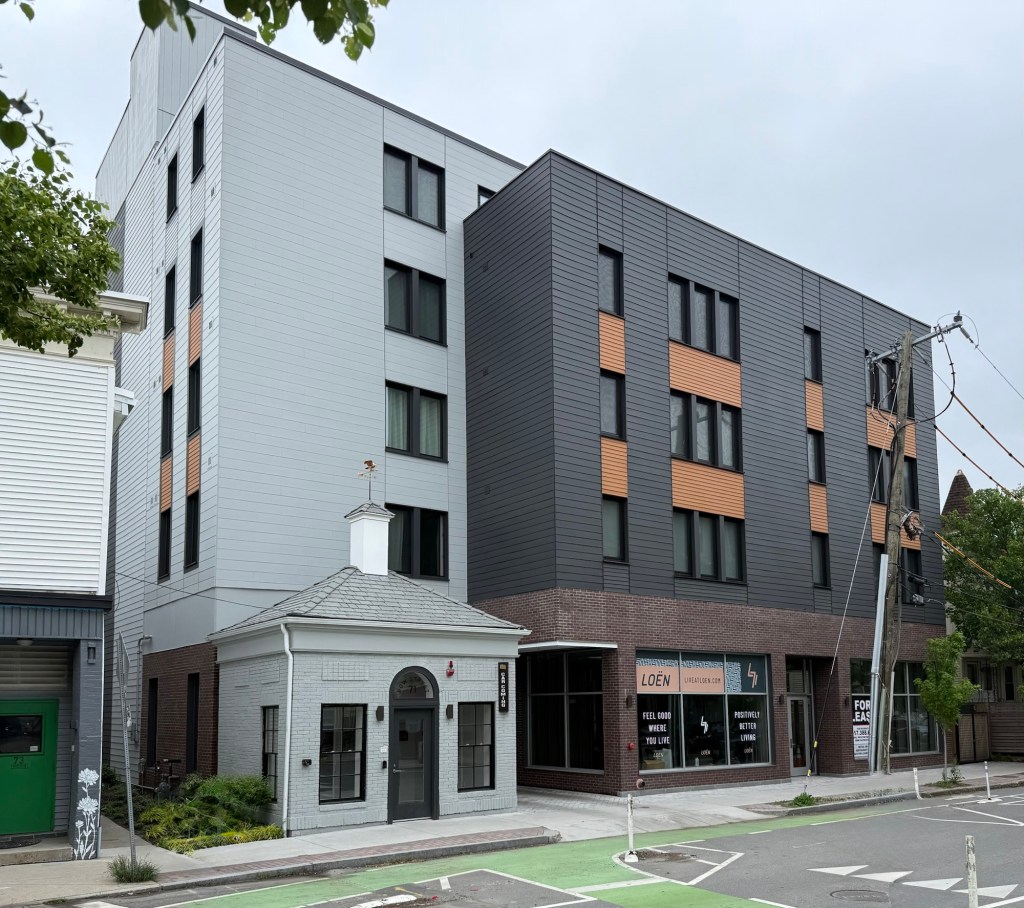
Union Square is the oldest and largest commercial district in Somerville, and its growth is tied to the residential and commercial growth of the City. The three main streets that form Union Square—Somerville Avenue, Bow Street, and Washington Street—were originally 17th- and 18th-century trade routes used by farmers in Somerville  to transport products, mostly dairy and produce, to larger markets in Charlestown and Boston. As the region grew, so did Union Square, with later hotels, civic buildings, churches and later, more car-centric uses like automobile garages and gas stations. By the 1920s, prosperity stagnated and one-story commercial blocks replaced larger, more ornate structures. This small building, the Cities Service Refining Co. Fuel Station at 69-71 Bow Street, was built in the mid-1920s and is an example of the wave of automobile-oriented development that occured here at the time. Before WWII, many service station companies created brand-identities by designing the appearance of their service stations like the Cities Service Stations and Beacon Oil Company, who regionally, developed distinctive Colonial Revival cottage prototypes for their chains to fit better within local context. This small service station, now 100 years old, is Colonial Revival in style with a hipped roof with cupola, symmetrical facade, and fanlight transom over the center entrance. When a developer proposed to demolish the station, the local preservation commission found the building preferrably preserved, initiating a delay on the demolition, forcing the developer to either wait out the delay or incorporate the structure into the new building. They chose the latter, and now we can visually see the layering of history on this site in Union Square, incorporating preservation with a 24-unit passive house development with the old station used as a mailroom. What do you think of this story?