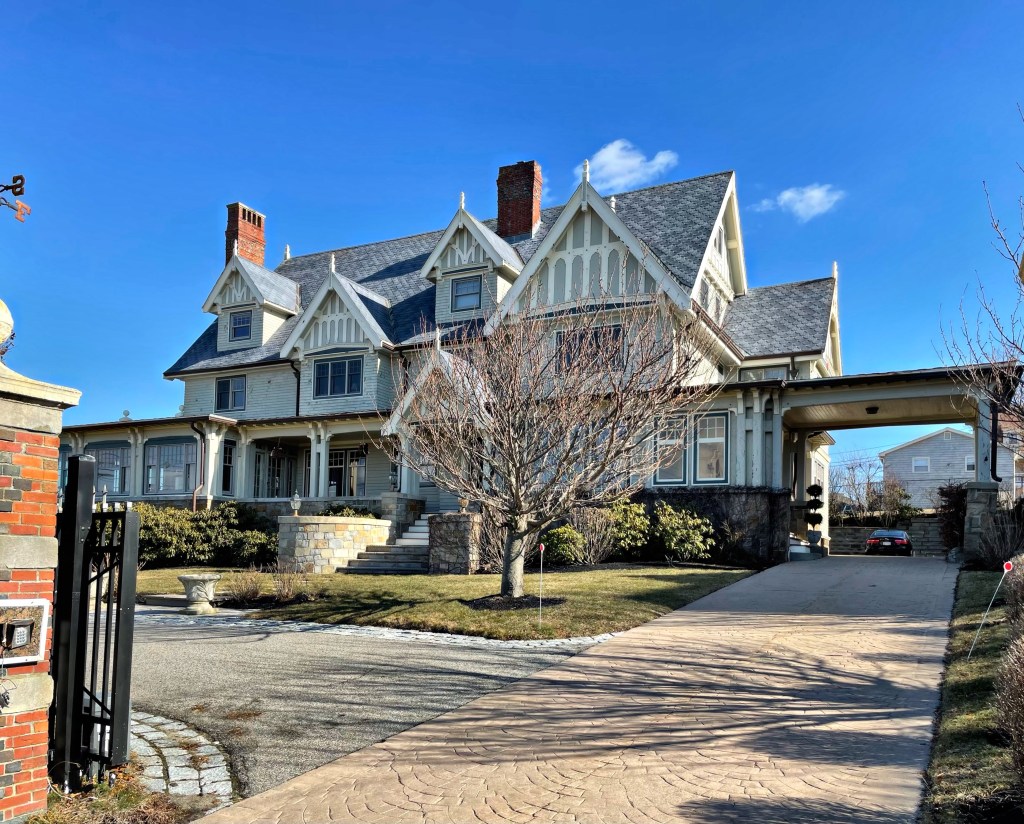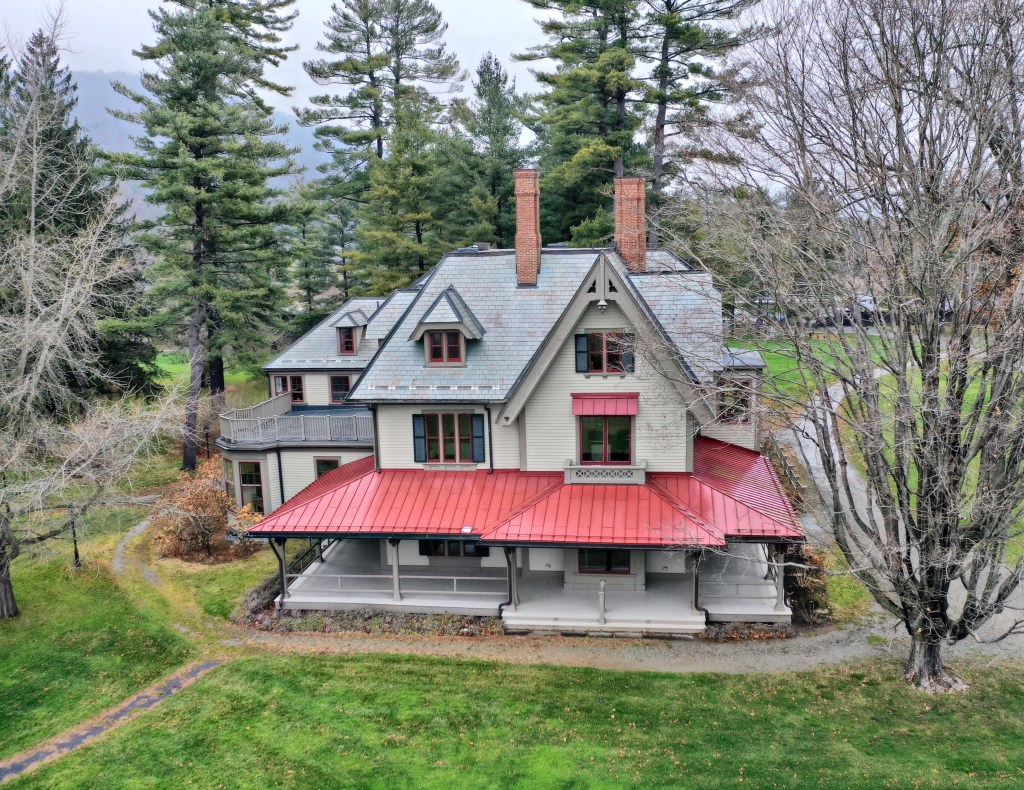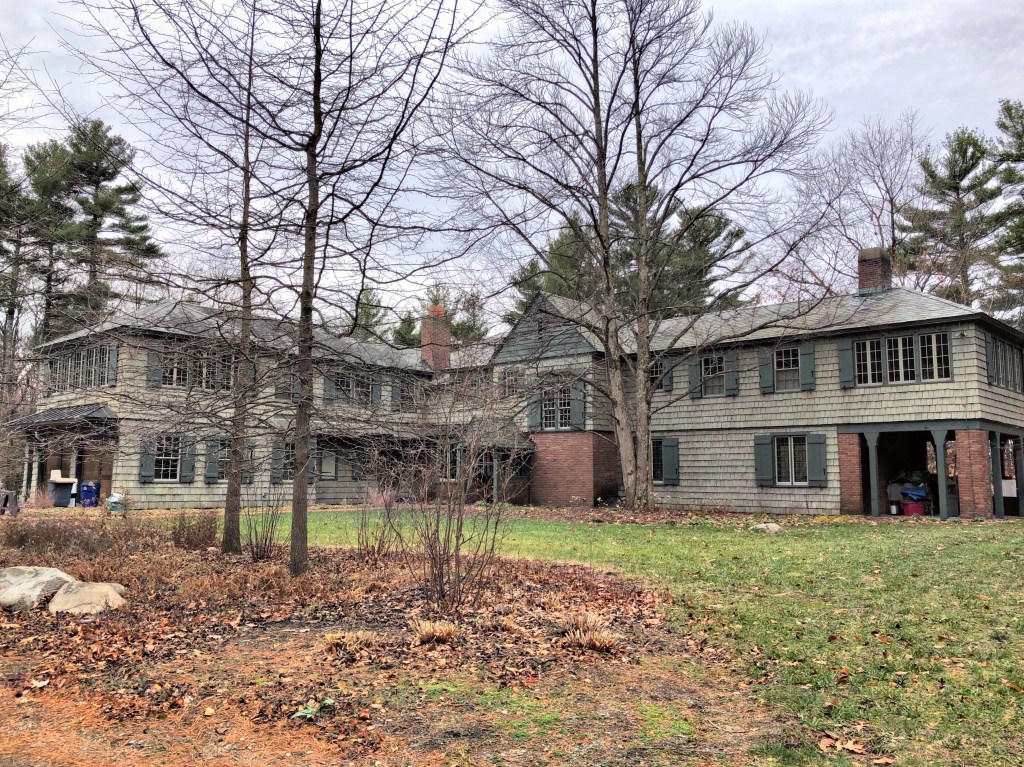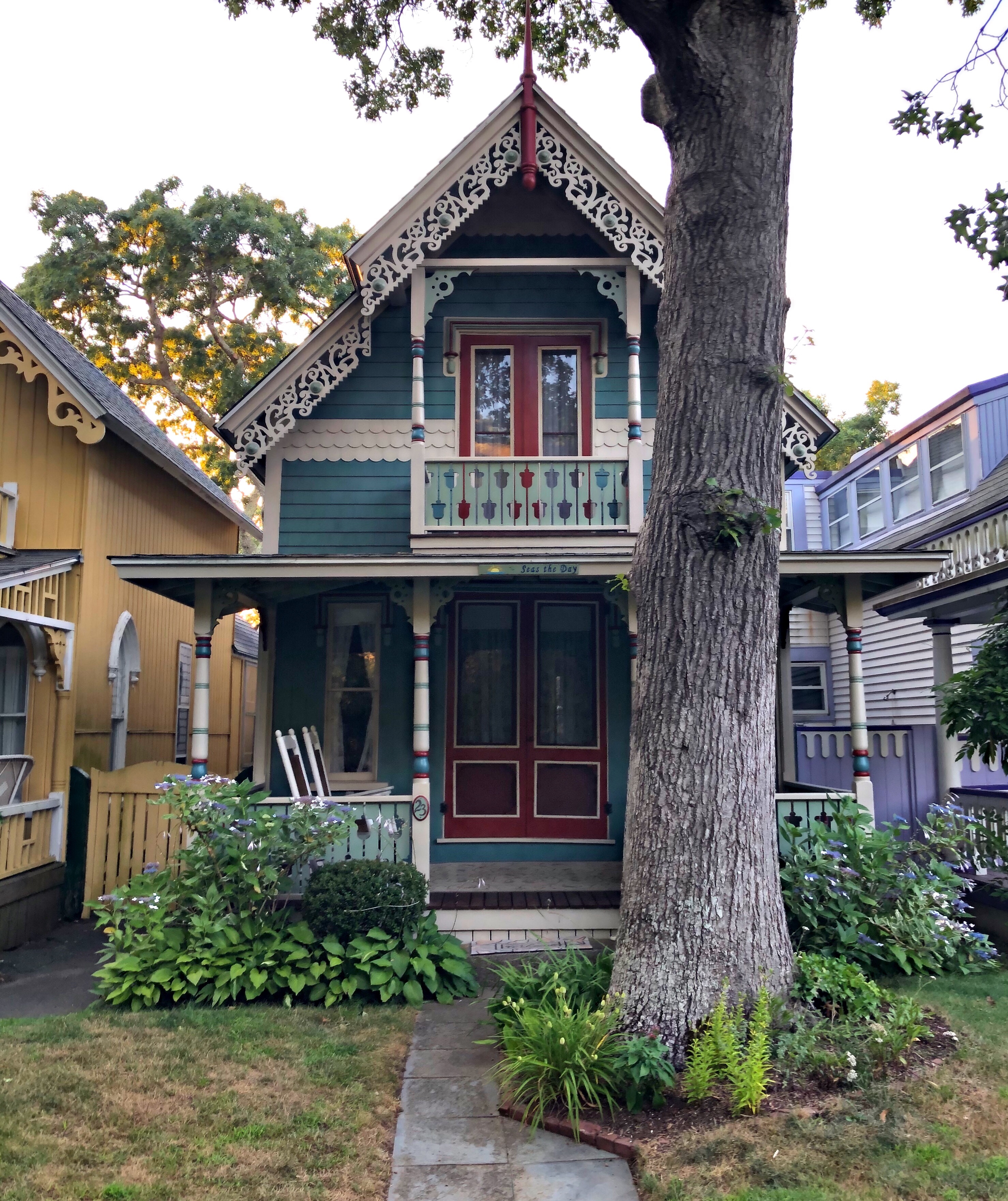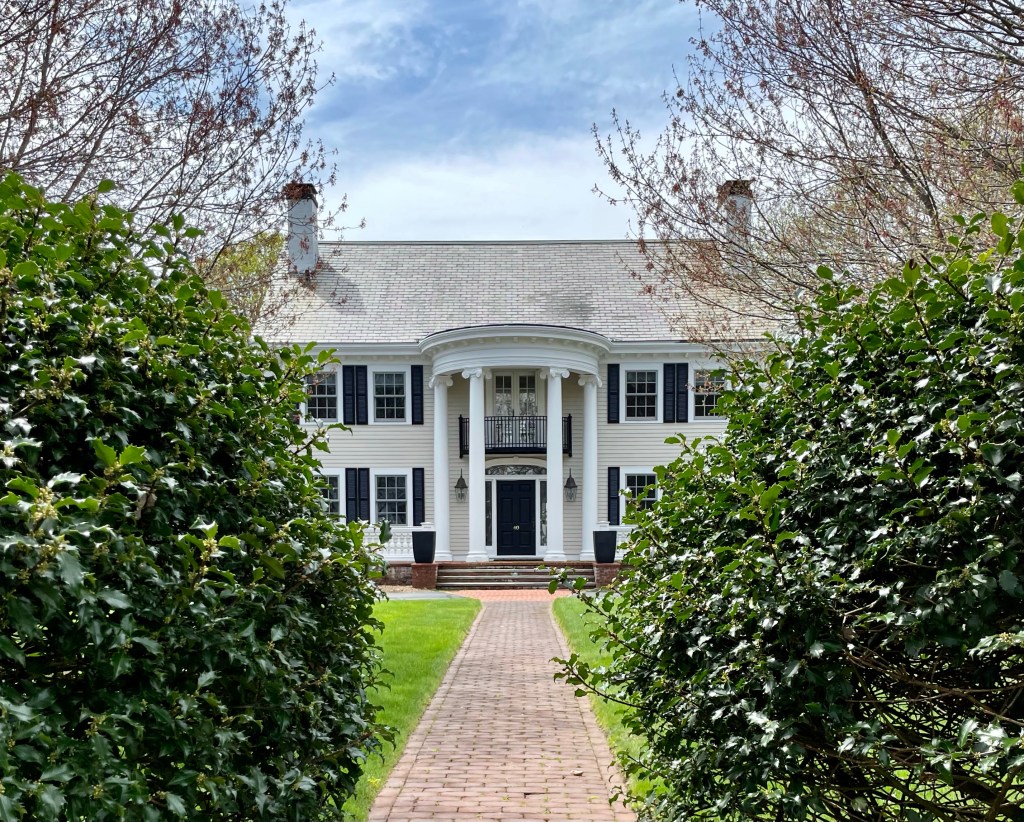
Susan Lord House // 1913

This home was built in 1913 and is a high-style Neo-Classical example of a “beach cottage”. The home is located in the fashionable Rye Beach colony in New Hampshire, which developed in the mid 19th century through the first half of the 20th century as an exclusive enclave for vacationing elite. The home was purchased by Susan Bailey Lord just years after its completion as a summer retreat from her home in Malden, MA, just outside Boston. She purchased the home just years after the death of her husband, who was thirty years her senior. It’s safe to say that Susan let loose up on the beach and had a “hot girl summer”.
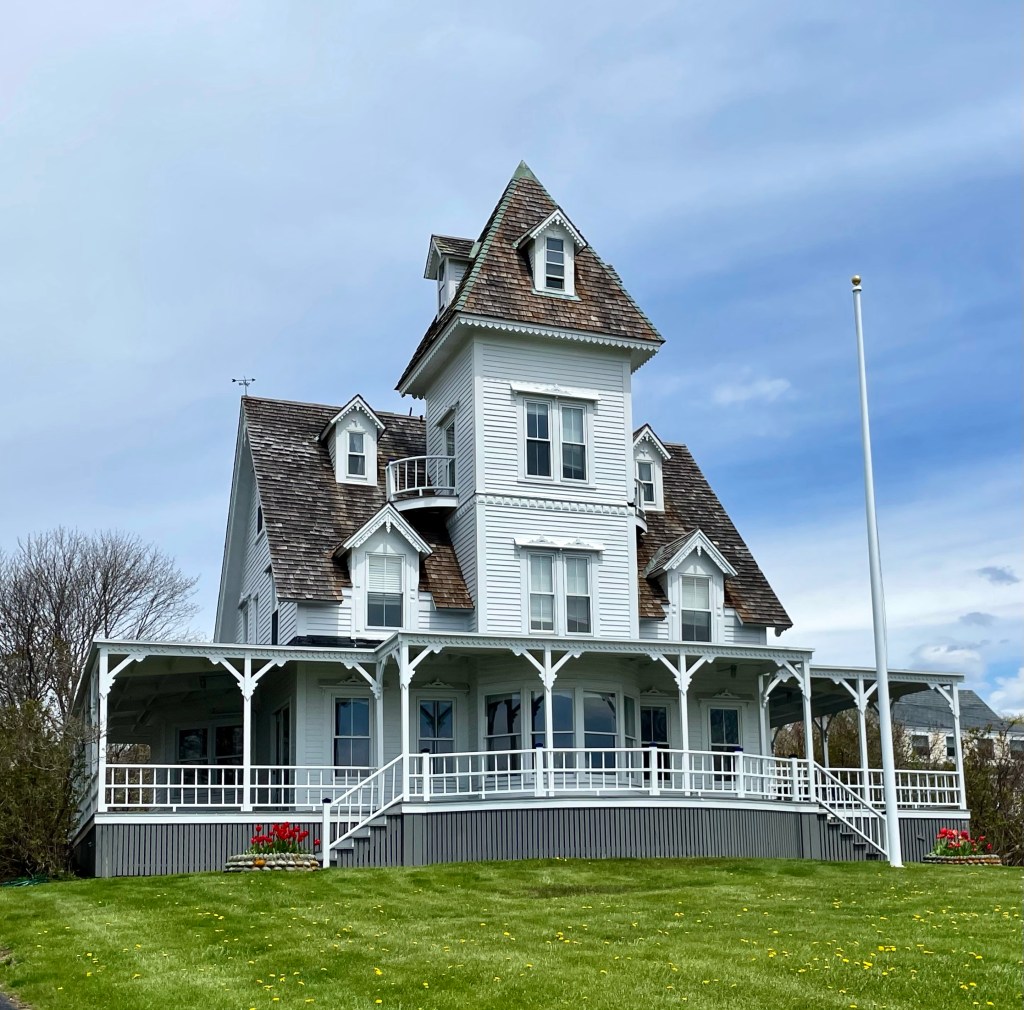
Tower Cottage // c.1880

Located in the Foss Beach section of Rye, NH, this Victorian summer cottage stands out among the later new construction of lesser detailed and quality late 20th century homes seen here lately. The home, known as “Tower Cottage” was built at the end of the 19th century and exhibits Victorian Gothic elements with a massive center tower. The steep wood shingle roof is punctuated by two rows of delicate dormers which add detail and views to the ocean. The massive wrap-around porch is also a must for such a prime location fronting the Atlantic Ocean!

Lougee Cottage // c.1880

This house was built and first occupied by George G. Lougee, owner and proprietor of the Sea View House Hotel (demolished) across the street. Before building his own hotel, Lougee was a clerk at the Atlantic House, another summer resort. Lougee eventually worked his way up and ended up managing that hotel. Lougee’s success managing the Atlantic and later, the Farragut, enabled him to pursue his own enterprise and build his Sea View Hotel. When Lougee sold the Sea View hotel, he also sold this house with it. His former Stick style home was then converted to additional rooms at the hotel until it closed in the 20th century.

C. A. Brown Cottage // 1886

Located just south of Portland Head Light, on the rocky ocean shore of Cape Elizabeth, is the settlement called Delano Park, a group of summer cottages, many of which were designed by iconic Maine architect John Calvin Stevens. Arguably the most significant and interesting is this Shingle style cottage, completed in 1886 for Charles A. Brown of Portland as a summer home. The cottage, sits atop a fieldstone foundation that are the very color of the ledges out of which the building grows. The walls above the are of shingle, “untouched by paint, but toned a silvery gray by the weather” as Stevens noted in his writings. Stevens was a master in siting his designs perfectly into the existing landscaping, and by covering all of the home with shingles, Stevens created an unembellished, uniform surface, which celebrates the honesty of its form. The home originally had a wood shingle roof, finished with a green stain. The home remains extremely well preserved by the owners and showcases the Shingle style of architecture brilliantly.

Honey Fitz Summer House // 1900

Before the Kennedy compound on Cape Cod where the political Kennedy Family summered, there was this house in Hull, now known as the ‘Honey Fitz’ summer house; named after John F. Kennedy’s maternal grandfather, John F. Fitzgerald, who owned the property. Fitz, the former mayor of Boston, would holiday at this home in the summer months with his wife Mary and six children Frederick, John Jr, Eunice, Thomas, Mary and Rose, who would go on to marry Joseph Kennedy and raise the political dynasty; The Kennedys. After Rose’s marriage to Joe Kennedy, she would return to the home with her children in the summer months, including the future president John Fitzgerald Kennedy. Rose Kennedy’s family often rented a smaller cottage on the peninsula for their family, but would always visit the big house for family dinners. Joseph Kennedy, who soon ended up being extremely wealthy, later bought a summer house in Hyannis, and the rest is history. This early Tudor mansion, with its stately proportions, stands out amongst the shingled cottages in Hull, fitting for the Kennedy dynasty.

Tanglewood // c.1865

The 200-acre campus of Tanglewood, where the Boston Symphony Orchestra spends its summer months, spreads the grounds of two historic summer cottages in the charming town of Stockbridge, MA. One of the summer “cottages” Tanglewood, where the music center gets its name, was constructed around 1865 for Caroline Sturgis Tappan, husband William Aspinwall Tappan and their two daughters, Ellen Sturgis Tappan and Mary Aspinwall Tappan. Mary, with her niece Rosamund Hepburn, donated the family summer home, Tanglewood in 1937 to Serge Koussevitzky, a Russian-born conductor, composer and music director of the Boston Symphony Orchestra from 1924 to 1949. The campus has since grown astronomically as it hosts musicians and tourists from all over the region and globally to experience the arts in the charming town in the Berkshires. The Tanglewood house retains much of its historic architecture and siting, overlooking the Stockbridge Bowl (lake).

Marion Nichols Summer Home // 1935

This summer estate in Hollis, NH epitomizes the hidden architectural splendor that can be found off the beaten path in many small New England towns. Hollis began serving as a summer destination in the late 1880s and the trend continued until WWII. In many cases, old family homesteads became summer residences for descendants who had moved to the city but desired to return to their “roots” periodically. The Nichols Home is unique in Hollis as it was designed to be a summer retreat for a well-to-do widow and her considerable servant staff, combining all the comforts available with the advantages of a rural retreat. The design of the main house offers separate living spaces for the family and the servants, including a library, living room and dining room for the use of the family. The servants’ wing was designed to include a two-car garage, a butler’s pantry, a manual dumbwaiter connecting the basement and first floor used to transport fireplace wood and a receiving unit for the delivery of milk, groceries and other goods. Sleeping porches, capitalizing on the benefits of the fresh country air, are an integral component of the house design and are included in both the family and servant wings. The home was designed by the Boston architectural firm of Densmore, LeClear & Robbins, who were hired by the 52 year old widow’s children for their mothers’ summer home. It is said that Ms. Nichols never liked the home and decided to summer instead at the old family summer home down the street.

Frank A. Ferris House // 1890

Located north of downtown Oak Bluffs, this oceanfront summer estate exemplifies the grandeur of Martha’s Vineyard at the end of the 18th century. This home was built in 1890 for Frank A. Ferris, a Manhattan meat dealer who processed and shipped his product to wealthy customers, markets, luxury hotels and restaurants all over the east coast. His processing plant on Mott Street in Manhattan remains an excellent example of Romanesque Revival architecture in the city. He lived at 5 Russell Terrace in Montclair, NJ, and in summers, stayed in this waterfront mansion overlooking the Atlantic. His summer home is a great blending of the Queen Anne and Shingle styles, both very common at the time.

“Seas the Day” Cottage // 1875

This quaint little summer cottage in Wesleyan Grove was built in 1875 for Hanson Arnold, a merchant and methodist from Woonsocket, R.I. The home is typical of many other summer cottages in Oak Bluffs on Martha’s Vineyard, with its delicate stick work, turned posts, full-length porch, and second story balcony with pierced bargeboards. The home was at one point named “Seas the Day”, a trend of naming the cottages occurred sometime in the 20th century by families who summered on the island, many incorporating the family’s name somehow. The home was restored recently with all new detailing and a reversion back to the original porch configuration.

Governor Oliver Ames Summer House // 1878

This stunning Victorian home in Oak Bluffs on Martha’s Vineyard was built in 1878 as a summer home for Oliver Ames (1831-1895), a businessman, investor and Governor of Massachusetts. Oliver Ames was the son of Oakes Ames, who is credited by many historians as being the single most important influence in the building of the Union Pacific portion of the transcontinental railroad. After his father’s death in 1873, Oliver Ames became the executor of his father’s vast estate and business dealings, and spent vast sums of money on properties in the places he lived including North Easton, MA, Boston and Martha’s Vineyard. He summered at this large home fronting the ocean in Cottage City, then a part of Edgartown. He decided to run for state senate in 1879, after he was unsuccessful in securing passage for the separation of the Martha’s Vineyard community of Cottage City, where he owned a summer house, from Edgartown. Winning election, he saw through the incorporation of the town (now known as Oak Bluffs). Ames served as the Governor of Massachusetts between 1887 and 1890, and continued to summer in his beachfront home during that time. The eclectic Victorian home blends many popular styles at the time from the Shingle style with the continuous shingle siding, the Stick style with the delicate stick-work at the veranda, to Queen Anne with its asymmetric massing and square tower.