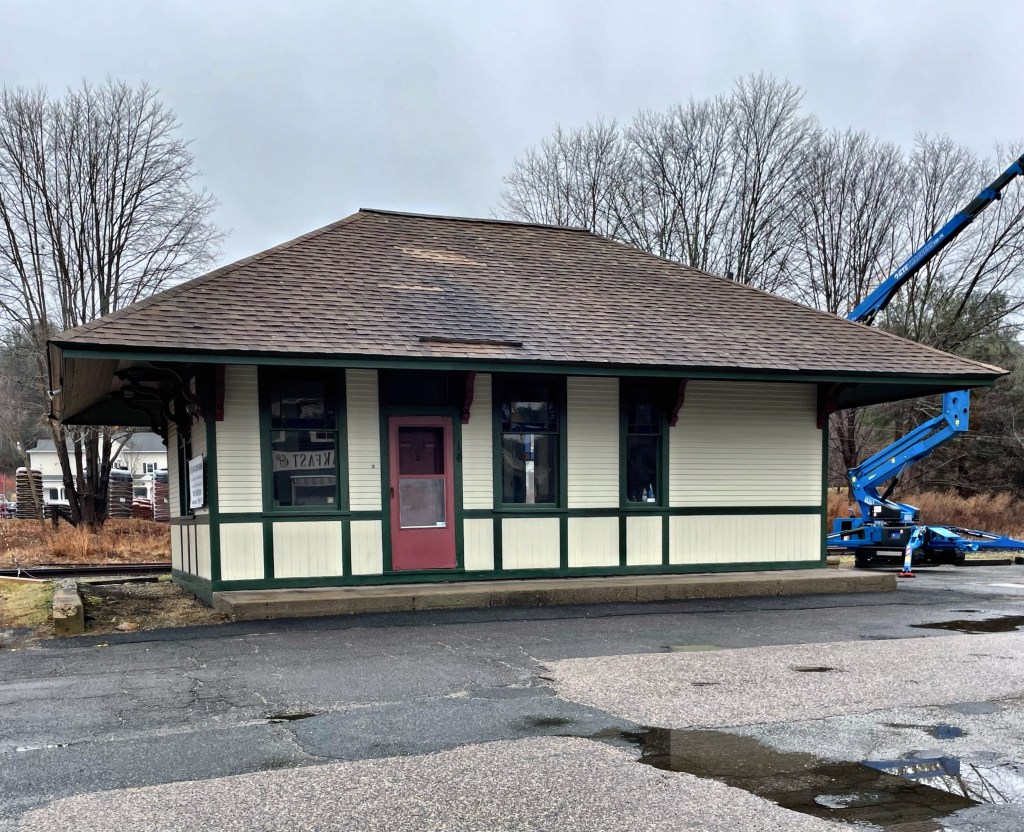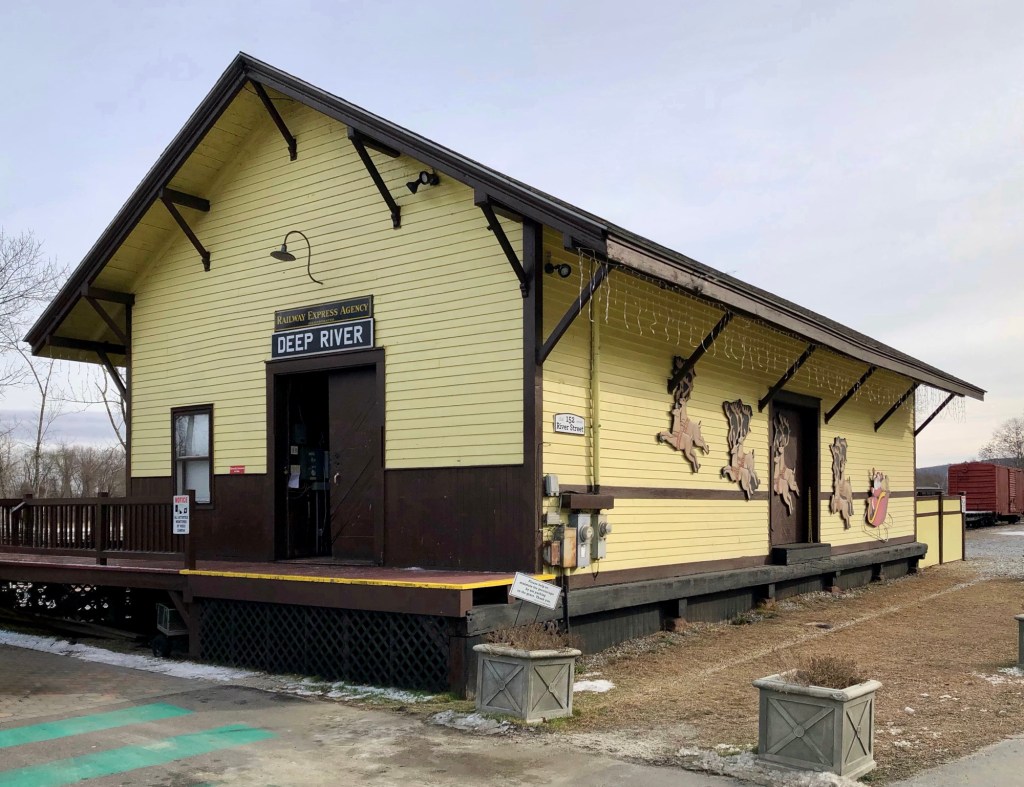
Deep River Freight Station // 1915

The Connecticut Valley Railroad opened for service in 1871, connecting towns along the Connecticut River between Hartford to Old Saybrook on the coast. This line carried passengers and freight between commercial and trade centers. The Deep River Station, which is sited along the banks of the Connecticut River, was built about 1915 by the New York, New Haven and Hartford Railroad, who had acquired the Connecticut Valley Line, as part of a government-mandated program to update aging railroad infrastructure. This station was originally built to serve both passengers and freight and showcases the dwindling usage of train service with the more vernacular and less ornate architecture compared to 19th century stations. Passenger service on the line was soon decimated by competition from the automobile, and ended in 1933. Freight service continued until 1961, when the New York, New Haven and Hartford Railroad went bankrupt. A portion of the former Connecticut Valley Railroad track was revived as a heritage railroad in 1971, connecting this station to the 1892 Essex Station via steam train!
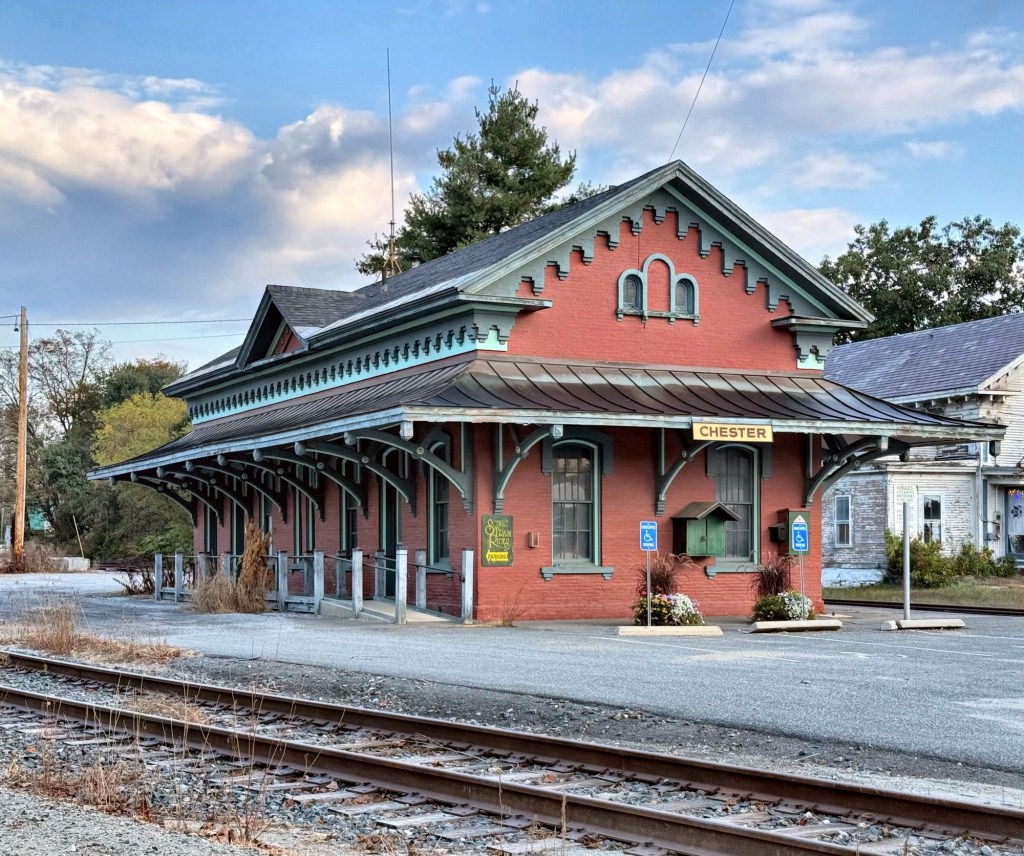
Chester Depot // 1872

The first public train arrived in Chester, Vermont, on July 18, 1849, and in December, the Rutland & Burlington Railroad opened the first rail line across Vermont linking the Connecticut River valley at Bellows Falls and Lake Champlain at Burlington. A fire destroyed the first station in 1871, and the Vermont Central Railroad built the current station within a year. The State of Vermont purchased the line in 1963, leasing it in part to the Green Mountain Railroad. Exceptional in Vermont, this brick station retains its high-style Italianate design and continues in railroad use. The station can be classified as Italianate/Romanesque in style and has a corbeled cornice, windows capped by brick hood moldings, and a projecting trackside awning. It appears that the station is not in active use, does anyone know more?

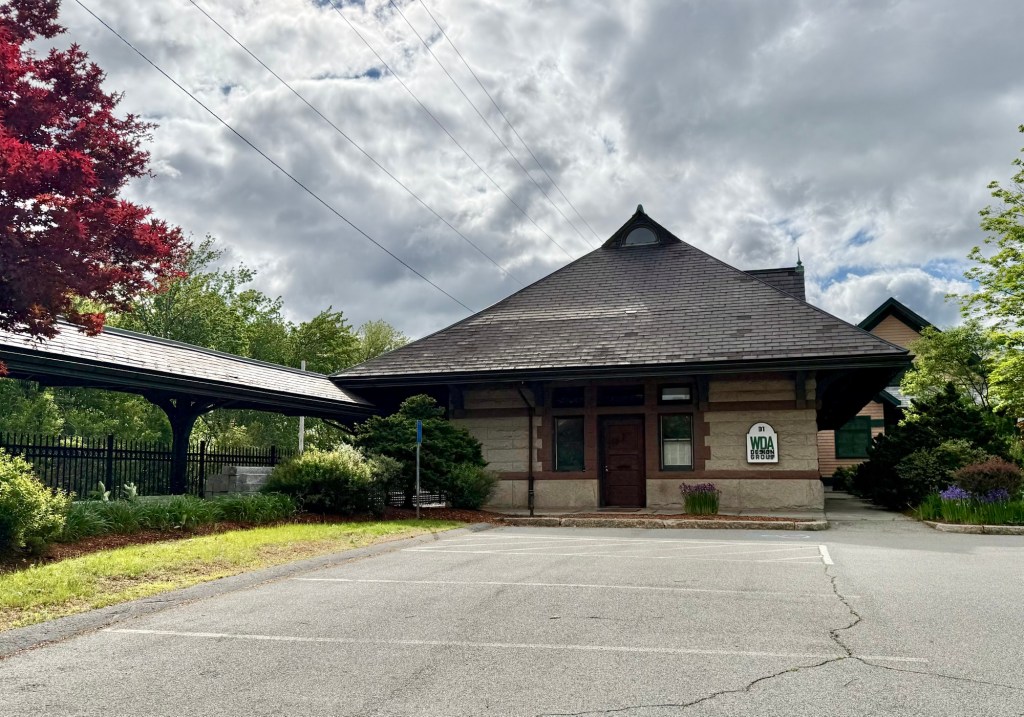
Westborough Rail Station // 1899

The Boston-Worcester Railroad roared into Westborough Square in 1834 and opened the once rural community to commerce and trade from its larger neighbors. The depot was in the center of the village and facilitated a development boom of commercial buildings. By the later 19th century, the Boston and Albany Railroad controlled the railway service and had built up an extensive passenger and freight service. The company sought to straighten out the track, thus increasing its speed and efficiency, so the B&A relocated the track in 1899 from the center of Westborough to its present elevated site on East Main Street, outside the commercial core of the town. The new station was built in 1899 and is a late example of the region’s many Richardsonian Romanesque stations, constructed of rusticated pale granite with contrasting brownstone trim; copper ornament; and a simple rectangular-plan structure topped by a low, overhanging hipped roof. Decades before this station was built, the Boston & Albany Railroad in 1881, hired renowned architect Henry Hobson Richardson to design a series of passenger stations. Over the next five years, Richardson was responsible for nine B&A stations, primarily closer to Boston and the nearer suburbs. After Richardson’s death in 1886, the B&A commissioned his successors, Shepley Rutan & Coolidge, to design 23 additional stations between 1886 and 1894. The unofficial style of B&A stations remained after 1894 and was employed in Westborough to a lesser ornate scale. Train service to town ceased here, but the tracks remain active. The former station was converted to office use. 

Former Boston & Lowell Railroad Depot // 1871-1927

Courtesy of Boston Public Library collections

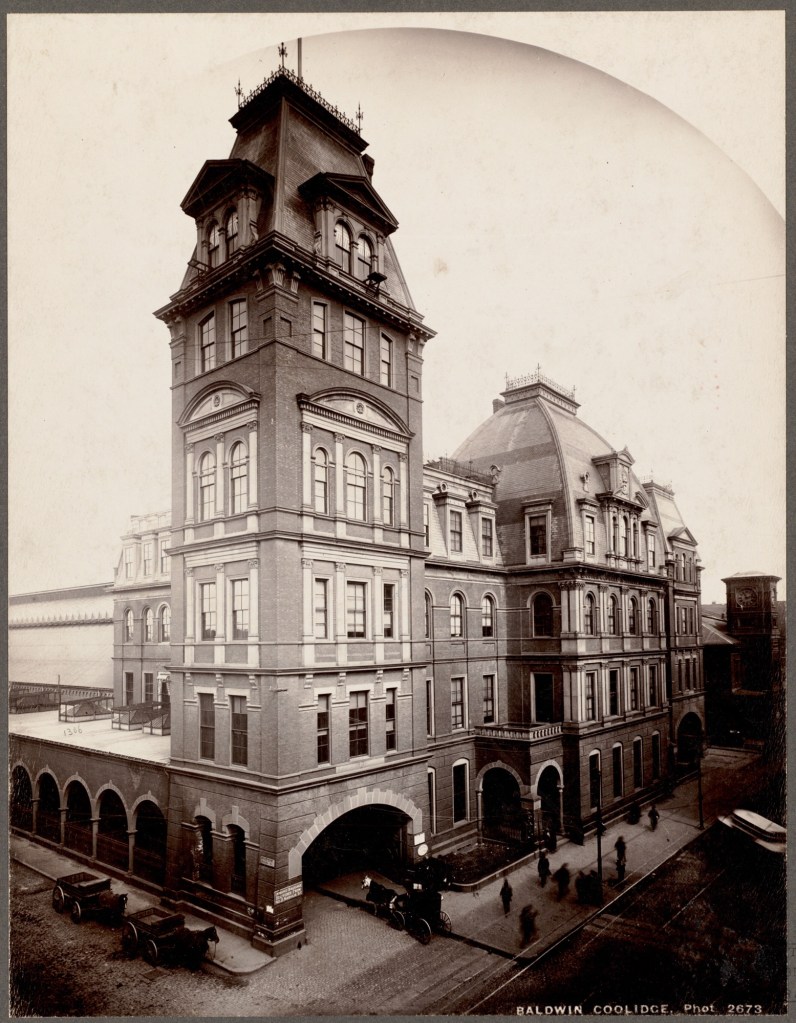
The Boston and Lowell Railroad was established in 1830 as one of the first rail lines in North America. The first track was completed in 1835, and freight service began immediately connecting Boston to the newly established town of Lowell, which had just 6,400 residents at the time (compared to Boston which had 10x that). The original Boston depot was a modest structure, but after the Civil War, it was decided that a new station connecting two of the most important industrial cities in Massachusetts, should be built. Architect Edgar Allen Poe Newcomb and his father’s firm, L. Newcomb & Son, was selected to design a new station on Causeway Street. The French Second Empire masterpiece was built between 1871-1878. Inside, the concourse was lined with oak walls and marble flooring. The depot was added onto in 1893 and incorporated into a Union Station of multiple former lines, and ultimately demolished in 1927 for the first North Station.

Ridgefield Train Depot // 1870

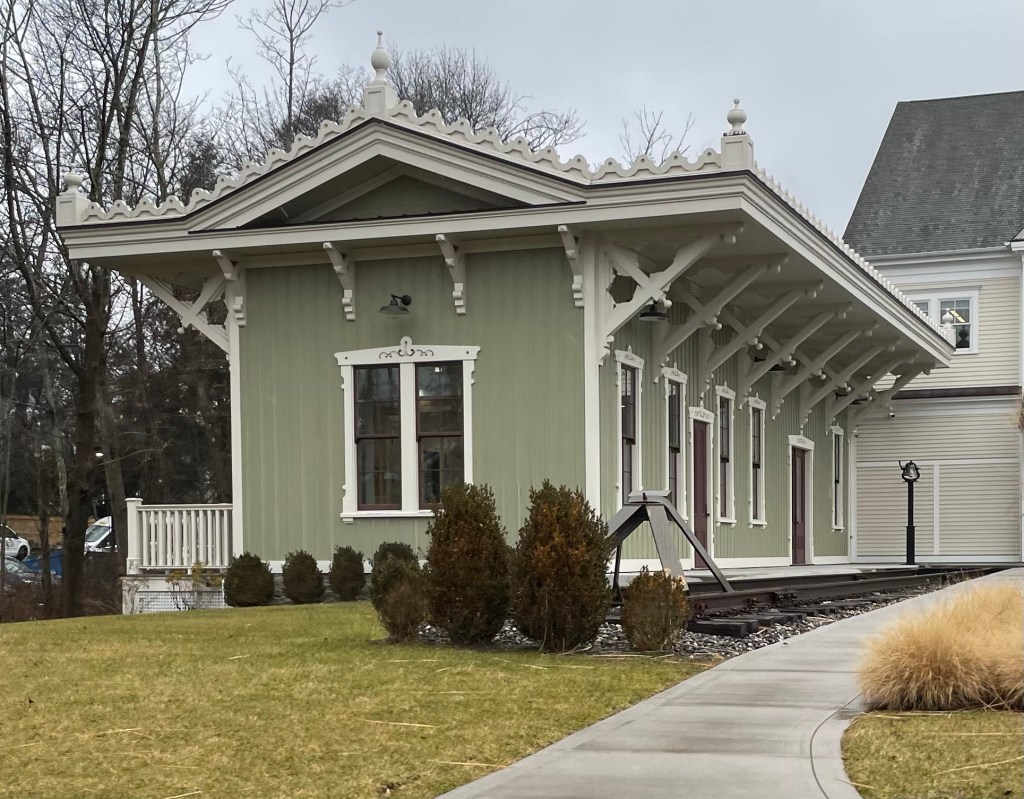
In 1870, the Ridgefield Branch branch line of the Danbury and Norwalk Railroad and later the New York, New Haven and Hartford Railroad was built connecting the sleepy village of Ridgefield to Branchville train station via the main line. The line was an early risk, built to offer service to the wealthy New Yorkers who began arriving to spend their summers in Ridgefield. Many of these “summer people” had their own private railroad cars, with chauffeurs meeting them as they arrived, driving horse and buggies to bring them and their luggage to their estates located throughout the town. As travel shifted to personal automobile, ridership dropped in the early 20th century, and the branch was replaced by bus service in 1925. Freight service was scarce, and lasted longer, to 1964. The depot was sold to the Ridgefield Supply Company, who used the 1870 building as storage for decades until it was disassembled, moved and rebuilt by the Ridgefield Supply Company in 2015, as part of their expansion. The historic station today provides an important link to Ridgefield’s past.

Noank Train Depot // 1858

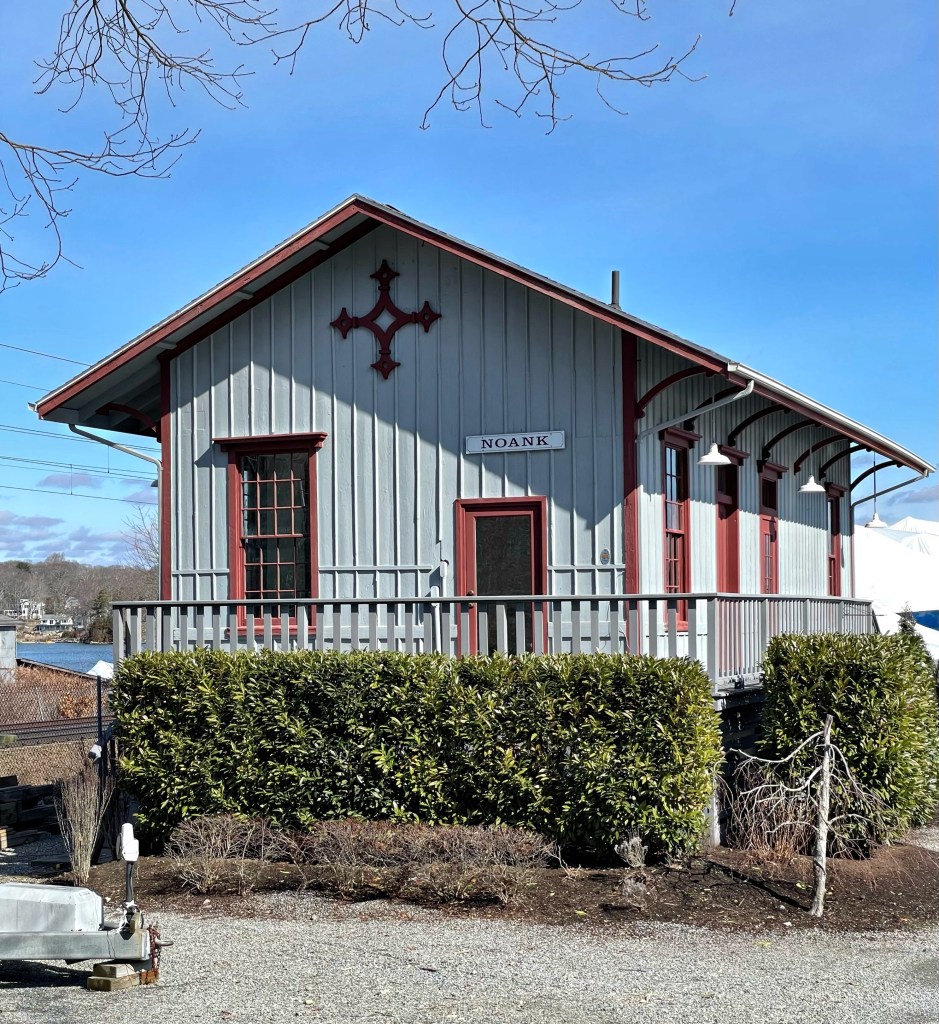
Starting in 1848, rail service connecting New Haven and New London, Connecticut commenced to provide transit between two of the state’s economic centers. The New Haven and New London Railroad was completed in 1852 and almost immediately, work commenced on extending the line eastward as the New London and Stonington Railroad. This completed the “Shore Line” route between New York City and Boston through other lines and the span became re-organized and named the Shore Line Railway. One of the many village stops along the route was in Noank, in this 1858 rail depot. The small train station is covered in board-and-batten siding with an overhanging gable roof supported by brackets. In 1976, much of the shoreline track was purchased by Amtrak, which is now known as the Northeast Corridor. The Noank station was cancelled as a stop, and the building was sold from the holdings, it is now office space, seemingly for the Noank Village Boatyard.

Wilton Train Depot // 1892

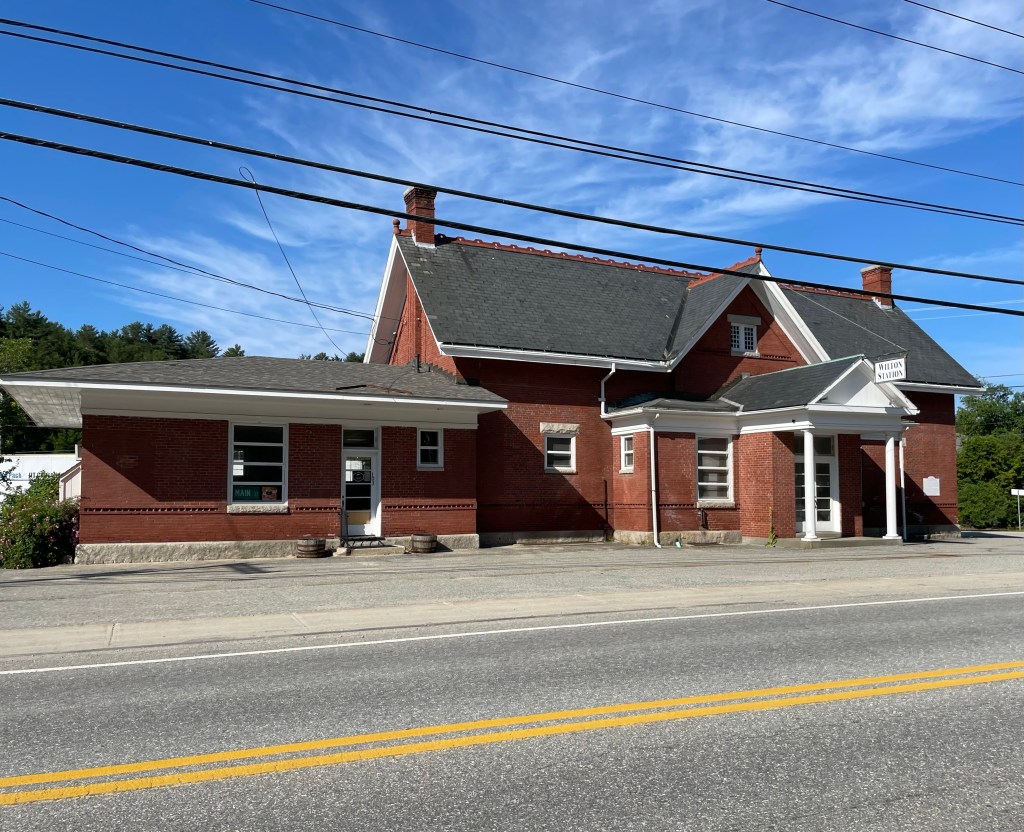
The coming of the railroad to Wilton, New Hampshire was largely due to the rapid increase in the number of mills and factories built in and around the East Village along the river beginning in the early 19th century. This increase was the impetus to Wilton business leaders of the time to petition the state for a charter to form the Wilton Railroad Company which was granted in 1844. The first official run of a wood-burning steam engine from Nashua City Station to the newly constructed Wilton Station occurred on Dec. 1, 1851. The small, wood-frame station was deemed obsolete, and replaced by 1860 with a more substantial structure. In this time, the town prospered, and the local mills cranked out everything from worsted yarn to wooden boxes and furniture. After thirty years of use, however, this second station began to show its age; the tin roof was rusting and it leaked. In 1888, a derrick on a wrecker train caught the side of the building and heavily damaged it, requiring the demolition of the station. By 1892, it was replaced by this new brick station. Between the World Wars, automobile use dominated the American transportation landscape, shifting demands from rail to road. In the late 40’s, a restaurant opened in part of the building, operating until the early-to-mid 50’s. The station was closed when passenger service finally ended and the building, undergoing “adaptive re-use”, into a medical center. It operated for some time as a scenic, heritage railroad stop from 2003-2006.

Willington Train Depot // 1895

TOOT TOOT! Next stop, Willington, Connecticut. Historically, all of central Connecticut was occupied by various Algonquin tribes which for thousands of years inhabited the region, the larger Pequot and Mohegan, and the smaller Nipmuck, Podunk, Shenipset and Skunkamaug all sharing a common-lineage, and language. In 1720, a party of eight men, originally from England, bought 16,000 acres of the region and called it Wellington after the town in England. Willington was incorporated in 1727. Like many early towns, Willington began as a farming community with modest industry until the 19th century, when the American Industrial Revolution saw mills and factories sprouting up all along the river towns in the region. Villages spouted up in town, mostly following their geographic location in relation to the town center (South Willington, West Willington, etc.) and each had their own industry and character. By the 20th century with industry in decline, many of the former mills and villages closed up and residents moved to “greener pastures”. The town is today mostly rural and serves as a suburb to larger towns nearby.

This train depot is located in West Willington just over the town line of Tolland. Due to this, the depot was originally named Tolland Station. Rail service began here in 1850, when the New London, Willimantic and Palmer Railroad Company built a freight and passenger station near this location. The rail line was later absorbed into the larger Central Vermont Railway in 1871. The original depot burned down in 1894, and was replaced that same year by this structure. The line, and this station, were in use for passenger service until 1947, when it closed. The depot has luckily been occupied by businesses ever-since, preserving this building typology in America that we are losing every year.

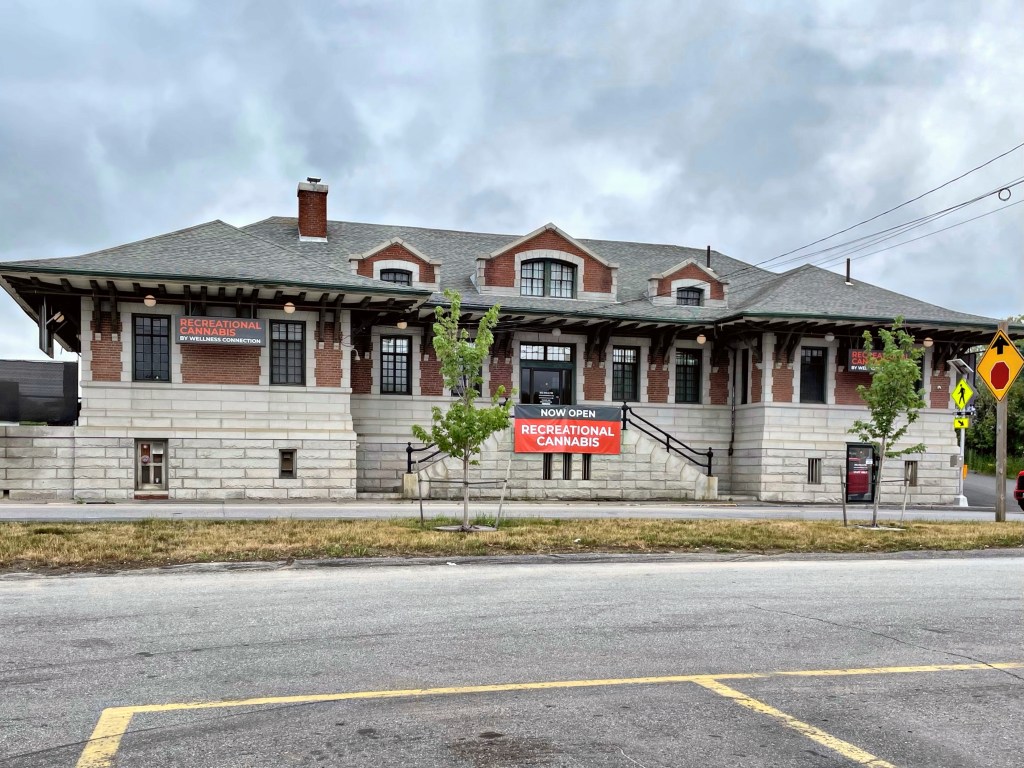
Gardiner Train Depot // 1911

The first train arrived in Gardiner, Maine in 1851. Rail here introduced a new mode of transportation for passengers and freight, which previously relied on horse or ship up the Kennebec River. When the old station was deemed too small and outdated, the Maine Central Railroad Company decided to hire Portland architect, George Burnham to complete plans for a more fitting station. This building is a mix of styles, the two I would categorize it as are Romanesque Revival and Spanish Revival. The building incorporates a number of influences of the two along with a deep overhanging roof supported by large brackets, heavy rusticated granite blocks at the base, and quoining around the windows and corners. The station was in operation until about 1960 when rail service here halted. Since that time, the building has been adaptively reused as a retail store, today as a recreational cannabis dispensary. So you can get high and look at cool architecture!

Kneeland Street Station // 1847-1918

All Aboard!! The Kneeland Street Station was built at the southern edge of Downtown Boston in 1847 for the newly established Old Colony Railroad Company. By the early 1840s, the city of Boston had six major rail lines connecting it with other places including Lowell, Maine, Fitchburg, and Salem to the north, Worcester to the west and Providence to the southwest. The southeastern part of Massachusetts had yet to be served by a rail link to Boston. On March 16, 1844 the Old Colony Railroad Corporation was formed to provide a rail connection between Boston and Plymouth. Construction of the line began in South Boston in 1844 and the line opened to Plymouth in 1845. The company needed a more accessible station to the residents and businessmen of Downtown Boston, so they acquired a large parcel of land on Kneeland Street to extend the line. The corporation hired architect Gridley James Fox Bryant, who designed this stunning railroad station constructed of brick with strong stone trimmings. As was common, a large clock was affixed to the building to allow waiting passengers to know how long they would be waiting. From 1845 to 1893, the Old Colony railroad network grew extensively through a series of mergers and acquisitions with other established railroads, serving lines to Providence, Newport, Fall River, New Bedford and down the Cape. The railroad was acquired in 1893 by the New York, New Haven and Hartford Railroad, and sought to consolidate the many local stations into a larger building. They soon after began construction on Boston’s South Station, re-routing lines to that new building. They sold off the excess stations, including this one on Kneeland Street, and it was eventually demolished in 1918.