Clark & Nightingale Block // c.1815

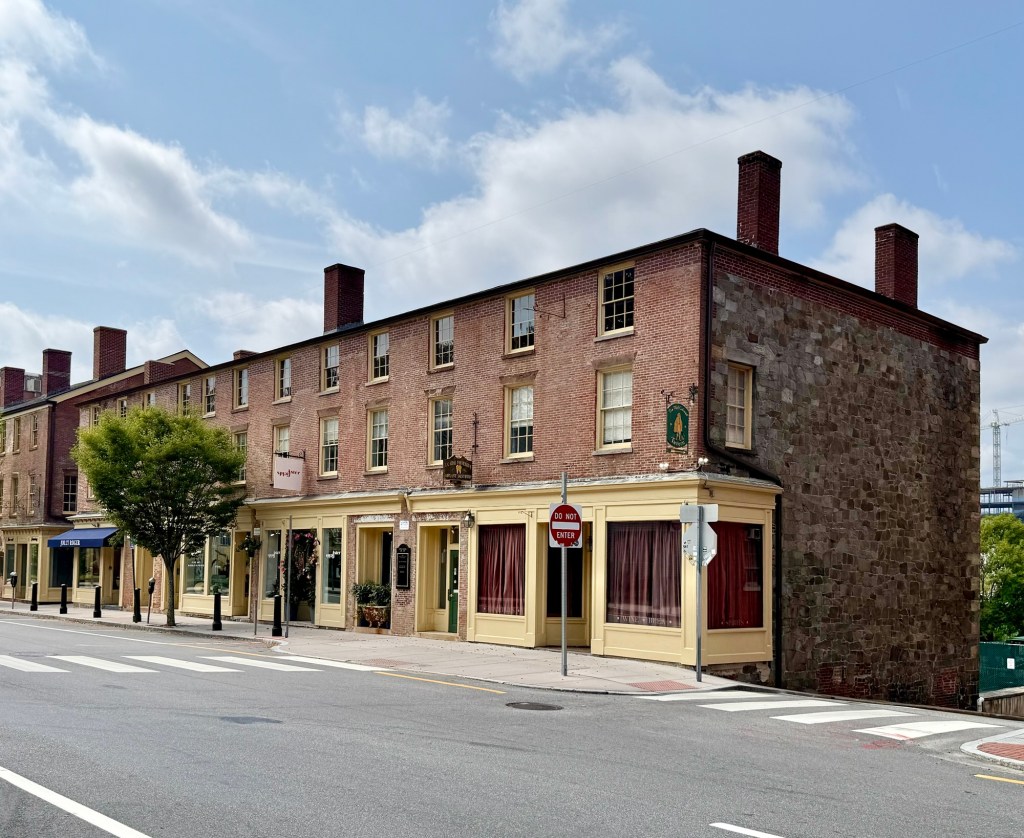
In the early 19th century of Providence, wealthy merchants dabbled in real estate and urbanism, not only as an income-producing investment, but also to serve as a buffer to obscure unsightly industrial and wharf uses from their mansions on College Hill. This is the Clarke & Nightingale Block, a c.1815 vernacular Federal style row of residences above commercial storefronts on South Main Street. The block was developed by the heirs of wealthy merchants, Joseph Innes Clark (1745-1808) and Joseph Nightingale (1747-1797), and constructed of brick and stone, providing a handsome structure facing the wealthy residences to their east, and obscuring the view of industrial buildings closer to the river. The block was gutted and rehabilitated as part of the East Side Renewal project in the early 1970s. Arguably the only thing Urban Renewal did right was select restoration of significant buildings within seas of the destruction and scars on the landscape the program left behind.

Perkins-Monroe House // 1811

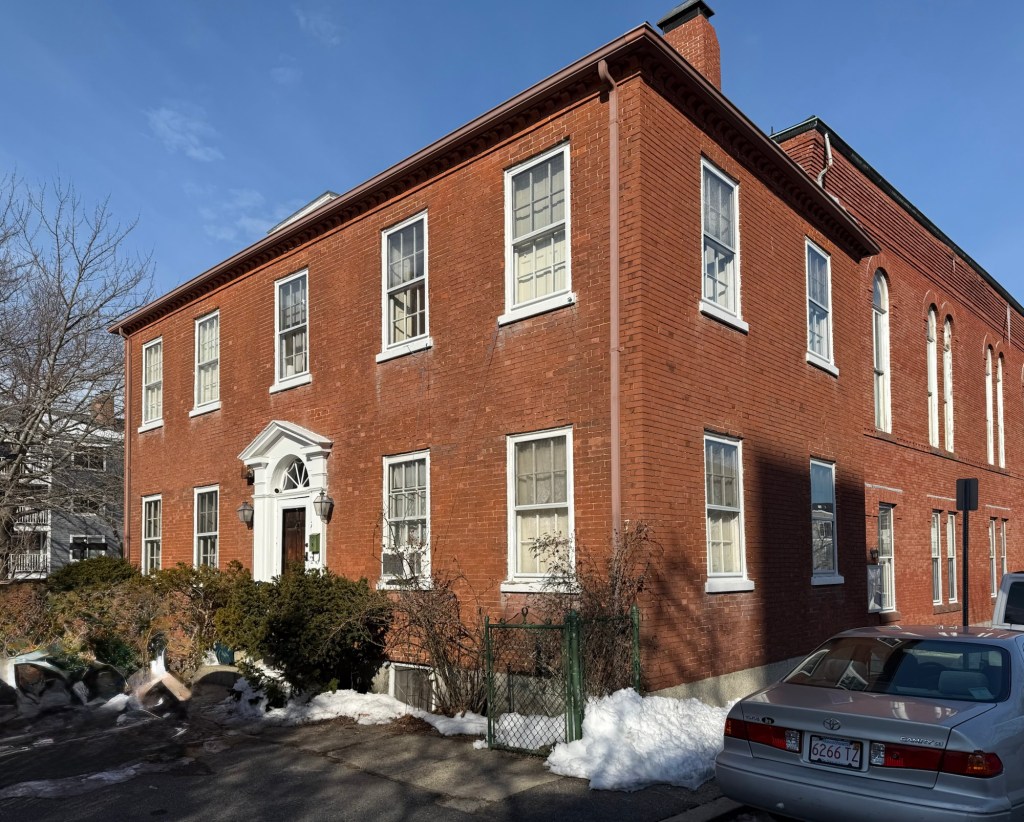
This brick, Federal style house, is located adjacent to the First Universalist Church of Salem amongst a sea of urban renewal-period housing, and is a reminder for Planners to think about the long-term implications in their work. This house was built in 1811 for Thomas Perkins, a local merchant whose brother was its first occupant. After successive ownership throughout the 19th and early 20th centuries, in 1950, Bessie E. Monroe purchased the premises and moved into the home. When the city began urban renewal planning for the area in the 1960s, the building was occupied by Bessie Monroe, who at the time was an elderly woman. The Salem Redevelopment Authority acquired the house through eminent domain and the house was targeted for demolition. The Redevelopment Authority, concerned with how relocation would affect Bessie Monroe’s health, decided to take the property but allow Mrs. Monroe to live there until her death. This decision delayed the planned demolition of the building, even though all other targeted properties were demolished. Luckily, the renewal plan changed its focus from new construction to restoration of existing buildings between the time of the taking and Bessie Monroe’s death. The building was then sold to an owner interested in restoring the structure, now the building is listed on the National Register of Historic Places and is a testament to the benefits of preservation over short-sighted planning policy. 

First Universalist Church of Salem // 1808

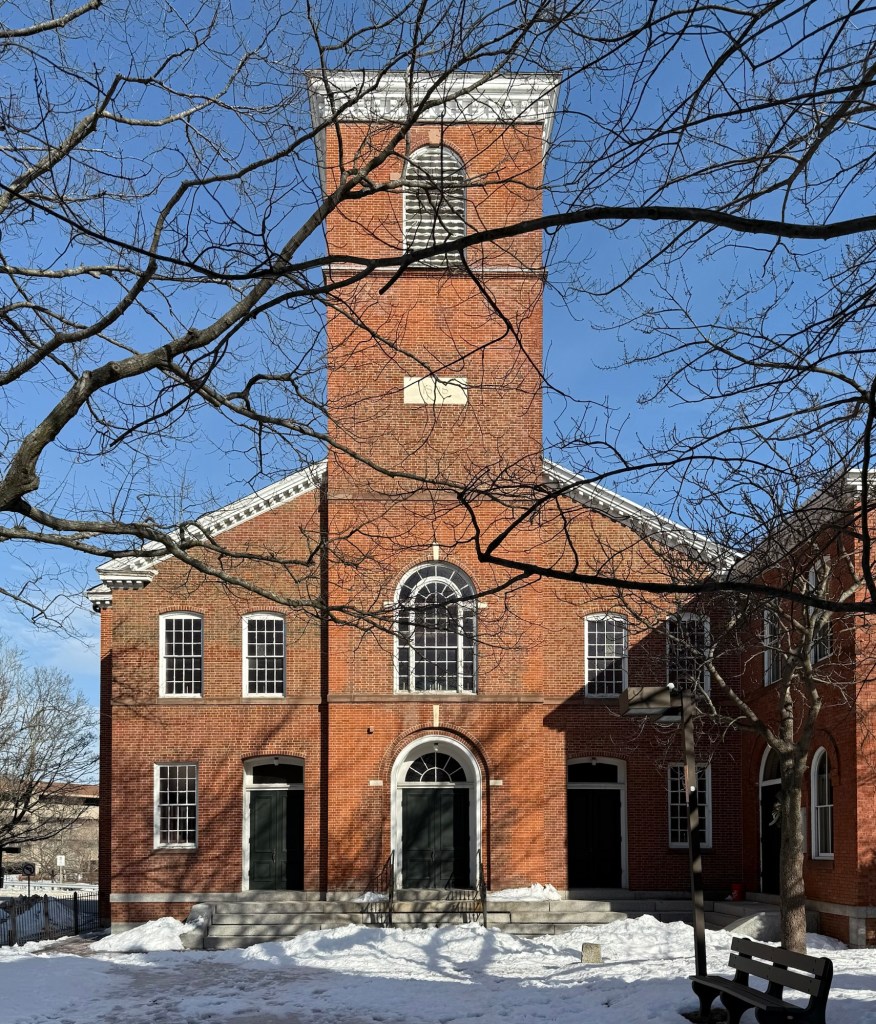
The First Universalist Church of Salem, Massachusetts, is a landmark example of a brick, Federal style church in New England. Tucked away within a network of Urban Renewal-era townhomes and backing up into a busy thoroughfare, the church is overlooked by many who pass behind its rear elevation, not knowing how special the building’s primary facade truly is! The church was constructed between 1808-1809 with early Church records showing that the interior carvings were done by Samuel McIntire, a Salem native, who was trained as a wood carver and later became an architect. It is unclear if any of McIntire’s work remains as numerous building modifications were completed throughout the 1800s; including a major exterior remodel in 1855 by architect Enoch Fullerchanging the appearance from Federal to Italianate. The church would again fall back to changing tastes in 1924, when they restored to an approximation of its original appearance by the office of R. Clipston Sturgis, a prominent Boston architect who specialized in Colonial Revival architecture. While the building’s significance is lessened by the urban renewal infill and streets surrounding it, the building remains one of the oldest in Salem and a significant architectural landmark in the city. 

Old Salem Central Fire House // 1861

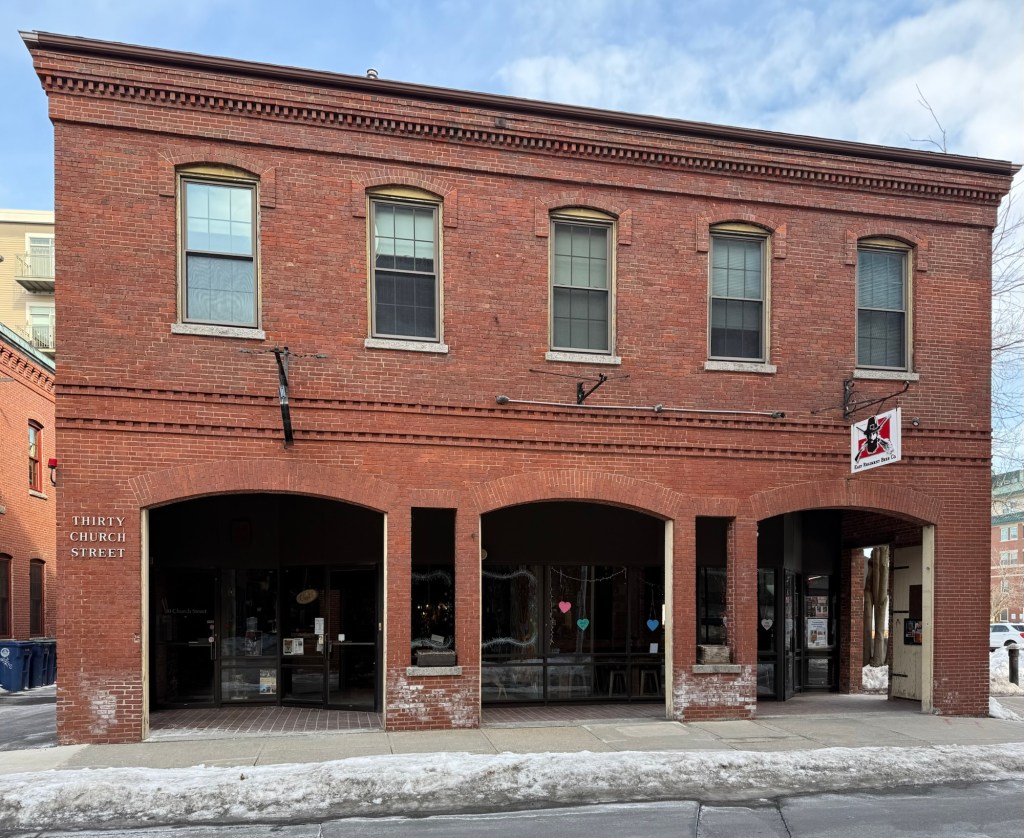
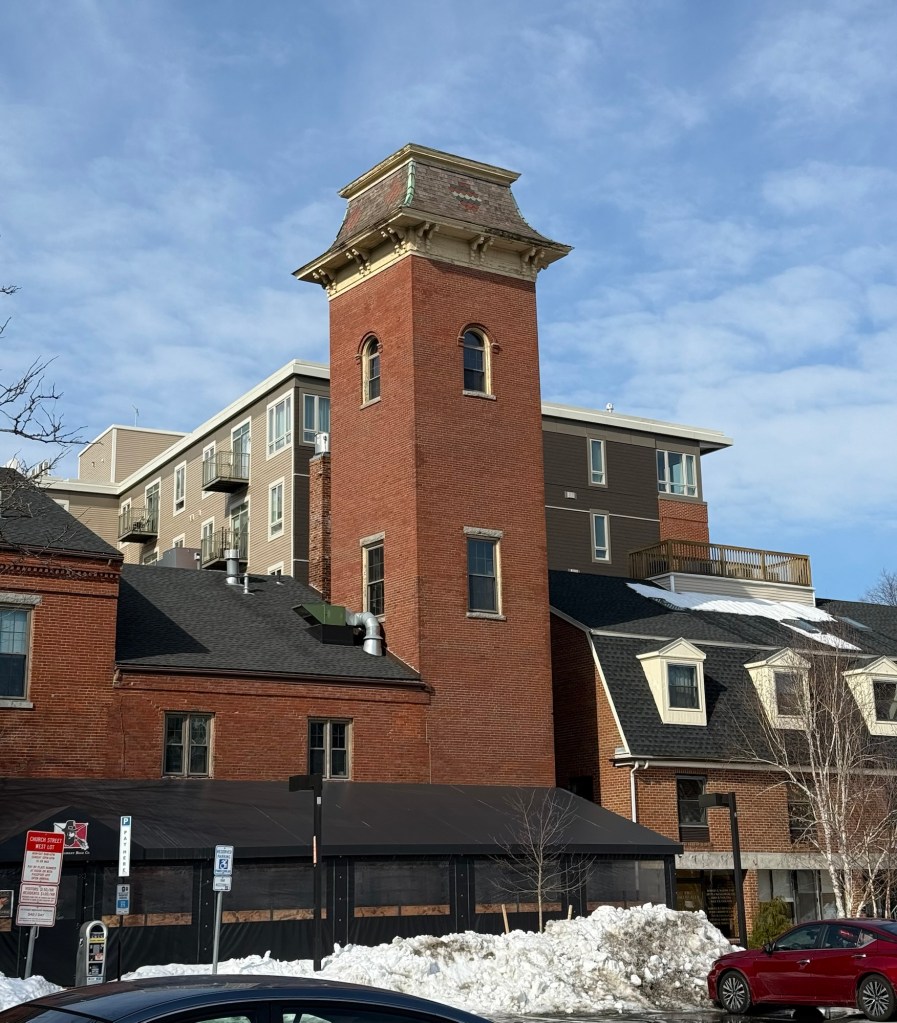
This mid-19th century brick structure on Church Street in Salem, Massachusetts, was built as the Central Fire House for the City. The Salem Fire Engine House was erected in 1861 from plans by an unidentified architect, in an eclectic style focused on function over frills. The façade is dominated by three engine bays with five windows on the second floor, surmounted by a decorative brick cornice. The hidden feature of the fire house is the three-story hose-drying tower capped by a slate mansard roof at the rear of the building. This building remained a fire house for 115 years until 1976, when due to larger fire engines and the tight constraints of the lot and surrounding streets, made use of the building a burden for fire-fighting. The City of Salem sold the building to private owners in 1976  for $24,000, and they underwent renovations to the building from designs by David Jaquith undertaken under the direction of the Salem Redevelopment Authority which sought to promote renovation of select historic buildings within the Downtown Salem Historic District. The recessed entrances through the old engine doors is a nice touch and retains the original fabric of the building. The old Salem Central Fire House is now occupied by Crazy Good Kitchen and the East Regiment Beer Company.

Lincoln Street Garage // 1956

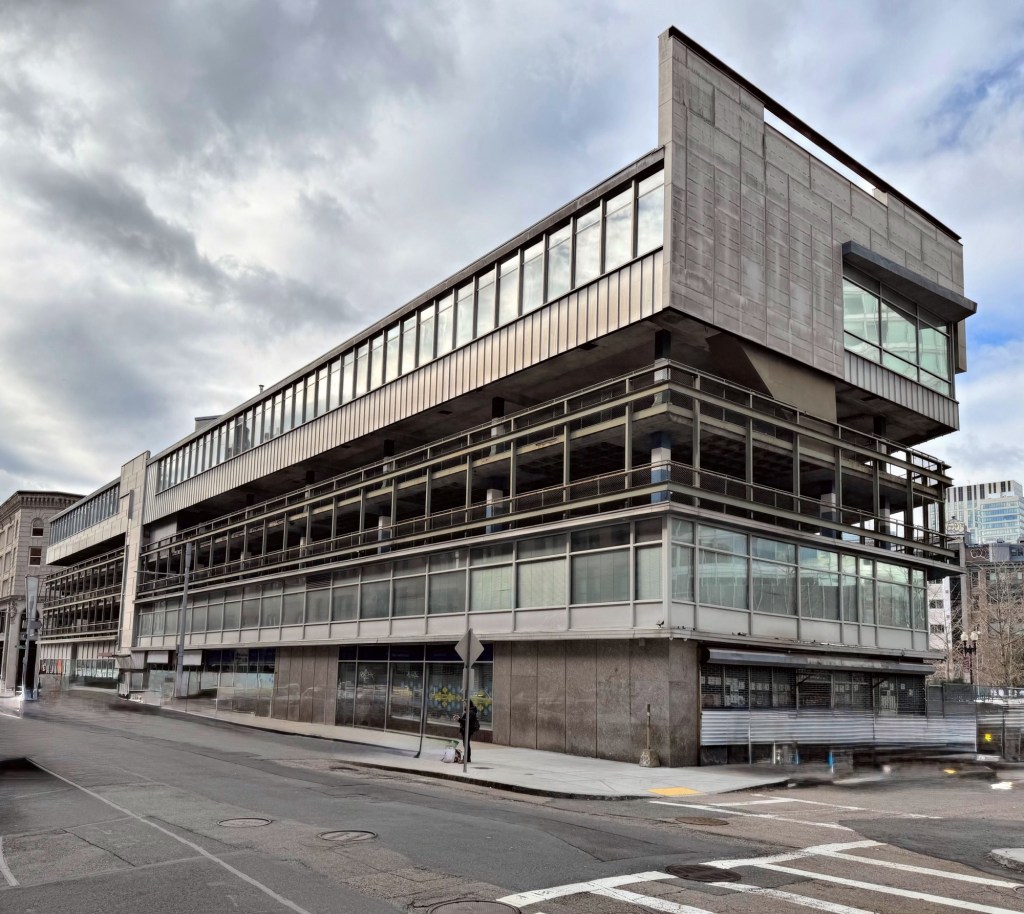
Few buildings in Boston showcase the evolution of its neighborhood (or bring out the architectural critics) quite as well as the Lincoln Street Garage in the Leather District of Boston. This Post-WWII mixed use building was originally constructed in 1956, on the former site of the United States Hotel (1839), one of the first major hotels in the nation, which was razed in 1930. The original building was designed by architect Archie Riskin, and stood three stories high with parking on half of the second floor and on the 3rd floor and roof. A fifth floor of office space was designed and constructed by 1959 also by Riskin. Due to its site at the edge of a historic commercial/industrial district and adjacent to the Central Artery, a raised highway that snaked its way through Downtown Boston, the building was minimally visible and faded away to obscurity until the late 1990s when the highway was buried under the city as part of the “Big Dig”. The open scar and subsequent re-greening of much of the former highway spaces necessitated the owners to re-work the building, due to its newfound gateway presence into the neighborhood. Brian Healey Architects renovated the building, adding an additional floor of offices and reworked facades. The result is a Post-war mixed-use hodgepodge of a building that expresses its use visually on each floor in a no-nonsense way, making it a unique urban building. Additionally the building has long been rented to small businesses, almost all Asian-owned with direct ties to the Chinatown and Leather District neighborhoods. Recent plans have been approved for a new office tower on the site and supported by preservation groups stating that “the existing garage is historically significant or beneficial to the neighborhood”, but to me, the further erasure of quirky buildings for more out-of-context developments is not the way to go.

Hotel Manger // 1930-1983

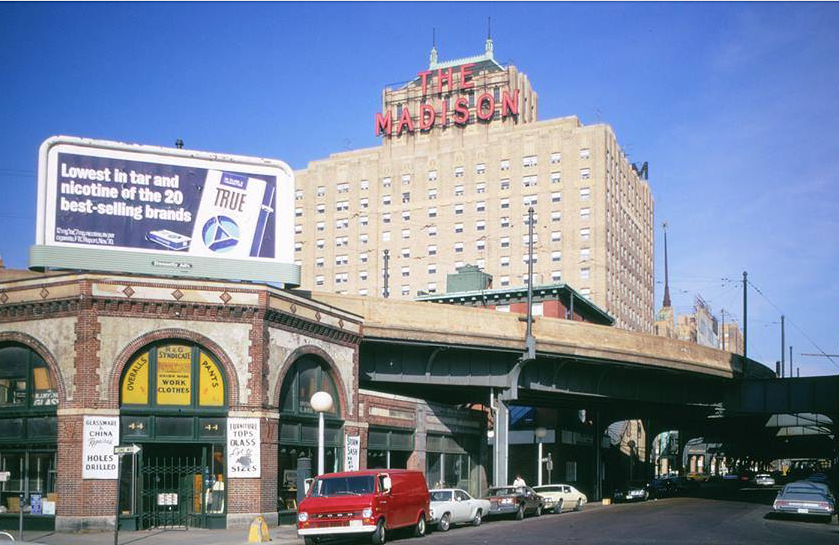
Built on the site of the former Boston & Lowell Train Station the Hotel Manger (later renamed the Madison Hotel in 1959) was part of the first redevelopment of North Station in Boston. When the Boston & Maine Railroad announced that plans had been finalized for the construction of a new North Station facility, which would include a sports arena, hotel, office building, and distributing terminal, Manger Hotels, a national hotel chain, and the Boston & Maine Railroad announced that the two parties had signed a contract for the construction of the hotel on the site with each party holding a 50% stock in the building. Designed by the architectural firm of Funk & Wilcox in the Art Deco style, the 17-story hotel was completed in 1930 and contained 500 rooms and at the time of its opening, the hotel was said to have had proportionately more marble than any other building in New England! As railroad traffic declined, the neighborhood surrounding North Station lost its importance as a commuter center and the hotel began to suffer financially, leading the hotel to close in 1976. Plans to convert the old hotel into elderly housing fell through, and in March 1983, the Boston Redevelopment Authority purchased the hotel and demolished it as part of their urban renewal plan for the area. The site is now occupied by the mundane Thomas P. O’Neill Jr. Federal Building.

Westminster Court Housing // 1967

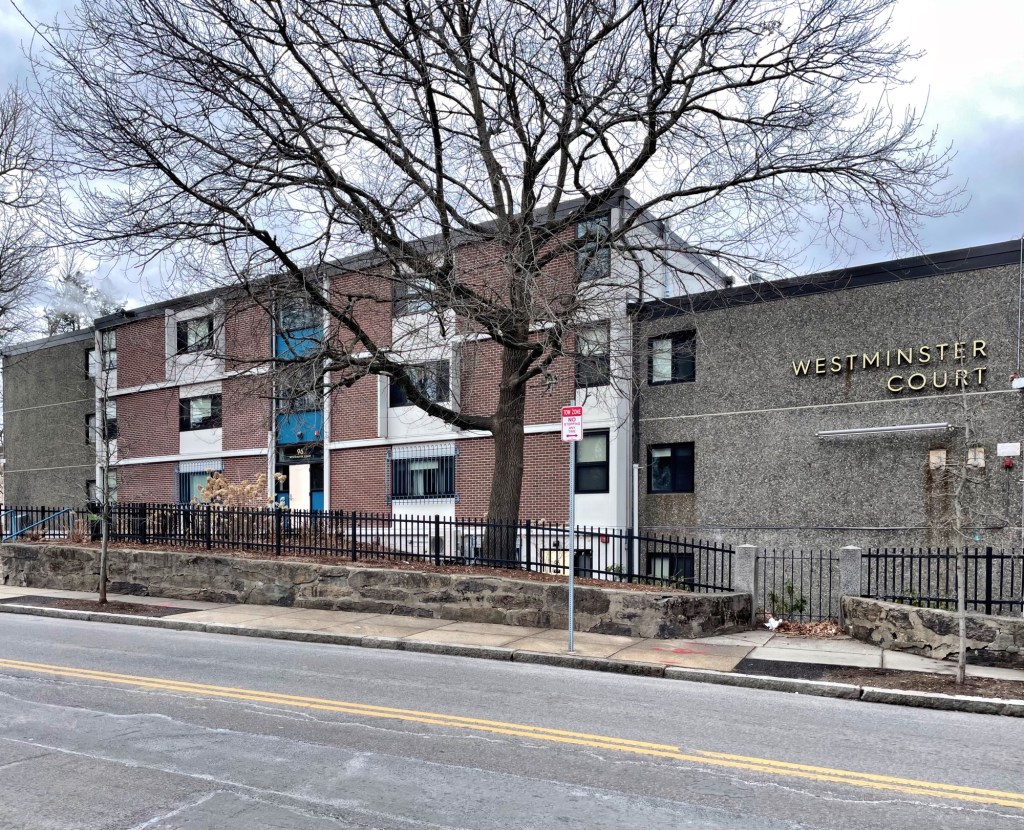
As populations boomed in the decades following the conclusion of WWII and suburbs drew wealthier residents to single-family neighborhoods, city governments were desperate to keep tax dollars in city limits. As a result, many cities instituted a policy called Urban Renewal, where neighborhoods (often with higher percentages of minority or immigrant populations) and historic housing were demolished as a form of “slum clearance” and modern housing centered around the automobile sprouted up in their place. The Washington Park section of Roxbury in Boston was one of the hardest-hit neighborhoods in the 1960s as part of a series of neighborhood plans by the Boston Redevelopment Authority. This housing development, called Westminster Court, was developed on one of the new Urban Renewal parcels in Washington Park. Designed by famed modernist architect Carl Koch, the Mid-Century Modern buildings were constructed in modular units to cut costs and expedite construction time. The buildings utilize precast frames with contrasting exterior panels of brick, exposed aggregate concrete, and aluminum. While many dislike these buildings, it is important to understand the history behind them and how they are part of the complex history of many cities.

Long Wharf Hotel // 1982

In the second half of the 20th century, much of Downtown Boston and the Waterfront areas were blighted with decaying buildings. Seeing tax dollars flee to the suburbs, the City of Boston used Urban Renewal to demolish large areas to erect new neighborhoods and blocks to revitalize the city. Much of it was done with a heavy hand, evicting largely minority and immigrant residents and razing of traditionally walkable neighborhoods for more car-centric districts. The Waterfront was traditionally the economic hub of Boston, with large commercial wharf buildings jutting out into the harbor symbolizing the economy’s strong ties to maritime trade for centuries. Boston Properties was an early developer who saw the potential of the revitalized waterfront, and developed this hotel off Long Wharf. Architect, Araldo Cossutta, (who was originally picked 8th of 8 submissions in a design competition) was ultimately selected to design the hotel, which at first glance may look out of place. However, the building draws cues from the area, evoking the Quincy Market warehouses as well as the attributes of a modern ocean liner on its head. Relatively simple massing with rectilinear and semi-circular fenestration at the lower level rises to a complex series of stepped back balconies, which form a steep gabled roof. To me, its the right amount of recessiveness and boldness in Postmodernism.

Garden Building // 1911

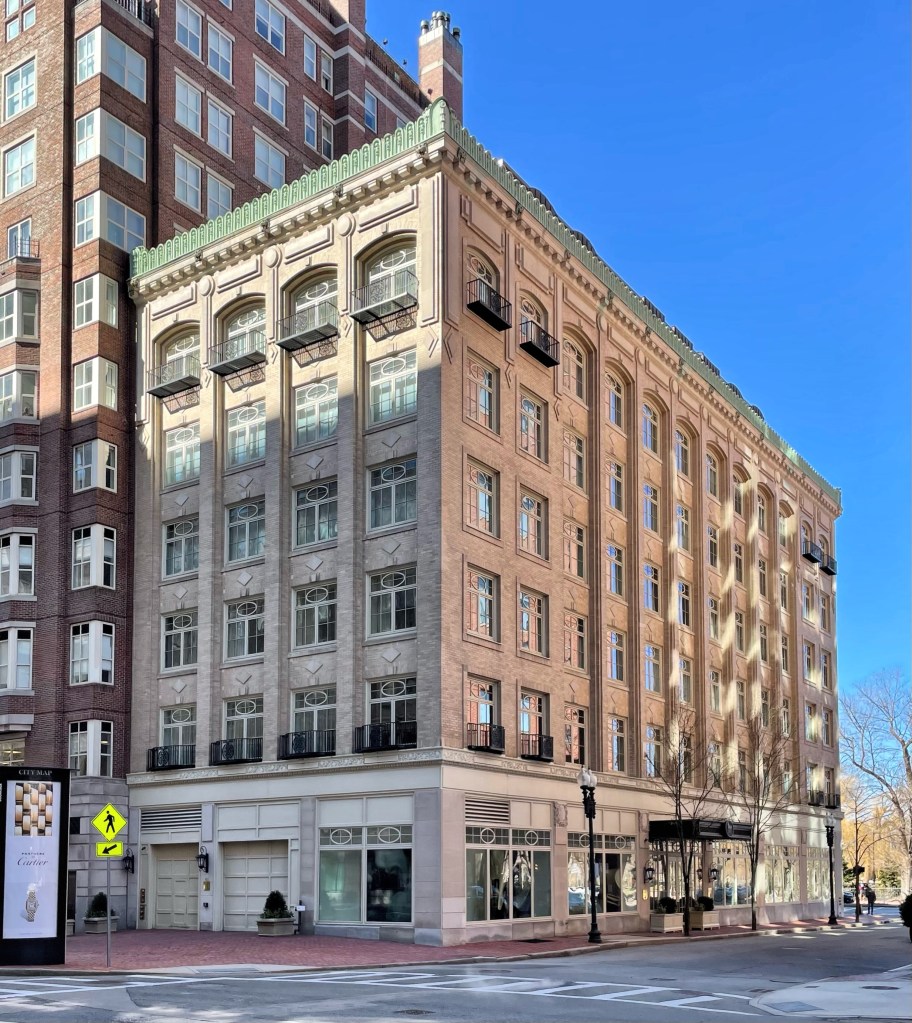
The only building that survived the wrecking ball of Urban Renewal on the stretch of Boston’s Boylston Street, south of the Public Garden was this six-story commercial building, known as the Garden Building. In 1911, architect Julius Adolphe Schweinfurth furnished plans for the new commercial building which was in the Beaux Arts style. The first floor was originally planned for three stores, with the upper five floors containing offices. A recessed penthouse floor served as studio space for artists and photographers with the large windows and skylights, the unobstructed views of the Public Garden didn’t hurt either! When the bulldozers of urban renewal came in the 1970s and 1980s to the area, this building surprisingly survived, and was reincorporated into the larger Heritage on the Garden condo development.

Heritage on the Garden // 1988

Located across Arlington Street from the since demolished Shreve, Crump & Low building (last post), Heritage on the Garden stands overlooking the Boston Public Garden. Heritage on the Garden was a result of a redevelopment initiative known as the Park Plaza Project, one of the city’s many urban renewal projects of the 1960s and 1970s, where buildings, blocks, and sometimes neighborhoods were razed and redeveloped. As part of the city’s effort of dramatic urban renewal, the Park Plaza area was identified as a site for intensive new uses, including hotel and apartment towers ranging from thirty to fifty stories! The impact of these buildings on the Public Garden and Boston Common was considered unacceptable by many residents of the city, with citizen participation helped to require lower-height buildings which would front the iconic Public Garden. In the 1980s, nearly the entire block of Boylston Street between Arlington and Hadassah Way was razed for the erection of the new condominium building, developed by the Druker Company and designed by The Architects Collaborative (TAC). The project was one of the last of the iconic TAC firm, once led by Walter Gropius, who helped bring Modernism to the United States. The Post-Modern style building ranges from five- to twelve-stories tall and is constructed of brick with cast stone, a nod to the historic Boston architecture, but with modern forms and projections. I think it works quite well, but maybe that is because I wasn’t around to see what was there before…