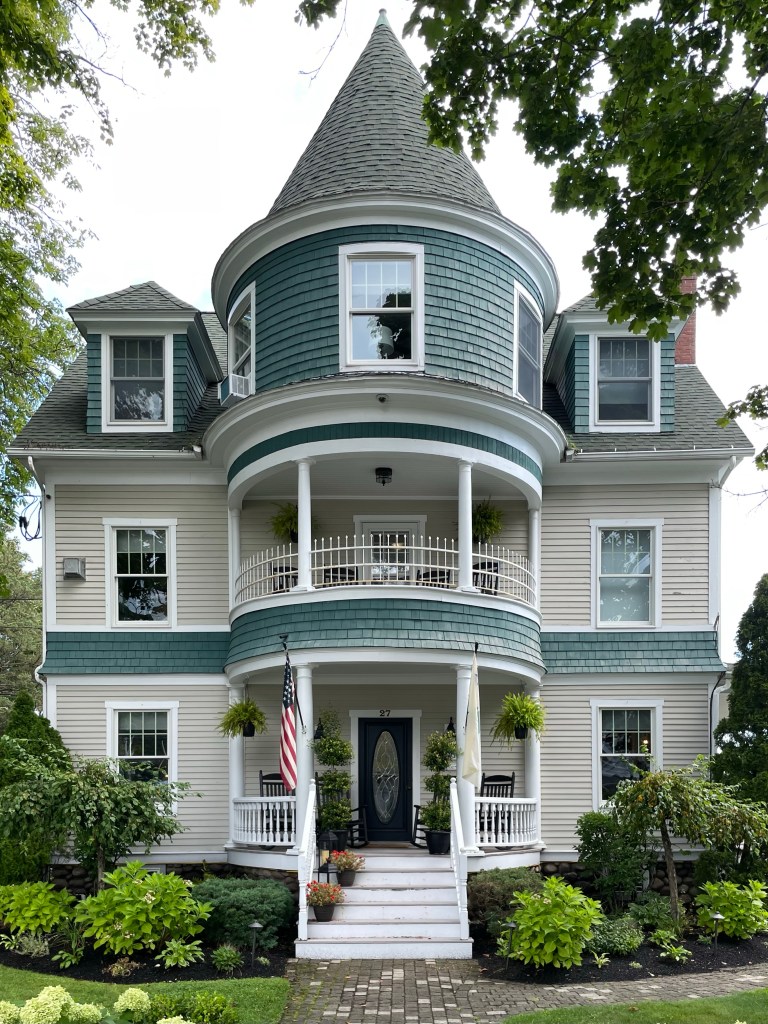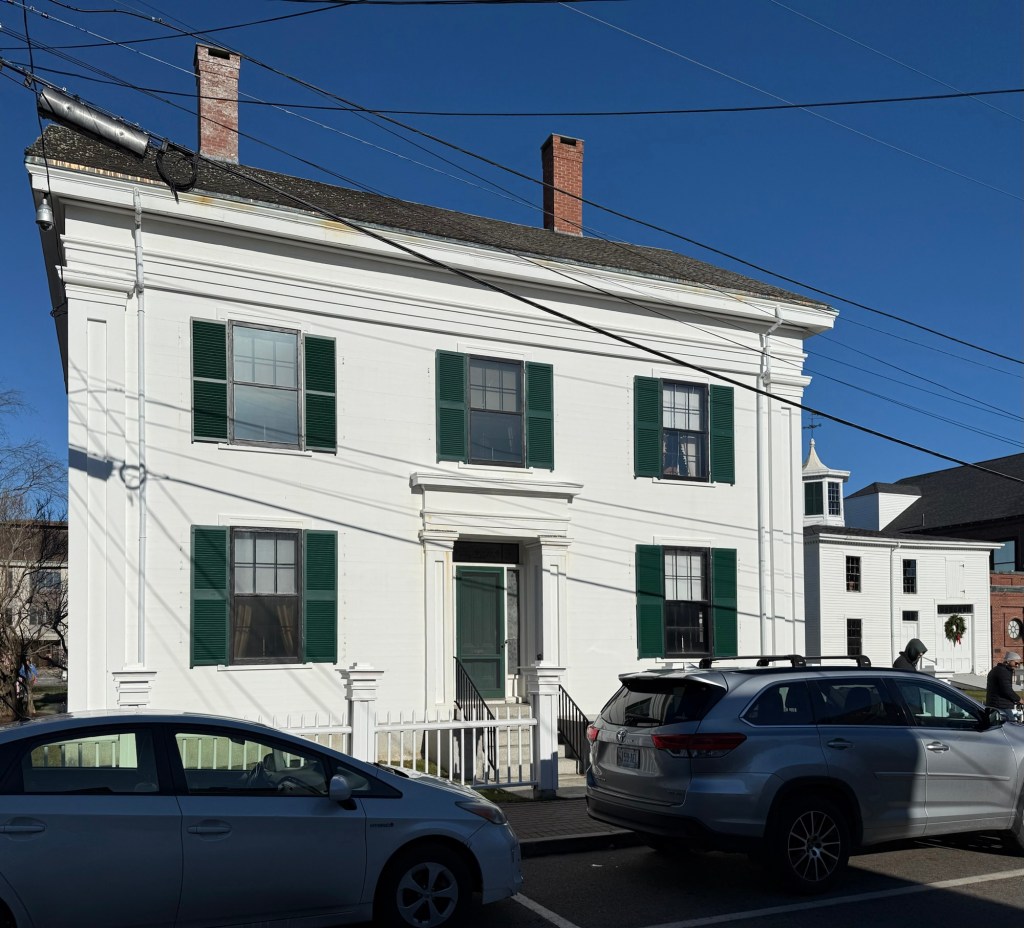
Farnsworth Homestead // 1850

The Farnsworth Homestead is located on Elm Street in Downtown Rockland, Maine, and is an excellent example of a mid-19th century residence in the Greek Revival style. The home was built in 1850 for Rockland businessman William Alden Farnsworth, who gained his income from lime-rock quarries and the Rockland Water Company. Mr. Farnsworth was a leading businessman who helped establish Rockland as the number four port in the United States, largely exporting lime for masonry construction all down the east coast. After William died in 1873, the property was inherited by his heirs, the last of which, Lucy Farnsworth, lived here until her own death in 1935. The 96-year-old Lucy Farnsworth died in the home and in her will, bequeathed the family property and ample funds to establish the Farnsworth Art Museum, and included preservation of the family homestead as a mid-19th century house museum, which it remains to this day. The Greek Revival style house with its flushboard siding and bold pilasters, was recently restored by the museum, along with the carriage house which stands to its east.
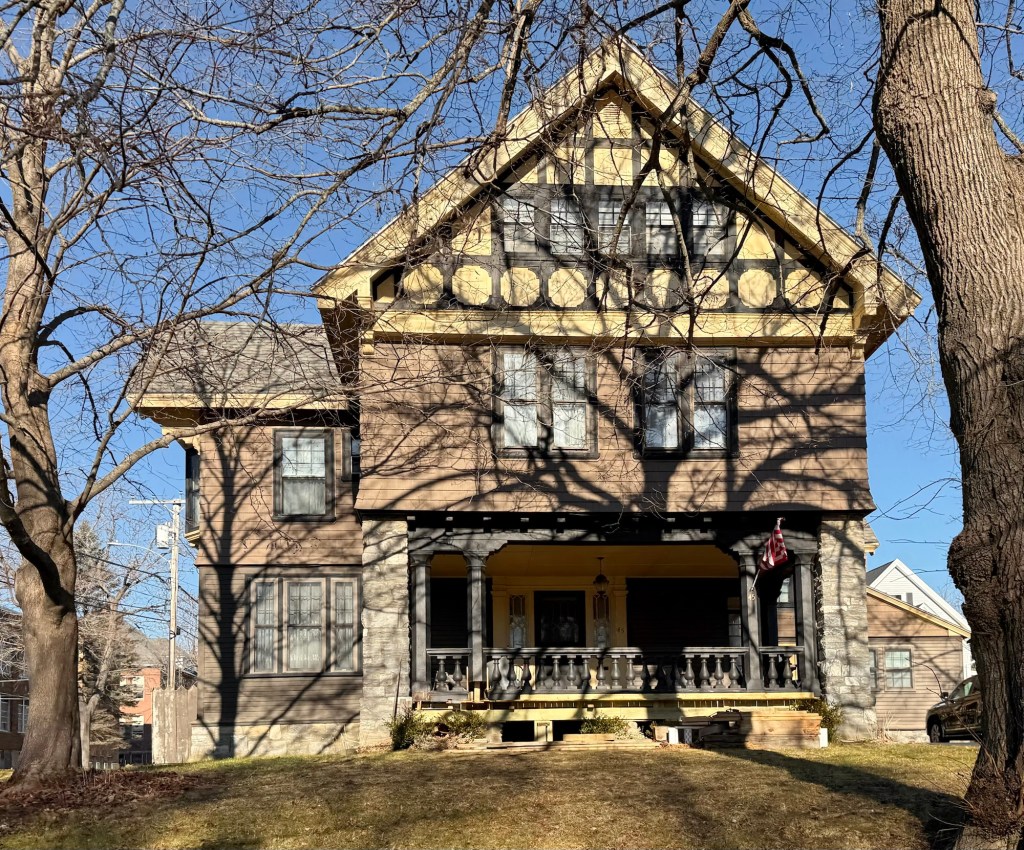
William and Kathleen Fuller House // 1905

This handsome Tudor residence was built around 1905 for William Oliver Fuller (1856-1941) and his wife, Kathleen Stephens Fuller (1869-1948), and can be found at the corner of Beech and Lincoln streets in the finest neighborhood in Rockland, Maine. Although an architect could not be established at this time, the high-style residence features half-timbered gables, an inset front porch framed by stone pillars, and an absolutely perfect color palette. William Fuller was a newspaper publisher, who created his first newspaper, the Rockland Enterprise when he was 18 years old and in high school. He would go on to become the editor and publisher of the Courier-Gazette, the region’s main newspaper. Kathleen Fuller frequented the newspaper herself through her published poetry and columns and would later become an associate editor and co-owner of the paper.

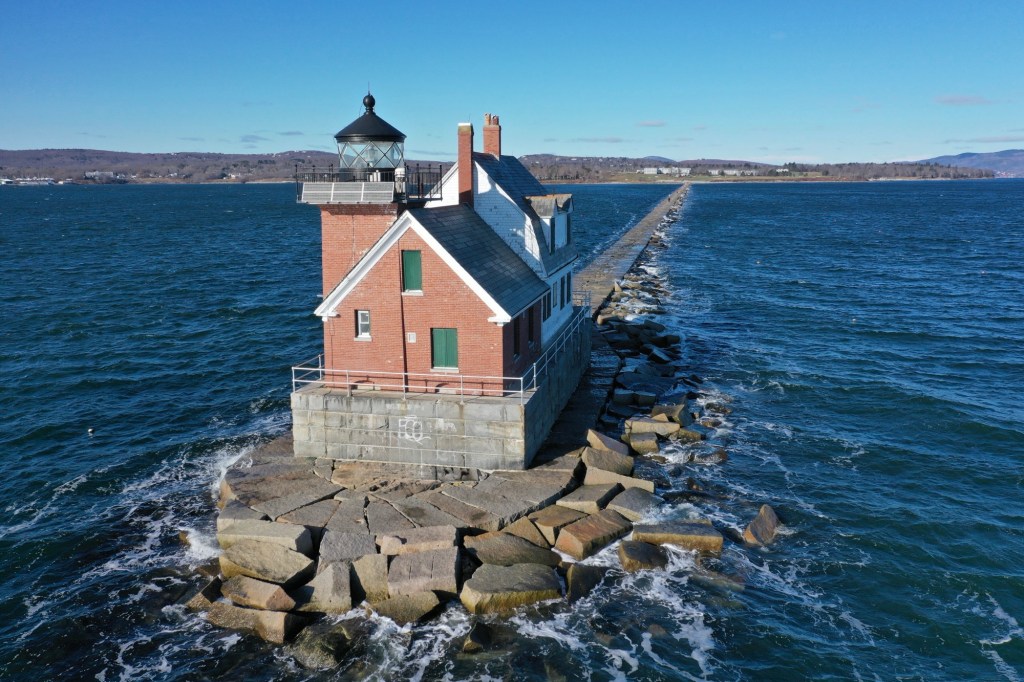
Rockland Harbor Breakwater Light // 1902

The Rockland Harbor Breakwater and Lighthouse is arguably the most iconic structure in the coastal town of Rockland, Maine. As Rockland was a major port and harbor, relying on the transportation of lime and shipbuilding for its economy, protecting the harbor was of paramount importance. Major storms in the 1850s highlighted the need for improved harbor protection, but federal appropriations for a breakwater were not approved until 1880. Between 1880 and 1900 the United States Army Corps of Engineers, under a series of Congressional appropriations, built the breakwater, a 4,364 foot long wall in the harbor built of locally quarried blocks of granite. It is truly a feat of engineering! The lighthouse standing at its end was added in 1902. The iconic breakwater is accessible by those who brave the crashing waves and distance to the end of the nearly mile-long walk out to the lighthouse. The structure is today maintained by volunteers and the City of Rockland.

Atlantic Hall // 1920

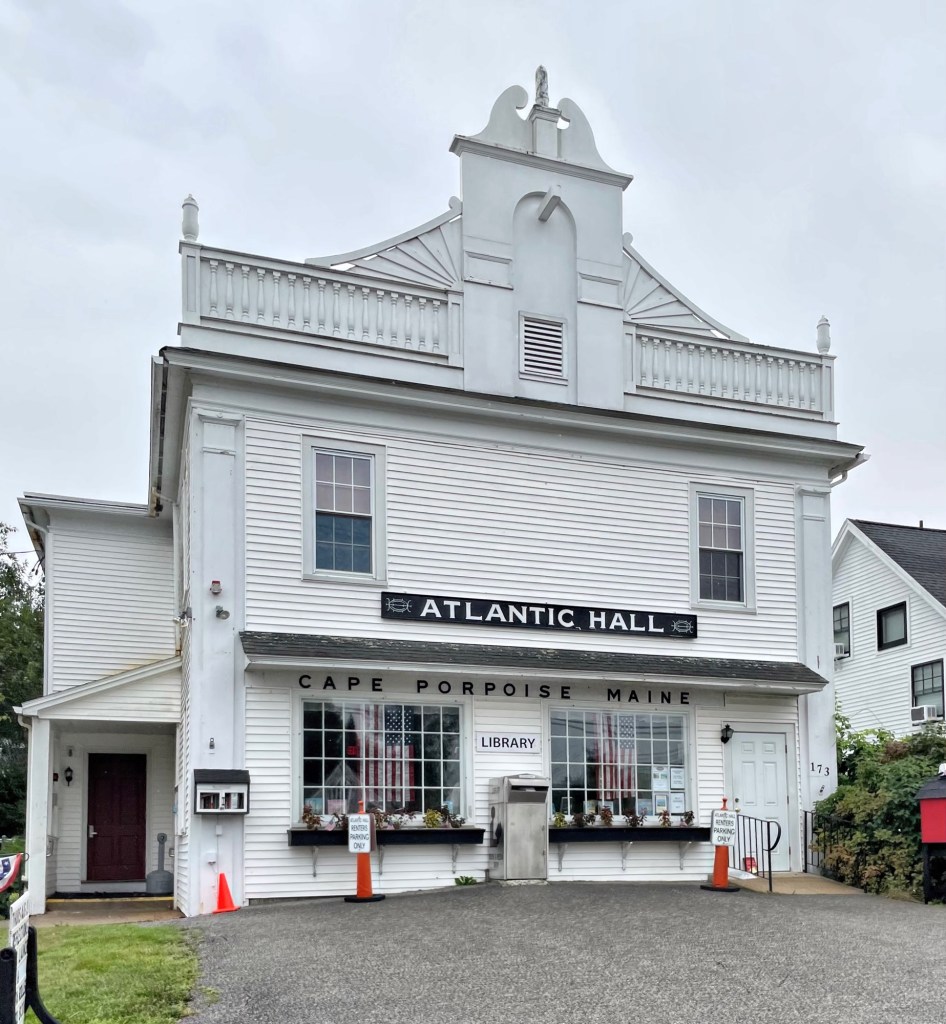
Atlantic Hall is one of the most iconic buildings in the well-visited town of Kennebunkport, Maine. The landmark structure was completed in 1920 as a volunteer fire station, by the Atlantic Hose Company. The volunteer fire-fighting company was founded in April 1906, and different members kept different parts of fire fighting equipment in each of their barns without a consolidated station. With the advent of the automobile, the community raised funds and purchased a Chevrolet hose truck, but had no station to put it. Without having the town pitch in money, residents (both permanent and summer “rusticators”) donated funds and a central location in Cape Porpoise was selected as a site for the new station. Construction started on a modest building in 1914, but was halted during WWI. After the war, local resident, Marion Goodall Marland hired the well known firm of Kilham, Hopkins and Greeley to furnish updated designs for the station, in a more elaborate version of the Colonial Revival style, fitting for the charming town. The building opened in 1920 with an engine room at the first floor and a meeting hall on the second floor. It was in 1958 that the Atlantic Hose Company outgrew its station at Atlantic Hall, and a new fire house was built across the street. Atlantic Hall was renovated for library and event use and has remained a significant piece of Cape Porpoise ever since!

Portland Mariner’s Church // 1828

Talk about a unique church! The Mariner’s Church in Downtown Portland was built in 1828 and is modeled after Faneuil Hall in Boston and East India Hall, Salem, Massachusetts; and was the first Greek Revival building in Portland (with some lingering Federal flair). It also for many years was Portland’s largest building! Its concept was that of a place of worship and education center for seamen of the port city between their voyages on the open sea. The ground floor was designed to house shops for merchants whose rent would support and maintain the building. The structure is virtually unchanged from how it looked nearly 200 years ago and showcases the importance of the sea to the port towns and cities of New England!

Woodman Block // 1867

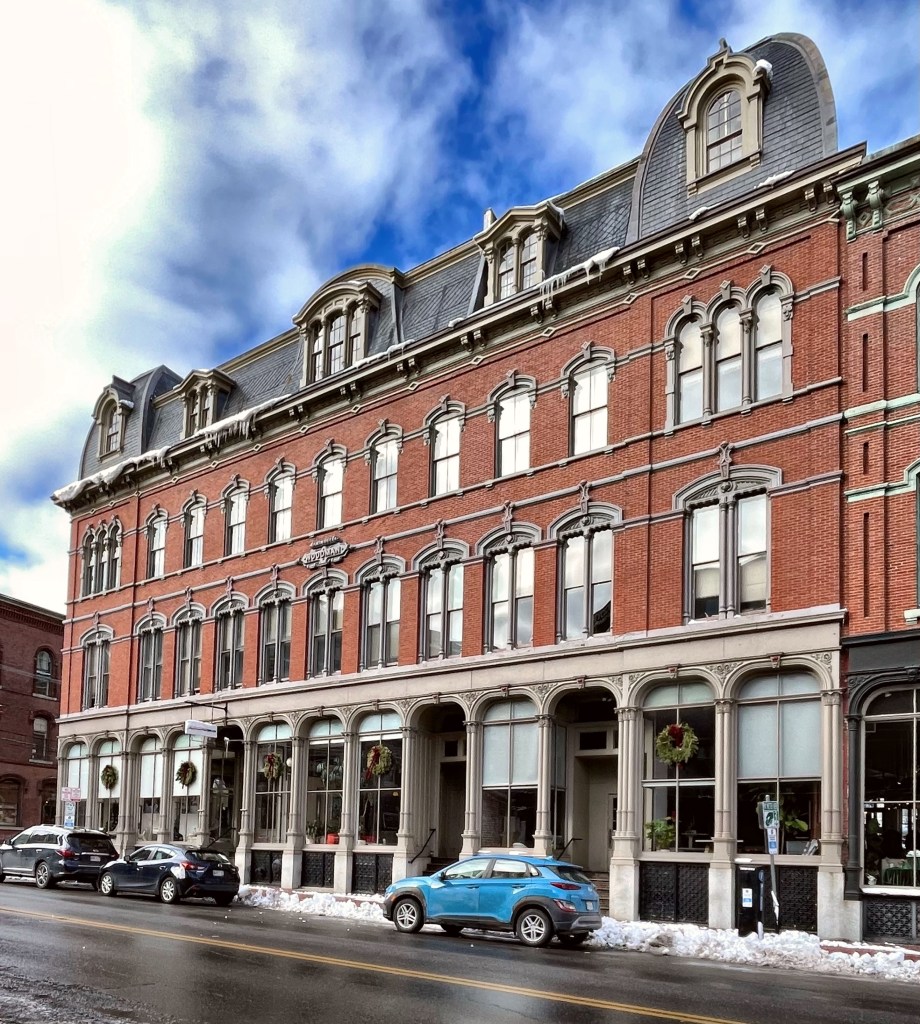
Located next-door to the Rackleff Block, this high-style Second Empire commercial block in Downtown Portland, Maine really turns heads. The Woodman Block (like its neighbor) was built in 1867 from plans by architect George M. Harding, who designed the building for George W. Woodman, a drygoods dealer. This stunning commercial block originally housed Woodman’s dry goods firm, Woodman, True, and Company. It later held a druggist and medicine company. The building retains much of its original architectural character minus the iron cresting which once capped the mansard roof. They don’t make them like they used to!

Portland Central Fire Station // 1924

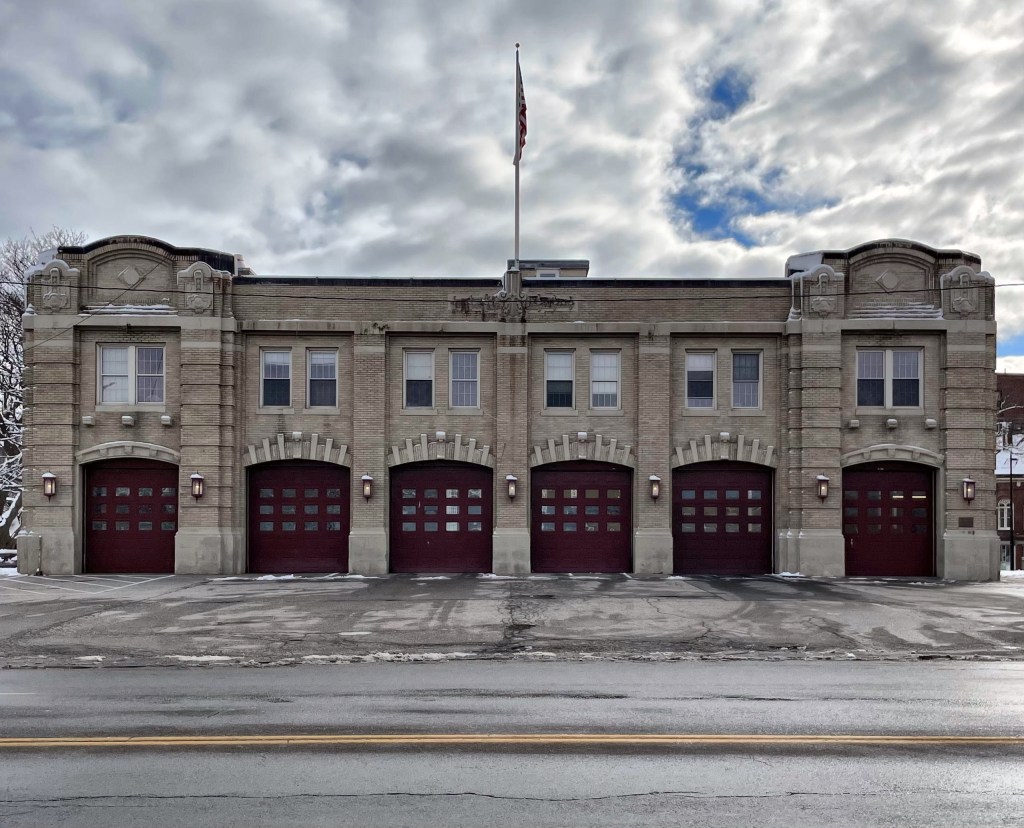
The Central Fire Station in Portland, Maine was built in 1924 and designed by William R. Miller & Raymond J. Mayo, architects located at 465 Congress. Lester I. Beal, a draftsman employed by Miller & Mayo, participated in the design. It was erected to contain the administrative offices of the Portland Fire Department, as well as to house fire engines and other apparatus of the inner city district. Portland has one of the oldest fire departments in the nation, 1768, when Falmouth appointed fire wardens to look for fires at night and alert the residents. In 1786, the citizens of Falmouth formed a separate town in Falmouth Neck and named it Portland, after the isle off the coast of Dorset, England. After the Great Fire of 1866 destroyed much of Downtown Portland, a new central station was built in 1867. The structure was deemed obsolete with new, large ladder trucks replacing smaller engines. The entire downtown block was demolished for the current Central Fire Station for the present building. The small building is at the center of a large lot, which is likely a candidate for redevelopment in the future (after some adjacent surface parking lots are developed).

Lobster Point Lighthouse // 1948

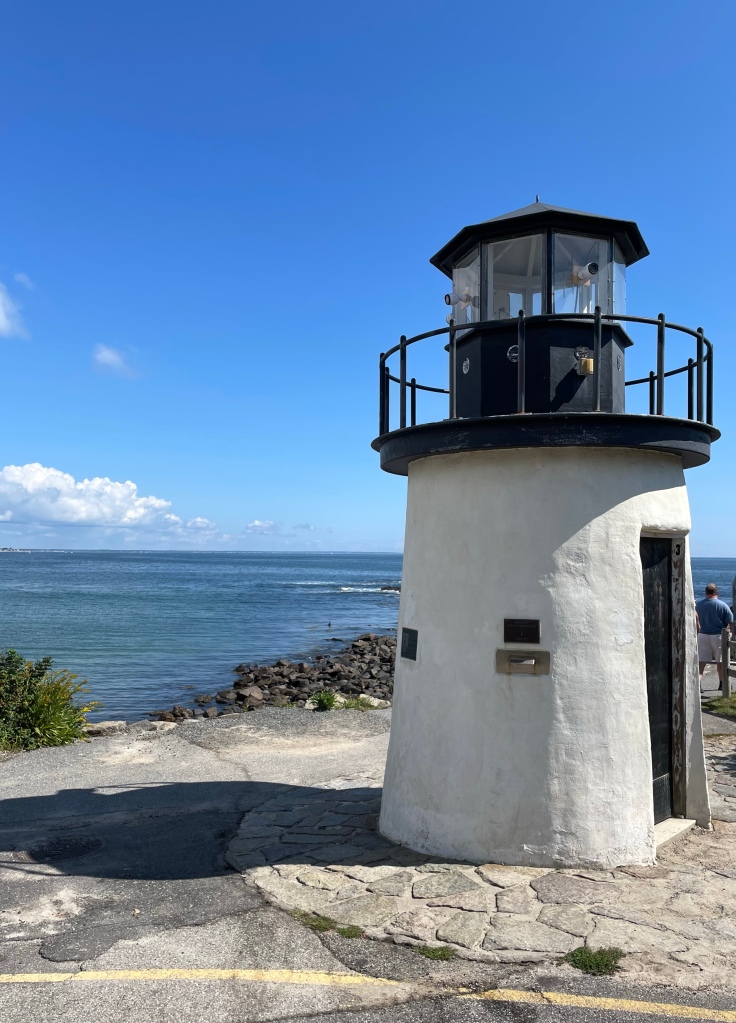
When you walk along Ogunquit’s Marginal Way cliff walk, it is missing one thing, an iconic Maine lighthouse… or is it? This mini lighthouse on the route always has people lining up to snap a picture and its quirky roadside attraction appeal is undeniable. The original Lobster Point Lighthouse was constructed in 1948 by Winfield C. Littlefield of the local family who first settled in the town. The “lighthouse” was designed by Grover S. Perkins. Much like the real lighthouses on the coast, the original structure was badly beaten by the salt air and high winds and parts of the structure were replaced. Notably, in 1993, the top (lantern) was replaced with fiberglass. Additionally, in 2009 the structure was upgraded, all from donations. The iconic roadside lighthouse will continue to ‘light the way’ for the droves of tourists and locals alike who navigate Marginal Way.

Perkins Cove Drawbridge // c.1941

The Perkins Cove wooden footbridge in Ogunquit, overlooks one of the loveliest little harbors in the Maine coast and spans the narrow entrance to the port. The iconic bridge is perhaps the only double-leaf draw-footbridge in the United States and luckily for us, is right here in Maine! The small channel was once very shallow, but in about 1940, the cove was dredged to make room for larger fishing vessels. A new drawbridge was soon added to allow access to the small peninsula while also permitting fishing vessels to pass underneath. The bridge has been modified a couple times since it was constructed in the early 1940s. The new bridge spurred development of some of the area which was already a mix of fishing shacks and artist studios. Since then, many of the original fish shacks have been converted to restaurants or shops due to the high value of the land now. It was also announced this year that the bridge would soon be demolished and replicated with Federal funds with a new harbormaster building. Hopefully the replacement will closely match the existing, which is a huge draw (pun intended) for the tourists who flock to the area.

Nellie Littlefield House // 1889

One of the most charming buildings in the quaint village of Ogunquit Maine has to be this Victorian inn, located right on Shore Road, the town’s main thoroughfare. The house had its beginnings in 1889 when Joseph H. Littlefield constructed it for his wife Ellen “Nellie” Perkins and their family of four children. Joseph was a member of the esteemed Littlefield Family, which goes back to before Edmund and Annis Littlefield and their six children traveled from England and settled in the town of Wells in 1641. The family was prosperous in the area, and Joseph used his wealth and position in local affairs to develop summer cottages and buildings at the beginning of the town’s large development boom in the late 19th century and early 20th, catering to summer residents and tourism. The Littlefield House was passed down to Joseph and Nellie’s children after their passing, last occupied by Roby Littlefield (1888-1988), who served in local and state politics. It was Roby who was instrumental to establishing the Ogunquit Beach District, which allowed the government to acquire the beachfront in Ogunquit, making it public. The old Littlefield House is now an Inn, known as the Nellie Littlefield Inn & Spa, and it retains so much of its original charm.