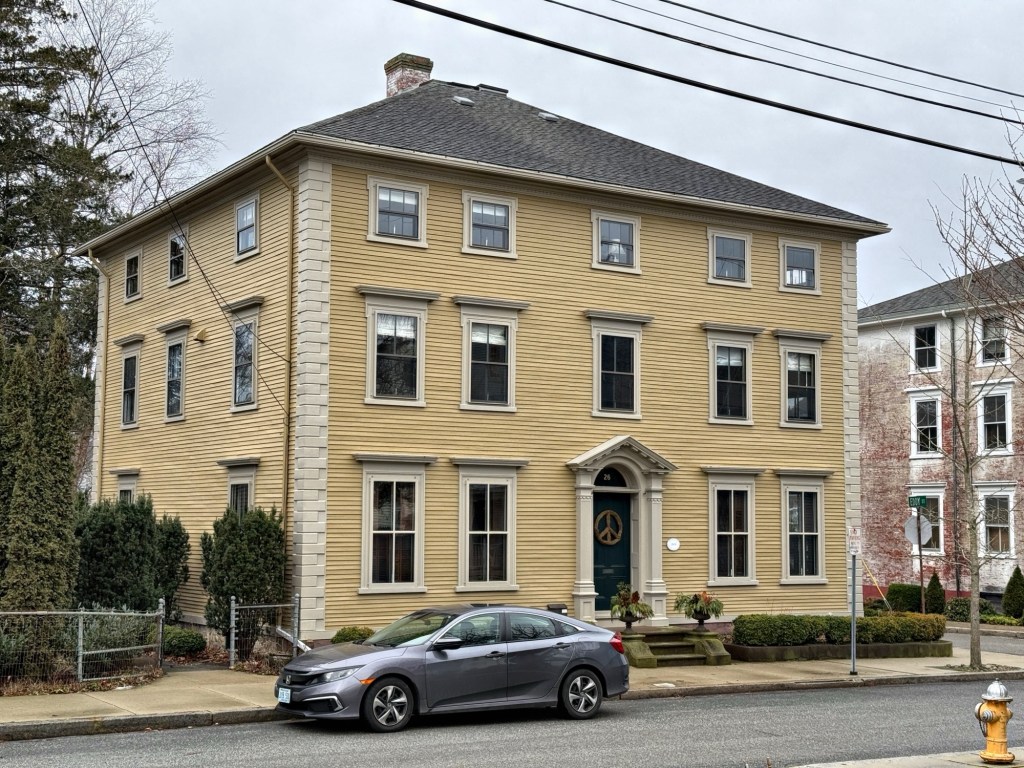
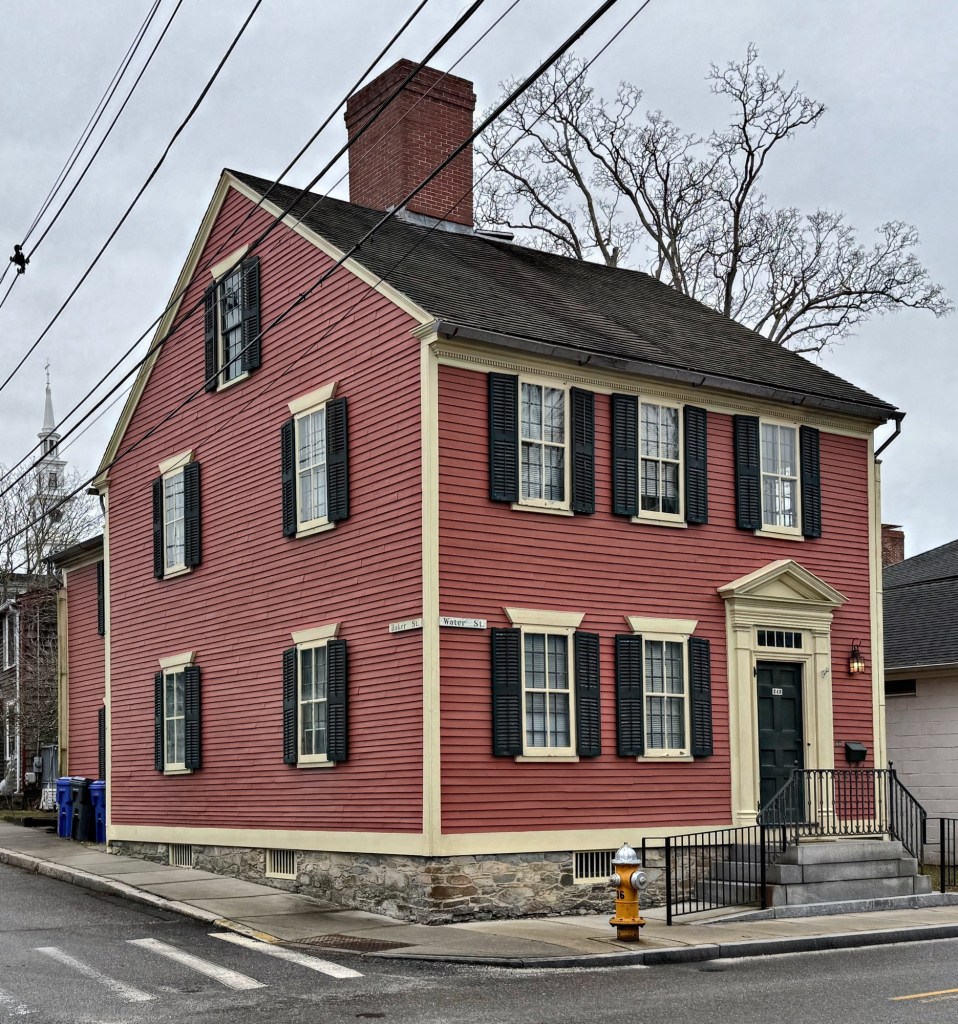
Governor Lyndon House // 1751

One of the more significant old homes in Warren, Rhode Island is this gambrel-roofed Georgian residence. Built in 1751, the home was occupied by Josias Lyndon (1704-1778) his wife and enslaved Africans he purchased in Rhode Island. He had no children. Lyndon worked as Clerk of the Assembly for the colony and in 1768, he was appointed Rhode Island’s last Colonial Governor, serving until 1769. He declined re-election and served as chief clerk for the General Assembly of the Superior Court of the County of Newport, until his death from smallpox in 1778. Josias enslaved Caesar Lyndon in this house. Caesar was a highly literate African man enslaved by Josiah Lyndon who carried out Lyndon’s business, acting as both a purchasing agent and a secretary. Josias allowed Caesar to marry, and he did marry to a Sarah Searing. It is unclear what happened to Caesar, Sarah and their children, but the Lyndon House lives on as a visual reminder of the complexities and harsh reality of slavery in New England, many often overlook.

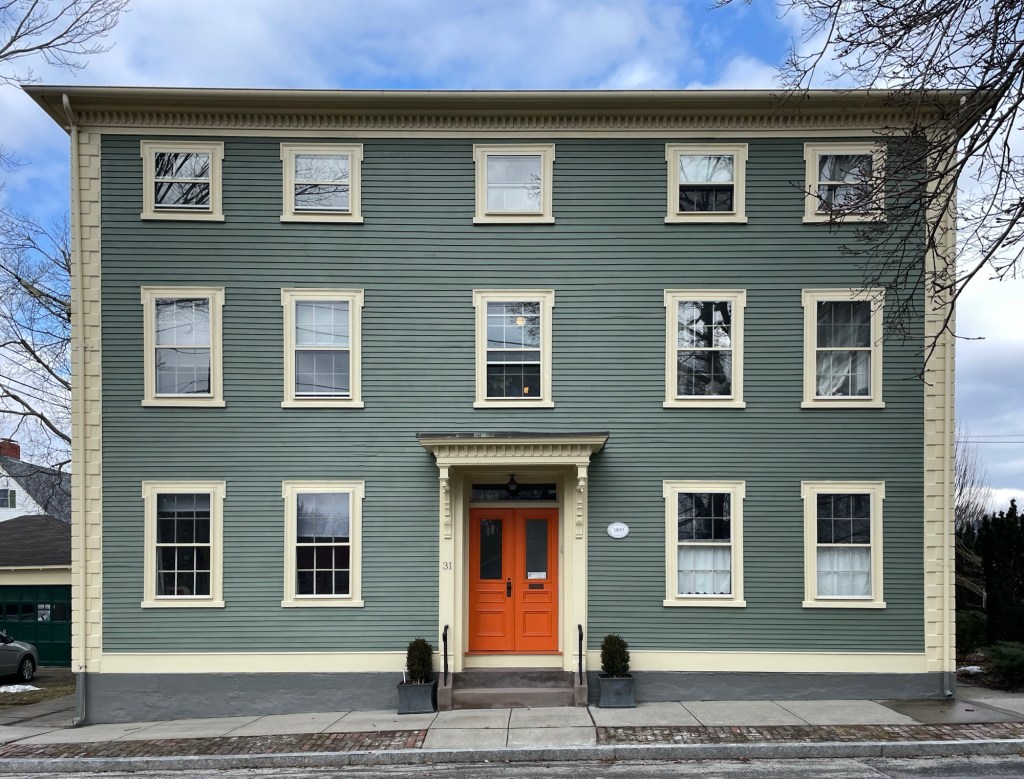
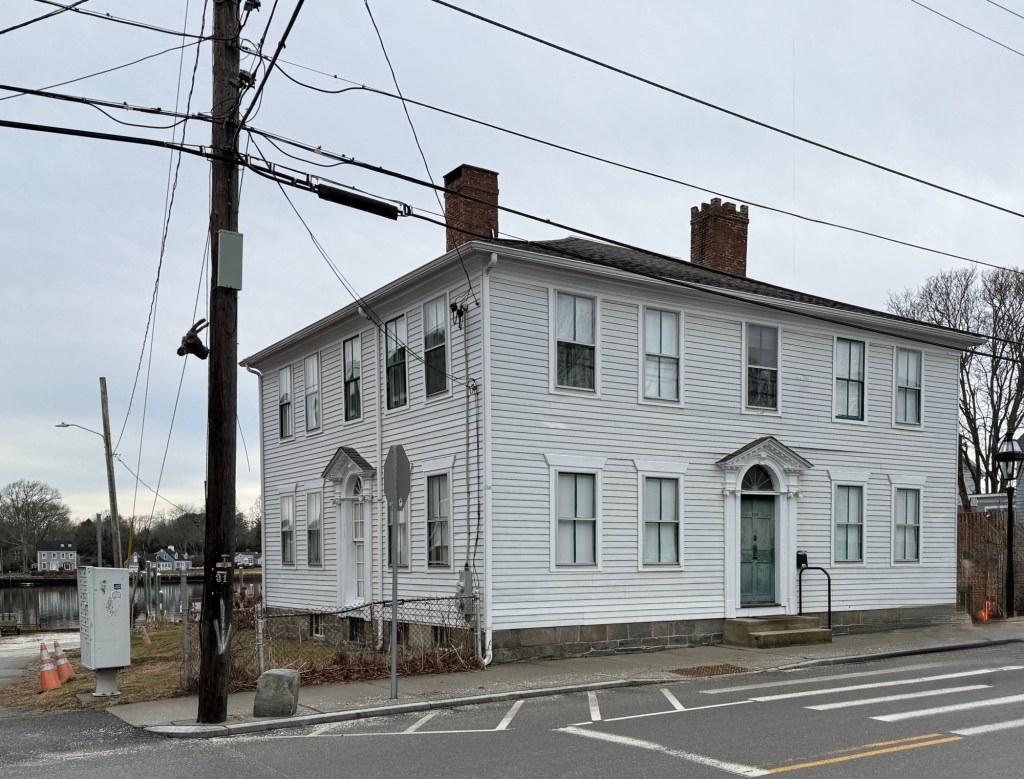
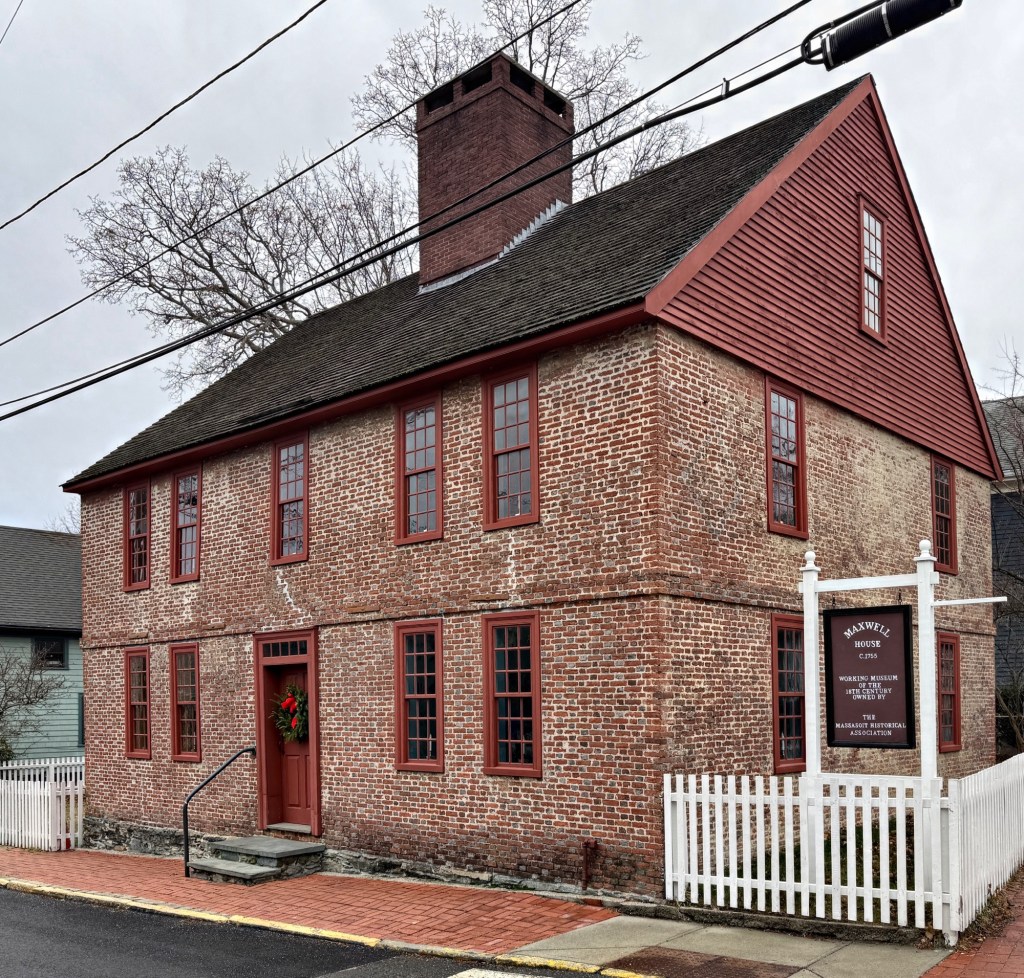
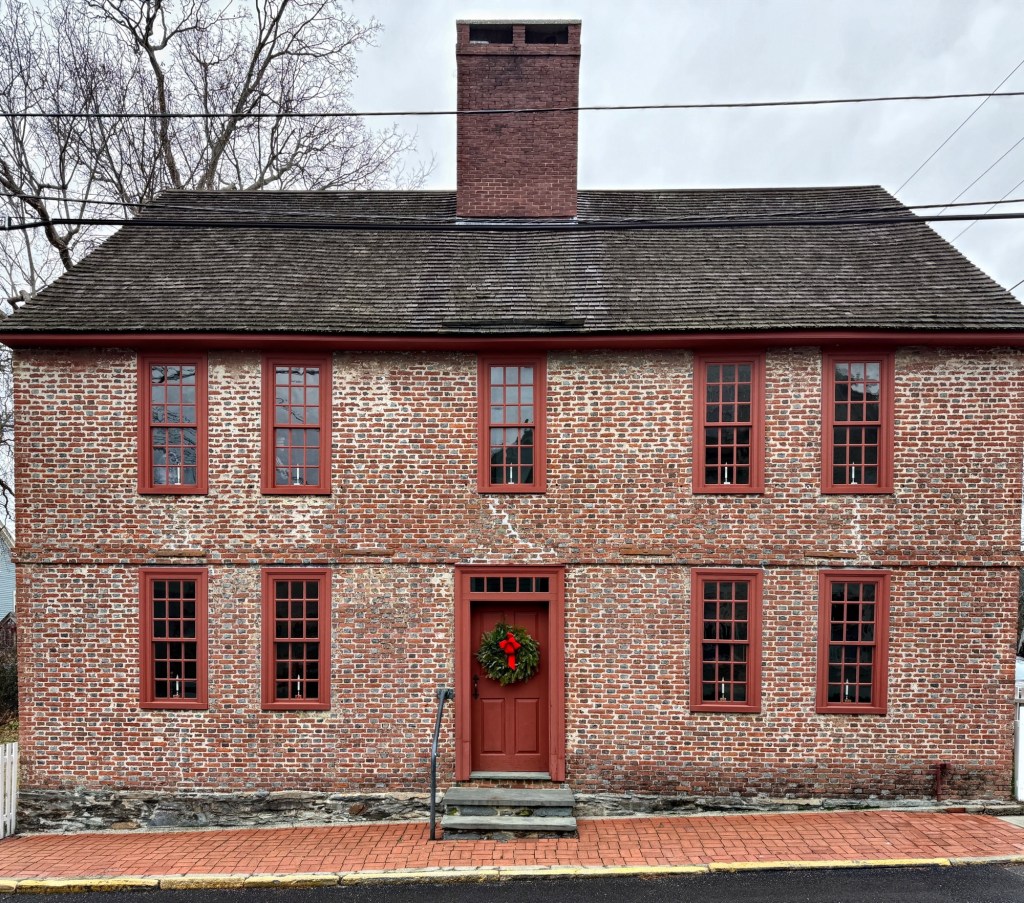
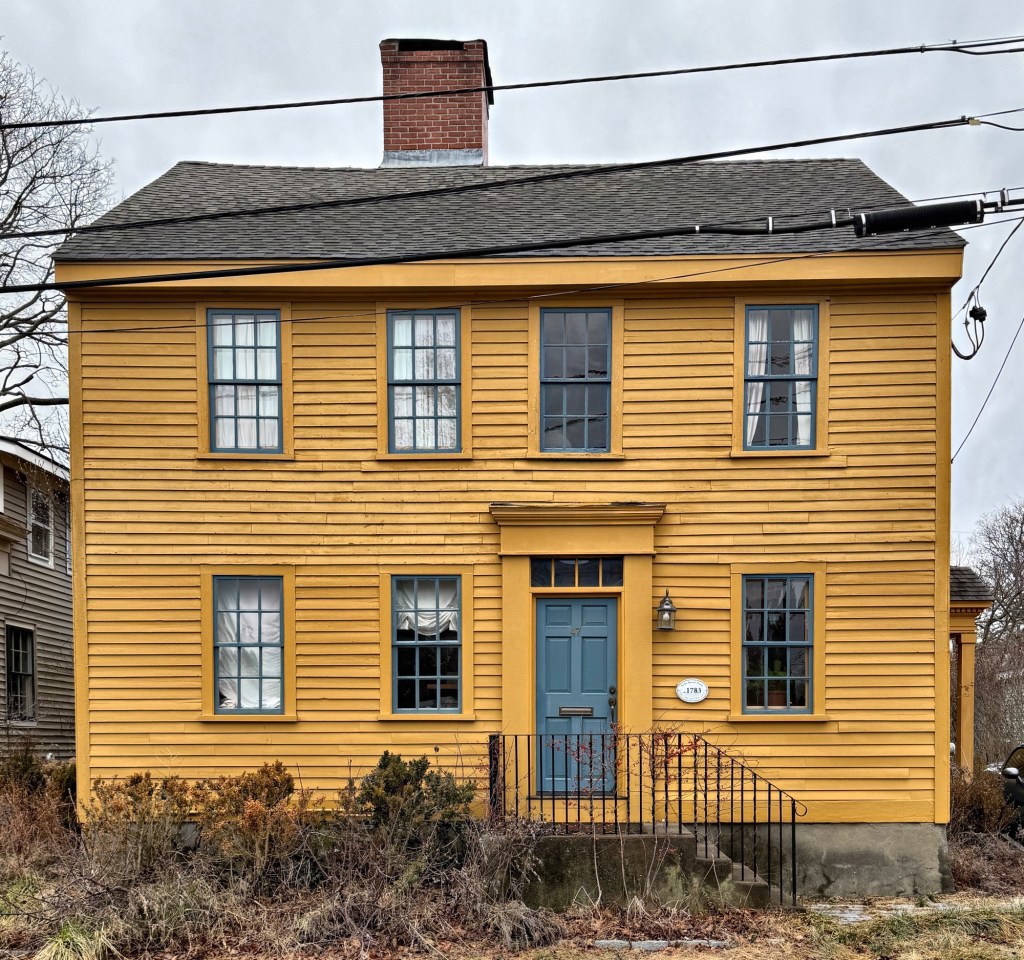
Cole-Richmond House // c.1740

This large house in Warren, Rhode Island (according to its house marker) was built around 1740, but it must have been relocated to this site or been built later as the street it is located on was initially laid out in 1790. The large, two-story house exhibits a large central chimney and five-bay facade and has recently been restored. It looks great! According to sources, the property was owned by members of the Cole Family, a prominent local family who engaged in the sale and transportation of African slaves in the 18th century. The house was eventually owned by Charles Richmond in the mid-19th century.

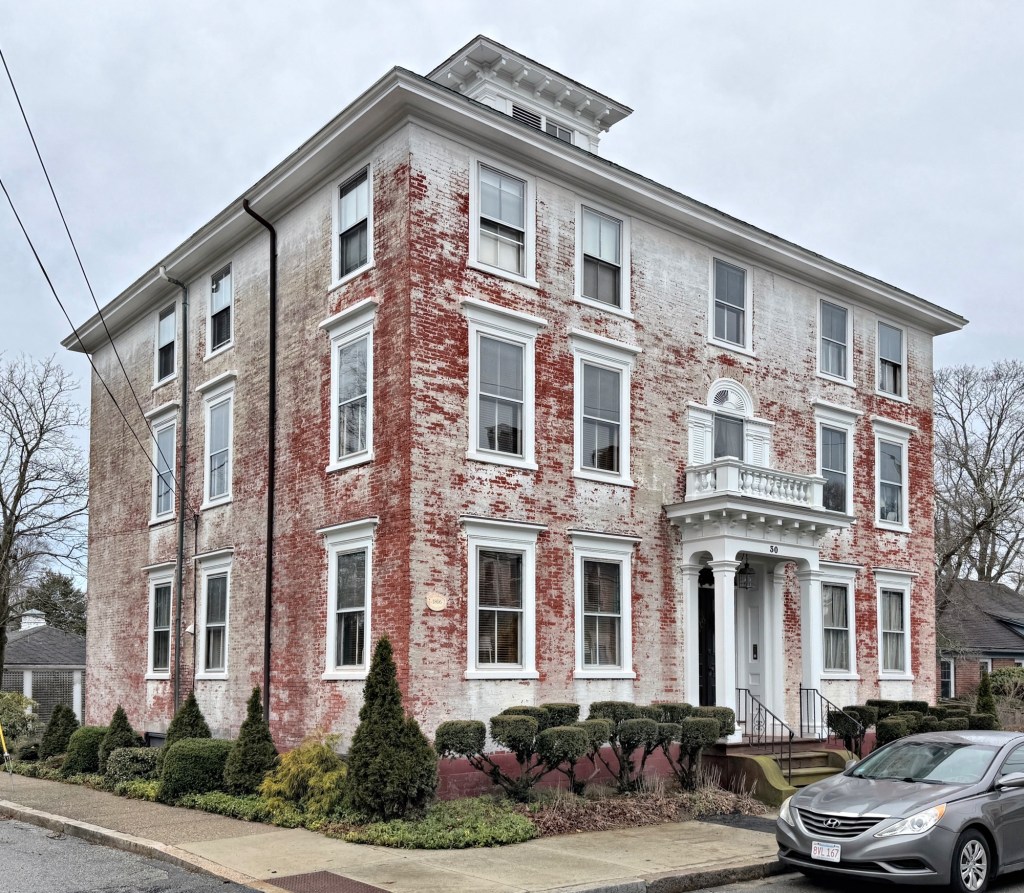
Hazard-Gempp House // c.1800

Opposite the Liberty Street School in Warren, Rhode Island, you will find this beautiful painted brick Federal period home. The residence was built around 1800 and owned later by George Hazard, of the prominent Hazard Family of Rhode Island. The Federal style house exhibits a three-bay facade with slightly projecting central pavilion with a semi-circular fanlight transom above. By 1915, the house was owned by Louise and Gottlieb Gempp, a German-born couple who settled in Warren and ran the German-American club in town.

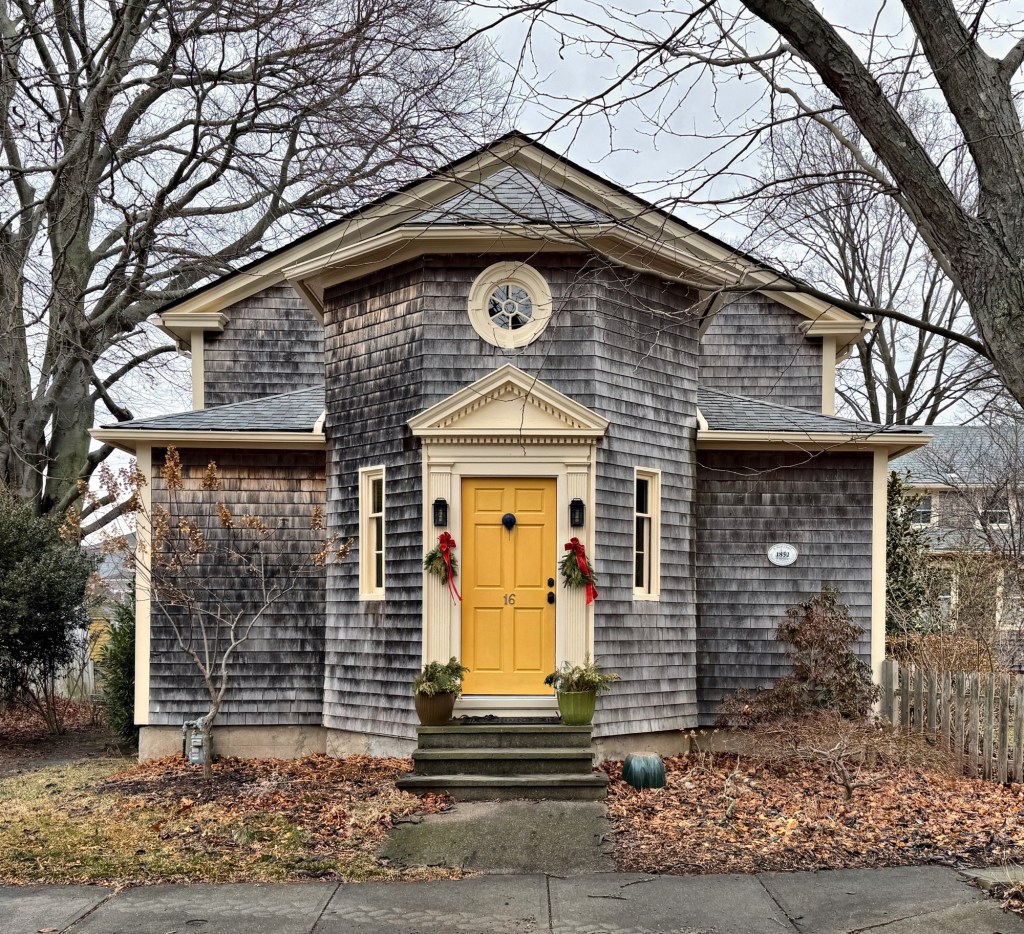
St. Mark’s Chapel // c.1855

This charming old chapel was built in the 1850s in Warren, Rhode Island, to accompany the larger St. Mark’s Church. The building was relocated from the lot of the main church across the street to its current location and converted to a parish house. In the 1890s, the building was covered in wooden shingle siding and an addition was added to the rear, giving the building its current appearance. Today, the former chapel is used as a residence, and is very well maintained by the owners.

Liberty Street School // 1847

The Liberty Street School building in Warren, Rhode Island, was built in 1847 and beyond its clear architectural significance, it is significant as the third high school building constructed in the state, and is the oldest survivor of its type. Architect Thomas Alexander Tefft, one of the nation’s first professionally trained architects, designed the school when he was just 21 years old! The young architect would later take an excursion around Europe in the mid 1850s, but would fall ill with a fever in Florence, Italy and he died there in 1859. He was just 33 years old when he died. The Liberty Street school building was eventually closed and has sat largely vacant for years. A recent proposal to restore the building and add onto the rear for condominium units has been a site of contention for the town in recent years.

Smith-Waterman House // c.1820

While Warren, Rhode Island is best-known for its 18th and early 19th century houses, there are some great Victorian-era homes to be discovered. This is the Smith-Waterman House on Broad Street, which was apparently originally built around 1820 on a different site and relocated here by around 1860 by Nathaniel Phillips Smith. After Smith’s death in 1872, the property was owned by John Waterman, the Treasurer and General Manager of the Warren Manufacturing Company in town. Mr. Waterman undertook a massive renovation to the house, more than doubling its size and adding Italianate style trim details, the porches, and the 3 1/2-story tower off the rear.

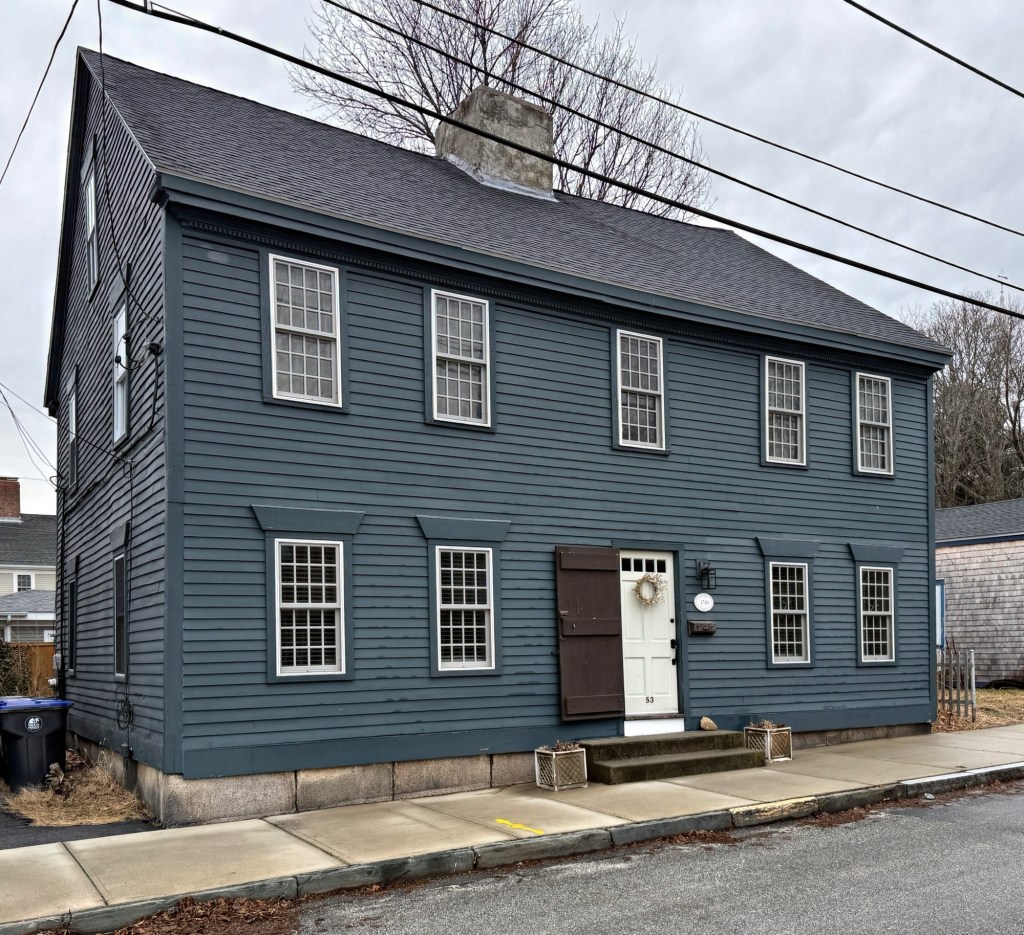
Rufus Barton House // 1782

Warren, Rhode Island is an often overlooked town for tourists, making it my favorite hidden gem in the Ocean State. The town is home to a bunch of Colonial-era homes, stunning institutional buildings, and industrial sites, oh and a lot of local businesses and restaurants. This charming house was built in 1782 for Rufus Barton and his wife, Prudence Cole. Rufus Barton sold the property to Nathan Burr for $775 in 1797 and the family moved to New York. Nathan Miller Burr sold the home to William Eastabrook two years later. Captain Eastabrook/Easterbrook had just returned from an illegal* slave voyage on the “Betsey” to Africa that resulted in the enslavement of 79 Africans who were sold into slavery in Havana, and purchased this home soon after with money he earned on that voyage. The new owners have done an amazing job restoring the house and telling the full story of the ownership, a task not many want to undertake with such complex and troubling past, but it is important!