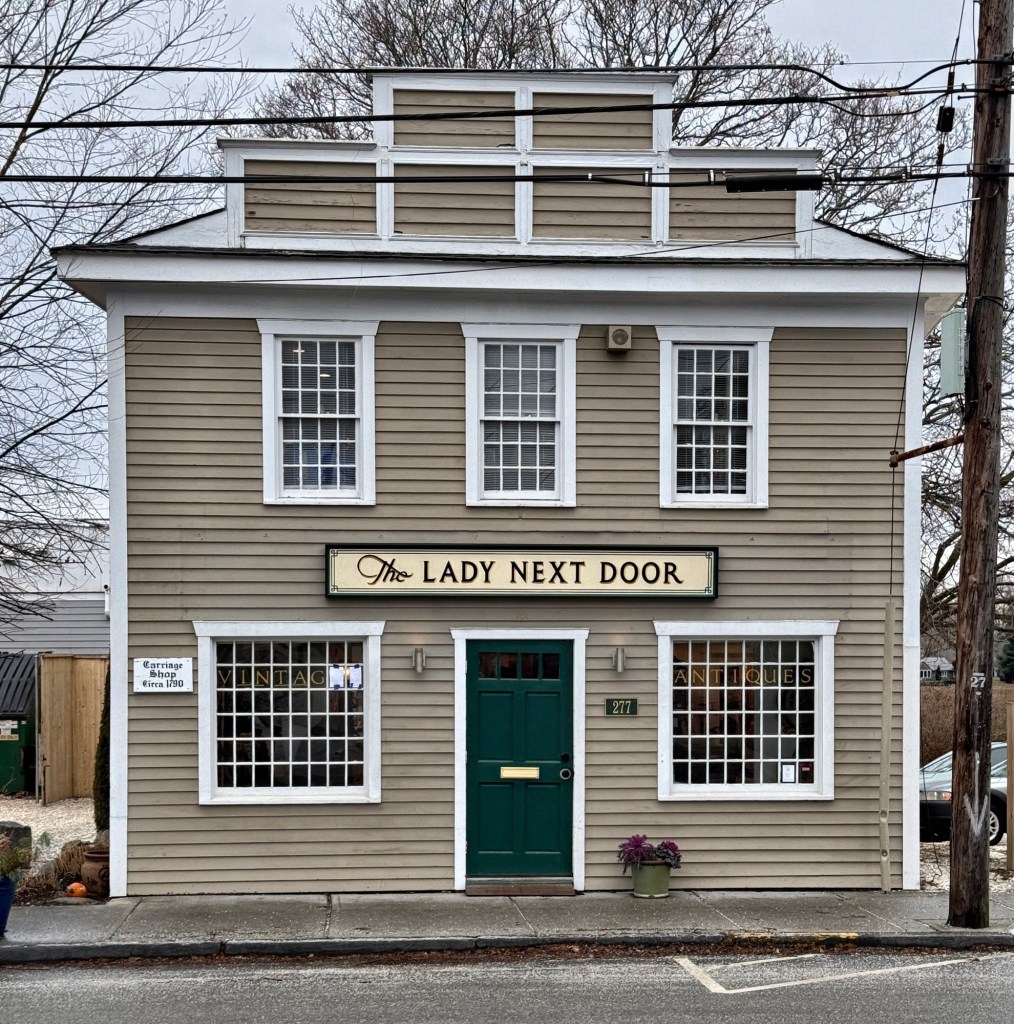
The Old Carriage Shop // c.1790

The old Carriage Shop on Water Street in Warren, Rhode Island, is an early and surviving industrial building from the late 18th century that adds to the charm and history of the great waterfront town. The two-story building has a three-bay facade with a center entrance and 48-pane fixed sash windows on the first floor and 12-over-12 sash windows on the second floor. The stepped parapet masks the low gable roof of the building behind that extends far back in the lot. The building was a workshop and paint shop for Gardner & Hoar, builders and carpenters, in the mid-19th century, and later as a blacksmithing shop and carriage shop before the turn of the 20th century. Luckily for us, the building has been preserved and while not finding a place in architectural journals, the building is an important remaining building that strongly contributes to the character of the town.
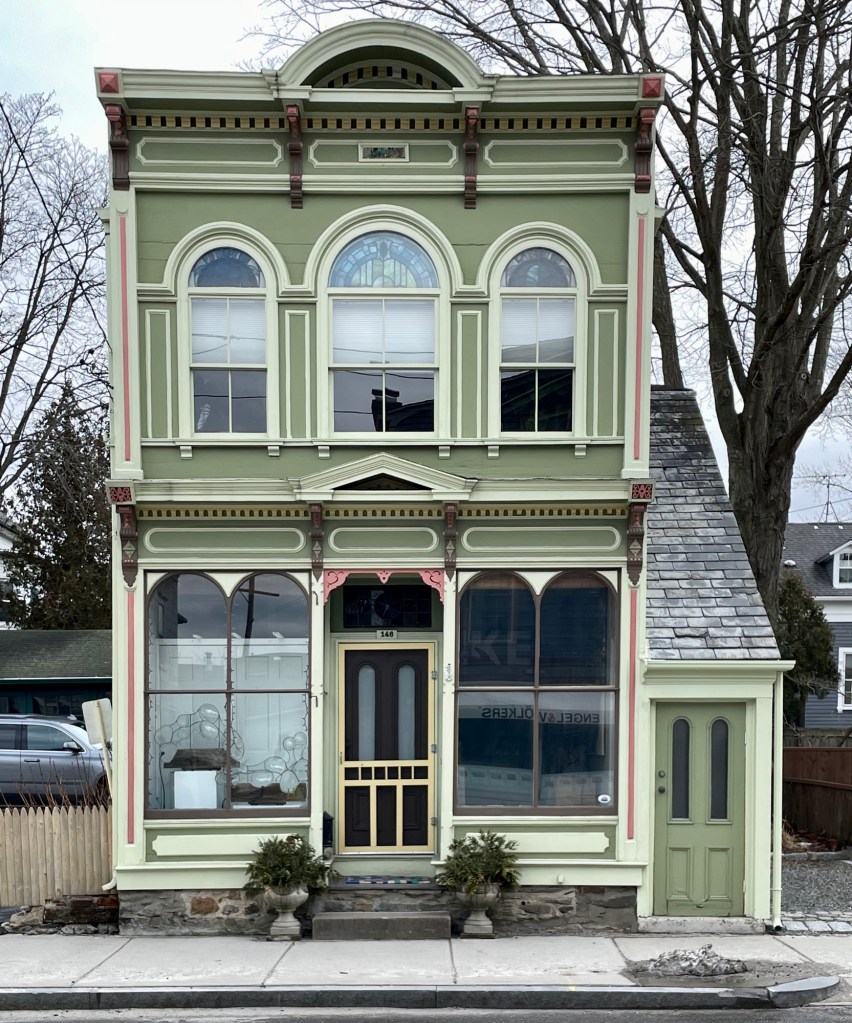
Hall’s Block // 1883

This diminutive commercial building on Water Street in Warren, Rhode Island stands out as one of the state’s best examples of a historic Victorian-era wooden commercial building, and its preservation is notable. The late-Italianate style wooden block dates to 1883, and exhibits its original wooden storefronts, second floor round arched windows with stained glass, and ornate detailing including the brackets, parapet and period-appropriate paint colors which allow those details to pop. The shop was owned in its early days by the John C. Hall, a carpenter who built the house next door. The building was used as an antique shop on the ground floor with a studio for author and illustrator, David Macaulay on the second floor. These types of smaller-scale commercial spaces are some last remaining (relatively) affordable spaces for small businesses to operate, and they add so much intrigue to the streetscape, especially compared to suburban cookie-cutter banks and stores.

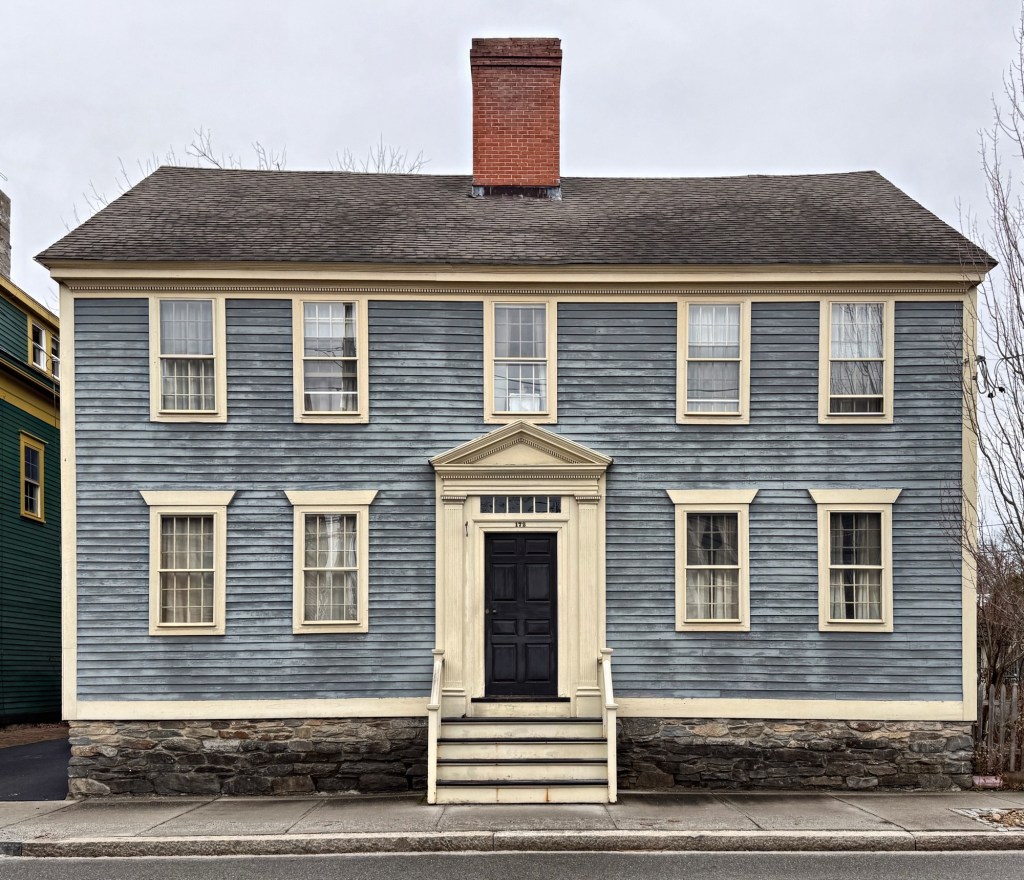
Hoar-Hall House // c.1770

This stately two-story, five-bay Colonial house at 172 Water Street in Warren, Rhode Island, is significant as a well-preserved Georgian style residence that has connections to a prominent local family. It is unclear who originally owned the residence, but by the mid-19th century, the property was owned by John C. Hoar, a blockmaker for the maritime trade. Passed through members of the Hoar family into the mid-19″ century, owned by John Champlain Hall (1818-1912), the son of John C. Hoar, who actually changed his last name from Hoar to Hall in 1867, but it is unclear why. John C. Hall worked as a carpenter and builder in town, building homes and commercial buildings for area residents, including his own shop nearby.

Wheaton-Capper House and Store // c.1760

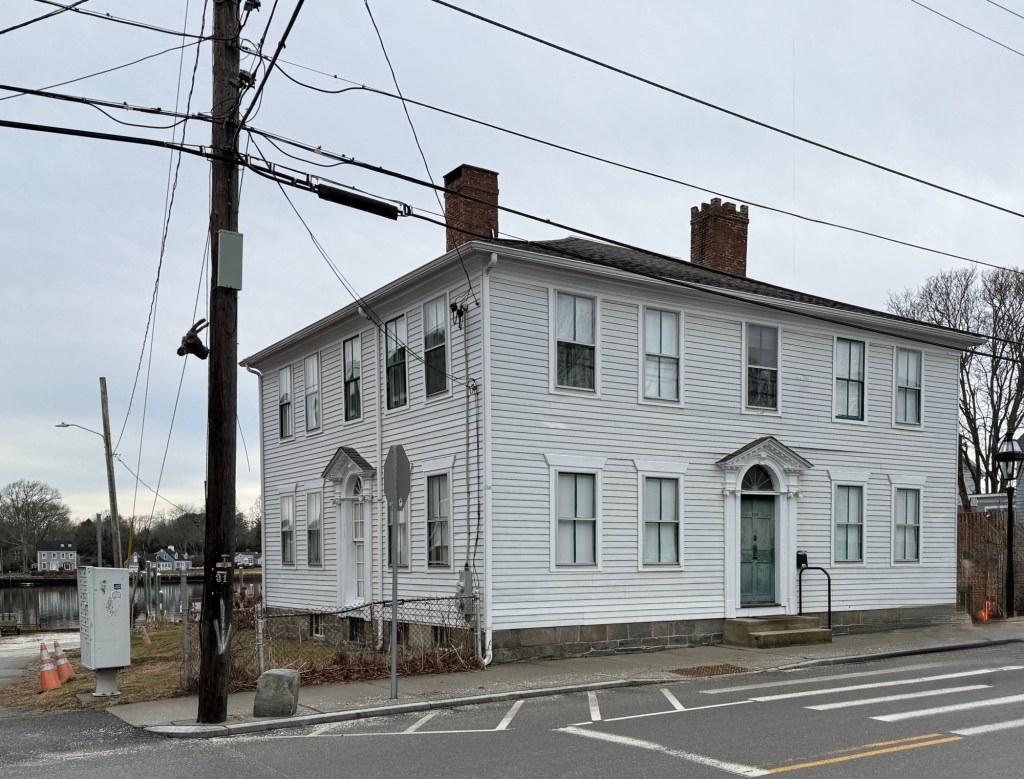
Built before the Revolutionary War, this charming building on Water Street in Warren, Rhode Island, dates to around 1760 and was The house was occupied by D. B. Wheaton as a residence and later by James Capper (1819-1891), an Irish immigrant who settled in Warren. James’ wife Ann, worked as a dressmaker and the couple sold goods out of the storefront in their residence. The retail storefront helps to tell the evolution of Water Street from a more industrial and residential street to a commercial corridor, similar to Main Street. The Wheaton-Capper House and Store legacy lives on with the building still occupied by a local business and residence.

Caleb Carr Tavern // c.1760

This house, located on Water Street in Warren, Rhode Island, is said to have been built in the 1760s, but its present appearance in the Federal style is credited to owner, Caleb Carr (1768-1853). In around 1790, Caleb fully renovated the property in the Federal style for his residence and as a tavern, with an elegant fanlighted door put on each facade—one for household use, the other for tavern customers. The property was inherited by his son, Captain Caleb Carr Jr., who continued as a tavern owner, but was also an important shipbuilder and operator of the ferry to Barrington, which docked at the end of the street. The Carr Tavern is today covered with later aluminum siding and has Victorian-era two-over-two windows but if restored, would shine as one of the best Federal style homes in town!