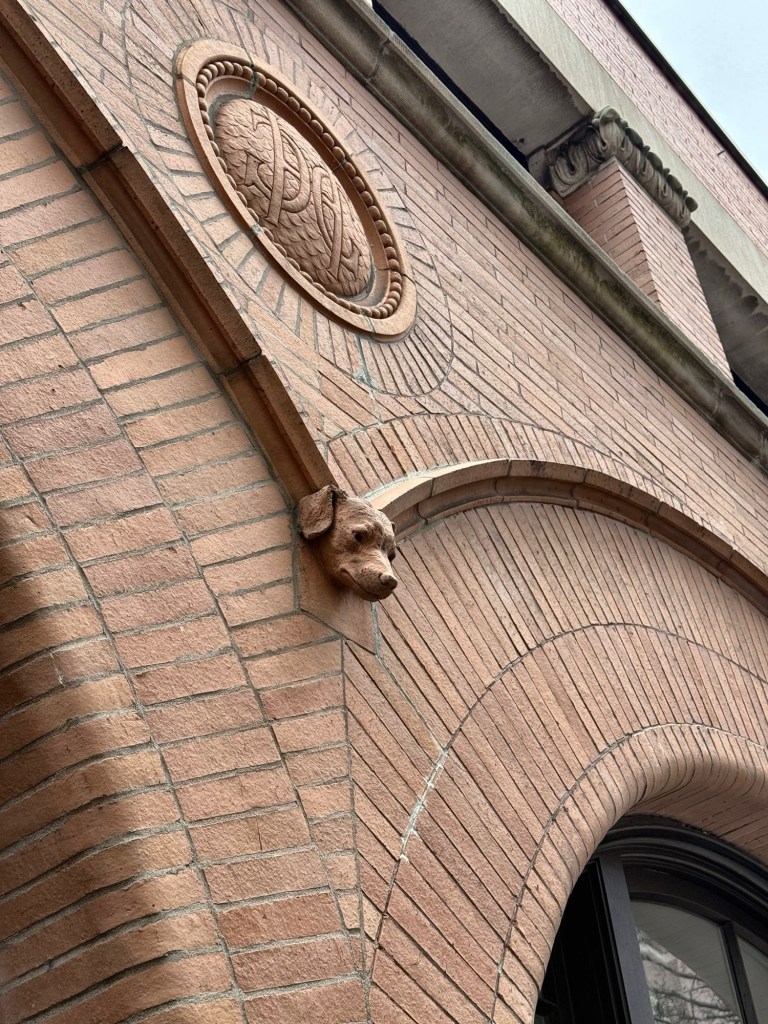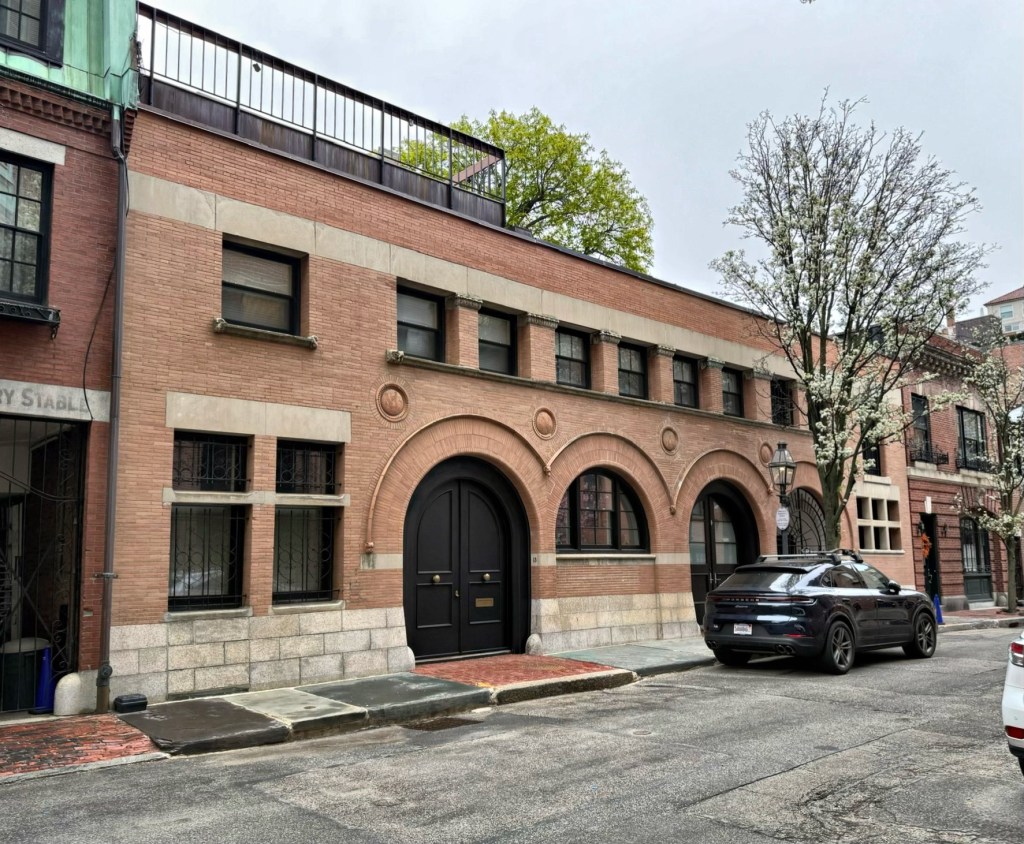
The George G. Hall Stables on Byron Street in Boston’s Beacon Hill neighborhood were built in 1895 for George G. Hall, a wealthy hotelier and developer, who razed three private stables occupying the site prior. For his private stables, George Hall hired Boston architect, William Whitney Lewis, to furnish the plans, which resulted in one of the finest buildings on the Flat of Beacon Hill. Designed in the Richardsonian Romanesque style, the building was described in architectural publications as being constructed of Milford pink granite and coral-colored bricks with two carriage doors and a door for the stable-keeper with an extant hayloft on the second floor. While from afar, the stables are stunning, it is when you inspect it up-close that you see the attention to detail that was taken by the architect. Round stone medallions on the facade read: “G.G.H.” after its owner; “No. 11, 12, & 13”, the addresses; and “1895”, the year of construction. Additionally, at the ends of the arched stable openings, carved dog heads can be found, keeping guard of the horses inside. The stable was later converted to three residences in the 1960s by the architectural firm of Goody & Clancy, Associates.