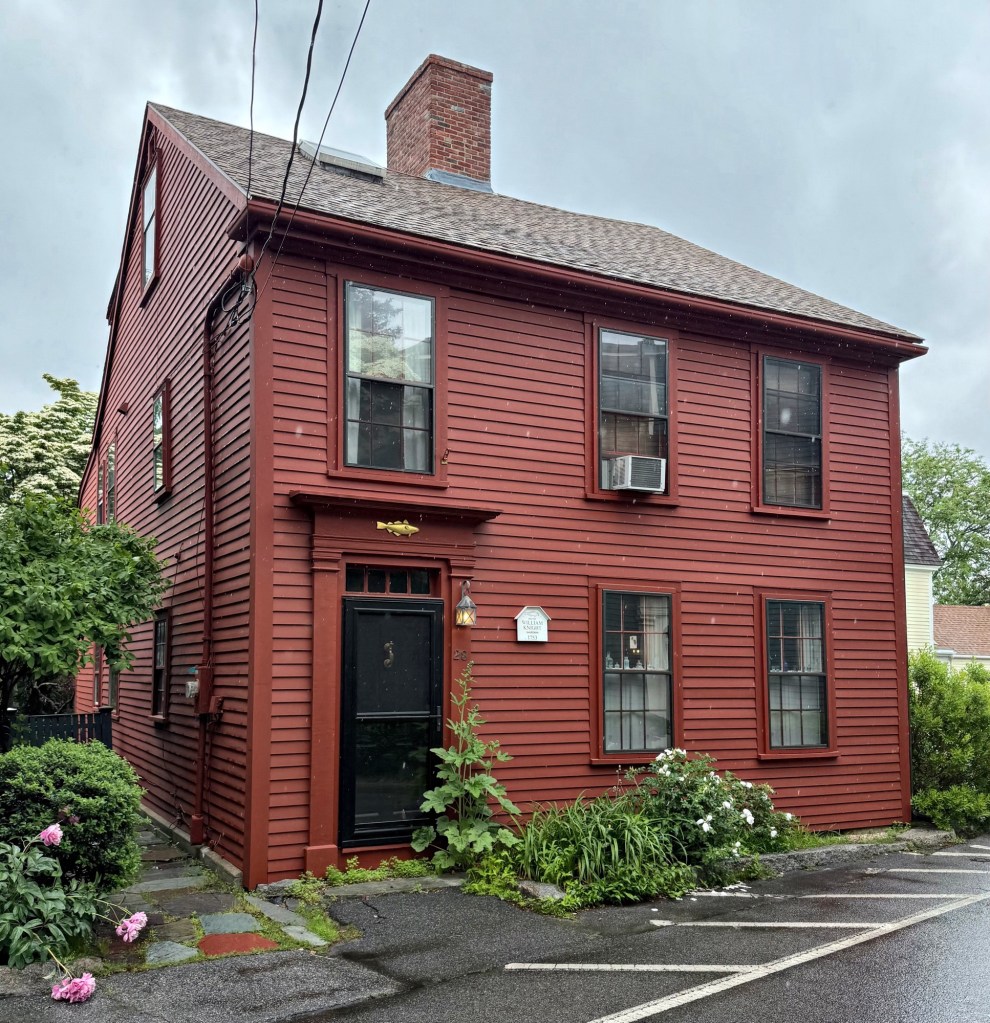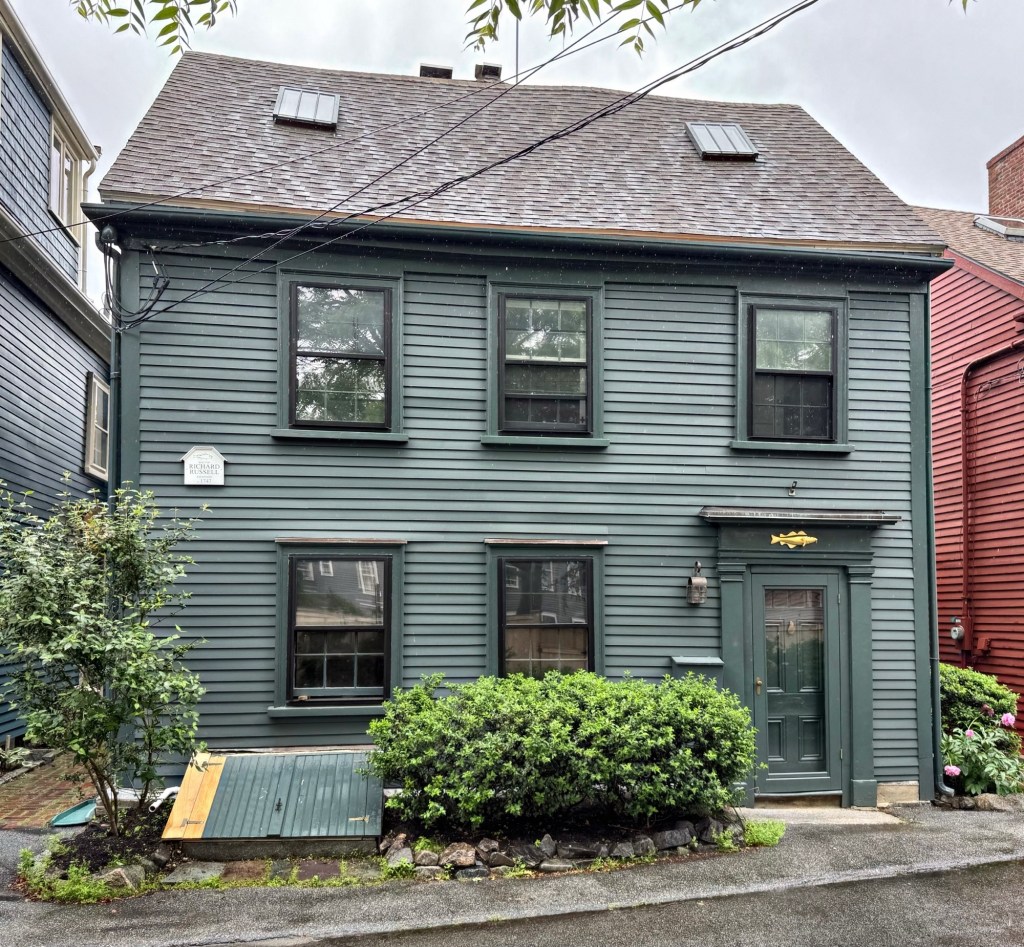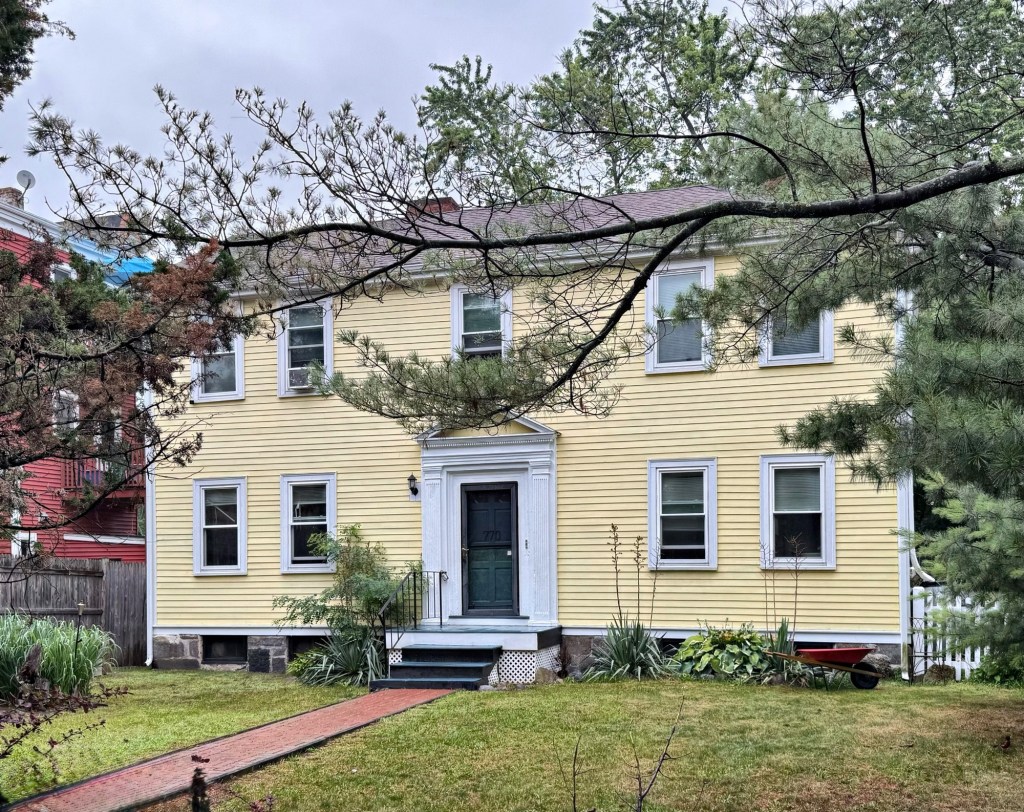
Edward Waldo House // c.1715

The Edward Waldo House in Scotland, Connecticut, is a vernacular Georgian house with saltbox roof and wings which from its erection about 1715 until 1971 was owned by members of the Waldo family. Edward Waldo (1684-1767) purchased land here along the Shetucket River in 1702 and by 1715, erected this house. The saltbox house which Edward Waldo built was one of the first houses in the town of Scotland and would remain in successive generations of the family for centuries. The house was the birthplace of Samuel Lovett Waldo (1783-1861), a portraitist who was a founder of the National Academy of Design as well as Daniel Waldo, chaplain of Congress, 1856-1858, and was one of seven Revolutionary War veterans who, having survived into the age of photography, were featured in the 1864 book The Last Men of the Revolution. The last Waldo owner, Miss Ruth Waldo died in1975. She insured the preservation of her family homestead by bequeathing the house, its contents, and about 15 acres of land to the Antiquarian & Landmarks Society of Connecticut Inc. and the surrounding acreage to the Connecticut Forest and Park Association, creating an enduring legacy for centuries to come. The house, set amongst a quiet country road, is evocative of early days in Scotland, Connecticut, and is one of the finest-preserved Colonial homes in this part of the state. 

Huntington Homestead // c.1715

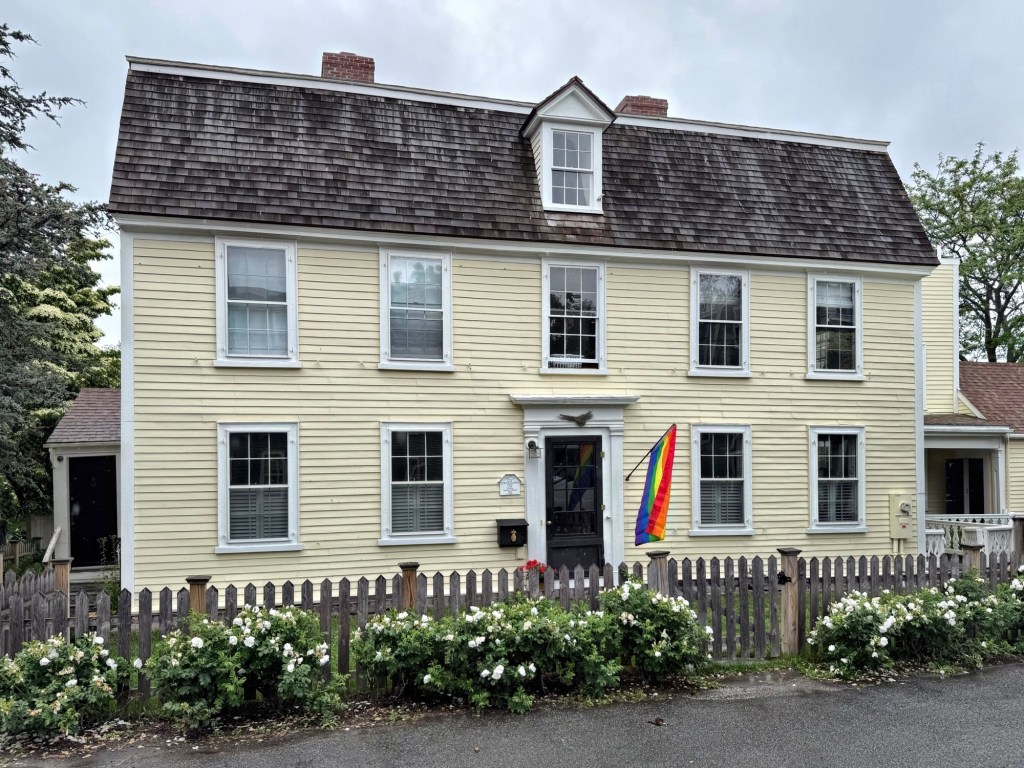
The Huntington Homestead in Scotland, Connecticut, was the birthplace and boyhood home of Samuel Huntington (1731–1796), a Founding Father, a signer of the Declaration of Independence and a distinguished statesman during the Revolutionary War and early Republic. The remarkably well-preserved site includes an eighteenth century house on its original foundation surrounded by acres of farmland and is now protected as a museum. The house was built sometime between the transfer of land in 1715 from Deacon Joseph Huntington to his son Nathaniel, and Nathaniel’s marriage in 1723 to Mehetabel Thurston. As originally constructed, the house consisted of a two-story structure with an end chimney on the west end and one large room on each floor. By the time of Nathanielís death in 1767, the house had been doubled in size with the addition of two rooms west of the chimney, giving the house its current five-bay form. The Georgian style Colonial-era home features a symmetrical facade, twelve-over-twelve windows, and a saltbox roof and is one of the finest Colonial-era homes in this part of the state.

Captain John Felt House // 1757

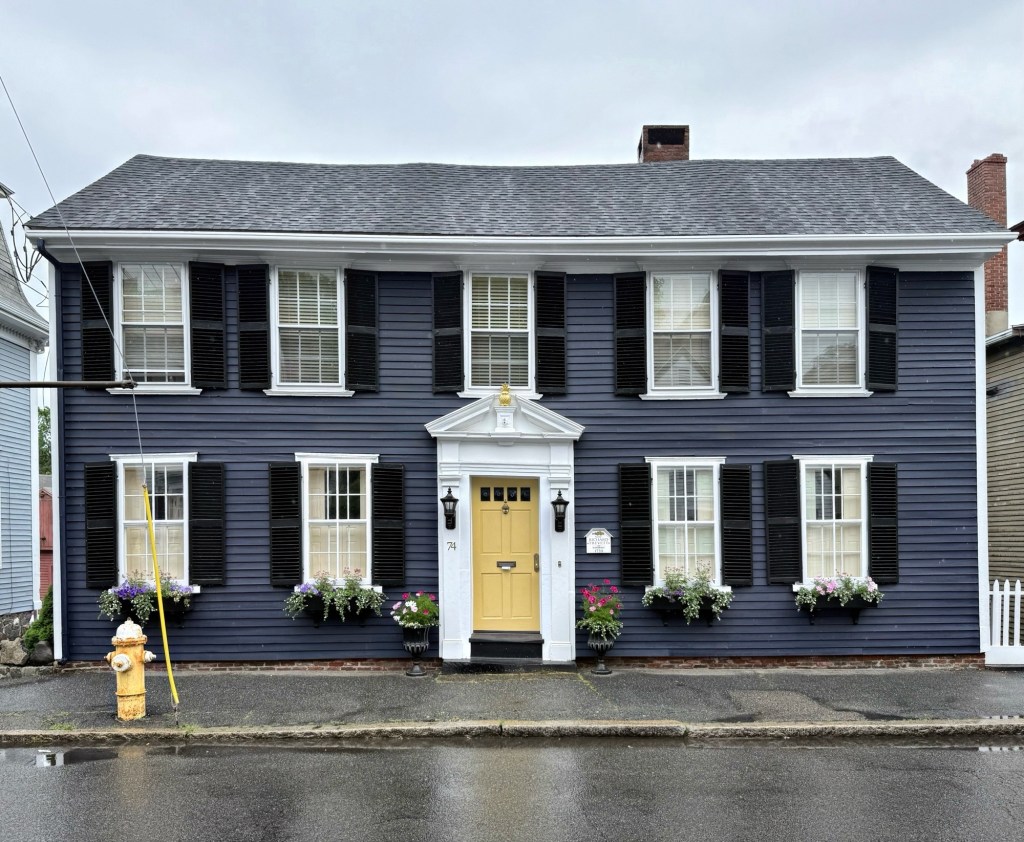
The Captain John Felt House on Federal Street in Salem, Massachusetts, is a surviving Georgian residence with ties to the American Revolution. In May 1757, John Felt purchased a lot on present-day Federal Street from Benjamin Lynde for 52 pounds, and began building his family home here. John Felt, a Salem native, worked as a “shoreman,” but was primarily an owner of vessels involved in the coasting trade, also owning a large warehouse to store the goods from the West Indies brought in by his ships. Felt’s title of “Captain” came from his involvement in the Essex county militia. Captain Felt was a key figure in Leslie’s Retreat, also called the Salem Gunpowder Raid, which took place on February 26, 1775, in Salem. British Colonel Alexander Leslie led a raid to seize suspected cannons from a makeshift Colonial armory in Salem. Instead of finding artillery, Leslie encountered an inflamed citizenry and militia members ready to stop his search. These colonists flooded Salem’s streets, preventing Leslie’s passage and forcing him to negotiate. Ultimately, the Salemites convinced the British Regulars to stand down and return to Boston. No shots were fired, and no one was seriously injured—but tensions were high and a skirmish was evident until Captain Felt stated, “If you do fire, you will all be dead men.” Had a soldier or a colonist gone rogue and fired their weapon, the American Revolution might have begun in Salem, and not Concord just weeks later. After the Revolution, Captain Felt sold his house and moved to present-day Danvers. After centuries of successive ownership by merchants, today, the Felt House is used (at least in part) as professional law offices.

Pierce Homestead // c.1750

Built before the American Revolution, this large Georgian residence is one of the oldest extant houses in the charming town of Cornwall, Connecticut. Located on Popple Swamp Road just outside the central village, the Pierce Homestead dates to circa 1750 (the sign dates the house to 1768, but information from the town history mentions a house there earlier) and is a stellar example of a simple, two-story Georgian house with five-bay facade and 12-over-12 sash windows. This property was purchased by Joshua Pierce in 1748 and included over 300-acres of farmland, the farmhouse was likely built within a matter of years. The house was likely expanded and modernized by his son, Seth Pierce, who inherited the property in the 1790s. The farm remained in the Pierce Family for generations and was lovingly restored in the 20th century. It is a great example of a well-preserved 18th century farmhouse in Litchfield County, Connecticut.

Brattle-Thurston House // c.1749

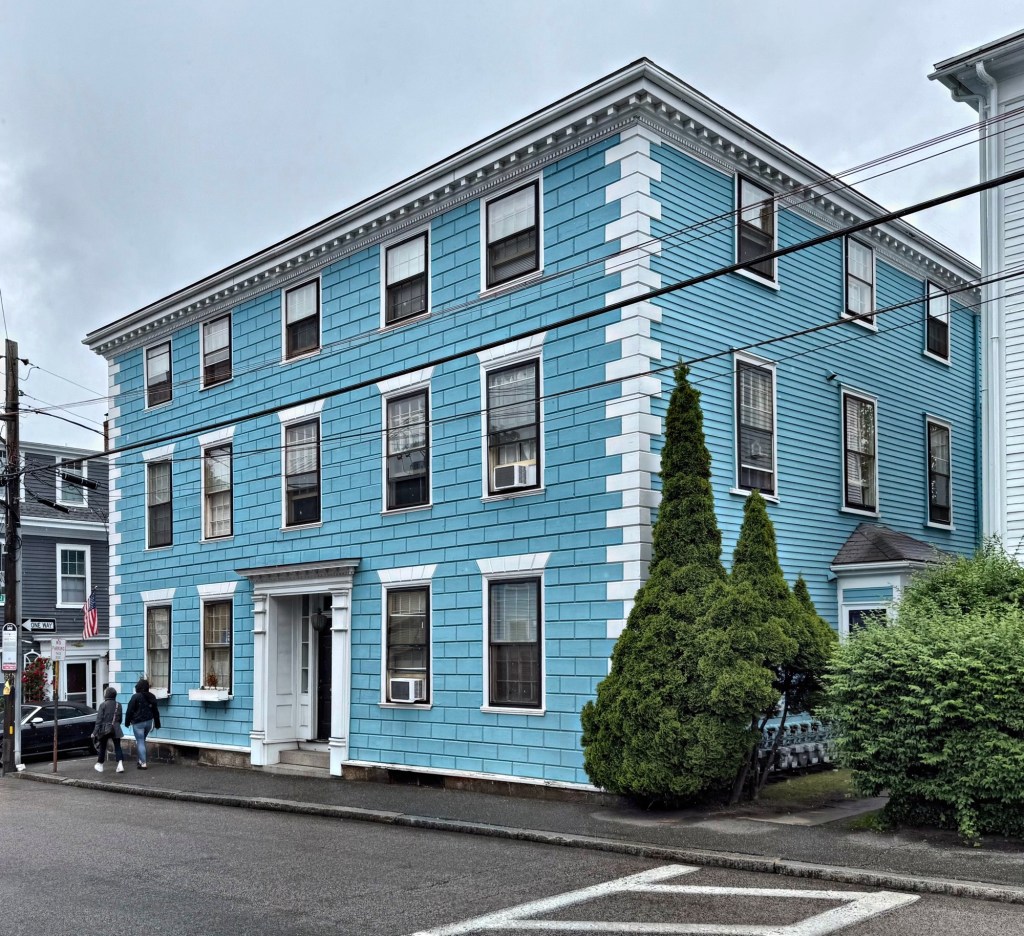
This early Colonial house with unique, rusticated wood coursing carved, treated, and painted to resemble ashlar stone, can be found on Prospect Hill Street in Newport, Rhode Island. This is the Brattle-Thurston House, a circa 1749 Georgian residence of an appropriate gray color, yet when I stopped by in early 2024, had peeling paint. The house was originally part of the Latham Thurston estate, and was later rented or purchased by Robert Brattle (Brattell), who lived here with his wife, children, and an enslaved person according to the 1790 census. The home would later be owned by William Thurston, a hatter and dyer, who likely inherited the residence from his ancestor. Beyond the unique rusticated wood siding, the design features splayed lintels, the main entrance on the side elevation and a later entrance facing the street with segmental pediment above.

Bowler House // c.1760

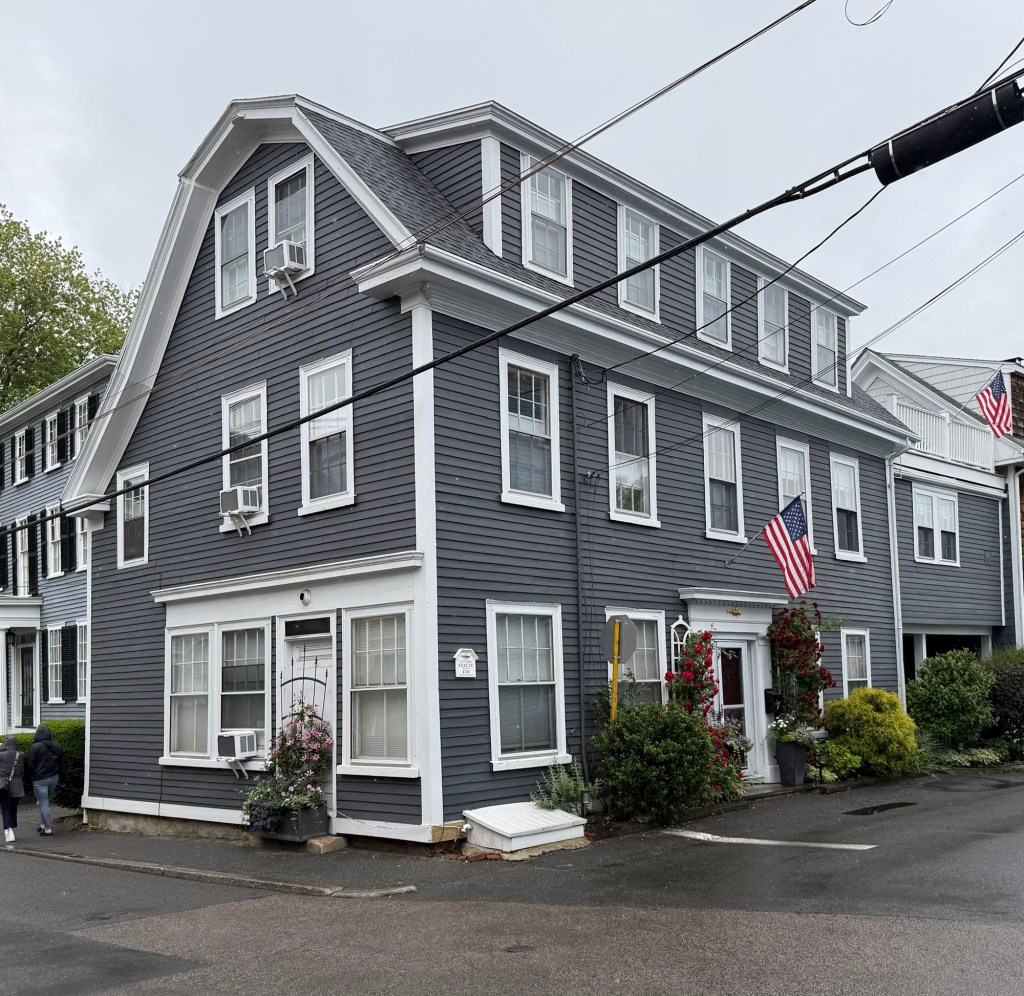
This beautiful Georgian house in Newport, with its prominent gambrel roof oriented toward the street, was built by 1760 and owned by Metcalf Bowler (1726-1789), a merchant, politician, and magistrate. Bowler was for many years speaker of the house in the Rhode Island colonial assembly, and it was discovered in the 20th century that he was a paid informant (spy) for the British during the Revolutionary War. The house was owned by Metcalf before he would purchase what is now known as the Vernon House, an even more stately Georgian mansion designed by Peter Harrison. This house was sold, and later owned by Charles Wickham, a Captain in the war, and later to the Burdick and Merrill families.

Shaw-Thurston Double House // c.1760

This pre-Revolutionary double-house is located at 128-130 Prospect Hill Street in the architectural historian paradise that is Newport, Rhode Island. This property was originally platted and purchased in 1752 by Anthony Shaw. By 1760, local papers advertised the property for sale, giving a built-by date. In 1777, the house was owned by Anthony Shaw Jr. and John Thurston. The property was purchased before the Civil War and went into single-ownership, which has remained to this day. The house, while seemingly a single-family, is preserved lovingly by the owners, who even retained the second front door!

Wright Homestead // 1767

This large, brick gambrel-roofed Colonial home in West Goshen, Connecticut, was built over decades beginning before the American Revolution and has remained in the same family ever-since! In 1767, Captain Jabez Wright (1737-1813) married Martha Baldwin of Goshen, and began constructing this farmhouse of brick. When the war broke out, he fought in New York, he also served as captain of a company of Connecticut militia, turning out to repel the British forces at New Haven. He would largely complete the home by 1787, and ultimately died in 1813. After successive ownership of generations of the Wright family, the property was owned by Henry G. Wright (1831-1917), a farmer who represented Goshen in the state legislature and held many town positions. The first Methodist sermons in town were also held in the home. Henry Wright died at 86 years old on this property, after being attacked by a bull. When entertaining guests, he showed others a prized bull, and possibly fell into the pen, and was trampled and attacked. The Wright Homestead is unique for its brickwork with bonds and burned headers, resembling many Colonial-era homes in Virginia, but this house can be found on the back roads of Goshen, Connecticut!

Israel Putnam House // c.1648

The General Israel Putnam House in Danvers, Massachusetts, was built circa 1648 by Lieutenant Thomas Putnam on farmland that then consisted of 100 acres. In 1692, his youngest son, Joseph Putnam, lived here, inheriting the property over his half-brother, Thomas Putnam, Jr. (1652-1699), causing friction within the family. During the infamous witch trials and hysteria in Salem Village, Joseph Putnam was one of two people who took notes during the examinations of the first three to be accused of witchcraft in 1692 – Sarah Good, Sarah Osborne, and Tituba. From that point forward, he was one of the most outspoken opponents of the proceedings, which put him in direct conflict with most of the Putnam family, especially that of his half-brother Thomas. Fearing accusations against him by his half-brother, Joseph was said to have kept horses saddled at all times, ready to escape at a moment’s notice. He was never accused, though Thomas Putnam was responsible for the accusations of 43 people, and his daughter was responsible for 62. In 1718, Israel Putnam, the son of Joseph Putnam, and later Commander of the colonial troops at the Battle of Bunker Hill, was born in this house. It is the only extant structure with direct ties to Commander Putnam. During the Battle of Bunker Hill, Putnam is thought to have ordered William Prescott to tell his troops, “Don’t fire until you see the whites of their eyes.” This command has since become one of the American Revolution’s notable quotations. It was given to make the best use of the low ammunition stocks that the troops had. The Putnam House remained in the family into the 20th century, and due to highway and commercial expansion, the property now sits in the middle of a cloverleaf intersection of two highways. The house was given by the Putnam family to the Danvers Historical Society in 1991, but as of 2020, the Putnam family once again owns the property. The house is not holding up well and I could not locate plans for restoration or preservation of it online. This house deserves to be preserved.

Jeremiah Page House // 1754

In 1754, a 32-year-old brickmaker Jeremiah Page built this large, gambrel-roofed Georgian house in Danvers, Massachusetts, for his young family. Jeremiah and his first wife, Sarah, raised nine children here and dreamed of liberty from England. Following the Tea Act, passed by British Parliament in 1773 that granted the British East India Company Tea a monopoly on tea sales in the American colonies, Page was said to have demanded that “none shall drink tea in my house.” One evening when her husband was out, Sarah Page is said to have invited several women from the neighborhood up to the porch atop the Page House’s gambrel roof to enjoy tea. Larcom quotes Page as telling her friends, “Upon a house is not within it,” thereby finding a loophole around her husband’s directive. This legend was enshrined in the poem “The Gambrel Roof” (1874) by Lucy Larcom, who knew Sarah Page’s granddaughter. Jeremiah Page would fight in the Revolution, serving as a Captain. The Page House remained in the family for two more generations, Sarah Page’s daughter in-law, Mary Page died in 1876 and her will put the property into a trust with the stipulation that once there were no longer any Page descendants to live there, the historic house was to be torn down. After Mary Page’s daughter Anne Lemist Page died in 1913, the trustee planned to demolish it according to her wishes. The Danvers Historical Society sprung into action and sued to oppose the will, fighting to preserve this significant home. They won, and relocated the home a block from Elm Street to its present site on Page Street, where it stands today. The Danvers Historical Society maintain the structure to this day, including the “porch” at the roof where the tea party once took place.