Krack House // 1870

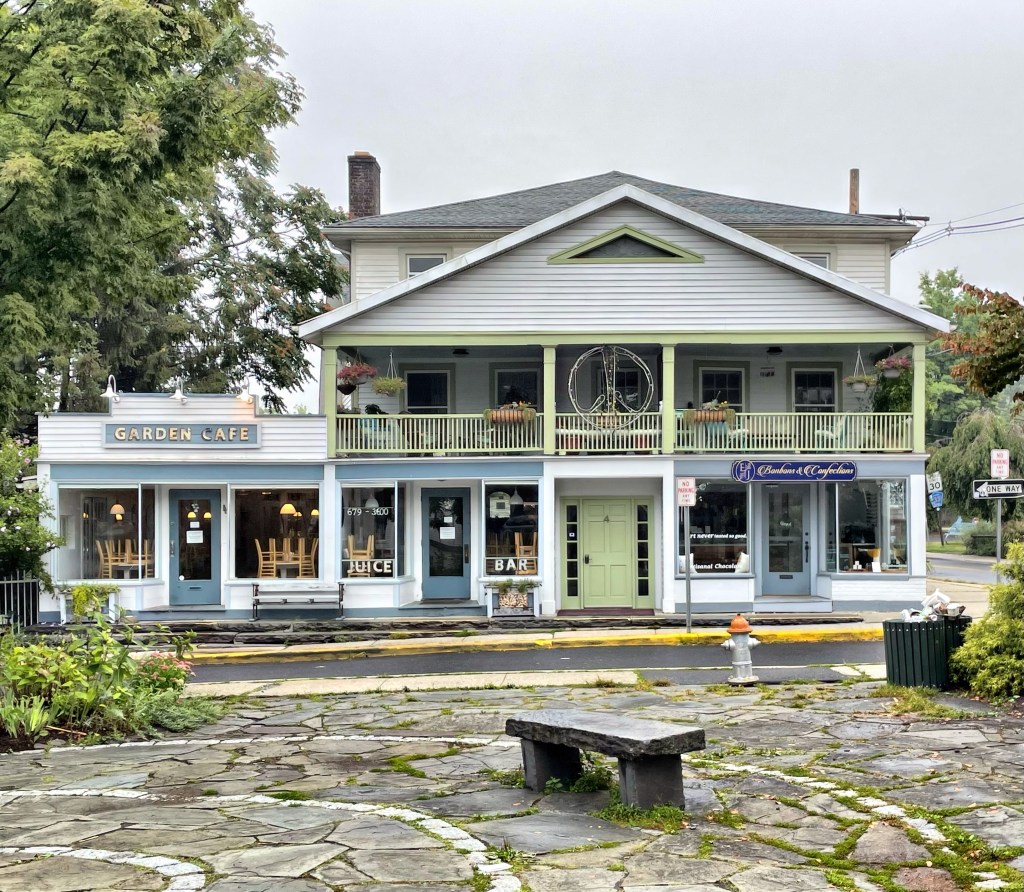
One of the largest buildings in the charming village of Woodstock, NY, is the former Krack House… I know what you are thinking, and no it was not due to illegal activity! The Krack House was developed in 1870 by Charles H. Krack (1824-1893), as a response to the success of other summer hotels built nearby as the area saw a boom in tourism. Charles Krack was born in Germany and after serving in the military there, he arrived to America in the mid-1800s. Here, he served as an overseer of a Georgia plantation, and moved to New York City after the Civil War, operating a hotel in Manhattan. He later became the owner of a floating bathhouse on New York City’s East River anchored near Grand Street, and made great money, investing it up the Hudson in Woodstock. In Ulster County, he got involved in politics. The Krack House was a summer lodging facility with food service and all the best amenities in the village. After Charles’ death in 1893, the property was eventually purchased by Stanley Brinckerhoff Longyear, who rebranded the hotel in his name, The Longyear. The building appears to now contain apartments above commercial spaces.

Pagoda Building // c.1850-1917

For the last on this series of Lost Boston buildings, I present this little-known landmark which was once neighbors to the Old State House. The Pagoda Building as it was named, was located on the corner of Washington and State Streets and was one of the tallest buildings on the street upon completion. The seven-story building of Quincy granite exhibited round arched windows and an interpretation of a belvedere at the roof which served as a penthouse. The building’s upper six stories were residential, including the spectacular Oriental penthouse at the top, with retail space at the ground floor. The architect was a recent immigrant from Britain named George Snell, who clearly made a name for himself, later entering a partnership with James R. Gregerson. The Pagoda Building, which was originally an early “skyscraper” in Boston was quickly surpassed in height and floor plate size and was deemed inadequate for such a prominent location. It was demolished by 1917.

Cragin-Frye-Savage Mill // 1858

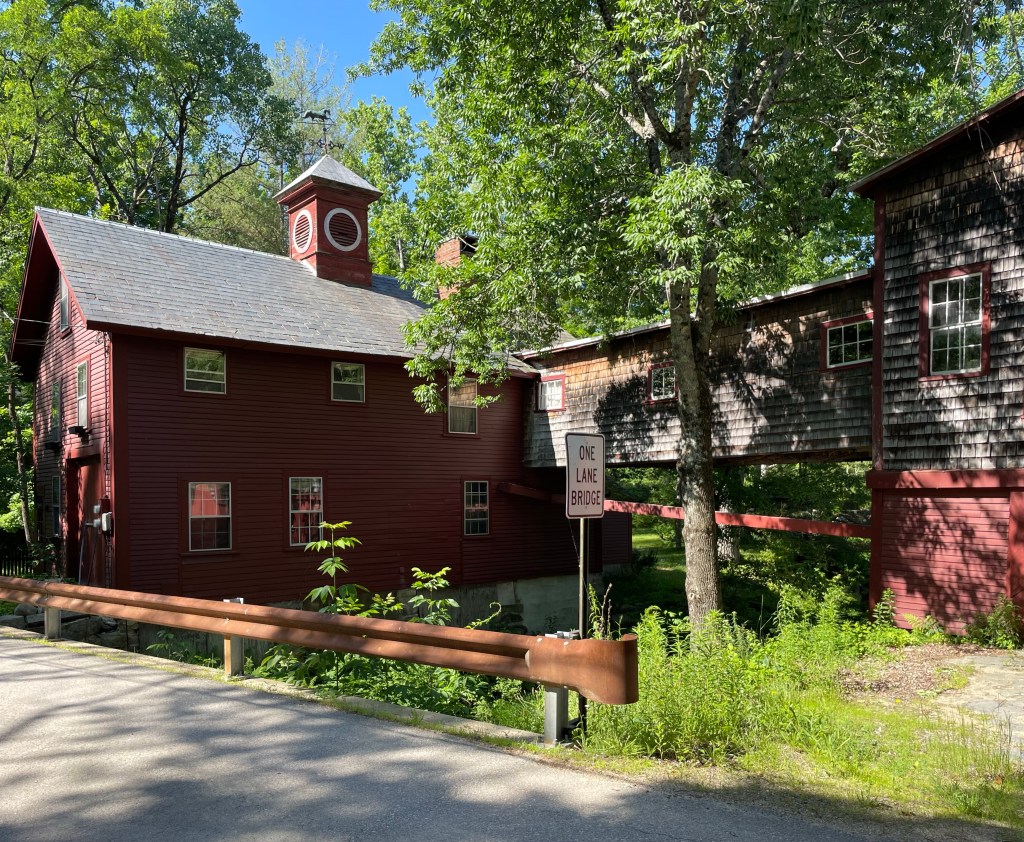
There’s not much that is more picturesque and stereotypical New Hampshire than old, wooden mill buildings. When I was looking for a town to explore in NH, I got stuck on a photograph of the old Cragin-Frye Mill in Wilton, and off I went! Daniel Cragin (1836-1921) was born in Merrimack, NH of Scottish descent. In 1856, age 21, he rented a room in a woolen goods mill, and he built knife trays and wooden toys which he turned into a business. He started his business with ten dollars, and turned a profit from the beginning, so much so that by 1858, he accumulated enough money to purchase a nearby existing building for his own operation. The mill was water-powered and grew quickly. The Daniel Cragin Mill began production of sugar boxes and dry measure boxes. The mill closed briefly after Cragin retired in the early 20th century. In 1909, Whitney Morse Frye and his father, Dr. Edmund Bailey Frye, bought the mill from Cragin. Frye continued the Cragin line of wooden trays, boxes, and pails in addition to his normal processing of grains. Whitney Frye died in 1961, and his employee, Harland Savage Sr. purchased the old mill, continuing operations. After his retirement in 1981, his son Harley and his wife Pam Porter Savage took over operations and they have operated the mill to the present day as Frye’s Measure Mill. The mill is one of a few remaining operating water-powered measure mills in the United States!

Colony-Abbott Worsted Mill // 1882

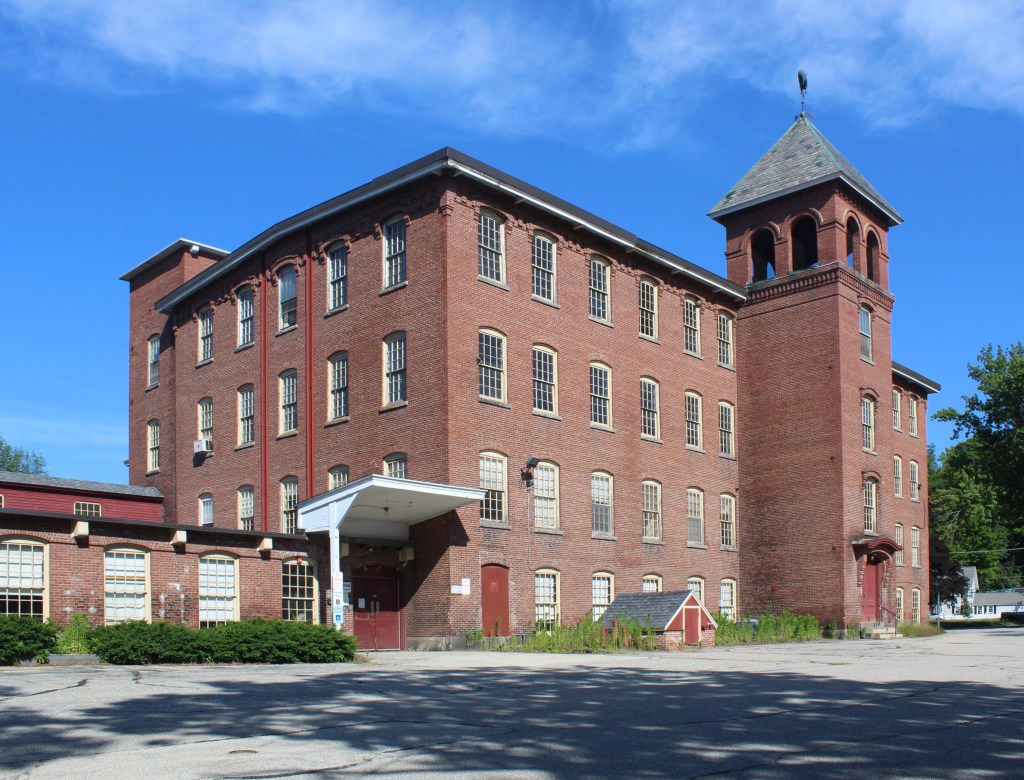
The site along the southern bank of the Souhegan River in East Wilton, NH has been the location of successive mills since 1814. These wooden mills were wiped out by fire, and the land was vacant until 1882, when members of the mill-owning Colony family of Keene, NH bought the site for a new cotton mill. That year they built a three-story brick mill building atop a raised basement level. Colony Bros., the company, began their manufacturing in early 1883. They produced woolen flannel and other woolen goods and employed 70 workers in the factory. The building was powered by steam and water from the adjacent Souhegan River. In 1894, the Colony Bros. mill passed into the hands of Philip Amidon, who formed the Wilton Woolen Company, who produced everything from traditional woolen goods to the finest cashmere. In 1932, the struggling mill was purchased by the Abbotts, owners of two local mills and others in Massachusetts. Abbott Worsted produced a very fine finished cloth, with much of their product going to New York City where it was made into fine men’s suits. The building was later purchased in 1971 by Leonard Peterson, to house his growing company, Label Art. The company has for many years been a nationwide distributor of pressure sensitive labels. Their occupancy likely saved the buildings from the wrecking ball, like so many others did at the time!

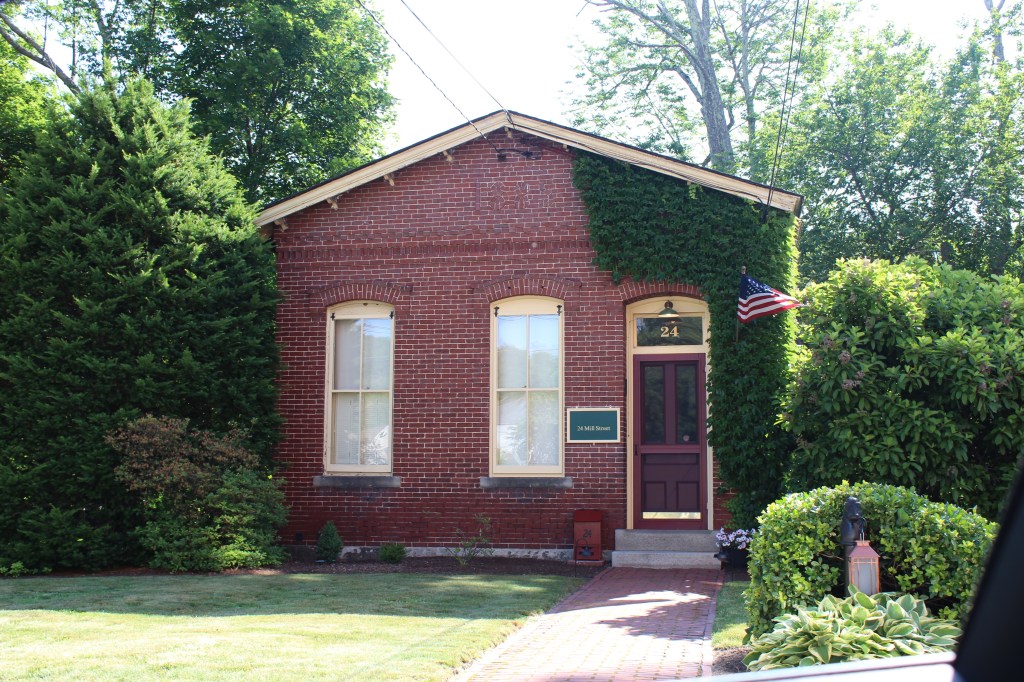
Oh, and how cute is the 1885 office for the mill?! The date is found in the brickwork!

Proctorsville Firehouse // 1883

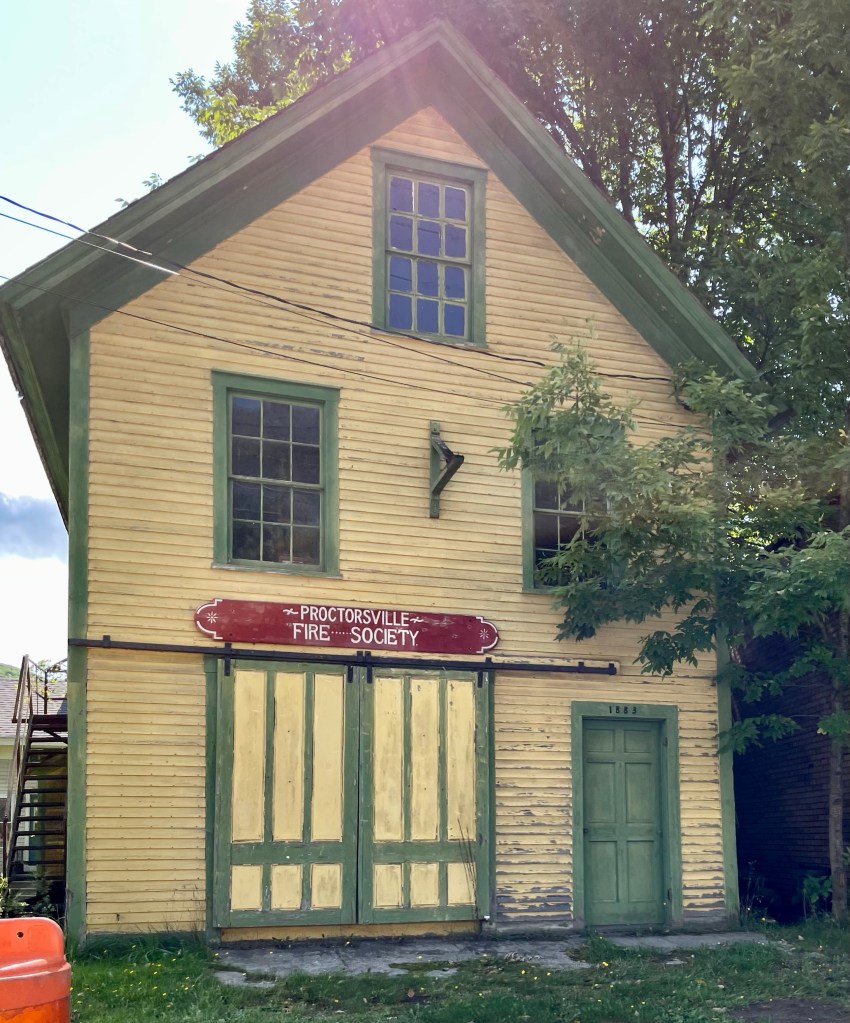
Industrial villages like Proctorsville in Cavendish, Vermont, have always been susceptible to fire and complete destruction. As a result, many such villages erected firehouses or barns where apparatus (and sometimes horses) would be kept in case of emergency. The Proctorsville Volunteer Fire Department was formed in 1883, and this structure was built to house the fire apparatus and possibly a small apartment or living quarters above. Today, the building appears to be home to the Fire Society.

Scott Farm – Pig Barn // 1911

Cows, horses and pigs once dominated the 571-acre landscape of Scott Farm in Dummerston, VT. We have seen where the farmer, cows, and horses lived, so now it’s time to see where the pigs “pigged” out. This barn building was constructed around the time of the horse barn when the farm was owned by Frederick Holbrook II of Boston. The one-and-a-half-story pig barn, like the others, was built into the landscape which would allow for the animals to easily get into the structures. This building was used as the “Cider House” in the 1999 movie Cider House Rules.

Scott Farm – Cow Barn // 1862

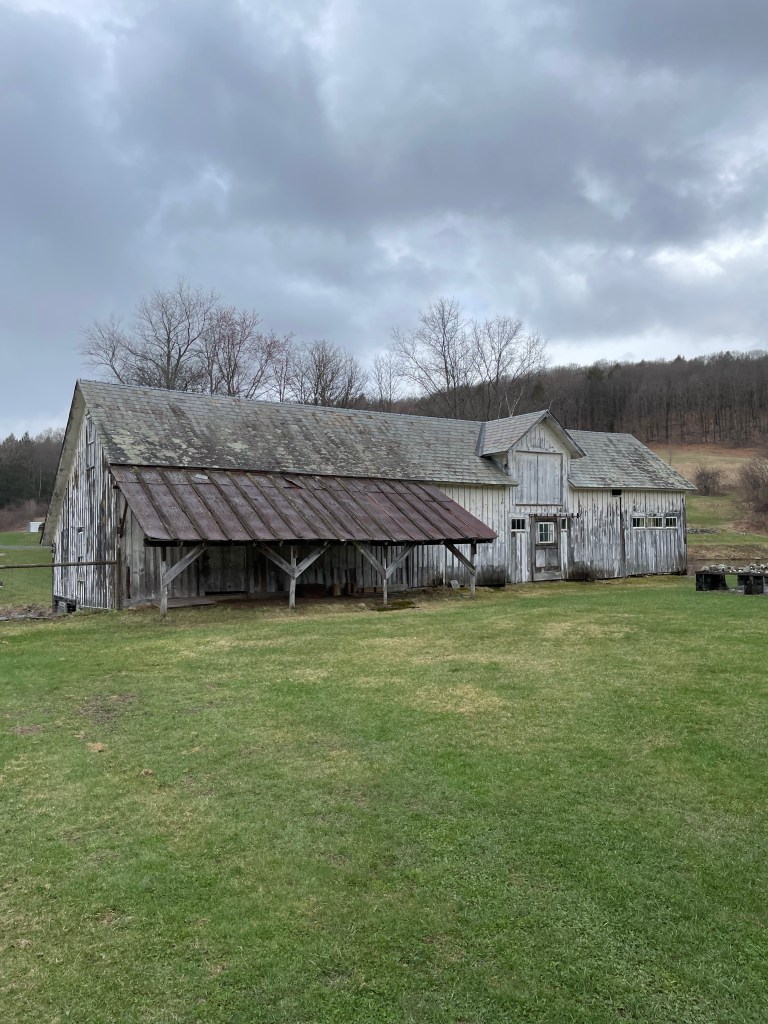
Historic barns really are the most charming buildings, and luckily, Vermont is home to soooo many great examples. The Cow Barn at Scott Farm in Dummerston, VT was built in 1862 and constructed into the slope of the land. The barn has a brick and stone foundation, barn board siding, and a roof sheathed with small dark slate. It is built into the slope of the land and has a single-story shed roof addition (c.1915) off the west facade to give the building a saltbox form, and a single story gable roof milk house addition off the east facade. The rear facade has a more rustic appearance and has a large entrance to the space inside which is occupied by The Stone Trust, with the mission to preserve and advance the art and craft of dry stone walling. The organization holds classes and trainings where people can learn how to build a traditional or modern stone wall and more! The barn (and the rest of the buildings on the Scott Farm property) is owned by the Landmark Trust USA.

West Dummerston Covered Bridge // 1872

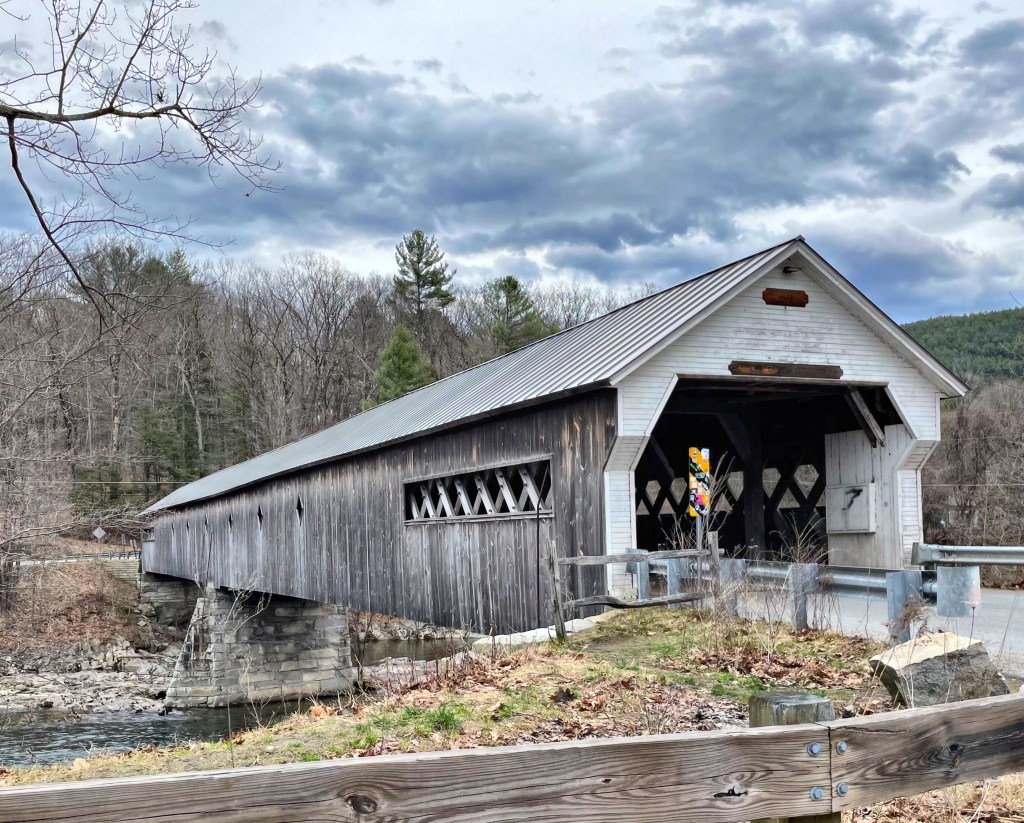
Oh covered bridges, one of the many symbols of New England that always give me joy when I see them! This beauty was constructed in 1872 to span the West River in Dummerston, Vermont and is the longest that is wholly within the State of Vermont. The bridge was designed by Caleb B. Lamson, a master carpenter and the bridge is the only known bridge built by Lamson that survives. Vermont is significant for covered bridges as about one hundred bridges still stand in the state, which is probably the greatest concentration by area of covered bridges in the nation. A reason we have to thank Vermont for this is purely population. With more people living in the state, transportation demands change, and these bridges are often replaced with modern steel structures. Keep doing you Vermont!

St. Andrew Ukrainian Orthodox Church // 1958

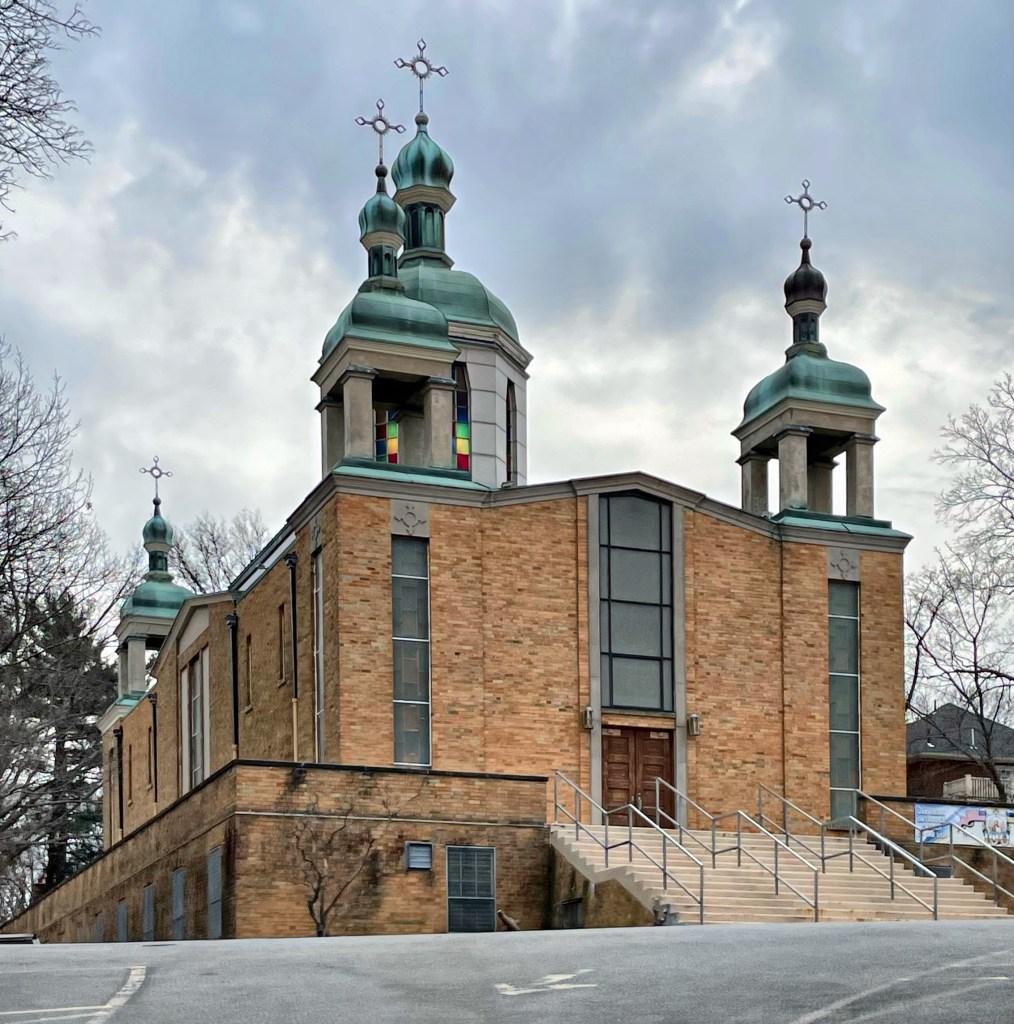
I typically do not connect my posts to current events, but I really wanted to take time to highlight the strength and fortitude of the Ukrainian people fighting to preserve their home and democracy around the globe. Closer to home, a growing Ukrainian community in Boston in 1956, decided to erect a new church in the Forest Hills section of Jamaica Plain. Land was acquired and a blessing ceremony was attended by members of the church, the architect, and Reverend John Theodorovich; the head of the Ukrainian Orthodox Church of America, who was born in Ukraine, and served at chaplain with the Army of the Ukraine National Republic in the war against Russia in 1919-20, before eventually moving to North America. The architect, John Kodak, was a Toronto-based architect of Ukrainian descent who ended up in Canada after fleeing from his home to escape communist rule from the USSR. This church is a Modernist interpretation of the iconic St. Andrew’s Church in Kiev, Ukraine, with its onion domes surmounted by crosses. The church, like many others, is holding prayers for Ukraine and is coordinating donations and aid to the Ukrainian people and related charities.

Waterford Odd Fellows Hall // 1904

Built soon after a massive fire destroyed much of North Waterford Village in Maine, the Iocal order of Odd Fellows decided to rebuild, constructing this building for their members. Though active for several decades after the building was reopened, an aging and dwindling membership forced this chapter to merge with the Odd Fellows of nearby Norway, Maine. After, this building was occupied by the Daughters of Rebekah, an auxiliary group of the IOOF for women until 1973 when it was donated to the recently formed Waterford Historical Society. The society has since moved, and listed the building for sale in 2020 for just $10,000!!