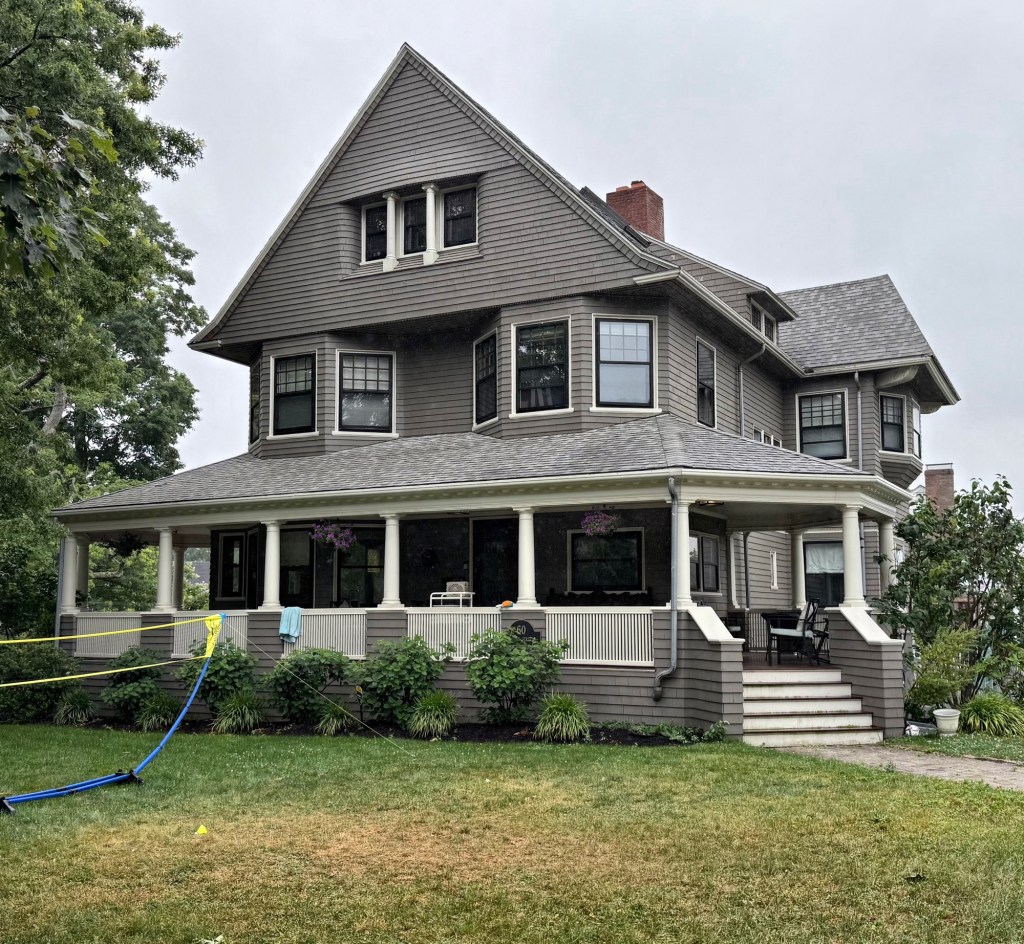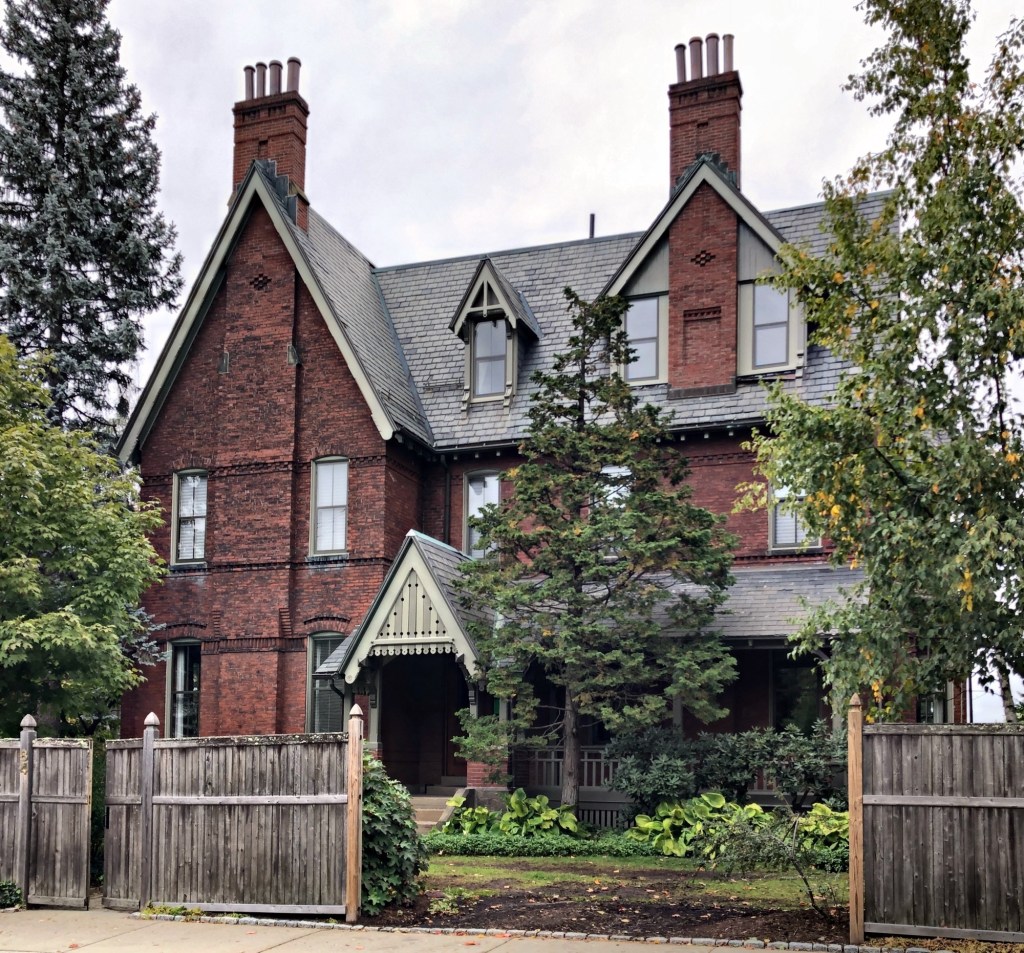
Higgins-Little House // 1890

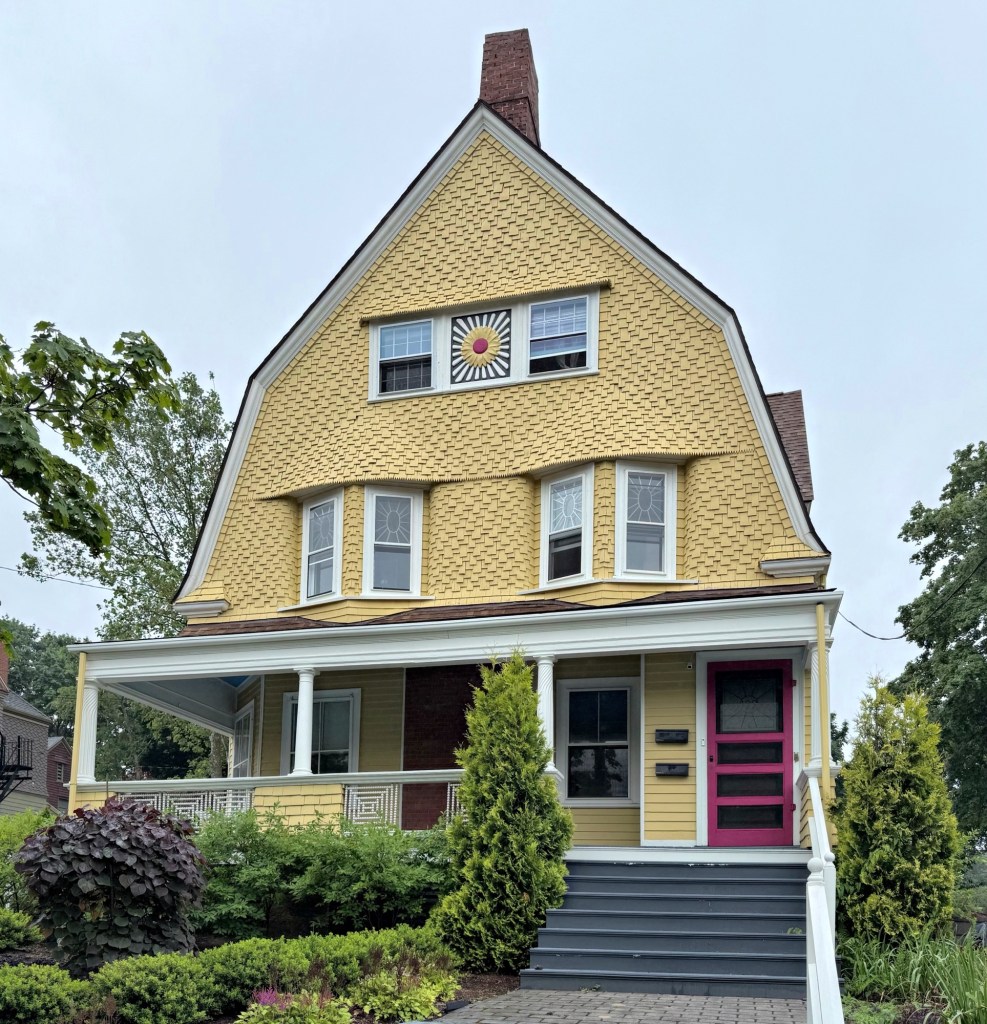
This “painted lady” on Roslin Street is one of the many fine Queen Anne Victorian houses in the Ashmont Hill neighborhood in Dorchester, Massachusetts. The residence was built in 1890 for original owner, Lewis H. Higgins, a master mariner who was born in Wellfleet before moving to Boston. Higgins seemingly resided here with his family for a short time until the house was sold in 1893 to Samuel and Grace Little. The house is perched on a hill and features a prominent rounded corner tower. The original porch with turned posts and gable detailing stand out with the intricate paint scheme used to highlight all of the amazingly preserved ornamentation. While paint schemes like these are not historic, they do bring joy to owners and passersby, and help viewers appreciate the care that these stewards take in maintaining their old homes.

Mary E. C. Bates House // c.1894

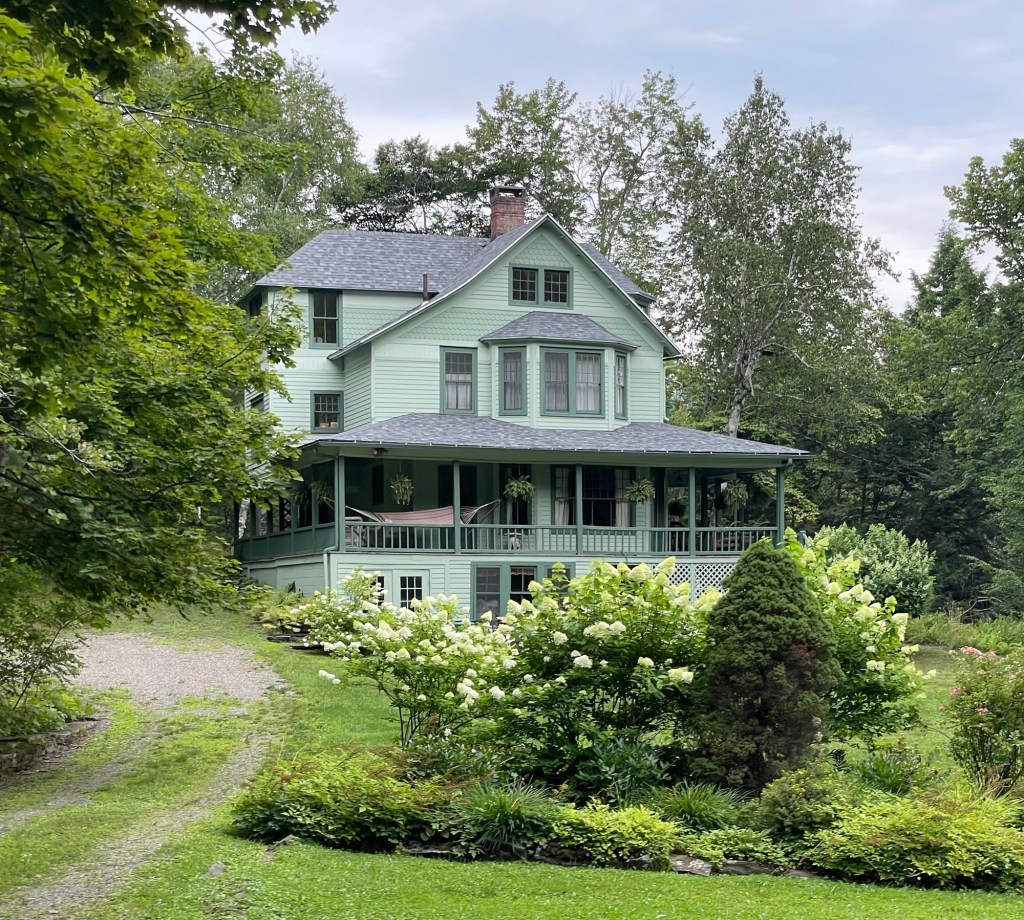
One of the many spectacular Queen Anne style houses in the Ashmont Hill neighborhood of Dorchester (Boston) is this c.1894 residence at 53 Ocean Street. The house was built for Mary Elizabeth (Cushing) Bates and her husband, Henry L. Bates. Henry worked as a bookkeeper and the couple was able to afford a house lot in the fashionable Ashmont area of Dorchester, and had this home built. In the early 20th century, the couple purchased a then-vacant lot next-door at 57 Ocean Street, and had the current house there built, renting it out for years for supplemental income. Hallmarks of the Queen Anne style seen in the Bates house include: varied siding types, large porch supported by turned posts, asymmetry, projecting bay window, and applied ornament seen here in the gable.

George and Emma James House // 1894

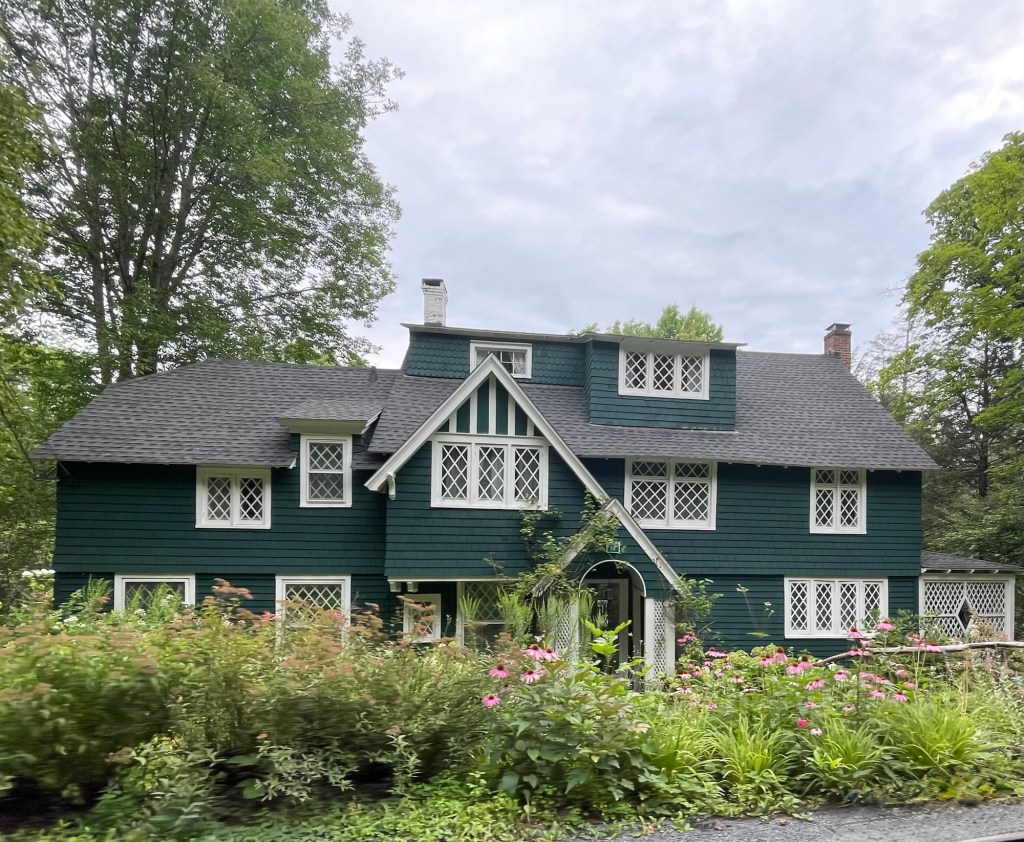
Built in 1894 for George and Emma James, the house at 47 Ocean Street in the Ashmont area of Dorchester, stands as one of the finest high-style examples of a Queen Anne single-family residence in Boston. George James was born in Vermont and worked as a farmer before moving to Boston, where he found work as a shoe manufacturer, opening offices and manufacturing facilities in the Leather District. The house was clearly designed by a skilled architect, and historians note that the residence was the design of architect S. Edwin Tobey, a skilled proponent of the Queen Anne style, seen here with its incredible detailing and unique form. The high-relief carvings in the gable and panels stand out, along with the recessed porch, and historic stable at the rear.

Sidney A. Kimber House // c.1894

Built by 1894, this fabulous Queen Anne victorian house can be found on Ashmont Street in Dorchester, and it has a period-appropriate color scheme. The residence here was built for Sidney Arthur Kimber (1866-1956) a London-born printing expert, who for years worked at the University Press in Cambridge. Mr. Kimber was an expert on printing and wrote many books on the subject; he even built a working model of the first printing press brought over from England to Cambridge in 1638. The Kimbers lived here for just a few years before moving, and the house was sold a few times until the first long-term owner, Helena T. Shortell. The house is lovingly preserved and features a unique entry tower capped by an ogee roof.

Thomas T. Hartford House and Stable // 1884

Situated at the corner of Harley and Roslin streets in the Ashmont Hill neighborhood of Dorchester, this property showcases the flair and ornate features of the eclectic Victorian styles, along with an original stable. The property was developed in 1884 by Thomas T. Hartford. Thomas Thurston Hartford (1845-1916), was a shoe machinery manufacturer with offices in the Leather District near downtown Boston, continuing in his father’s company, Hartford Brothers Co. The house and stable are said to have been designed by architect Edwin J. Lewis, Jr., or John A. Fox, who blended Stick and Queen Anne styles. Interestingly, the house features Palladian windows in the gables and was restored by owners, who even went the extra mile to repaint the house in its historic colors.

Chansonetta Stanley Emmons House // 1893

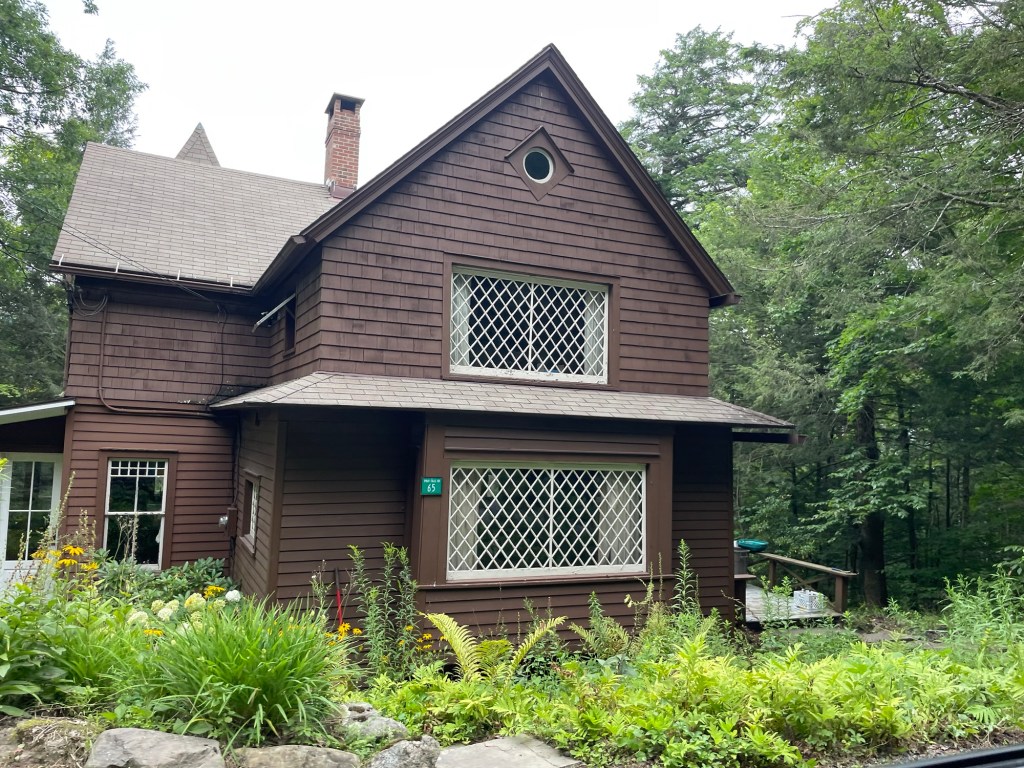
Chansonetta Stanley Emmons (1858-1937) was born in Kingfield, Maine, and was one of the great women photographers in the 19th and early 20th century, often depicting domestic life and New England scenes. The young Chansonetta Stanley grew interested in photography after her brothers’ (Francis E. and Freelan O. Stanley) dry-plate printing invention, they also invented the steam-powered automobile known as the Stanley Steamer. She married James Nathaniel Whitman Emmons in 1887 and in 1894, James hired architect Henry McLean, to design a residence for him and Chansonetta, this lovely home on Harley Street on Ashmont Hill. The couple occupied the house until 1898, when James died of blood poisoning at the age of 41. Chansonetta sold the home and moved to Newton, where her two brothers lived and operated their business. The house blends Queen Anne and Colonial Revival styles and originally had a conical roof over the corner rounded bay. The roof was replaced with a flat roof at about the time of the large balcony and extended dormer.

Joseph Lindsey Cottage // 1886

While Marblehead is best-known for its Georgian and Federal period houses, there are some great examples of later styles, sometimes tucked behind and in side yards of earlier residences. This is the Joseph Lindsey Cottage on Washington Street, a vernacular, Folk Victorian style residence built in 1886 by carpenter and housebuilder, Joseph W. Lindsey (1823-1902). Mr. Lindsey lived nearby on High Street, and purchased an earlier house at 45 Washington Street by 1881, building this cottage five years later and rented both out to boarders. Joseph Lindsey worked his entire life as a carpenter, except for a few years when he and his brother, Philip B. Lindsey, travelled west to seek gold and fortune during the California Gold Rush. The Lindsey Family Papers are part of the collections of the Marblehead Museum. 

Harvey School // 1883

Built to meet the needs of an expanding and prosperous community, the Harvey School in Westborough, Massachusetts, was built as a neighborhood school and is both historically and architecturally significant. Located on Phillips Street, a residential, tree-lined street just north of the commercial center of town, the Harvey School was built in 1883 under the supervision of Dr. Edwin Bayard Harvey, a local doctor who served on the town’s School Committee and as superintendent of schools from 1887-1890. As a State Senator he introduced a bill in 1884, which became law, to provide free textbooks for schoolchildren of Massachusetts. The Queen Anne style school building was in plan, designed by Dr. Harvey, who hired the Worcester-based architectural firm of Barker & Nourse, to furnish plans and design the building itself. The school would eventually close in 1980 as many local schools were consolidated, and the building was rented to the Boy Scouts and the Westborough Community Chorus. Recent attention on the under-utilized building has initiated more discussion on the future of the building, which may eventually house a regional emergency communications center.

Dr. Benjamin L. Noyes House and Vault // 1903

Benjamin Lake Noyes (1870-1945) was born in Lisbon Falls, Maine, but grew up on Grand Manan, New Brunswick, Canada. He worked at his father’s hardware store before entering Bowdoin Medical College. After graduating, he moved to Stonington, Maine, to work as a physician. Here, he met his wife, Linnie Howard, and they married in 1899. In 1903, the couple had a large Queen Anne style house built on a bluff, overlooking the Stonington Harbor. Dr. Noyes was a physician, surgeon, occultist, inventor, surveyor and antiquarian, who took interest in genealogy and local history in his spare time. By the time of his death Dr. Noyes had completed 100 volumes of material on island history and genealogies of its people. To house his massive collection, he constructed a fire-proof vault of local granite at the base of his home opened his record collection to the public known as the Penobscot Bay Archives. After his death in 1945, much of the collection was sent to the local historical society for preservation. A fire in 1981 destroyed much of the house except the first floor and the granite, fire-proof building, and the upper floors of the Noyes house were rebuilt.

Thurlow Building – Stonington Public Library // 1897

This historic building on Main Street in the working harbor village of Stonington, Maine, was built in 1897 as a commercial block for Mr. Thurlow. John Leman Thurlow (1842-1928) was born on Deer Isle and was engaged in business in town. Mr. Thurlow had this commercial building constructed to house a local grocery store with residences above. Just before its completion, the Deer Isle Gazette wrote, “J. L. Thurlow’s new store is up and the side finish is being put on. It will be a fine commodious two story and a half building, an ornament to the place.” The building later was occupied as a millinery shop, a dress shop, and was purchased in 1959 by a newly established library association. The all-volunteer operation to establish a library in town began in 1955, and a collection of donated books was eventually housed in a rented space until this building was purchased as the home of the village library.