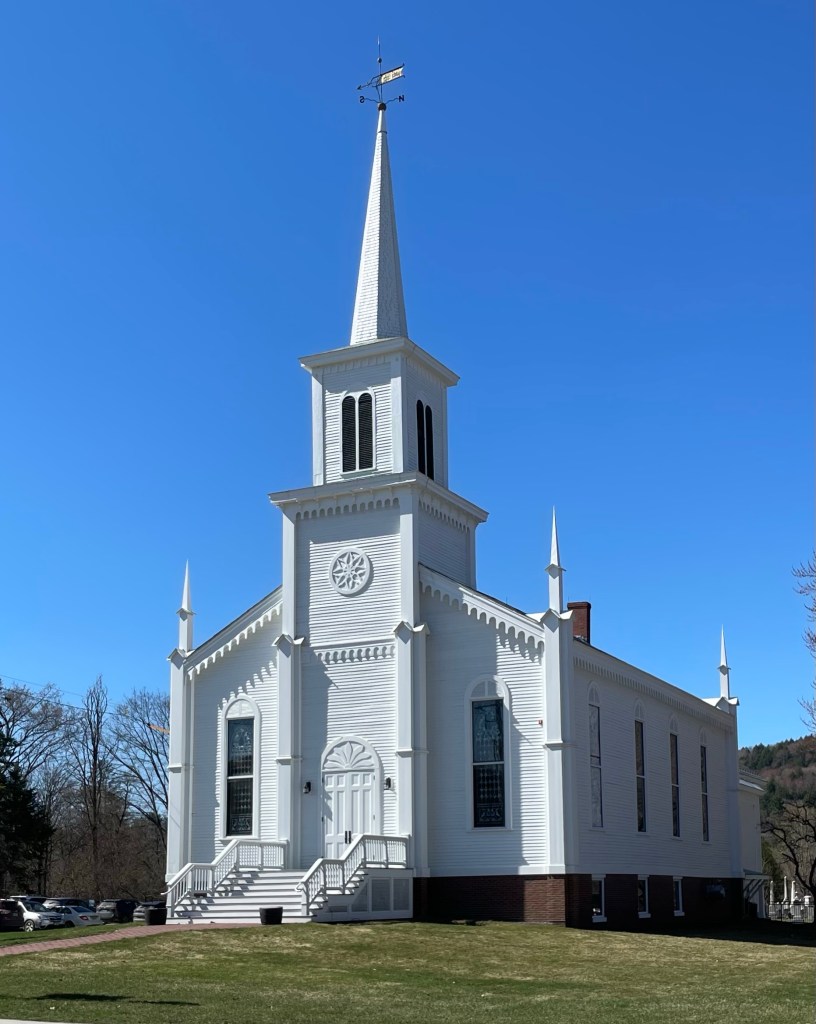
As soon as settlers arrived in Waterbury, they began worshipping their respective religions, largely out of private homes. The town’s meeting house was occupied by some congregations, but there was no real union church for the many growing congregations. This edifice was originally erected in 1824 as a united Congregational church by local builders, the Carpenter Brothers (how perfect is that?) The church was modernized in about 1860 with Gothic Revival detailing, which included the raising of its foundation, bargeboard, spires, and a new steeple. It was updated later in 1880 with a new chapel and ten years later, with stained glass windows. It remains today as an active church and is in a great state of preservation.
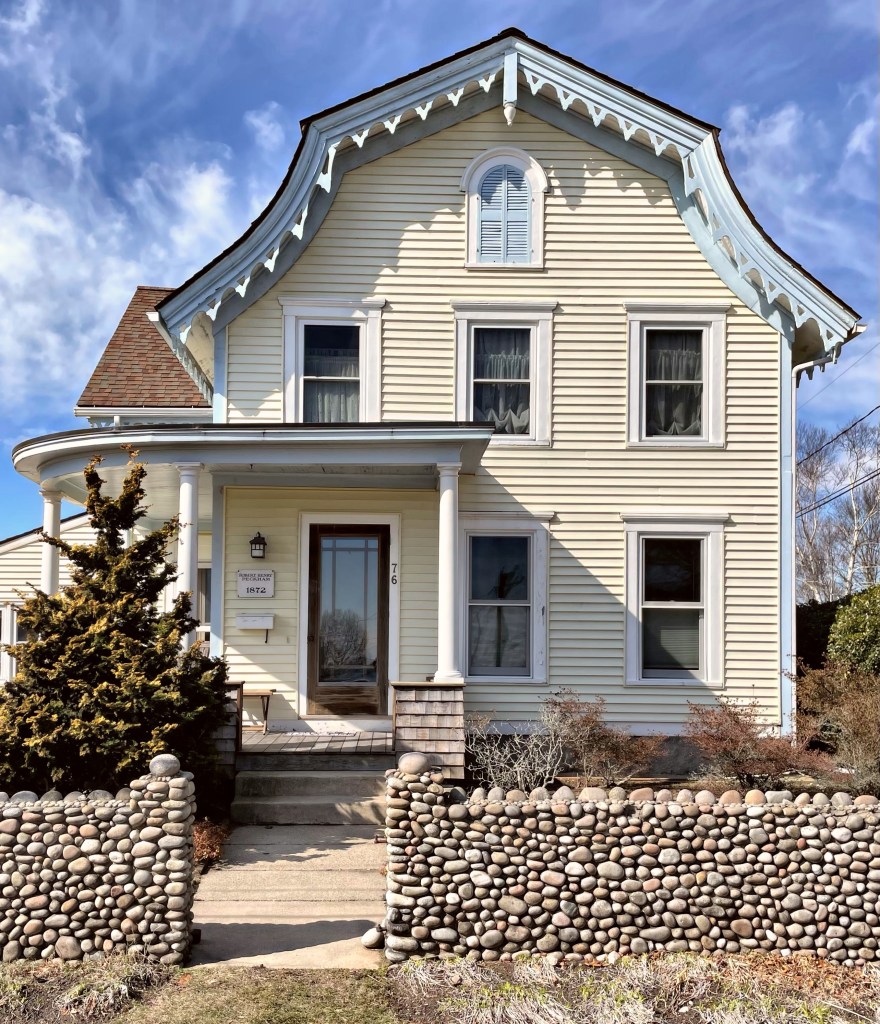
Another of Noank’s stunning Victorian-era seaside cottages is the 1872 Robert Henry Peckham house which is located across the street from the village’s most ornate cottage, the Deacon Robert Palmer House (featured previously). The house exhibits a gambrel roof which reads as a mansard roof at the side elevations. A round arched window is set into the gable end. Decorative cut bargeboards add much complexity to the design. It appears that in the early 20th century, as Noank was re-establishing itself as an artist colony, the owners added the small wrap-around porch and stone garden wall.
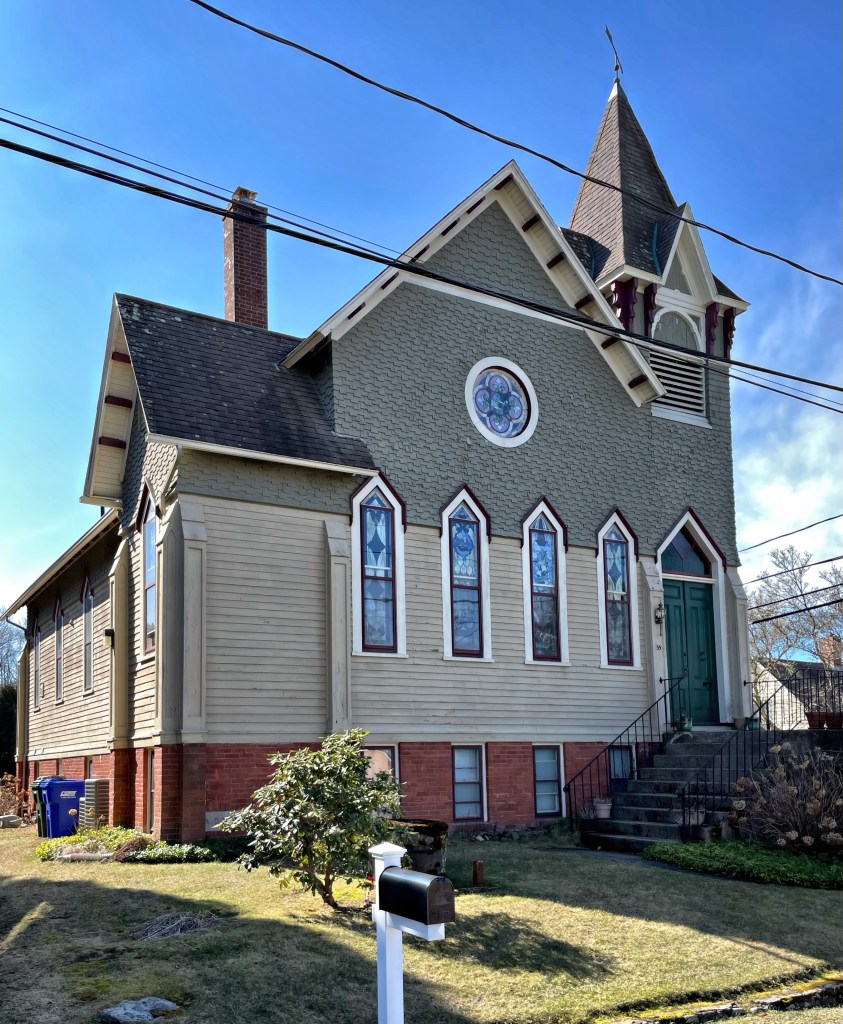
Adaptive reuse of old buildings always makes me so happy to see! Besides the obvious benefit of preserving an old building which contributes to the history and character of an area, there are clear environmental benefits to renovating older buildings for new uses when older uses are no longer viable. In 1902, the village of Noank was bustling with workers in the shipyards, many of whom attended or hoped to attend religious services close to home rather than travelling to adjacent towns. As a result, the local Methodist church-goers had this building constructed. Architecturally, the building is a hodge-podge of styles with interesting lancet windows as a nod to the Gothic style, shingle and clapboard siding which reads Queen Anne. The Noank Methodist Church merged with the Groton Methodist Church to form Christ United Methodist Church, which moved to a new building in 1972. The former church was converted into a residence. Preservation wins!
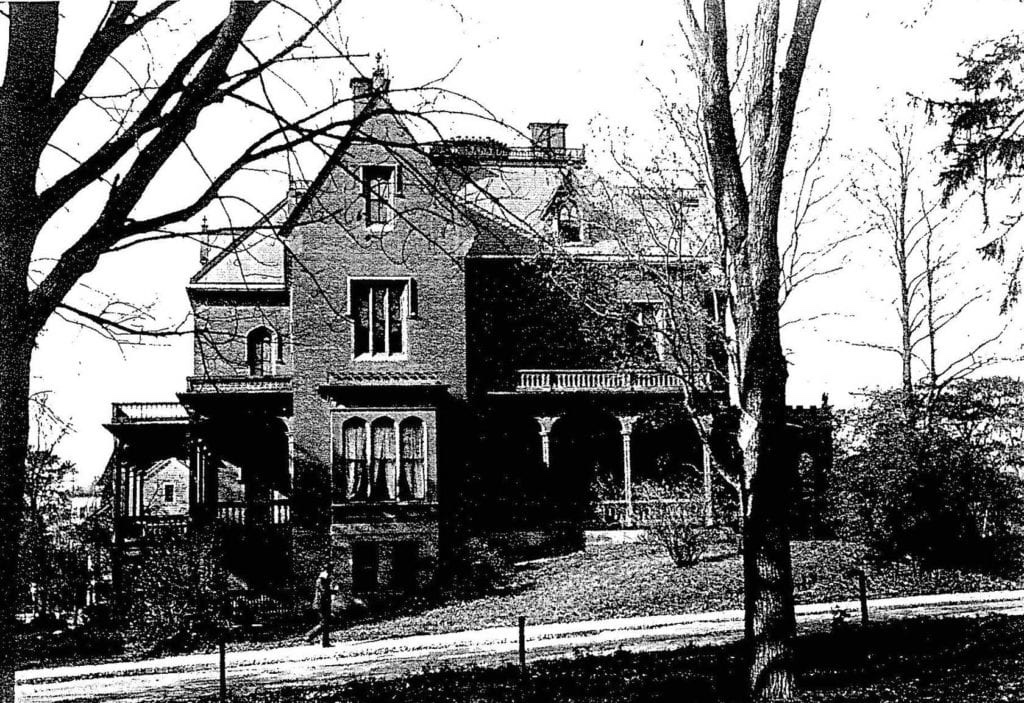
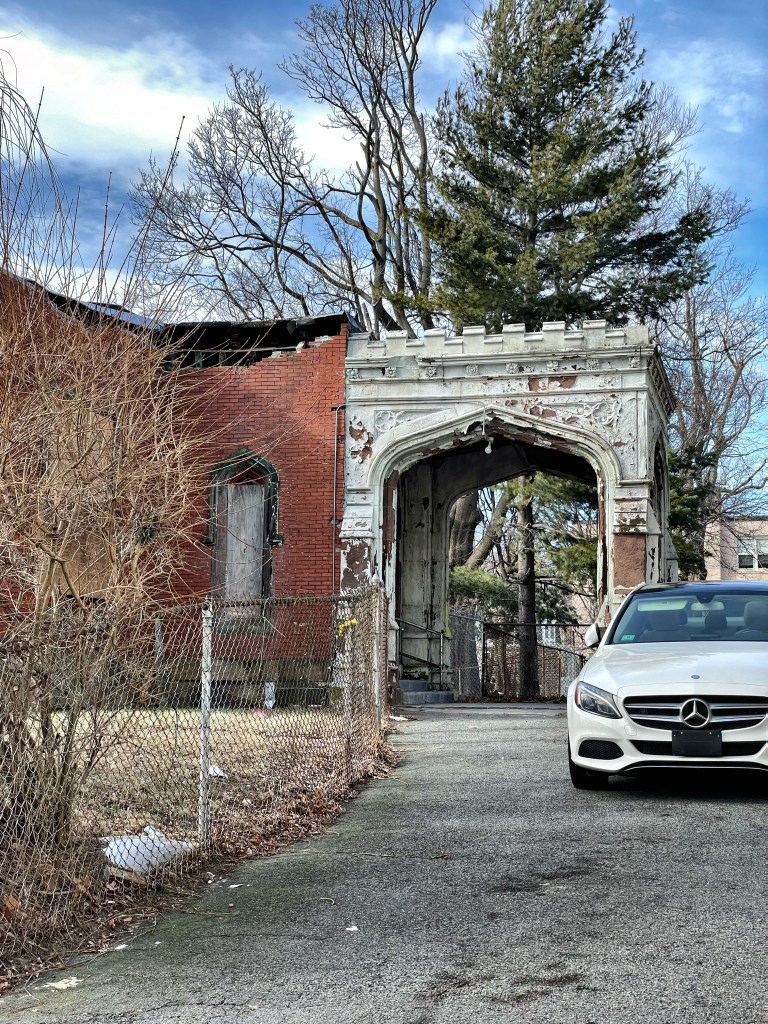
Not much remains of one of Roxbury’s once grand rural estates, but as there is some left, I want to feature it before it’s all gone, possibly any day now! Horatio Harris was born in Dorchester (present-day South Boston) in 1821 and ran a prominent auction house in Boston. He built his country estate in Roxbury beginning in 1857 in the Gothic Revival style, adding on and updating numerous times. During the Civil War, the firm of Horatio Harris & Co. obtained the contract to sell at auction all goods which were confiscated by the United States’ land or naval forces and brought to Boston. He made a lot of money and added to his land holdings and estate house in Roxbury. The mansion’s construction was timely as Roxbury was transitioning from a rural town, with farms and country estates of wealthy Boston merchants, to a streetcar suburb, increasing the land value of his holdings. The estate included nearly 30 acres of meandering paths, a lake with an island, outbuildings, and an observation tower – one of which remain today besides the ruin of the former mansion. Horatio died in 1876, in the decades following his death, his heirs began subdividing the estate, developing some and selling other plots off for houselots. By the early 1900s, Jewish people began moving into Roxbury, mixing with the predominantly Yankee population. By 1915, the Harris manor house was owned by the Hebrew Alliance of Roxbury, Inc. By the 1920s, they expanded facilities, adding a school building to the front of the former Harris Mansion, completely obscuring the facade of the old estate. In the 1940s, the upper stories were removed. Seemingly the death knell of the old Harris Villa was a fire in 2019, which gutted much of the remaining original fabric of the estate. All that remains is a bay window, some window trim details and a Gothic porte-cochere at the rear of the estate. See it before it’s too late!
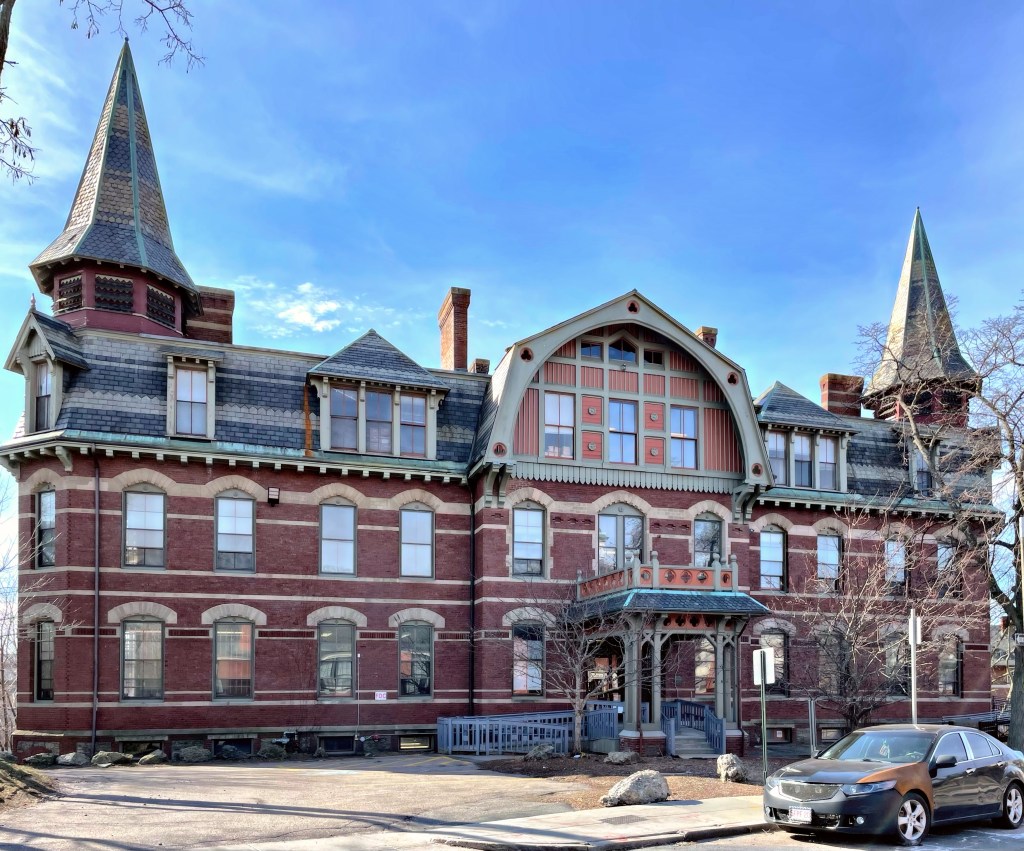
Following the construction of Cary Cottage at the New England Hospital for Women and Children in Roxbury (last post), architects Cummings and Sears turned their attention to designing the most important facility in the complex, the large two-story Zakrzewska Building built in 1873. It is a fine example of polychromatic High Victorian Gothic style with Stick detailing. The building is characterized by its decorative stone and brick string courses, arched window heads, polychrome slate roof, end towers, and a gambrel dormer. The building was named after Dr. Maria Zakrzewska (1829-1902), a Polish-American doctor who moved to the United States in 1853, eventually settling in Boston in 1859, working as a professor of obstetrics at the New England Female Medical College. There, she realized that women in medicine did not have the same opportunity to advance in their field and left, launching her own hospital, the New England Hospital for Women and Children. It was the first in Boston, and the second hospital in America, to be run by women physicians and surgeons. Dr. Zakrzewska knew that the opportunity to work with large numbers of patients was vital if women physicians were to achieve the same levels of training and standards of practice as male physicians. The hospital became a primary training hospital for several generations of women physicians, and also trained nurses. The hospital was extremely successful and remains a medical institution to this day, as the Dimock Health Center.
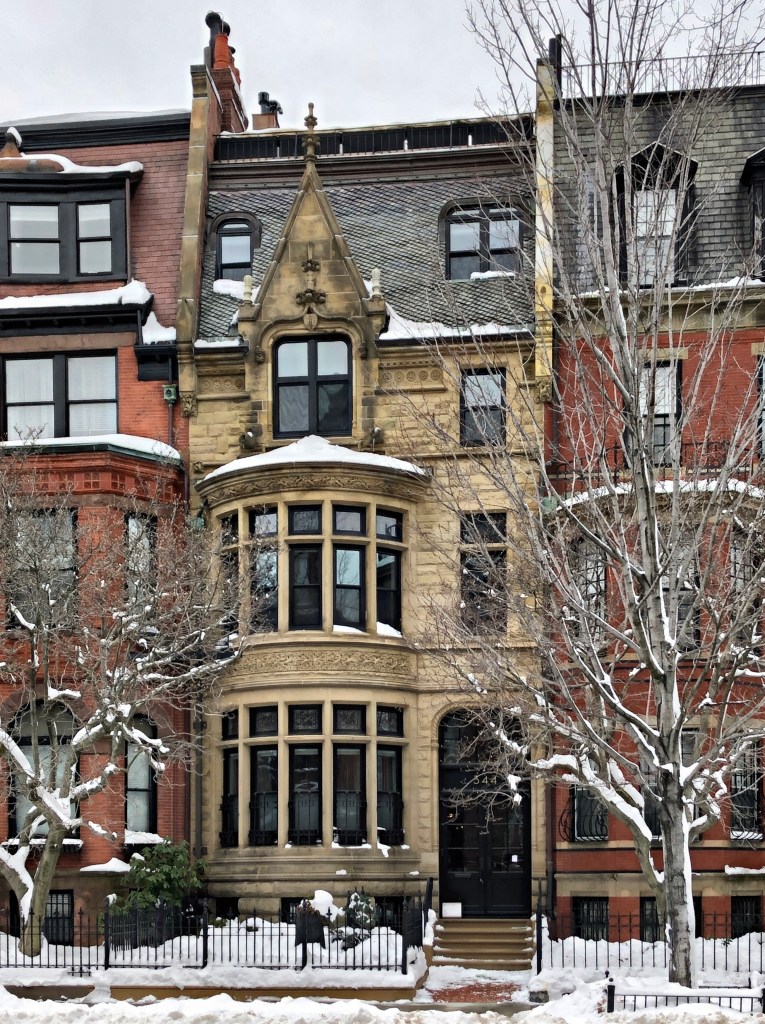
Another of my favorite townhouses in the Back Bay neighborhood of Boston is this Victorian Gothic mansion on Beacon Street, built for Daniel and Mary Knowlton. The residence was designed by the firm of Allen and Kenway and built in 1880 and stands out architecturally for its use of style and use of material amongst a sea of brick. A former cotton merchant, Daniel Knowlton was treasurer of the Flexible Shoe Nail Company and later worked as a stockbroker. The large single-family dwelling was converted into four condominium units in 1989, but has since been switched back to a single-family residence. It sold for $11.2 million dollars as a five bedroom, six full and two half bath home in 2017. Yikes!
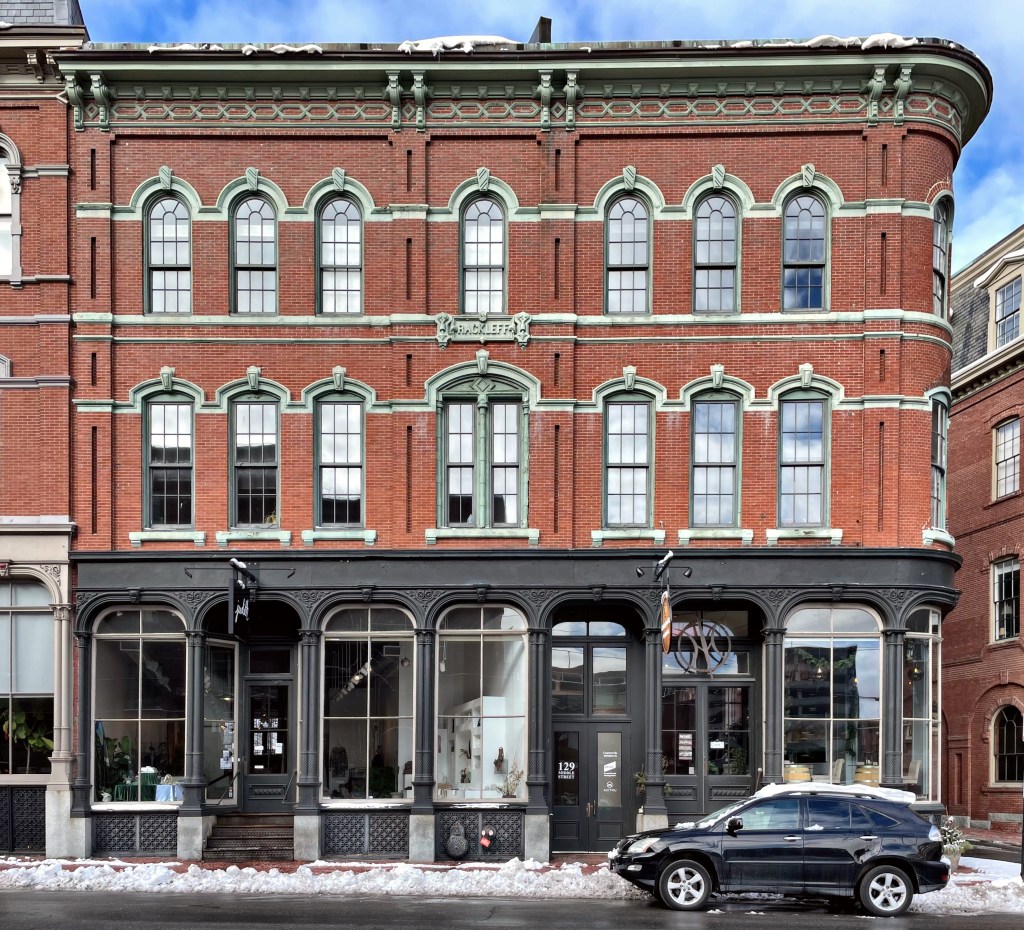
Late 19th century commercial architecture in downtowns all across New England always transport me to the past because they evoke the days of carriages in the streets and the hustle and bustle of post Civil War American cities. After Portland’s Great Fire of 1866, many standing or damaged wooden buildings were replaced with fireproof construction in the event of another conflagration. Five years before the Great Chicago Fire, this was the greatest fire yet seen in an American city. It started in a boat house then spread across the city. Amazingly, only two people died in the fire, but ten thousand people were made homeless and 1,800 buildings were burned to the ground. This is one of the buildings constructed in the rebirth of the downtown/waterfront of Portland. The Rackleff Block was built in 1867 from plans by architect George M. Harding, who designed the building with details reading Italianate and Victorian Gothic. The building retains its original cast iron storefronts and ornate cornice with brackets.
After the Civil War, the Village of Versailles’ Congregational Church was seeing less attendance and its deathknell was a fire which destroyed the building in 1870. That next year, a vote was taken by members of the Congregational Church as to a preference for their denomination. A majority voted for Methodist Episcopal and asked the New England Conference to appoint a Pastor for the new church. Funds were gathered and this church was opened in 1876, in the Italianate and Victorian Gothic styles. The building sits upon a raised brick foundation with small windows on the facade. In 1887, the Versailles church was linked with Baltic and Greenville (Norwich) the following year.
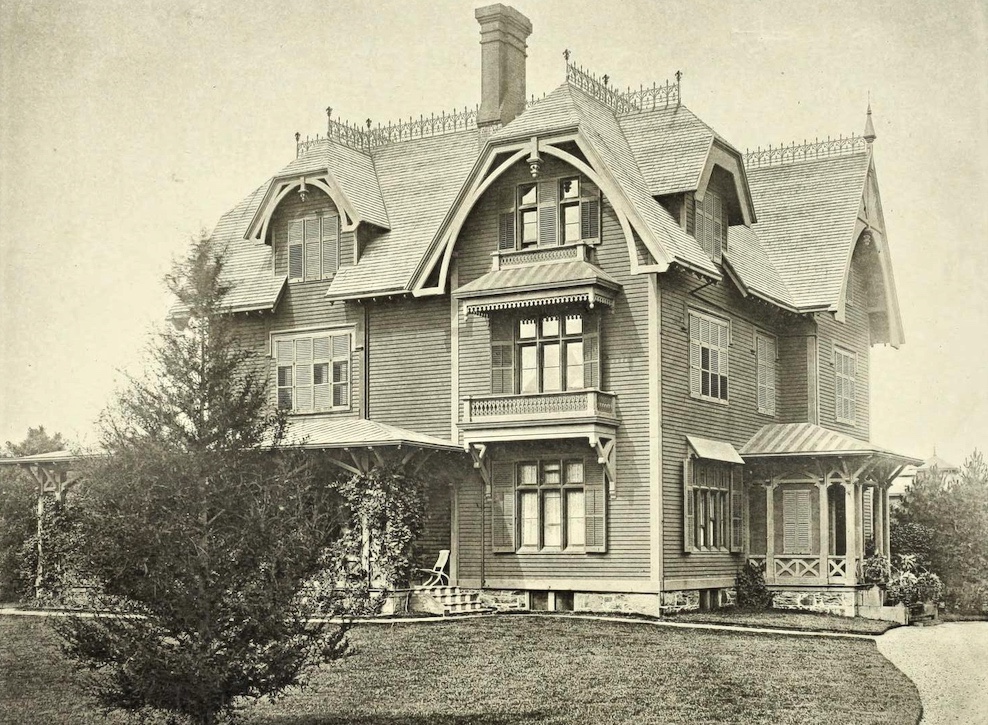
Formerly located adjacent to “The Lodge” (last post) on Newport’s iconic Bellevue Avenue, this mansion once stood and today, would be one of the finest in town, but it suffered a similar fate as its neighbor. The home was built for Rebecca Mason Jones (1803-1879), a widow (who married her first cousin) and daughter of wealthy New York banker and developer, John Mason. Rebecca made money from her late father’s estate, developing some parts of Manhattan. For her summer residence, she hired local society architect, George Champlin Mason to design the cottage. The cottage (originally thought to have been razed) was moved to 28 Narragansett Avenue to make room for Rose Villa, which also necessitated the demolition of the two neighboring mansions (more on that tomorrow).
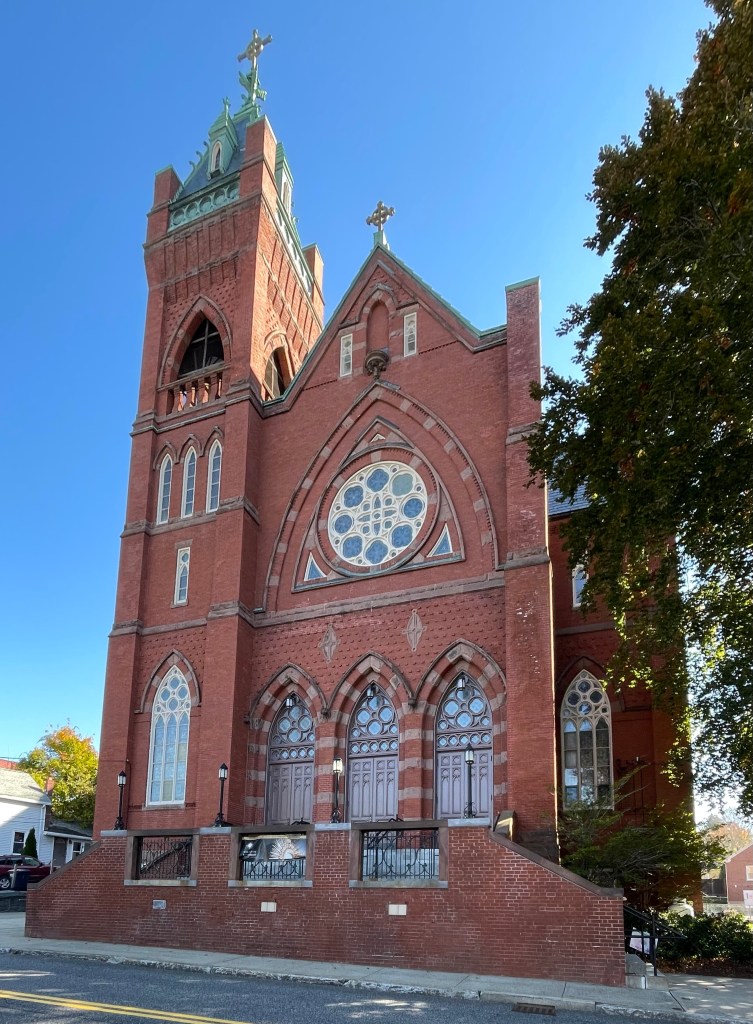
All Saints’ Church in Ware Massachusetts was originally known as St. William’s parish, and was the oldest Roman Catholic Church in the town. Beginning in 1850, regular Catholic services were held in the new industrial village, as large a population of French Canadians moved there for work in the textile mills. A small frame church was built on West Street and a cemetery laid out around it for members of the congregation. As the congregation grew, a larger building was needed. In 1888, work began on the present structure which was to be located in a more central location. The Archdiocese worked with Patrick W. Ford, an architect who designed many Roman Catholic churches built in the eastern part of United States through the latter half of the 19th century. The Victorian Gothic church building remains one of the best examples of the style in central Massachusetts.

 Buildings of New England