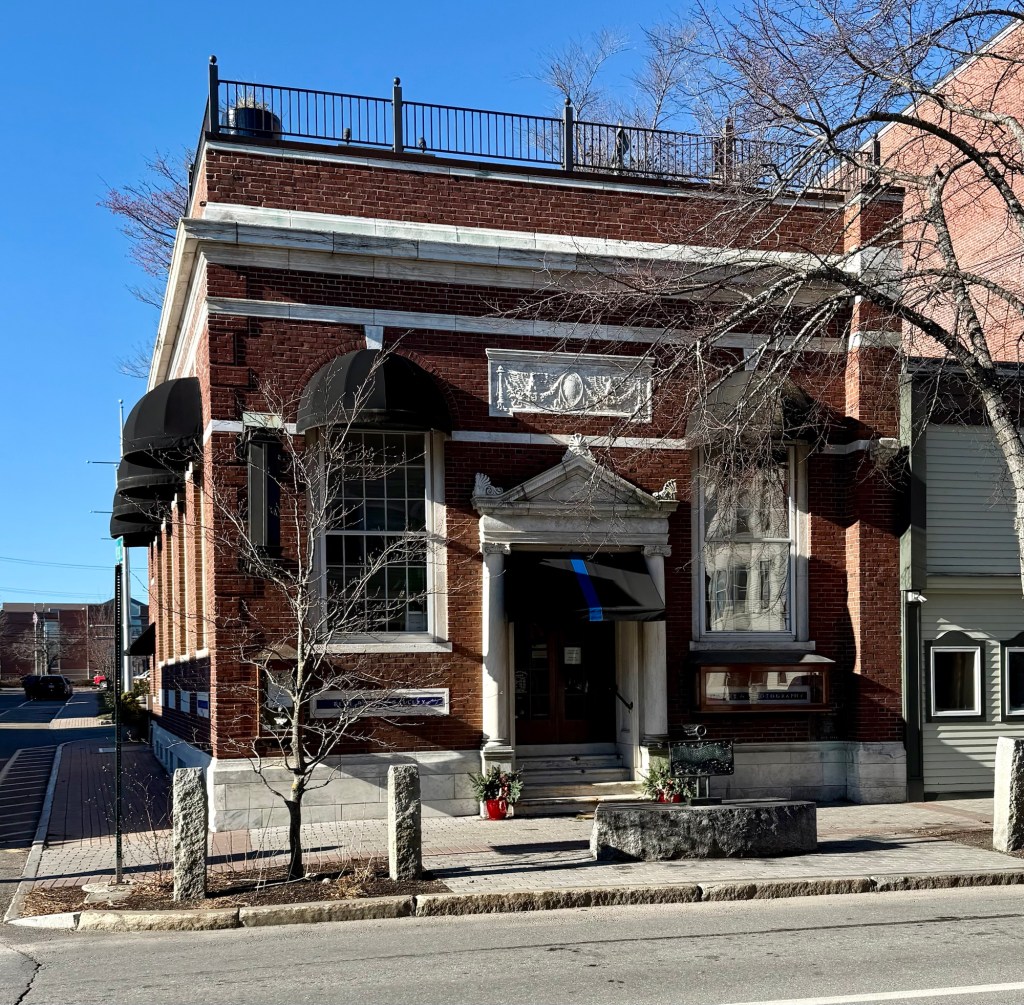
The Rockland Security Trust Building is a significant Colonial Revival style bank structure located on Main Street in Downtown Rockland, Maine. Built in 1912 from plans by Boston architect Richard Clipston Sturgis, the brick building is trimmed in marble, to provide a visual representation to the financial wealth and stability the bank could provide its clients. The bank closed and the building is presently occupied by an art gallery. Sadly, the rooftop deck railing takes away so much from the building’s presence.
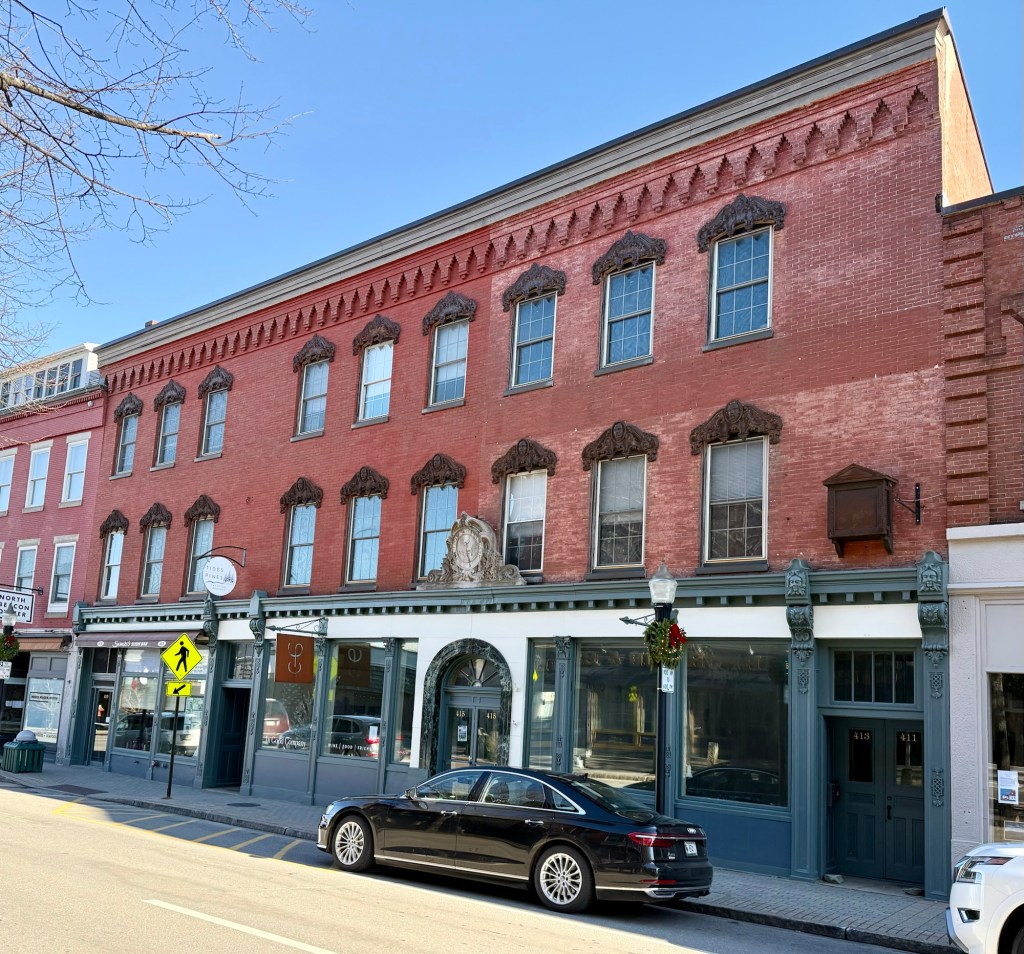
This stately commercial block is found on Main Street in Rockland, Maine. The block originally housed the local custom house (before a larger, purpose-built custom house was erected nearby in 1873) with other retail and commercial spaces at the ground floor with offices and meeting space above. The block is a great example of the Italianate style with an intricate brick corbeled cornice and cast iron and marble storefronts. The commercial space occupied by the First National Bank also exhibits a stone medallion with deer set within a wreath over the entrance. The detail that stood out to me most was the cast iron lintels over the windows, with the second floor lintels including a man’s face! The building is well preserved and is today occupied by local businesses.
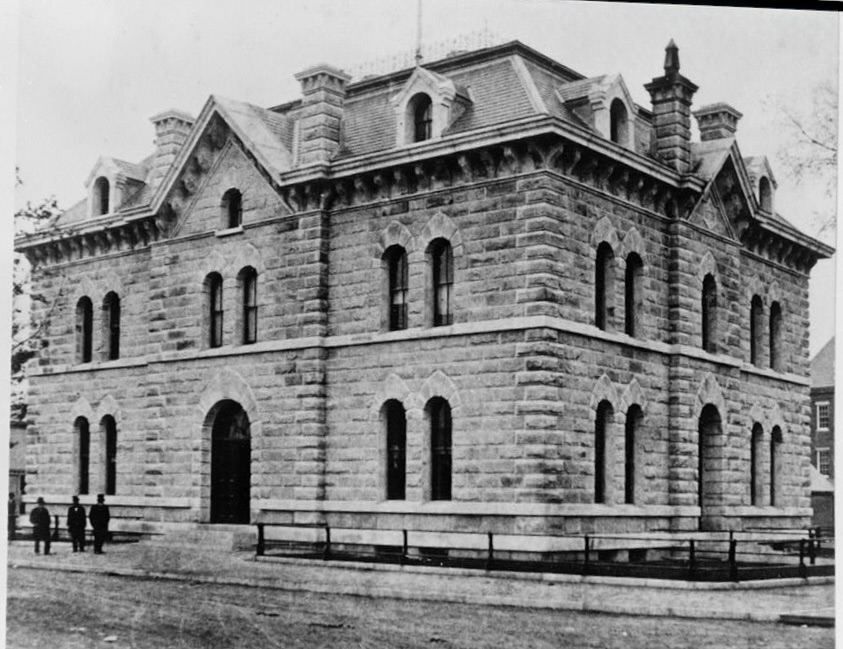
It saddens me to see photos and learn about some of the amazing buildings demolished in the name of “progress”; it is even more disappointing when said building is replaced by a surface parking lot (over 50 years later)! This great stone building was built in Rockland, Maine, in 1876 as the town’s post office and custom house by the Federal government. Relatively unknown architect Alfred B. Mullett is credited with the design as he served from 1866 to 1874 as Supervising Architect of the United States Treasury Department. The building can be classified as Italianate-Second Empire in style and is constructed of massive, rough-faced granite block walls with a shallow mansard roof above. The building was offered for sale by the U.S. Government in 1967, likely due to the upkeep costs and a shrinking local population with the dependency on maritime trade diminished. The building was ultimately razed in late 1969, with a new, uninspiring, post office built next door to this site.
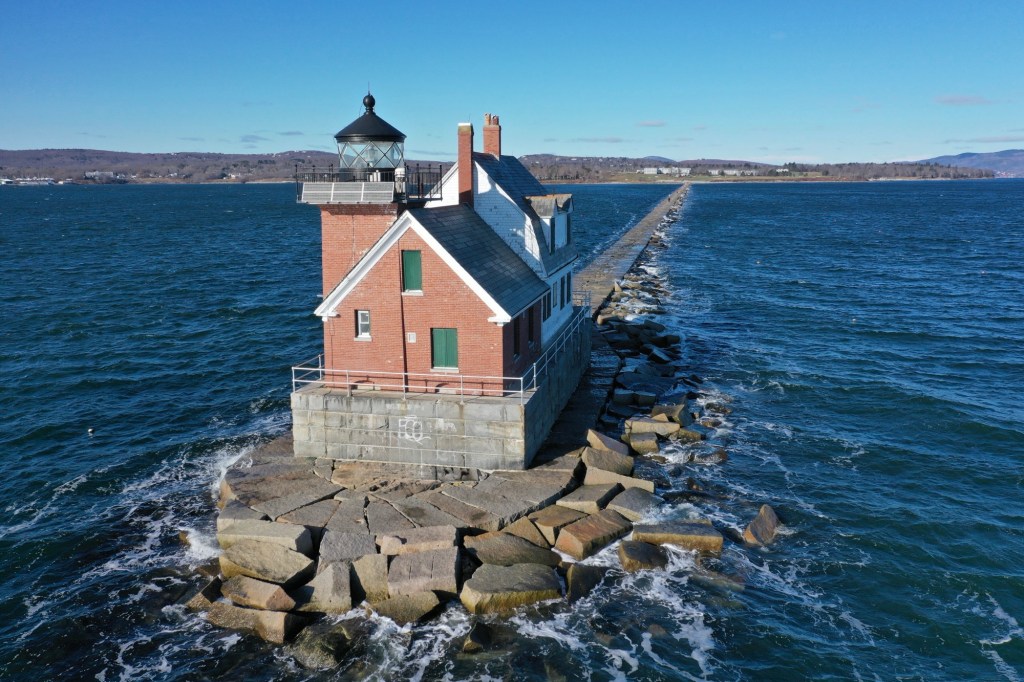
The Rockland Harbor Breakwater and Lighthouse is arguably the most iconic structure in the coastal town of Rockland, Maine. As Rockland was a major port and harbor, relying on the transportation of lime and shipbuilding for its economy, protecting the harbor was of paramount importance. Major storms in the 1850s highlighted the need for improved harbor protection, but federal appropriations for a breakwater were not approved until 1880. Between 1880 and 1900 the United States Army Corps of Engineers, under a series of Congressional appropriations, built the breakwater, a 4,364 foot long wall in the harbor built of locally quarried blocks of granite. It is truly a feat of engineering! The lighthouse standing at its end was added in 1902. The iconic breakwater is accessible by those who brave the crashing waves and distance to the end of the nearly mile-long walk out to the lighthouse. The structure is today maintained by volunteers and the City of Rockland.
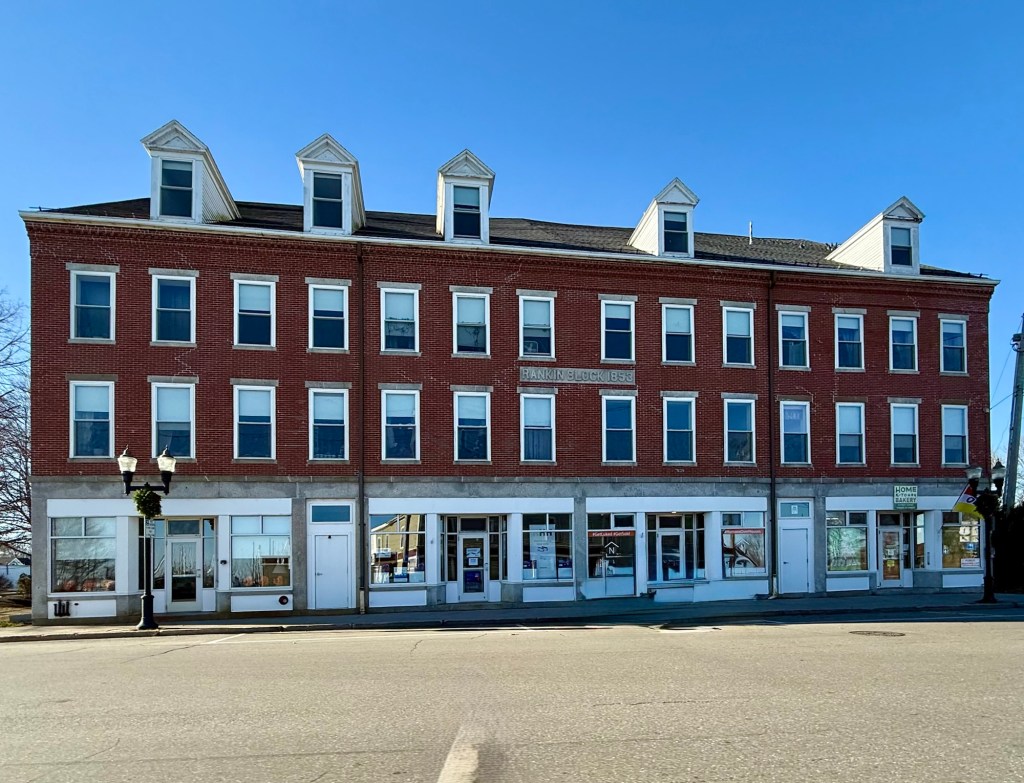
The Rankin Block is a significant early commercial building in Rockland, Maine. The brick block was built in 1853 by Samuel Rankin, a descendant of one of the area’s first European settlers. Its location was near the center of the city’s shipbuilding industries, and replaced an earlier commercial building destroyed by fire. Its early tenants included a ship chandlery, shipping offices, and a sail loft. The vernacular Greek Revival style building is constructed of brick and granite, showcasing the no-frill architecture that working Maine sailors preferred. The building is now occupied by a senior living facility. Talk about a great adaptive reuse!
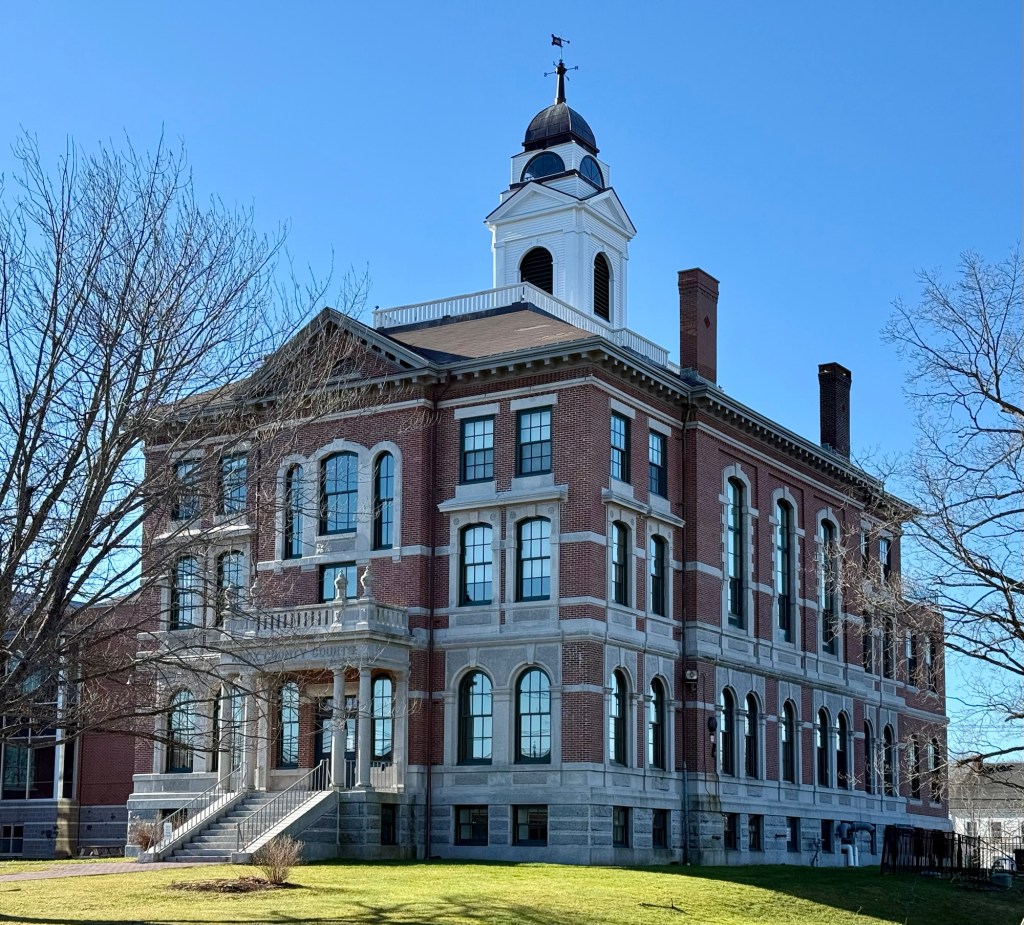
The Knox County Courthouse stands in Downtown Rockland, Maine, and is a landmark example of a Civic building constructed in the Italianate style. Knox County was separated from adjacent Lincoln County in 1860, with the coastal city of Rockland established as its county seat. For its first fifteen years, county offices were dispersed amongst buildings until in 1874 when the county retained Boston architect Gridley James Fox Bryant to design the present building. The building was constructed at a cost of $83,000, well over the anticipated $50,000 cost, and opened in 1875. The first floor accommodated all the county offices, with fireproof storage areas for records. The second floor was be taken up by the courtroom, and at either end were rooms for judges, jury and counsel.
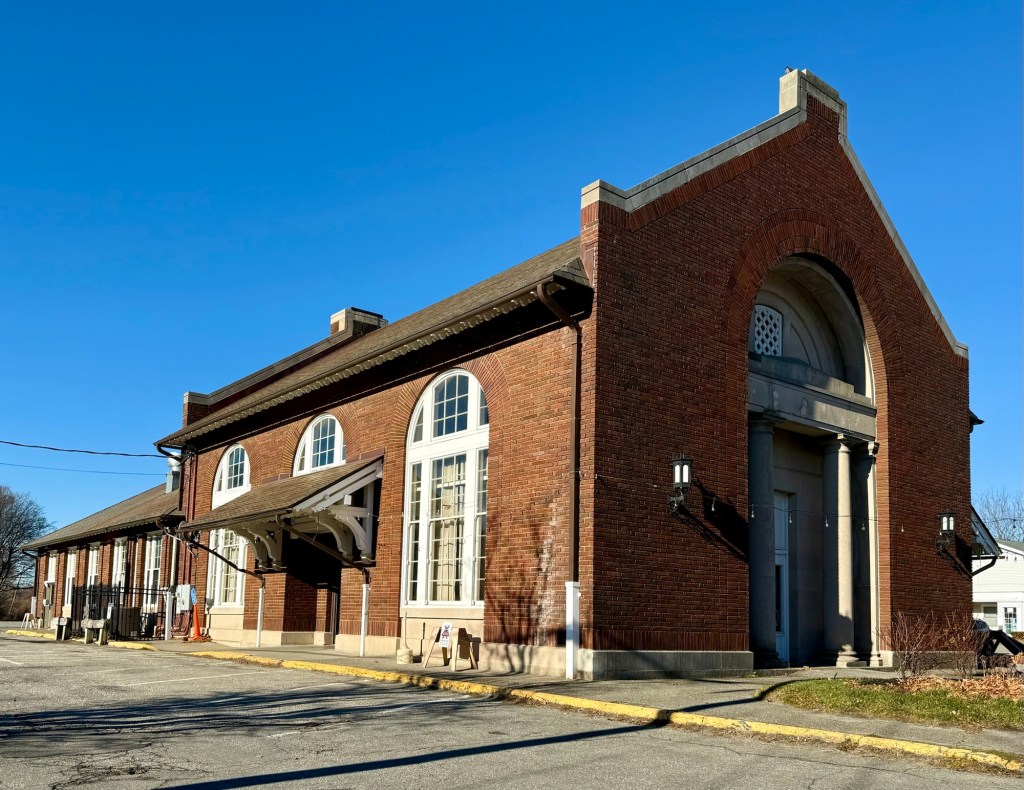
Welcome to Rockland, Maine! Originally called Catawamteak by the Abenaki, meaning “great landing place”, Rockland was first settled by European settlers in In 1769 as a camp to produce oak staves and pine lumber. In 1777, when Thomaston was incorporated, present-day Rockland became a district called Shore village. In 1848, it was set off as the town of East Thomaston and renamed Rockland in 1850. The coastal community grew quickly as a shipbuilding and lime production center, with upwards of 300 vessels to transport the mineral to various ports in the country for the building of communities all down the coast. The opening of the Knox and Lincoln Railroad in 1871 brought an influx of tourists and businesses, creating a development boom for the community. The line was leased to the Maine Central Railroad in 1891, which took over ownership in 1901. The Rockland Railroad Station, seen here, was built in 1917, just before the government took over the railroads during World War I. Architects Coolidge and Shattuck designed the station in the Romanesque Revival style with the oversized arched openings at the windows and main entrance. The rise of the automobile industry would further harm rail service and usage, and the Rockland Branch officially closed in 1959. The old Rockland branch station operated as the Rockland Town Hall for decades and is now occupied by a local restaurant, Trackside Station.
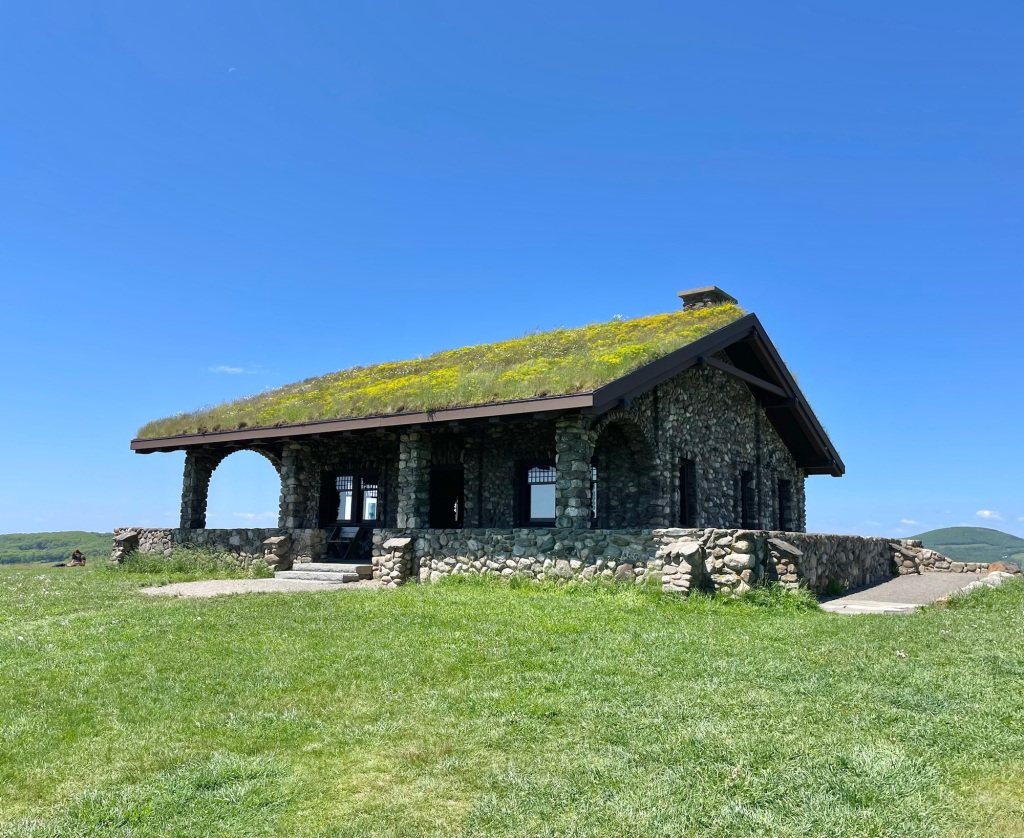
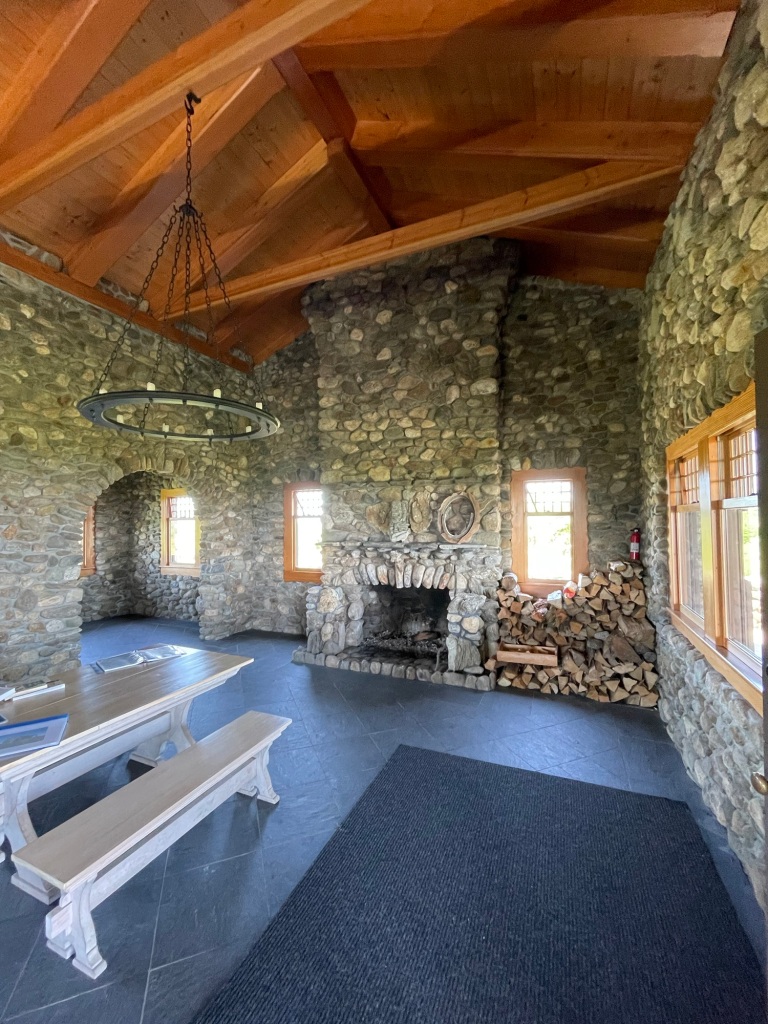
“Beech Nut” is a stone cottage built at the top of Beech Hill in Rockport in one of the best hiking areas of Mid-Coast Maine. The hut was built in 1913 for owner John Gribbel (1858-1936), a Philadelphia-based industrialist, who had a summer estate, “Weatherend” in Rockport. He hired a Norwegian immigrant named Hans Heisted, an employee of the Olmsted Brothers, to improve the grounds at Weatherend, which included meandering paths, stone walls, and stone structures. Meanwhile, the Gribbels had started acquiring land on Beech Hill in 1909, and eventually accumulated holdings of more than 300 acres. To keep the masons and landscapers busy during the winter, Gribbel and Heisted thought to build a small hut a few miles away on Beech Hill, which would serve as the family picnic and tea shelter. The stone building features a unique sod roof which was typical of Scandinavian houses up until the late 1800s. Once complete, family and friends would visit Beech Nut to enjoy the fresh air and views of the Atlantic from atop the hill for the day. After successive owners, the property began to deteriorate until the 1980s, when developers began to swarm the open space for redevelopment. In 1986, the land around Beech Nut was put under conservation easement and was acquired in 2003 by the Maine Coast Heritage Trust, which then transferred it in 2006 to the Coastal Mountains Land Trust. In 2007, the hut was completely restored and serves as a respite after the uphill climb for visitors.
As coastal communities in Maine’s mid-coast began to see more wealthy summer residents, these enclaves of cottages needed clubhouses and spaces to spend their summer days. In 1899, Philadelphian (and Rockport summer resident) Charles Wolcott Henry converted a section of his oceanfront summer estate at Rockport’s Beauchamp Point to a newly established golf club which quickly outcompeted all others nearby. Within a few years, Boston architect Charles H. Brigham, was hired to design this Craftsman style clubhouse that sits on an elevated site with an expansive wraparound veranda providing views of the new course and the Penobscot Bay. The rubble-stone foundation and walls clad in brown-stained shingles are well suited to the rugged coastal Maine site. The golf course, also designed in 1901, was planned by groundskeeper Thomas Grant as a 9-hole course. The recreational complex has been meticulously preserved and is a great example of a turn-of-the-century clubhouse in coastal Maine. The 1901 clubhouse is also said to be the oldest golf building in Maine!
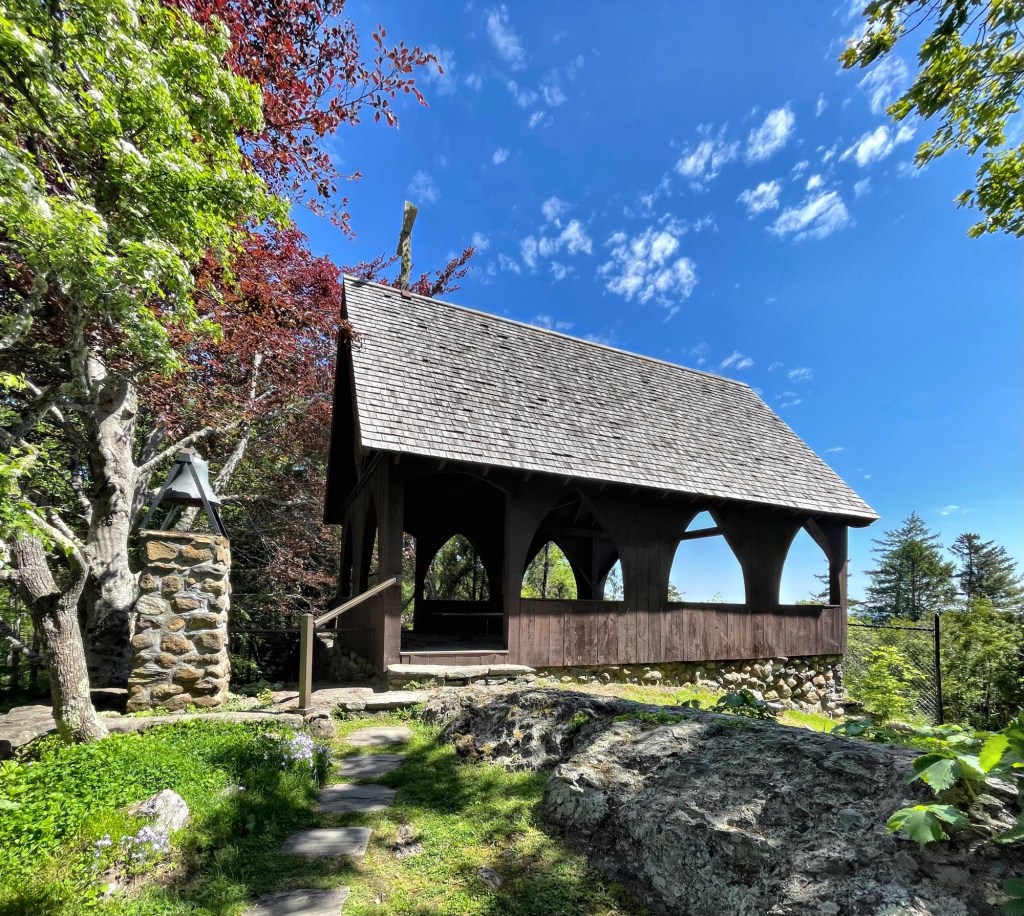
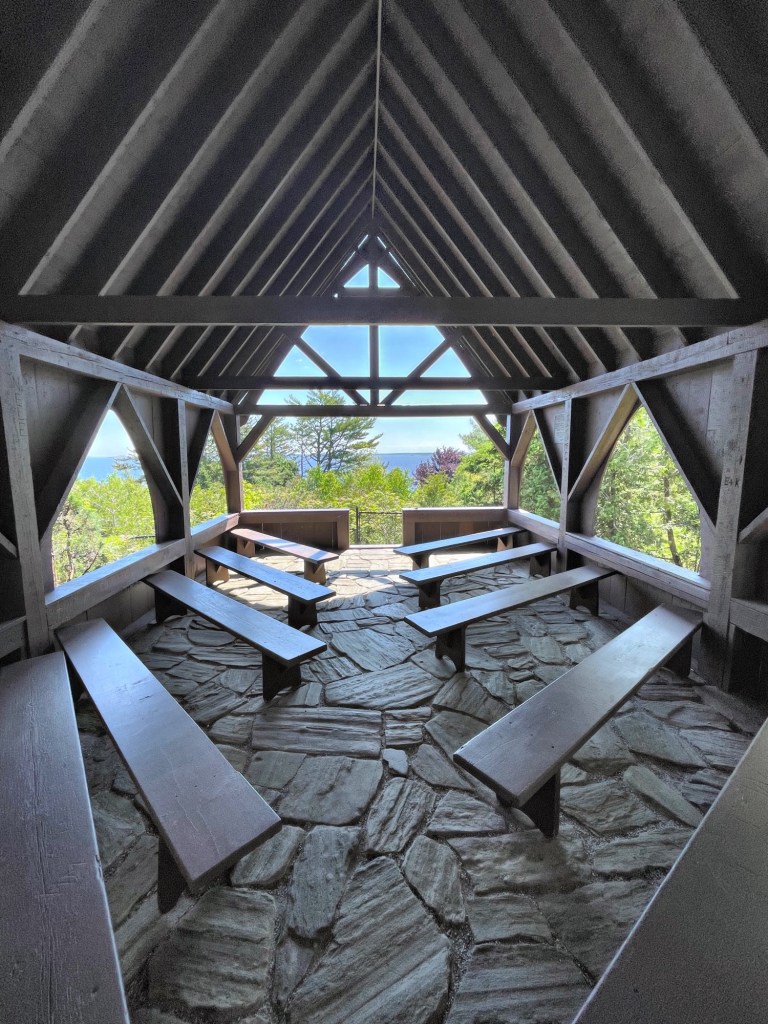
After the Tamarack Lodge hotel of Rockport, Maine, burned down in 1954, nearby resident Helene Bok began to envision what would be the best use of the charred landscape. Her project became the Vesper Hill Children’s Chapel, an absolutely stunning outdoor chapel that is open to the public. Her dream was to build a refuge that would be open for all people and “speak in and of itself of the beauty, goodness and truth of nature, life and God.” It is not clear to me who the designers were, but the structure and grounds are elegantly sited on the hill, overlooking the harbor in the distance. Helene planned the chapel to partially sit atop the rustic stone foundation of the former hotel on the site, with an open post-and-beam wooden structure above. After Helene’s death, Elmer Crockett, a designer for years on the Olmsted staff in Maine, oversaw the grounds and maintained a biblical herb garden. The chapel is today approached by a roofed stairway and surrounded by mature trees and locally harvested stones. It is truly a hidden gem in Mid-Coast Maine.

 Buildings of New England