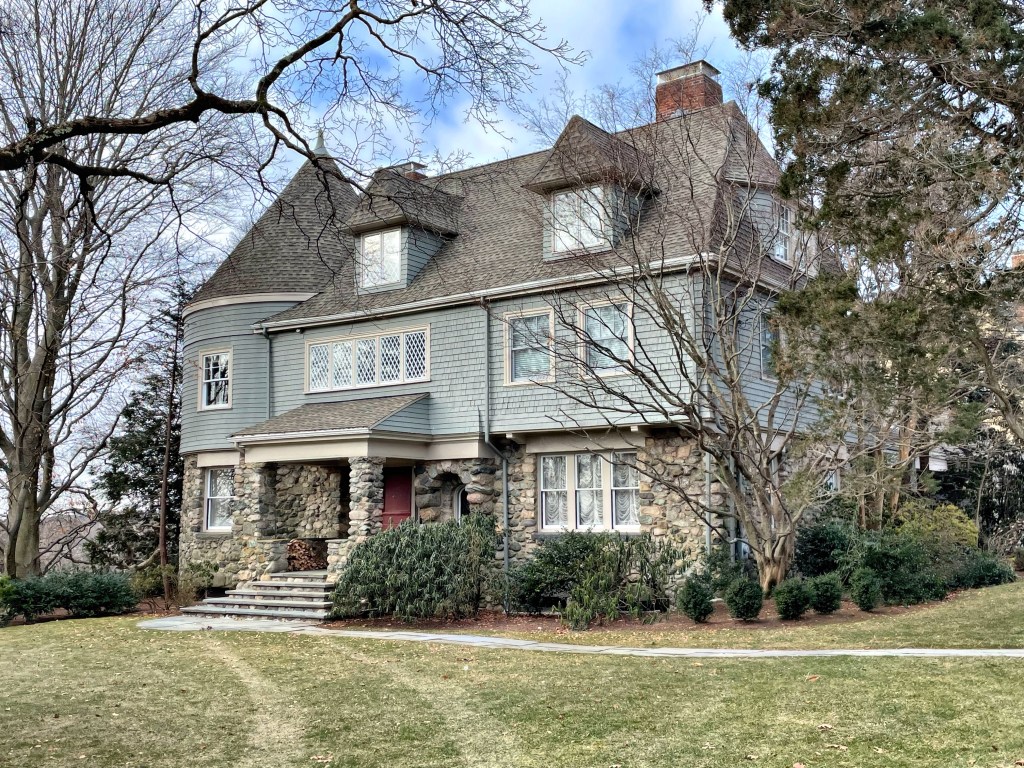
Louis K. Harlow House // 1888

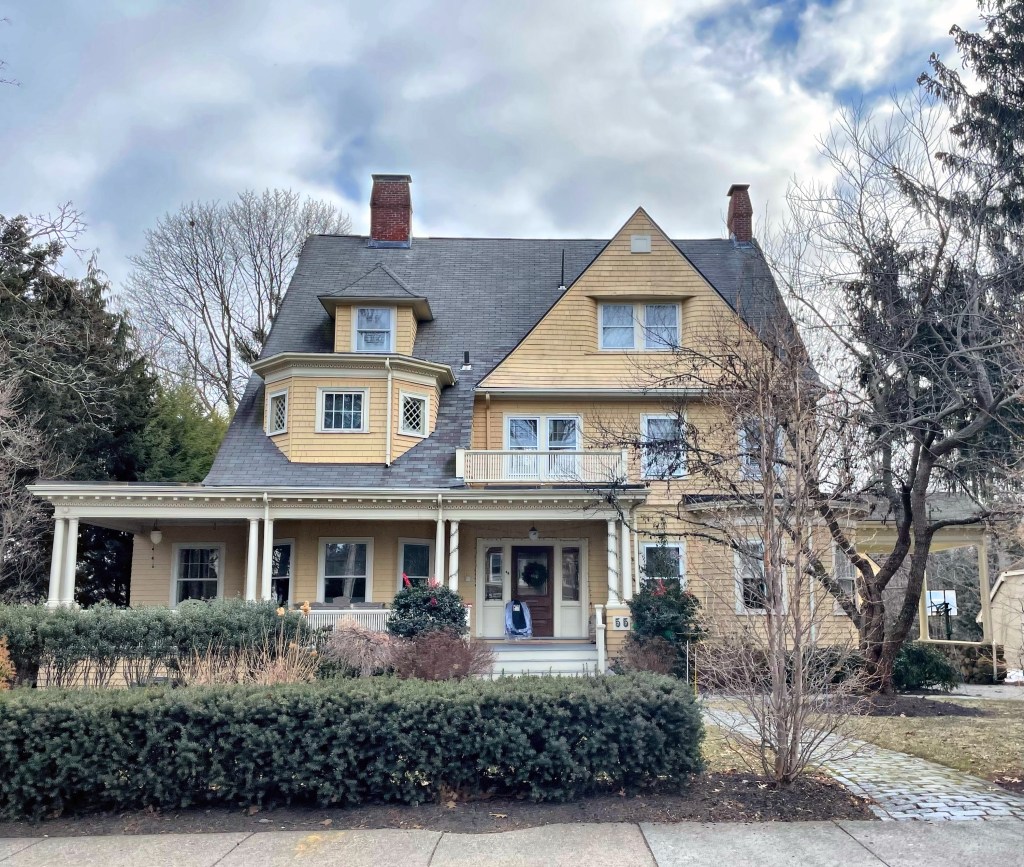
One of the best houses in Waban Village in Newton is this absolutely stunning Shingle style/Queen Anne home perched high on Moffat Hill. This house was built in 1888 for Louis K. Harlow, who began his career as a professional artist in 1880 and traveled Europe to study the work of prominent painters. Back in the Boston area, Harlow painted nature and landscapes and produced etchings that were shown in the Boston Art Club and sold worldwide. He later got into poetry and published multiple works. Harlow hired the firm of Longfellow, Alden, and Harlow, to design this country retreat. I assume there is a relation between Louis K. and the architect Alfred Branch Harlow, but I would love to find out the connection! The design is quintessentially Queen Anne, with the asymmetry, complex roof form, varied siding types, and diamond window sashes. The shingled second floor overhangs the fieldstone first floor which to me, evokes the Shingle style where the house seems to have grown out from the earth. I can only imagine how spectacular the interior is!
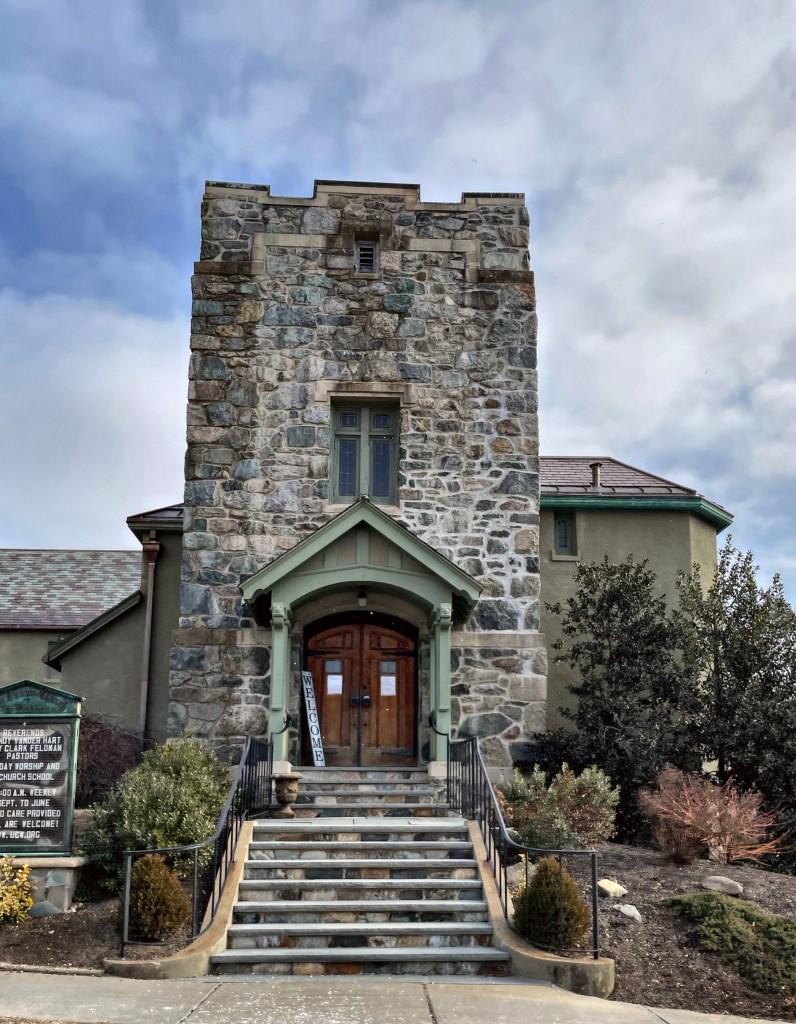
Union Church of Waban // 1912

In 1904, residents of the newly established village of Waban in Newton, Mass., began meeting with the hope to establish a non-denominational church there. As the population of the village grew rapidly in the first decade of the 20th century, funding surged and it was determined that a place of worship was necessary. William C. Strong, a Waban resident and well-known horticulturist, donated the land from his large holdings, many of which was already being developed for house lots. The church building, designed by Boston architect James H. Ritchie, had its cornerstone laid in November 1911. Construction followed rapidly and the building was formally dedicated in September, 1912. The building follows the Arts and Crafts movement, especially Ralph Adams Cram’s revival of the English parish church.

Winfield S. Carr House // 1896

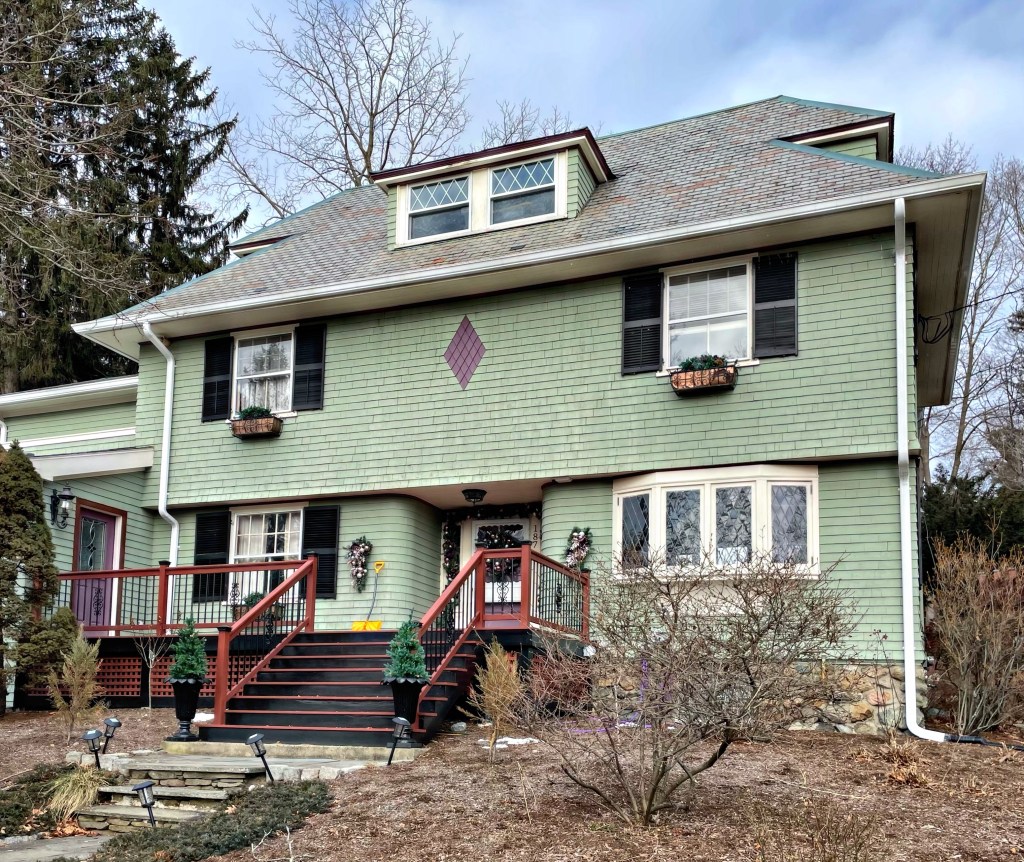
In 1895, Winfield S. Carr (1849-1911) purchased land on Windsor Road for a residence from William S. Strong, a horticulturist and developer of Waban Village. The lot is located at the peak of Moffat Hill, and provided sweeping views of undeveloped farm and marshland and possibly Boston in the distance. As a young man, Carr moved to Fall River from Maine, and was employed in the dry goods business. He eventually moved to Boston and opened up a toy shop, which clearly became a large success. The firm sold fireworks and children’s toys from the downtown location. The Queen Anne style home was occupied by Carr and his wife (they don’t appear to have had children) for less than a decade, when the couple downsized and moved to an apartment on Comm. Ave. in Allston.

Dr. Sarah Crawford House // 1897

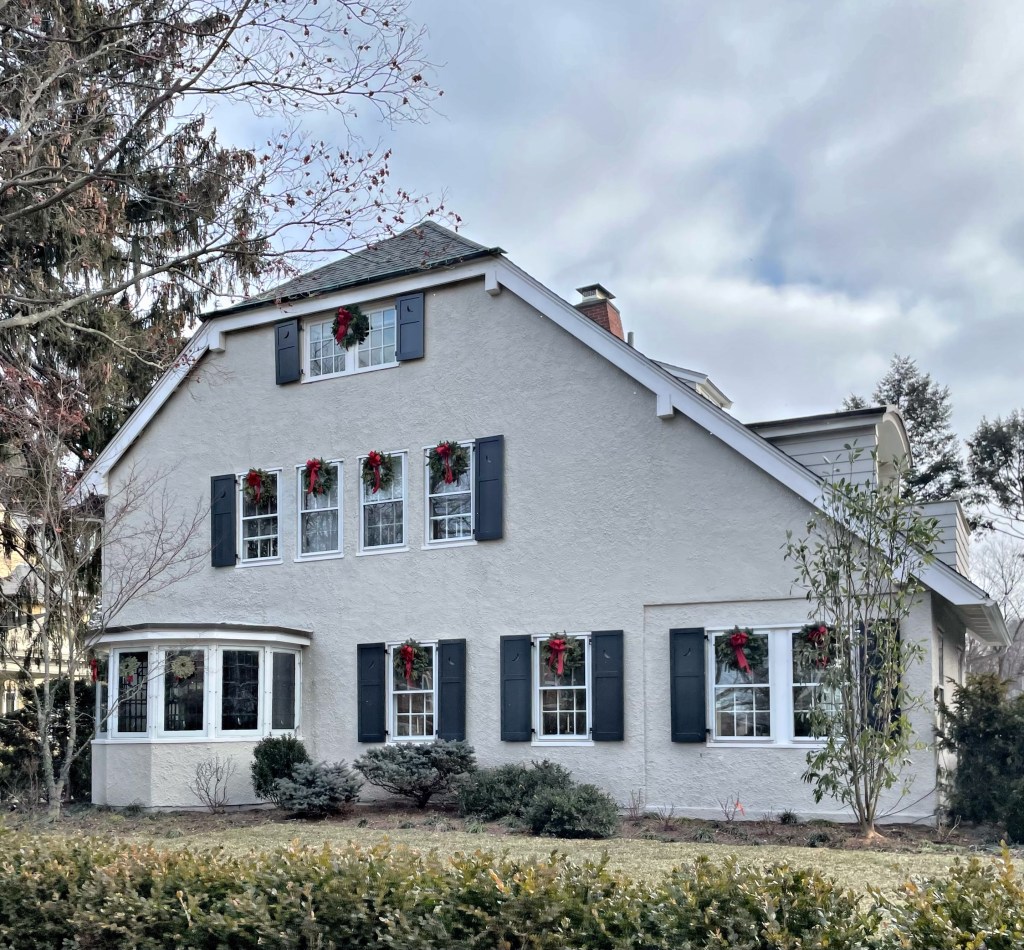
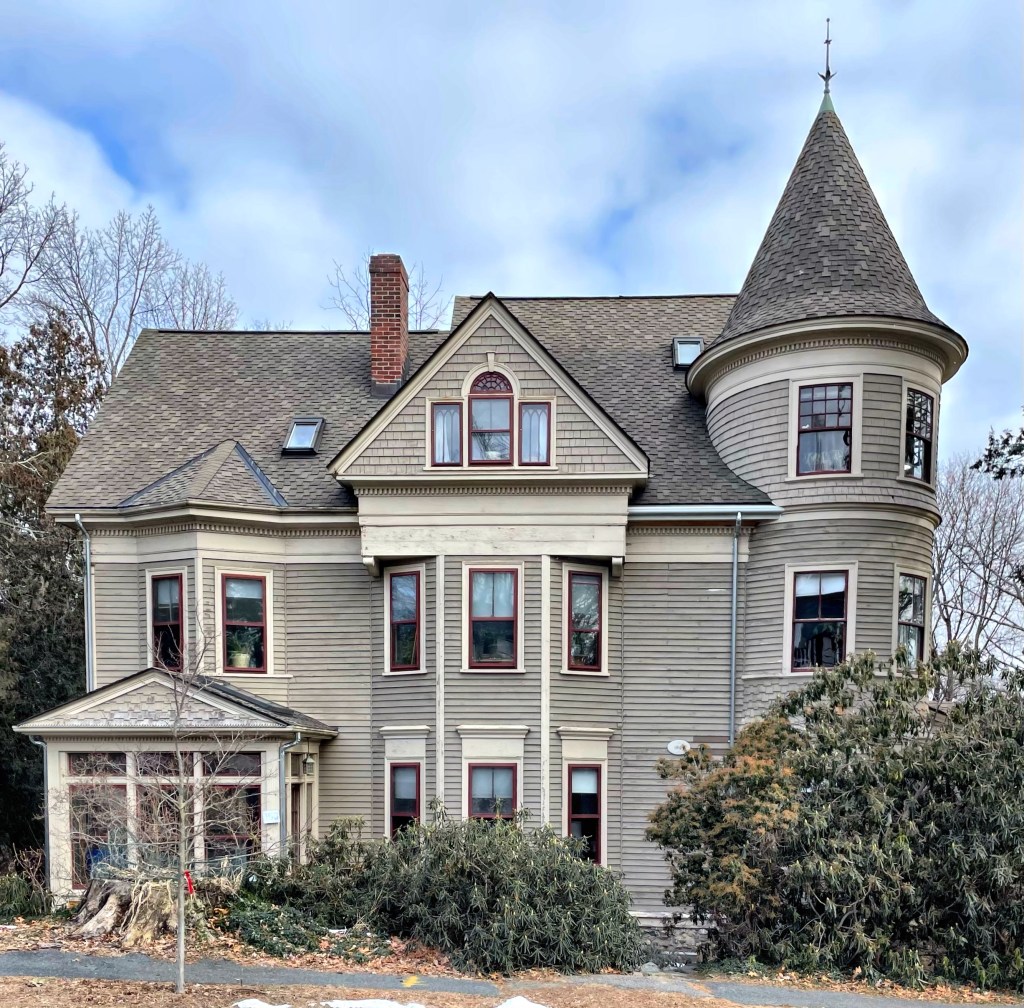
Dr. Sarah Marcy Crawford was a graduate of the Woman’s Medical College of the New York Infirmary for Women and Children and long devoted herself to her patients. She eventually settled in the Boston area, working in Roxbury as a physician until she took up a residence in Waban Village of Newton. She worked locally at the New England Hospital for Women and Children and served as a deputy superintendent of the State’s minor wards for the old Massachusetts Board of Charity and was an active member of the Massachusetts Medical Society. She had this eclectic home built for her and her family, but they later relocated to another home in town. The house is a great example of the convergence of architectural styles, common at the end of the 19th century, this one being a blending of Shingle, Queen Anne, and Colonial Revival styles.

F. W. Webster House // c.1895

When William C. Strong began developing land on the farm he purchased in Waban, he built a few homes to market the new neighborhood, and rented some of them for additional income. This really unique home was one of them. It was built around 1895 and exhibits elements of the Shingle and Colonial Revival styles. The home was eventually purchased by Frederic W. Webster, who was an alderman in Newton. The blocky proportions of this house and the prominent overhang of its hip roof are prevalent motifs in late 19th century adaptations of the Shingle Style. The style is even more evident at the recessed center entrance with curved reveals, and the diamond shingle motif at the second floor. Nods to Colonial Revival are the garrison (second floor overhanging the first, and the central dormer.

William C. Strong House // 1907

In 1875, William C. Strong, a nurseryman from Brighton, MA, purchased the 93-acre Staples-Craft farm in Newton. He established a large nursery on the grounds and promoted construction of the Circuit Railroad, which connected the rural section of Newton to the Boston and Albany rail line in 1886, thus establishing the village of Waban. Due in great measure to the efforts of Strong and other developers, Newton’s youngest village grew rapidly as the once isolated farm area gave way to a vibrant suburban community. He built commercial structures and people began to flock to the village, for the new housing and easy-access into Boston by rail. Strong had a house built by architect Herbert Langford Warren in 1896 and lived there for years before having this house built in 1907, when William was 83 years old. The house was occupied by Strong for just a couple years until he moved away to Manhattan. The Arts and Crafts style home was purchased by Esther Saville Davis.

Baylies Mansion // 1903

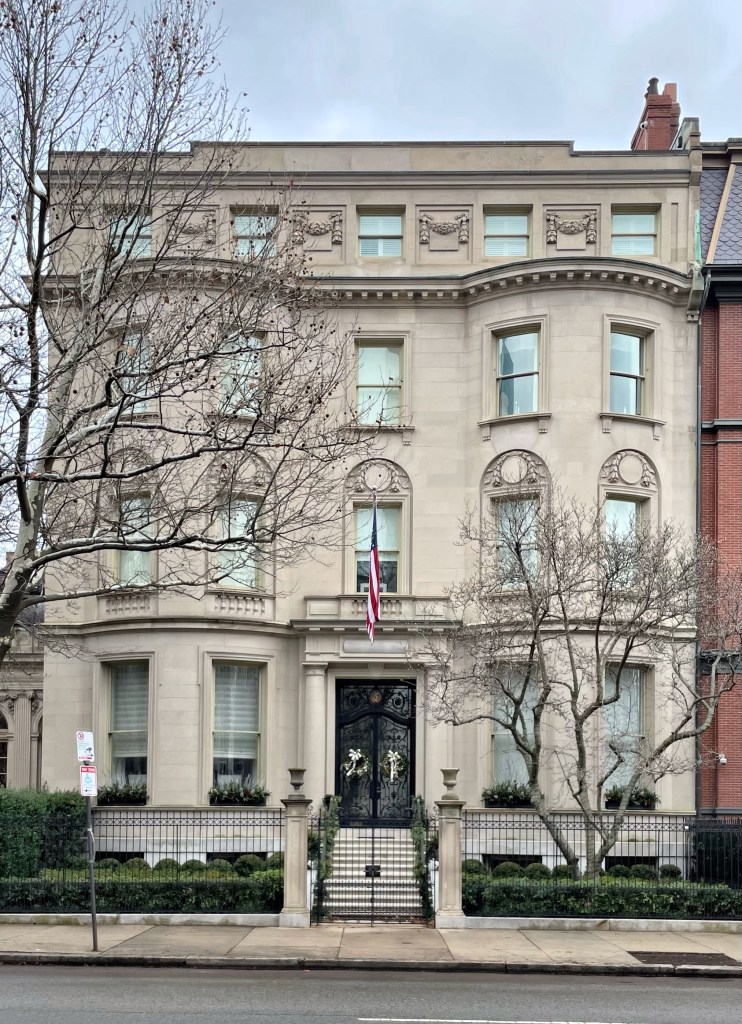
Commonwealth Avenue in Boston’s Back Bay neighborhood is a dream, no matter what time of year, though I am a huge fan of it in the winter so the leaves don’t obscure the architectural details! This home just steps from the Public Garden was built in 1903 for Walter Baylies (1862-1936) and his wife, Charlotte. The couple had purchased a c.1860 Second Empire mansion (basically a sister house or twin to the adjacent at 3 Commonwealth Ave), and demolished it for a more “modern” residence. Baylies was extremely wealthy with investments in nearly everything, and he wanted his city residence to stand out amongst the earlier, brick and brownstone townhouses on the eastern edge of the neighborhood. Architect Arthur Rice designed the house in the Renaissance Revival style, and it is finished with Indiana Limestone. Of particular note is the one-story ballroom, which was built to the side of the home, set back behind a small garden. An empty house lot, formerly occupied by a stable, was used simply for the Baylies’ ballroom, constructed in 1909 for their daughter. Talk about a status symbol! The home was purchased by Walter’s heirs in 1941 by the Boston Center for Adult Education. The home was again purchased in 2020, and is back to a single-family home! I can’t even imagine how stunning the interior is!

Asa Waters Mansion // 1829

In 1824, prosperous gunsmith Asa Waters II set out to build the stateliest residence in the country. It took two full years to amass the necessary materials for what is now known as the Asa Waters Mansion and Mr. Waters spared no expense. Asa Waters II (1769-1841) was born in Millbury in 1813 to Asa Sr. and Sarah Waters. Asa earned the art of gunsmithing from his father, and in 1808 the junior Asa and his brother Elijah opened the Waters & Co. Armory along the banks of the Blackstone River, in what is now Millbury Center. Following the untimely death of his brother in 1814, Asa Waters carried on the business solo and secured lucrative arms contracts with the United States government. His invention of a lathe to turn gun barrels into the first seamless barrels revolutionized the manufacture of guns throughout the world, and provided his company a stockpile of cash. As a result, he hired Boston-based architect Asher Benjamin, to design a country house suitable of his stature. The mansion features two prominent facades with the primary distinguished by a colonnade of fluted two-story columns with composite capitals. The mansion remained in the Waters Family until 1929, when it was sold to the Roman Catholic Diocese of Worcester, as a rectory of a local church. In 1977 the Town of Millbury acquired the Asa Waters Mansion, and with little funding to maintain the property; in 1994, the Asa Waters Mansion had fallen into quite a bit of disrepair. The town proposed to demolish the mansion for a parking lot, but a group of locals worked together as the Asa Waters Task Force and petitioned to save the house: funds were raised, tradesmen in the community donated materials and labor. Saving the architectural landmark for generations to come.

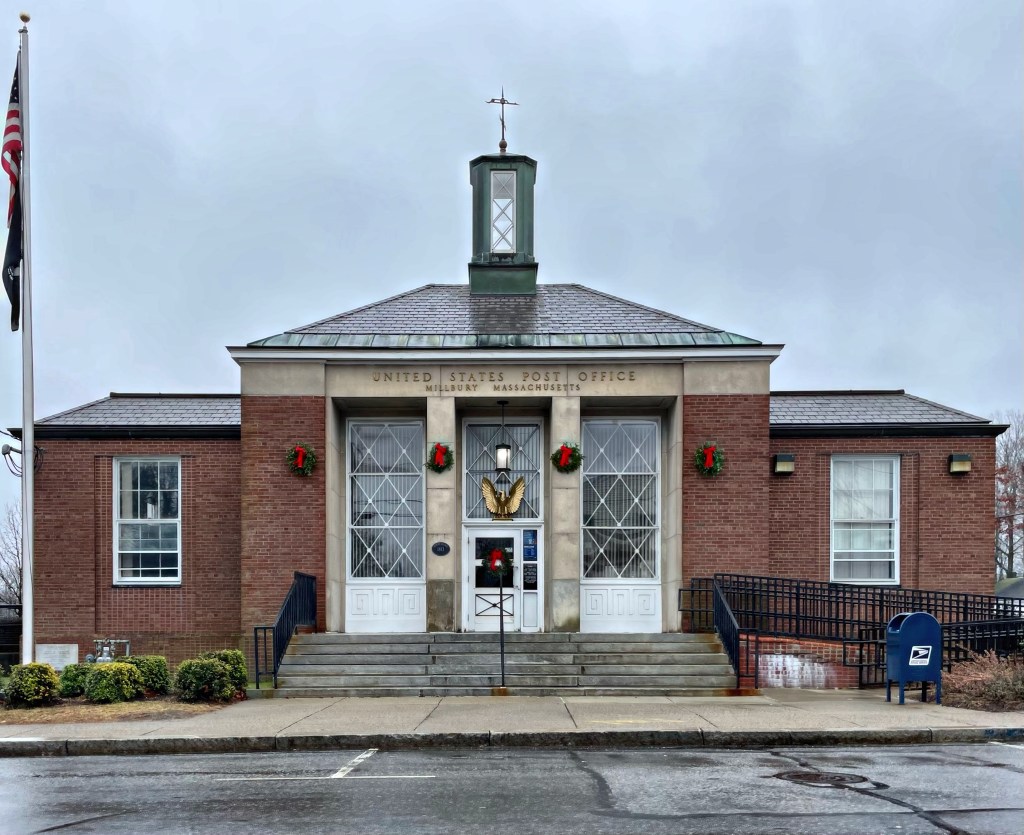
Millbury Post Office // 1940

Located in downtown Millbury, MA, the town’s local post office stands as a great example of Art Deco and Colonial Revival architecture styles, showing how well different styles can be incorporated into a single, complimentary design. The Millbury Post Office building was constructed in 1940 from plans by Louis Adolph Simon, who served as Supervising Architect in the Office of the Supervising Architect for the U.S. Treasury from 1933 until 1939, when the office was moved to the Public Works Administration / Works Progress Administration. The post office was designed at the tail end of the New Deal programs to help stimulate local economies by building infrastructure and providing jobs to locals. Inside, a mural “An Incident in the King Philip’s War, 1670” was painted by Joe Lasker and installed in 1941 and was “revivified” in 1991.

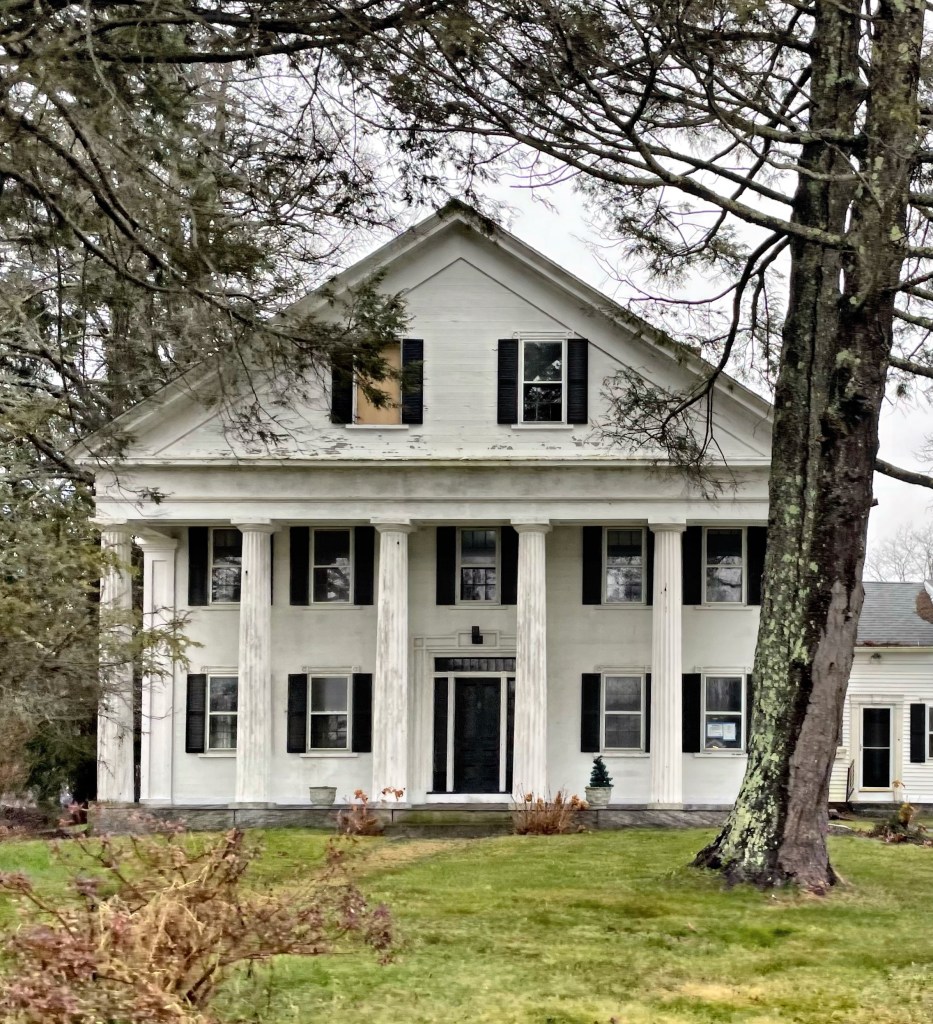
Elijah Waters House // 1845

Elijah Waters (1773-1846), a hardscrabble farmer in West Millbury inherited his father’s large farm and resided there for over thirty years before wanting something more his style. Unmarried and without children, Elijah (who was 72 at the time), had this impressive Greek Revival farmhouse constructed near his old family homestead. He was possibly looking to spend money saved up and without a wife or heirs to will it to. The massive temple-front Greek Revival mansion has a stunning doorway and six columns supporting a projecting pediment. Within a year after the home was built, Elijah died. The home was willed to his nephew, Jonathan Waters. The house is for sale for $384,000 which is a STEAL!