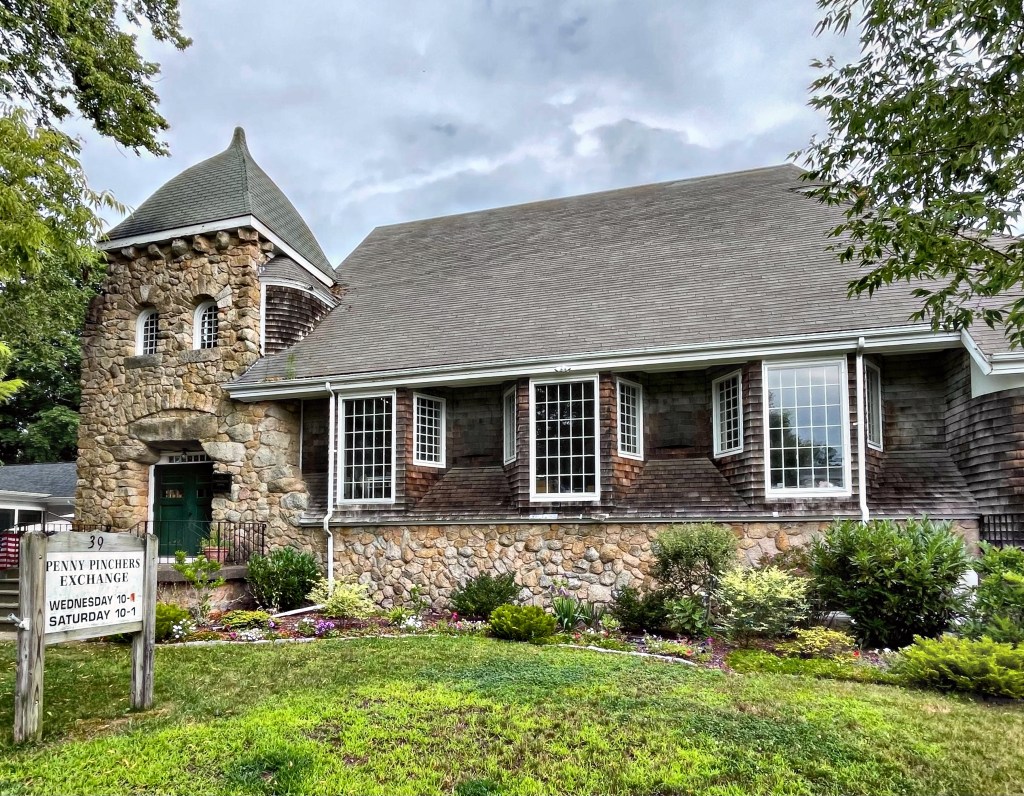
Marion Congregational Chapel // 1885

Built in 1885, Marion’s Congregational Chapel represents one of Elizabeth Pitcher Taber’s last substantial gifts to her community. Born in Marion in 1791, Mrs. Taber taught grammar school in Marion as a young woman, marrying, Stephen Taber, clock maker and whaling ship-owner in 1823, subsequently living in Acushnet and New Bedford. She refocused her interest in Marion after the death of her husband in 1862. A wealthy, childless widow, Mrs.Taber funded a library/natural history museum, music hall, and during the mid-late 1870s, she set about the daunting task of founding a private academy in Marion which still thrives in the town as Tabor Academy. Three years before her death in 1885, Mrs. Taber, in one of her last acts of generosity to her church and town, purchased a vacant lot owned by her Tabor Academy’s principal and her downstairs neighbor in Tabor Hall, Clark P. Howland. She paid him $300.00 for his land and subsequently had the Congregational Chapel built in the up-to-date Shingle Style. Composed of rubble stone, the church features a south-facing wall with a trio of polygonal bays that add depth and provides the hallmark cedar shingle siding in the style. The church is one of the most rustic and beautiful in the state of Massachusetts. The church here also runs Penny Pinchers Exchange, a church-run thrift shop.
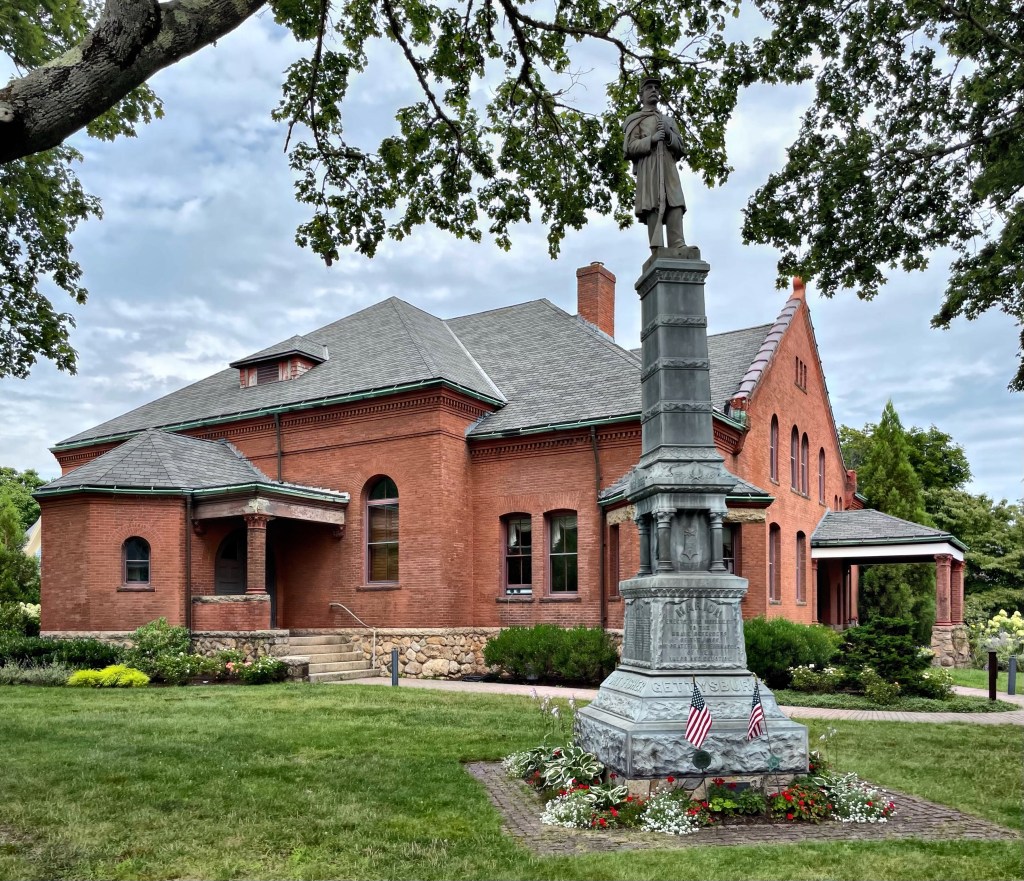

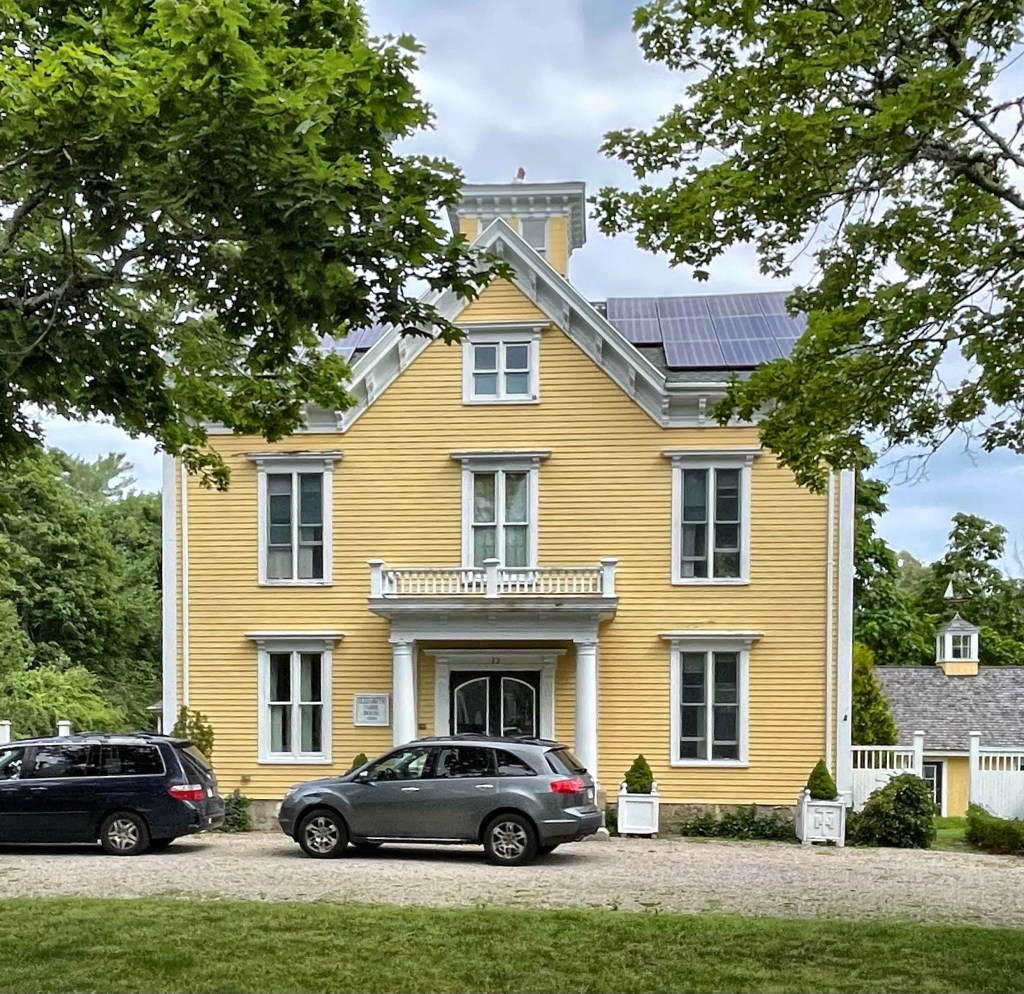
Marion Music Hall // 1891

You know a town is fancy if it has its own music hall! The Marion Music Hall was (you guessed it) largely funded by none other than Elizabeth Taber the prestigious benefactor of Tabor Academy, the Library, and more in her hometown. This building was first envisioned after Ms. Taber was dismayed by the poor quality of “worldy theatricals” that were taking place in the only such venue at the time, the Congregational Chapel. Her last gift to the town via a provision in her will, allotted money for the construction of a “suitable building for a lecture and music hall”, costing a total of $23,000. Her go-to architect, William Gibbons Preston, was hired to design the Music Hall, which is a pleasing late-Victorian, Queen Anne-Romanesque Revival building constructed of brick. The Music Hall’s lawn was deemed worthy as the site of a handsome cast-iron Soldiers Monument which was dedicated during the summer of 1894 and remains on the site today.

“Old Parsonage” // 1813

The “Old Parsonage” was built in 1813 by Capt. John Pitcher, brother of Elizabeth Pitcher Taber, benefactress of the town of Marion. The side of the building that faces the street (what we see) is actually the back of the original dwelling. The Federal period house sits on a raised stone foundation with a central door and shingle siding above. Behind his home, a large pasture was situated where his sheep and cows grazed on fields. Pitcher used to hang a ship’s bell from the branch of an oak tree and ring it every evening at 9 p.m. as a curfew bell for the town. The bell is now located in the Marion Natural History Museum. When Capt. Pitcher died, he left his house to the Congregational Church, which used it as a parsonage for many years. It was sold in May of 2021 and is likely a private home now.

Tabor Hall // c.1880

This beautiful Italianate building was constructed around 1880 for the newly established Tabor Academy, which was founded in Marion, Massachusetts by Ms. Elizabeth Taber in 1876. After Ms. Taber funded the constructed of a town library and museum and oversaw construction of the new academic building for her school, she endowed money for Tabor Hall, which was to house the school’s Principal, some boarding students, and most importantly, herself. The structure was located on Spring Street, just north of the library, until 1937, when the “Tabor Swap” was finalized. The swap was a deal between the academy and the Town of Marion, who exchanged properties in 1937. The town received the library building, the academic building (soon after converted to Town Hall) and land where this building once sat. The town erected Sippican Elementary, a public school on the land, and Tabor Academy moved this building a block over.

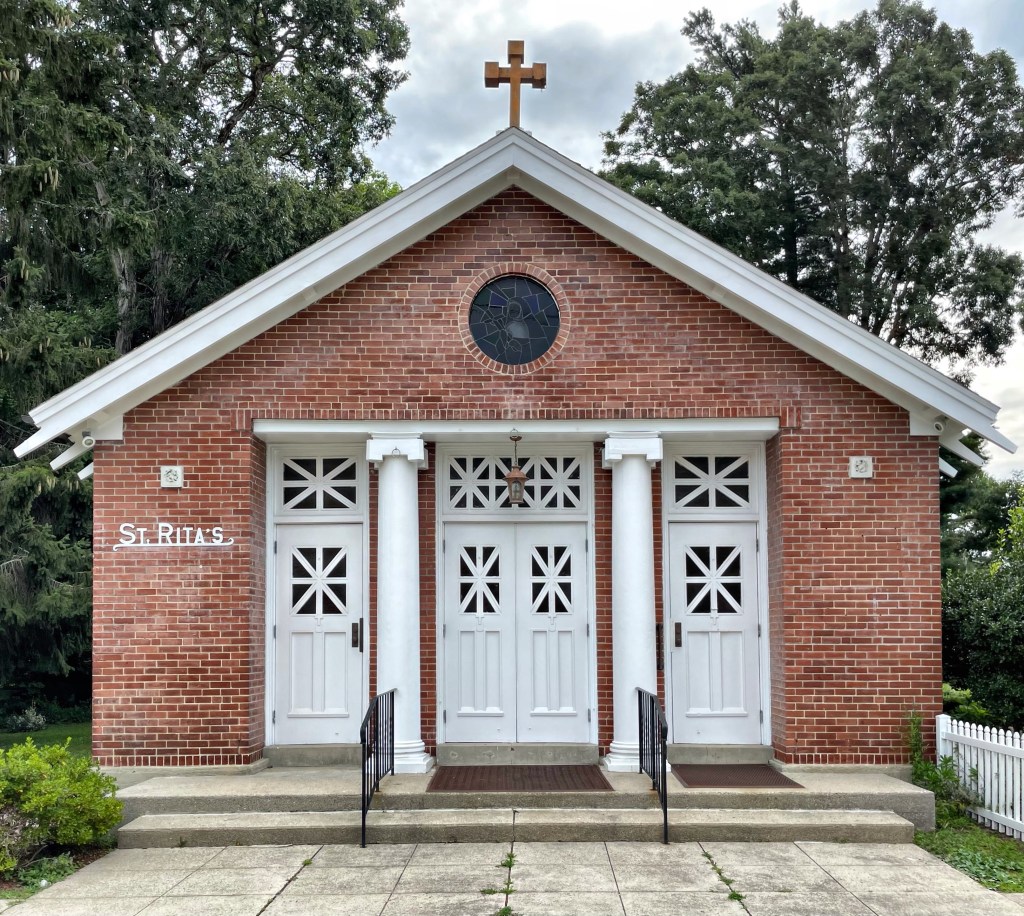
St. Rita’s Roman Catholic Church // 1916

A Roman Catholic parish was established in the South Coast/Cape Cod area by 1830 in Sandwich, where a large glass company employed a number of Irish immigrants. Over the course of the 19th century, several mission churches were established, and eventually a second parish, St. Patrick’s, was established in Wareham in 1911. Soon after, a mission was established in nearby Marion to serve the summertime Catholic community there. A parcel of land was acquired by the Roman Catholic Bishop of Fall River and they hired architect Matthew Sullivan to furnish plans for the small church. Matthew Sullivan (1868–1948) trained in the office of Edmund M. Wheelwright, Boston City Architect (1891-1894). Sullivan succeeded Wheelwright as City Architect and served in that position from 1895 to 1901, when he became a junior partner in the firm of Maginnis, Walsh and Sullivan, which was widely known for its ecclesiastical work, where he too specialized in religious buildings. St. Rita’s Roman Catholic Church is an example of an early 20th century chapel in the Craftsman style, characterized by eaves marked by long projecting rafter tails and a bold entry framed by Tuscan columns.

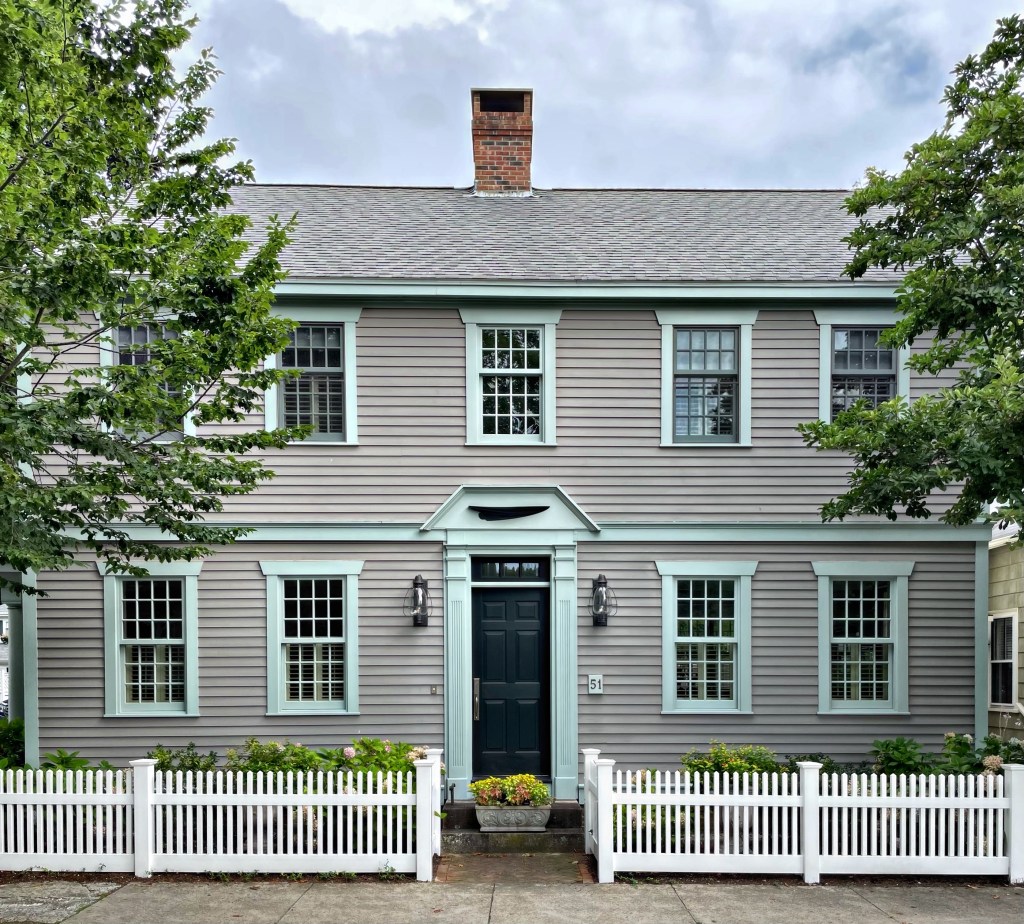
Look-Coggeshall House // 1828

Believe it or not, this beautiful home was once a one-story Cape house! Built in 1828, the home was constructed for Captain Hiram Look, a sea captain, and his new wife Kezziah (Kezia) within a year of their marriage. They had two daughters. Hiram died in 1865, possibly related to the Civil War, which ended that year. After his and his widow’s death, the home was willed to their daughter and her husband, Bernard Coggeshall, who was likely a descendant of the Coggeshall Family of Bristol, RI. The Look daughter died in 1890, and Bernard remarried a year later. Sometime after 2008, this home was enlarged, giving it the second story we see today. If you look closely at photos from before 2008, you can see the matching door surround, window lintels, and window spacing seen today. While the home is completely different, the “updated” version is still appropriate and conveys the home’s history.

What do you think?

First Universalist Church, Marion // 1830

I do love a good adaptive reuse story! This Marion, Massachusetts church building was constructed in 1830 for the town’s growing Universalist congregation. Architect Seth Eaton was hired and furnished plans, likely relying on neighbor, Warren Blankinship, a carpenter and congregant, to construct the building. It blends together the Greek and Gothic Revival styles well, but in a less sophisticated form. By the mid 20th century, membership of the church dwindled, and it finally shuttered its doors. With the building’s future uncertain, at a time where demolition for surface parking lots was the go-to solution, Marion residents Andrew and Dorothy Patterson, purchased the building and soon after worked with local artists in town to restore the building for use as an art space. The Marion Art Center was thus founded in 1957, and to this day, serves as a non-profit community cultural organization dedicated to promoting the visual and performing arts.

Old Stone Studio // c.1820

Just a stone’s throw away from the Marion Town Hall and Elizabeth Taber Library (yes, pun intended), this beautiful 200 year old stone building oozes charm. The building was constructed around 1820 as a salt works storage facility, and is an extremely rare surviving storage facility associated with the early 19th century salt industry. While many storage facilities we know today are void of architecture and soul, this building looks like it was plucked from the French countryside. The salt industry in Massachusetts began on Cape Cod during the Revolution. Salt was a vital necessity for the preservation and curing of fish and meat for sale in this country and overseas. According to local lore, the Old Stone Studio was originally “a place for the conversion of sea water into salt.” Around the Civil War, the building was being used as a whale oil refinery, a fitting use for a fireproof structure. It had fallen into disrepair by the 1880s, until New York magazine editor Richard Watson Gilder bought and restored it as a studio for his wife, artist Helena de Kay Gilder. Gilder renovated the building in the early 1880s as the town of Marion was becoming a vibrant summer colony. He added a massive stone fireplace and new windows to flood the interior with natural light. The towering fireplace, with its 9-foot long mantle, was apparently designed by leading 19th-century American architect and Gilder’s friend Stanford White of McKim, Mead & White. The fireplace provided a stunning backdrop for guests, including President Grover Cleveland and First Lady Frances Folsom Cleveland, who summered in town. Ms. Gilder even painted the First Lady in the studio, and hosted her on occasions.

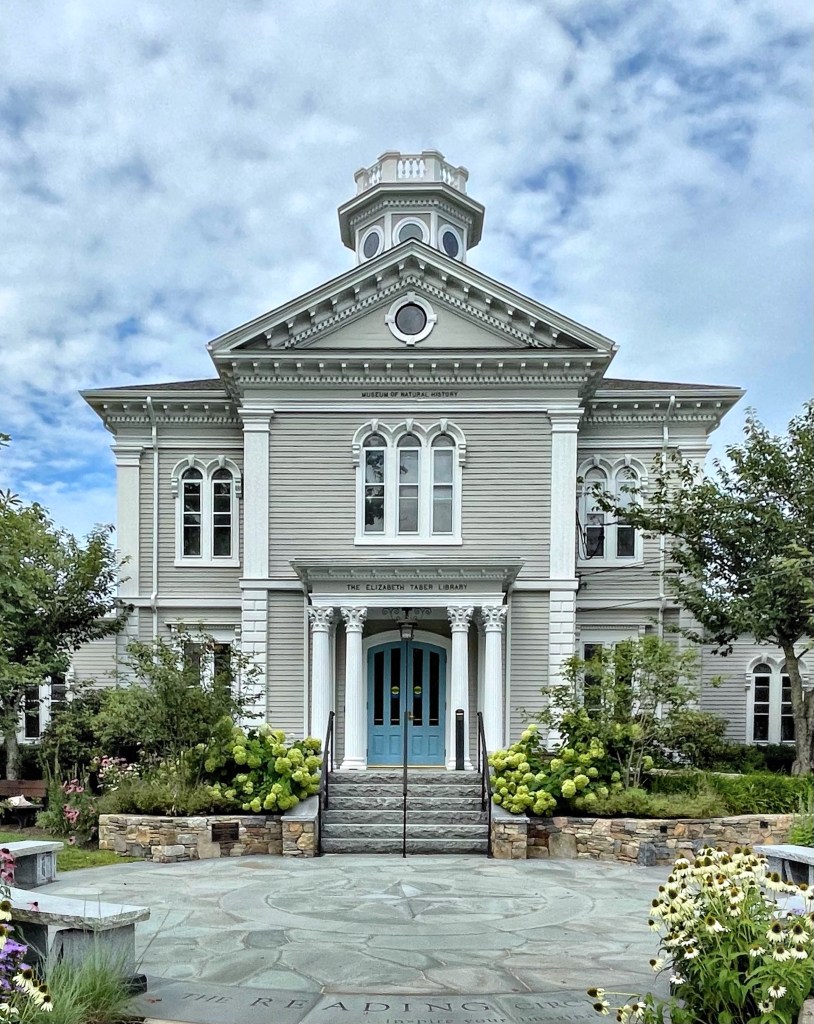
Elizabeth Taber Library // 1872

The first of many generous gifts by Elizabeth Taber to the town of Marion, Massachusetts was this gorgeous Italianate style library building. Elizabeth Taber (1791-1888) was educated in the Sippican Village School, immediately giving back, teaching school in Marion while still in her teens. At 33, she married Stephen Taber, a clockmaker, and they had three children, none living to adulthood. They eventually settled in New Bedford, where Stephen made much more money in his trade, paired with investments in whaling excursions leaving the town. In 1870, eight years after the death of her husband, Elizabeth Taber turned her attentions to engaging in projects for the benefit of her hometown, Marion. In 1870, she bequeathed over $20,000 for the design, construction and furnishing of a new library in town that would also house a natural history museum. The natural history museum component of the building had been eclipsed in importance by the library which was expanded by side wings during the mid-20th century. Encompassing a collection of rocks, minerals, stuffed birds and other curiosities, the second floor museum was designed to complement the first floor’s book-learning activities. By the late 1870s, the Taber Library and Natural History Museum had become a key component of the Tabor Academy campus, founded just years later.

Blankinship House // c.1840

Across from the Marion Town Hall (last post), this perfect little cottage showcases what makes coastal New England so special. Built around 1840, by and for Warren Blankinship, a carpenter in town, the home represents a well-preserved example of a modest Greek Revival home. The home is clad in cedar shingles, a hallmark of many coastal homes in New England. White Cedar shingles are so popular historically as the species is such a hard wood that pieces are naturally insect and rot resistant and hold up amazingly well to salt air. Early colonists noted the use of the tree for canoes and other objects by Native people and followed suit, constructing homes from the native tree. The shingles were usually left exposed, and they would eventually weather over time. The exposed, cedar shingles have been a classic look in coastal homes since and even today, evoke a strong sense of place when seen on an old home here.