Former Allerton Point Post Office // c.1890

By the end of the 19th century, various coastal developments on the elongated coastal town of Hull, Massachusetts, developed into established neighborhoods of cottages. As a result, new stores, schools, and post offices were built to accommodate the increase in population. William Henry Sylvester (1840-1923) a local resident, built this structure to serve as a store, professional offices, and post office. Like other buildings in the area constructed in the 1890s, the structure blends Queen Anne and Craftsman elements in a great composition. Sadly, the building has not been maintained and the windows are now boarded up, with the entire waterfront parcel selling in 2018. Plans to demolish the buildings on the site, including this charming structure were proposed to erect new townhomes, but they have not materialized. I’d love to see the site redeveloped with much-needed housing, but this structure should be incorporated in the development.

Winfield S. Richards Cottage // c.1890

Summer cottages of the late 19th century are always a treat to come across! While most cottages I feature on here are more high-style and were built for the wealthy, Hull, Massachusetts, has some of the best middle-class summer cottages in New England! Steamships and rail service from Boston and other cities opened up Hull and Nantasket Beach to summer residents and day visitors alike, creating a massive increase in building in the latter decades of the 19th and early 20th centuries. This cottage was owned by Winfield S. Richards and his wife Myra of Newton, Massachusetts. The cottage blends Queen Anne and Craftsman styles with complex Queen Anne massing, turned posts, and recessed second story porch, and sloping roof extension to create the Craftsman-esque front porch. The cottage is one of the better-preserved in town and an excellent blending of architectural styles.

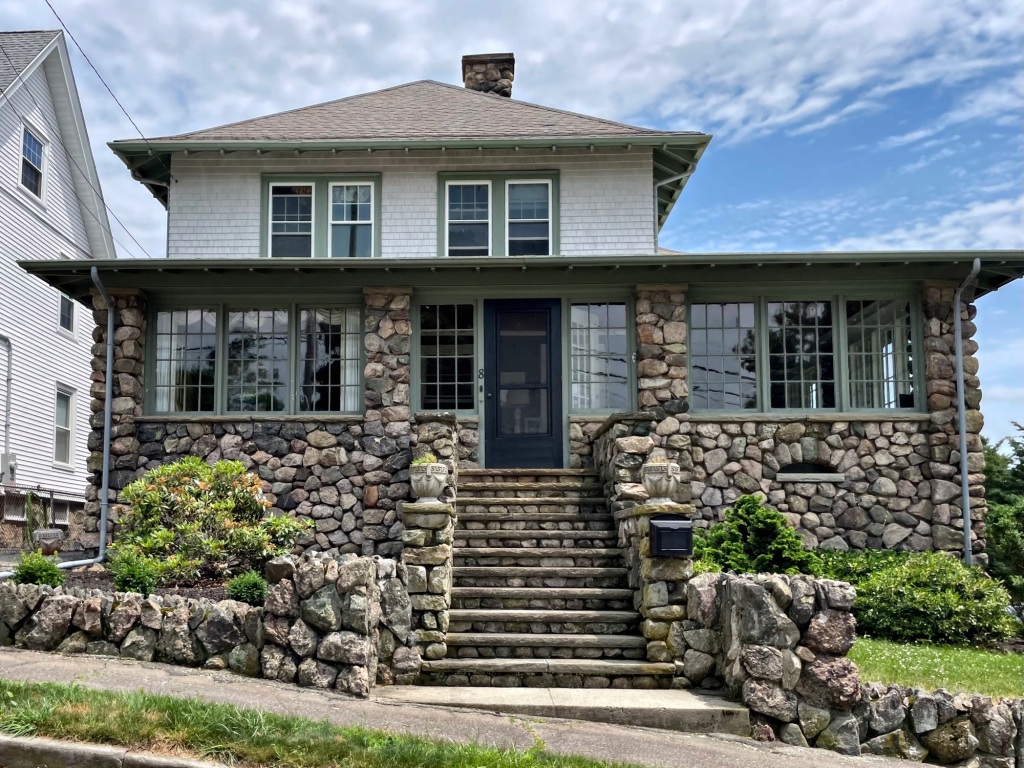
John Smith House // c.1895

Hull, Massachusetts is an often overlooked town (besides Nantasket Beach Reservation), but there are some really great old houses and buildings to be found in the seaside town. This is the John Smith House on Meade Avenue in the Atlantic Hill neighborhood inland from the peninsular part of town. Development here was fairly slow, but took-off in the late 19th century when cottagers began to develop some house lots here. They were soon joined by year-round residents like John Smith, an ice merchant who built this home around 1895. Craftsman in style, the house exhibits a mix of building materials with a rough fieldstone porch and two matching stone chimneys together with wood shingle siding. The stunning stonework extends from the foundation, uniting the house to its terraced, rocky site. It is one of a handful of homes here that have not yet been altered or covered up by vinyl siding.

Old Nantasket Beach Police Station // c.1930

The area of Nantasket Beach in Hull in the late 19th century was a hotbed of taverns, thievery, and brothels. To counter this trend of unsavory uses, the Metropolitan Park Commission (MPC) of Greater Boston acquired about 25 acres of land at Nantasket, which included roughly one mile of shoreline extending north from Atlantic Hill in 1900. The initial appropriations provided for only minimal facilities, such as a bathhouse and a few incidental buildings, one of which was a waiting room for those arriving or departing from the new railroad station (since demolished) at the beach. The MPC hired the Olmsted Brothers landscape architects to design the paths and landscaping for the new park, and they worked with architects Stickney & Austin who designed many of the early buildings here. This stucco structure was built around 1930 and served as MPC offices and a police station until 1992. The building has been vacant since 1992, but a recent push to convert the nearly 100 year old structure into the Nantasket Center for the Arts is slowly materializing. Fingers crossed to see this building preserved and used for the arts!

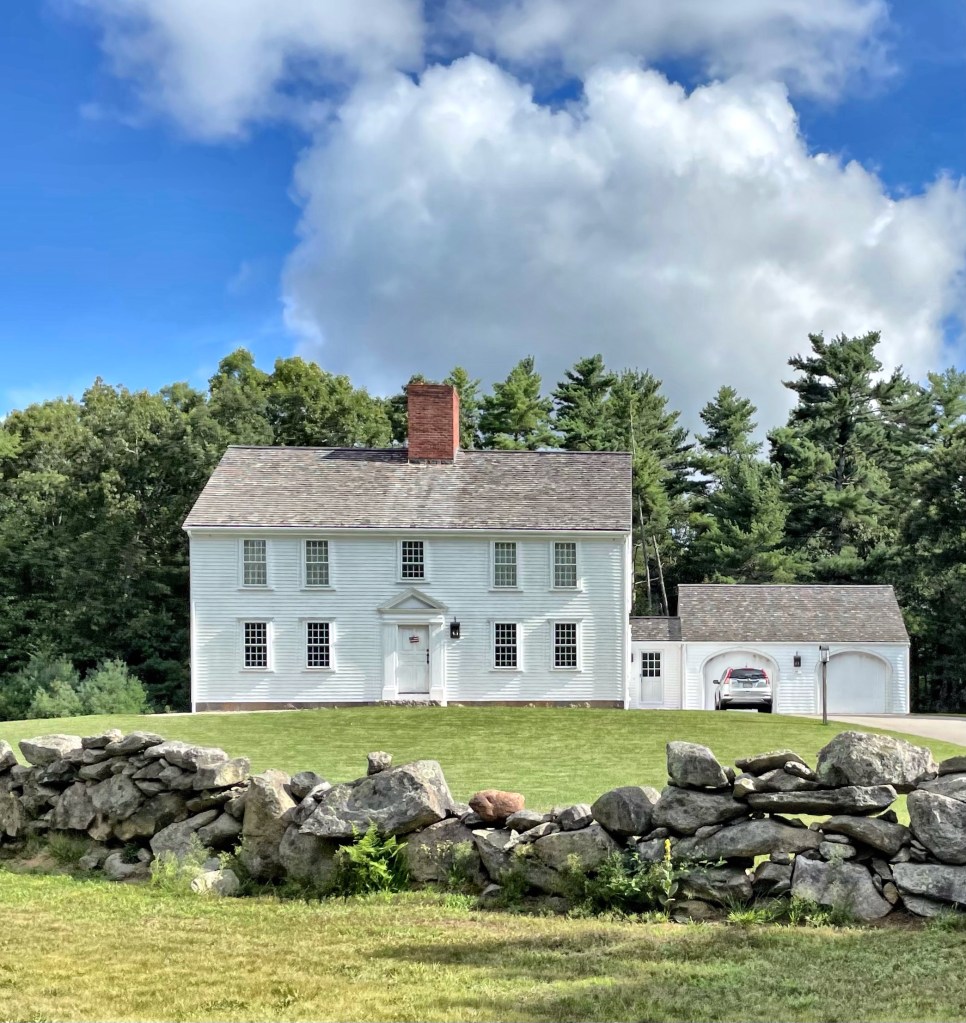
Delano-Clapp House // 1735

My favorite Georgian style house in Rochester, MA is the Delano-Clapp House set far off the street, behind a stone wall. The house was built in 1735 for Jonathan Delano, a weaver. Jonathan’s son, Jonathan, Jr., sold the house and land to Ebenezer Clapp, in 1755. The property remained in the Clapp Family for nearly 250 years, when it sold out of the family in 1990. This house is testament to the fact that you can find great architecture in every corner of New England!

Rochester Grange Hall // 1924

The Grange, officially named The National Grange of the Order of Patrons of Husbandry, is a social organization that encourages families to band together to promote the economic and political well-being of the community and agriculture. Grange Halls can be found in rural towns and villages all over New England, and historically served as a gathering place to discuss agriculture-based business, crops, trade, and issues faced in the community. The Rochester Grange Hall was constructed in 1924 to the designs of architects Brown and Poole of New Bedford, MA and is of the Craftsman style. The National Grange has sharply declined in membership since the late 19th century. In 2013, the Grange signed on to a letter to Congress calling for the doubling of legal immigration and legalization for undocumented immigrants currently in the United States. The Grange now emphasizes an expansion in the H-2A visa program to increase legal immigration and address the crisis-level labor shortage in agriculture.

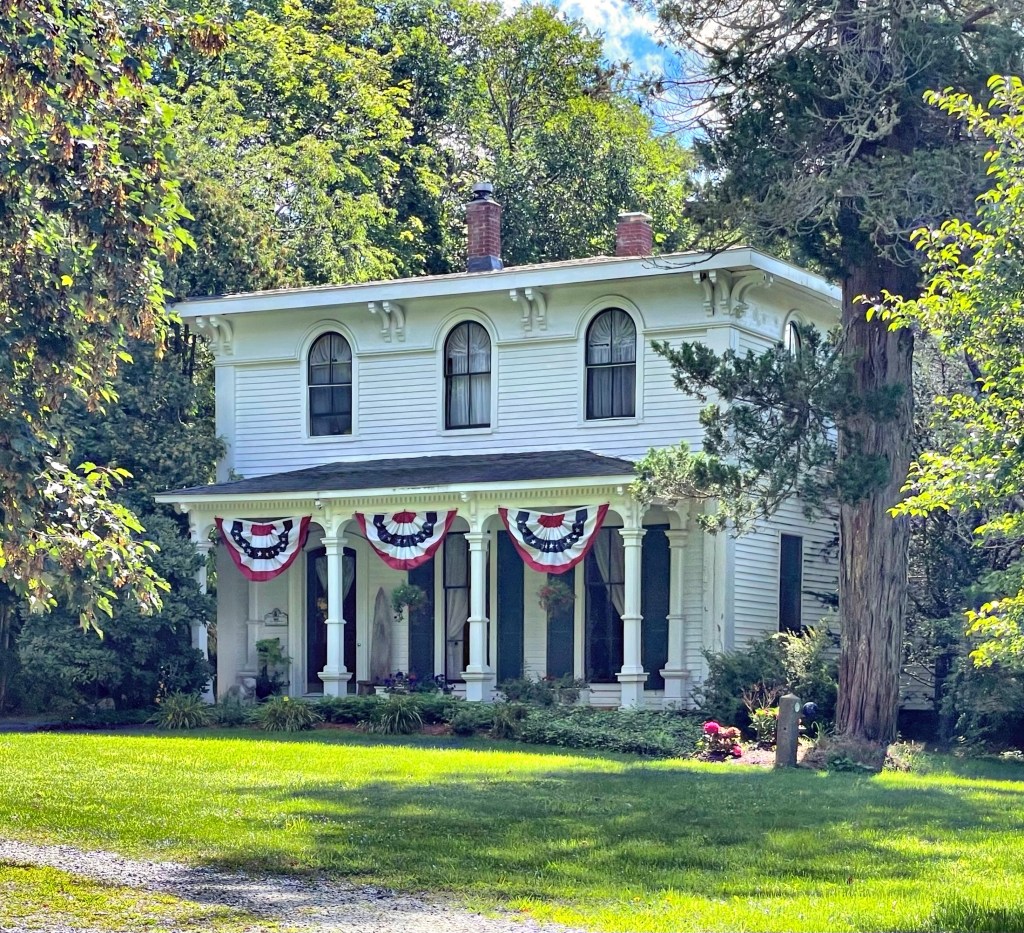
Haskell House // c.1854

One of the more high-style houses in rural Rochester, Massachusetts, is the Weld-Haskell House. The house was built around 1854 in the Italianate style for a recently widowed Susan Haskell. Susan was the daughter of Jesse Haskell, who was a state representative and served in the War of 1812, and a descendant of one of the town’s earliest colonial settlers. The home remained in the Haskell family until the second half of the 20th century.

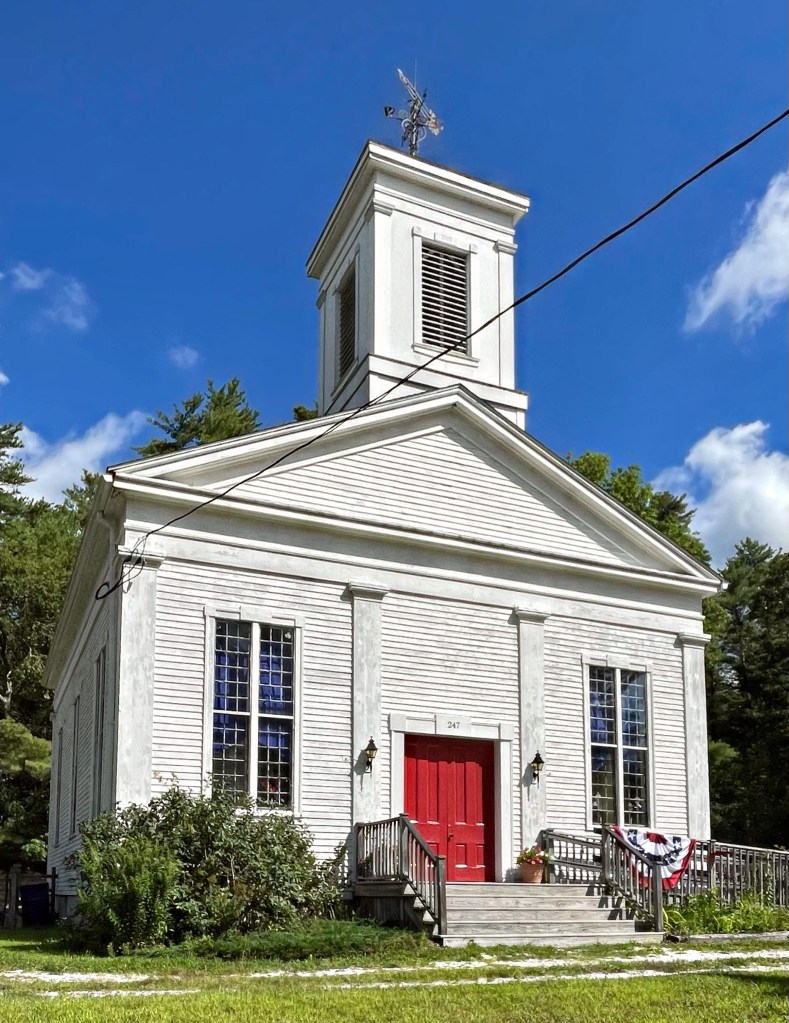
North Rochester Congregational Church // 1841

The North Rochester Congregational Church is located in a distinctly rural, area in the northwest corner of the largely pastoral town of Rochester, Massachusetts. This church, built 1841, is locally important to the development of religion and community in North Rochester. In Rochester as in other early New England towns, the building of a church symbolized the founding of a community. North Rochester’s first church was built in 1748, about 1 mile west of the present building, and was served by traveling ministers from other communities. The church congregation was formally organized in 1790, and a new church was built at that time, serving a larger area. The current church building was built in 1841 by Solomon K. Eaton, a noted regional builder whose credits include several other area churches. The church is of the Greek Revival style, which was frequented in the designs of hundreds of churches all over New England in the mid-19th century.

Chaddock Boarding House // 1799

Calvin Chaddock (1765-1823) graduated from Dartmouth in 1791 and three years later earned a Master of Arts degree from the college. In 1792, he married Meletiah Nye and they settled in Rochester, Massachusetts, where he became pastor of a Congregational parish in the rural northern part of town. In 1798, he opened an academy for boys and girls in the village and built this beautiful Federal style home as a boarding house for students to reside in (the schoolhouse is no longer extant). By 1804, he had “a respectable number of students from different parts of the United States.” The man moved to Ohio before settling in Charlestown, West Virginia, where he lived in a homestead with his family and three enslaved people, Charles, Thomas, and an unnamed woman. Upon his death in 1823, the three people enslaved by Chaddock, were sold at auction. The former boarding house in Rochester was later occupied as a tavern and stagecoach stop, and a store, when it was given some 19th century alterations. It has been a private home for the past hundred years.

Charles Dexter House // c.1910

Craftsman bungalows are a rarity in New England. The Craftsman style surged in the early 1900s, which coincided with the ever-popular Colonial Revival styles reign as most commonly built house style. Many of the Craftsmans that were built are less “ornate” than the West Coast counterparts, lacking deep exposed rafters, sweeping porches, and low-pitched roofs, but they are out there. This bungalow in Rochester was built around 1910 and has some Colonial qualities, including the Tuscan columns, boxed eaves, and shingle siding. I do love that full-length porch and hipped roof with a cute centered dormer! Do you wish we had more Craftsmans in New England?