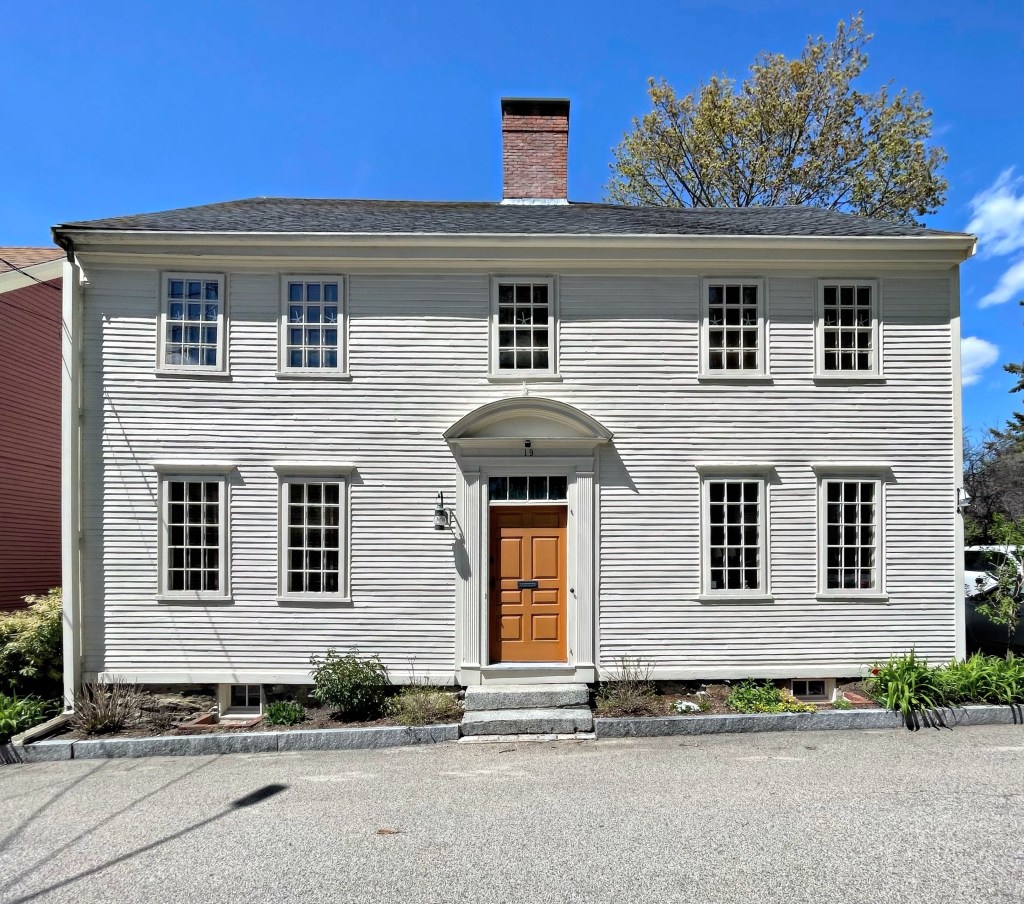
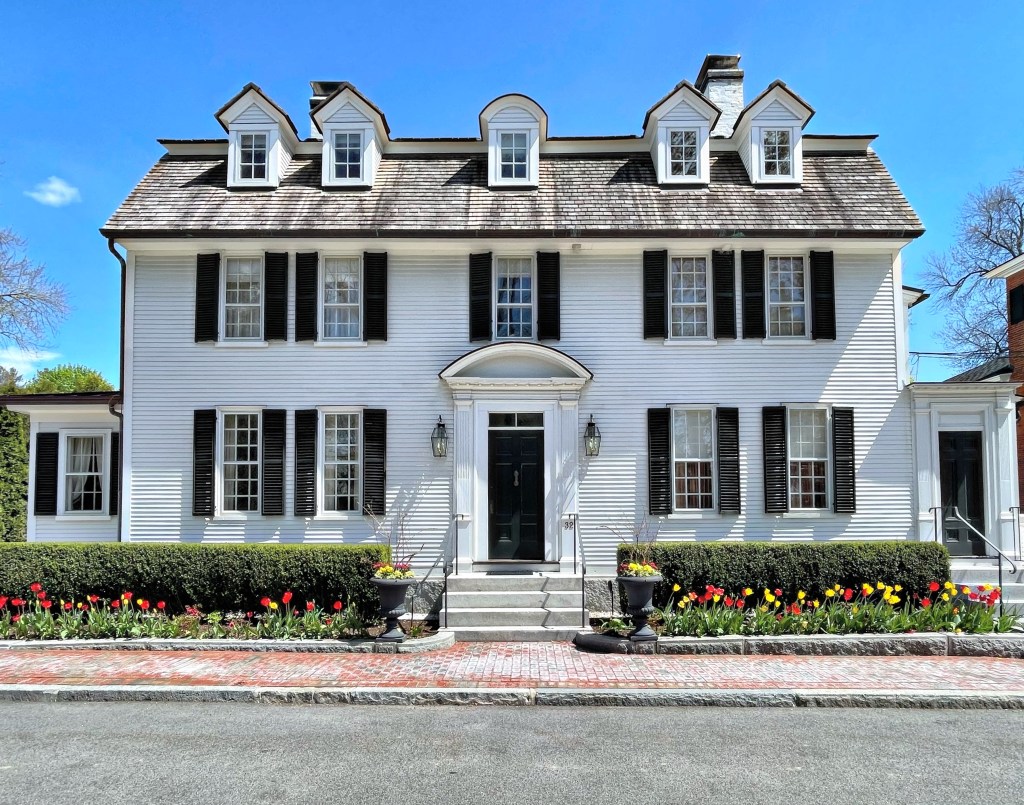
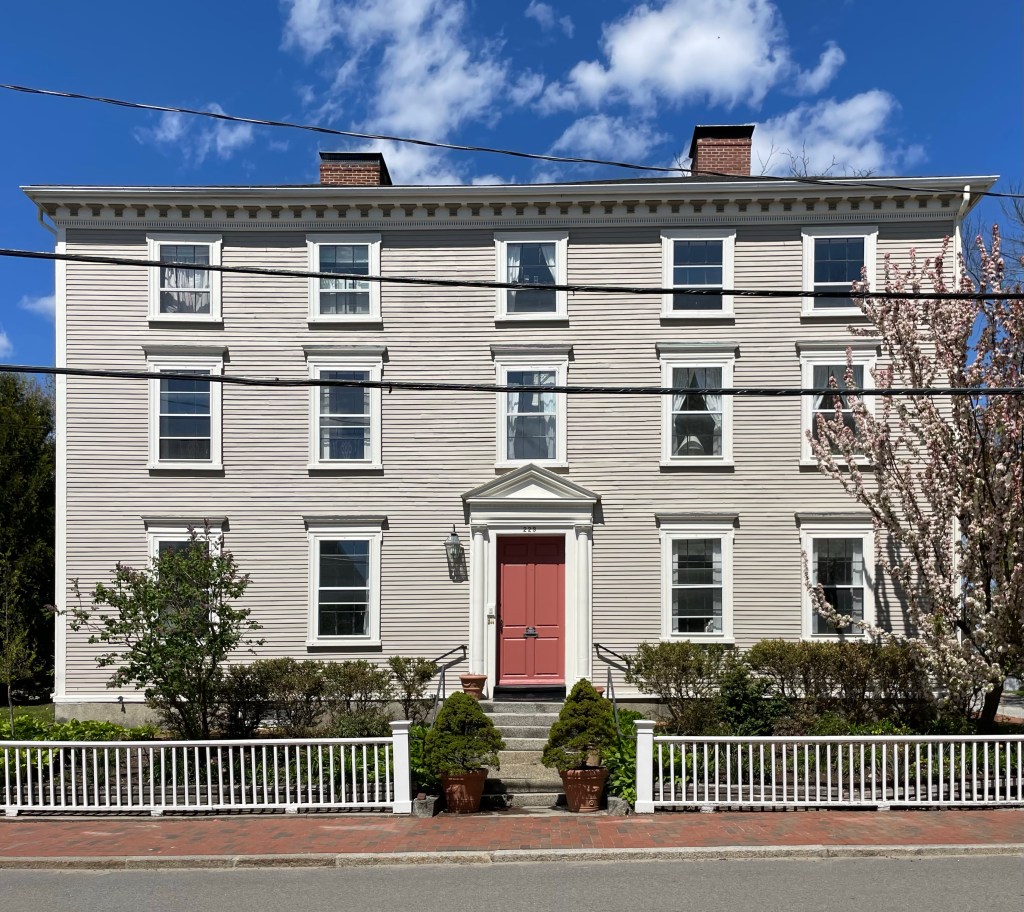
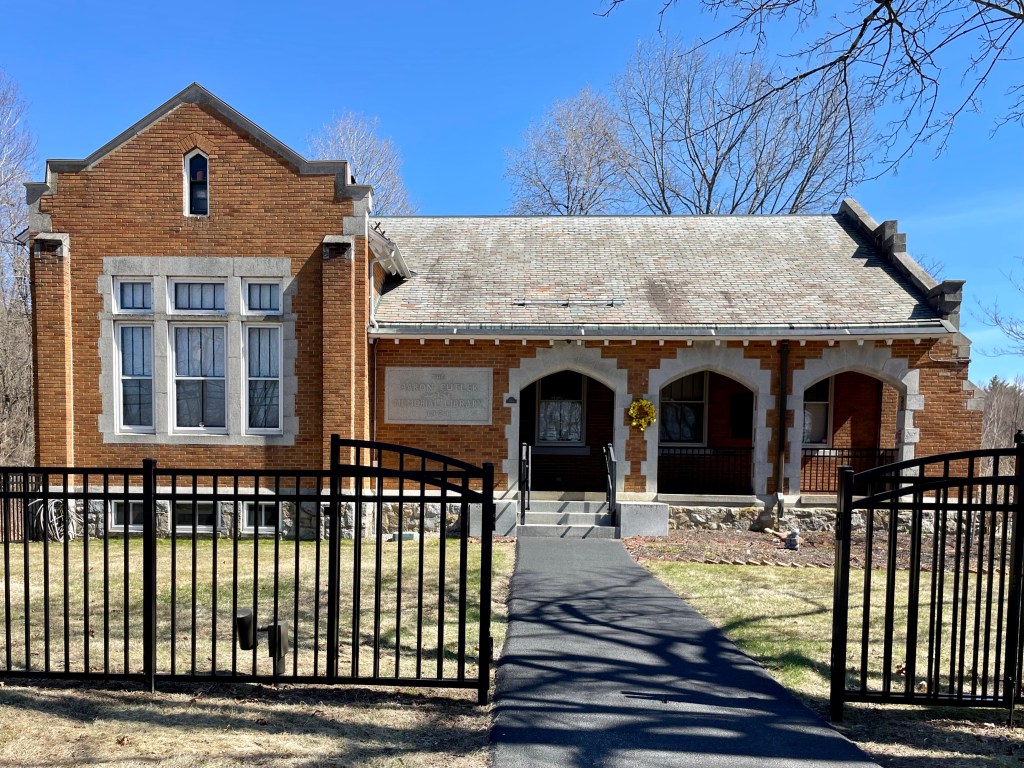
Another of the absolutely stunning 18th century homes in Portsmouth I stumbled upon in my recent walk there is this late-Georgian home, built in 1780 and owned by Ebenezer Lord. Lord worked as a cabinetmaker and produced many fine pieces of furniture, many of which are sold today for high values at auction. Due to his high skill with woodworking, it is possible that Ebenezer built this home himself for his family, down to the segmental pediment over the front door. The house has been maintained very well, and even retains historic wood windows.
The Captain Drisco House on Meetinghouse Hill Road is a recently restored example of the vernacular Federal period architecture so many flock to Portsmouth to see. The house sits in the middle of a warren of short streets where houses (all built before zoning and setbacks) were built right at the sidewalk creating the most pleasant walking experience. The symmetrical five-bay Federal house was built by Captain Drisco, who purchased the house lot after the Revolutionary War.
Many may not know this fact about Portsmouth, which shaped the city’s development for some of the formative years of the coastal town. The 1814 Brick Act was passed by the New Hampshire legislature after three devastating fires wiped out hundreds of closely-packed wooden buildings in the heart of the state’s only seaport. The act prohibited the erection of wooden buildings of more than twelve feet high in the downtown area which was the densest, it was effectively an early building code. The regulation helped change the look of the city, creating the red brick image Downtown that many identify today as Portsmouth. As a result, nearly all homes and buildings in the downtown area of Portsmouth were constructed of brick, largely in the Federal style, popular at the time. This home was constructed around 1815 as a wedding present for the South Parish’s minister, Reverend Doctor Nathan Parker, upon his marriage to Susan Pickering, the daughter of New Hampshire Chief Justice John Pickering and a descendant of the original John Pickering.
Matthew Livermore (1703-1776), a native of Watertown, Massachusetts and a 1722 Harvard graduate, came to Portsmouth in 1726 to teach grammar school while studying law, and in 1731 became the first college-educated lawyer to practice in New Hampshire. He would build this Georgian mansion in Portsmouth in 1735. Later, the property was owned by Samuel Coues, a leader of the shipbuilding industry in Portsmouth during the 19th century, and leader of the American Peace Party in the 1840s. Fitz John Porter was born in the house in 1822. General Porter would become one of the Union’s most talented leaders at the beginning of the Civil War. After the U. S. Army dismissed him for disobeying what would be a suicidal order during the Second Battle of Bull Run, he spent the rest of his life fighting the charges. The army cleared his name in 1879.After this, the home was occupied by General Fitz John Porter, a United States Army general who served in the Mexican–American War and the American Civil War. The building was moved in 1900 when Haven Park was created by the City of Portsmouth, and it had already been moved in the 19th century to front the newly laid out Livermore Street. The Livermore-Porter House was eventually converted into condominiums in 1983, and it showcases how condo conversions aren’t a bad thing! More people can live in this house now, win-win!
Another three-story Federal period house on Pleasant Street in Portsmouth, NH is this wood-frame example, known as the Haven-White House. The property was developed in 1799-1800 by Joseph Haven, a merchant who built the house across the street from his father’s residence. Joseph Haven occupied this house until his death in 1829. After his wife Sarah’s death in 1838, the house remained in the Haven family, though usually occupied by others, until 1898 when it was sold to Mrs. Ella White. The White family, which included a grocer, a City Councilman in the early 1900s; and a chiropractor, with the family occupying the house until 1981. This history of long ownership by only two families for nearly 200 years perhaps accounts for the survival of this important house with so few changes. As a result, the house was listed on the National Register of Historic Places in 1985, marking it as a nationally significant building.
The Abraham Wendell House on Pleasant Street in Portsmouth, New Hampshire, is a three-story, five-bay, masonry Federal-style residence with symmetrical facade. The building has a slate hip roof with overhanging eaves, a dentilled cornice, and tall brick chimneys. The facade has a wood-paneled entrance door with elliptical entablature, Corinthian pilasters, and a fanlight above. The home was built around 1815 for Abraham Wendell (1785-1865) a ship’s chandler and hardware merchant. Along with his brothers, Jacob and Isaac, established cotton mills in Dover. Although they lost money on the early mill attempts, they became wealthy importer of foreign goods into the ports of Portsmouth. The house remains a highly significant example of early 19th century residential architecture built for wealthy merchants.
In his 1917 will, Aaron Cutler of Hudson, N.H. left his estate to family and friends with his remaining estate to be bequeathed “for the purpose of the erection, furnishing and maintenance of a Public Library, upon the express condition that the citizens of said town give land upon which to erect the same. Said land to be located within one-quarter of a mile of the town hall. Said Library to be of brick and slate. And to be known as “The Aaron Cutler Memorial Library.” His town of Hudson recently erected a memorial library, so he sought to fund a library in an adjacent municipality. Land was donated in Litchfield for a new library there and architect William M. Butterfield furnished plans for the building. The library was completed in 1924 and exhibits Tudor/English Revival design, unique for the town.
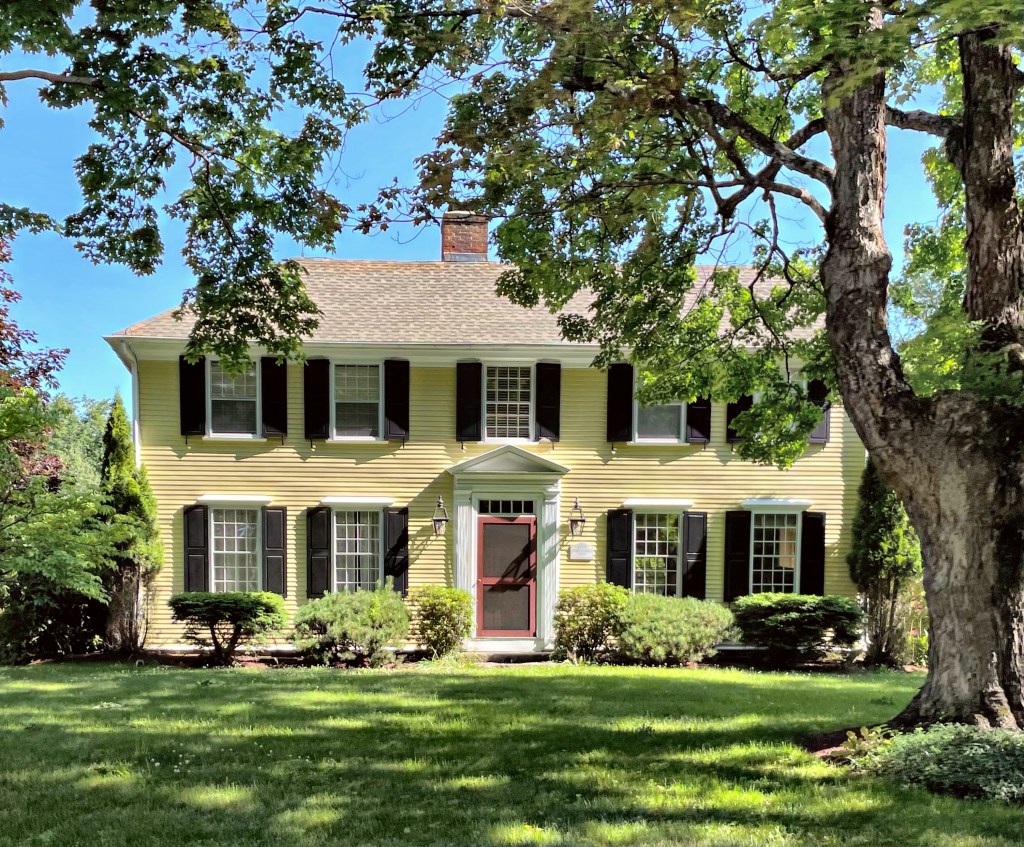
Isaac Newton Center (1811-1889) was born in Windham, NH and arrived to the rural town of Litchfield, NH in its early days. Upon arrival, he appears to have built this homestead sometime in the mid-19th century based on its style. Like many in town, he was a farmer and was involved with the local Presbyterian Church, which is still neighboring this old farmhouse. After his death, the old farmhouse and homestead was inherited by Isaac’s youngest son, Isaac Newton Center, Jr., who was engaged in local town affairs, serving as City Clerk, Treasurer, Forest Fire Warden, and Library Trustee. The house appears as a melding of late Greek Revival and Italianate, possibly from the 1850s or 1860s.
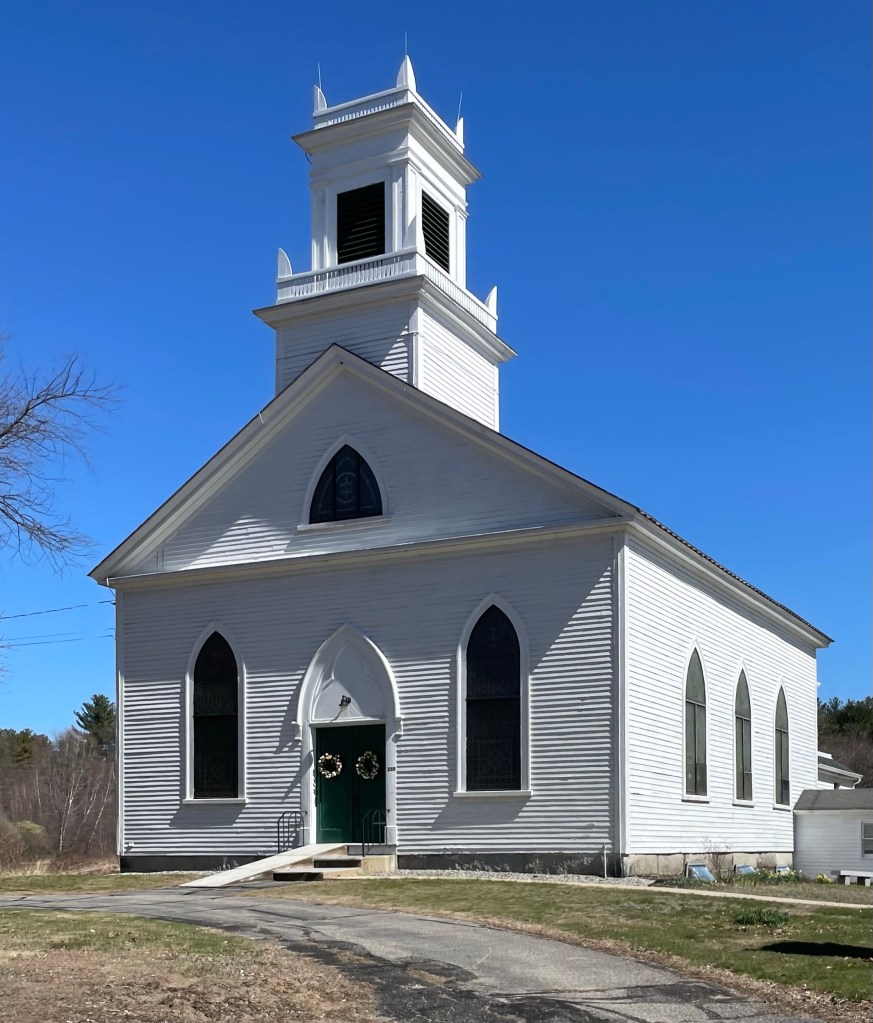
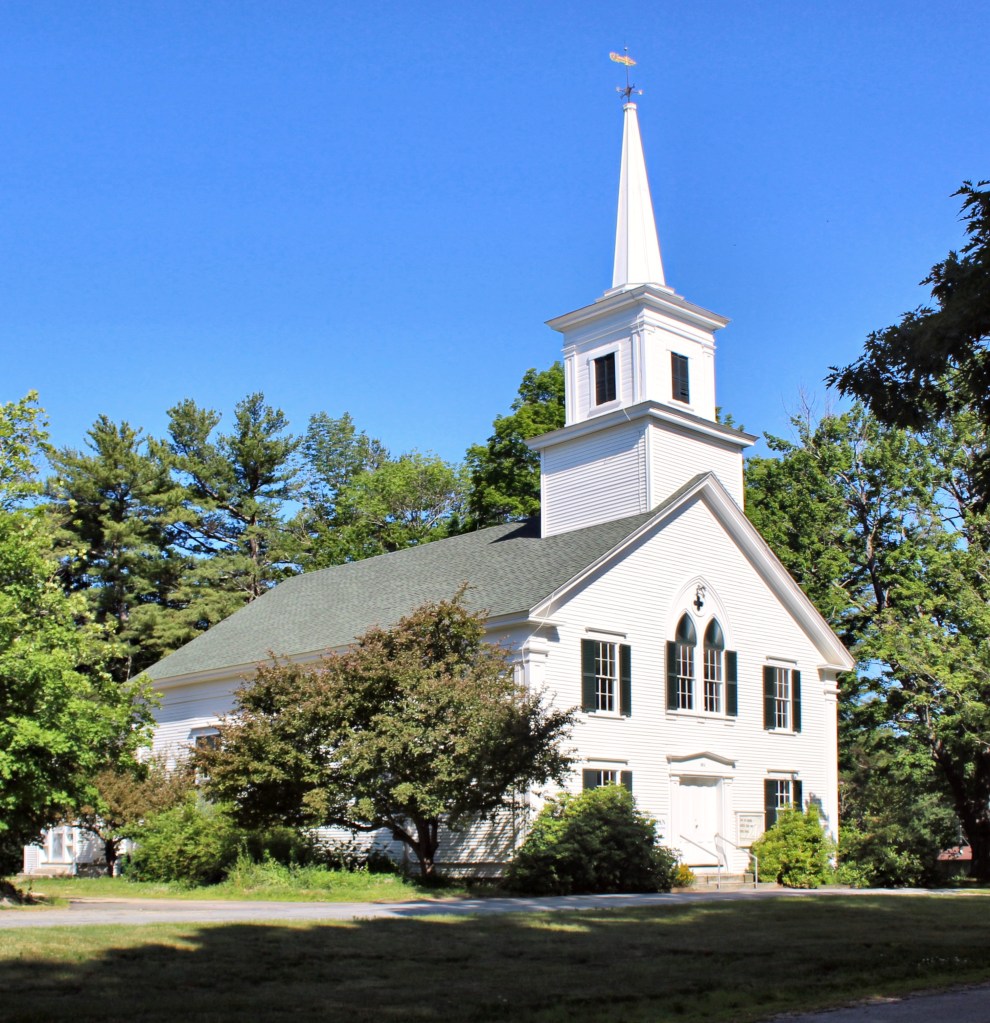
Litchfield, New Hampshire remained a rural agricultural town on the eastern banks of the Merrimack River from its founding by white settlers until after WWII when it rapidly became a bedroom community for nearby NH cities and Boston. The area’s Presbyterian residents needed a place to worship, separate from the more common congregationalists, and they built this Gothic and Greek Revival style church near the geographic center of town, a stone’s throw from the Merrimack River. The building features lancet windows, tracery, and a two-tiered belfry with classical pilasters and Gothic finials at the tower.
The town of Litchfield, New Hampshire is located at the southern section of the state across the Merrimack River from the town that carries its name. Land which is now known as Litchfield, was once populated by the Abenaki people. The New Hampshire Archaeological Society has located over 30 Native American sites along the shore of the Merrimack River in Litchfield, with artifacts several thousands of years old being uncovered. European influences started in the 1650’s with early records showing that Litchfield was then a part of Dunstable, Massachusetts. Both sides of the Merrimack River were granted in 1656, to William Brenton, colonial governor of Rhode Island. The name was changed to “Brenton’s Farm” in 1729. Chief Passaconaway of the Penacook lived in a Litchfield settlement at least part of the year around this era. In 1728, sixteen proprietors divided up the Brenton Farm Land. In 1749, the land was granted to another group of settlers and named “Litchfield” after George Henry Lee, Earl of Lichfield. The town has historically been comprised of farmland without a true town common or center. A small enclave of buildings did center in town, where the town hall was built. This building, the Old Town Hall of Litchfield, was built in 1851 from parts of an older meetinghouse, which was built across the road from where the building now stands. A shift in the course of the Merrimack River during the early 1800s forced the dismantling of the original Meeting House and a new structure to be built. It is a modest Greek Revival structure with corner pilasters, entablature, and gable end facing the street which reads as a pediment. It is very well maintained to this day as the home to the Litchfield Historical Society.
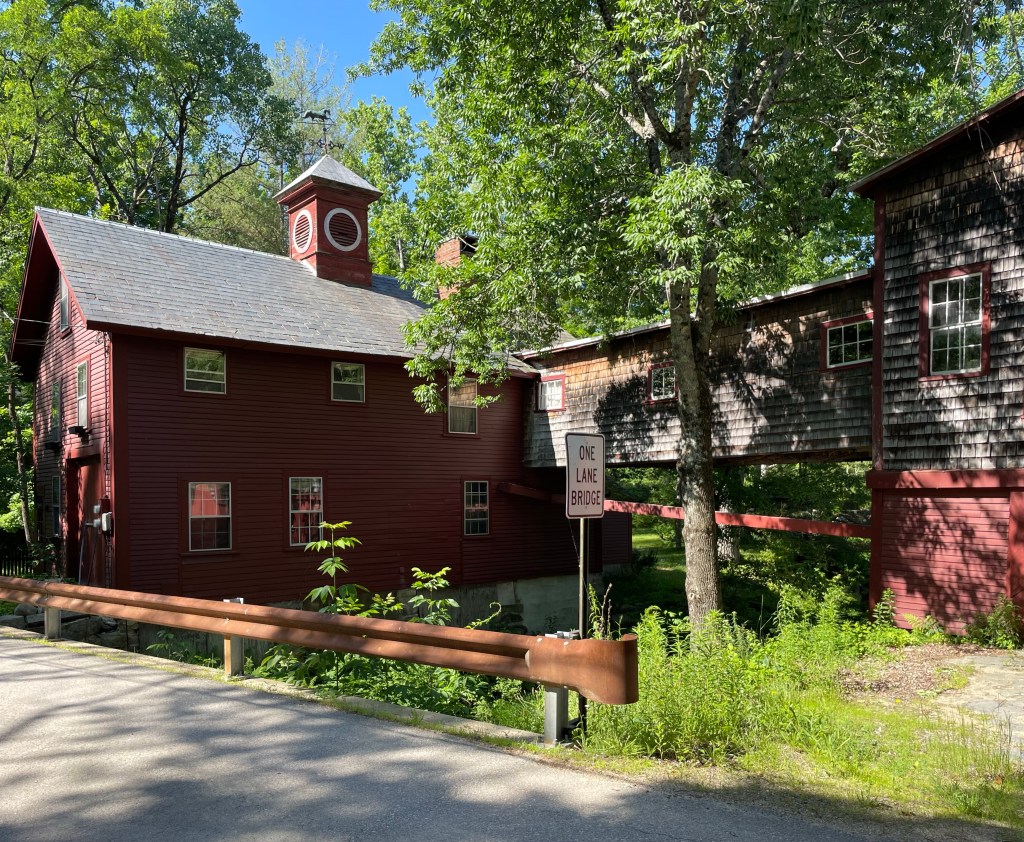
There’s not much that is more picturesque and stereotypical New Hampshire than old, wooden mill buildings. When I was looking for a town to explore in NH, I got stuck on a photograph of the old Cragin-Frye Mill in Wilton, and off I went! Daniel Cragin (1836-1921) was born in Merrimack, NH of Scottish descent. In 1856, age 21, he rented a room in a woolen goods mill, and he built knife trays and wooden toys which he turned into a business. He started his business with ten dollars, and turned a profit from the beginning, so much so that by 1858, he accumulated enough money to purchase a nearby existing building for his own operation. The mill was water-powered and grew quickly. The Daniel Cragin Mill began production of sugar boxes and dry measure boxes. The mill closed briefly after Cragin retired in the early 20th century. In 1909, Whitney Morse Frye and his father, Dr. Edmund Bailey Frye, bought the mill from Cragin. Frye continued the Cragin line of wooden trays, boxes, and pails in addition to his normal processing of grains. Whitney Frye died in 1961, and his employee, Harland Savage Sr. purchased the old mill, continuing operations. After his retirement in 1981, his son Harley and his wife Pam Porter Savage took over operations and they have operated the mill to the present day as Frye’s Measure Mill. The mill is one of a few remaining operating water-powered measure mills in the United States!
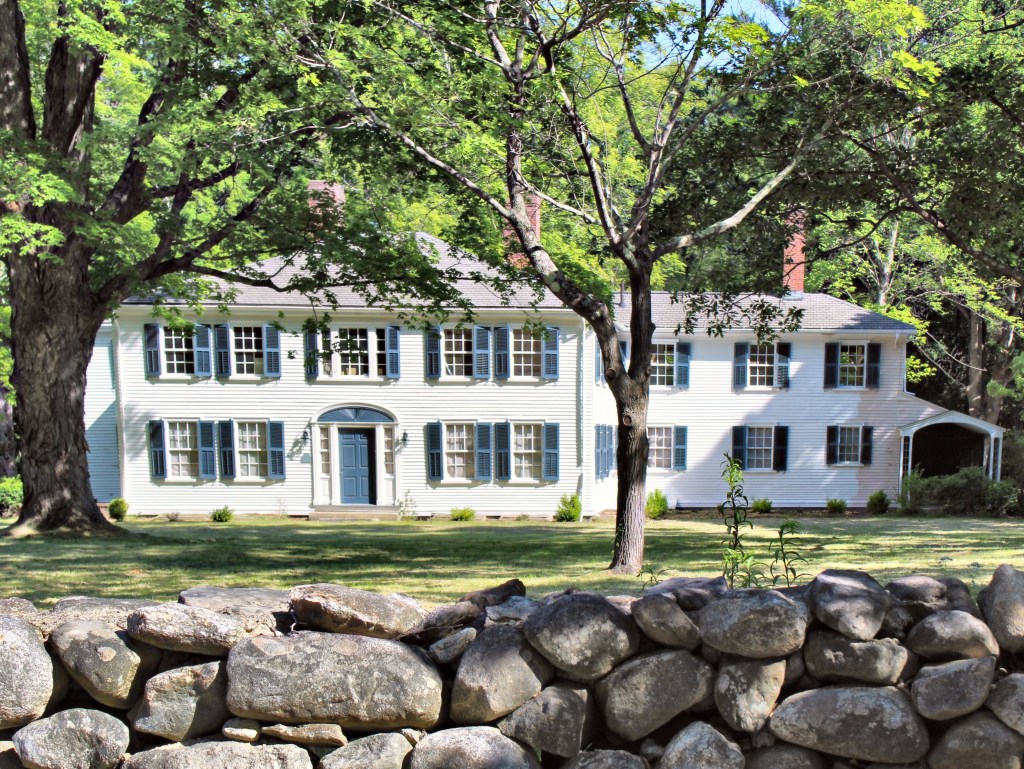
Reverend Abel Fiske (1752-1802) was born in Pepperell, Massachusetts and graduated from Harvard College in the class of 1774. Four years later in 1778, at 26 years old, he was ordained as the successor of Reverend Jonathan Livermore at Wilton, New Hampshire, where he remained until his death. During his time in Wilton, Rev. Fiske built this Federal style home for his family. The house is a short walk to the old church where he gave sermons to the growing rural community.