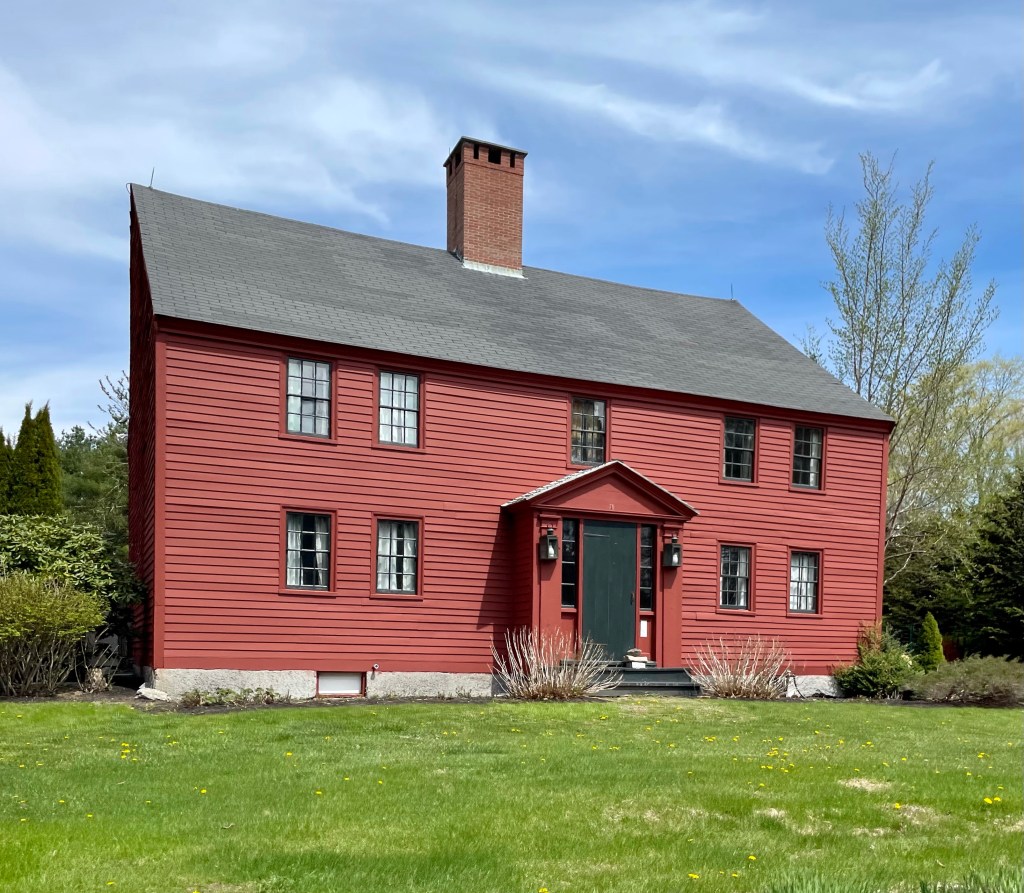
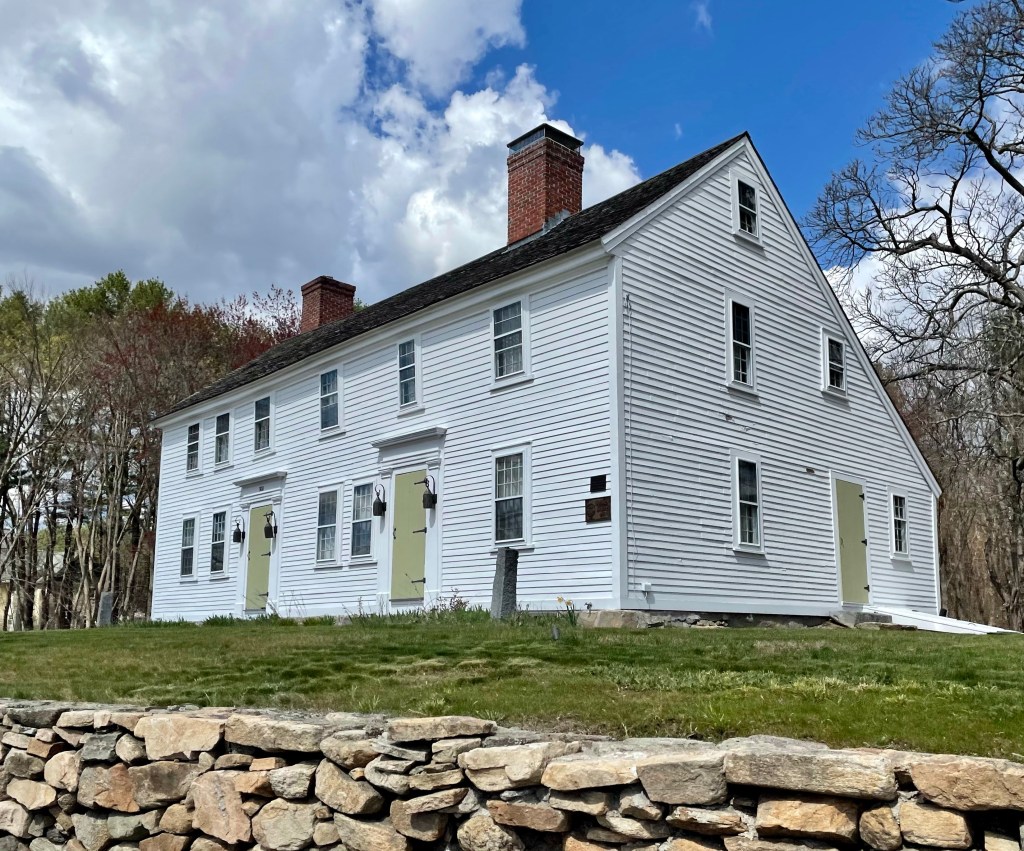
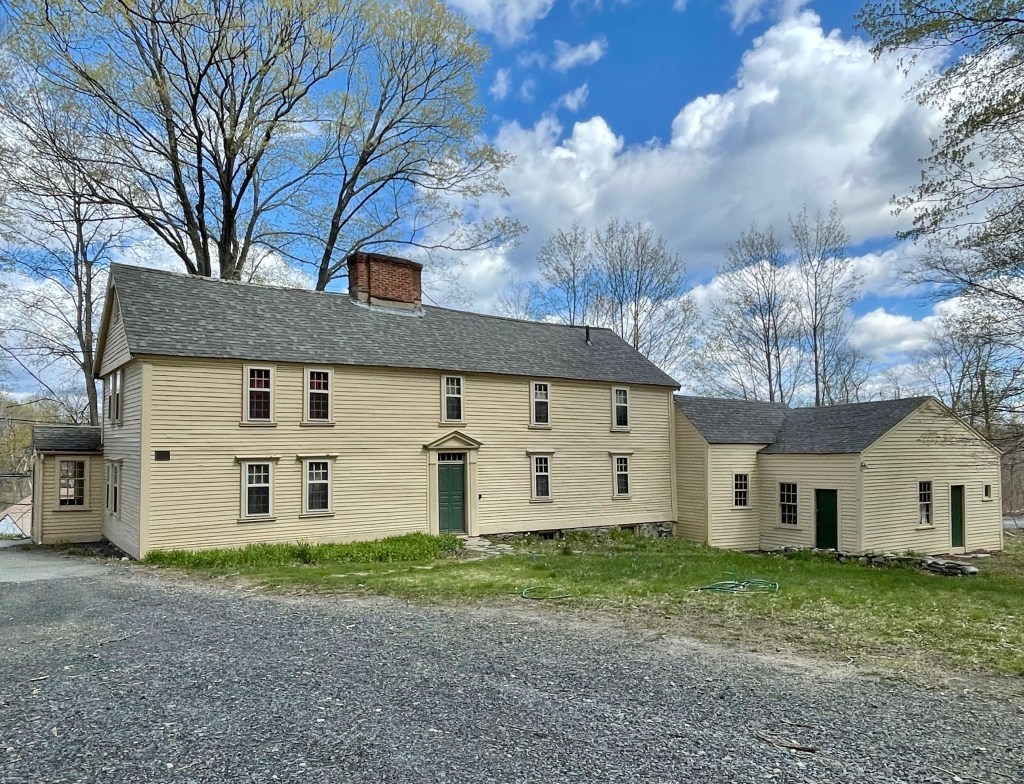
John Locke (1627-1696) settled in New Hampshire about 1640, arriving from London. He was a farmer and carpenter, and reportedly built the first church in New Hampshire. He was also a Captain in the local militia, who was constantly at odds with the people who’s land they were usurping. While working the fields at his homestead in Rye, he was killed by a native person, likely as a retaliatory attach. The attacker was soon after shot by his son, who was helping his father at the time. This Georgian home was built by John’s grandson Elijah in 1739 on family land; the date is found incised on one of the original roof beams inside.
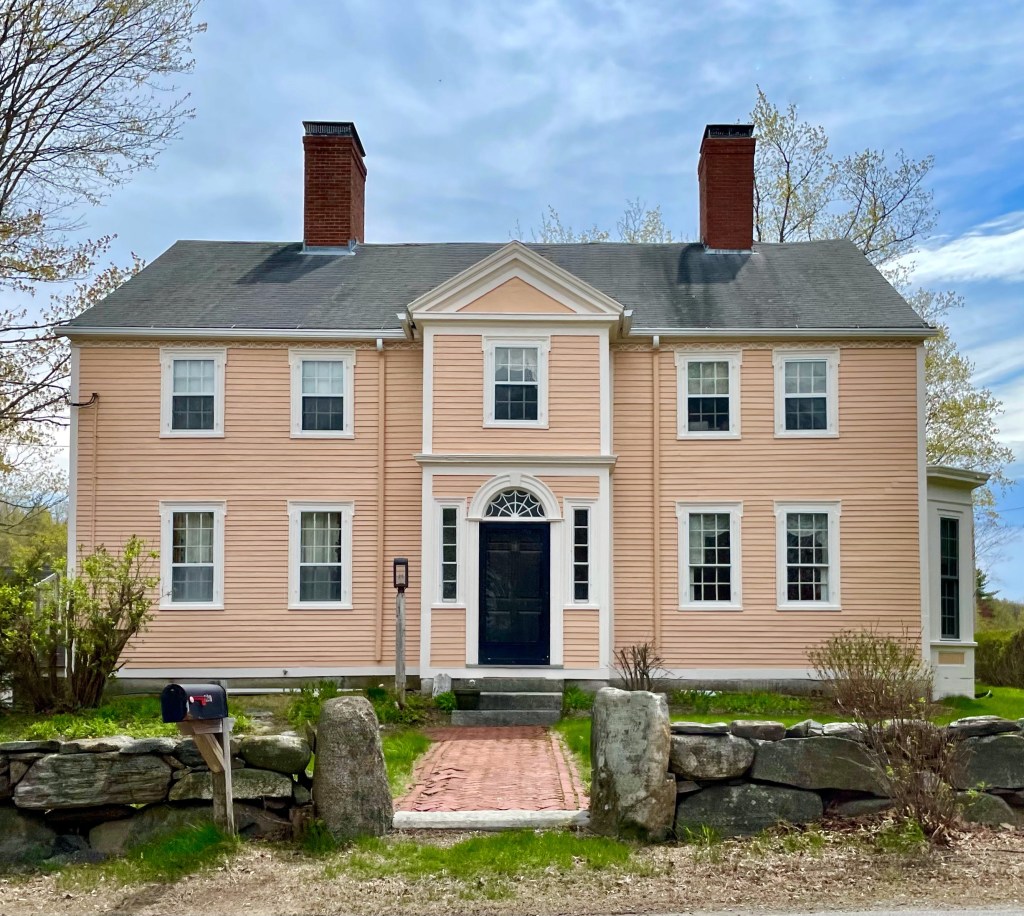
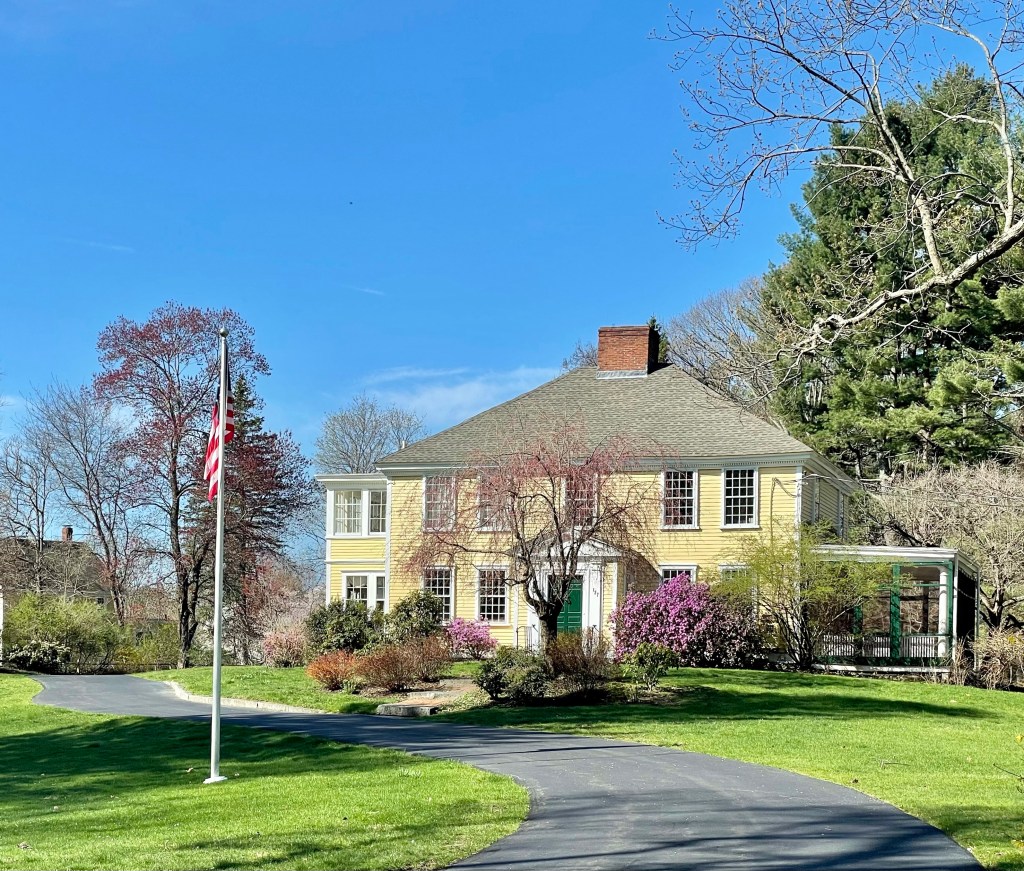
The Parsons Homestead in Rye, contains some of the most interesting early Federal-style design elements in the coastal towns of New Hampshire outside of the principal towns of Portsmouth and Exeter. When the Parsons House assumed its present appearance at the turn of the nineteenth century, Rye was a coastal farming community, but despite its rural character, the town developed distinctive preferences within the Federal style. There is no architect listed for the home, but it is highly likely a housewright took cues from William Pain’s “The Practical Builder” (1774, published in Boston in 1792). This book, inspired directly by the designs of British architect Robert Adam, allowed carpenters to take plans from one of the earliest “do-it-yourself” manuals ever published. The builders’ manuals and pattern book offered carpenters and other construction workers important resources for designs and techniques in house design and construction. Those unable to afford an architect’s services could feel confident in the good taste of their residence by selecting designs from a pattern book style in southeastern New Hampshire. Records show the land here was purchased in 1757 by Samuel Parsons (1707-1789). The property was acquired by his son Captain Joseph Parsons (1746-1832), who was a Doctor and Captain in the Revolutionary War. It is likely that he or his own son built this “modern” Federal home, and incorporated some of the old features of the family home inside.
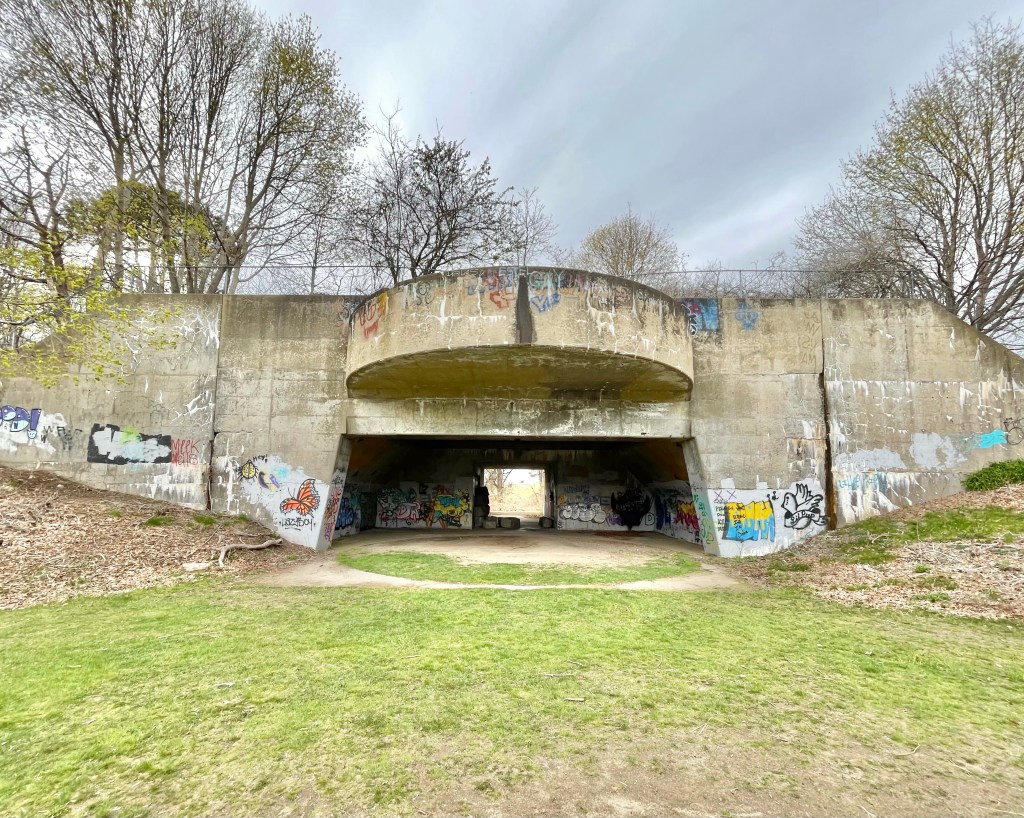
Odiorne Point in Rye New Hampshire was owned by the Odiorne Family from at least 1800, when the family built a farmhouse on the land. The peninsula juts out into the Atlantic Ocean, just south of Portsmouth, and it was seen as a strategic position by the United States Government, to protect the Portsmouth Naval Shipyard. With the advent of World War II, the United States Government deemed it necessary to improve the fortifications commanding the approaches to the Portsmouth Navy Yard, so the Government acquired this property and named it Fort Dearborn. Giant 16” coast defense guns and other equipment were installed to protect the coast from the impending German advance into North America. The Government acquisition on Odiorne’s Point included Mr. Odiorne’s home and 24 other properties, with many fine old homes on the coast demolished to make way for military facilities, but the Odiorne house was converted to a barracks. When The Nazi forces were beat in Europe, the fort was deactivated and all the guns were removed. In the Cold War period, the U.S. Air Force took formal possession of 45.3 acres at Odiorne’s Point in 1955, which it had been using since 1949 as the Rye Air Force Station. By 1961, the defensive use of the site was not as important, and the site was sold to the State of New Hampshire as a State Park. Today, you can explore the park and the decaying concrete batteries up close, which is a favorite excursion of mine.
Located on Odiorne Point in Rye, New Hampshire, this old farmhouse has overlooked the Atlantic Ocean for over 200 years. Before that, this land was Pannaway Plantation, the first European settlement in what is now currently the state of New Hampshire. By 1630, the plantation was abandoned, and the settlers moved to Strawbery Banke in what is now Portsmouth. John and Phillip Odiorne (likely brothers) arrived to Portsmouth in 1657 from England, and some of their descendants moved south to modern-day Rye. This home was built by a descendant around 1800, and although built as a farm house, not as a city mansion, it is quite large. The house is a Federal period farmhouse with later alterations and additions, but has deteriorated since the property was acquired by the State of New Hampshire from the Odiorne Family in 1942. More on the property next!
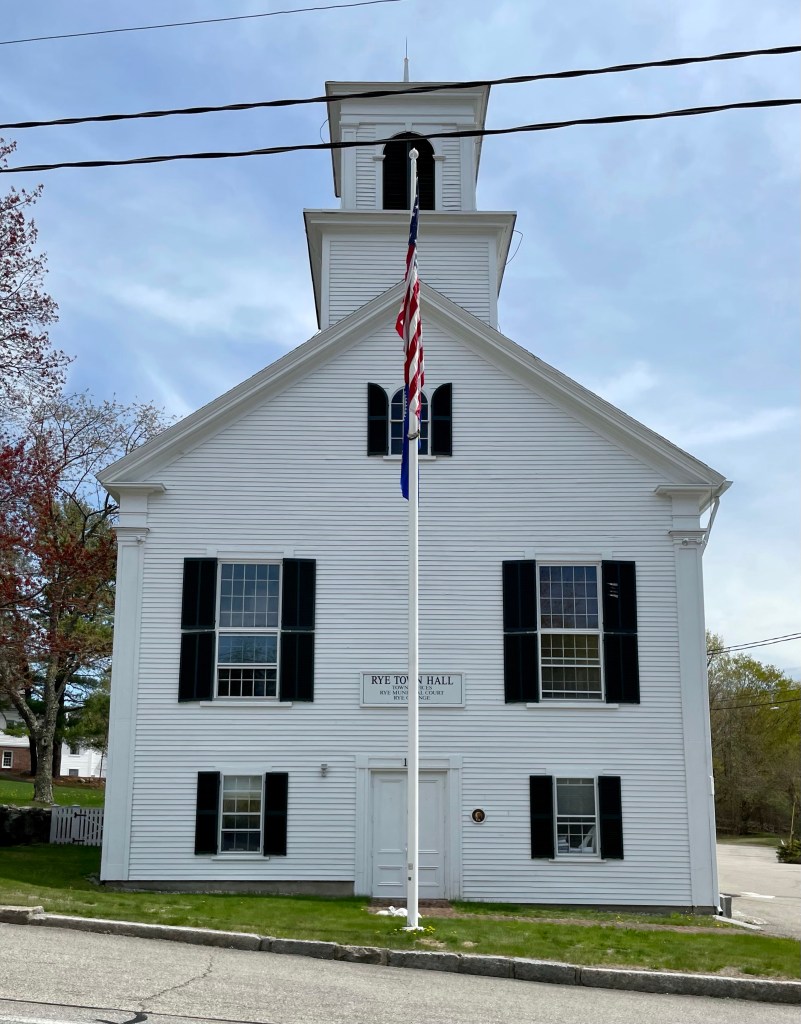
Rye, New Hampshire sits on the short coast of the state, between the busy towns of Portsmouth and Hampton, and provides a respite from the swarms of tourists and beach-goers alike. Modern-day Rye was the first settlement in New Hampshire by Europeans, and was originally named Pannaway Plantation, established in 1623 at Odiorne’s Point (more on that later). The settlement was eventually abandoned for Strawbery Banke, which became Portsmouth, the historic port town we know today. The town was later a village of New Castle, and was known as Sandy Beach Village, before it was called “Rye”, for Rye in Sussex, England, and incorporated as its own town in 1785. The town met in a Meeting House until it purchased an old 1839 Methodist church in town. In 1873, the building was purchased by the town of Rye for $1000, with an additional $2658 spent on renovations, which added a new ground floor to increase the height from 1.5 stories to 2.5 stories, added 10 feet in depth to the building, and the two-stage tower and belfry. The Greek Revival building has long been a landmark in town, hosting dances, concerts, whist parties, singing schools, oyster parties and immunization clinics, beyond the typical governmental functions. There were calls to demolish the building for a modern town hall, which saw resistance (thankfully) and now the town has agreed on a land-swap with a bank, demolishing an old house to take over the bank building, turning it into some town offices.
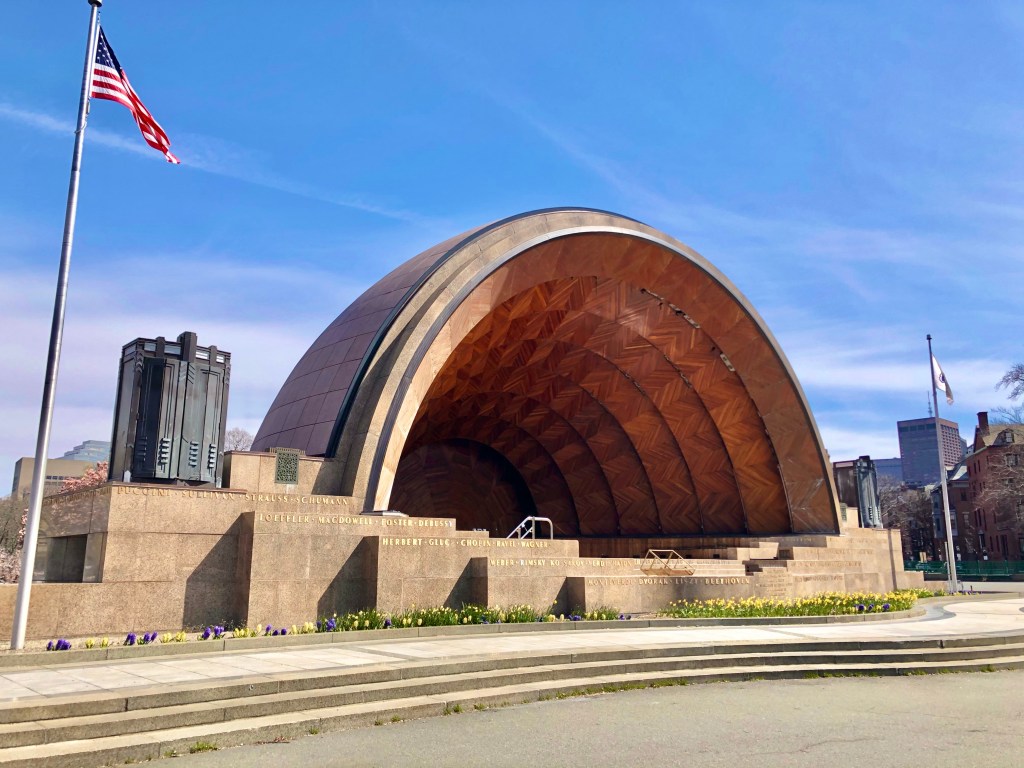
Located at the Charles River Esplanade in Boston, the Hatch Memorial Shell has long been an iconic landmark and meeting place for Bostonians and tourists alike. Built in 1940, this outdoor amphitheater structure replaced an earlier 1920s shell, envisioned by Arthur Fiedler, the first permanent conductor of the Boston Symphony Orchestra. Construction began on the first shell in 1928 and Arthur Fiedler conducted the first Boston Pops concert there on July 4, 1929, followed by a month of concerts during that first summer, a tradition that has continued to this day. A second temporary shell was constructed of metal in 1934, which was unsatisfactory for the famous orchestra. In 1940, the construction of the new music shell took place, donated by benefactor Maria Hatch, to build a memorial for her late brother, Edward, who it is named after to this day. The permanent shell was designed by Richard J. Shaw, a Boston architect known for designing churches. The Art Deco design, with intricate woodwork adorning the interior and a terrazzo tile roof, was dedicated on July 2, 1940, just in time for Independence Day celebrations.
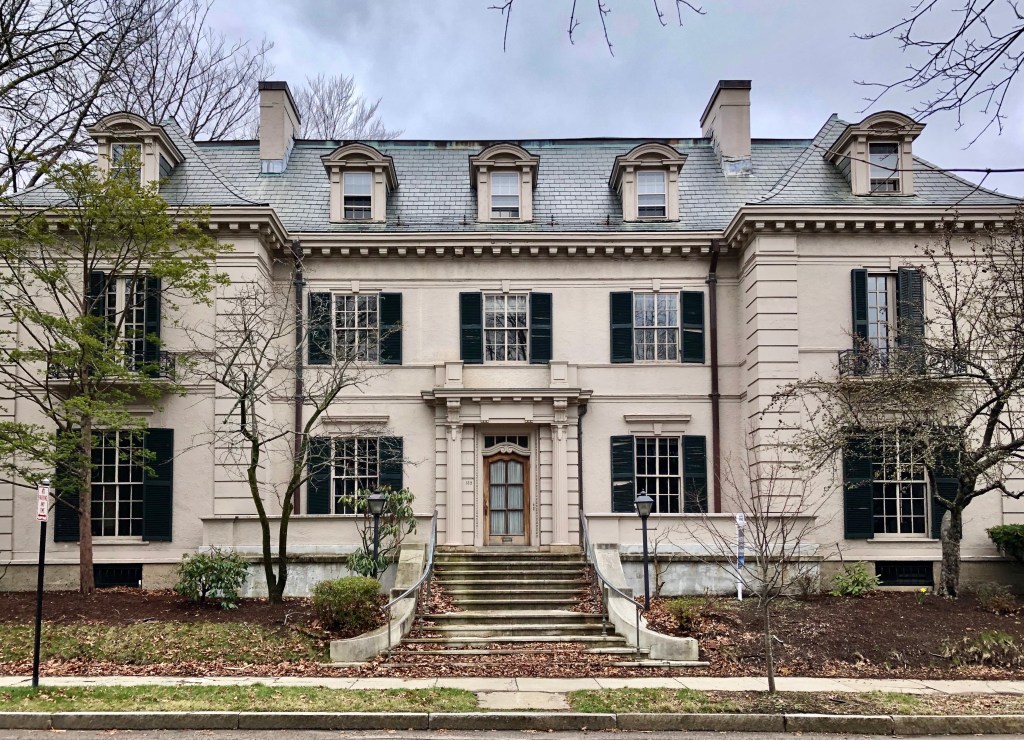
This stunning home in Brookline’s Cottage Farm neighborhood was built in 1908 for Bernard Jenney, the assistant treasurer of the Jenney Oil Company. Stephen Jenney, had founded Jenney Oil Company in Boston in 1812, as a kerosene, coal and whale oil producer. By the 1860s, Bernard Sr. and his brother Francis took over the company which became known as the Jenney Manufacturing Company. The newly established company focused primarily on production and distribution of petroleum products for factories and businesses. The Jenney Manufacturing Company took off in the early 1900s due to the proliferation of personal automobiles in Boston and they expanded a new manufacturing center in City Point, South Boston, which had a capacity of 500 barrels of oil a day. Jenney auto oil and gasoline became a major supplier and after Bernard Sr.’s death in 1918, under Bernard Jr.’s leadership, the company began to develop gas stations in New England. The company continued into the 1960s when it was acquired by Cities Service, later rebranding as Citgo. Jenney resided here until his death in 1939. According to the 1935 Brookline street list, the occupants included his daughter’s family Mary & Francis Brewer, three maids and a laundress. The house was acquired by Boston University in 1963 and has long served as the home of former president John Silber.
The architectural firm of Kilham & Hopkins was hired to design the home, which is French Renaissance Revival in style. The home itself is an architectural landmark. When it was published in ‘The American Architect’ in 1910, the house was described as, “A Study in French design of the Louis XVI period”. Additionally, the home (of course) featured a vehicle garage as the family must have had some cars based on the line of work. The home is now listed for sale for a cool $4,888,000 price tag!
This stunning Georgian farmhouse in Acton, Massachusetts, was built around 1773 for Seth Brooks (1740-1831) and his wife Molly Conant Brooks, on land that had belonged to her father, William Conant of Concord (part of which was later annexed to Acton). Seth Brooks fought under Captain Isaac Davis on April 19th, 1775 at the Battle of Concord, who was among the first killed and was the first American officer to die in the Revolution. It was Brooks who ordered Davis’ body carried from the field after he fell, so he could be buried with honor. After the war, the family suffered an unfathomable tragedy. Seth and his wife, all their nine children, and all but one of their grandchildren died of the same type of tuberculosis, “slow consumption.” The family “curse” appears to have been broken by grandson Nathan Brooks, Jr., (1799-1881,) who inherited the property. According to local legend, a room beside the center chimney sheltered runaway slaves, as Nathan Brooks was an avid abolitionist. At the turn of the 20th century, the farm was purchased by Brookline timber merchant Benjamin Pope, owner of the Pope and Cottle Company of Boston. For many years, the Pope family used the house as a summer residence, with managers working the property as a dairy farm. It was Pope who named the farm “Stoneymeade,” and added greenhouses, an icehouse, and had an elaborate water system installed. Stoneymeade Farm continues to this day as an equestrian farm with boarding space for horses.
This 2-1/2 story wood frame house in Acton, Massachusetts was built in 1760, and is one of the town’s best-preserved colonial-era houses. It is an unusual double house, consisting of one section with a square plan, and the other with a typical colonial “half house” plan, having three bays and an off-center chimney. The house was built by Jonathan Hosmer, Jr., a bricklayer whose workmanship is evident in the house’s many fireplaces. Hosmer was also prominent in civic and military affairs; he served (along with his son, who was killed at 17 years old) in the 1777 Battle of Bennington. The home was later owned by Jonathan’s son Simon, who may have added the attached dwelling, creating the double-house form we see today. In 1974 the property was acquired by the Acton Historical Society, which rents one of the units, and operates the rest of the property as a museum. The home is a great example of a Georgian double-house with a saltbox roof.
One of three pre-1725 houses in South Acton, the Faulkner Homestead is the best preserved First Period house in the area and displays elements from its First Period construction date of 1707 and from the later Georgian period. The home was built for Ephraim Jones, who was one of the first millers starting what was to become the Faulkner mills located near the old homestead. The home was known as a Garrison House, built as a refuge for the settlers in times of Indian raids, but there is no record that it was ever used for that purpose. In the 1730s, the home was rented by Ammi R. Faulkner (1692-1756), who purchased it years after he moved in. The Faulkner Homestead remained in the Faulkner Family for over 300 years, when it sold our of the family in the 1940s.

 Buildings of New England