North Easton Railroad Station // 1884

Frederick Lothrop Ames (1835-1893) was born in Easton, MA, the son of Oliver Ames Jr. who ran the Ames Shovel Works in town. On the death of his father in 1877, Frederick became head of the Ames & Sons Corporation also inheriting upwards of six million dollars, which he invested in railroads. From this, he eventually became Vice President of the Old Colony Railroad and director of the Union Pacific railroad. At the time of his death, Ames was reported to be the wealthiest person in Massachusetts! Due to his role for the Old Colony Railroad, Ames had a rail station built in his hometown, adjacent to his family’s factory. Henry Hobson Richardson, who designed many other buildings in town for the Ames Family, designed this station in his signature Richardsonian Romanesque style with its large arches, varied rustication of stone, and brownstone trimming. The building was completed two years before Richardson’s death. Rail service here was cut in the 1950s, allowing the Ames family in 1969 to buy the station back from the consolidated New York Central Railroad, gifting it to the Easton Historical Society.
North Easton Fire Station // 1905

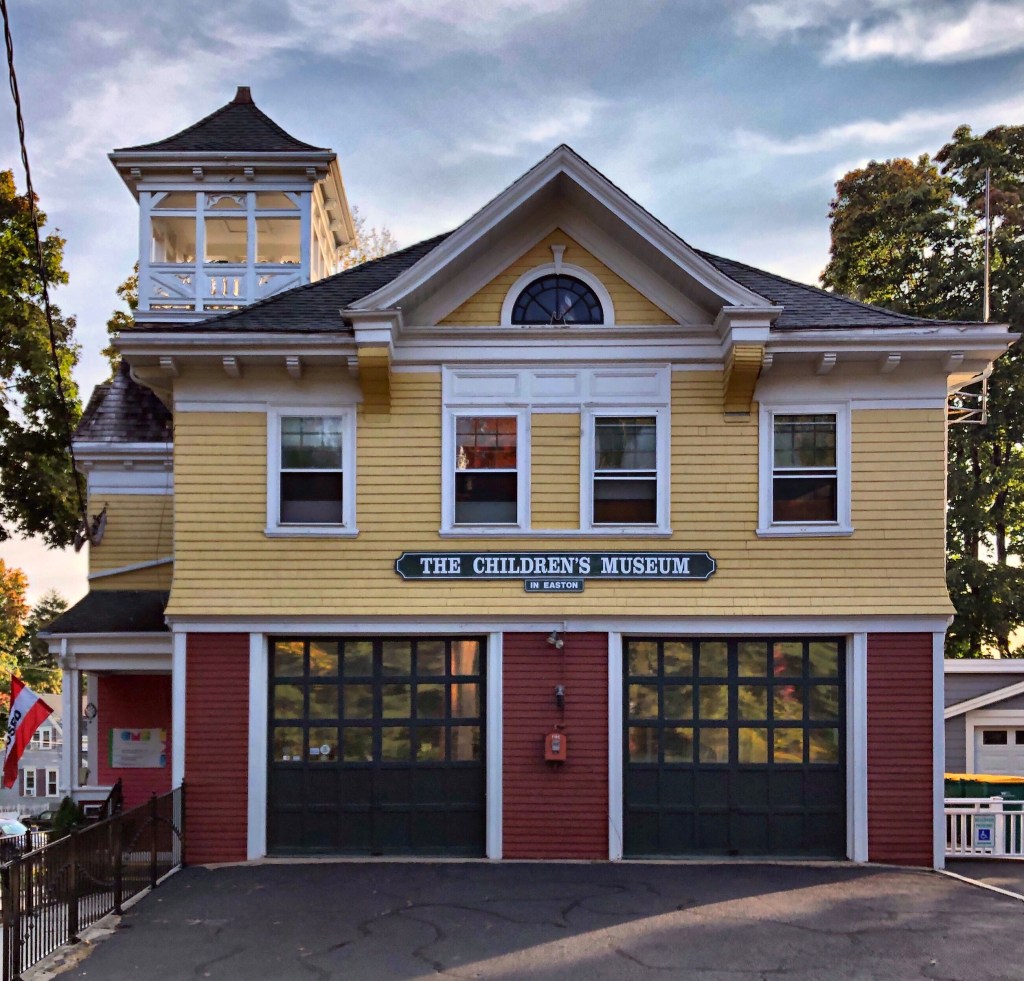
In the early 20th century, the village of North Easton, Massachusetts saw large growth, in large part by the Ames Family. The town had previously had a volunteer fire station, but due to the development, a permanent fire department was needed. In 1904, Mary S. Ames (later Mrs. Louis Frothingham) donated land for the purposes of building a fire station; across from the Ames Shovel Works. The fire station, completed in 1905, remained active until 1968, when the town’s modern firehouse that could accommodate larger fire apparatus was constructed. In 1991, the former fire station became the home of the Children’s Museum in Easton, which it remains to this day.

Ames Memorial Hall // 1881

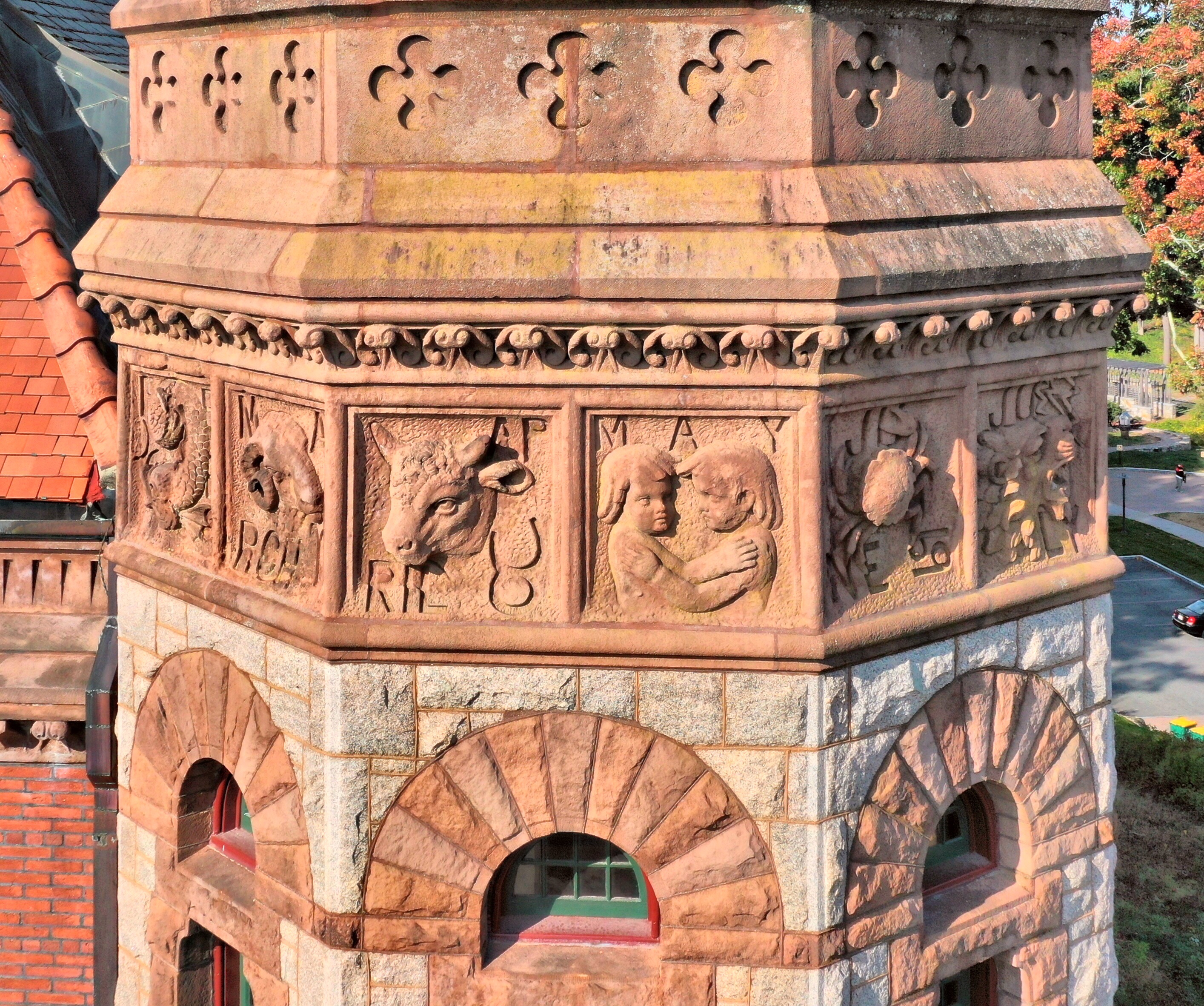
There are few buildings that make you stop and stare in marvel at their perfect architectural proportions, detailing and design, the Ames Memorial Hall in Easton, Massachusetts is one of them for me! In the late 1870s, the children of Oakes Ames commissioned the great American architect Henry Hobson Richardson to design the Memorial Hall as a tribute to their father. Richardson, the architect of Boston’s beloved Trinity Church in Copley Square, responded with a picturesque masterpiece using his signature architectural elements of rounded arches, dramatic roof lines, and heavy masonry adorned with carvings. The building was provided to the inhabitants of Easton “for all the ordinary purposes of a town hall”. Oakes Ames (1804-1873) was partner in the family business, O. Ames & Sons, a U. S. congressman, an early investor in the Central Pacific Railroad, and, at the urging of President Abraham Lincoln, a prominent force in the building of the first transcontinental railroad. The Richardsonian Romanesque building stands on the solid foundation of a natural ledge, from the northeast corner of which rises the beautiful octagonal tower, on whose frieze are carved the twelve signs of the zodiac.

Ames Shovel Works // 1852-1934

Oliver Ames began producing shovels in North Easton, Massachusetts at three pre-existing factory sites in the early 1800s. By 1852, O. Ames & Co., now run by Oliver Ames’s sons, Oakes and Oliver, Jr., was prompted to construct stone shops on the west side of the Shovel Shop Pond. In 1851, the original shovel shop was destroyed by fire. The company would soon rebuild, and by 1852 the first of the new shops, of fireproof stone construction had been completed. From 1852 to 1953 the company hired hundreds of men, women, and boys to make dozens of different kinds of shovels as well as hoes and, later, lawn and garden tools. Strong demand for shovels would continue in the mid 19th century, with the great expansion of railroads and later the American Civil War. Abraham Lincoln personally asked Oakes Ames to supply shovels to the Union Army, and he obliged. By 1879, the company is said to have produced 60% of all the shovels in the world!! The Ames Shovel Company ceased production in Easton in 1952. After, the buildings started to suffer from neglect with only a few buildings occupied by commercial uses. Thankfully, in 2014, the complex was redeveloped into a local YMCA and apartments as the Ames Shovel Works Apartments!

The Angel of Death and the Young Sculptor // 1893

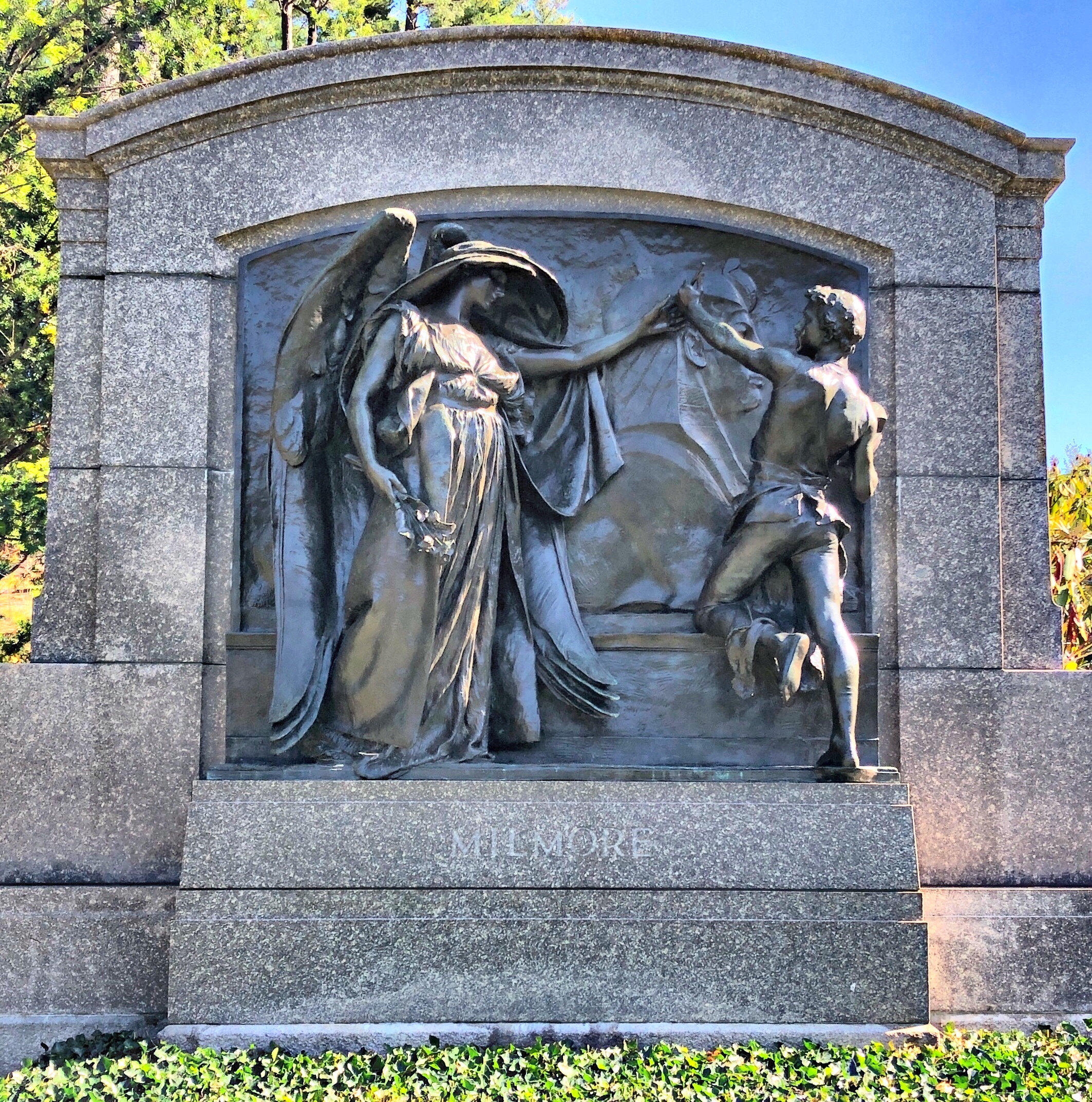
While not a building, I must feature one of the most stunning pieces of art I have seen, at a cemetery! Titled “The Angel of Death and the Young Sculptor“, this massive monument was is a sculpture in bronze, and one of the most important and influential works of art created by sculptor Daniel Chester French and is located at Forest Hills Cemetery in Boston. Also known as the Milmore Monument, it was commissioned after the death of brothers, Joseph, James, and Martin Milmore (1844–1883). The Milmore brothers immigrated to the United States from Ireland in 1851, Joseph becoming a stone carver and Martin a sculptor. The will of Martin Milmore’s older brother, Joseph, called for creation of the monument, which was to commemorate the life of his older brother, Martin. As Martin Milmore had been a sculptor himself, French decided to depict the artist at work, with the Angel of Death interrupting his work, with death grabbing the chisel from Martin’s hand as he works. Martin Milmore was 39 years old when he died.

Forest Hills Administration Building & Chapel // 1884

Located adjacent to the Entrance Gate at Forest Hills Cemetery in Boston, the Administration Building and Chapel perfectly compliments the Gothic Revival collection of structures welcoming all visitors to the cemetery. Designed by the firm of Van Brunt & Howe, the building was completed in 1884, when the cemetery’s popularity with visitors (alive and deceased) was at a high. The building is in the Gothic Revival style and is constructed of
Roxbury puddingstone, with sandstone trim on the original parts of the building and yellow freestone trim on the 1921 addition. The building remains as a perfect partner to the entrance gate, serving as a physical portal between metaphorical life and death.

Forest Hills Cemetery Bell Tower // 1876

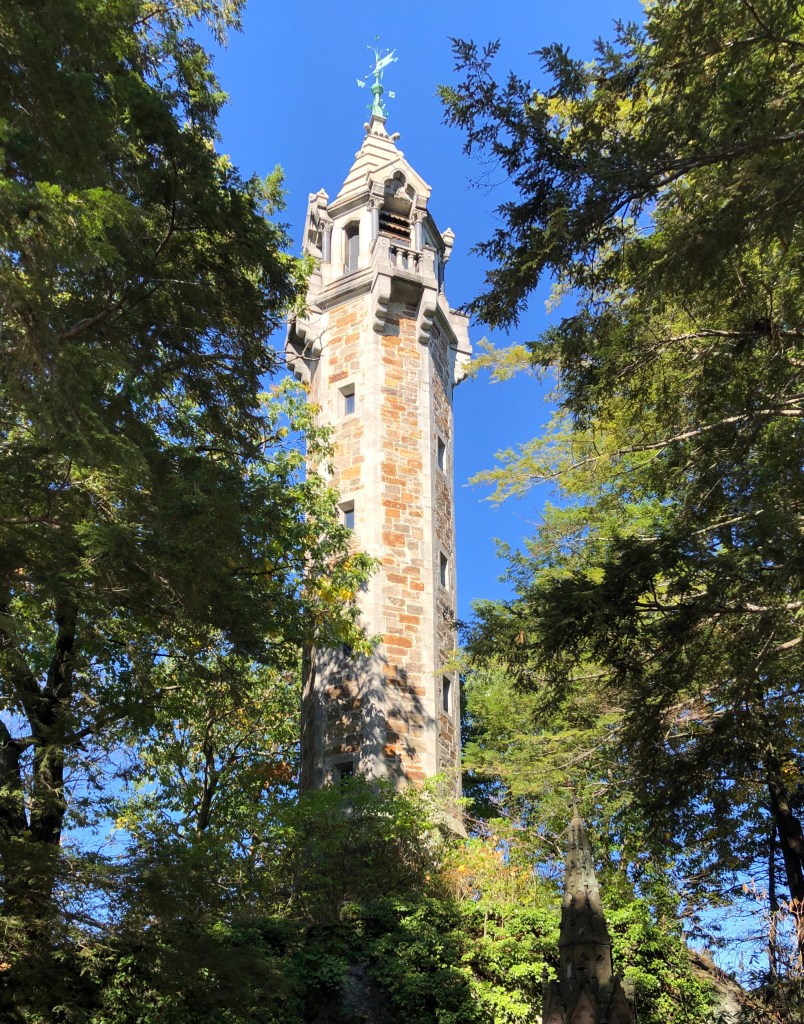
The bell tower at Forest Hills Cemetery is an octagonal Gothic revival structure located on Snowflake Hill just past the entrance gate and administration building and was completed in 1876. The 100-foot tower is constructed of Roxbury puddingstone and trimmed with granite. The roof is clad with granite tiles and topped with an ornate copper weathervane. Originally its swinging bell tolled, but it has since been replaced with an electronic carillon. The bell tower rises dramatically from massive
outcrop of Roxbury puddingstone known as Snowflake Hill which is offset by smooth lawns and Victorian planting beds. While the large trees surrounding partly obscure the tower, it truly is a stunning building.

Forest Hills Cemetery, Entrance Gate // 1865

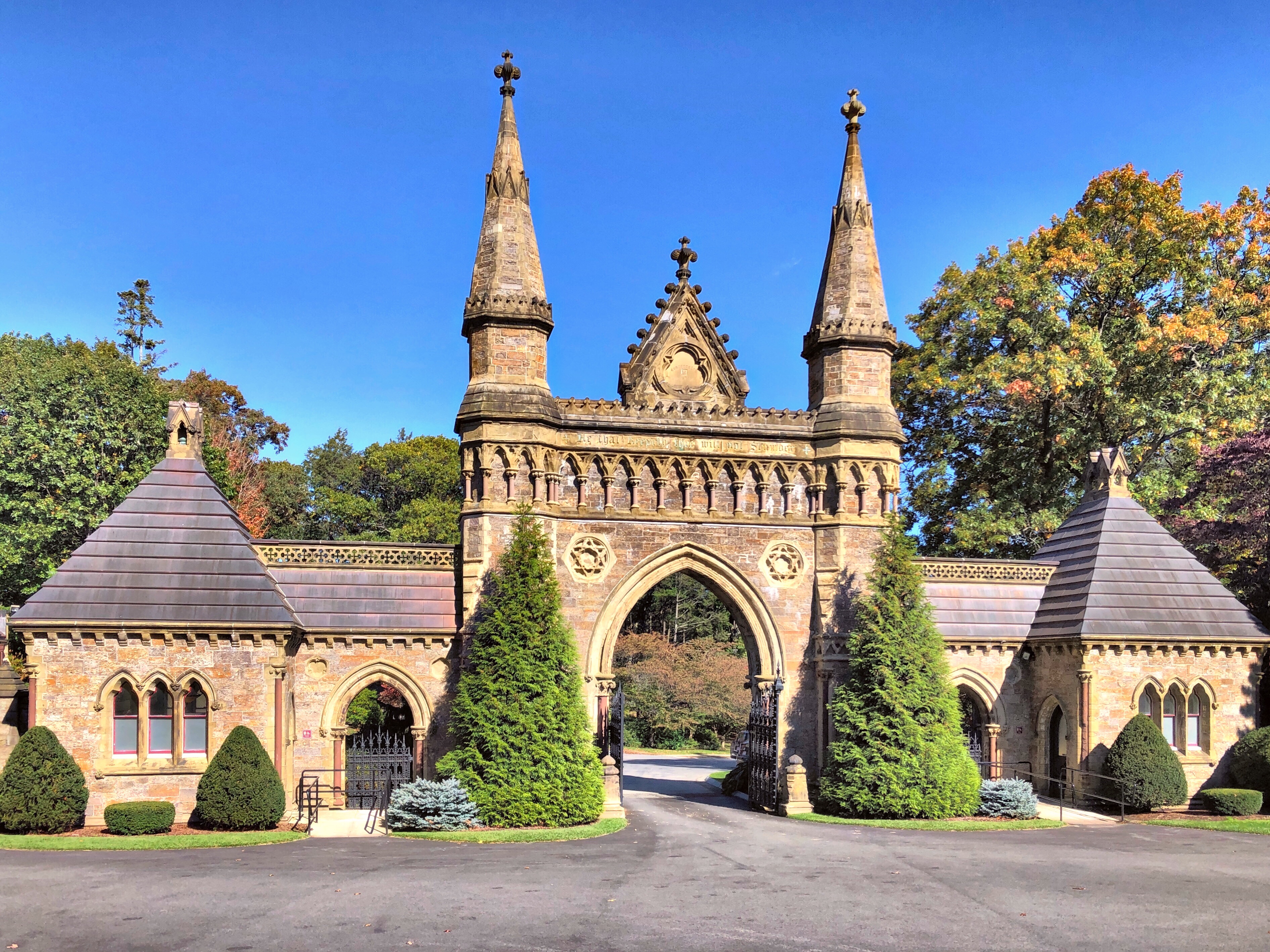
Forest Hills Cemetery was founded in 1848 by Henry A. S. Dearborn, then mayor of Roxbury. He designed this magnificent cemetery to offer the citizens of his community a place to bury and remember friends and family in a tranquil and lovely setting. Forest Hills embodies the ideals of the rural cemetery movement, which begun at nearby Mount Auburn Cemetery, in Cambridge in 1831, which was co-founded by Dearborn. Many rural cemeteries have elaborate entrance gates, possibly serving as a dramatic transition from the secular world to the spiritual realm of the cemetery, and perhaps as a metaphor for the journey from life to death. This entrance gate was built in 1865, replacing an earlier Egyptian Revival gate constructed in 1848. Designed by Charles Panter, the gate is constructed of local Roxbury puddingstone, with three arched openings with ornate iron gates surmounted by decorative scrolled ironwork. The central gateway is
framed by two conical spires and a central stone pediment, all topped with stone crosses.

Forest Hills Cemetery, “Boy in a Boat” // 1886

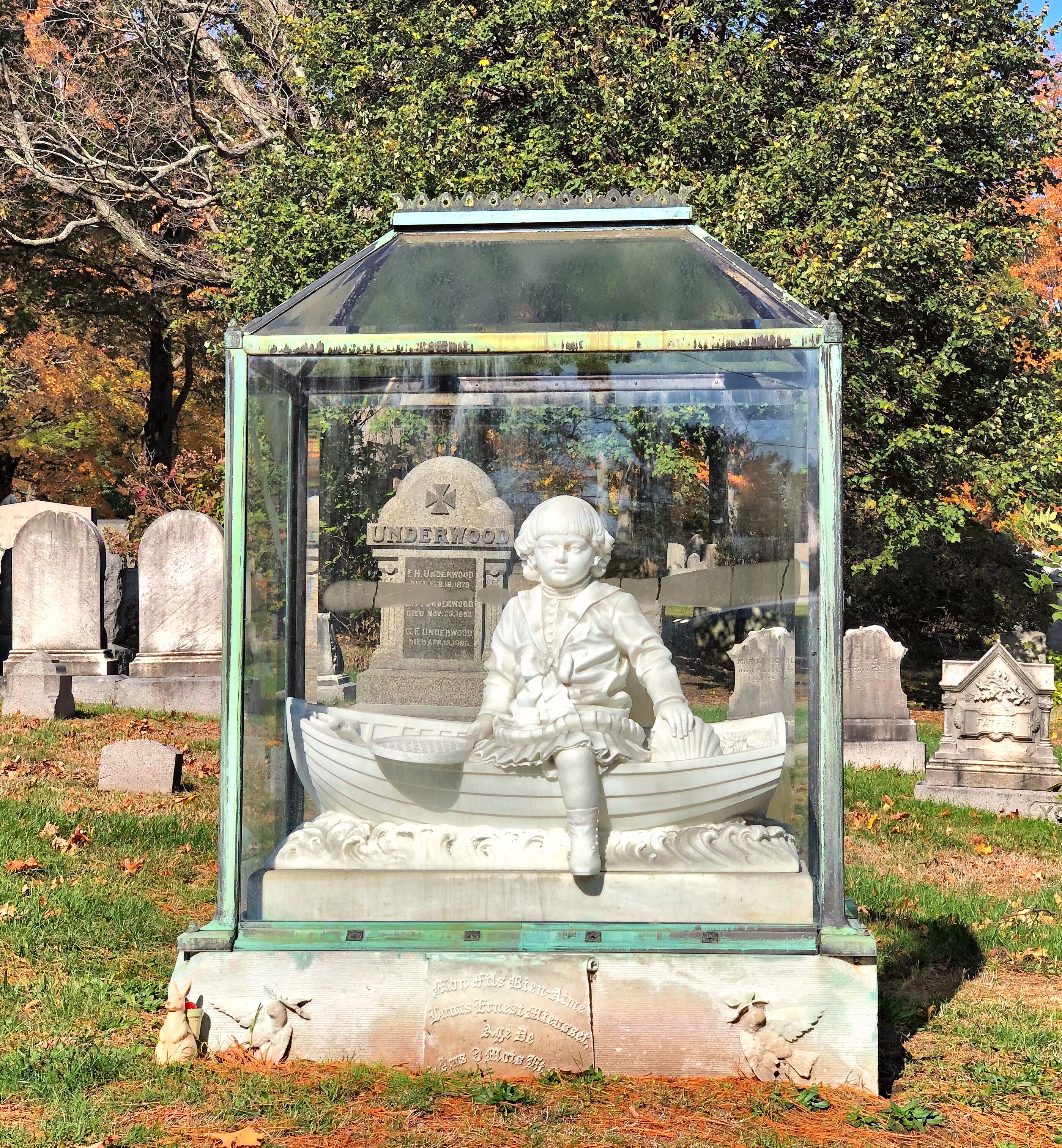
While this funerary sculpture is not a building, I couldn’t help but share one of the most captivating graves in New England for Halloween, “The Boy in a Boat”. Louis Ernest Mieusset (1881-1886), just four years old, died of Nephritis, a kidney inflammation and Scarlet Fever. His mother, Madame Louise Mieusset, took every penny she had saved for the boy’s education and put it towards a commission of a funerary sculpture, depicting her late son’s playful spirit. Madame Mieusset worked as a hat-maker in Boston, barely scraping by until her death in the 1930s. She died penniless, and wished to be buried near her beloved son, but she did not have enough money set aside to be interred in the cemetery and was set to be buried in a pauper’s lot, until (legend says) Boston Mayor James Curley paid her burial expenses, allowing for her eternal rest with her late son Louis. The sculpture is carved of white marble and depicts Louis playing in a boat with a tennis racket in one hand and a shell in another. The funerary sculpture is enclosed in a bronze and glass vitrine to protect it as the marble was believed to be too soft to stand up to weathering, the artist is unknown.

Sleepy Hollow Farm // c.1780

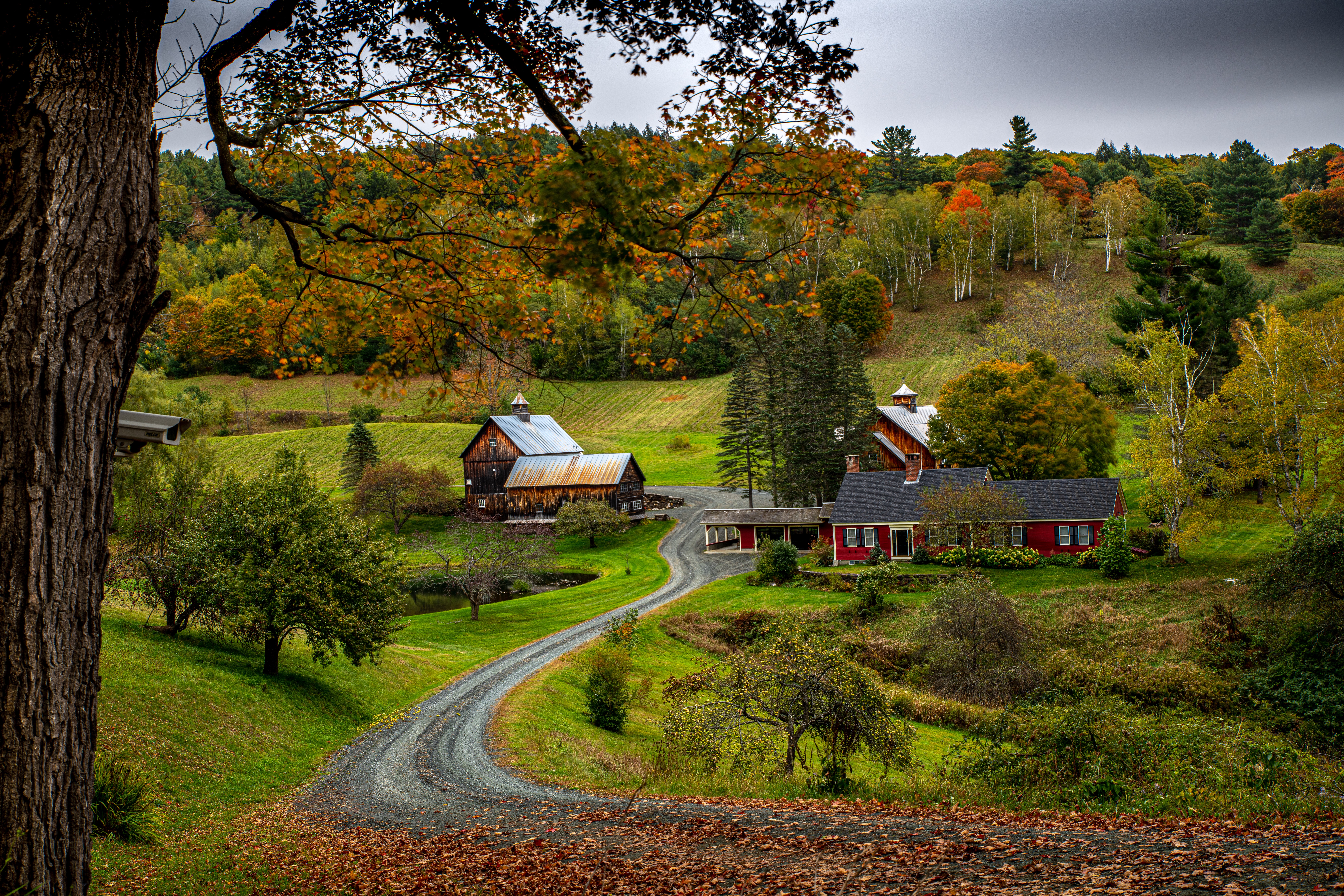
Without question, this property is the most photographed site in the tiny town of Pomfret, Vermont, if not the state. The property dates to the late 18th century when John and Samuel Doten moved to the newly settled town of Pomfret Vermont, overlooking the growing town of Woodstock in the valley below. The two brothers acquired vast farmland on the hills of Pomfret and each built farmhouses adjacent to eachother, with Samuel getting elevated land and John developing the land sunken off what is now known as Cloudland Road into this stunning property. Sleepy Hollow Farm remained in the Doten family for centuries until the 1950s, when the owners sold the property to move to Woodstock and work for Laurance Rockefeller, the famous philanthropist and conservationist, who later donated his Summer home in Woodstock to the National Park Service. The property sold numerous times in the late 20th century, and is presently owned by Aerosmith guitarist Joe Perry and his wife, Billie. They are clearly great stewards to the property’s rich history and various outbuildings, and must not care too much to have swarms of photographers at the end of their driveway year-round!