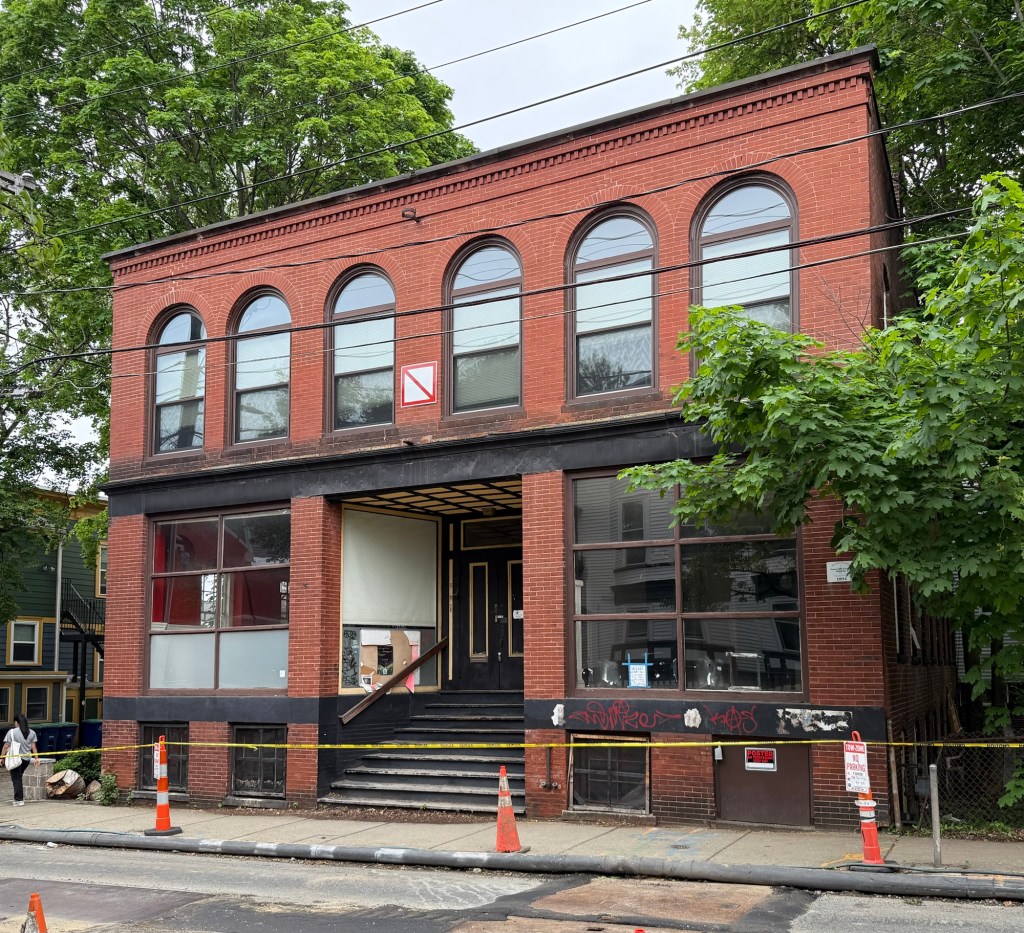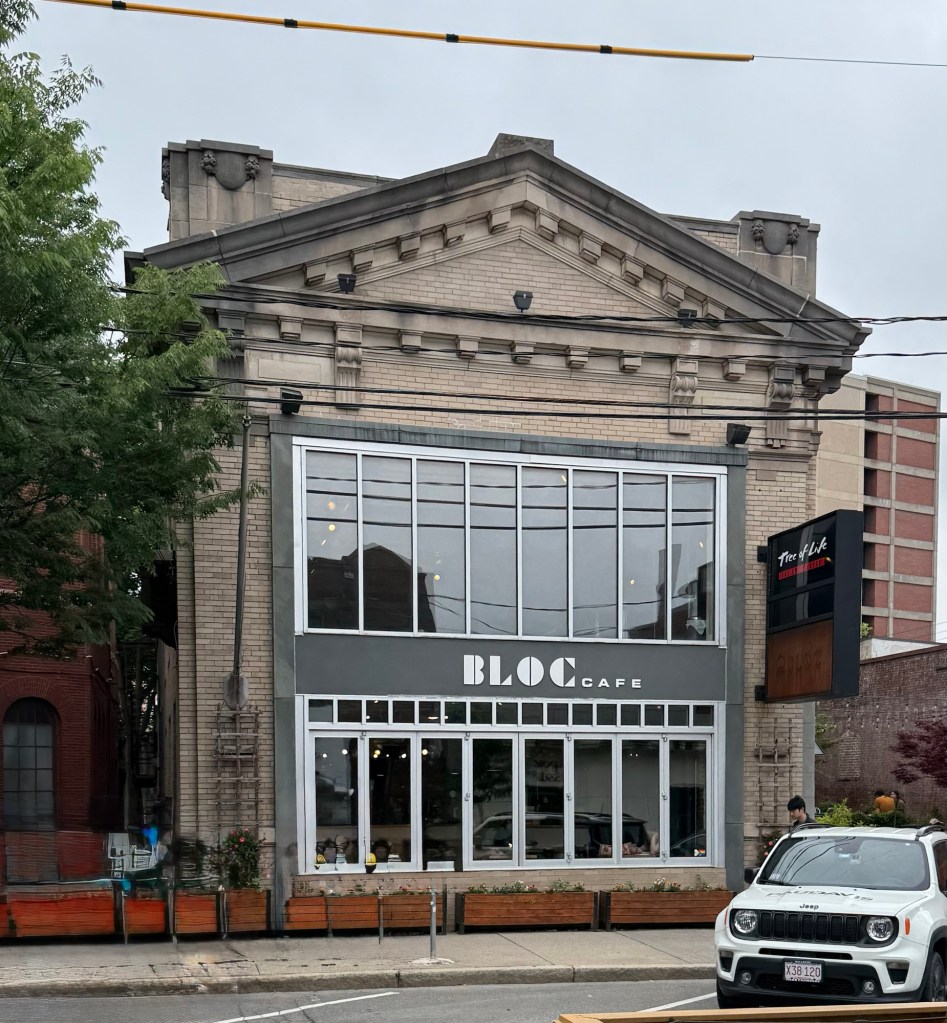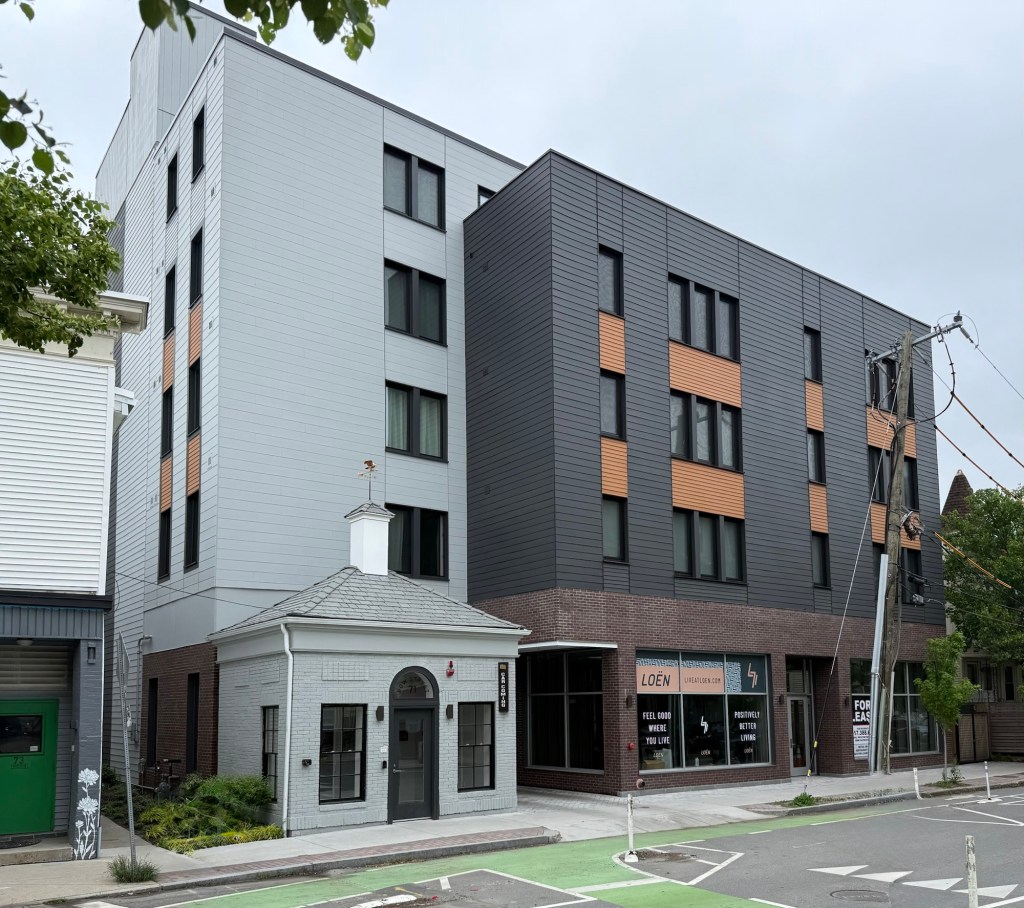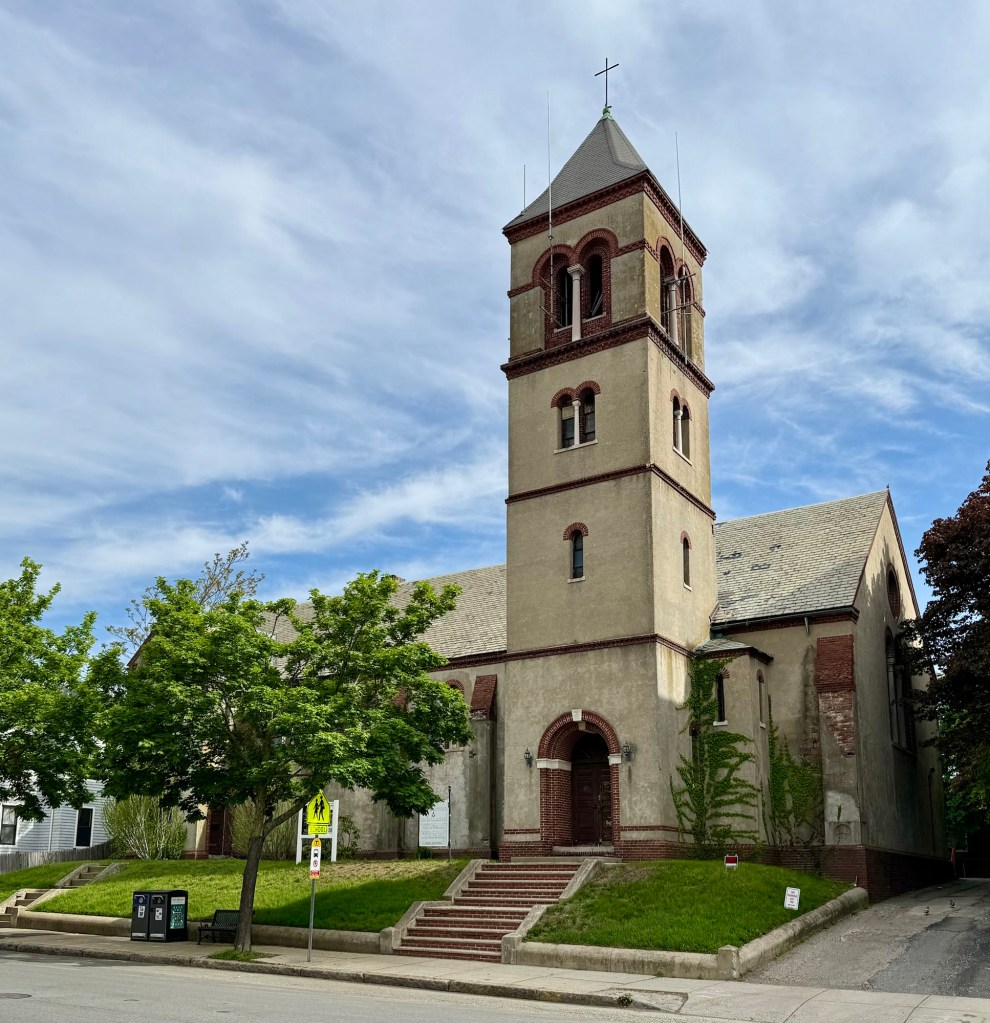
Former Broad Street School // 1861

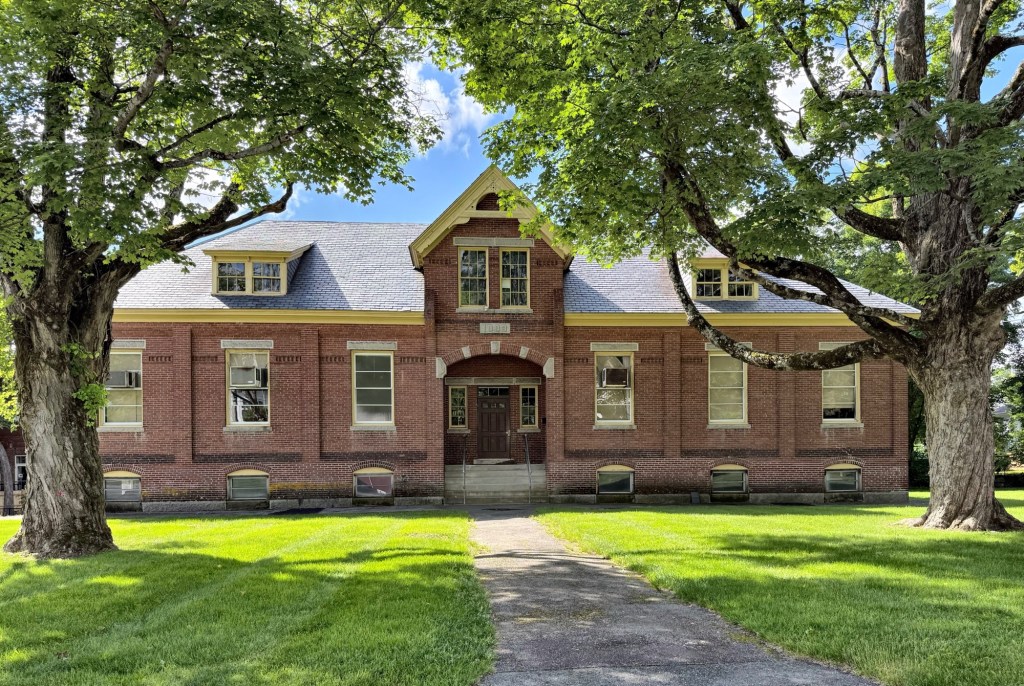
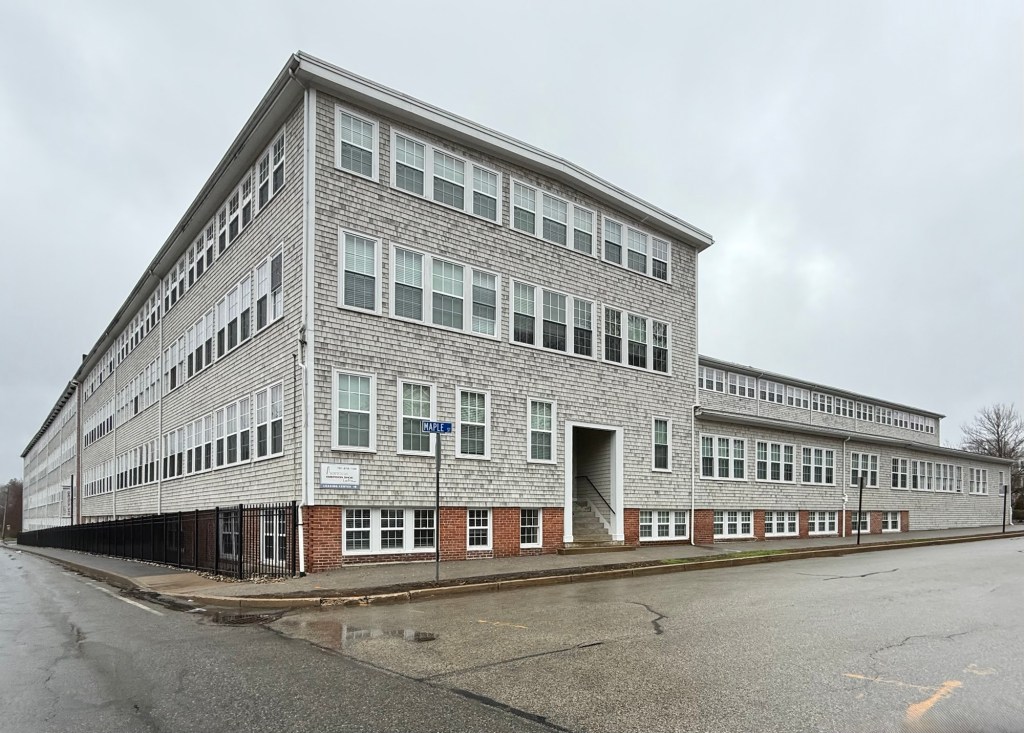
The oldest extant school building in present-day Central Falls, Rhode Island, is this brick schoolhouse, constructed in 1861, to serve as the main village school. The rather plain two-story brick building was built just before the Civil War, during a period of rapid industrialization and growth in Central Falls, when it was then the dense core of the town of Smithfield, Rhode Island. The building contained classrooms for pupils from elementary through high school. Italianate in style, the rather unadorned building does feature oversized windows with some containing rounded tops, deep eaves, and a subtle recessed arch in the central bay on the facade. The school has been vacated for some time, and in 2024, plans materialized to convert this building into affordable housing. Hopefully the renovation/restoration is thoughtful for such a significant piece of the city’s history.

Broad Street Fire Station // 1889

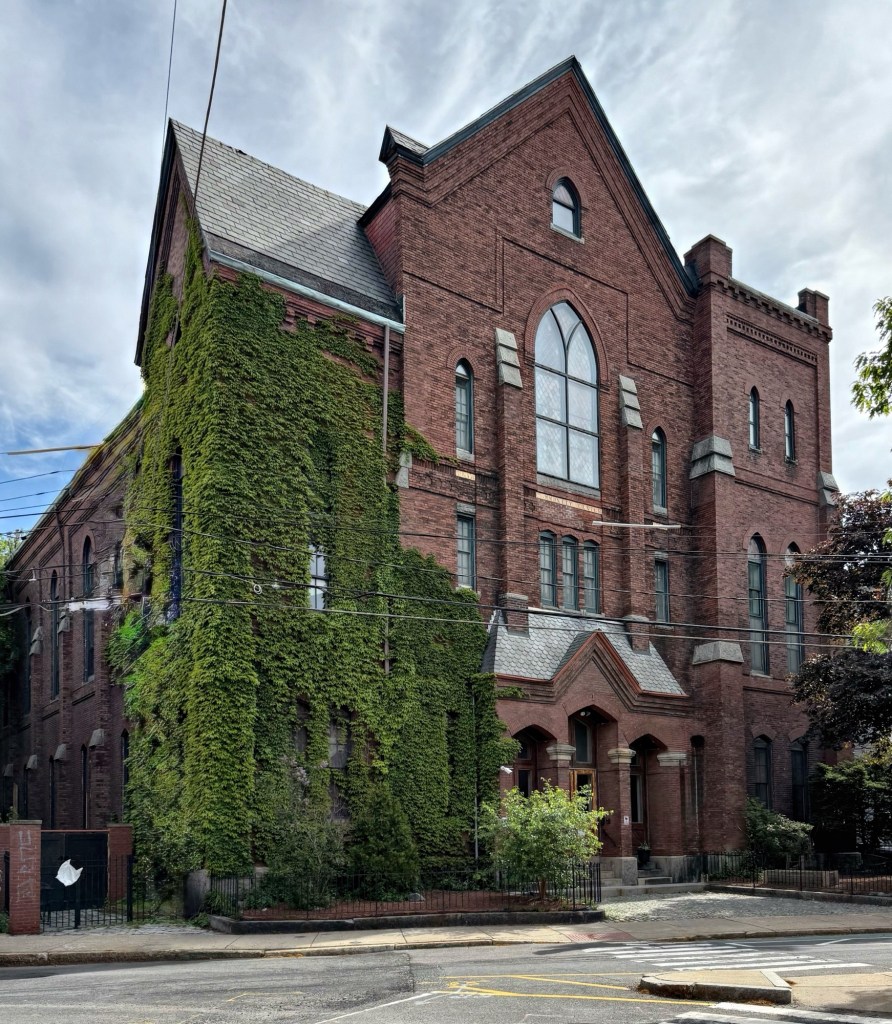
Built in 1889 at the same time as the Central Falls City Hall across Broad Street, this former fire station in Central Falls, Rhode Island, is a great example of late 19th century architecture for a civic use. The fire station was built in the dense Central Falls village, before it separated from Lincoln, creating their own city. The brick, Queen Anne style structure features a unique mansard roof which is broken by a series of pedimented dormers. The original arched doors have since been infilled, but maintain the original openings, awaiting a thoughtful restoration. The fire station was designed by Pawtucket-based architect, Albert Humes. Due to ever-growing fire trucks, the historic station was eventually deemed obsolete, and a new station was built elsewhere. Today, the former Broad Street Fire Station is occupied as the Morabeza Health Center.

Essex County Jailkeeper’s Residence // 1813

Built adjacent to and two years after the construction of the Essex County Jail in historic Salem, Massachusetts, this 1813 brick Federal style house was originally the jailkeeper’s residence. It has been speculated that the house was built by Samuel Field Mclntire (1780-1819), son of preeminent Salem carver and master carpenter, Samuel Mclntire, although there is no conclusive evidence. The house displays a 5 x 2-bay massing and is capped by a hip roof with three, large brick chimneys and a center entry with elliptical fan light transom, sidelights, and shallow portico. The jail was in operation until 1991, and at that time was considered the oldest active penitentiary in the United States. Years prior, in 1984, several detainees had successfully sued the county for inadequate living conditions, leading to the closure of the building. A preservation restriction was established for the building and in 2009, the property was conveyed to a developer who converted the complex into 23 apartments, with 19 in the old jail, three in the old jail keeper’s residence, and one in a converted carriage house. The great preservation/adaptive reuse firm of Finegold Alexander Architects furnished the plans for the successful renovation that provided a new life for a once crumbling eyesore.

Former Essex County Jail // 1811

The former Essex County Jail is a large and significant building in Salem, Massachusetts, that has seen a recent rebirth thanks to the intersection of historic preservation and the demand for new housing in many New England communities. Constructed of large, Rockport granite blocks, the building was constructed in two phases—the section to the east was constructed in 1811-13 while the parallel west wing dates to 1884, with each of the construction dates inscribed at the top of the pediments on the south elevation. Completing the complex is the 1813 Jailer’s Residence which sits at the edge of the now enclosed courtyard. Those who were committed here were largely sentenced to short terms, many for the offense of drunkenness or petty theft. Inside, prisoners did all the labor, such as cooking, baking, firing the boilers, etc., with the female inmates making clothing for all inmates. The jail was in operation until 1991, and at that time was considered the oldest active penitentiary in the United States. Years prior, in 1984, several detainees had successfully sued the county for inadequate living conditions, leading to the closure of the building. A preservation restriction was established for the building and in 2009, the property was conveyed to a developer who converted the complex into 23 apartments, with 19 in the old jail, three in the old jail keeper’s residence, and one in a converted carriage house. The great preservation/adaptive reuse firm of Finegold Alexander Architects furnished the plans for the successful renovation that provided a new life for a once crumbling eyesore.

First Baptist Church of Salem – Essex Law Library // 1805

The First Baptist Church of Salem was built in 1805 on Federal Street and is the oldest brick meetinghouse in Salem. The local Baptist congregation was established in 1804 when 24 parishioners formed the First Baptist Church, and began gathering funds to elect a pastor and build a house of worship. At the time, Baptists were a religious minority in Massachusetts, where nearly all churches were Congregational, so against large odds, the parishioners funded a brick building and lot on the prominent Federal Street in Salem. The structure was completed by 1805 and is said to have been one of only fifty brick structures that stood in the city at the time. A major renovation to the building occurred in 1850, when the church was renovated in the Italianate style. Its three bays are articulated as an English basement containing three identical entrances framed in heavy rusticated brownstone. A belt course separates this basement from a principal story composed of tall arched windows capped by drip-molded brownstone. A lunette window is the centerpiece of the strongly projecting modillioned pediment. The entire composition is very pleasing and showcases the ever-evolving architectural tastes in the 19th century. A tower was later removed due to structural issues. In the early 21st century, the site of the church was needed for an expansion of the Essex County Courts. The congregation sold the property and in the following year, the old brick church was moved a couple hundred feet to the west and restored and was converted into a law library for the new courthouse. Talk about historic preservation at work!

Salem Christian Science Church – Witch Dungeon Museum // 1897

This Shingle-style church building on Lynde Street in Salem, Massachusetts, was built in 1897 as a satellite chapel for the First Congregational Society in Salem. The chapel was constructed from designs by the Boston-based architect Edward B. Stratton. From 1908 to 1979, the building was owned by the Christian Science Church and was eventually sold to private ownership in 1979, where it has since been home to the Witch Dungeon Museum. The building has retained much of its original design, including the large Gothic sanctuary window, tower, and decorative trusses at the gable. Sadly, the original shingles have been replaced by later siding.  

Old Salem Central Fire House // 1861

This mid-19th century brick structure on Church Street in Salem, Massachusetts, was built as the Central Fire House for the City. The Salem Fire Engine House was erected in 1861 from plans by an unidentified architect, in an eclectic style focused on function over frills. The façade is dominated by three engine bays with five windows on the second floor, surmounted by a decorative brick cornice. The hidden feature of the fire house is the three-story hose-drying tower capped by a slate mansard roof at the rear of the building. This building remained a fire house for 115 years until 1976, when due to larger fire engines and the tight constraints of the lot and surrounding streets, made use of the building a burden for fire-fighting. The City of Salem sold the building to private owners in 1976  for $24,000, and they underwent renovations to the building from designs by David Jaquith undertaken under the direction of the Salem Redevelopment Authority which sought to promote renovation of select historic buildings within the Downtown Salem Historic District. The recessed entrances through the old engine doors is a nice touch and retains the original fabric of the building. The old Salem Central Fire House is now occupied by Crazy Good Kitchen and the East Regiment Beer Company.

Salem Water Company Offices // 1879

Salem, Massachusetts, was first settled by Europeans in 1626, and it would take 170 years until in 1796, an organization of citizens was established for the purpose of supplying the inhabitants generally of Salem and Danvers with pure spring water. The Salem and Danvers Aqueduct Company was incorporated in 1797  “for the purpose of conveying fresh water by subterraneous pipes into the towns of Salem & Danvers.” As Salem grew, the need for a more central water district and distribution network became a necessity for the health and prosperity of the city. A 1864 law allowed Salem to construct its own water works, and it formed a Board of Water Commissioners who designed and constructed the system. From this, funding was acquired and paid for the laying of tens of thousands of feet of subterranean water distribution pipes connecting the reservoir to buildings and hydrants in Salem. Offices of the Waterworks were scattered and obsolete until 1877, when funds for the construction of this structure at 32-34 Church Street were set aside as the new Water Department Offices. Completed by 1879, the building is a great example of a Romanesque/Italianate style masonry structure with corbelled cornice and arched openings. According to the city directories, this building continued to operate as the Salem Water Works into the late 1930s. By 1945, it was the headquarters of the United States War Price & Rationing Board. In 1964, it held a number of city offices including: Civil Defense headquarters, Fire Department headquarters, Licensing Board, Planning Board, and the City Veterans Service, before being sold by the City of Salem to private ownership in 1976.

Roughwood Estate Carriage House // 1891

Built on the expansive grounds of “Roughwood”, a country estate in Brookline, Massachusetts, this former carriage house has seen many iterations in its lifetime. Like the mansion house, the carriage house is a blending of Queen Anne/Shingle styles with fieldstone and shingle construction, designed by the architectural firm of Andrews, Jacques & Rantoul. When the Roughwood Estate was purchased and converted to Pine Manor College, the carriage house was adaptively reused and added onto as the Annenberg Library with a large imaginatively designed wing by Shepley, Bulfinch, Richardson and Abbott completed in 1986. The building remains as a library as part of the newly established Messina College, a campus of Boston College, which opened in July 2024 for over 100 first-generation college students. Gotta love adaptive reuse!

Wright Carriage House – Soule Recreation Center // 1897

The Soule Recreation Center in Brookline, Massachusetts, was originally the stable and carriage house on the John G. Wright estate. John Gordon Wright (1843-1912), was a Boston wool merchant who purchased farmland on this site in the 1890s and hired architects Chapman & Frazer , to design an estate house (since demolished), and this building to serve as a carriage house and stable for horses. The stone Tudor Revival style mansion house was complemented by the earlier wood-frame Tudor carriage house, resembling an English manor with grounds designed and laid-out by the Olmsted firm. In 1942, the property was purchased by the Rivers School (now located in Weston) and converted into classrooms and administrative offices for the private school. When the school moved to Weston, the Town of Brookline in 1961 bought property for recreational purposes. Sadly, in 1967, the mansion house burned down, but the carriage house and gate lodge remain as lasting remnants of a once great Brookline estate.