East Congregational Society Chapel // 1881

I love exploring old industrial towns. In Ware, Massachusetts, the urban decay of some buildings provides opportunity and potential, but also so much negative thoughts for long-time residents as it reminds some of the town’s once thriving past. Just off Ware’s Main Street, I spotted this former chapel and had to learn more. This structure was built in 1881 as the second East Congregational Church chapel. The congregation was largely made up of immigrant laborers who worked in the town’s mills. This chapel replaced a Greek Revival building erected in 1857 on Water (Pulaski) Street that was later remodeled by the town into a fire station. That building was destroyed during the Hurricane of 1938. This Victorian Gothic chapel was designed by architect Eugene C. Gardner of Springfield, who was very busy in central/western Massachusetts. The chapel long was used by church members for spillover events and social gatherings. Later, the building became the office of the Ware River News.

Otis Company Mill #3 // 1856

One of the later mill buildings constructed in the mid-19th century for the Otis Company is this brick building which contributes to the rich industrial heritage of the town. Built in at least three stages, this long industrial building probably grew from a middle section dating 1856, expanded in both directions over the next several decades and but was largely completed by 1869. The building was a major manufacturer, supplying thousands of jobs for the town until it closed after WWII. In 1945, the top two stories of this building along with their towers were removed in 1945, which echoes the history of many similar mills all over New England (but hey, at least this one is occupied today!)

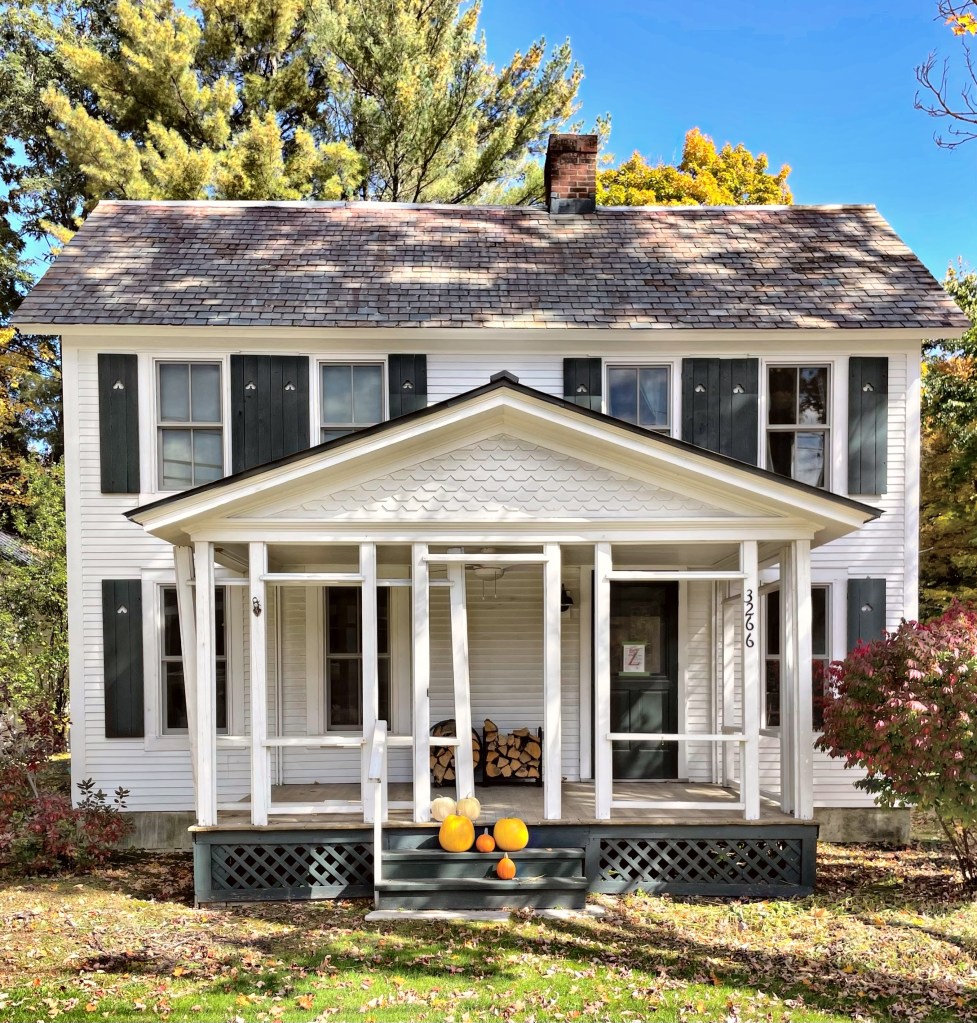
Kent-Harwood House // 1850

Originally owned by marble dealer Daniel Kent (1793-1858) in the 1850s at the height of marble quarrying in the town of Dorset, Vermont, this house shows the history of Dorset very well in its alterations and ownership. After the marble dealer Kent passed away, the property was owned by watchmaker Luke B. Gray (1825-1878). Soon after, homeopathic physician Charles Farrar Harwood (1833-1902) and family moved in. His son, Elmer Harwood (1885-1960), the first Rural Free Delivery mailman in Dorset, continued living here, likely renovating the home with the oversized front porch and charming rustic quality. Harwood oversaw the delivery of mail to the rural farmhouses and village of Dorset, which previously made individuals living in remote homesteads had to pick up mail themselves at sometimes distant post offices or pay private carriers for delivery. In 1965, the home was remodelled and sold it to Hugh Vanderbilt, the son of Robert Thurlow Vanderbilt (yes of that family) whose primary residence was in Greenwich, Connecticut. This new ownership showed how the town of Dorset became popular as a rural/country retreat for the wealthy, many of those families remain here today, preserving these old homes.

Adams House // c.1820

Welcome to Peru…Vermont. The town of Peru sits in Bennington County, adjacent to the previously featured town of Landgrove. Peru was chartered with the name Bromley in 1761 by Benning Wentworth, governor of the Province of New Hampshire as one of the land grant towns in the former hinterland of present-day Vermont. By 1804, the name of the town was changed to Peru. The new name was adopted to attract more people to the town by associating it with the South American province of Peru, which was considered to be a place of great wealth (wishful thinking). This house on the western edge of the village was built c.1820 and significantly modernized since then. The original log house here was built c.1804 by Joel Adams. The home was modernized to the present five-bay facade by the 1820s-30s and operated as a double-house for Joel and his son Joel Adams Jr. The property was also inhabited by Everett Adams, Joel’s grandson, who briefly served in the Civil War.

Unitarian Church of Barnstable // 1907

Early in the 17th century, the Rev. John Lothrop and his followers left England for these shores seeking religious independence. They settled first in Scituate and a few years later came to Barnstable, arriving in 1639. They constructed their first meetinghouse in 1646 on Coggins Pond, about a mile west of this church. Lothrop’s second dwelling in Barnstable is the current Public Library in town (featured previously). In the early 19th century there was considerable theological debate in the “churches of the standing order” in New England. Many churches actually split over this debate, the traditionalists becoming Congregationalists and the liberals becoming Unitarians. The Eastern Parish in town was thus occupied by the Unitarians. In 1836 the original meeting house was removed and a new, larger one was constructed. It was destroyed by fire in 1905, and planning began for a new church. The present edifice was dedicated in 1907, and was designed by architect Guy Lowell, the architect of the Boston Museum of Fine Arts and the New York County Courthouse. His traditional, Classical designs were featured in publications all over the country. This church in the Classical Revival style is one of the finest on Cape Cod.

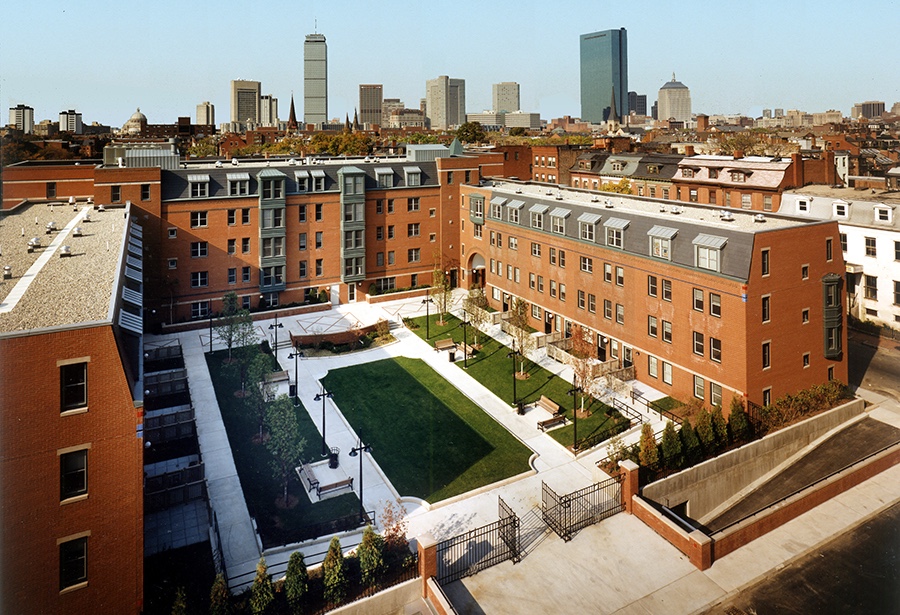
Langham Court // 1991

Image courtesy of Goody/Clancy

Appropriate infill construction can be a very difficult thing to accomplish, with some developments hitting the mark and others adversely impacting the historic neighborhoods where they were built. Boston is home to many examples of both occurrences, but I wanted to share a very successful infill project in the South End neighborhood, Langham Court. As the South End resurfaced as a desirable neighborhood, long-time residents were priced out, which led to the Boston Redevelopment Authority to fund projects to provide much-needed housing for the local community. This site which once housed over 20 townhouses, was razed by the 1960s in a period of urban renewal where existing housing was deemed unsafe and inadequate. The local design firm of Goody/Clancy was hired, and they masterfully designed a U-shaped complex of 84 mixed-income units that fits well within its surroundings. The design exhibits dormers, bays, arched and vaulted entries, a combination of mansard and flat roofs, stringer courses and textured brickwork, and a palette of well chosen materials all at a scale that blends in the 1990s building to its surroundings which came nearly 150 years prior. The complex remains as a testament to good-quality design even for affordable housing, which notoriously gets the short end of the stick design-wise.

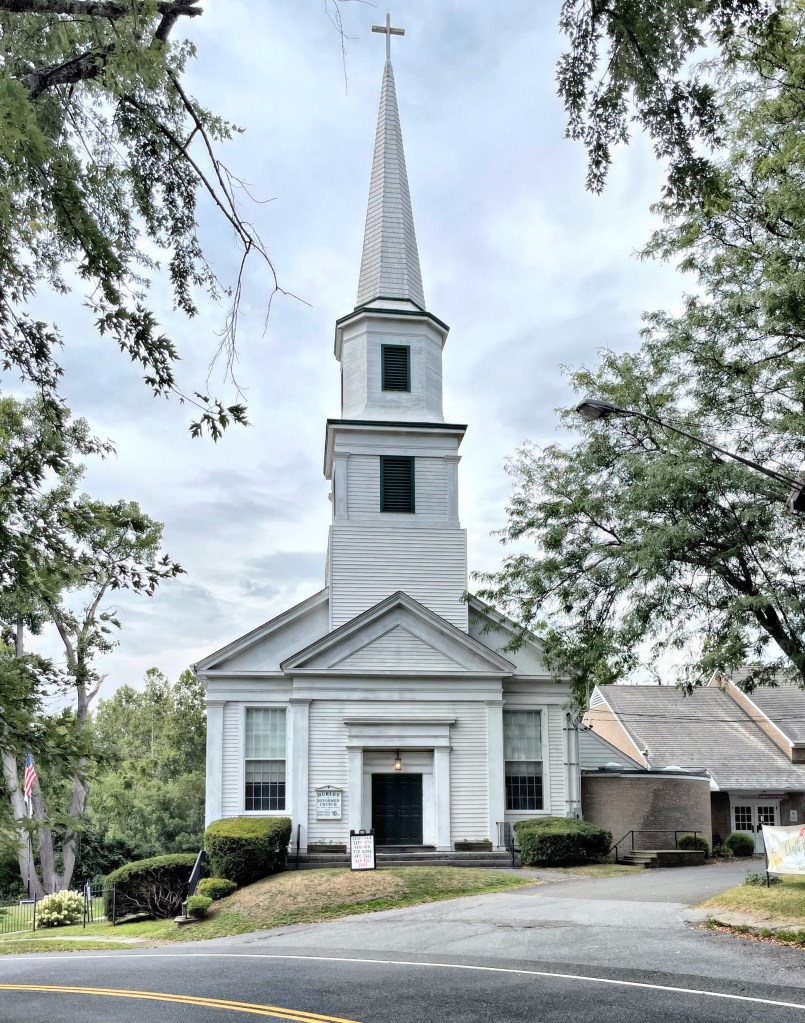
Hurley Reformed Church // 1854

From about 1670 to 1801, the villagers of Hurley were associated with the Kingston Reformed Church, about three miles away. In those years, the minister of the Kingston Church met with the Hurley parishioners at least once every six weeks and conducted a Sunday service in one of the local homes. In 1801, they grew tired of not having their own place of worship, and they petitioned to establish their own church in Hurley, and succeeded. The original church building was a large, single room, stone building that seated over 250 people on the main floor and in three galleries around the side and back walls. A tall steeple atop the building boasted a large brass globe surmounted by a wrought iron weathervane in the shape of a crowing rooster. A large crack in the building was unrepairable and the structure began to shift, leading to its replacement with the current building in 1854. The old white church has been occupied by the congregation ever since.

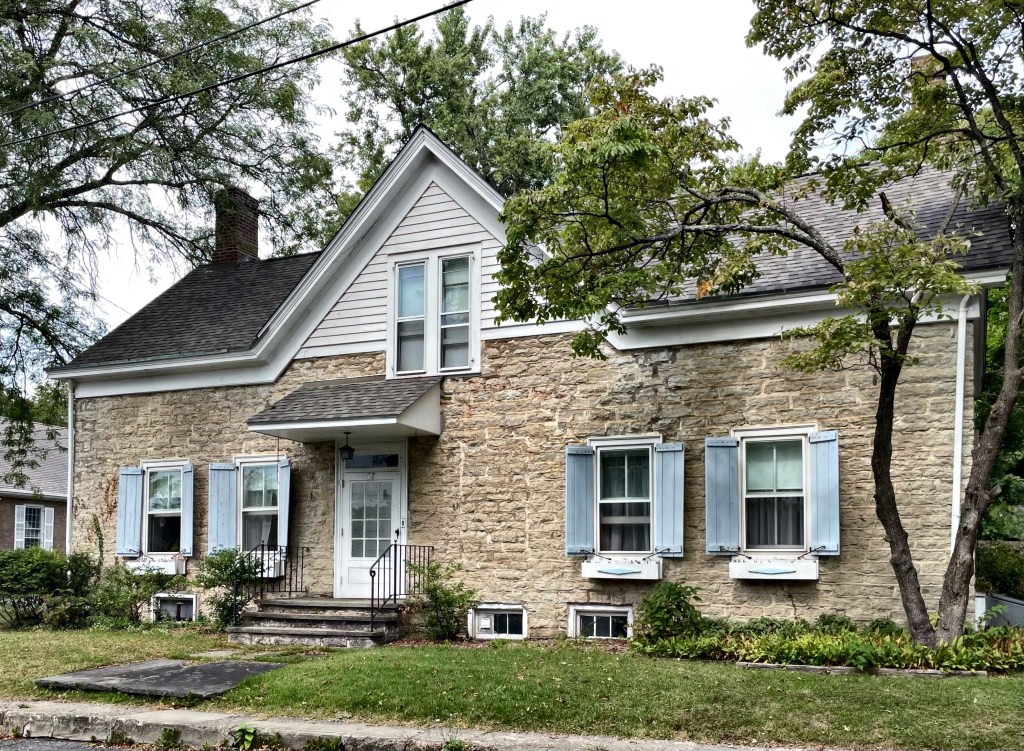
Petrus Crispell House // c.1725

Another of Hurley, New York’s beautiful old stone houses is this Georgian-era home, right on Main Street. The house is known as the Petrus Crispell House and dates to about 1725. Petrus Crispell must have purchased or inherited the house and occupied it for some years until it was acquired by the Dutch Reformed Church in the village to be used as a parsonage. It is 1 1/2 stories and is built of coursed and squared stone which continues into the gables. The facade, now 5 bays, was formerly 6, perhaps with two entrances. Nineteenth century alterations by the church include a large cross-gabled dormer and 2/2 sash.

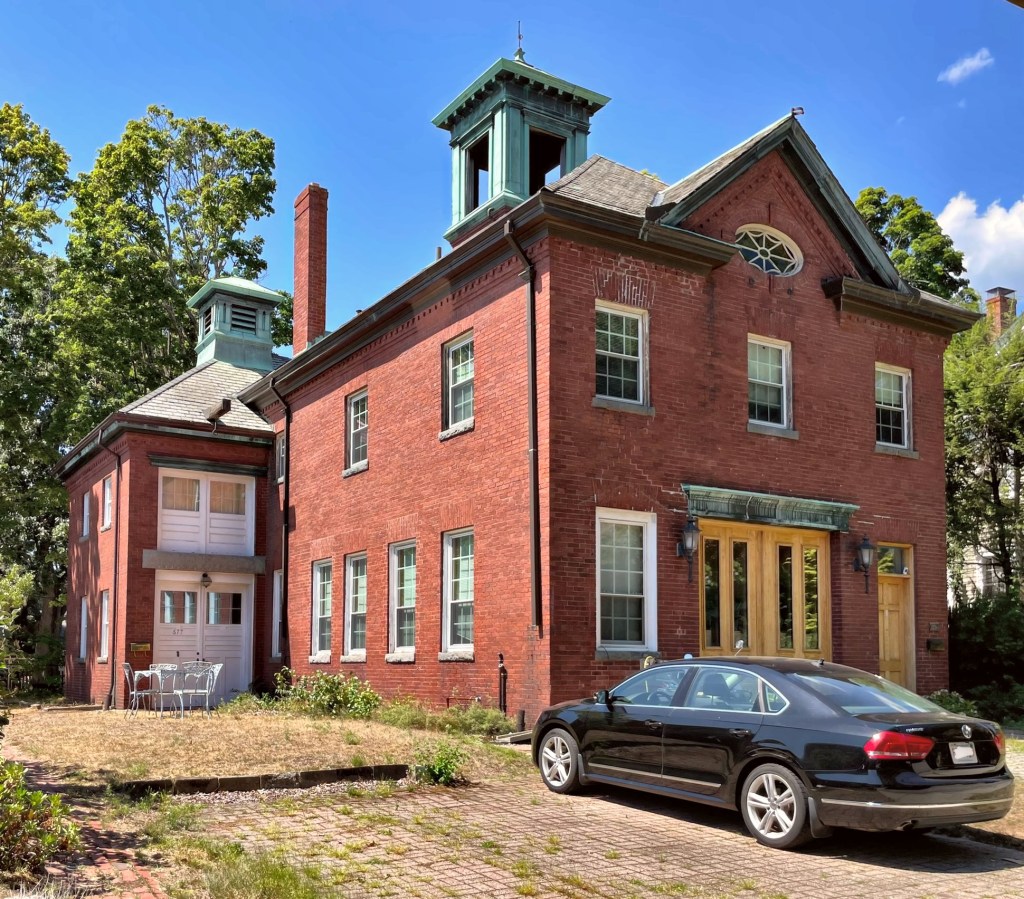
Lower Falls Firehouse // 1900

The Newton Lower Falls Firehouse was built in 1900 to serve the village’s fire prevention needs. As nearby Waban Village’s population surged (along with a stronger tax base) the City of Newton constructed a new fire station in 1918, that could serve both areas. This, the already outdated station, was converted to a village library on the ground floor with a janitor’s apartment and storage above. The space was determined to be surplus by the City and was sold off in 1979, quickly converted to housing by a developer. The building retains much of its original character, down to the hose-drying tower.

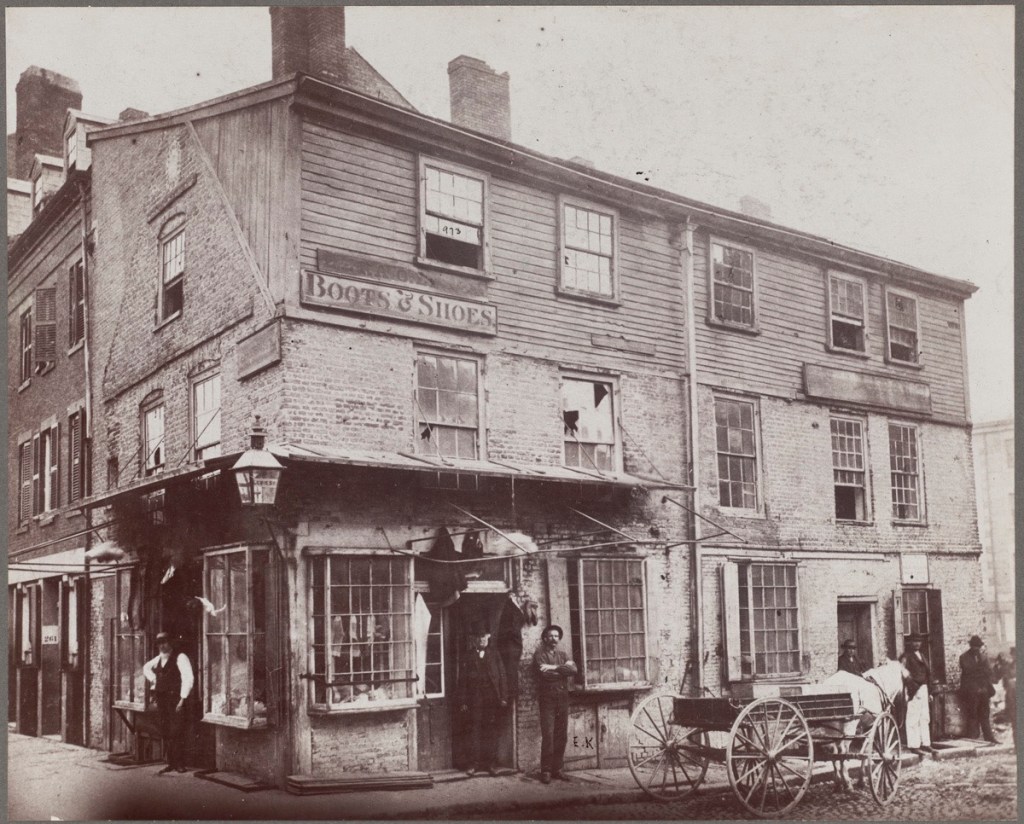
King’s Head Tavern // 1691-1870

Another of Boston’s Lost buildings is the King’s Head Tavern, an old establishment that was built in the early days of Boston and rebuilt following a fire in 1691. It stood on the corner of Lewis and North Streets, in the North End near Scarlett’s Wharf. Due to its proximity to the harbor and wharfs, it became the first place weary sailors stopped to get a drink on solid ground. The two-story, brick tavern was capped with a gambrel roof, which was later filled with wooden additions giving the structure a boxy look. The establishment was named the King’s Head Tavern after a popular London tavern of the same name. Like much of the North End, surging immigrant populations put immense strain on the built environment and many older buildings were demolished in the late 19th and early 20th centuries for tenement housing. The old King’s Head Tavern was demolished in 1870, just two years after the photo was taken.