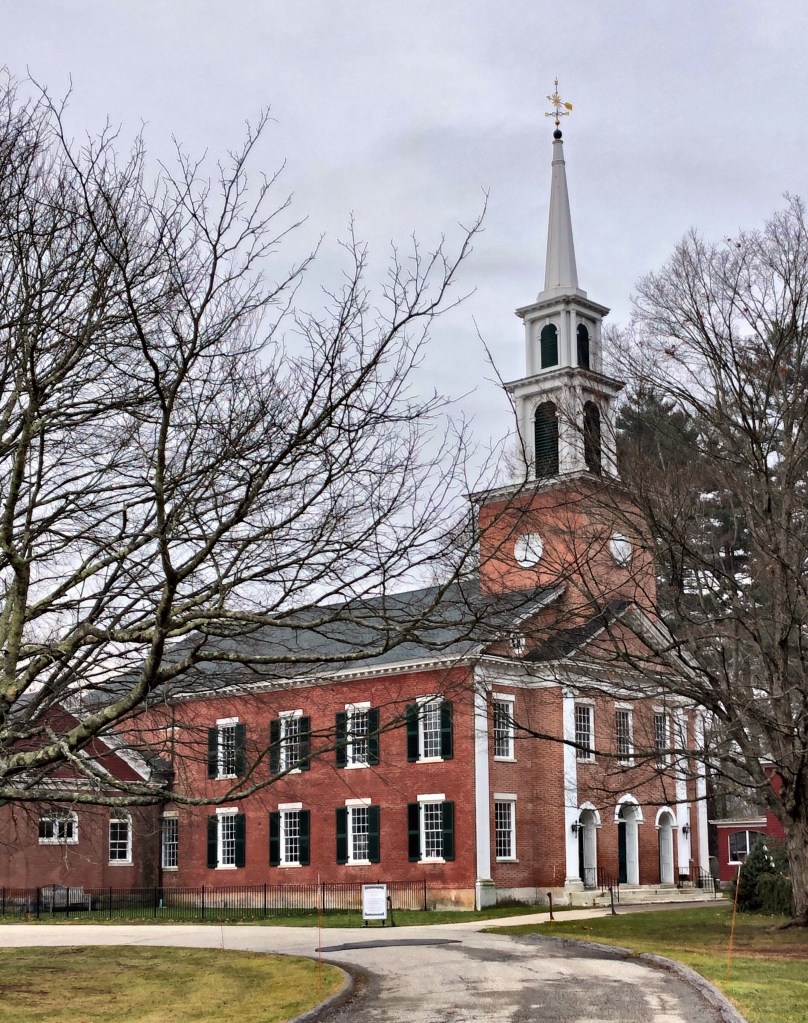
First Congregational Church, Stockbridge // 1824

Stockbridge, Massachusetts was settled by English missionaries in 1734, who established it as a praying town (an effort to convert the local Native American tribes to Christianity), for the Mohican tribe known as the Stockbridge Indians. The township was set aside for the tribe by English colonists as a reward for their assistance against the French in the French and Indian Wars. From this, a Yale-educated missionary, John Sergeant began converting native people to Christianity, essentially stripping them of their own religious culture and practices. Although Massachusetts General Court had assured the Stockbridge Indians that their land would never be sold, the agreement was rescinded. Despite the aid by the tribe during the Revolutionary War, the state forced their relocation to the west, to New York and then to Wisconsin. The village was then taken over by British-American settlers who created the township.

The first congregational church here was formed by Sergeant in 1734, and later succeeded by Jonathan Edwards, another minister. During his time in Stockbridge, Edwards wrote his masterpiece, Freedom of the Will, which remains one of the most studied works in American theology. Edwards later left the church to become the President of The College of New Jersey, now known as a little school by the name of Princeton. The first church was built in 1739, later replaced by a second church building that stood from 1785 to 1824. The present brick building was built in 1824 in the Federal Style. The space was occupied for town functions until the 1840s, when an official town hall was erected next door, demarcating the separation of church and state. The stunning church marks the immense influence religion had in the early colonial days of New England and the impact it had on native peoples (for better or worse).
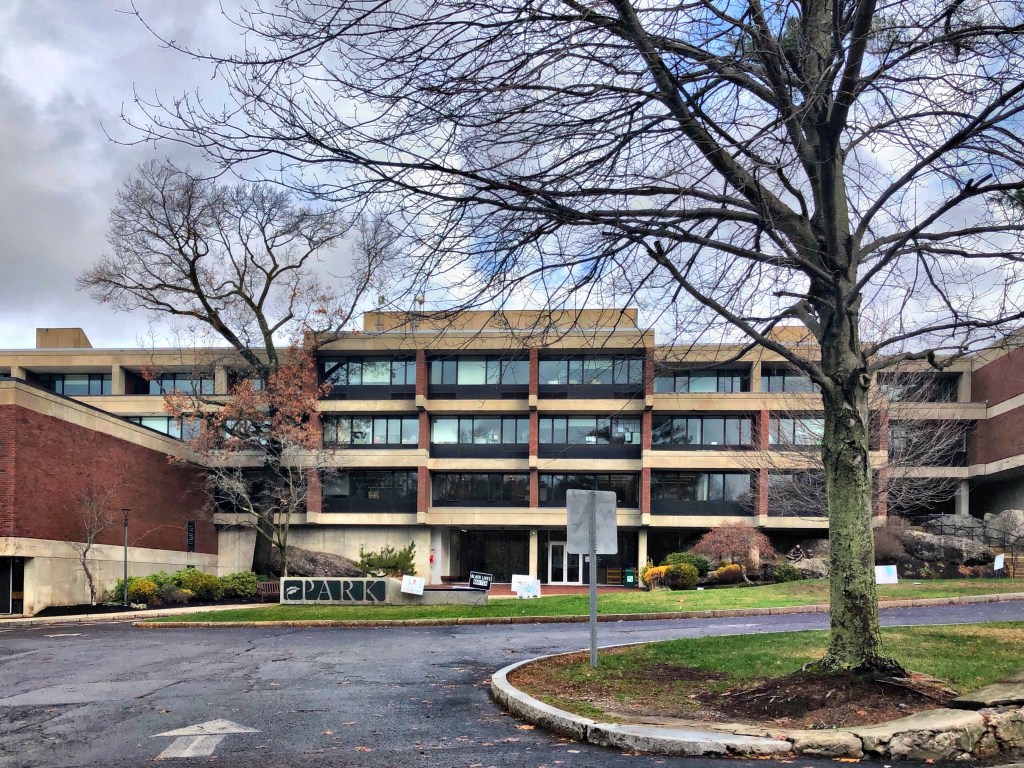
The Park School – Main Building // 1971

Founded in 1888, The Park School, one of the premier private schools in the Boston area began off Walnut Street in Brookline in half of a house. Founded by Miss Caroline Pierce, the school was officially incorporated in 1923 and named to commemorate Julia Park, principal from 1910-1922. The school occupied the former Hill Estate before the school board voted in 1967 to look for a new campus, with space to grow. James and Mary Faulkner donated 14-acres of rolling fields and woods to the school for their new campus. The Park School hired architect Earl Flansburgh of Cambridge to design the new, Modern school building. The Brutalist building allowed for large, open classrooms with the flexibility for the school to adapt as its needs changed. The school is built of reinforced precast concrete as a stack of modular classroom and office spaces with wall-length windows for more natural illumination of rooms. Since the 1970s, the school has expanded a couple more times, notably with a 1990s addition by Graham Gund. The school remains one of the most desired in the region and fits well within its landscape.

“Puddingstone” // 1927

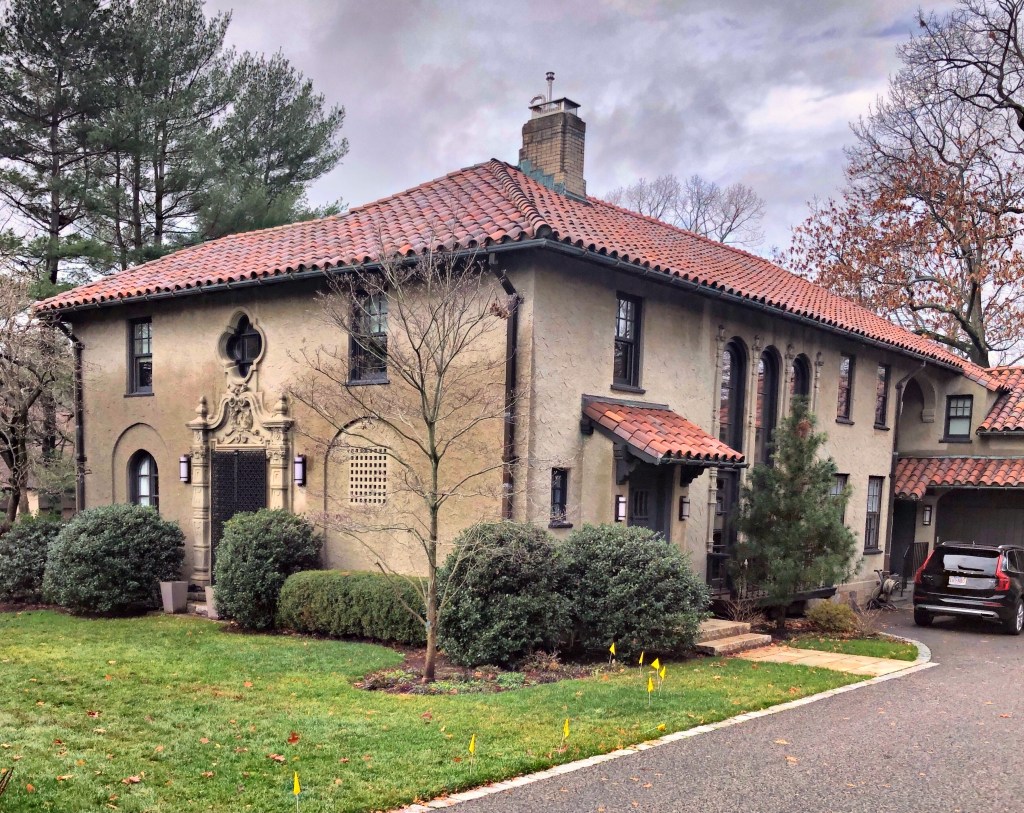
Located across the street from Larz Anderson Park and the former Larz Anderson Estate, this stunning Spanish Revival home, built in 1927, was constructed as a guest house for visitors of Larz and Isabel Anderson. Between 1925-29 the Andersons constructed three guest houses outside the estate on Goddard Avenue. The designs were intended to call to mind places the Anderson’s had visited. “Puddingstone”, was named for a nearby outcropping of puddingstone on the Anderson estate, and was modeled after a house the couple had seen in Santa Monica, California. The Andersons used the buildings occasionally as guesthouses for relatives or friends who came for long stays at Weld, especially when Larz and Isabel were not in residence there. But for the most part, the houses remained empty and it was only after Larz’s death in 1937 that Isabel disposed of them. She donated them to Boston University for use as the Brookline Campus, who in turn, sold them off as private residences years later. Built in a Spanish Colonial style, it features a red terra cotta tile roof, adobe-colored stucco walls, and a center entrance framed by an elaborate cast stone surround in a Spanish Baroque style. To the right of the front door, a clathri (grid/lattice in architecture) over a window can be found in a blind arch.

.

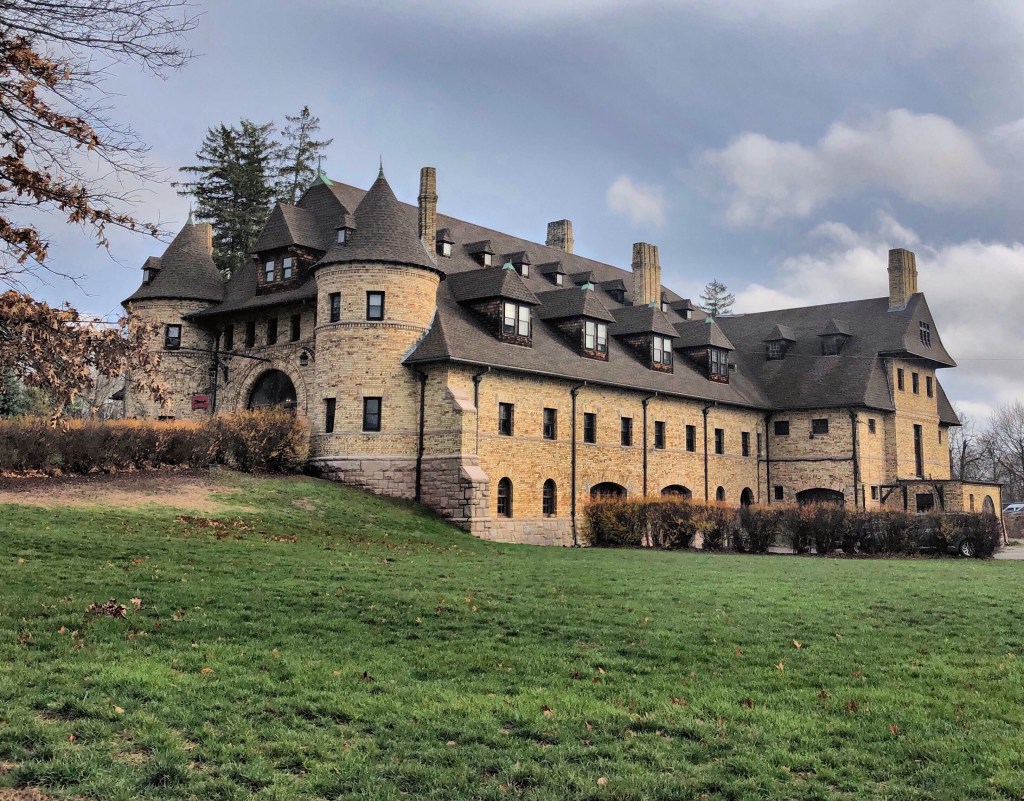
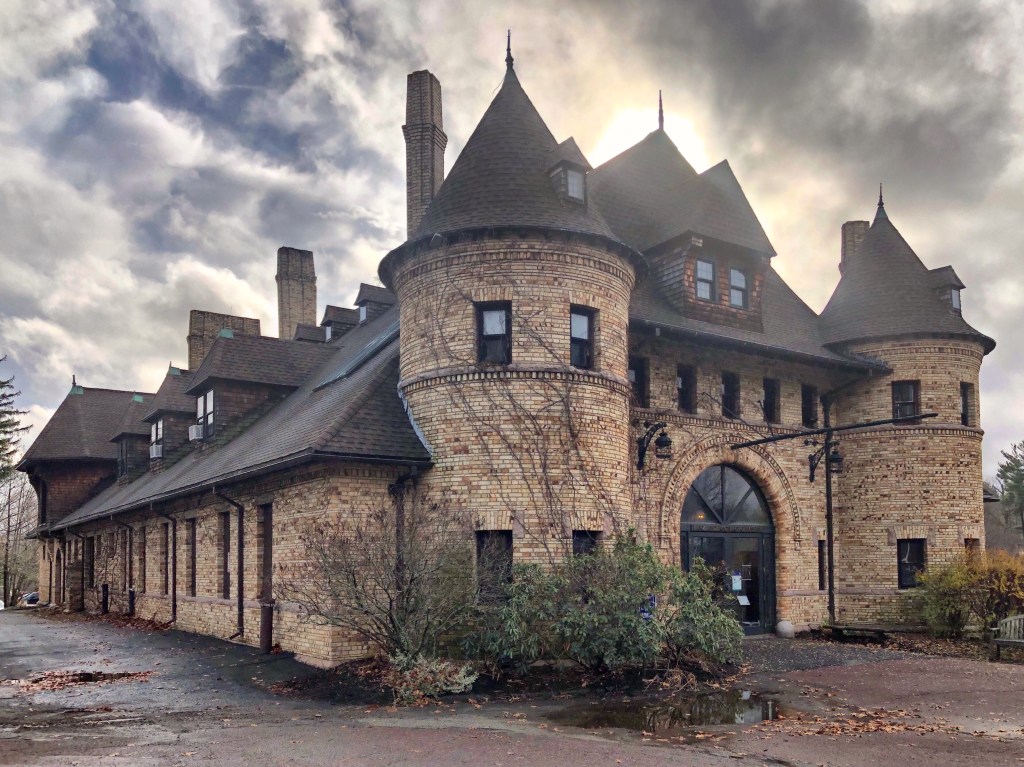
Larz Anderson Carriage House // 1889

This large and imposing brick and stone structure, located in Larz Anderson Park in Brookline, was once the carriage house of “Weld”, the estate owned by Larz and Isabel Weld Anderson. Constructed in 1888, it was inspired by the Chateau de Chaumont-Sur-Loire in France and designed by Edmund M. Wheelwright, the city architect of Boston. First constructed to house a working stable, it later served to house and maintain the Andersons’ growing automobile collection. After Isabel Anderson’s passing in 1948, the collection was entrusted, at Isabel’s bequest, to the Veteran Motor Car Club of America. The VMCCA then established the nonprofit organization that is now known as the Larz Anderson Auto Museum. The former mansion suffered from vandalism in the 1950s and caught fire, later demolished by the Town, who could not afford to rebuild the home.

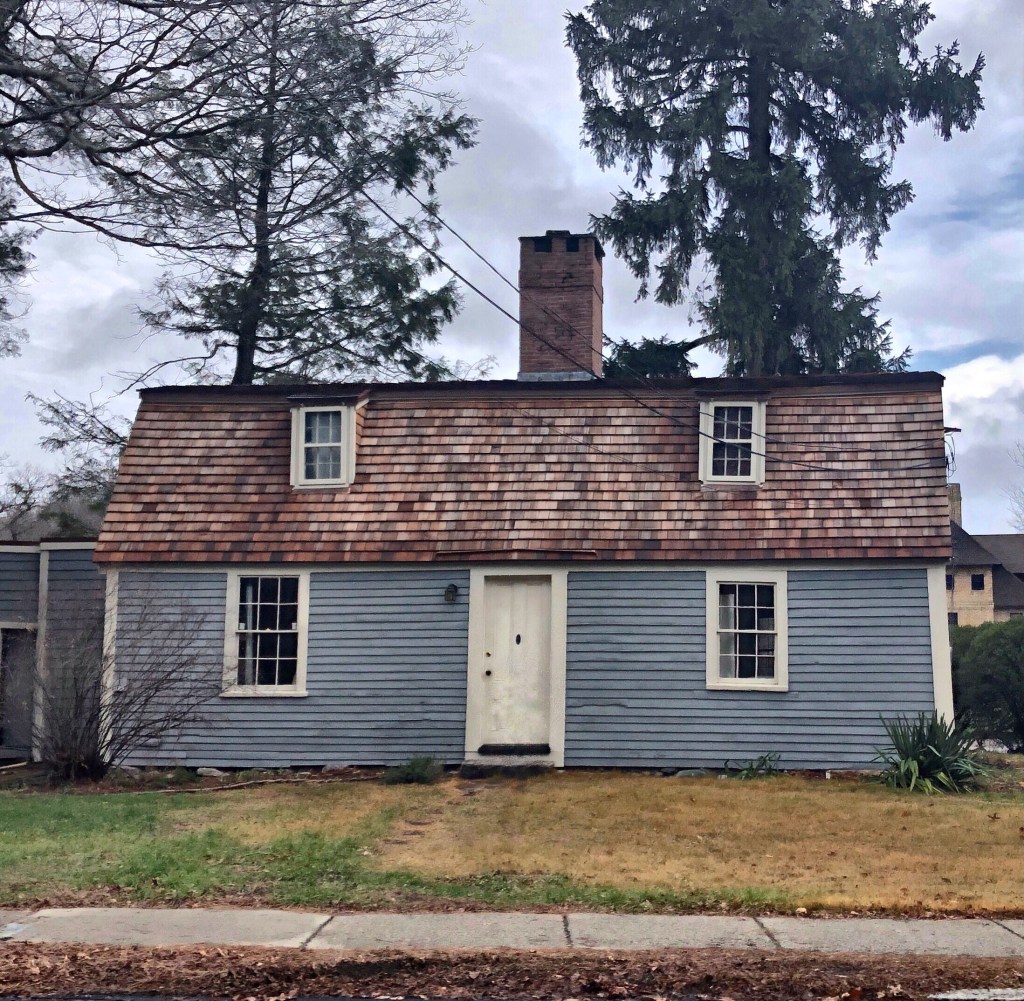
Hannah Harris House // c.1772

This cute little Georgian home in Brookline was built around 1772 for Hannah Winchester Harris, a widow at the time. Hannah’s husband, Timothy died in 1772 and it appears the widow had this small gambrel-roofed home constructed sometime soon after. Ms. Harris died in 1805 and the home was occupied by a new family, who added the saltbox addition. The home is today owned by the Town of Brookline, who maintain the building through the Brookline Historical Society. the home sits on the boundary of the old Weld Estate.

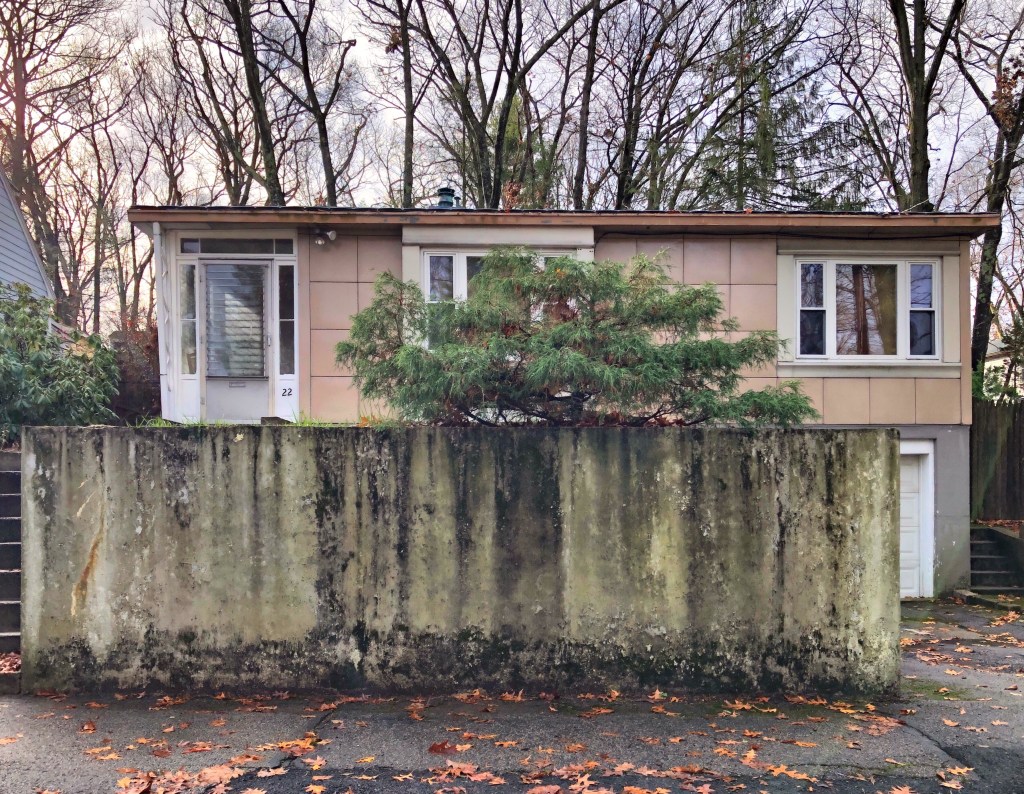
Jennings House // 1949

Tucked away on an un-assuming side street in South Brookline, you will find this oddly fascinating home. Without architectural history knowledge, you may think it is just a normal 1940s house, but it’s actually a Lustron House! Between 1948 and 1950, the Lustron Corp. built prefabricated metal homes across the U.S. as part of an effort to combat the housing shortage for returning soldiers post–World War II. Despite these futuristic homes being considered low-maintenance and highly durable, only about 2,500 were constructed, as the structures were seen as too costly and complex to manufacture and assemble. The homes came in just three models and came in four available colors: “Surf Blue,” “Dove Gray,” “Maize Yellow,” and “Desert Tan”. The home is covered in porcelain enamel metal panels set into a steel frame which can be replaced when damaged. At the interior, the homes had metal-paneled interior walls with mostly pocket-doors for space saving. This home in Brookline was built for Edmond and Helen Jennings, in the Westchester model in the Desert Tan color. The only major alteration is the enclosure of the porch, but it retains a high degree of integrity from when it was assembled in 1949.

What do you think of this iconic 1940s home and style?

Edith C. Baker School // 1937

At a time when many public school buildings around Boston were designed in the Art Deco or early Modern styles, the Edith C. Baker School in South Brookline went back to basics and represents a nod back to Colonial era design. The whitewashed red brick building was designed and built in phases as the neighborhood surged in population, tied in with the re-emergence of the economy after the Great Depression. The opening of the West Roxbury Parkway in 1919 and the Hammond Pond Parkway in 1932, both precipitated subdivision of the farms in South Brookline for residential development. The first section was completed in 1937 (what is shown in the photo) by plans from the local architecture firm of Kilham, Hopkins and Greeley, who also designed an addition just a year later for the un-forecasted growth in the neighborhood. More additions were added in the decades following WWII, thankfully just as additions and not a scraping of the site which seems to be all the rage now. The school was named as a tribute to Edith C. Baker, a longtime member of the Brookline School Committee from 1900 to her death in 1942.

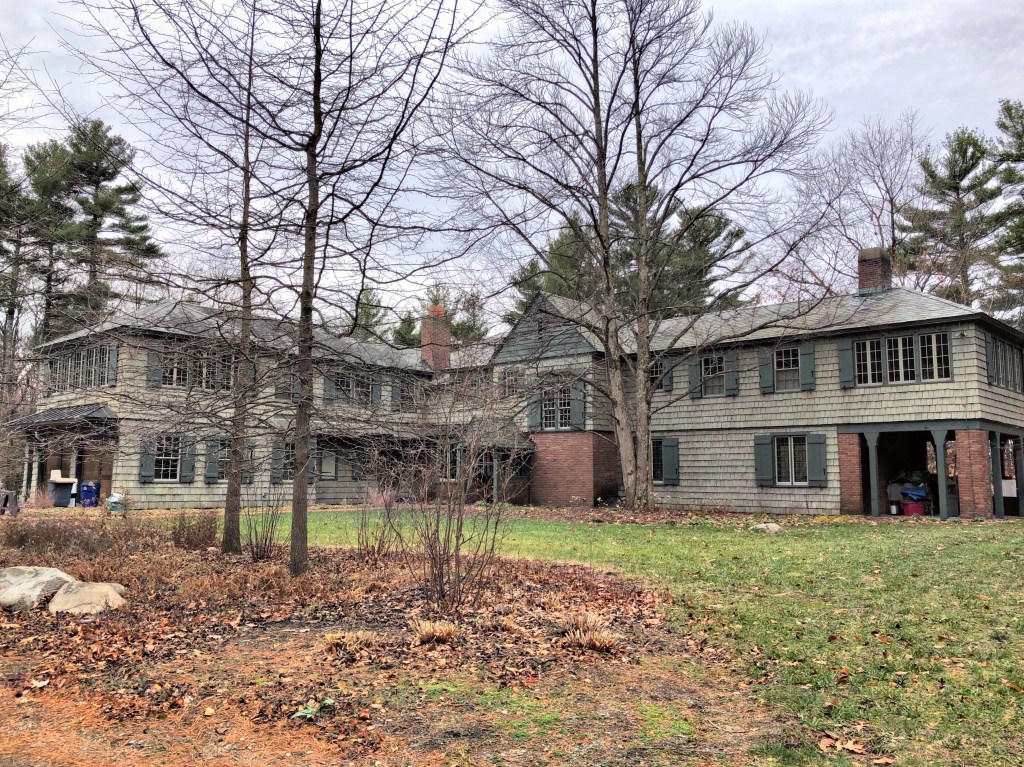
Marion Nichols Summer Home // 1935

This summer estate in Hollis, NH epitomizes the hidden architectural splendor that can be found off the beaten path in many small New England towns. Hollis began serving as a summer destination in the late 1880s and the trend continued until WWII. In many cases, old family homesteads became summer residences for descendants who had moved to the city but desired to return to their “roots” periodically. The Nichols Home is unique in Hollis as it was designed to be a summer retreat for a well-to-do widow and her considerable servant staff, combining all the comforts available with the advantages of a rural retreat. The design of the main house offers separate living spaces for the family and the servants, including a library, living room and dining room for the use of the family. The servants’ wing was designed to include a two-car garage, a butler’s pantry, a manual dumbwaiter connecting the basement and first floor used to transport fireplace wood and a receiving unit for the delivery of milk, groceries and other goods. Sleeping porches, capitalizing on the benefits of the fresh country air, are an integral component of the house design and are included in both the family and servant wings. The home was designed by the Boston architectural firm of Densmore, LeClear & Robbins, who were hired by the 52 year old widow’s children for their mothers’ summer home. It is said that Ms. Nichols never liked the home and decided to summer instead at the old family summer home down the street.

Hollis Social Library // 1910

An excellent example of Classical Revival architecture, the Hollis Social Library in Hollis, New Hampshire is a single-story building displaying an Ionic portico and capped by a copper dome. The building, which fronts the town green, was constructed in 1910 according to plans by architects Magee and Rowe of Boston. The building was dedicated on August 24, 1910. The Hollis Social Library is believed to be one of the oldest libraries established in the State of New Hampshire. An association was formed in 1851 and a small library was kept in the Congregational Church vestry. After the new Town Hall was built the library was located there until the construction of the current building.

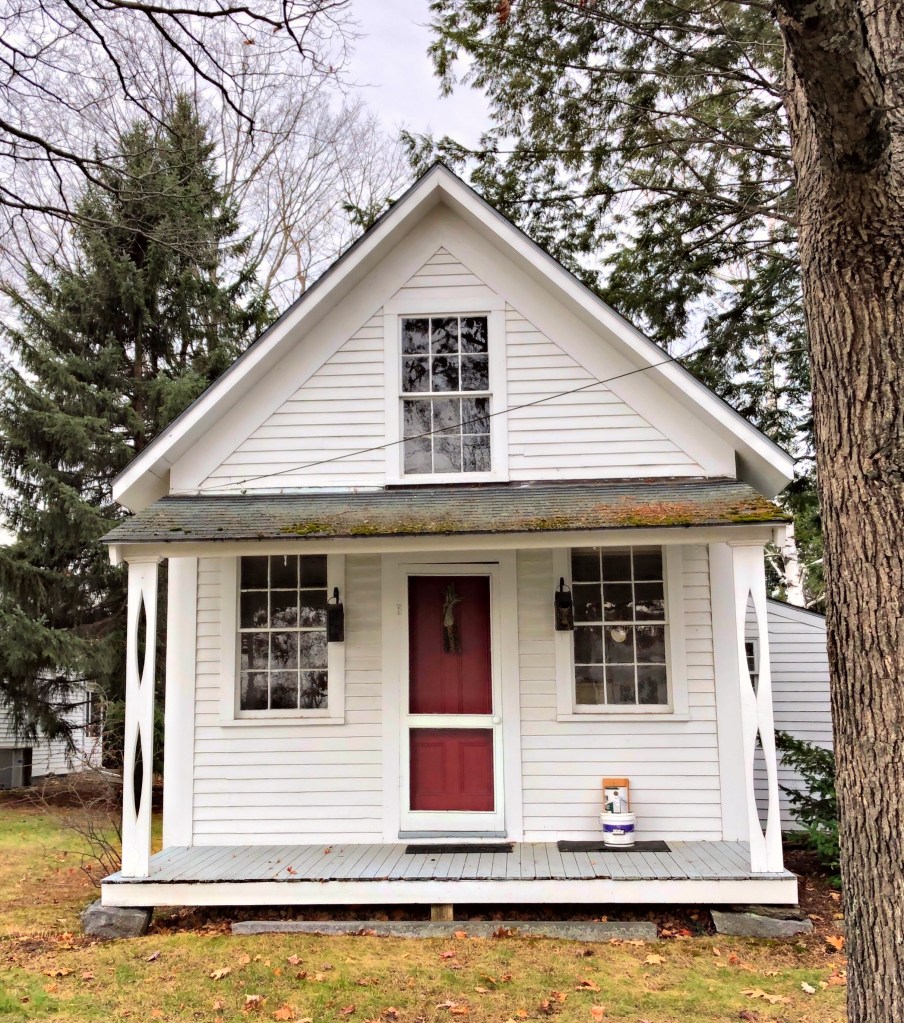
Gates Cobbler Shop // c.1864

This cute little building was built around 1864 according to public records, as a cobbler (shoe repair) shop in Hollis, New Hampshire. The building, on Main Street, is located adjacent to the former Gates house and was used as his workshop for shoe repairs. The building was used for various purposes until the early 20th century when it was converted to a vehicular garage. The building was restored sometime after WWII and converted to a workshop/study by the owner, bringing the building back to its former glory, though altered. The building, seemingly balancing on stones from the photo, adds much to the pleasant streetscape of Main Street in Hollis.