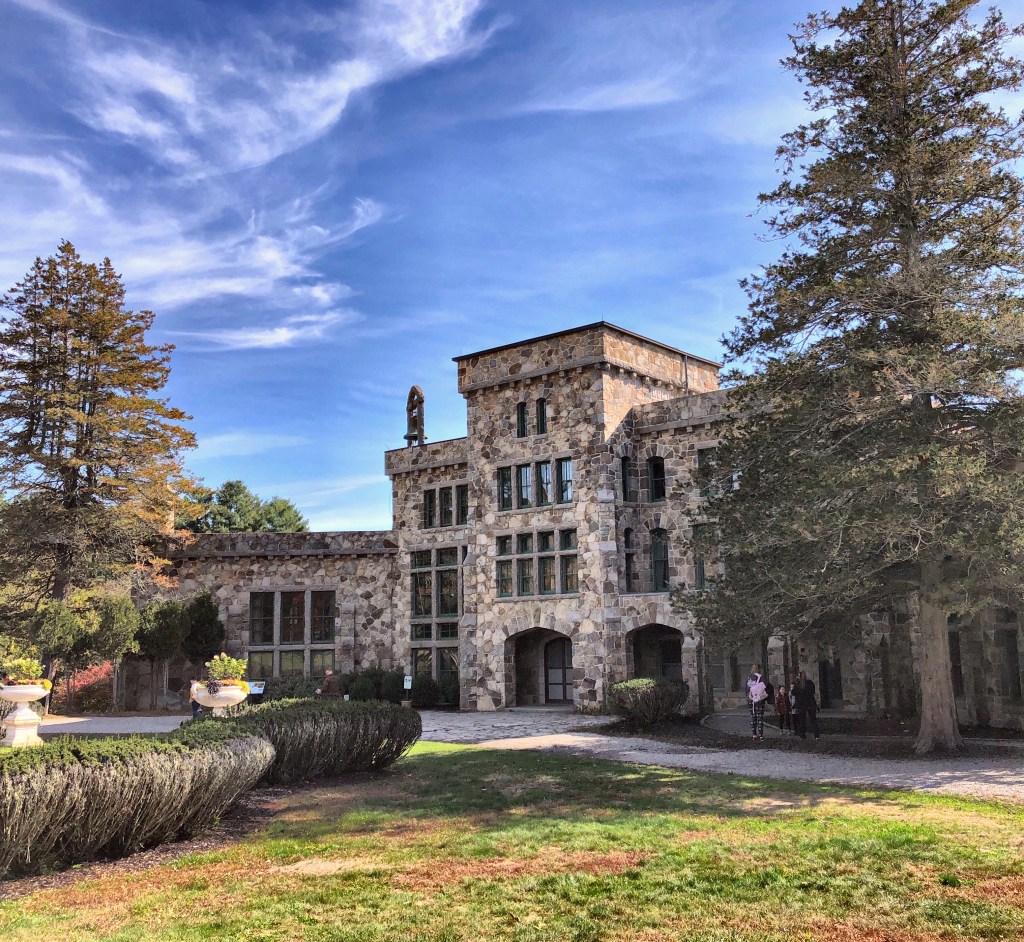
Ames Mansion-Borderland // 1910

One of the more stunning homes and parks in Massachusetts is located in Easton, known as the Borderland State Park. Borderland was the 1,200-acre estate of Blanche Ames Ames, an artist, political activist, inventor, writer, and prominent supporter of women’s suffrage and birth control. Blanche Ames’ husband, Oakes Ames (of the Ames Family of Easton), came from a wealthy Massachusetts family that owned the Ames Shovel Works. Marrying in 1900, Blanche and Oakes (who were not related even though they had the same last name) constructed their stone mansion in 1910 and created a system of ponds and dams on their property. Blanche and Oakes, who wanted a fireproof house, became displeased with the work of their architect because of the challenges he faced with their design and engineering requirements. Dismissing the architect, Blanche took over the design and construction management of the mansion and hired the Concrete Engineering Company to draw plans according to her specifications. Also on the grounds is a hunting lodge with fireplace, overlooking the large pond on the estate.
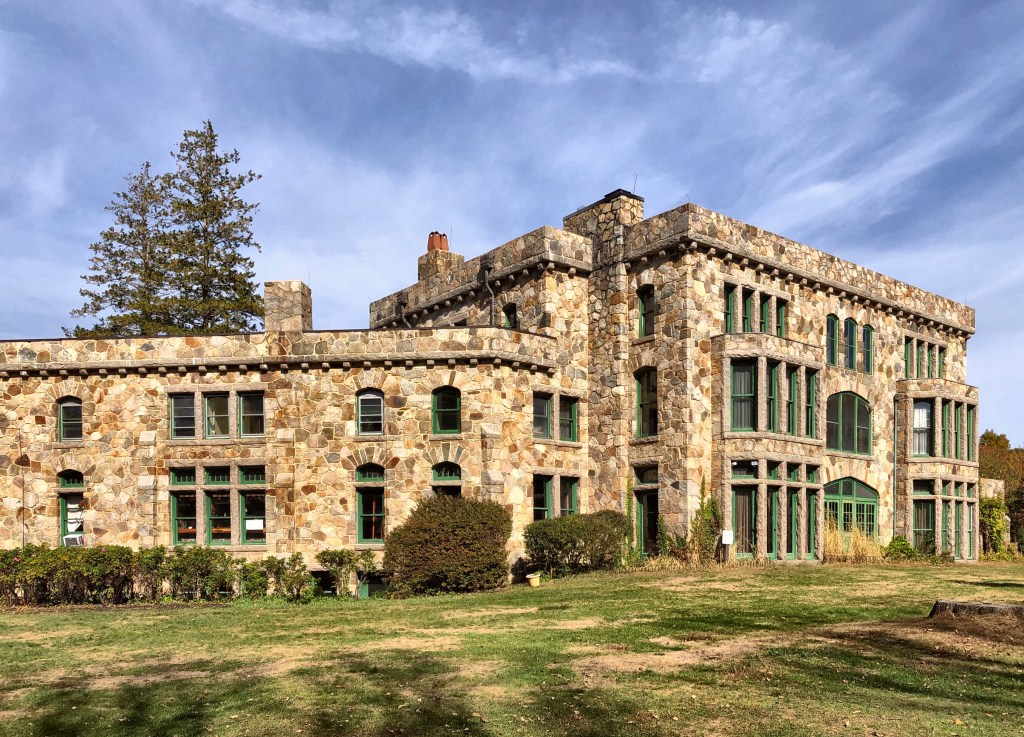
Once the mansion was completed, Blanche set up a studio on in the house and developed a scientific color system for mixing paints. She became the sole illustrator of her husband’s botanical books (Oakes was a renowned authority on orchids and taught botany at Harvard from 1900 until his retirement in 1941). Later in life, Blanche became the co-founder of the Birth Control League of Massachusetts and the Treasurer of the League of Women Voters from 1915 to 1918. She also gained notoriety for her political cartoons depicting the struggle for women’s suffrage. In addition to these many accomplishments, Blanche was an inventor who, in 1939, designed a hexagonal lumber cutter. During World War II she designed, tested and patented a method for ensnaring enemy airplanes in wires hung from balloons. Remaining active her entire life, Blanche received a patent for a water anti-pollution device in 1969, a year before her death.

The estate remained in the Ames family for 65 years, until 1971, when the Commonwealth of Massachusetts was gifted the Borderland Estate and all furnishings inside for use as a State Park.

North Easton Savings Bank and Post Office // 1904

Located across the street from the Oakes Ames Memorial Hall and the Ames Free Library, the North Easton Savings Bank and Post Office building perfectly compliments the Romanesque Revival motif seen in the village. The building was constructed in 1904 in a Richardsonian Romanesque design with rough-faced granite ashlar walls with brownstone trim. The three-bay front façade contains centered entrances recessed behind a wide brownstone arch in the signature Richardsonian manner. The building was designed by Shepley, Rutan and Coolidge, a Boston-based architectural firm which grew out of Henry Hobson Richardson’s office, where they completed many of Richardson’s unfinished works after his death.

Ames Free Library // 1883

The Ames Free Library first opened its doors in 1883. Under the terms of the will of Oliver Ames II, $50,000, in trust, was left for the construction and support of a library for the benefit of the inhabitants Easton. The library was designed by Henry Hobson Richardson in 1877 and opened in 1883, becoming one of the finest public libraries in the region. The library is built of Milford granite with the same Longmeadow trim used on his famous Trinity Church in Boston. The very low cavernous arch over the doorway was used here by Richardson for the first time and became one of the most prominent and widely imitated characteristics of his style.

Oliver Ames Jr. House // 1864

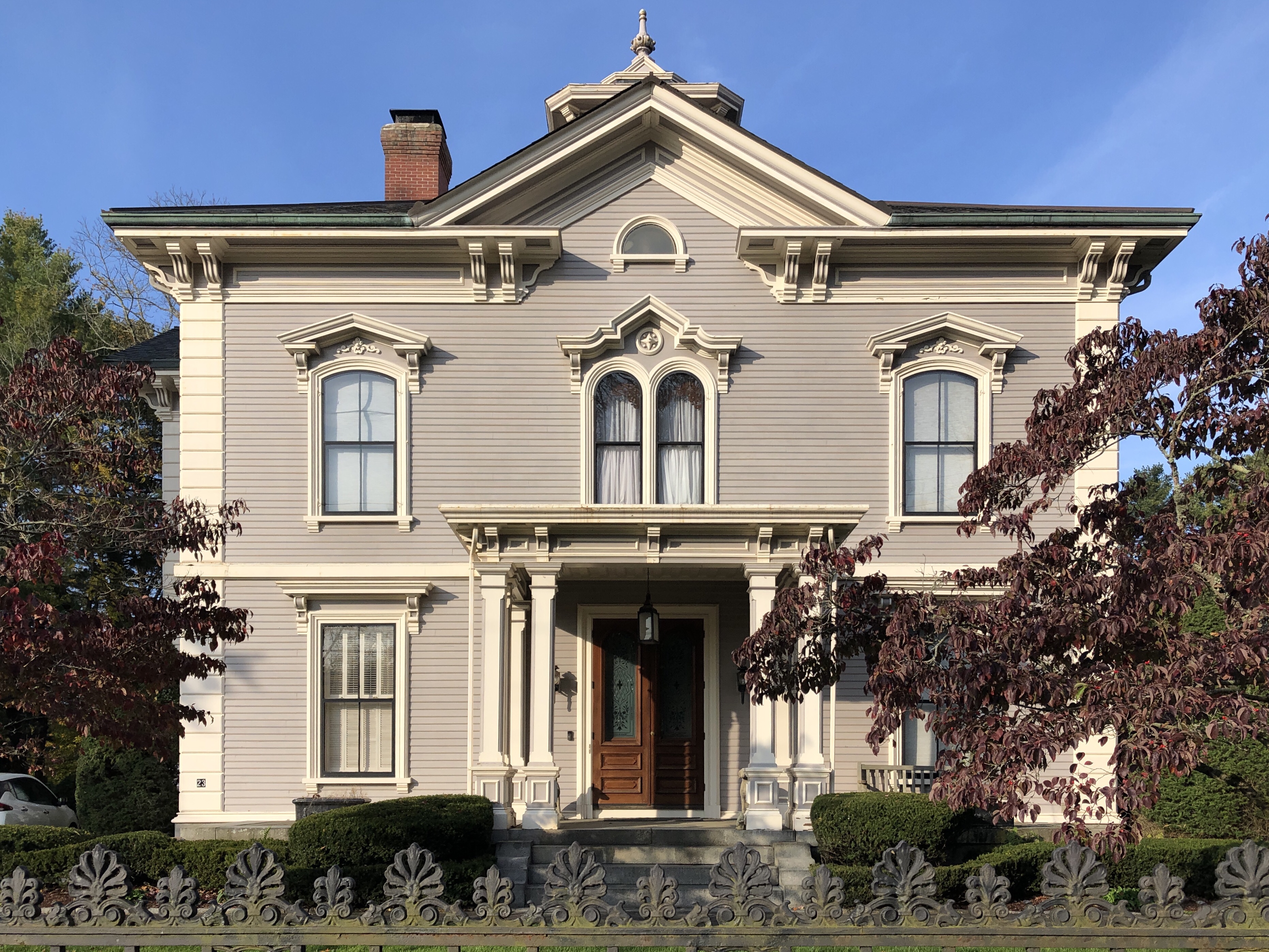
Located on Main Street in Easton, the Oliver Ames Jr. House exemplifies the romanticism of the Italianate style in the mid 19th century. Built in 1864, the home, known as “Unity Close”, was designed by George Snell, a Boston-based architect. Oliver Ames Jr. was a son of Oliver Ames Sr., who along with his brother, Oakes Ames, joined the family business at the Ames Shovel Works in town. The home has a massive garden at the side yard, originally designed by the Olmsted Brothers, John and Frederick, the sons of the great Frederick Law Olmsted.

Oliver Ames High School // 1896

I’m starting to see a trend in Easton, almost everything is named after the Ames Family! In 1893, Oliver Ames (1831-1895), a grandson of shovel company founder Oliver Ames and son of Oakes Ames, offered to fund the construction of a new high school building if the town would pay the cost of building its foundation and grading the site. While governor of the Commonwealth of Massachusetts (1887-90), Ames had hired Boston architect Carl Fehmer as consulting architect to the State for the extension to the Massachusetts State House, and it was Fehmer who secured the design contract for the new school in Easton. The refined Colonial Revival school building features a central pavilion with an entrance set within an ornate stone architrave with a Classical entablature with central pediment. The school was outgrown in 1957 and became the town’s middle school, outgrown again in the 1990s. The town sold the school to a developer with preservation restrictions and it is now used as apartments!

North Easton Railroad Station // 1884

Frederick Lothrop Ames (1835-1893) was born in Easton, MA, the son of Oliver Ames Jr. who ran the Ames Shovel Works in town. On the death of his father in 1877, Frederick became head of the Ames & Sons Corporation also inheriting upwards of six million dollars, which he invested in railroads. From this, he eventually became Vice President of the Old Colony Railroad and director of the Union Pacific railroad. At the time of his death, Ames was reported to be the wealthiest person in Massachusetts! Due to his role for the Old Colony Railroad, Ames had a rail station built in his hometown, adjacent to his family’s factory. Henry Hobson Richardson, who designed many other buildings in town for the Ames Family, designed this station in his signature Richardsonian Romanesque style with its large arches, varied rustication of stone, and brownstone trimming. The building was completed two years before Richardson’s death. Rail service here was cut in the 1950s, allowing the Ames family in 1969 to buy the station back from the consolidated New York Central Railroad, gifting it to the Easton Historical Society.

North Easton Fire Station // 1905

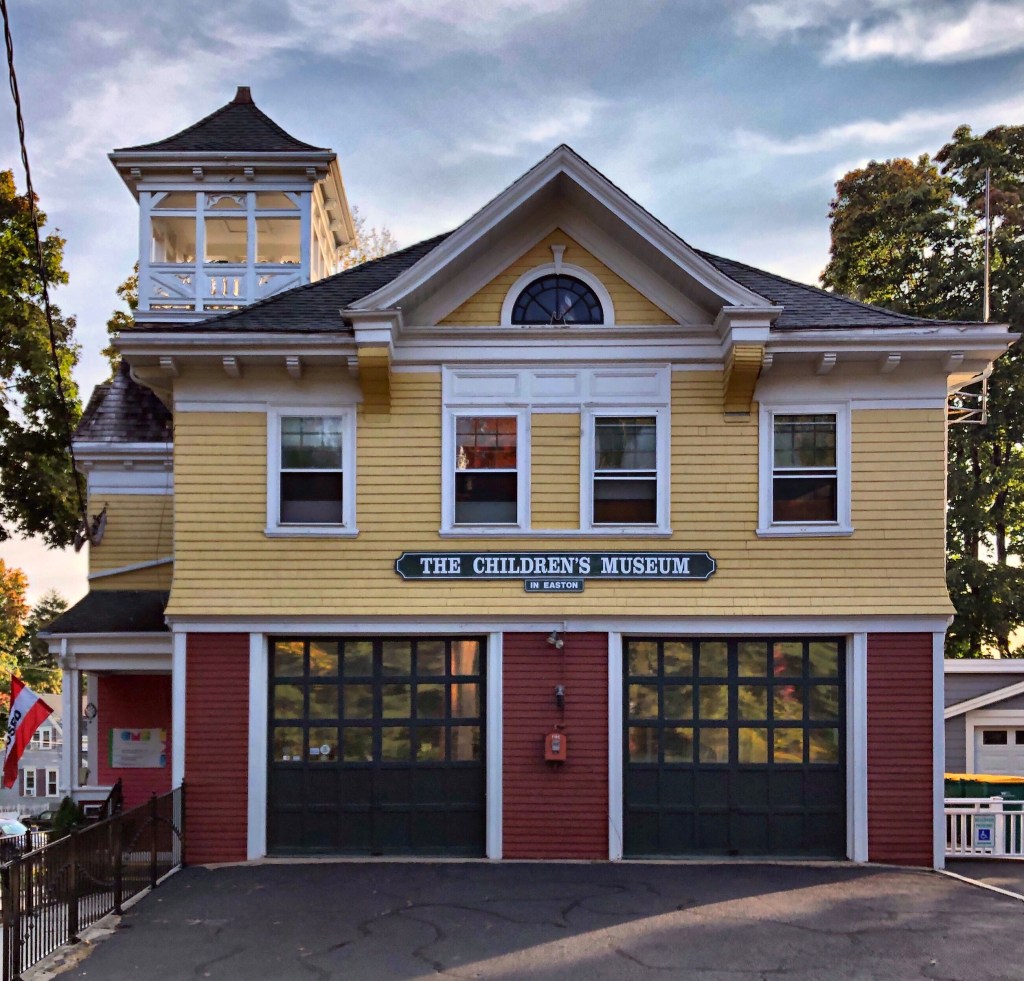
In the early 20th century, the village of North Easton, Massachusetts saw large growth, in large part by the Ames Family. The town had previously had a volunteer fire station, but due to the development, a permanent fire department was needed. In 1904, Mary S. Ames (later Mrs. Louis Frothingham) donated land for the purposes of building a fire station; across from the Ames Shovel Works. The fire station, completed in 1905, remained active until 1968, when the town’s modern firehouse that could accommodate larger fire apparatus was constructed. In 1991, the former fire station became the home of the Children’s Museum in Easton, which it remains to this day.

Ames Memorial Hall // 1881

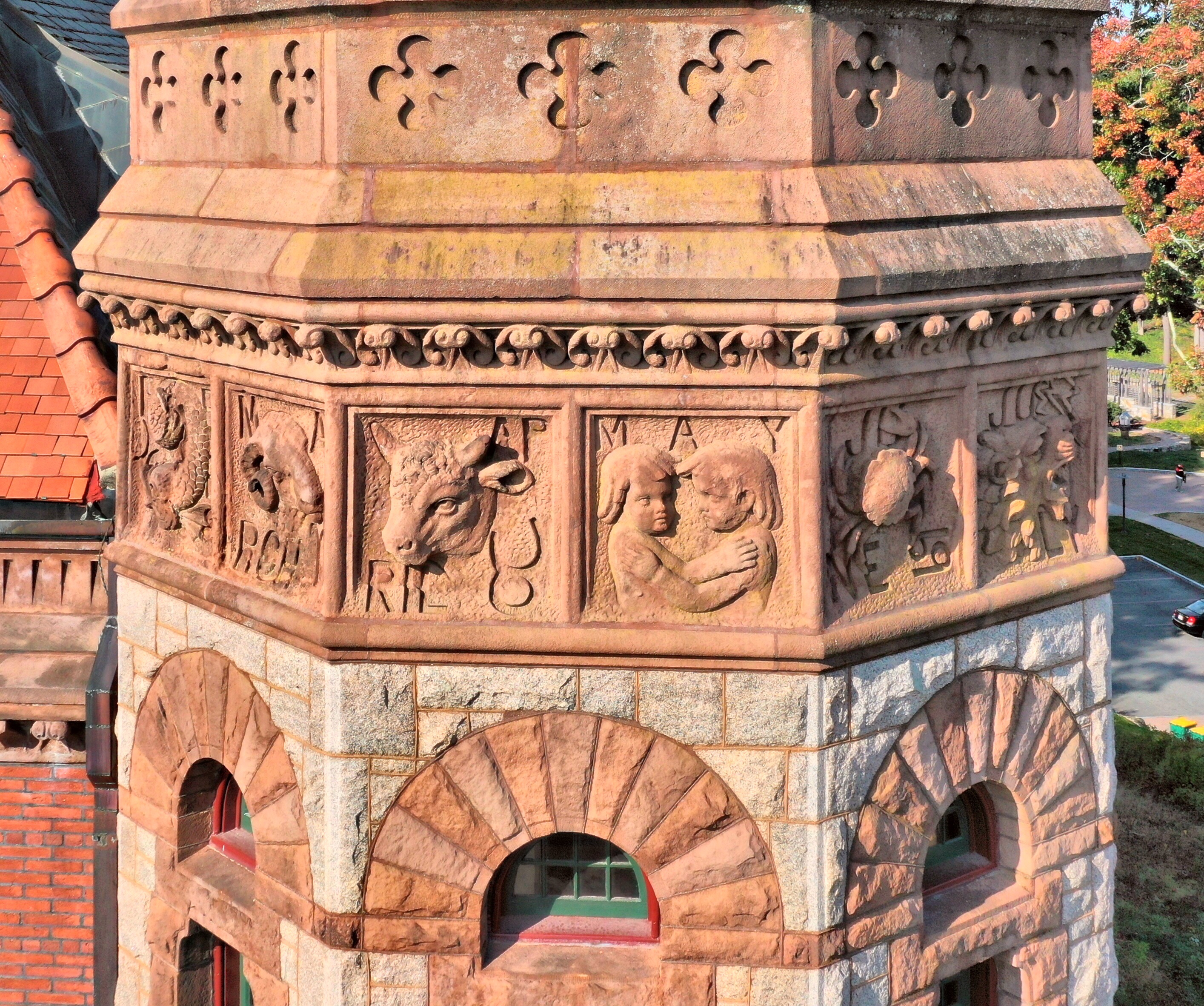
There are few buildings that make you stop and stare in marvel at their perfect architectural proportions, detailing and design, the Ames Memorial Hall in Easton, Massachusetts is one of them for me! In the late 1870s, the children of Oakes Ames commissioned the great American architect Henry Hobson Richardson to design the Memorial Hall as a tribute to their father. Richardson, the architect of Boston’s beloved Trinity Church in Copley Square, responded with a picturesque masterpiece using his signature architectural elements of rounded arches, dramatic roof lines, and heavy masonry adorned with carvings. The building was provided to the inhabitants of Easton “for all the ordinary purposes of a town hall”. Oakes Ames (1804-1873) was partner in the family business, O. Ames & Sons, a U. S. congressman, an early investor in the Central Pacific Railroad, and, at the urging of President Abraham Lincoln, a prominent force in the building of the first transcontinental railroad. The Richardsonian Romanesque building stands on the solid foundation of a natural ledge, from the northeast corner of which rises the beautiful octagonal tower, on whose frieze are carved the twelve signs of the zodiac.

Forest Hills Administration Building & Chapel // 1884

Located adjacent to the Entrance Gate at Forest Hills Cemetery in Boston, the Administration Building and Chapel perfectly compliments the Gothic Revival collection of structures welcoming all visitors to the cemetery. Designed by the firm of Van Brunt & Howe, the building was completed in 1884, when the cemetery’s popularity with visitors (alive and deceased) was at a high. The building is in the Gothic Revival style and is constructed of
Roxbury puddingstone, with sandstone trim on the original parts of the building and yellow freestone trim on the 1921 addition. The building remains as a perfect partner to the entrance gate, serving as a physical portal between metaphorical life and death.

Forest Hills Cemetery Bell Tower // 1876

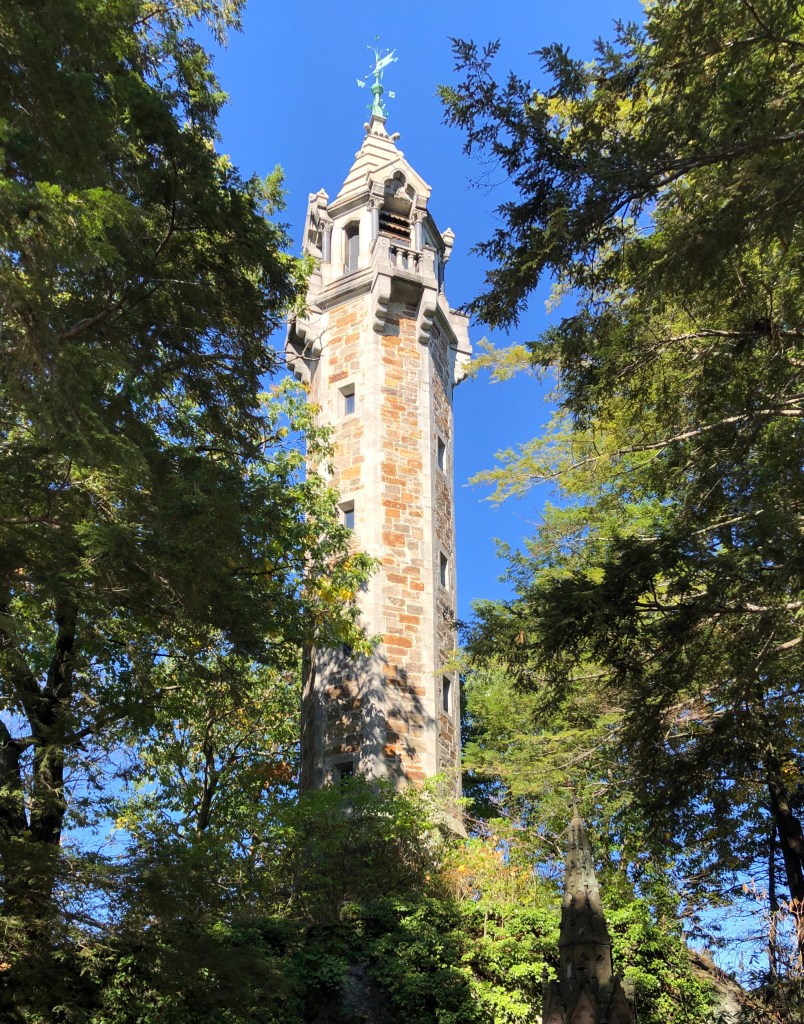
The bell tower at Forest Hills Cemetery is an octagonal Gothic revival structure located on Snowflake Hill just past the entrance gate and administration building and was completed in 1876. The 100-foot tower is constructed of Roxbury puddingstone and trimmed with granite. The roof is clad with granite tiles and topped with an ornate copper weathervane. Originally its swinging bell tolled, but it has since been replaced with an electronic carillon. The bell tower rises dramatically from massive
outcrop of Roxbury puddingstone known as Snowflake Hill which is offset by smooth lawns and Victorian planting beds. While the large trees surrounding partly obscure the tower, it truly is a stunning building.