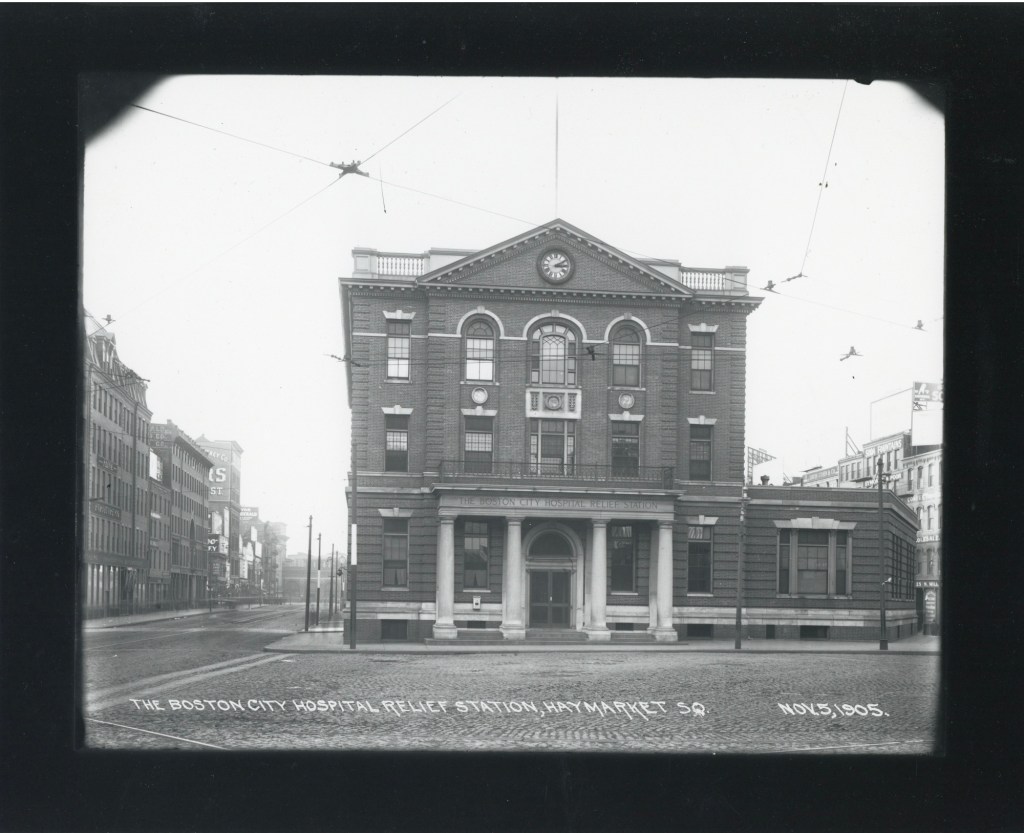
Boston City Hospital Relief Station, Haymarket // 1902-1960s

Image courtesy of City of Boston Archives

In 1858, as Boston began to see a massive influx of immigration into the city and rapid industrialization, the City of Boston authorized the creation of a new hospital whose purpose was the “reception of those sick and injured: citizens of Boston who, from any cause, were unable to otherwise obtain care and treatment,” especially in cases of “acute illness and for the victims of accident or injury.” This was the Boston City Hospital, which was established in the South End, and is now known as the Boston Medical Center. The hospital was thought to be too far away for victims of injury of illness to get to promptly, so a relief station was built in Haymarket Square, replacing the recently demolished Boston & Maine Railroad Station. The new, standalone hospital building was constructed of brick and stood three stories tall and opened in 1902. On its first day of operation, doctors and staff saved the life of a man who had attempted suicide by ingesting carbolic acid. A Boston Globe reporter speculated that had the patient been  transported to the more distant Massachusetts General or City Hospitals, he would have surely died. The Colonial Revival style building was designed by the firm of Kendall, Taylor & Stevens, who specialized in medical facilities and other institutional building designs. The structure was demolished by the 1960s, when much of the Government Center/West End areas were razed for urban renewal.
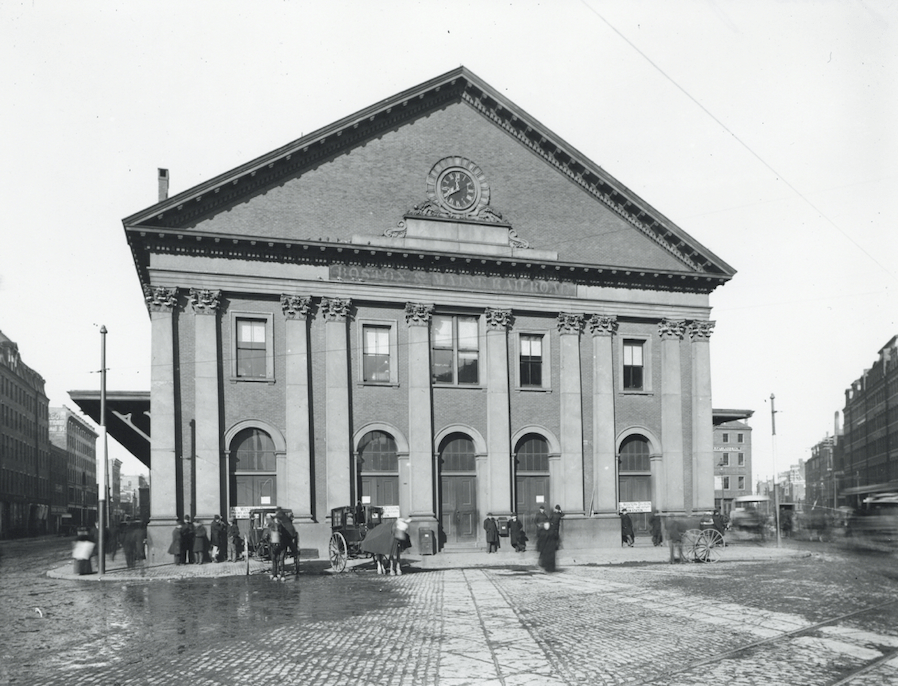
Former Boston & Maine Railroad Station // c.1845-1893

Photo courtesy of City of Boston Archives

The Boston & Maine Railroad opened in 1845, and over the years, became the dominant railroad in northern New England with many of its lines terminating at this station for a half-century until the original Union/North Station was built in 1893 consolidating many of these northbound lines under one roof. The Boston & Maine Station was located in Haymarket Square, southeast of the present North Station and the building was a landmark in the Greek Revival style. The brick building with monumental pilasters and pediment at the facade commanded the heavily trafficked site until it was demolished in 1893 when the lines relocated to the newly built Union Station on Causeway Street. The architect for the station was Richard Bond.

Former Arlington House Hotel // 1870

The Bulfinch Triangle area just south of the TD Garden in Boston is a cohesive and historically preserved district of similar commercial and industrial buildings of the 19th and early 20th centuries. Somehow, the area has been preserved largely intact besides some sites serving as surface parking lots and some incompatible infill developments. Historically, the area was a tidal flat, before the land here was filled beginning in 1807, with Causeway Street as the northern boundary. The area’s namesake, architect Charles Bulfinch, designed the street layout for the landowners, and the area was filled with material taken by lowering Beacon Hill and Copp’s Hill. Development was fairly slow until railroad companies built depots in the area around present-day North Station, many of which connected the area to cities north of Boston. These new train lines boosted the value of the surrounding land, with manufacturers and developers building factories and hotels in the area. This handsome structure on Causeway Street was built in 1870 by William G. Means, a manufacturer who also invested in real estate in Boston. He commissioned architect Samuel J. F. Thayer to furnish plans for the apartment hotel in the Second Empire style with a mansard roof and window lintels of diminishing detail as the floors increase. In later years, the Arlington House Hotel changed hands and names, later known as the Eastern Hotel and Hotel Haymarket. Stay tuned for more Boston history in this series highlighting the North Station and Bulfinch Triangle district!

Ellen and Ida Mason Villa // 1902

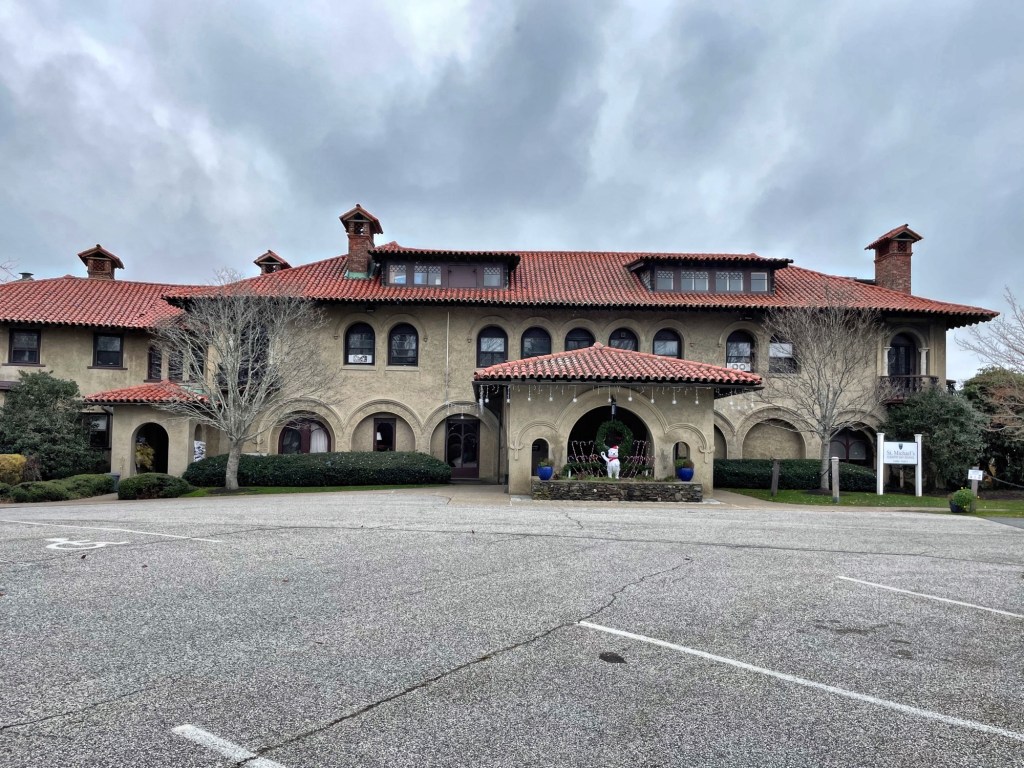
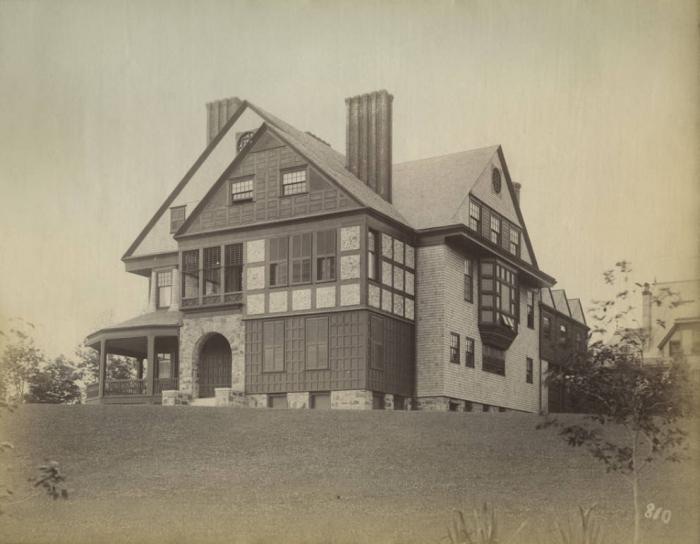
This large, low-slung and stuccoed Spanish Colonial Revival house in Newport Rhode Island, looks straight out of Southern California, thats because it is.. kind of. The Ellen Mason Villa was built in 1899-1902 from plans by Irving Gill, a southern California architect, for sisters Ellen and Ida Mason. The two unmarried sisters were daughters of Robert Means Mason a Boston millionaire, who had a summer cottage on the site that the family enjoyed for decades. The old Mason Villa was designed by H. H. Richardson, but burned to the ground in 1899, replaced by this structure. The sisters lived between Boston and here at this Newport estate until their deaths. In 1943, the property came into the ownership of the St. Michael’s Country Day School, who have both preserved the old estate house, but also added new structures to the campus. The house is unique as a rare Spanish Colonial Revival style property in New England, what a treat!

Original Means Villa

Sunnyside // 1886

Photo from recent real estate listing

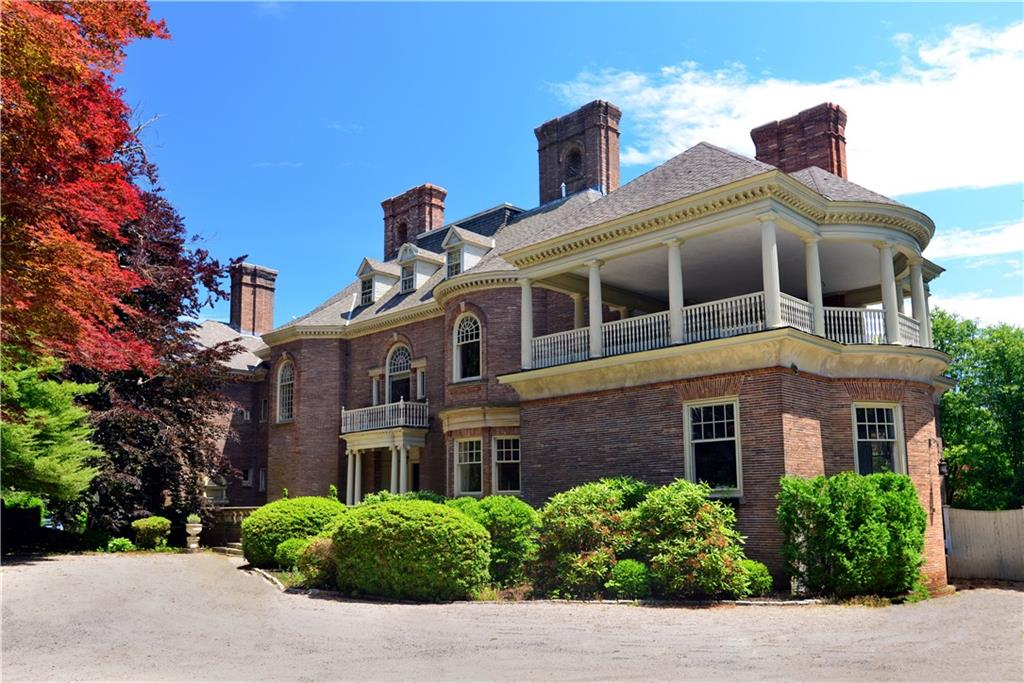
During the height of the Shingle and Queen Anne styles’ popularity, architect Stanford White of McKim, Mead & White completed plans for one of the earliest Colonial Revival style residences, “Sunnyside” in Newport, Rhode Island. The residence was built in 1886 for “Commodore” William Edgar (1810-1887) and his wife, Eliza Lucille Rhinelander (1832-1916). William was a co-founder of the New York Yacht Club in 1844 and heir to a New York fortune. Eliza was an aunt of Edith Wharton and a grand-daughter of William Rhinelander, co-founder of the Rhinelander Sugar Refinery. The property remained in the Edgar Family as Lucille Rhinelander Edgar (1858-1948), an unmarried daughter of the couple, would live here year-round with servants. The house is built of buff-Roman-brick with a large central block flanked by L-plan wings under a hipped roof punctuated by massive chimneys. Of special note on the facade are the rounded bays, entry portico with Palladian window above, and side porch.

Oakwood/ // 1902

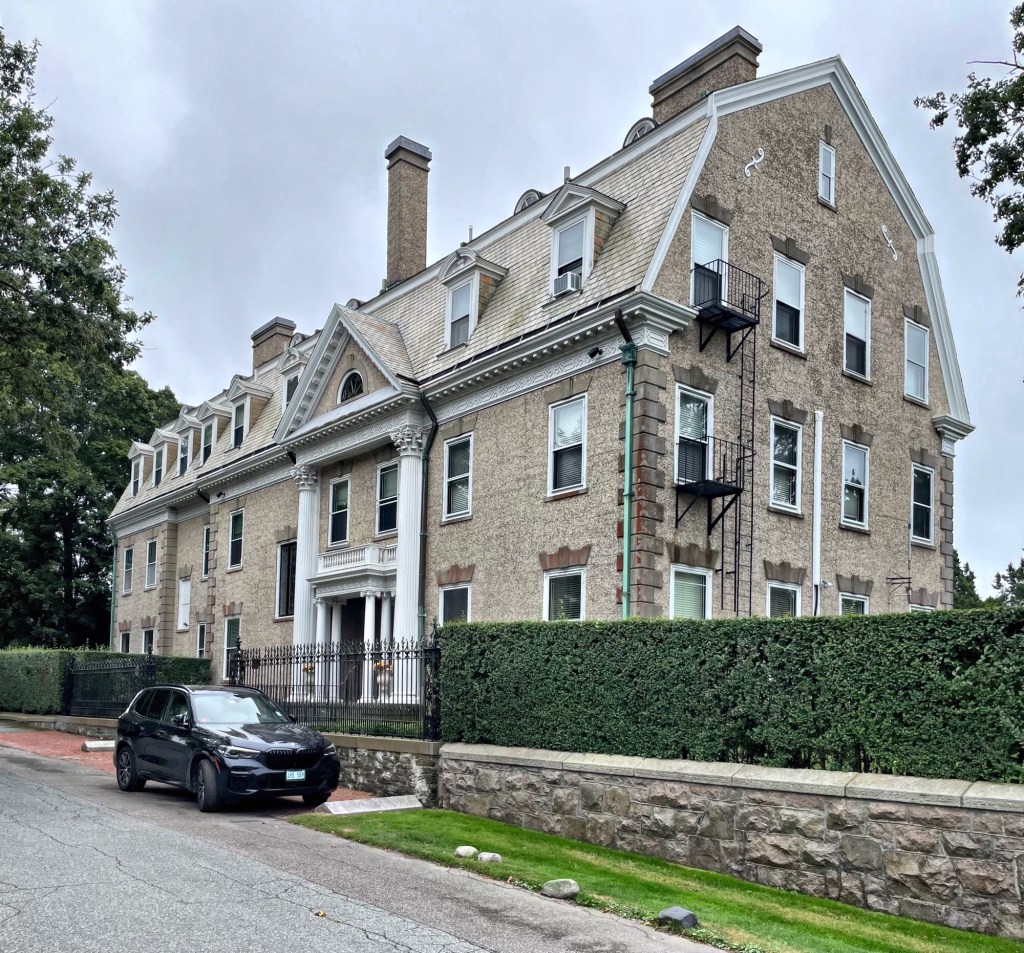
Oakwood, another massive gambrel-roofed “cottage” in Newport, Rhode Island, is another of the McKim, Mead & White designed residences in the Old Beach Road vicinity of town for wealthy summer residents. Built in 1902 for George Gordon King (1859-1922), Oakwood is a large, elongated two-and-one-half-story structure with a gambrel roof with walls in pebbledash finish. Its off-center main entrance with double-height engaged Corinthian columns supporting a pedimented gable and a blind balustrade set on smaller Ionic capitals. The massive home was later converted to condominiums. It sometimes amazes me that families (but with many servants) would live in these houses just for a season…

Boxcroft // 1883

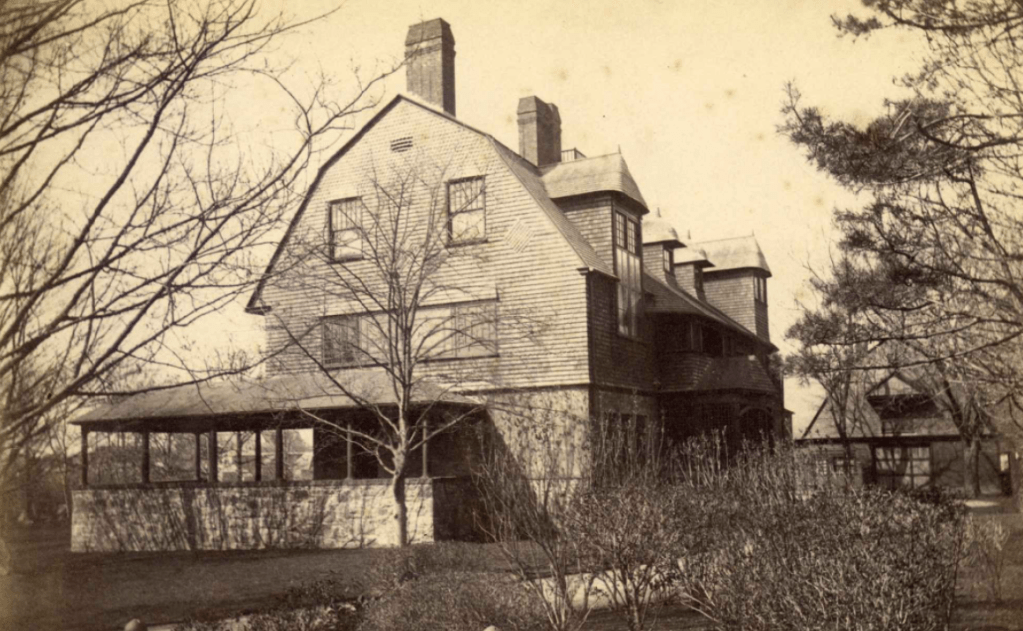
“Boxcroft” (also known as “Whileaway”) is a historic Shingle style summer “cottage” on Red Cross Avenue in Newport, Rhode Island. While it is surrounded by vegetation and tucked away, not facing the road, the house is a landmark example of the architecture style and very significant. The house was completed in 1883 from plans by the architectural firm of McKim, Mead & White a white shoe firm who designed many summer cottages in Newport for social elite. The original owner was Samuel Colman (1832-1920), a well-known landscape artist, the first President of the American Water Color Society, a connoisseur of Oriental art and an interior designer in business with Louis Comfort Tiffany specializing in fabrics and wallpaper. Colman lived here with his first wife, Ann Lawrence Dunham until her death in 1902. The property was later owned by Mary Appleton, an unmarried daughter of publisher William Henry Appleton. She would sell Boxcroft to lawyer and socialite J. Coleman Drayton, years following his bitter (and very public) divorce from Charlotte Augusta Astor, a member of the prominent New York Astor family, following a cheating scandal by Charlotte. Mr. Drayton died in Newport in 1934. Boxcroft remains an architecturally and historically significant piece of Newport’s Gilded Age.

Mary Walcott Almon Cottage // 1883

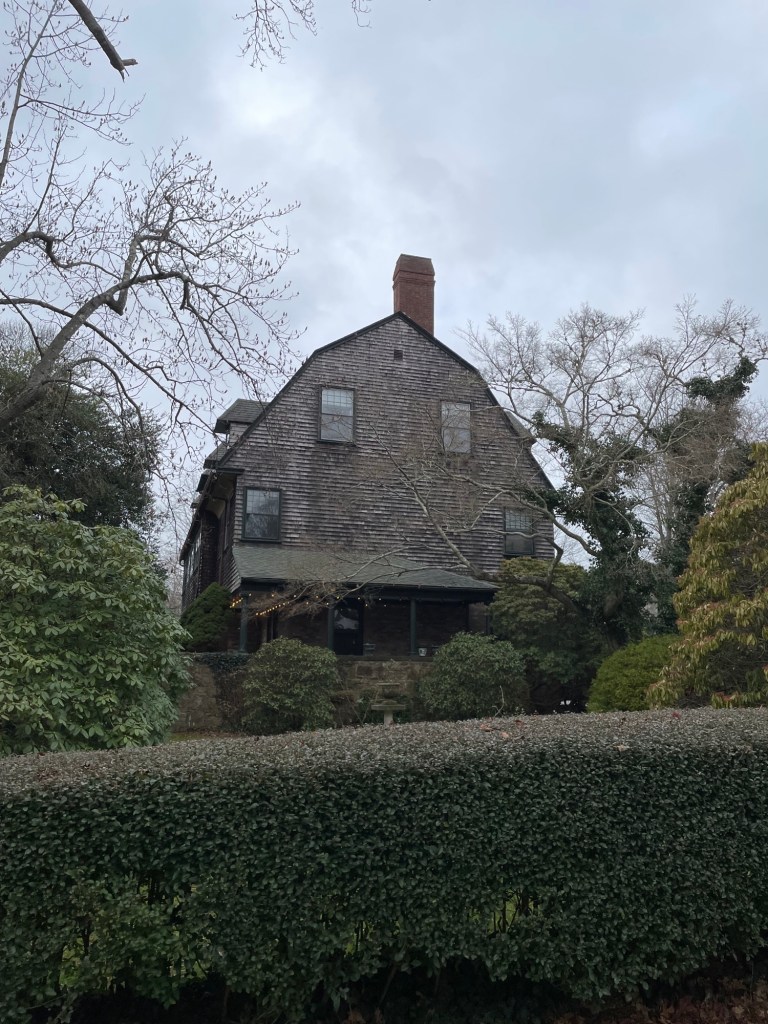
Andrew Belcher Almon was born in Nova Scotia in 1824. He would enroll at Harvard College and graduate with a law degree before moving to Salem, Massachusetts, marrying Mary Walcott Baker, the daughter of Samuel Baker and Martha Pickman Wolcott. The couple first lived in Cambridge before relocating to Salem to live Mary’s widowed aunt, the late wife of Ezekiel Hersey Derby. After her aunt died, Mary and Andrew moved back to Cambridge until they built this fine Colonial Revival style mansion on Red Cross Avenue in Newport. No architect is attributed to the house, but due to it being an early Colonial Revival style house for the period, it can be inferred that it was a Boston/Salem-area architect. Does anyone know more?

LaFarge Cottage // c.1845

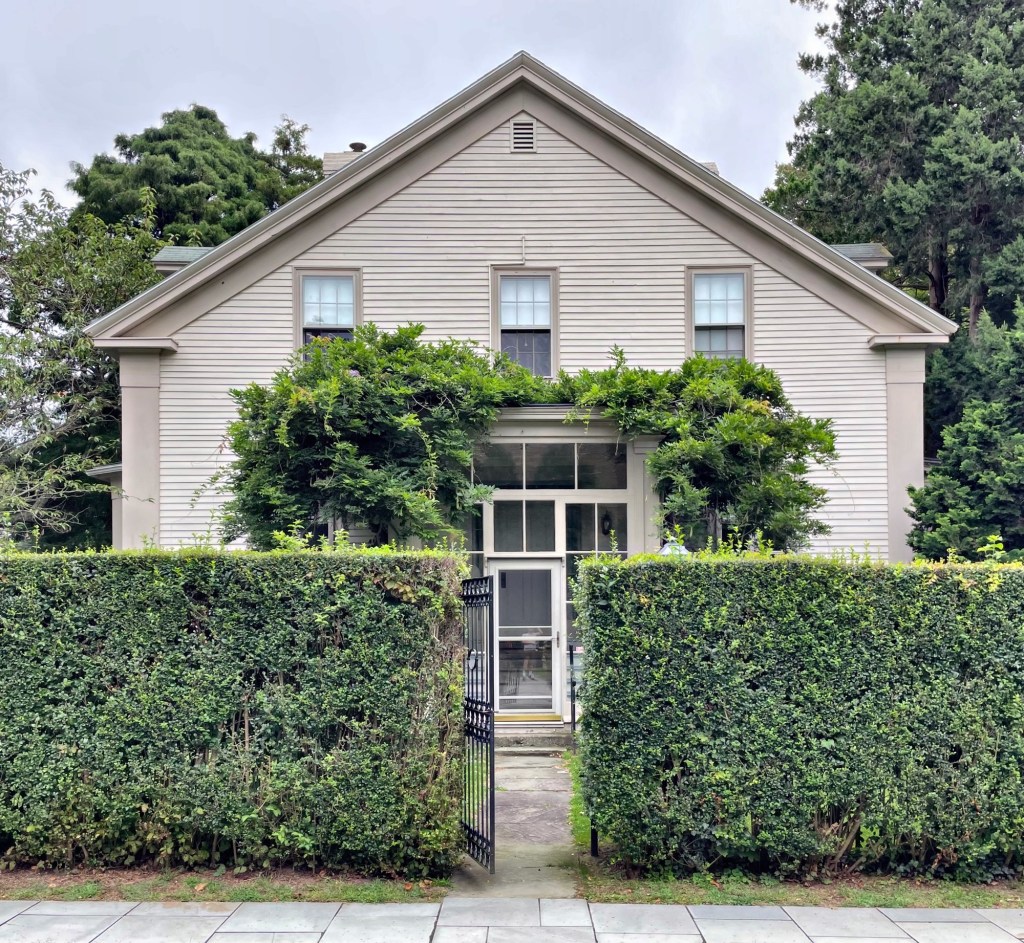
Even the less ornate and grand summer cottages of Newport can have interesting histories! This c.1845 Greek Revival cottage sits on Sunnyside Place and is best-known as the summer home of nationally significant painter, muralist, and stained-glass master John LaFarge (1835-1910), active in the lively late 19th-early 20th-century Newport art scene. John LaFarge’s wife, Margaret Mason Perry LaFarge (1839-1925), was the granddaughter of Commodore Oliver Hazard Perry, and was a native of Newport, seemingly providing the connection between her husband and lucrative stained glass commissions for many Newport and New York buildings. LaFarge is arguably best known for his innovative, opalescent stained glass windows, which was later stolen and adapted by Louis Comfort Tiffany. The LaFarge Cottage was possibly moved to this site and renovated, adding the glazed entry.

Maud Howe Elliott Bungalow // c.1912

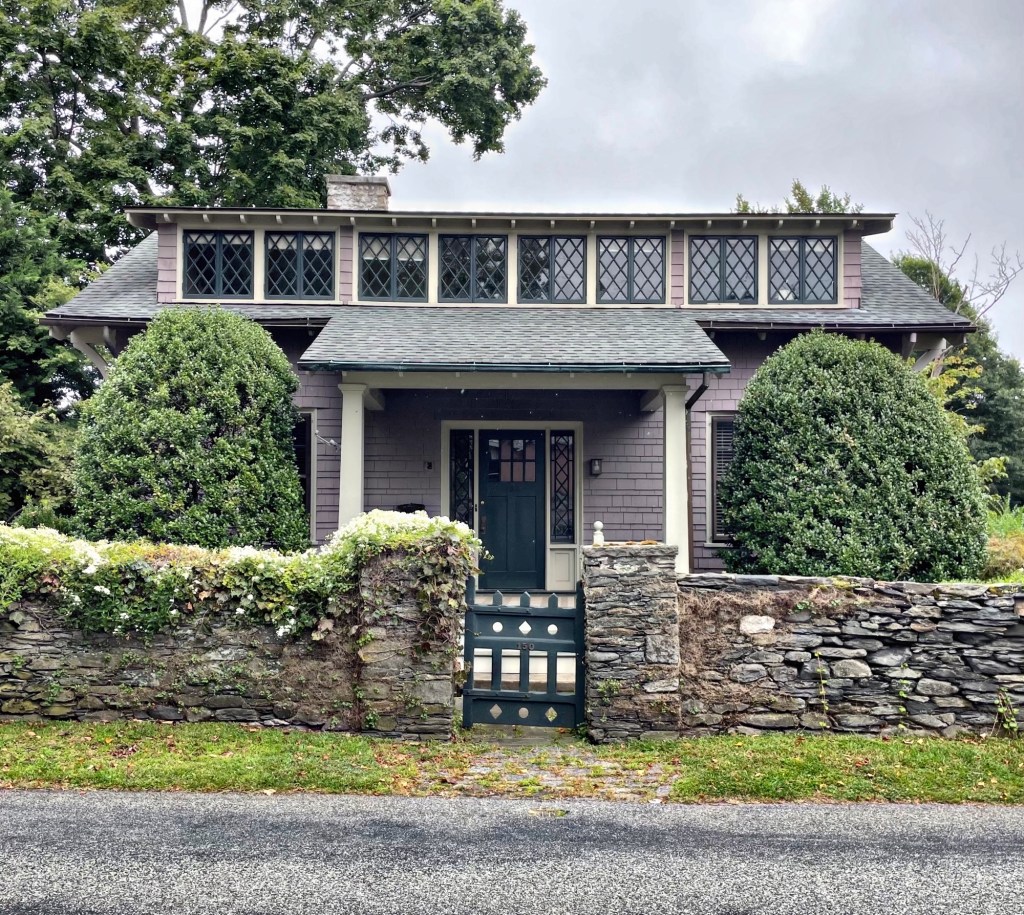
This shingled Craftsman bungalow on Rhode Island Avenue in Newport was built in the 1910s for Maud Howe Elliott (1854-1948), a Pulitzer prize winning author and active member in Newport’s art scene and her artist husband, John Elliott. Maud Howe was born at the Perkins School for the Blind in Boston, founded by her father, Samuel Gridley Howe. Her mother was the author and abolitionist Julia Ward Howe. In 1887, she married English artist John Elliott. John is known for his epic Symbolist murals including working alongside his friend and colleague John Singer Sargent to provide murals for the Boston Public library, and a mural at the Smithsonian Museum of Natural History. In Newport, Maud became a founding member of the Newport Art Association, and served as its secretary from 1912 to 1942. She also took part in the suffrage movement as she was greatly influenced by her mother’s ideas and convictions about women’s role in society and particularly so in terms of women’s suffrage. She fought passionately for women to be liberated from the societal expectations and roles determined to them by male dominated society. This was her home in Newport until her death in 1948.