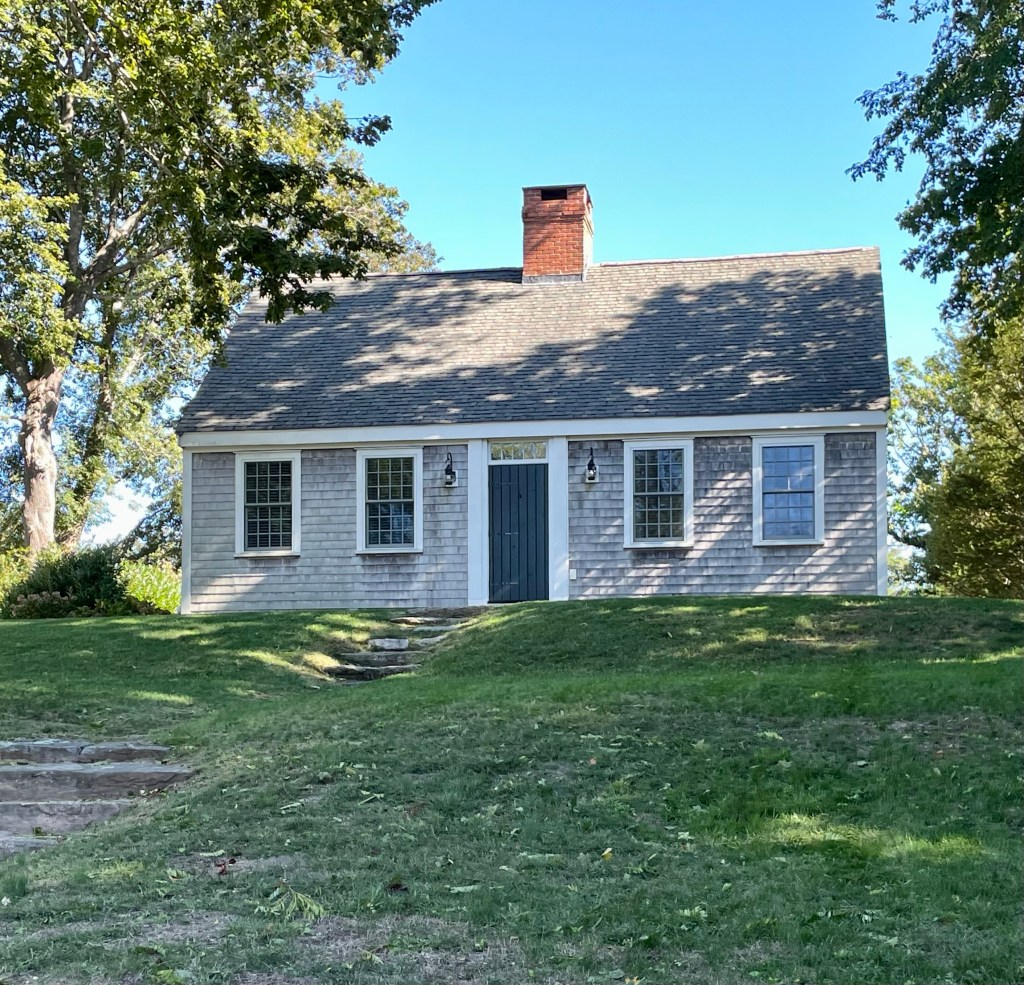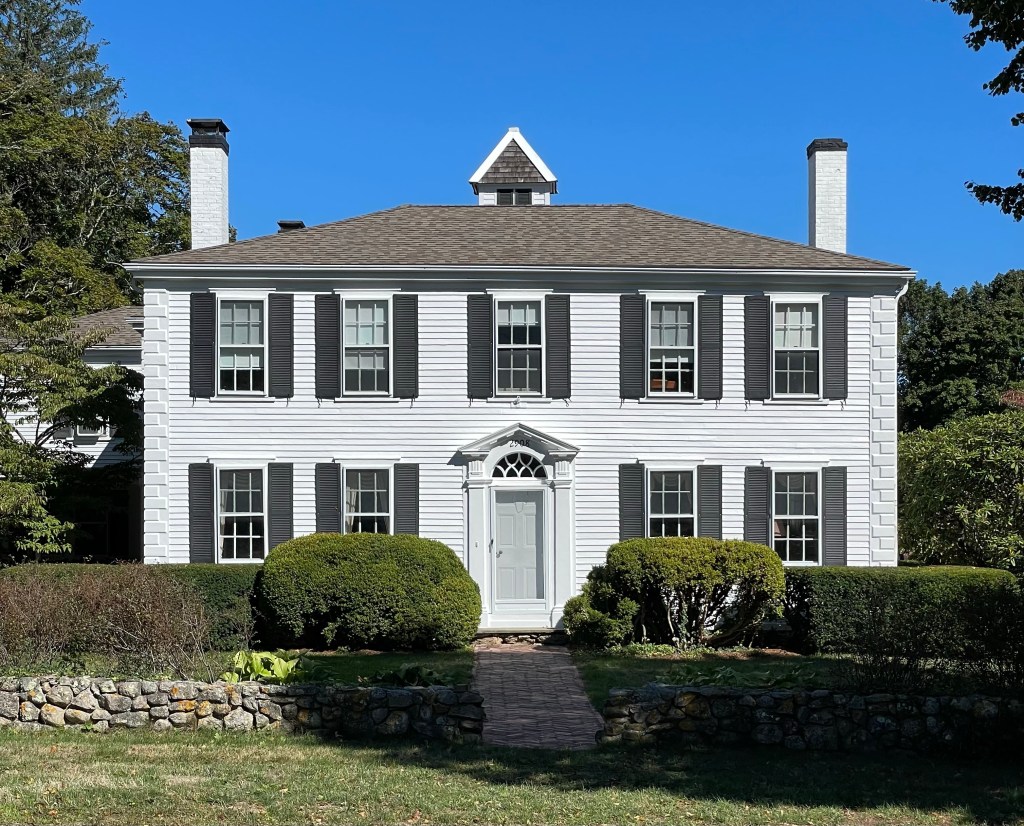
Russell House // c.1810

Landgrove, like many other rural towns of Vermont, has seen a lot of investment from out-of-state residents who pick up historic farm properties and renovate them. This is a great thing for many, as with investment comes tax-dollars and preservation of these historic buildings. On the other side, it prices out many who have grown up in these rural towns. Many villages and regions in Vermont have strict zoning which limits density, to maintain the character and charm of these back roads. Another Catch-22, as more housing (especially multi-family) means lower costs for limited available housing, but it can adversely impact what makes these rural towns so enchanting. Anyways, here is a beautifully restored Federal house!

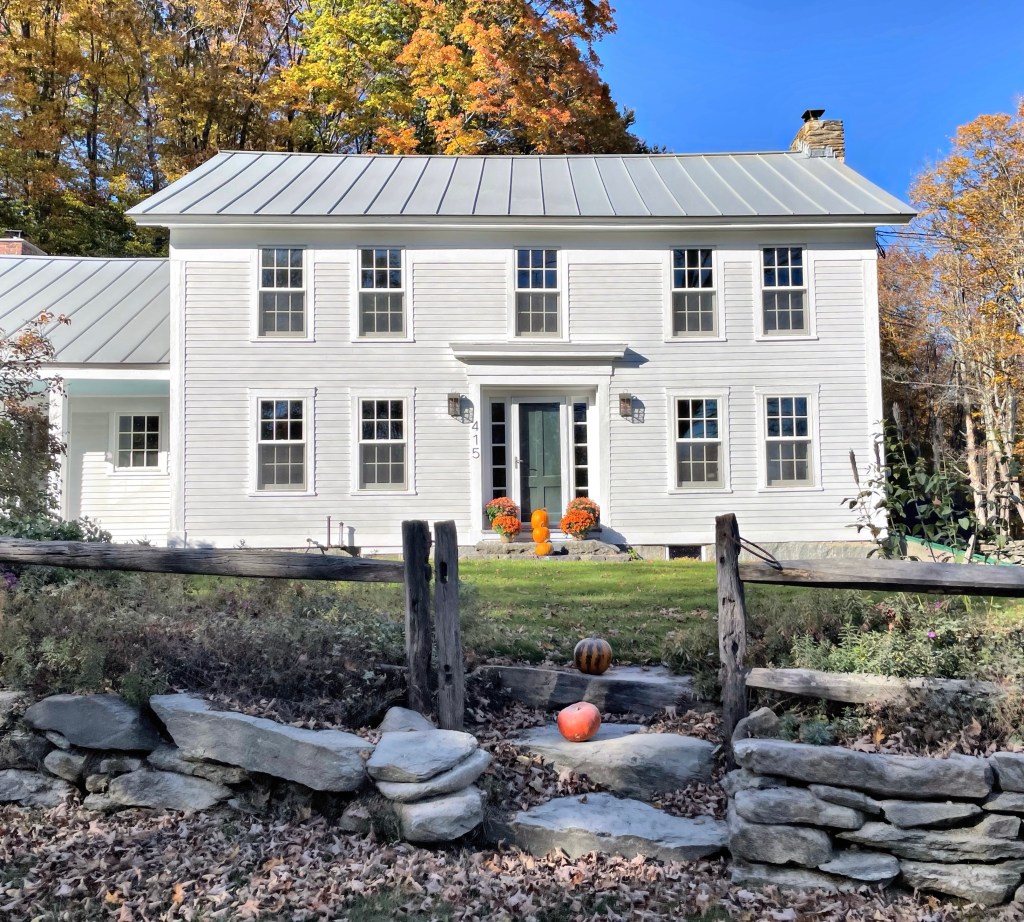
Cory House // c.1859

I stumbled upon this Greek Revival farmhouse located on one of many dirt roads in Landgrove, Vermont and had to snap a few photos! I couldn’t find much on the history of the house besides the fact it was listed on an 1869 atlas as the property of an “I. Cory”. The five-bay farmhouse has an elaborate door treatment and bold corner pilasters all perched behind a historic stone wall. The house telescoped outward with additions, eventually connecting it to what is now a garage. This farmhouse purchased in the 20th century by John A. Brown, who worked as Dean of Students at Princeton University.

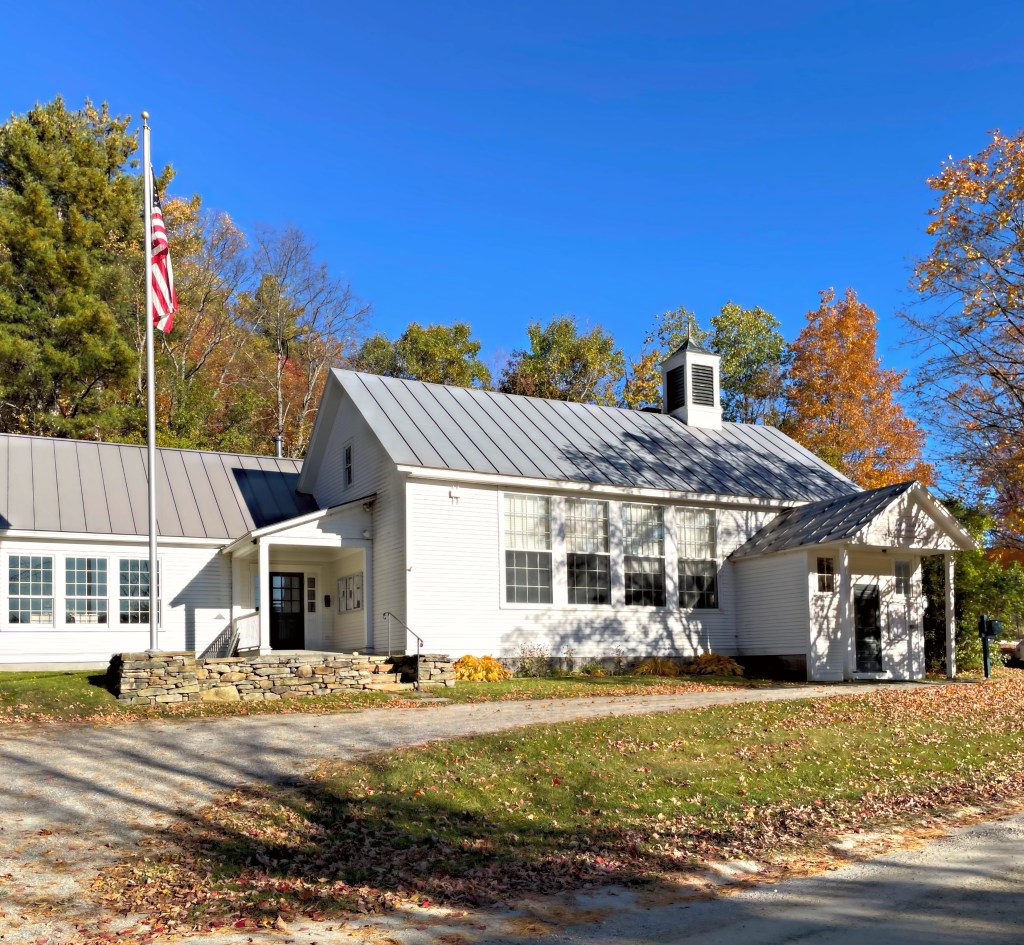
Landgrove Old Schoolhouse – Town Offices // c.1900

Before driving down the winding dirt roads of Landgrove, Vermont, I had never even heard of the town, let alone what I would find. It is always a treat to explore a rural Vermont town, not knowing what lies beyond each hill and bend in the road. Landgrove was chartered in 1780 and is one of the least-populated towns in New England at just 177. The town’s founding occured in the spring of 1767, when Captain William Utley (1724-1790) and his 16-year-old son Asa, traveled from Connecticut to what is now Springfield VT, across a newly created road to the frontier town of Chester. Upon arriving, they spent the rest of the year cutting a road from Chester to the West River. He thought that he arrived in the Town of Bromley, one of the New Hampshire Land Grants. After building his cabin, settling here with his family, he realized he was in unincorporated land between other grants. He petitioned for a new town and it was accepted after the Revolution. The town grew slowly with farms sprouting up along the countryside, never expanding beyond 355 people. This old schoolhouse was constructed, likely around the turn of the 20th century at the geographic center of town after the town consolidated their school districts. When the town’s population shrunk further, Landgrove’s school district merged with nearby Londonderry and Weston. This former school was converted to town offices.

The Old Jail, Barnstable // c.1690

The Old Jail in Barnstable is a historic wooden jail, resembling a colonial domestic residence, which was built by order of the newly established Barnstable County, which separated from the Plymouth Colony on in 1685. It served as the Barnstable County jail from 1690 to 1820 and is the oldest extant wooden jail in the United States! By 1702, prisoners were being held in the jail while awaiting trial at the Court Sessions held in Barnstable. In 1716, the jail imprisoned Mehitable “Goody” Hallett, the lover of pirate Samuel Bellamy, later known as the Witch of Wellfleet, as well as the two survivors of Sam Bellamy’s flagship Whydah Gally which wrecked at Wellfleet, and the seven pirate survivors of his consort ship Mary Anne which wrecked ten miles south. The jail house is considered one of the most haunted in America, supposedly containing the spirits of these pirates and lost loves. The jail building was attached to a barn by the 19th century, when a new jail was constructed. This building was later removed from the barn and restored, and moved to the present site next to the old Customs House in 1968.

Doane-Foster House // 1807

In 1807 Hezekiah Doane (1768-1834), a shipwright, purchased land on Main Street in Barnstable Village, building a family home. The house was built in the Federal period, likely with a side gable or hipped roof. Hezekiah and his small family lived here until his death in 1834. After successive ownership, the property was purchased in 1846 by sea captain Heman Foster (1812-1867). Foster renovated the house, raising the roof and adding the Greek Revival detailing with the pedimented roof and pilasters, and the gothic lancet window in the gable for some Gothic Revival flair.

Barnstable Customs House – Coast Guard Heritage Museum // 1855

The former United States Customs House (now the Coast Guard Heritage Museum) in Barnstable is located at the eastern end of the village, and across the street from the Unitarian Church (featured previously). The building was constructed in 1855, likely under the supervision of Ammi B. Young, who was acting as the first Supervising Architect of the U.S. Treasury Department. The Seventh Customs District was established by Congress in 1789, and encompassed Barnstable County except Falmouth, and it ranked fourth in revenue among the state’s customs districts. By 1850, 91,102 tons of materials had been reported through the district, so the need for a new customs house was clear. The Customs House is said to have been the first ‘fireproof’ building constructed on Cape Cod, in contrast to the traditional wood-frame and shingled dwellings found there. This district merged with Boston in 1913, and the building became a local Post Office until 1958. It was converted to a museum and named after Donald G. Trayser. It was renamed the Coast Guard Heritage Museum in 2005.

Crocker Tavern // c.1754

One of the largest pre-Revolution houses in Barnstable is this stunning Georgian manse, known as the Crocker Tavern. The c.1754 home was built along Main Street in Barnstable Village by Cornelius Crocker (1704-1784), who operated it as a tavern along the Old King’s Highway, the main stagecoach route through Cape Cod. Cornelius died in 1784, and he left the eastern half of his house and land to his grandsons Robert, Uriah, and Joseph Crocker; the western half of land and house went to his daughter Lydia, widow of Captain Samuel Sturgis who died at 25, she never remarried. The house was “to be divided through by the middle of the great chimney“, a feature which was likely removed under separate ownership. Lydia eventually acquired the other half of the house, and continued operation of the tavern as her father did before her, though it was known as Aunt Lydia’s Tavern. The property was passed down through the family until 1925, when the property was left to the Society for the Preservation of New England Antiquities (later renamed Historic New England) as a historic house museum. The Georgian house and property were eventually de-accessioned by Historic New England and the tavern can be rented out on AirBnb!

Reverend Joseph Green House // c.1725

In 1725, the second or eastern parish of Barnstable separated from the first (or west) and the congregation had a 25 year old pastor to lead them in Reverend Joseph Green. Joseph Green(e)(1701-1770) attended Harvard and trained in theology, graduating and accepting the call to lead a new congregation in Barnstable Village on Cape Cod. Green would must have had this house built around the time of his arrival, which was a modest, full-cape Georgian home. Reverend Green remained in his position until his death in 1770.

Hinckley-Crocker House // c.1827

In 1827, Isaiah Hinckley (1786-1880), a boatbuilder, purchased a pre-Revolutionary home built by Dr. Abner Hersey on Main Street in Barnstable Village. Hinckley, being a skilled tradesman, completely re-designed the house, creating the stunning Federal style manse we see today. It is likely that Hinckley used an architectural pattern book, like one of the many by Asher Benjamin, which provided plans and drawings for carpenters and other tradesmen to be able to build stunning homes and churches all over the country. In 1861, this estate passed to Captain Elijah Crocker, a sea captain who commanded the ship Akbar.

Unitarian Church of Barnstable // 1907

Early in the 17th century, the Rev. John Lothrop and his followers left England for these shores seeking religious independence. They settled first in Scituate and a few years later came to Barnstable, arriving in 1639. They constructed their first meetinghouse in 1646 on Coggins Pond, about a mile west of this church. Lothrop’s second dwelling in Barnstable is the current Public Library in town (featured previously). In the early 19th century there was considerable theological debate in the “churches of the standing order” in New England. Many churches actually split over this debate, the traditionalists becoming Congregationalists and the liberals becoming Unitarians. The Eastern Parish in town was thus occupied by the Unitarians. In 1836 the original meeting house was removed and a new, larger one was constructed. It was destroyed by fire in 1905, and planning began for a new church. The present edifice was dedicated in 1907, and was designed by architect Guy Lowell, the architect of the Boston Museum of Fine Arts and the New York County Courthouse. His traditional, Classical designs were featured in publications all over the country. This church in the Classical Revival style is one of the finest on Cape Cod.