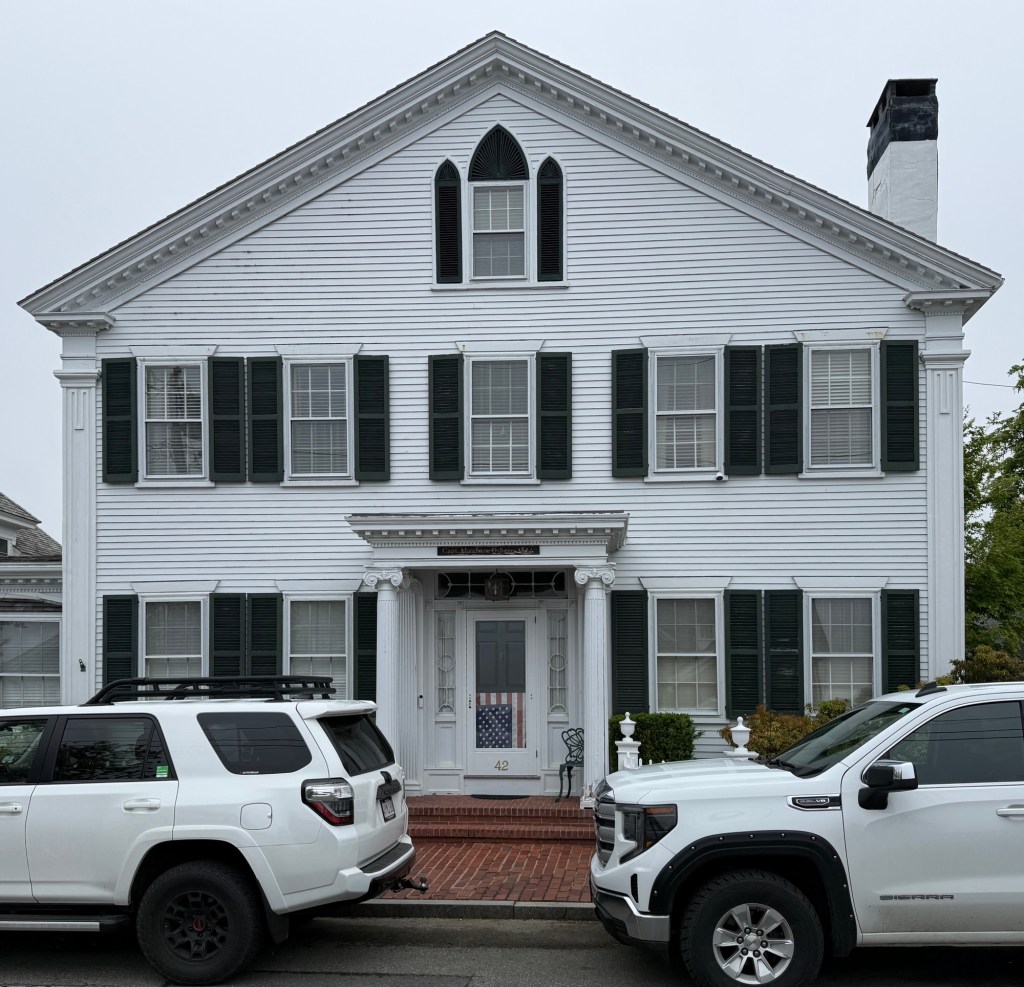
Captain Abraham Osborn House // 1834

Built in 1834, this early Greek Revival house with Gothic Revival detailing, sits on Edgartown’s South Water Street, a notable street lined by large mansions built for early whaling captains on Martha’s Vineyard. The residence was built for Abraham Osborn (1798-1865), a whaling captain, soon after his marriage to Eliza Norton. Captain Abraham Osborn owned several whaling ships based out of Martha’s Vineyard and New Bedford, and one of these large vessels, the Ocmulgee, came to an untimely end early in the Civil War. When captaining the ship in September 1862, the Ocmulgee was approached by a ship flying British flags. When it got within speaking range, the British flags were replaced by Confederate colors and the rebel captain took over the ship, which contained 250 barrels of whale oil. The Confederates detained the ships officers and Captain Osborn in chains bringing them aboard their ship, the Alabama, which was known for stealthy operations to damage the economy of the Northern states. The rebels torched the Ocmulgee, forcing Captain Osborn and his crew to watch their profits burn up and sink into the ocean. The crew was detained for a few days and ultimately released near the Fayal Islands where they received help. Captain Osborn returned home and would die just three years later. The Osborn house was later inherited by his son, Abraham Jr., a retired sea captain himself, who eventually converted the large family home into a hotel called Ocean View. A famous guest at his hotel was Alexander Graham Bell, who was on island to study the extensive deafness prevalence for those on the Island. The house has since been converted back to a single-family residence and maintains its stunning Greek Revival entry portico and tripartite window in the gable with shuttered lancet openings.
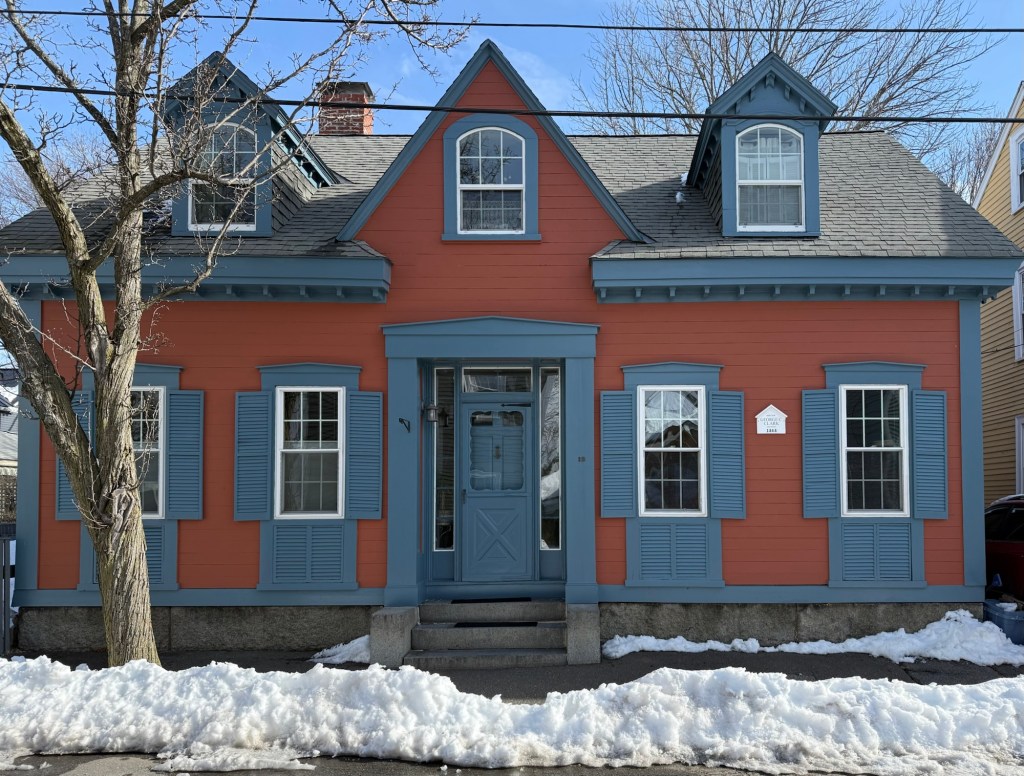
George Clark Cottage // 1847

In 1847, George Clark (1815-1890), a Salem carpenter, purchased a house lot on Oliver Street, a block away from the Salem Common. That year he began constructing this cottage for his family. The Clark Family resided here for just a year until 1849, when George got caught up in the California Gold Rush, selling the property and moving west to make his fortune. Since Mr. Clark was back in Salem by 1850 (according to the federal census), he was likely one of the thousands of forty-niners who did not strike it rich. The Greek Revival style house is unique for its more Gothic style gable, brackets, and segmental arched windows.

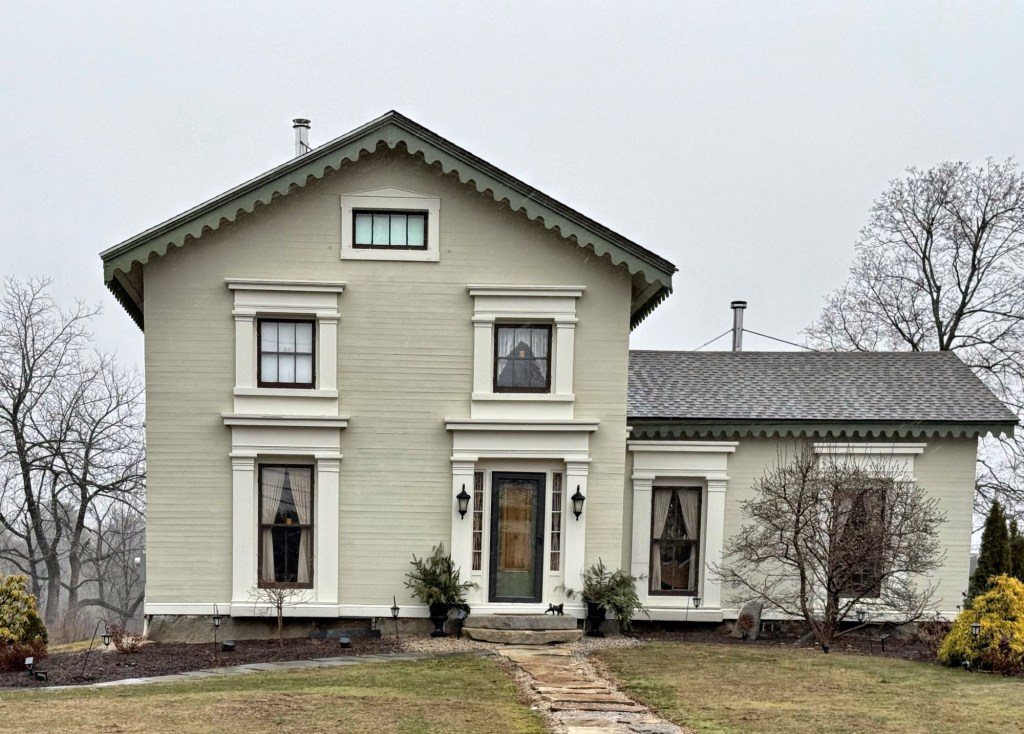
Lavalette Perrin House // c.1844

The perfect whimsical blending of the Classical Greek Revival and the intricate details of the Carpenter Gothic styles can be found under one roof in Goshen, Connecticut; this is the Lavalette Perrin House. Built c.1844 for Lavalette Perrin (1816-1889), who graduated from Yale in 1840, and became licensed to preach in 1843. Reverend Perrin was in his late 20s when he accepted the call to become the pastor of Goshen’s Congregational Church in 1843. Upon arriving to town, he had this residence built soon after, blending two differing styles in a blissful composition. Perrin remained in Goshen until he was called to New Britain in 1858, where he remained until his death. Unique architectural features of the home include the flushboard siding, pilaster-and-lintel framed doors and windows (very rare in this form), and wave-like bargeboards. What a special home!

Doane-Foster House // 1807

In 1807 Hezekiah Doane (1768-1834), a shipwright, purchased land on Main Street in Barnstable Village, building a family home. The house was built in the Federal period, likely with a side gable or hipped roof. Hezekiah and his small family lived here until his death in 1834. After successive ownership, the property was purchased in 1846 by sea captain Heman Foster (1812-1867). Foster renovated the house, raising the roof and adding the Greek Revival detailing with the pedimented roof and pilasters, and the gothic lancet window in the gable for some Gothic Revival flair.