One thing about Victorian-era houses that I love so much is the fact that it’s so rare to find two houses that are the same! The uniqueness and detail is just amazing and stalking these homes never gets old! This 1886 beauty was built as a double-house for Stephen Cummings of Norway, Maine. Cummings was a member of the family which built many of the grand homes in town as they ran a woodworking and carpentry company. Architect John B. Hazen designed the Stick style home with a octagonal bay at the facade, capped by a tower, giving the home a sort of pagoda effect.
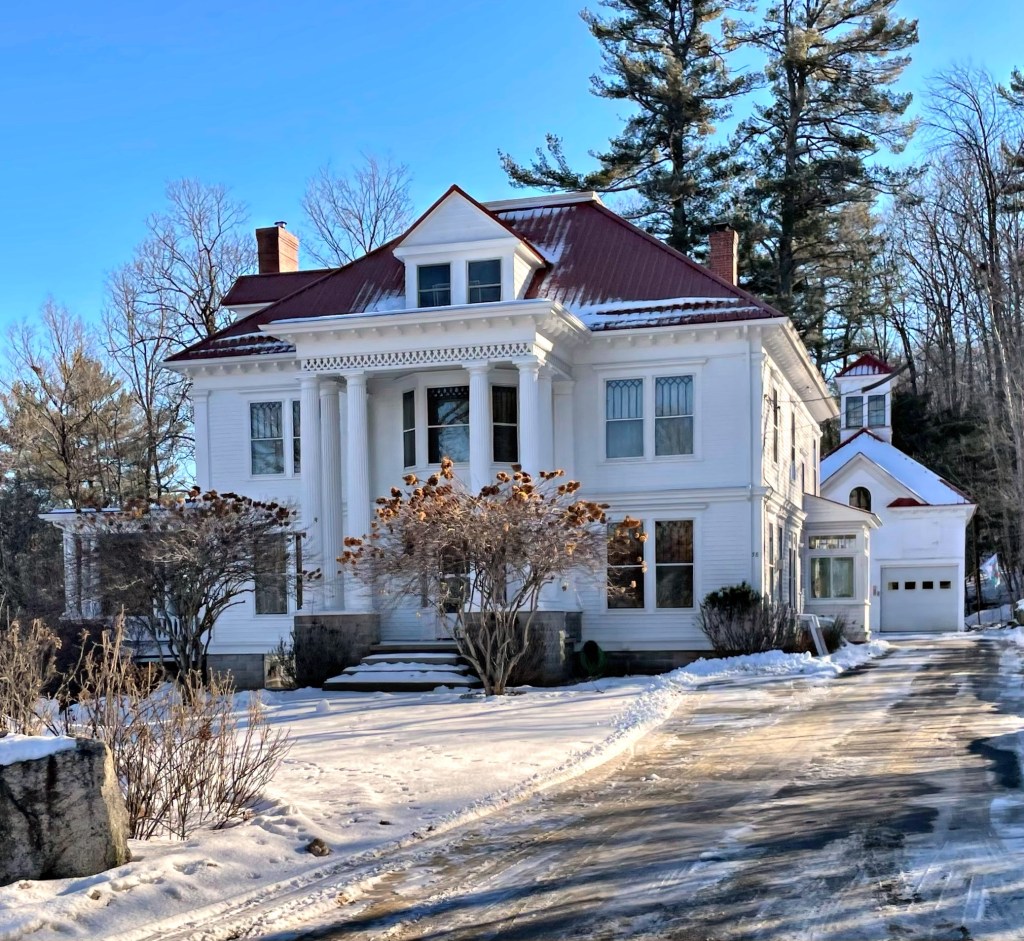
This two-and-a-half story mansion sits on a steep hillside overlooking Downtown Norway, Maine. The home was built in 1908 for Edwin Cummings, who appears to have been a son of Charles B. Cummings, who ran a profitable woodworking and carpentry firm in the village. Charles Cummings was the owner of the Evans-Cummings House (featured previously) and updated it to show off his carpentry skills. The house here is a great example of Neo-Classical architecture with the monumental columns to create a prominent portico. The home retains the original windows which really complete the facade!
The most iconic house in Norway, Maine has to be the Evans-Cummings House (also known locally as the Gingerbread House) on Main Street. The ornate Victorian era home was originally built in 1855 for Richard Evans, who was born in Portland in 1805 and after training as a carpenter, moved to Norway in 1833 for work. He and his wife, Mary Warren Hill, had eight children and they resided in the home until their death. In 1890, Charles B. Cummings bought the house in 1890 and hired local architect John B. Hazen to remodel the house. Hazen added the gingerbread adornments for which the house is now known colloquially. The home attracted a lot of attention in the region, and the later heirs continued that whimsical appeal. When the home was willed to Fred and Cora Cummings, they were said to have kept a stuffed peacock at the top of the stairs, which delighted children when they toured the home. The house eventually became used as storage by the owners of the local Advertiser Democrat newspaper, and its future was threatened. Since 2012, a local group, Friends of the Gingerbread House, have poured tens of thousands of dollars and an equal amount of time restoring the iconic home to her former glory! Preservation is important!
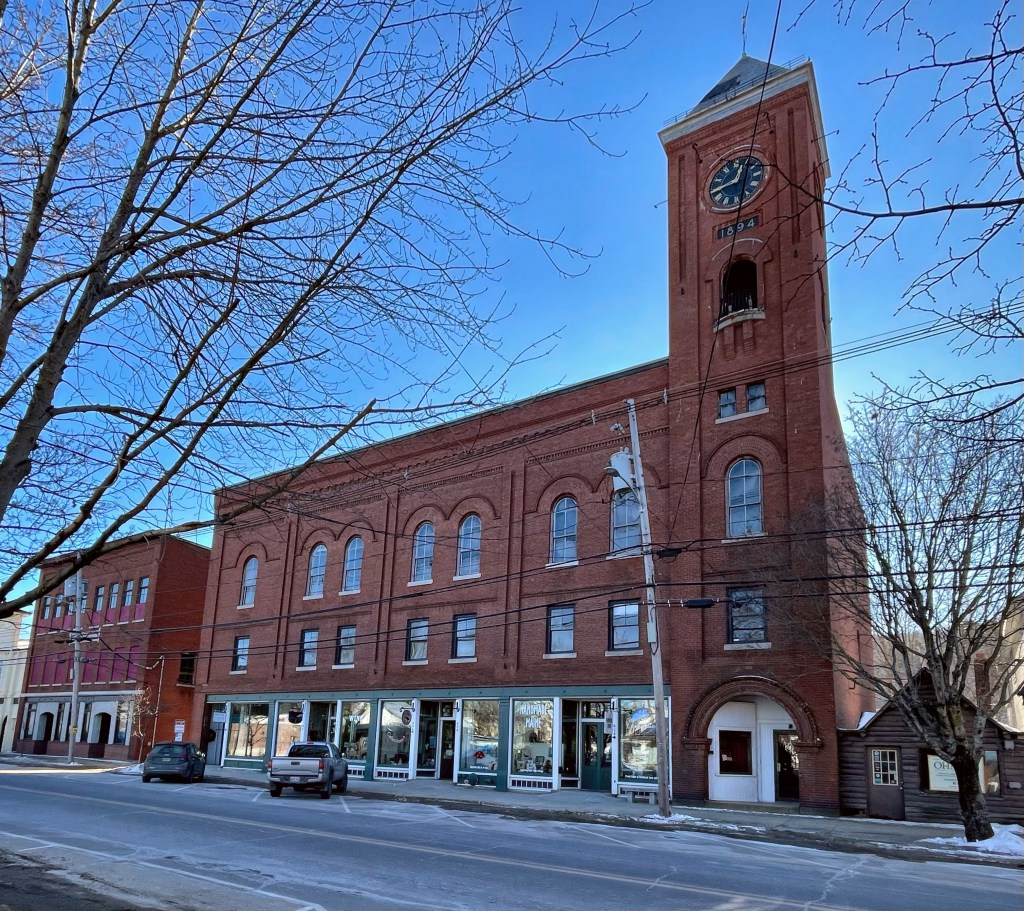
The most substantial building on Norway’s Main Street is this hefty brick commercial block with its prominent corner clock tower. The structure was designed by Maine architect Edwin E. Lewis and built in 1894 as the Opera House with stores along the ground floor. The building was constructed immediately after a large fire destroyed much of the downtown village area of Norway, and was built in such a way to show the strength and resolve of the town, leading the way for a larger re-building effort by the local business community. The Romanesque Revival building features lovely arched windows and brick detailing. The building has seen better days, but a local group has been working tirelessly to restore this beauty to her former glory! The group is presently soliciting donations to restore the roof and rear wall, to keep the building standing for future generations.
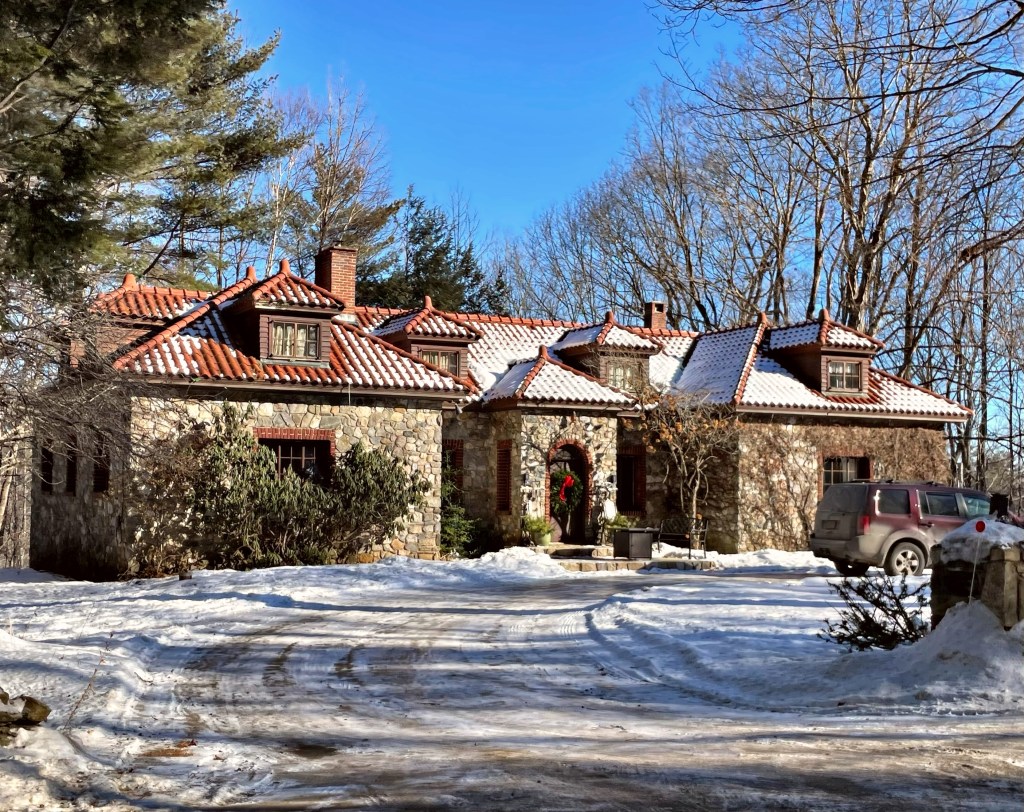
In the early 20th century, Norway, Maine and the surrounding towns were sought-after for their natural beauty with large lakes and rivers with untouched expanses of forest. Upper-middle class residents of Portland, Boston and other larger cities in New England built more rustic summer homes, compared to the elaborate “White Elephants” in Newport, Rhode Island. This home in Norway was named Wrightstone and was built in 1925 for the Wright Family. The U-shaped home is constructed from rubblestone, likely gathered from the land on which it sits. The house blends the Arts and Crafts movement with the uncommon (in Maine) Spanish Colonial Revival style, with the terracotta roof! I bet the interior is so cozy!
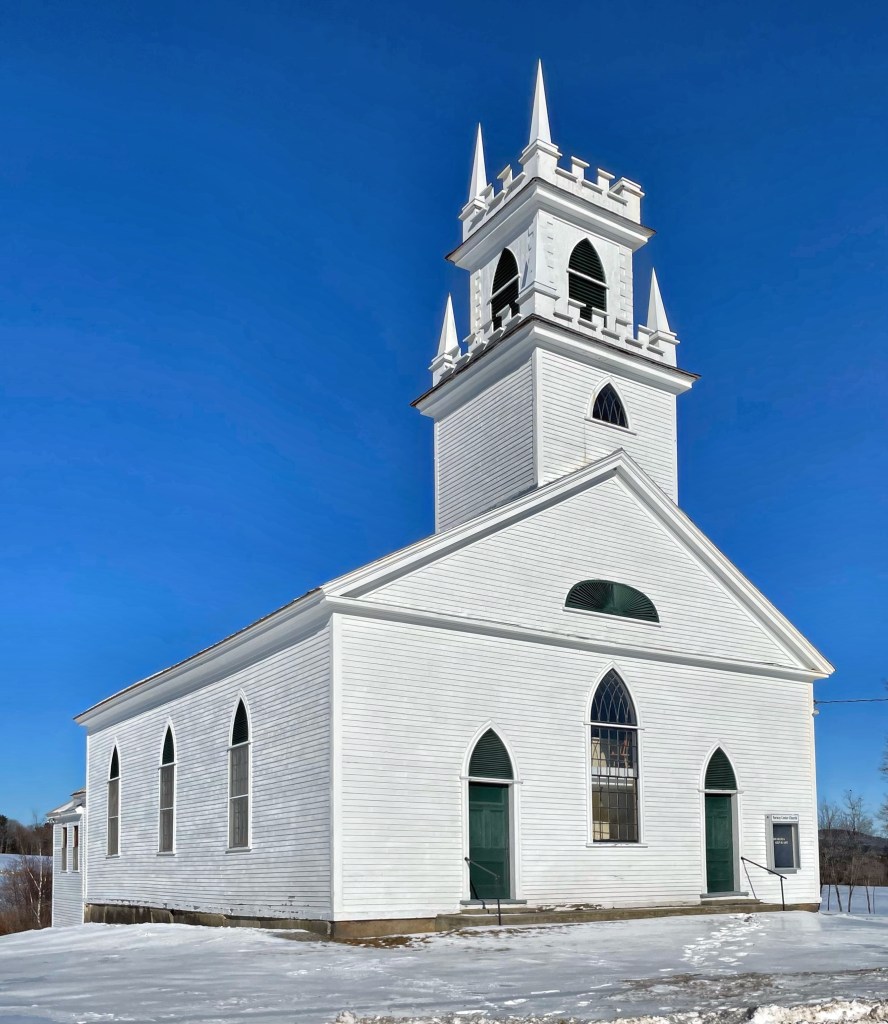
This beautiful, bucolic church in Norway Center was built in 1840 to replace an earlier meeting built in 1808-09 on the site. The present building is Gothic Revival in style with louvered panels making the windows appear lancet in shape and the amazing lancet window centered on the facade. The two-tiered tower is ornamented with crenellation and a wooden spire at each corner (besides one missing). The church features a louvered fan and strong pediment, which are nods to other prominent styles of the early-mid 19th century, Federal and Greek Revival respectively. This church quickly saw membership drop as Norway Village became the population center of town, with Norway Center becoming more agricultural and rural.
Last up on our tour of Scandinavia (Denmark, Sweden and now Norway) Maine, is Norway. The town of Norway centers around Pennessewasse Lake, which supported native people in the region for thousands of years. It wasn’t until after the American Revolution that European settlers established the town. By 1789, a sawmill and gristmill were established, the first road was built in 1796, and the town of Norway was officially incorporated on March 9, 1797. Before incorporation, the township adopted the name Rustfield, to recognize the contributions of prominent landowner Henry Rust of Salem, Mass and the community once petitioned the Massachusetts General Court to be named Norage, meaning “falls” in the native peoples’ language. Norway won the name, but the origin of the town’s name remains unknown. The town leaned more towards industry than Denmark and Sweden due to the stronger rivers, and its population increased as a result.
This historic farmhouse sits on the eastern edge of Pennessewasse Lake and is one of the oldest extant homes in town. It was built in 1792 just years after land here was purchased by Nathaniel Bennett in 1790. Nathaniel and Elizabeth Bennett resided in the home until they died, childless. The home was eventually purchased by Don Carlos Seitz, publisher of the New York World, who grew up and was educated in town. Seitz operated the property as a gentleman’s farm, and is responsible for naming the property “Cedarbrook Farm”. His estate sold the property to one of his hired hands in 1927. It remains very well preserved and was listed on the National Register of Historic Places in 1996 as the Nathaniel and Elizabeth Bennett House.
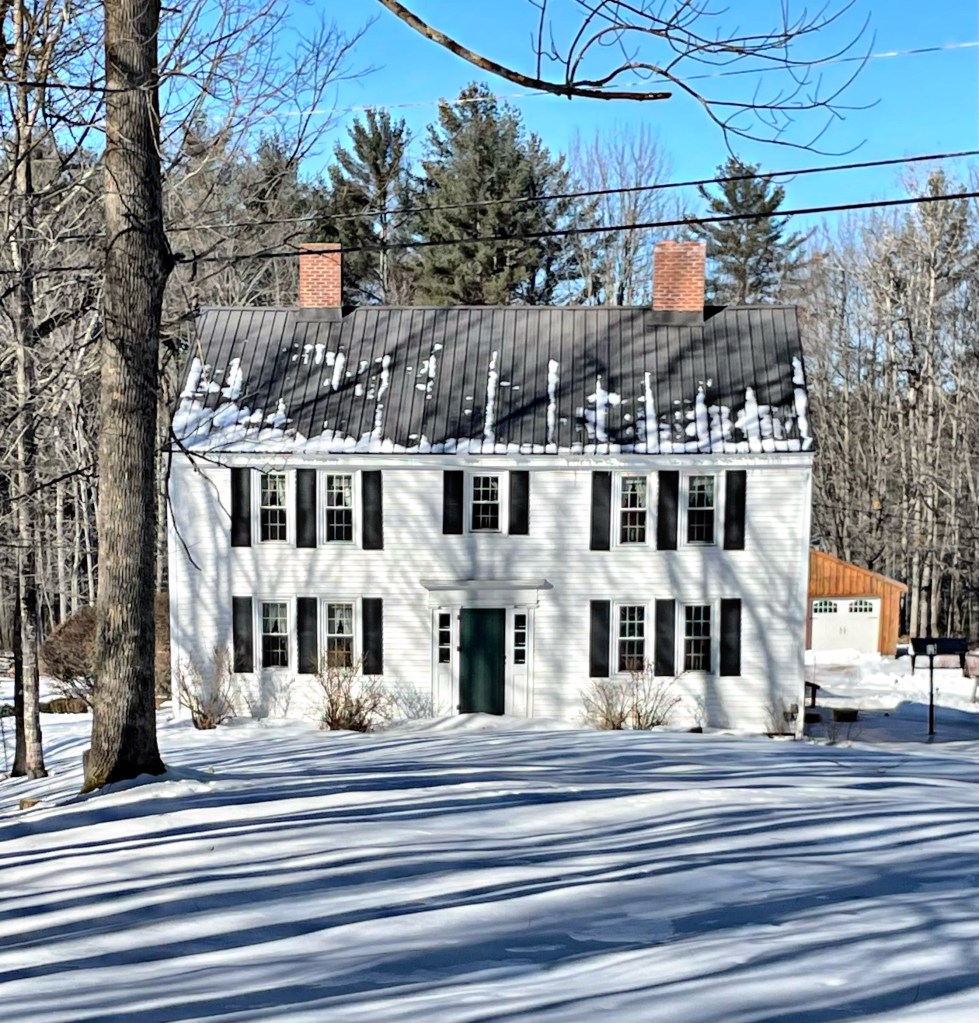
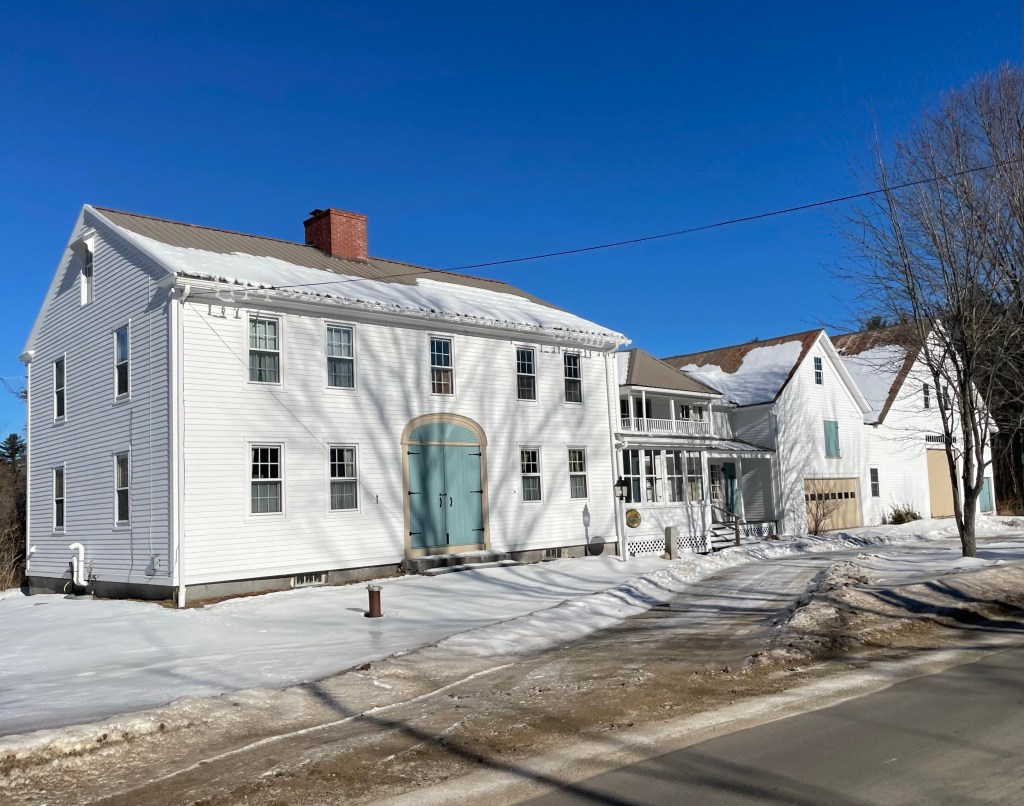
In 1820, just seven years after the incorporation of Sweden Maine, a homesteader, Amos Parker purchased fifty acres of land and began to erect a two-story, Federal house with a center chimney and a detached store beside it. Plagued by debt, Parker sold the unfinished house to Samuel Nevers circa 1833–1835, who purchased the property with the store for his recently married son, Benjamin. By 1860, Benjamin Nevers had a successful store and prospering farmstead. Benjamin died in 1883, and in the next two years, their daughter Charlotte, and her husband, Charles Bennett, dramatically remodeled and modernized the farmstead, adding a connected two-story ell building outward from the main house toward the old 1840 barn, connecting the entire property. I believe that the property remains in the Nevers-Bennett Family, as recently, Steve and Judy Bennett, recently negotiated an easement with the Maine Farmland Trust to protect their hay, beef, and maple sugaring acreage as farmland into the future.
While architecturally significant mansions, churches and civic buildings are great, the smaller wood-frame buildings such as this really tell the story of New England. When the town of Sweden, Maine was still in her infancy, the Nevers Family helped to establish the town and diversify its output from the typical agricultural village. Sweden supported an interesting variety of nineteenth century businesses including: general stores, saw mills, copper and cobbler shops, and a straw hat factory. The town of Sweden was distanced from major trade routes, railroads and navigable rivers, so it saw a period of decline from the late 19th to the 20th century. The town has since been a sort of “bedroom community” where people mostly live, but travel outside the town for commerce and work. This blacksmith shop shows us an example of a trade that has largely gone away, but it was a common structure and profession in early America.
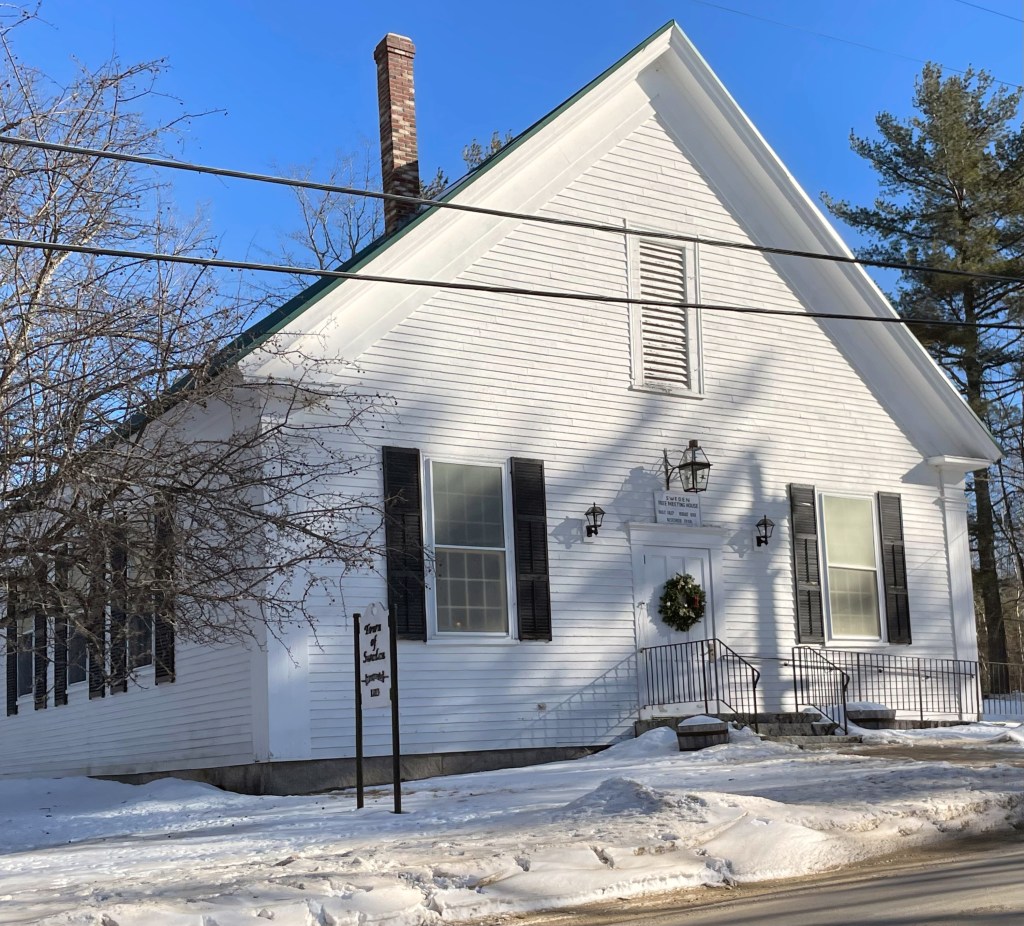
Just a short flight (erh I mean drive) from Denmark, you’ll find Sweden… Maine. Sweden is one of three towns of Oxford County Maine, named after Scandinavian countries (Denmark, Norway & Sweden). Sweden was once territory of the Abenaki tribe who fled to Canada during the Dummer’s War. Present-day Sweden was first colonized in 1794 by Colonel Samuel Nevers from Burlington, Mass. After the Revolutionary War, where he served, Samuel was given a large tract of land in Maine. The town separated from Lovell and became known as Sweden, likely due the . THe started to clear his lumber on his land, and he returned several times a year to his home in Burlington, Mass. for supplies. In 1796, his friend Benjamin Webber joined him and Samuel gave his friend some land for his assistance. Upon his last visit back to Burlington in 1796, he took his bride Esther Trull by horseback, making the 180-mile journey within 24 hours, a record time for this era. The Nevers cleared out land, laid out roads, and built the earliest civic buildings in the fledgling town, including the town’s Free Meetinghouse seen here in 1826. This building has served as a townhouse, community church, schoolhouse, and grange hall. The building was largely rebuilt in the 1860s, giving it the vernacular Greek Revival appearance we see today.



 Buildings of New England