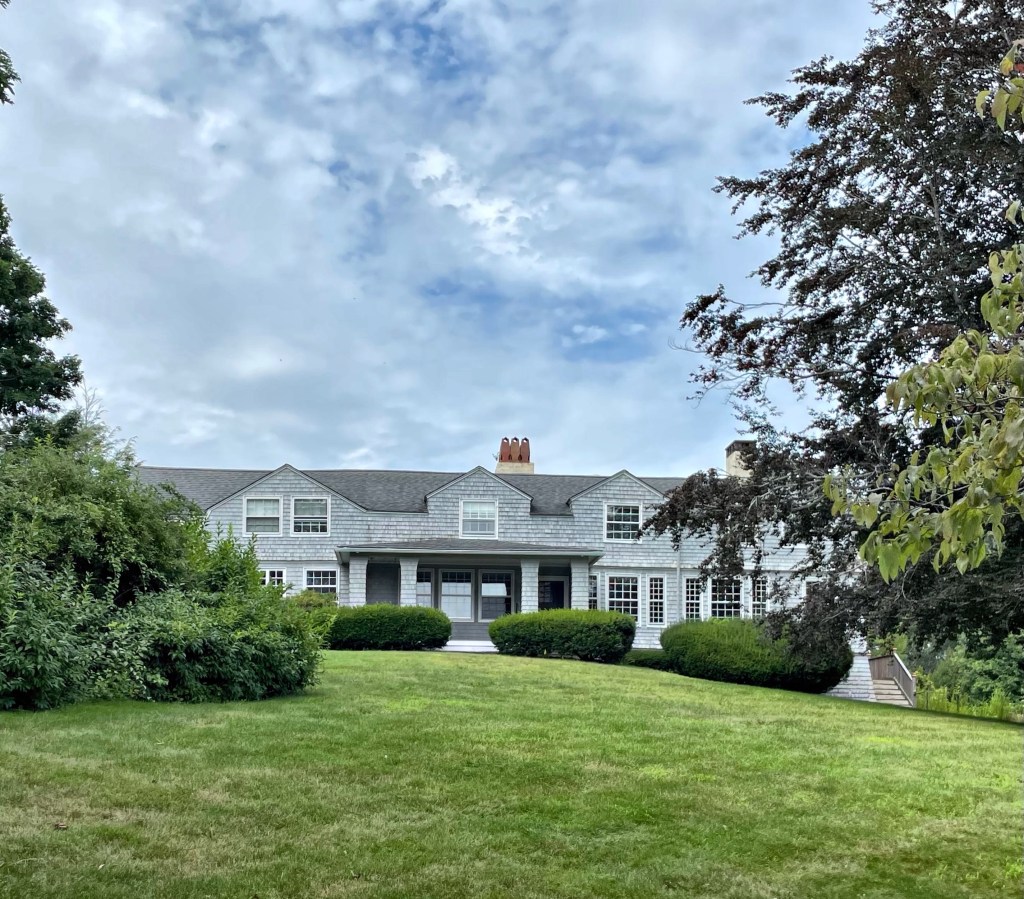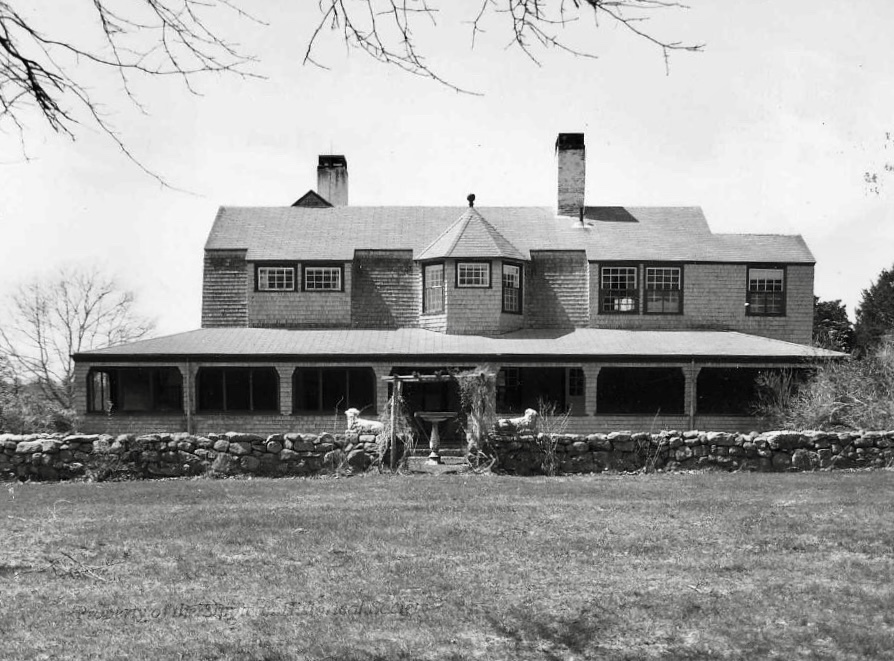
Charles Allerton Coolidge Cottage // 1891

Charles Allerton Coolidge (1858-1936) was born in Boston and grew up in the iconic Beacon Hill neighborhood, known for its stunning architecture. Inspired by his surroundings, he attended Harvard and MIT and studied architecture, graduating in 1883. He entered into Henry Hobson Richardson’s architectural practice as a draftsman until Richardson’s death in 1886. Upon his death, Coolidge continued Richardson’s commissions as a partner, as Shepley, Rutan and Coolidge. Shepley married Richardson’s daughter; and Coolidge later married Shepley’s sister. It is likely that Coolidge became aware of Marion from Richardson’s earlier design of the Percy Browne Cottage in town. He must have liked the town so much, since he built this summer cottage in 1891 in a sparsely developed area across Sippican Harbor from the village. The Shingle style home was later rented to Isaac Henry Lionberger, a lawyer who served as assistant Attorney General of the United States by appointment of President Cleveland (who also summered in Marion). Lionberger, who spent most of his time at his home in St. Louis, married Coolidge’s wife’s sister, so the families often hung out at this home together. The summer cottage in Marion is still owned by Coolidge’s heirs to this day.
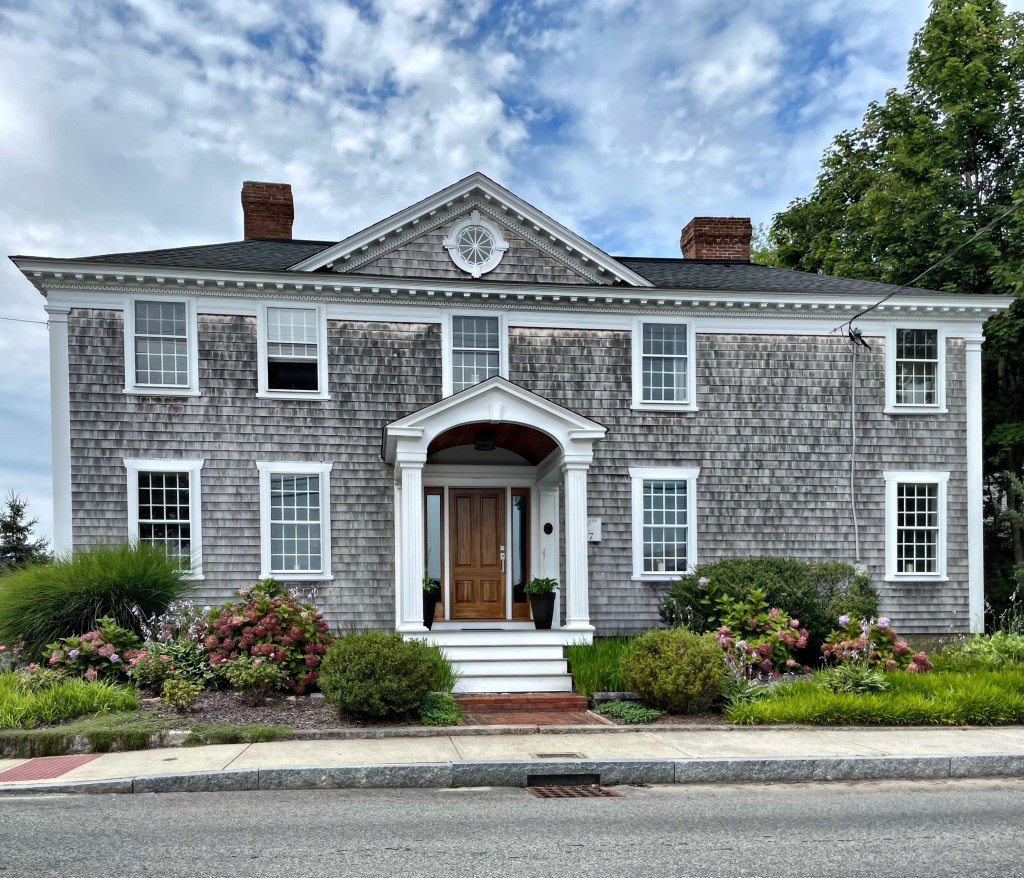
George House // c.1929

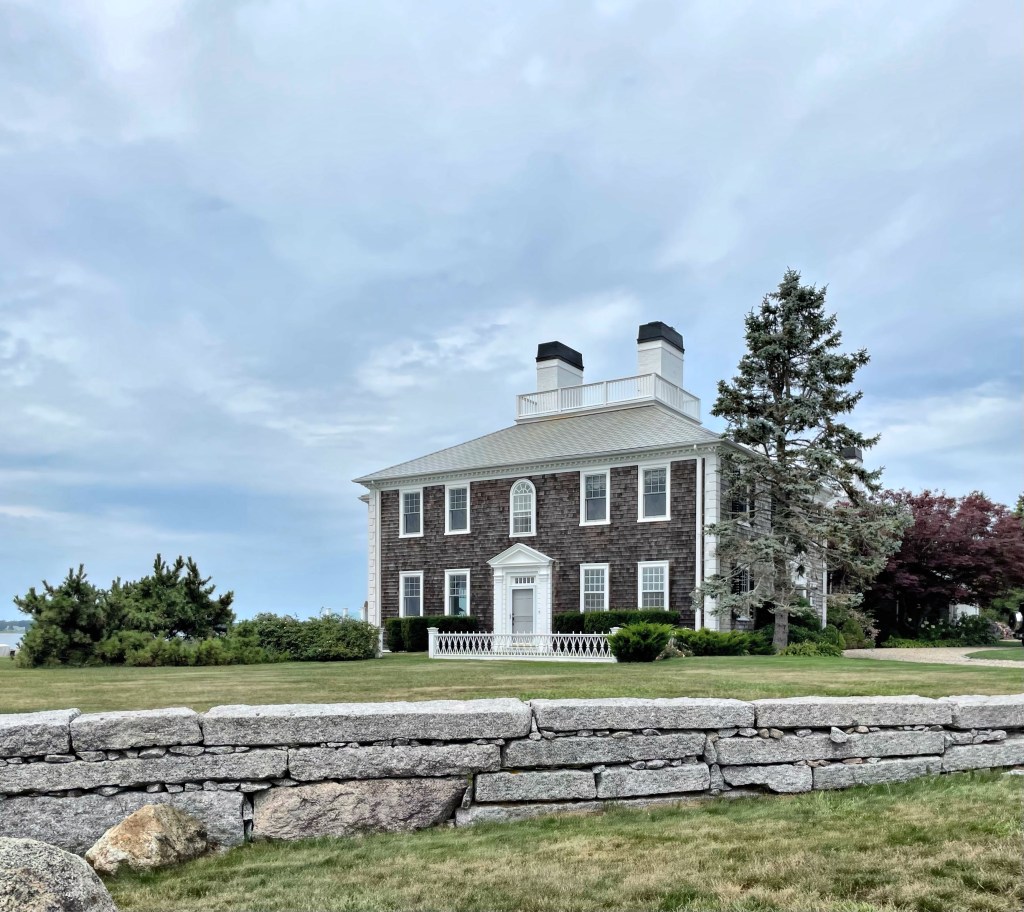
This Georgian Revival house was built in the mid-late 1920s for the George Family, who ran a construction company based out of Worcester, Massachusetts. The home was a summer retreat for the family, who acquired a prime lot on Butler Point in Marion, MA, from the Butler’s Point Associates, a group of men who developed the peninsula with the Kittansett Club and desirable house lots from plans by the Olmsted Brothers, landscape architects. The house is prominently sited and is one of the best examples of the Colonial Revival style I have seen in the seaside town. It is clad in cedar shingles as a nod to the vernacular coastal homes and larger Victorian-era summer homes seen in the village.

Bird Island Light // 1819

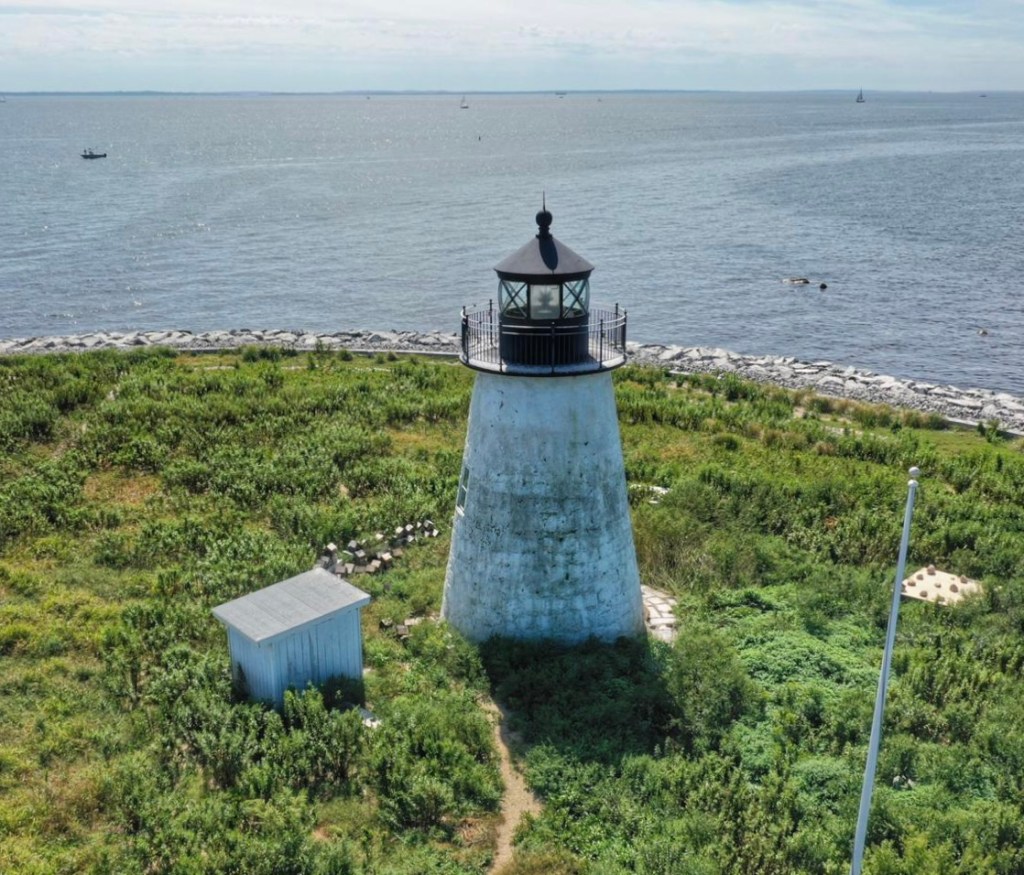
Bird Island sits about seven football fields away from the tip of the Butler Point peninsula, which juts out into Buzzards Bay in Marion. A small sitting area at the Kittansett Club provides a bench and amazing views of the open water and historic lighthouse in the distance. Immediately after the War of 1812, Marion became a hub of whaling and shipping with many sea captains building homes in town. As a result, Congress appropriated $11,500 for the purchase of Bird Island and the erection and stationing of a lighthouse. A 25-foot-tall conical rubblestone tower was constructed, surmounted by a 12-foot tall iron lantern. The accompanying stone dwelling was 20 by 34 feet, and a covered walkway connected the house and tower. William S. Moore, a veteran of the War of 1812, was appointed as the first keeper, which went into operation in 1819. There are legends about murder and hauntings on the island.

Moore’s wife, suffering from tuberculosis, would frequently get into liquor and cigarettes, and would become raucous when she did. When the villagers of Sippican would visit the island, many times they would bring her tobacco to the dismay of Keeper Moore. The legend claims that one morning, after returning from a shed on the island, he found his wife drunk and dancing through the snow. Reports are that he returned to the keeper’s dwelling, retrieved his rifle, and shot her. She is reported to be buried on the island, but there is no sign of a grave. Keeper Moore insisted that she had “succumbed from nicotine” when the townsfolk had asked what had happened. Many years later, when the keeper’s dwelling was being torn down in 1889, a rifle and a bag of tobacco were purportedly found in a secret hiding spot. With those items, was an alleged note that said the following:

“This bag contains tobacco, found among the clothes of my wife after her decease. It was furnished by certain individuals in and about Sippican. May the curses of the High Heaven rest upon the heads of those who destroyed the peace of my family and the health and happiness of a wife whom I Dearly Loved.”

The lighthouse is owned today by the Town of Marion. And the only residents are endangered roseate tern.

Rev. William Percy Browne Cottage // 1881

In 1881, Henry Hobson Richardson furnished plans for this modest, shingled cottage in the town of Marion, overlooking Sippican Harbor. At the same time, he was also completing designs for Austin Hall at Harvard and overseeing the construction of Albany City Hall in New York, both in his iconic Richardsonian Romanesque style. This Shingle style home in Marion was designed for Reverend William Percy Browne (1838-1901), who was educated at Kenyon College in Ohio alongside John Cotton Brooks, the youngest brother of Phillips Brooks, who would become the Rector of Boston’s Trinity Church and briefly Bishop of Massachusetts. Brooks would hire H.H. Richardson to design Trinity Church in Boston in the early 1870s. From this connection and being members of the St. Botolph Club of Boston, Reverend William Percy Browne and H.H. Richardson began a working relationship designing Browne’s summer cottage in Marion. The legend is that at the club, Browne bet Richardson that he could not design a small house for $2,500. Browne lost. This modest house was completed in 1882 and represented an early, significant example of a Shingle style home in Massachusetts. Browne died in 1901 and the house was sold to Sidney Hosmer, a Boston electrical engineer. Under his ownership, the home was expanded and altered, somewhat obscuring Richardson’s original design. The cottage was eventually purchased by Tabor Academy, who in 2019, pulled a demolition permit for the house. Architects and historians quickly rallied and advocated for the preservation of the cottage, saving it from the wrecking ball. The academy is undergoing alternative plans, which were stalled due to Covid-19.


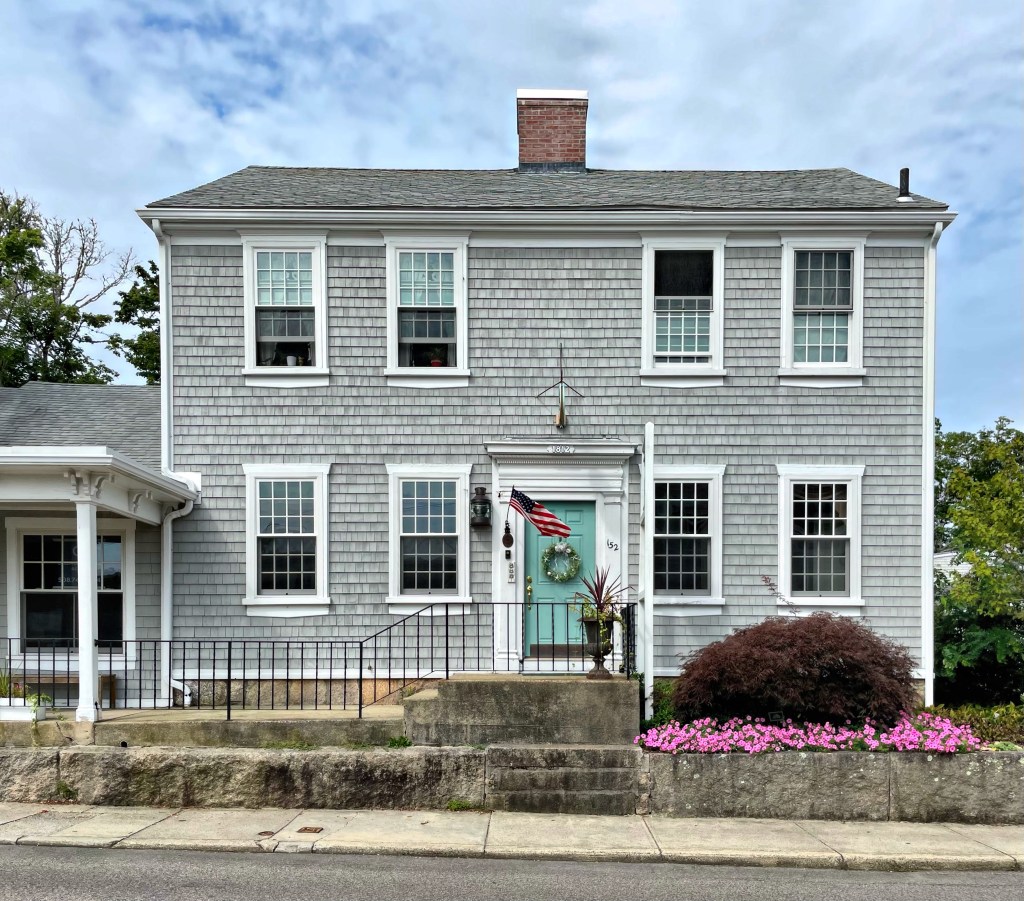
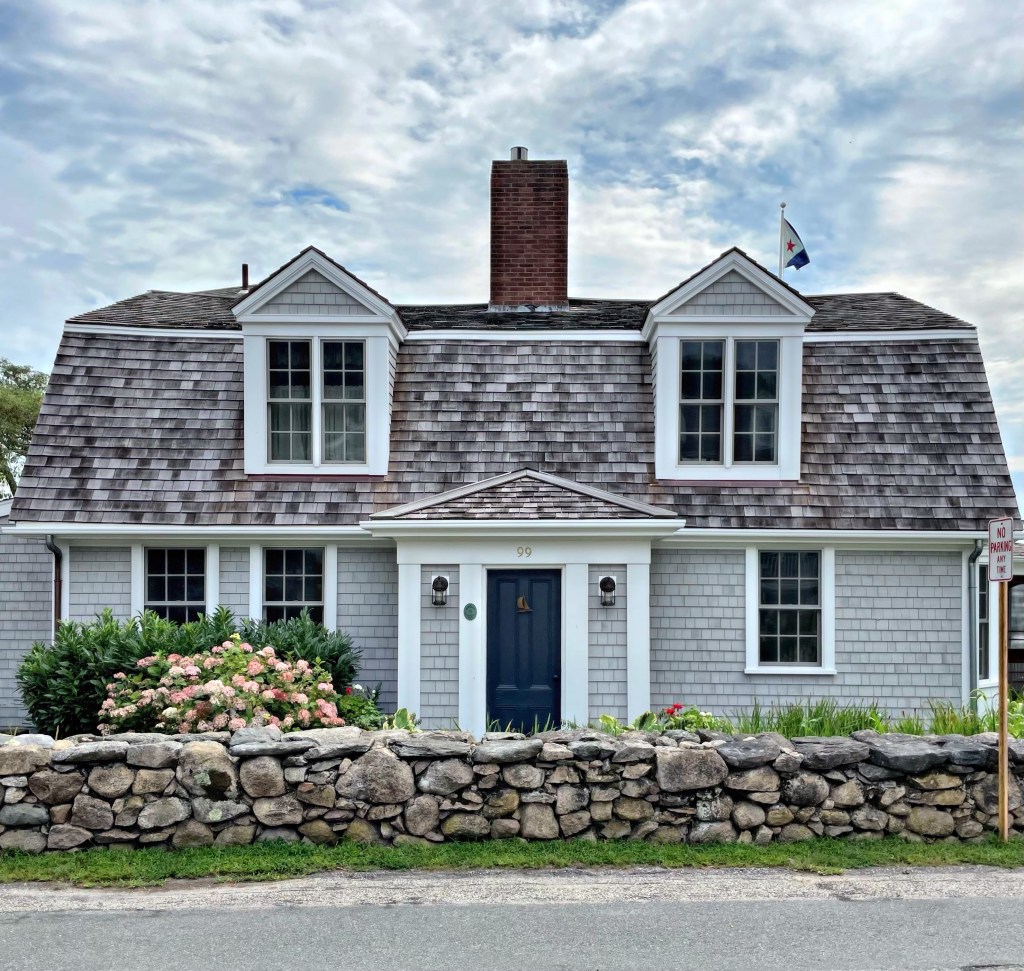
Ward Parker Delano House // 1797

During the 1790s and early 1800s, the rise of the coastal schooner trade and whaling ushered in a long period of prosperity for coastal towns in New England, which continued unabated until the Civil War. The War of 1812 provided many Marion sailors and sea captains with the chance to experience life at sea with privateers papers issued by the United States government, these captains went to sea in their schooners to hunt down British ships, plundering them like pirates. One of these captains was Ward Parker Delano, who built this house in 1797 overlooking Sippican Harbor. Under subsequent owners in the Delano family, the home was modified on numerous occasions in styles popular at the time until the early 20th century when it was Colonialized, which added the portico, gable, and dentils.

Handy’s Tavern // 1812

Before the days of cars and even trains ruled, people in New England would get around by horseback or stagecoach (horse-drawn carriages) from town to town. Due to the long travel times to get everywhere, many New Englanders built taverns, which served as inns and bars for the weary traveller on their journey. In 1812, a recently married Caleb Handy built this house to serve as a residence and source of income, as a tavern for travellers on the Plymouth-New Bedford stagecoach route. He married Sophia Dexter in 1811, who died just two years later at the age of 22. Two years after the death of his first wife, he married Sophia’s sister, Mary, who just turned 18 (he was 33). The tavern had a ballroom for local dances and a room for serving drinks, based principally on West Indian rum, that was shipped in from sugar plantations, owned by many wealthy white families in New England (many of whom exploited the slavery abroad). The Tavern was later owned by Benjamin Handy, who continued to operate it as a Tavern until the railroad made the stagecoach route obsolete in the middle of the 19th century. It then became a family home. The house was sold to the Sippican Women’s Club in 1923, who renovated and restored much of the building, and held luncheons and events inside. They maintain the building to this day.

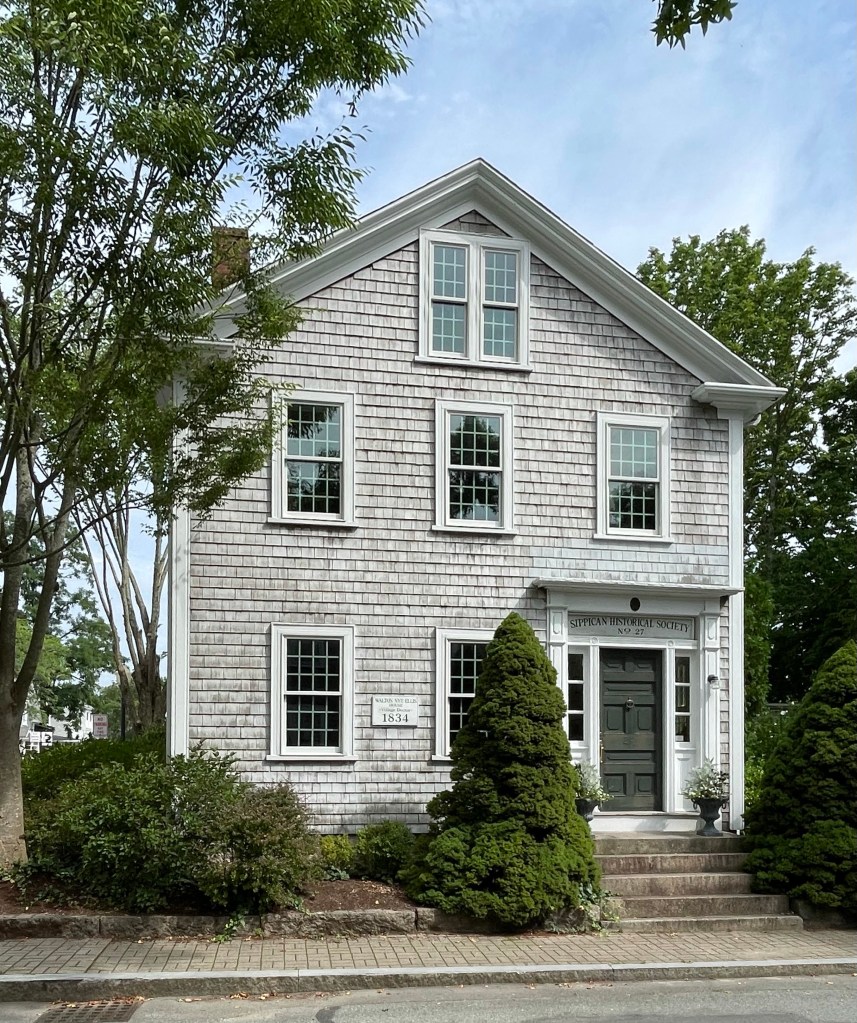
Dr. Ellis House – Sippican Historical Society // 1839

This house was built in 1839 Dr. Walton Nye Ellis (1808-1867), who served as physician in Marion in the second quarter of the 19th century. Born in Wareham, Ellis moved to Marion, and married Susan Delano (1809-
1840) after her death, within the year, he married Lucy Clark Allen (1820-1885); he had a daughter with his first wife and four daughters and three sons with his second. By 1838, he purchased a lot in Sippican Village for the price was $225. In 1855, Dr. Ellis organized a meeting of prosperous Village men, mostly sea captains, with the purpose of planning a library for the town. They pooled resources and funded a library which was located in a large closet on the second floor of his home seen here. The library’s books could be borrowed for a few cents a week. Subsequent funding from Elizabeth Taber helped create the Taber Library just decades later. In the 1960s, the home was gifted to the Sippican Historical Society, who remain in the building to this day.

Sherman’s Inn – Beverly Yacht Club // 1784

One of the oldest homes in Sippican/Wharf Village in Marion, Mass., this beautiful Cape house with gambrel roof dates to 1784 from deed research. The house was constructed by two owners, Barnabas Luce, innholder, and Stephen Cunningham, a mariner, seemingly as an inn for sailors who would dock their ships in the harbor just behind the property. It was later acquired by Edward Sherman (1790-1867), a shipwright and carpenter who built schooners at the wharfs in town. In 1868, his son Edward Franklin Sherman (1821-1907), also a ship carpenter, sold the waterfront property after his father’s death to Andrew A. Harwood, an admiral in the United States Navy, Commodore of the Washington Navy Yard, and through his mother, Elizabeth Franklin Bache, a great-grandson of Benjamin Franklin! The property remained in the Harwood family until, 1955, when the property was sold to the Beverly Yacht Club. The yacht club was originally named after the town of Beverly, north of Boston, when members broke from the Eastern Yacht Club of Marblehead which was more prestigious. For the first 23 years, the club had no fixed location, but eventually settled in Bourne, and merged with the local Sippican Yacht Club. The Great Hurricane of 1938 destroyed their clubhouse and they were “homeless” for years until moving into this 1784 home, later expanding it to meet growing needs.

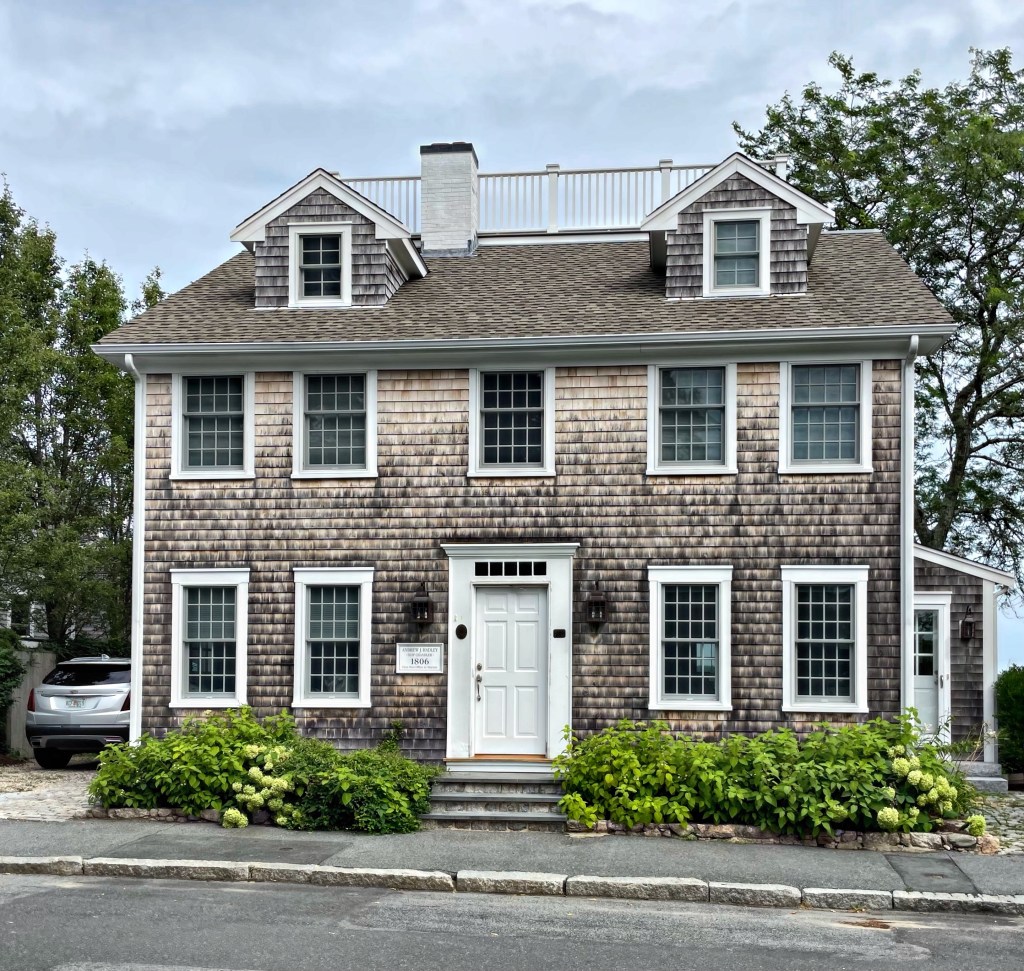
Hadley’s Chandlery // 1806

At the corner of Main and Water streets in Marion’s Wharf Village, this beautiful building has long ties to the town’s rich maritime history. The building was constructed by A.J. Hadley in 1806 as a ship chandlery, a shop selling all the goods necessary for sailors and fishermen who were docked just steps away. While Hadley’s store occupied the right half of the first story, the western (left) segment housed the first Post Office in the village, leaving Hadley and his family on the second floor. There is something so special about fishing villages in New England, while the populations of these towns are very different than they once were, the buildings and history still convey martime history and the way of life here over 200 years ago.

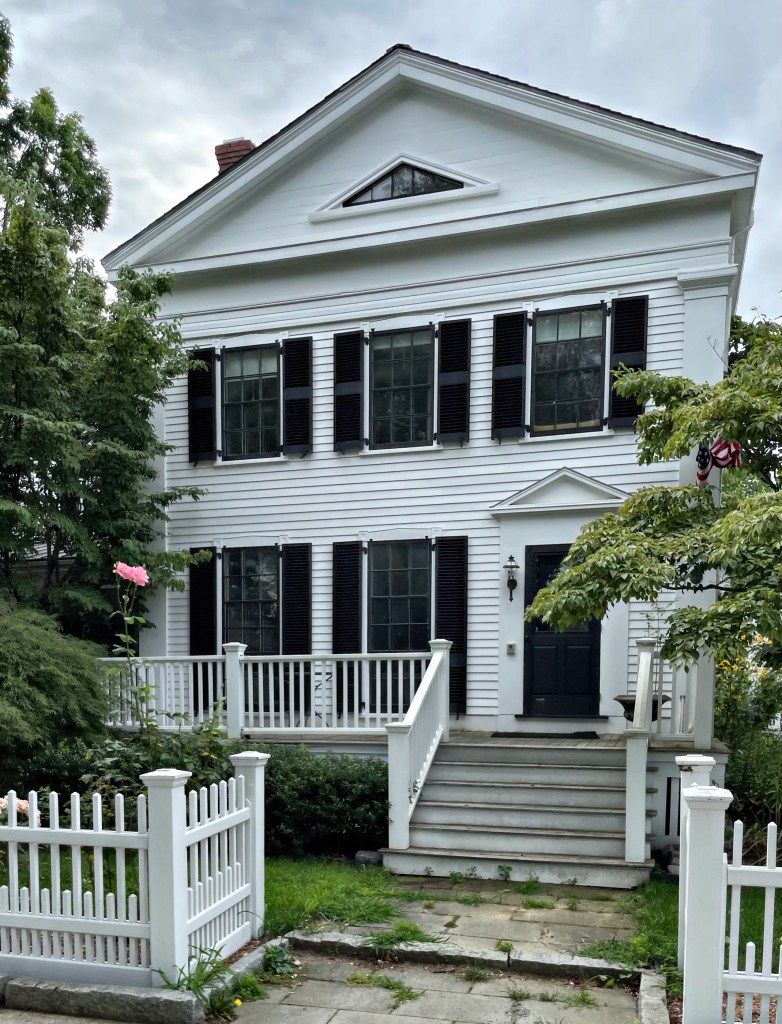
Cobb House // 1841

The highest-style Greek Revival house in Marion is this home, built in 1841 as a parsonage for Marion’s Congregational Church. The first pastor to reside here was Rev. Leander Cobb. He assisted his father, Rev. Oliver Cobb, who had been preaching in Marion since the completion of the first meeting house in 1799. Leander’s daughter, Sarah Elizabeth, married Captain Benjamin Briggs, who’s father ran the local post office (see last post). In 1872, Captain Briggs set sail aboard his ship, Mary Celeste, with his wife and two year old daughter Sophia, and seven crewmates. Their school-aged son was left at home with his grandmother. They sailed from Massachusetts on November 7, 1872, bound for Europe with a cargo of commercial alcohol. Less than a month later, on December 4, the ship was found sailing erratically off the coast of Gibraltar. A local crew boarded the ship to investigate when they saw no one on deck. The sails were furled and the ship was in excellent condition. In the infant’s crib remained the impression of a sleeping child. However, no sign of the crew or the Briggs family was ever found. There are many theories about what happened, with the most likely being that some alcohol barrels got loose and flammable liquor poured out near the kitchen. It is possible the family and crew became frightened and boarded the safety boat incase of an explosion. The boat was not tethered and they likely could not reach the main ship as her sails were up. They were probably capsized by a wave and drowned to death in the open ocean.