Gallup Farm Carriage House // 1906

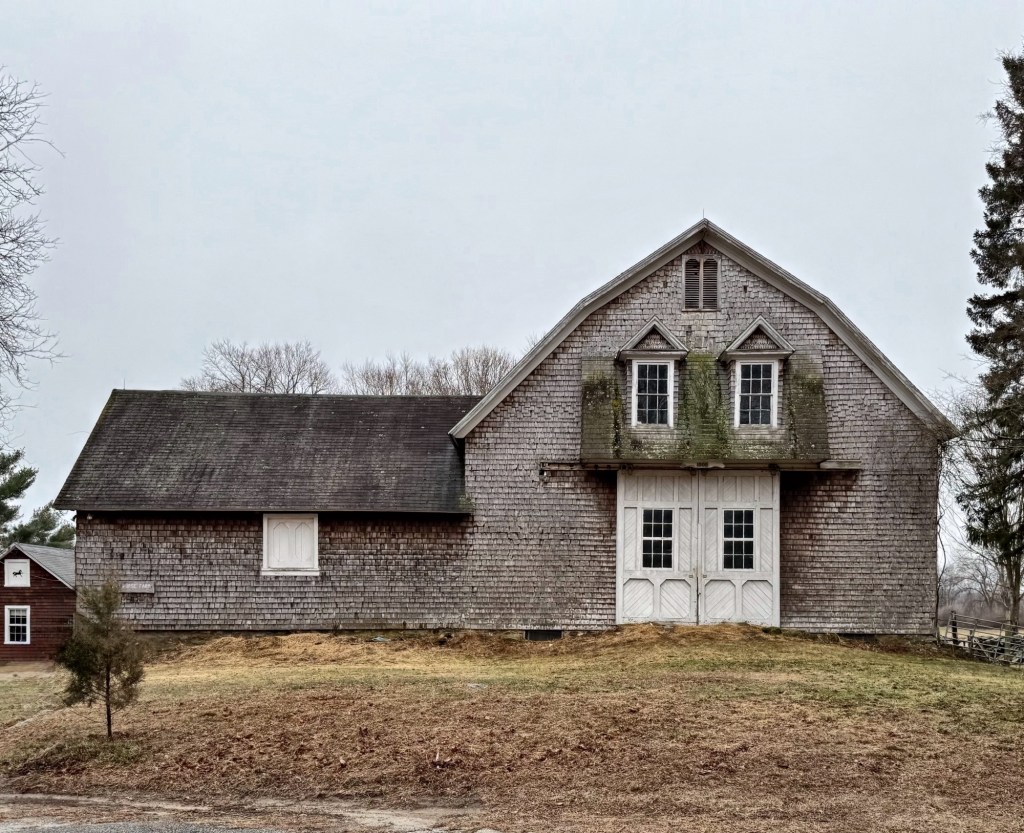
This handsome Shingle style building was constructed in 1906 as a carriage house of a larger farm property in Scotland, Connecticut. The barn is said to have been built for Archie Gallup, who purchased the old Manning farm just west of the town green in Scotland. The 1 1/2-story carriage-house with a gambrel-roof stands out for its principal entry of paneled wooden doors and above, a large, flared hood featuring two pedimented gable-dormers. The entire building is clad with varied shingles to add complexity to the design, catching the attention of all who drive by.

Roughwood Estate Cow Barn // 1892

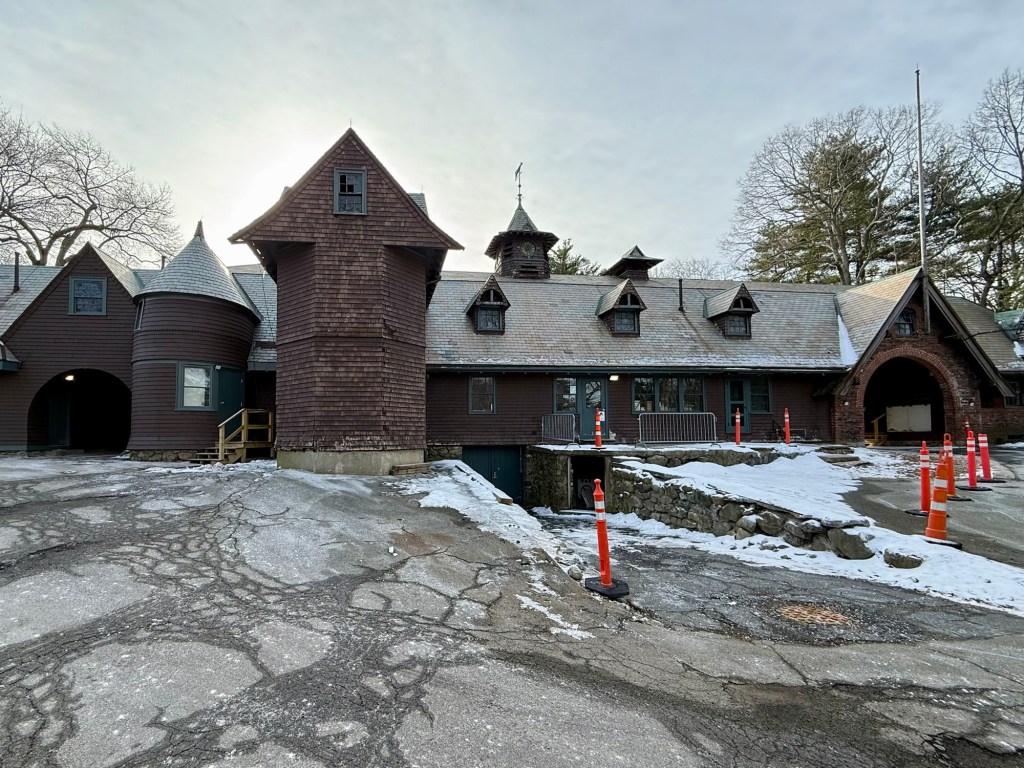
Like the Roughwood Mansion and carriage house, this building was designed and built in Brookline, Massachusetts, in the early 1890s as part of the “Roughwood” estate. Despite its high-style and ornate detailing, the building was actually constructed as a cow barn. Built in two phases for its two owners, William Cox and Ernest Dane, the large barn structure blends Victorian design into a use more reserved for vernacular detailing. The building was designed by Andrews, Jacques and Rantoul, and like the mansion and carriage house, blends Queen Anne and Shingle styles under one roof. Ever-since the estate became a college in the 1960s, the building has been used as a maintenance building. It appears that since it has been owned by Boston College as part of it’s Messina Campus, it is undergoing a thoughtful restoration!

Weir Farm Barn // c.1820

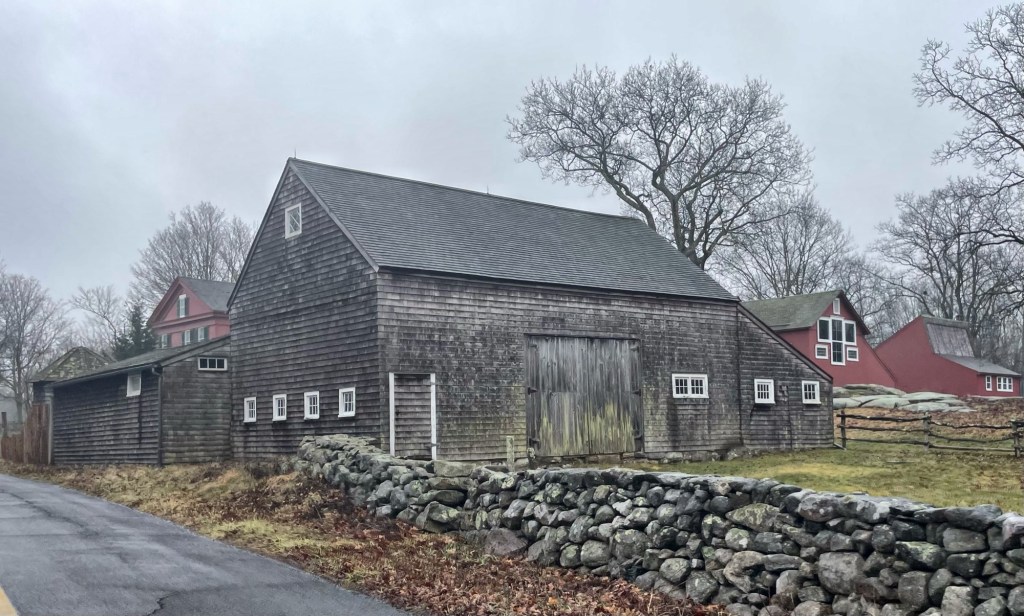
Weir Farm, later an artists retreat and studios, was once a fully operating farm, with horses, cows, oxen, chickens, vegetables, and numerous gardens. To artist Julian Alden Weir, farming was more of a hobby than an economic necessity, undertaken for aesthetic reasons. Weir’s romantic vision of the landscape extended to his use of oxen, carts, and hand tools instead of modern machinery available at the time. Over its long history the barn complex has housed a milking room, a carriage house/wagon shed, a garage, a tack room, an equipment and tool room, hay lofts, a corn crib, and stalls for donkeys, ponies and horses. The rustic barn is a typical “English-barn” built between 1815 and 1835 by The Beers’ family, who owned the property until 1880. Weir used the barn as a prominent feature in many of his paintings like “New England Barnyard” and “After the Ride.” It remains an important piece of agricultural and artistic significance to the now nationally recognized Historic Site.

Frederic Bronson Barn // c.1895

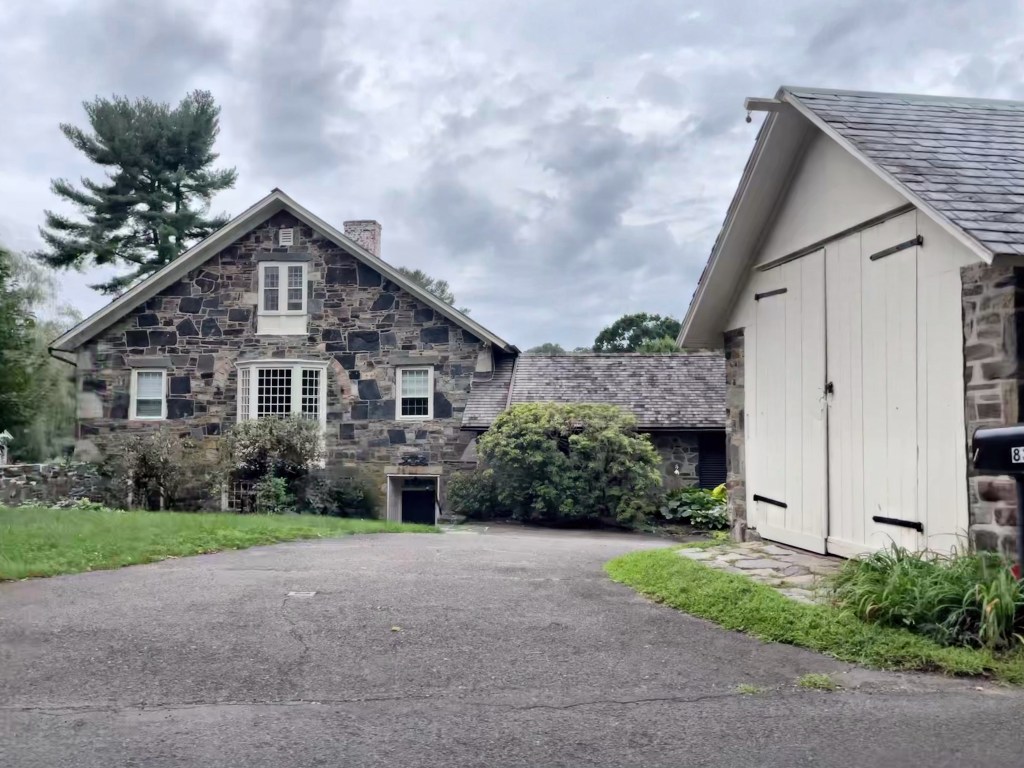
Not many buildings in Greenfield Hill, Fairfield, Connecticut showcase the neighborhood’s transition from farming community to affluent suburb quite as well as this stone barn turned house on Hillside Road. The stone barn was constructed around c.1895 for Frederic Bronson Jr. (1851-1900) a prominent New York attorney and treasurer of the New York Life and Trust Company which was founded by his grandfather, Isaac Bronson. In about 1892, Frederic demolished his ancestral home and hired architect Richard Morris Hunt to design a new country estate for his family. The house was called Verna and is also located in Fairfield. Today Verna is known best as the Fairfield County Day School. As with many wealthy men of the Gilded Age, Frederic wanted his rural retreat to also work as a gentleman’s farm, where he could have staff farm and tend to livestock on the expansive rolling hills bounded by historic stone walls. He appears to have had this barn built for his livestock shortly after the main house, Verna was completed nearby. Bronson died in 1900 and some of the property was later sold off. This property was acquired by a Charles Stillman in 1941 and it is likely him that converted the barn into a charming residence.

Scott Farm – Cow Barn // 1862

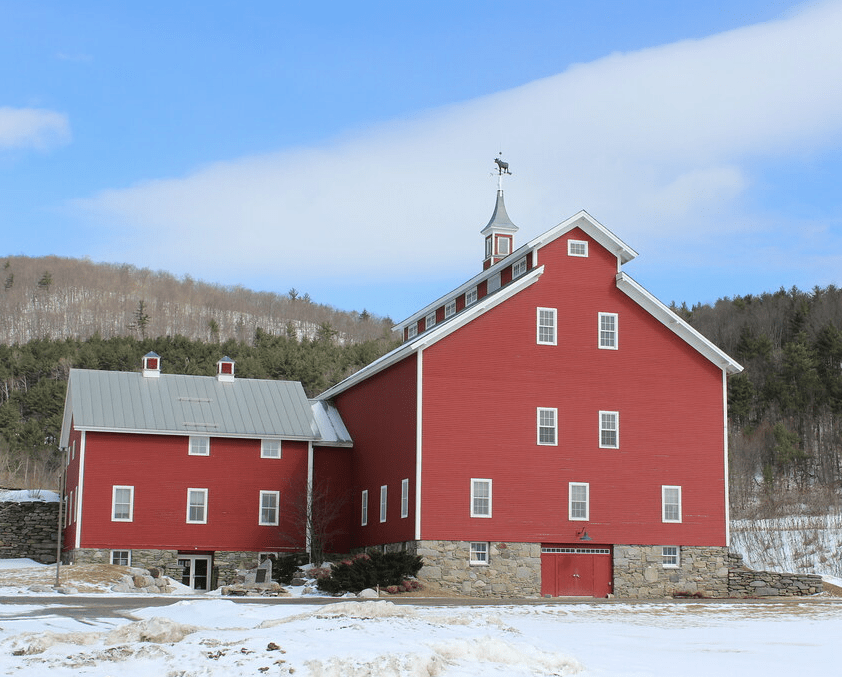
Historic barns really are the most charming buildings, and luckily, Vermont is home to soooo many great examples. The Cow Barn at Scott Farm in Dummerston, VT was built in 1862 and constructed into the slope of the land. The barn has a brick and stone foundation, barn board siding, and a roof sheathed with small dark slate. It is built into the slope of the land and has a single-story shed roof addition (c.1915) off the west facade to give the building a saltbox form, and a single story gable roof milk house addition off the east facade. The rear facade has a more rustic appearance and has a large entrance to the space inside which is occupied by The Stone Trust, with the mission to preserve and advance the art and craft of dry stone walling. The organization holds classes and trainings where people can learn how to build a traditional or modern stone wall and more! The barn (and the rest of the buildings on the Scott Farm property) is owned by the Landmark Trust USA.